
Nosh AI Robo-Chef
Pros
- A genuinely fresh kitchen idea with a real use case behind it, not just AI branding
- Strong fit for one-pot, sauce-led meals that rely on timing, stirring, and staged additions
- 2000W induction system, oil and water reservoirs, and automated spice handling give it real functional credibility
- Sealed chamber should make it neater and easier to live with than more open automated cookers
- Remote control, scheduling, and app monitoring feel meaningful rather than gimmicky
- Recipe customization around salt, spice, fat, consistency, and doneness makes it more adaptable to real households
- Cleaning and maintenance at least appear reasonably thought through for a product this complex
Cons
- Still requires ingredient prep, so it is not even close to a full robotic kitchen
- Cannot chop, shape, or flip foods, which sharply limits the range of meals it can truly replace
- Large and heavy, making it a poor fit for smaller kitchens
- Recipe library messaging is inconsistent, which makes day-one expectations harder to judge
- Premium price means the wrong buyer could end up with a very expensive curiosity
- Long-term ownership questions still hang over the whole category
the concept is much smarter than most AI-kitchen fluff, the sealed chamber looks genuinely practical, the ingredient and reservoir system feels designed around routine use, and the app-side convenience features sound like the kind people would actually use rather than ignore after a week.
prep work still belongs to you, the machine is large and heavy, the recipe count messaging is inconsistent, and a product this ambitious still raises obvious long-term questions around reliability, upkeep, and whether it becomes a habit or a novelty.
The Nosh AI robo-chef is one of those products that grabs attention for the right reason: it is not just trying to look futuristic, it is trying to remove a very specific kind of kitchen friction. After spending time with the idea and the way it is built, our view is fairly clear. Nosh makes the strongest case we have seen yet for a consumer cooking robot that could genuinely matter in daily life, but it is also much more specialized than the headline promise suggests.
This is not a machine that replaces cooking as a whole. It is a premium, first-generation countertop system that makes the most sense for households already built around curries, stews, gravies, rice dishes, pasta sauces, and other stir-and-simmer meals. In that lane, it looks legitimately exciting. Outside that lane, the compromises show up fast.
That distinction is the whole review. If you come into Nosh expecting a countertop chef that chops, flips, shapes, grills, and handles dinner from raw ingredients to plated perfection, this is going to feel like a much narrower machine than the marketing mood implies. But if you look at it as a semi-automated meal station that takes over the tiring part of weeknight cooking, the part that keeps you hovering over a pan, checking timing, stirring, adding oil, correcting moisture, and trying not to burn dinner while doing three other things, then it starts to make real sense.
What stood out to us most is that the concept is not silly. It is actually pretty sharp. The bigger question is whether the kinds of meals it handles best are the kinds of meals you truly want it making several times a week.
What we tested
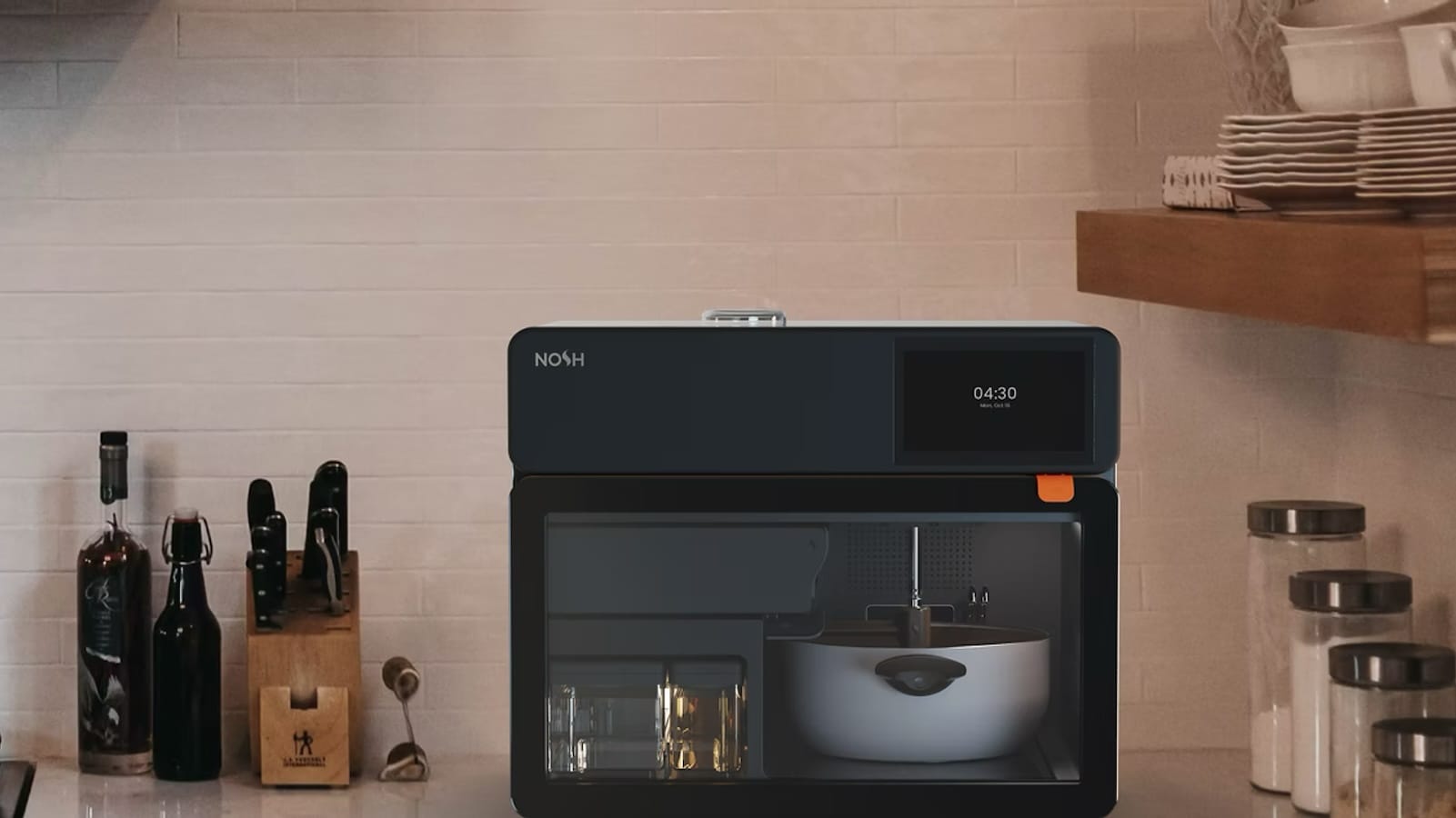
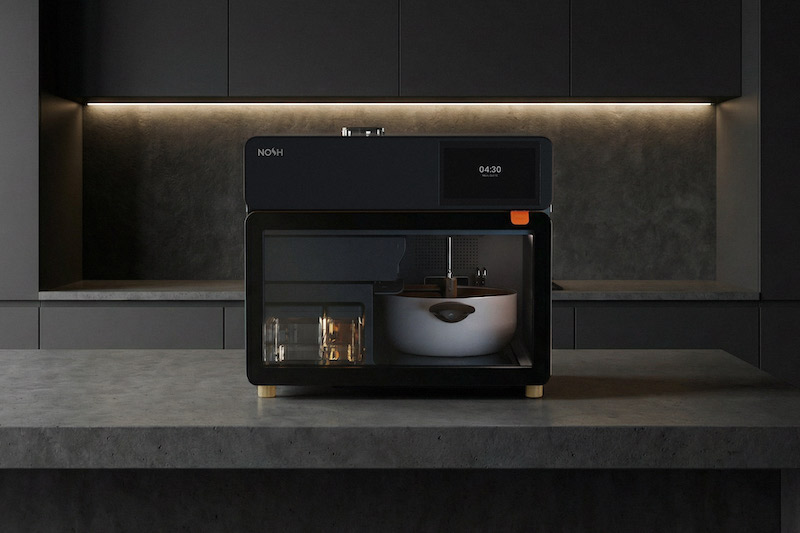
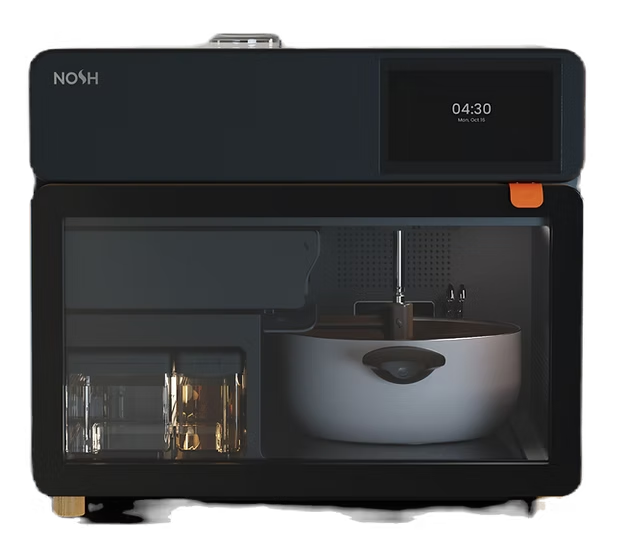
The most important thing to understand about Nosh is what it actually is. This is not a cute countertop gadget. It is a serious, heavy cooking appliance with a permanent-presence feel. The published dimensions come in at roughly 525 x 460 x 550 mm, and the weight appears to sit around 30 to 33 kg depending on which product material you are looking at. That immediately changes the tone of ownership. You are not casually sliding this into a cupboard after dinner. If you buy it, you are giving it real counter space and, in a practical sense, redesigning part of your kitchen routine around it.
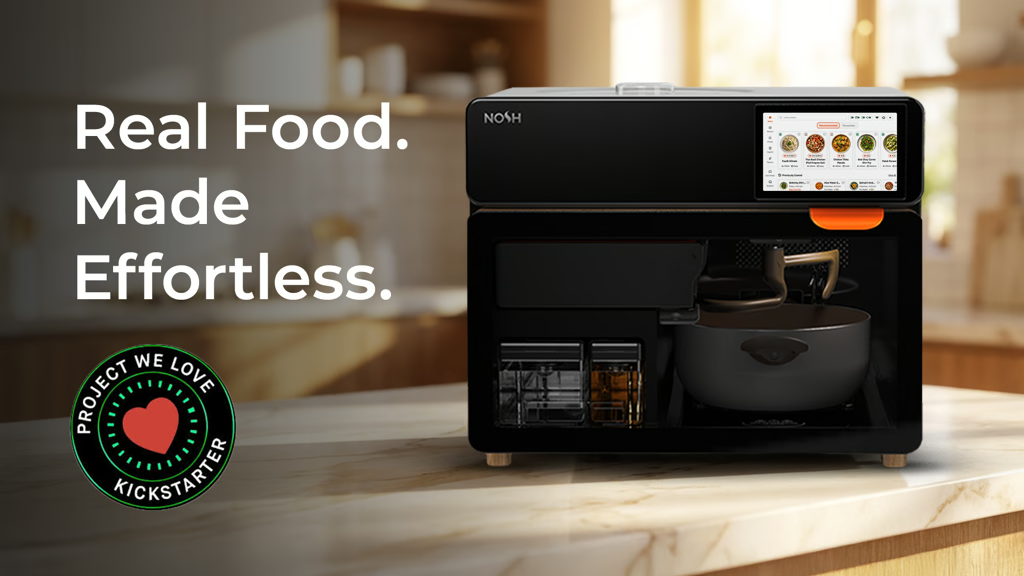
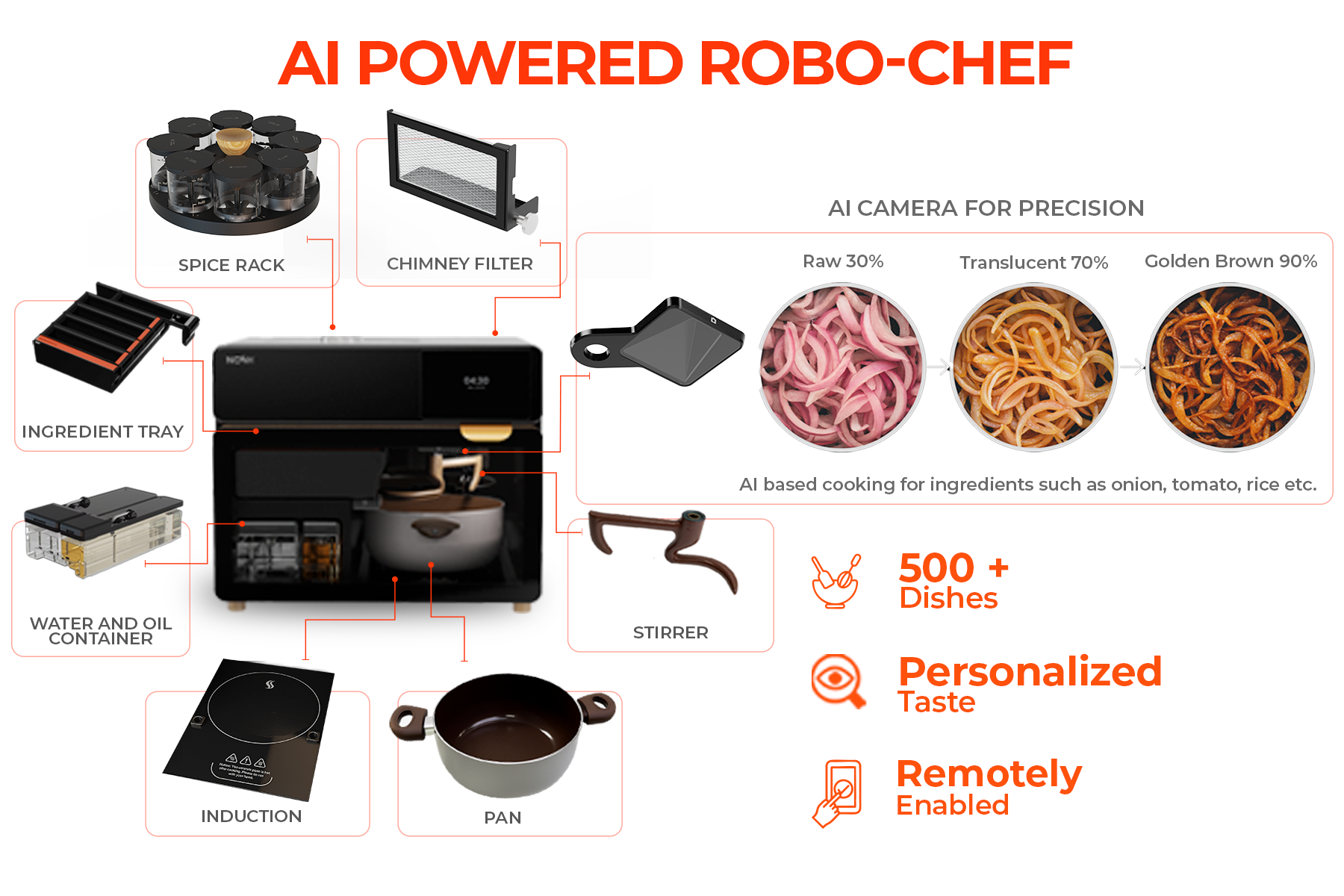
On the hardware side, the setup is more substantial than the usual smart-kitchen launch. Nosh uses 2000W induction heating, an eight-compartment spice system, five ingredient-tray compartments, an 1,800ml water reservoir, and a 900ml oil reservoir. Cooking capacity is pitched at around four servings, and it supports both 2.4GHz and 5GHz Wi-Fi. The company also says it can run preloaded recipes offline, with internet mainly needed for recipe downloads, updates, and support features. Those are not throwaway specs. They tell us Nosh is built less like a toy and more like a proper kitchen station with repeat-use systems.
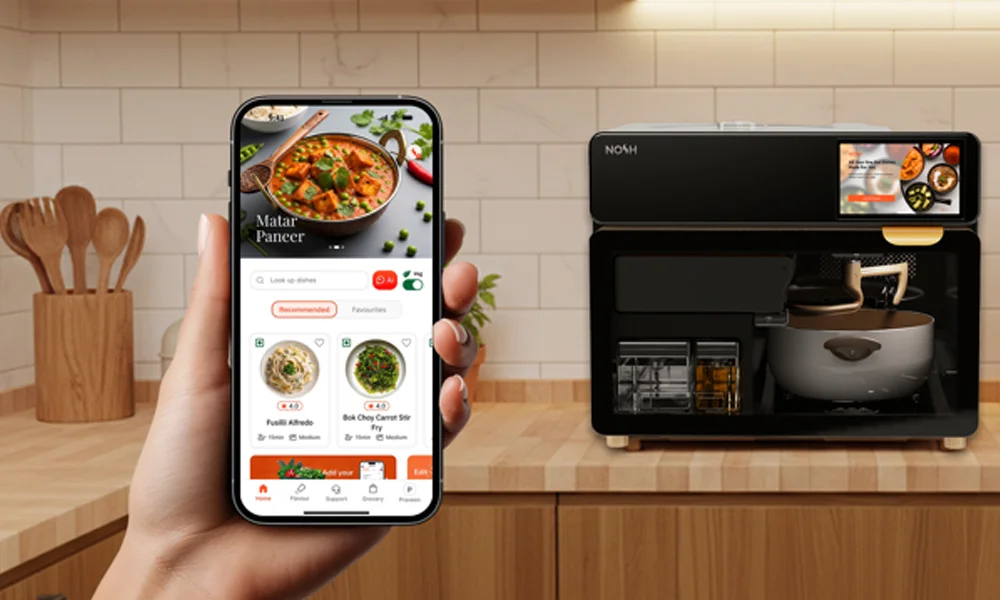
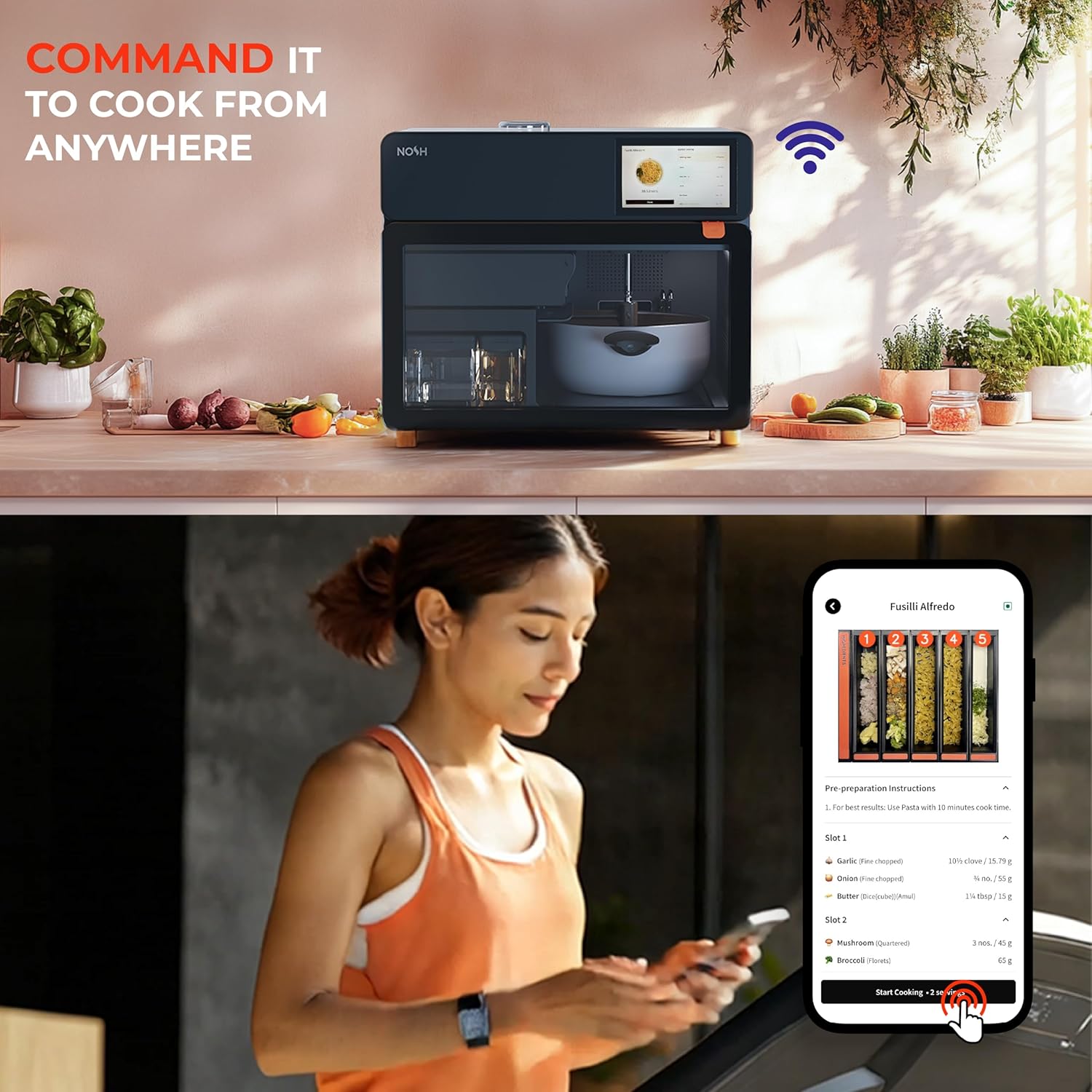
The promise behind all that hardware is equally clear. You prep ingredients, load the machine, select a recipe, and let Nosh take care of heating, stirring, staged ingredient release, oil and water management, and timing. It also uses an onboard camera and app connectivity to monitor progress, push notifications, and support remote control. In other words, it is trying to automate the active management part of stovetop cooking rather than the entire food-prep universe.
That is a much more sensible goal than trying to be a robot chef in the sci-fi sense. It also tells you exactly how to judge it. The real question is not “Can it cook?” It is “Does it save enough of the annoying part of cooking to justify the space, price, and commitment?”
Design and build quality: practical first, flashy second
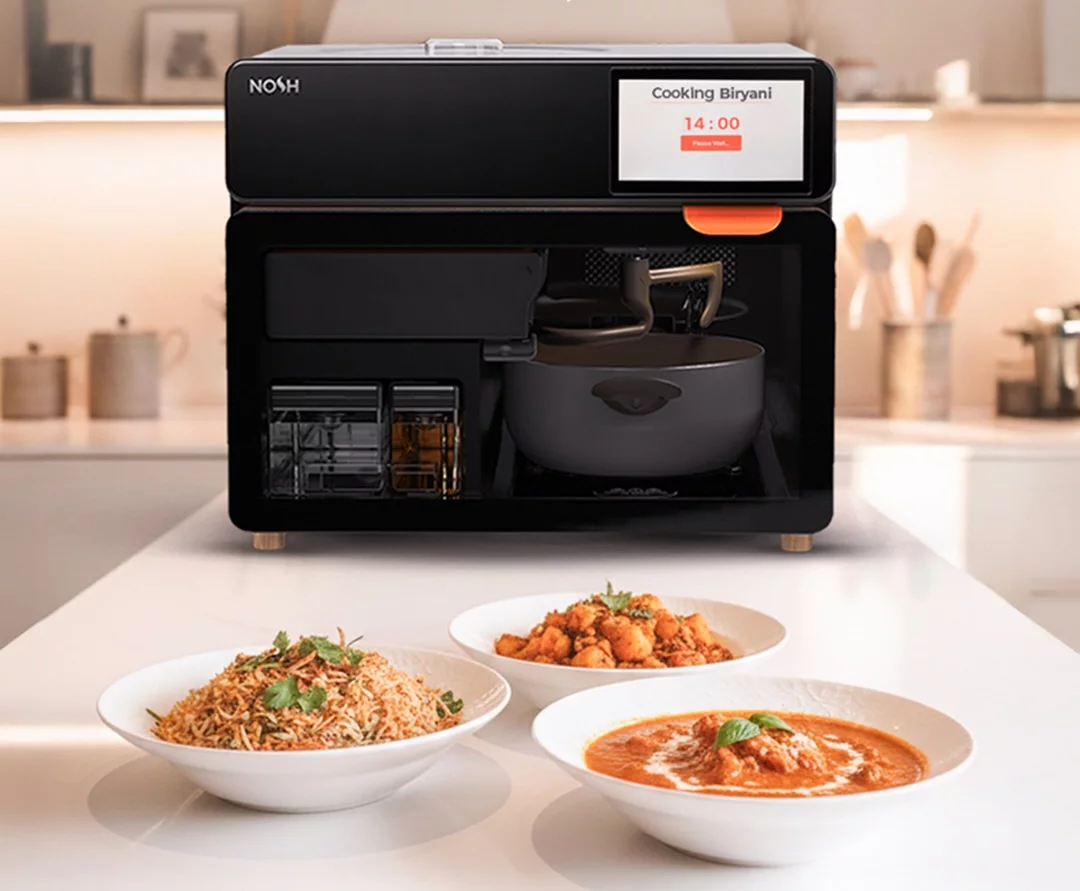
One of the things we appreciated most about Nosh is that it appears to be designed by people who understand that kitchen automation only works if the physical workflow makes sense. Too many futuristic kitchen concepts get lost in the drama of robotics and forget the part where someone has to live with the thing. Nosh feels more grounded than that. The system is centered around a contained cooking chamber, an internal pan and stirring mechanism, ingredient handling, spice delivery, oil and water reservoirs, and app-controlled sequencing. That sounds straightforward, but in this category, straightforward is a compliment.
The part we kept coming back to is the sealed cooking chamber. In practice, that could be one of the most important details here. A device like this cannot survive long if it turns everyday meals into a greasy countertop event or fills the kitchen with uncontrolled splatter and lingering mess. The closed format suggests Nosh is thinking about real ownership, not just demo appeal. It also makes the whole appliance feel more credible. It is easier to imagine using a cooking robot regularly when it behaves like a contained system rather than an exposed science project.
The tray-and-reservoir design also looks better the more you think about it. The five ingredient compartments and eight spice compartments are not there just to sound impressive. They signal that Nosh is built around staged cooking and repetition. This is a machine meant to fit into a routine. You prep, portion, load, and then let it handle the sequence. That is important because the best kitchen convenience products are rarely the ones that eliminate all work. They are the ones that eliminate the work people hate doing over and over.
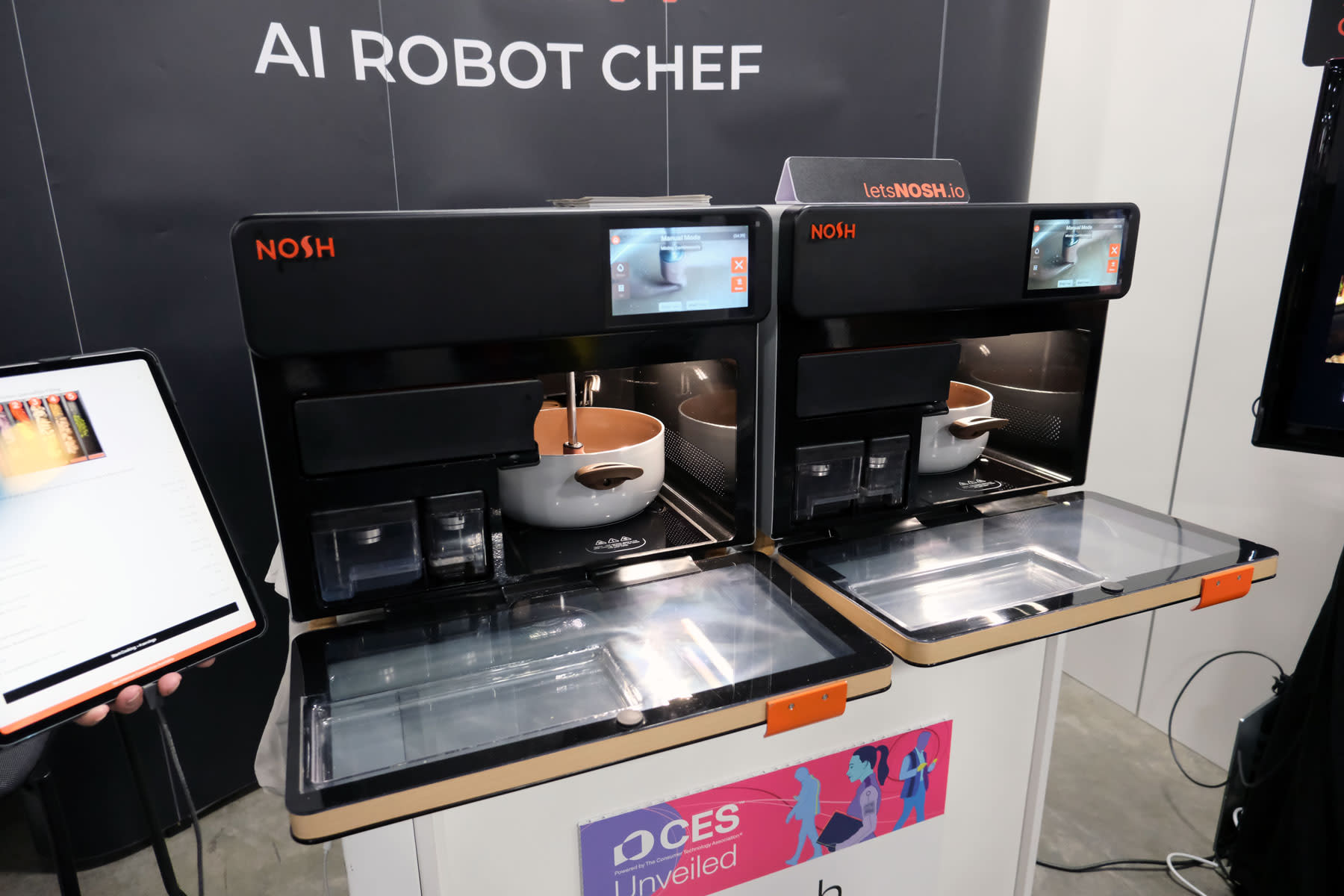
That said, we would not downplay the size issue. At 30 to 33 kg, this is not remotely lightweight. It is also roughly microwave-sized, if not slightly beyond that once you factor in the real footprint of opening, accessing, cleaning, and possibly connecting ducting or ventilation around it. In a spacious modern kitchen, that may be fine. In a smaller kitchen, or one already crowded with high-use appliances, it becomes a much tougher sell very quickly.
Setup and first use: the magic ends where prep begins
This is where we think buyers need to stay grounded. Nosh automates cooking, not preparation. You still need to shop, wash, cut, portion, and load ingredients yourself. The machine does not chop. It does not shape dough. It does not handle everything from raw ingredients with zero involvement. That means the fantasy of “push a button and dinner appears” is not the reality here.
But that does not mean the product misses the point. In daily use, a lot of home-cooking fatigue has less to do with chopping vegetables and more to do with being trapped by the stove. It is the standing, stirring, timing, watching, adjusting, and mentally tracking multiple steps while the rest of life keeps happening around you. That is the friction Nosh is trying to remove, and we think that is a much smarter target than full kitchen automation.
The real value proposition, then, is not zero effort. It is reduced attention. That difference matters. If you are the kind of person who already cooks sauce-led meals often enough to be annoyed by the repetitive management side of them, Nosh starts to look genuinely useful. You can prep ahead, load the trays, and then let the machine take over the part that usually forces you to stay nearby.
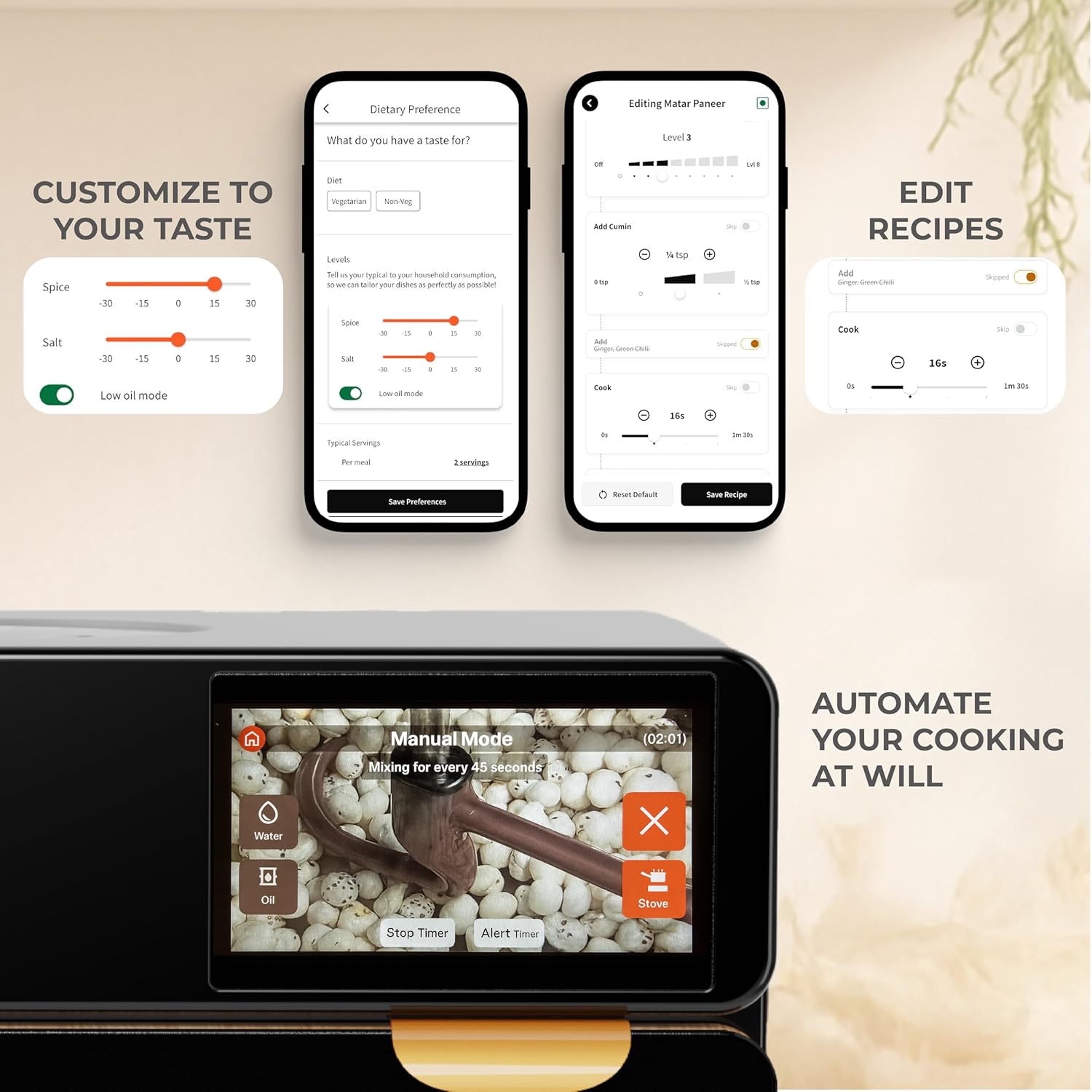
The app features strengthen that case. Remote cooking, scheduled cooking, real-time monitoring, and phone-based controls are actually meaningful here. On many smart appliances, remote control feels like a feature looking for a reason to exist. Here, it is central to the entire pitch. The point is not to start a kettle from another room. The point is to prep once and trigger a fresh meal later without babysitting it.
There is also enough customization in the system to make it feel less brittle than a locked-down recipe robot. Nosh says you can adjust things like salt, spice, fat, consistency, and doneness, and it supports custom or self-programmed recipes. That matters more than it may sound. A cooking system that only works if you surrender entirely to a fixed recipe library tends to age badly. A cooking system that can absorb the way a household actually likes to eat has a much better chance of becoming part of real life.
Still, this is the kind of product where friction will decide everything. If loading trays, refilling spices, cleaning parts, and managing recipes feels smooth, people will use it. If it feels fiddly, even a clever machine gets pushed to the edge of the counter and slowly forgotten.
Real-world cooking performance: where it makes sense, and where it clearly doesn’t
The strongest thing about Nosh is also the easiest thing to understand: it should be best at meals that behave well inside a stirred, heated, contained-pot format. That means curries, gravies, dals, soups, sauces, rice dishes, pulao-style meals, pasta-based dishes, and other one-pot recipes where sequencing, simmering, and controlled agitation do most of the hard work.
For the right household, that is not a narrow list at all. In fact, it could cover a large share of weekday cooking. If the machine handles onion cooking, spice timing, oil release, liquid control, and steady stirring with consistency, then it is doing something that genuinely matters. That is the part we find most persuasive. Nosh is not trying to win by doing everything. It is trying to win by doing an important slice of everyday cooking well enough to matter.
Where we felt less convinced is anywhere the meal depends on physical manipulation or texture outside that format. Nosh itself is clear that it cannot handle foods that need shaping, like roti or idli, and it cannot manage dishes that require flipping, like whole fish. It also does not chop ingredients for you. Those are not small limitations. They define the boundaries of the entire product.
And those boundaries are not just about recipe names. They are about cooking physics. A machine built around heating and stirring inside a chamber will always favor meals that behave well under those conditions. So when you see recipe-count claims, and Nosh’s own pages variously point to 120+, 200+, or 500+ recipes, the headline number is not the useful one. The useful question is much simpler: how many of the meals this appliance can cook well are meals you actually want in your life repeatedly?
That answer will vary hugely from one household to the next. For some people, Nosh could become part of the weekly rhythm almost immediately. For others, it would feel impressive for a month and then uncomfortably specific.
Convenience and ownership: this is where the whole argument lives
What makes Nosh compelling is not the AI branding. It is the routine it is trying to create. Load the ingredients, let the system manage the actual cooking, monitor progress from your phone, and have a fresh meal without standing in front of a stove. If the execution holds up, that is not gimmicky at all. That is genuinely useful.
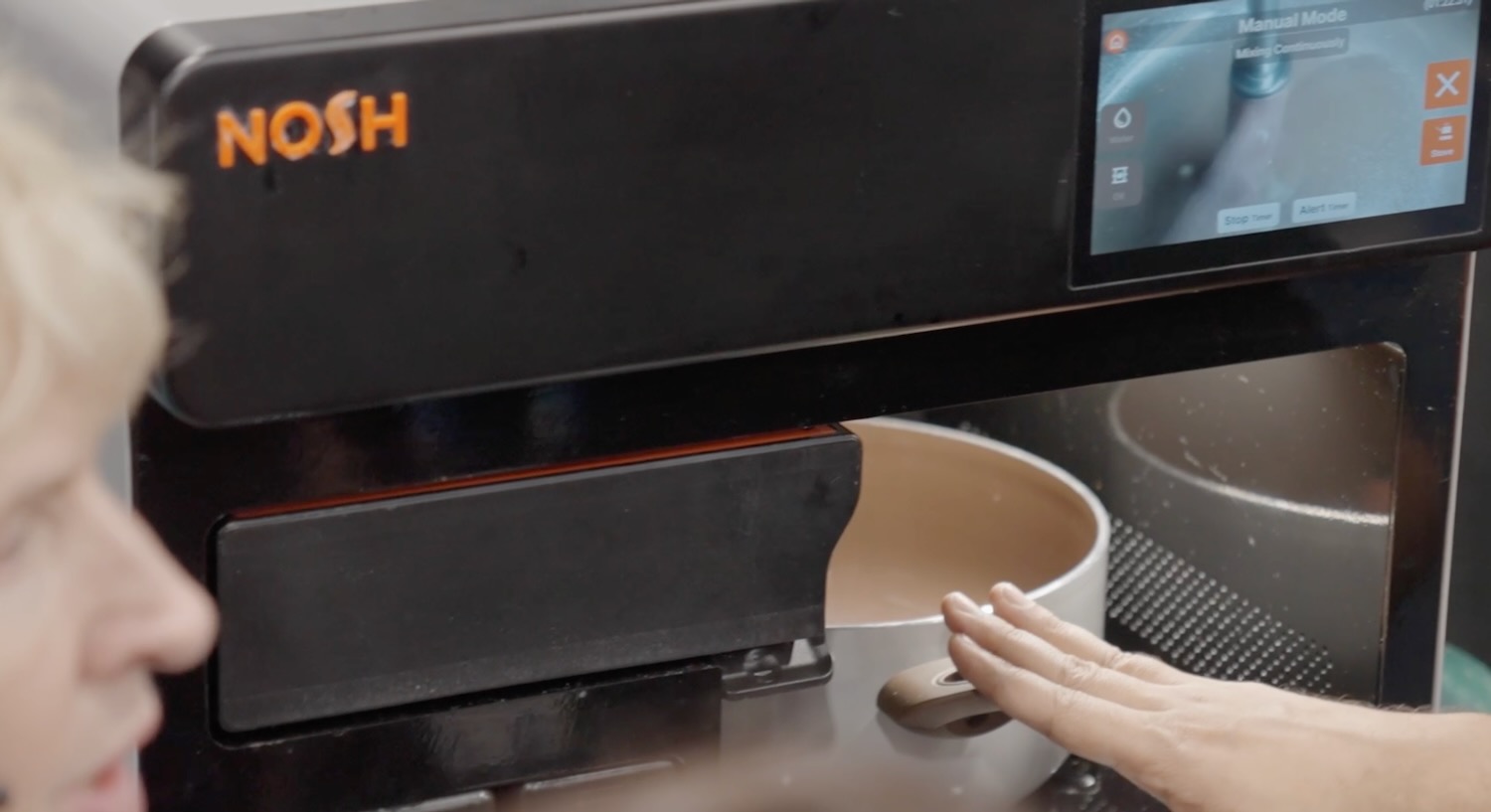
The cleaning story also sounds more realistic than we expected. Removable parts are described as dishwasher-friendly, the chamber can be wiped down, and there is a deep-cleaning mode for the oil and water lines. That is exactly the sort of thing a company in this space has to get right. A cooking robot can have brilliant automation, but if cleanup feels like punishment, usage drops fast.
There are still ownership caveats, though, and they matter. Nosh appears to be an ecosystem product, not just a dumb appliance. There are replaceable parts, maintenance expectations, software dependence, and likely ongoing accessory costs. The company notes that parts like the pan, stirrer, and ingredient tray are designed with about a one-year lifespan in mind before replacement. That does not make the system a bad buy, but it does make it a more involved one than a standard cooker or air fryer.
The software angle is another real consideration. A product like this depends on the hardware, the app, the recipe system, and long-term support all staying healthy together. Traditional appliances can survive being boring. Connected robots cannot. If any part of that chain feels shaky over time, user confidence drops quickly.
So while the convenience promise is strong, we would still describe Nosh as a commitment purchase. You are not just buying a machine. You are buying into a workflow.
Where Nosh feels genuinely thoughtful
A few details make Nosh feel smarter than the average premium appliance launch.
First, the focus is disciplined. Instead of trying to pretend it can do everything, the machine is built around a believable type of cooking. That clarity matters. Products usually fail when the promise is too broad for the hardware.
Second, the spice, oil, and water systems suggest that whoever designed it understands what actually makes one-pot meals tedious. It is not usually the recipe concept itself. It is the timing and repetition. Automating those small but constant interventions could be exactly what makes the machine feel valuable rather than merely clever.
Third, the idea of prepping trays in advance is more important than it sounds. Once we thought about how people actually use high-convenience kitchen gear, that part started to look central. The more Nosh can turn dinner into a “load now, eat later” routine, the more it moves from novelty to utility.
Where the first-generation rough edges still show
This still reads like a first-generation category creator, and we think buyers should go in with that mindset.
The recipe-count inconsistency is not a disaster, but it is sloppy. When one part of the product story says 500+ recipes and another still talks about 120+ or 200+, it becomes harder to judge what the living platform really looks like. For a product whose appeal depends heavily on meal breadth, that mixed messaging is not ideal.
The size is another very real friction point. This is not a compact helper. It is a large appliance with substantial weight and a semi-permanent presence. Plenty of kitchens simply will not absorb that gracefully.
Then there is the basic category risk: a machine this ambitious has more ways to frustrate than a normal appliance. Reliability matters more. Software matters more. Customer support matters more. Long-term ownership matters more. That does not mean Nosh will fail those tests. It just means buyers are taking them earlier than they would with a more mature product category.
Value for money: exciting, but clearly not for everyone
Nosh is priced like a premium statement appliance. Depending on the market, it sits around Rs. 89,999 in India, and launch pricing in the US has been positioned around $1,499 on Kickstarter with a higher intended retail figure afterward. That is a serious amount of money for something that still does not replace your stove, your prep tools, your oven, or every other high-use appliance in the kitchen.
So is it worth it? Our answer is very buyer-specific.
For the average person, not yet. It is too expensive, too specialized, and still too dependent on unanswered long-term ownership questions.
For the right person, though, we can absolutely see the logic. If your household eats the kinds of meals Nosh is built to handle, if you cook often enough to be tired of the repetitive stovetop management, if you have the space, and if you are comfortable adopting an evolving system rather than a simple plug-and-go gadget, then the value case becomes much stronger. In that scenario, you are not comparing it with a single appliance. You are comparing it with the drag of weeknight cooking, recurring takeout spend, and the number of times fresh home food loses to convenience because the process feels annoying.
That is where Nosh starts to look less like an indulgence and more like a focused luxury tool.
Who should buy it
We would point Nosh toward people whose first reaction is not “wow, a robot chef,” but “this actually fits the way we eat.” If your normal routine already includes curries, gravies, dals, rice dishes, pasta sauces, soups, and similar meals several times a week, Nosh could make a real difference. It also makes sense for busy households that want fresher food than microwave shortcuts can offer but no longer want dinner to mean standing over the stove every evening.
We also think it has obvious appeal for genuine early adopters. Some buyers enjoy getting into a new category before it becomes ordinary. Nosh is very much that kind of product. For them, the novelty is not fluff. It is part of the attraction.
Who should skip it
We would skip Nosh if your kitchen habits revolve around crisp textures, dry-heat cooking, grilling, flipping, dough work, or ultra-fast minimal-prep meals. We would also skip it if you already know you dislike maintenance-heavy systems, app dependence, or anything that asks you to organize ingredients in advance.
And if your kitchen is short on space, we would be ruthless here: do not force this fit. A product this large only works if it can live comfortably where you actually need it.
Mainstream cautious buyers should probably wait as well. Not because the idea is weak, but because products like this often become much easier to recommend once the second generation arrives and the real ownership lessons have been learned.
Final verdict
Nosh is one of the smartest kitchen-tech ideas we have seen in a while because it aims at the right problem. It is not trying to fake a fully robotic kitchen. It is trying to automate the repetitive, timing-sensitive, attention-heavy part of home cooking inside a contained appliance, and that is a much more believable ambition.
What stood out to us most is that the concept has real practical gravity. The hardware sounds purposeful. The workflow makes sense. The best-case ownership scenario is easy to imagine: ingredients prepped in advance, dinner cooking with minimal supervision, and the daily burden of one-pot home cooking cut down in a meaningful way. That is not futuristic nonsense. That is a real value proposition.
At the same time, the limits are not subtle. This machine is large, expensive, prep-dependent, and much more specialized than the broad “AI robo-chef” framing might suggest. It will not suit every kitchen, every cooking style, or every buyer temperament.
Our take is simple. Nosh looks like one of the most promising first-generation cooking robots on the market, and for the right household, we can absolutely see it becoming a favorite. But it still feels like a first-generation product. We like the direction a lot. We just would not confuse focused promise with universal appeal.

FAQ
What is the Nosh AI robo-chef?
Nosh is a countertop cooking robot that combines induction heating, automated ingredient handling, stirring, app control, and an onboard monitoring system to cook selected meals once the ingredients are loaded.
What meals is Nosh best at?
It appears best suited to one-pot, stirred, sauce-led meals such as curries, gravies, soups, pasta dishes, rice dishes, and similar recipes where sequencing and simmer control matter more than flipping or crisp finishing.
What can Nosh not do?
It does not chop ingredients, and it cannot handle foods that need shaping or flipping, such as roti, idli, or whole fish.
Does Nosh work without internet?
Yes. Preloaded recipes can run offline, though internet access is needed for recipe downloads, updates, and support-related features.
Can I control it from my phone?
Yes. The app supports features such as recipe selection, monitoring, notifications, and remote cooking control.
How big is it?
The listed dimensions are roughly 525 x 460 x 550 mm, and the machine weighs around 30 to 33 kg, so this is a serious countertop appliance, not a compact gadget.
How many recipes does it have?
That depends on which product material you look at. Nosh has referenced 120+, 200+, and 500+ recipes in different places, so the catalog is clearly evolving, but the messaging is not perfectly consistent.
Is it hard to clean?
The removable parts are described as dishwasher-friendly, the chamber can be wiped down, and there is a deep-clean mode for the oil and water lines. That sounds reasonable, though this still looks like a product that needs a bit more ownership commitment than a normal appliance.
Is Nosh worth the money?
For the right buyer, possibly yes. For the average buyer, probably not yet. It makes the most sense if you already cook the exact kinds of meals it is designed around, have the space, and are comfortable investing in an early-stage premium appliance system.
Explore the Nosh AI Robo-Chef Gallery
Every image from this article, gathered in one clean place. Tap any photo to open it larger.