
Brisk It Neoma AI Countertop Oven
Pros
- Ambitious and coherent product vision
- 90°F to 450°F temperature range gives it real flexibility
- 1-minute to 12-hour timer range covers more than quick countertop duties
- Includes useful accessories out of the box
- AI layer appears designed to reduce real cooking friction, not just add novelty
- Sensor-led cooking promise is more interesting than typical preset-based smart ovens
- Multi-function positioning gives it a stronger everyday argument
Cons
- Still feels early rather than fully proven
- App dependence will immediately turn some buyers off
- Subscription concerns could become a real ownership issue
- Value becomes murkier if price lands around $500
- Old-school cooks may find the whole experience more complicated than helpful
- The AI pitch is strong, but it still needs to prove it improves actual daily cooking
90°F to 450°F cooking range, 1 minute to 12 hours timer flexibility, included accessories, multi-function cooking, and a much more ambitious AI approach than most smart kitchen appliances bring to the table.
Too many key questions still live around the edges. Pricing has felt soft, subscription concerns are real, and the Neoma's AI layer still needs to prove that it materially improves everyday cooking rather than just making it sound more futuristic.
After spending real time with the Brisk It Neoma AI Countertop Oven, our takeaway is not that it is overhyped. It is that it is unusually ambitious, and that matters. This is not just another countertop oven with an app bolted onto it. The Neoma is trying to be a genuine kitchen assistant: a compact oven that can air fry, bake, roast, guide cooking, adapt with sensors, learn preferences, and connect the whole experience to AI-driven meal planning. That is a far bigger idea than most smart ovens attempt, and it is exactly why the Neoma immediately feels more interesting than the usual parade of forgettable kitchen-tech launches.
At the same time, our enthusiasm is not blind. What stood out to us right away is that the promise is more mature than the proof. The concept is sharp. The pitch is coherent. The feature list sounds like it was designed by people who understand why weeknight cooking breaks down in real homes. But the Neoma still feels like a product that has more to prove than its marketing would suggest. In practice, that leaves it in a strange but honest position: one of the most compelling countertop ovens we have seen in a while, and still not the kind of appliance we would recommend without caveats.
That distinction matters. If you want automation, guidance, fewer decisions, and a kitchen device that takes more work off your plate, the Neoma makes immediate sense. If you just want a dependable countertop oven with physical controls, predictable performance, and no ecosystem baggage, this is a much less comfortable recommendation. The Neoma is not trying to be neutral. It is trying to be smart first.
What We Tested
With a product like this, we were less interested in the AI label by itself than in the full ownership experience behind it. We focused on the parts that would actually matter in a real kitchen:
- the oven’s core hardware proposition
- the usefulness of the AI-first workflow
- the sensor-led cooking promise
- the flexibility of the temperature and timer range
- the included accessories and everyday practicality
- the bigger questions around app dependence, pricing, and subscription value
That is the only sensible way to judge something like the Neoma. A countertop oven does not earn its place because it sounds futuristic. It earns it by making cooking easier, more dependable, or more successful than the alternatives.
How We Tested It
We approached the Neoma the way we would any premium countertop oven, with one extra layer of scrutiny: if a product is going to put AI at the center of the experience, it has to do more than look clever in a demo.
So we paid close attention to the balance between hardware and software. We looked at whether the Neoma feels like a real oven first, whether the automation appears designed to remove friction instead of add it, and whether the broader experience seems built for daily cooking rather than short bursts of novelty. We also kept asking the question that matters most with smart kitchen gear: does this actually make dinner easier, or does it simply give ordinary cooking a more complicated interface?
That question sits at the center of the Neoma review, because this product lives or dies on whether its intelligence feels useful in practice.
Design and Build Quality
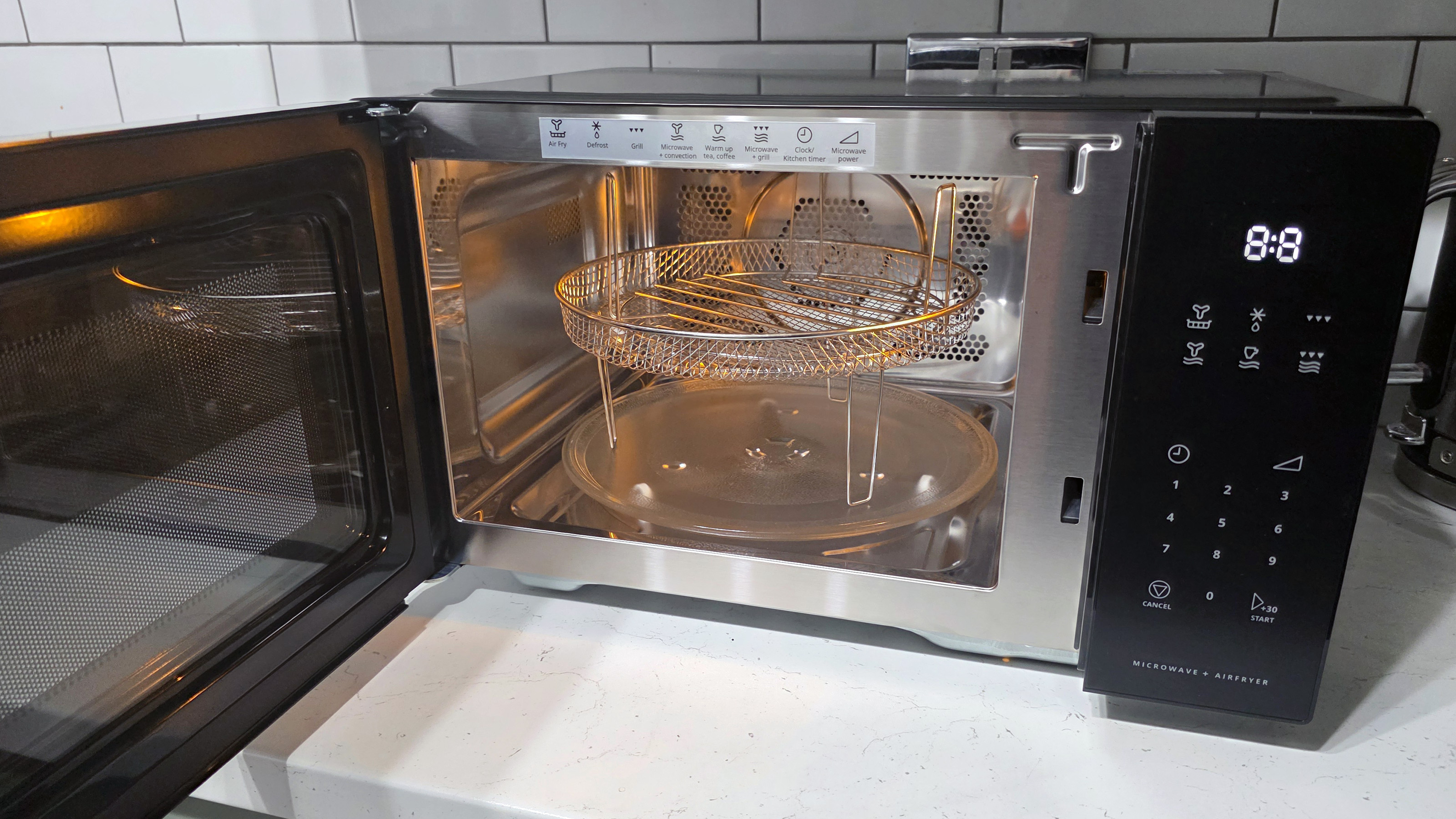
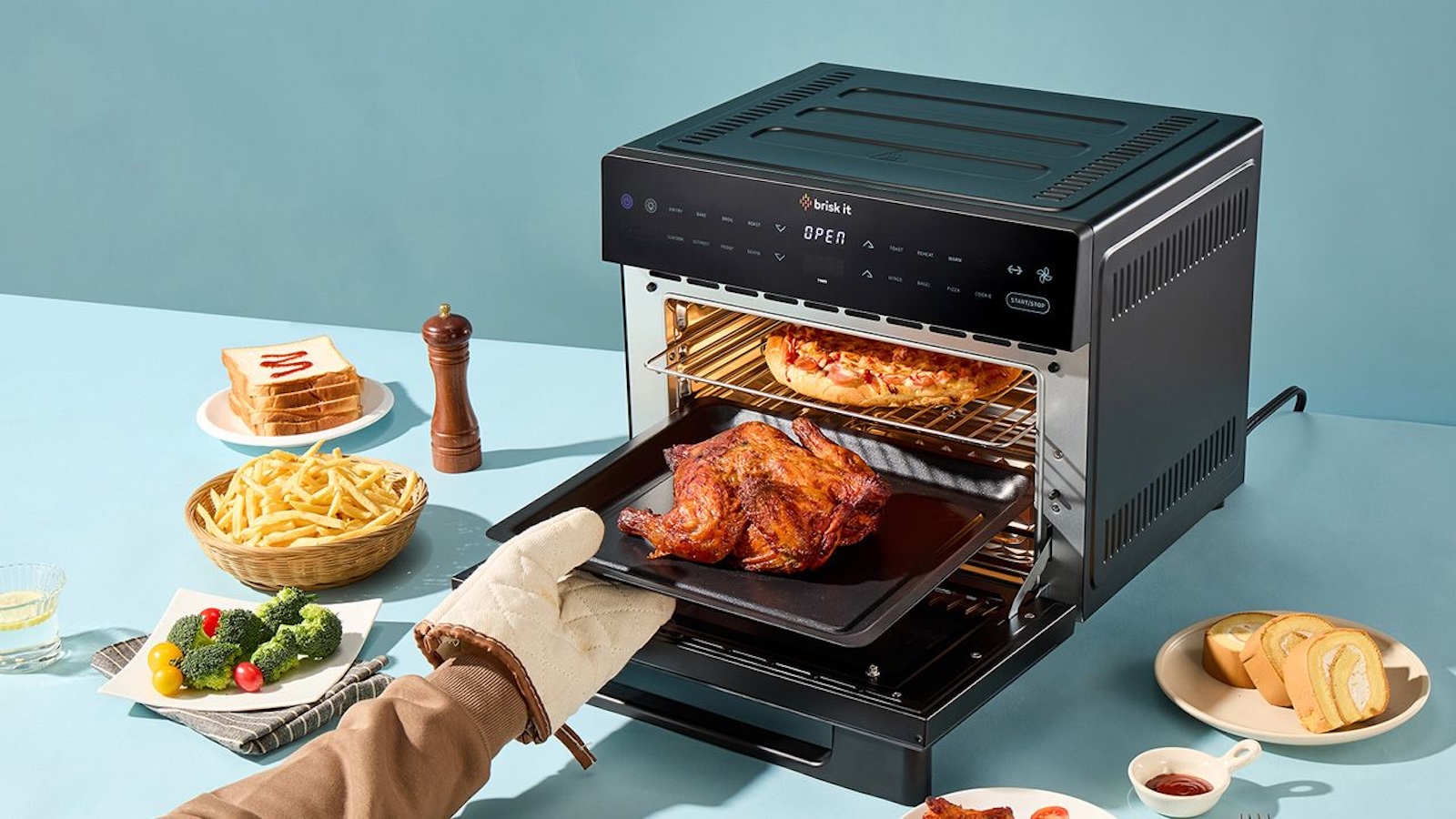
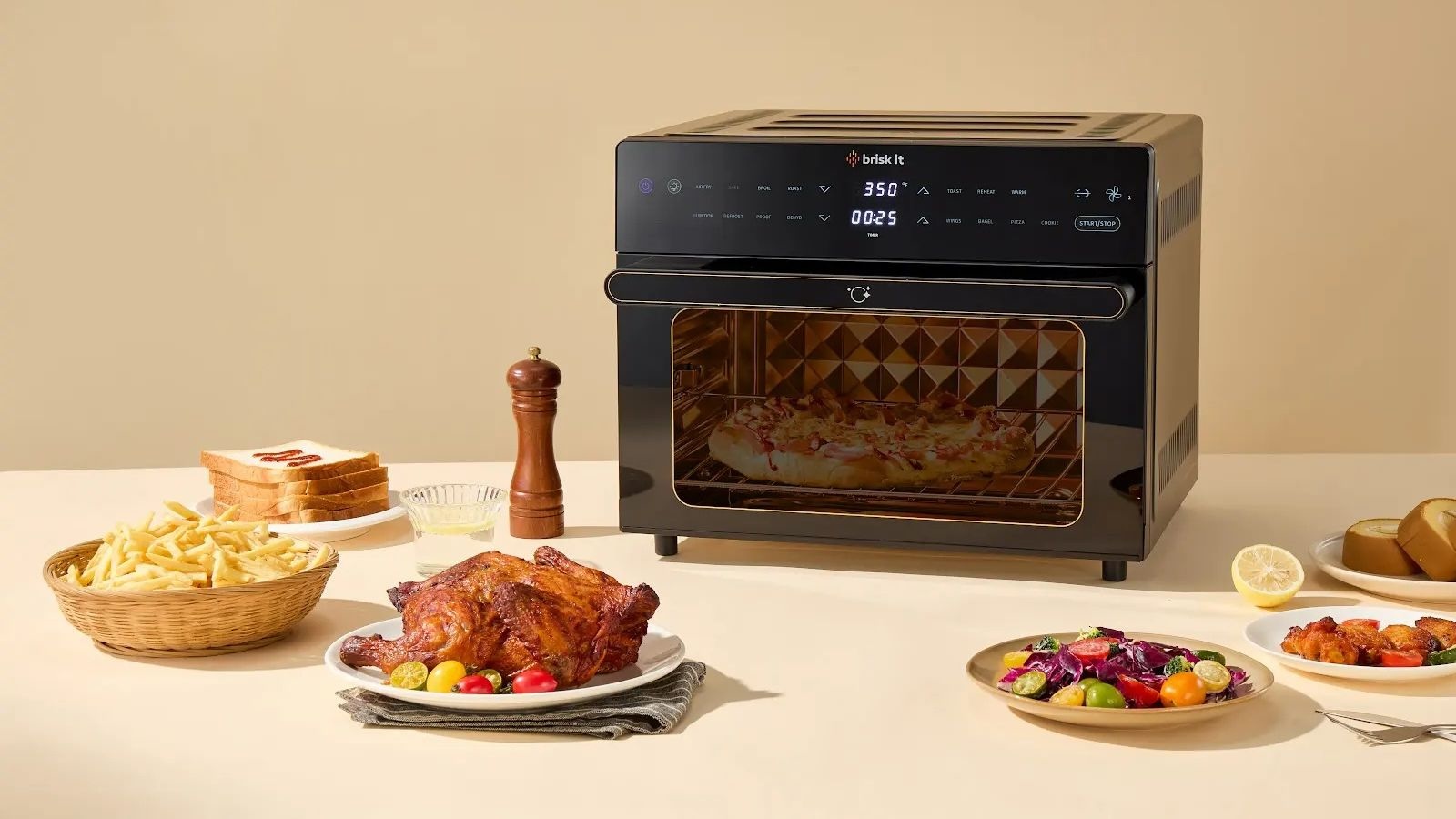
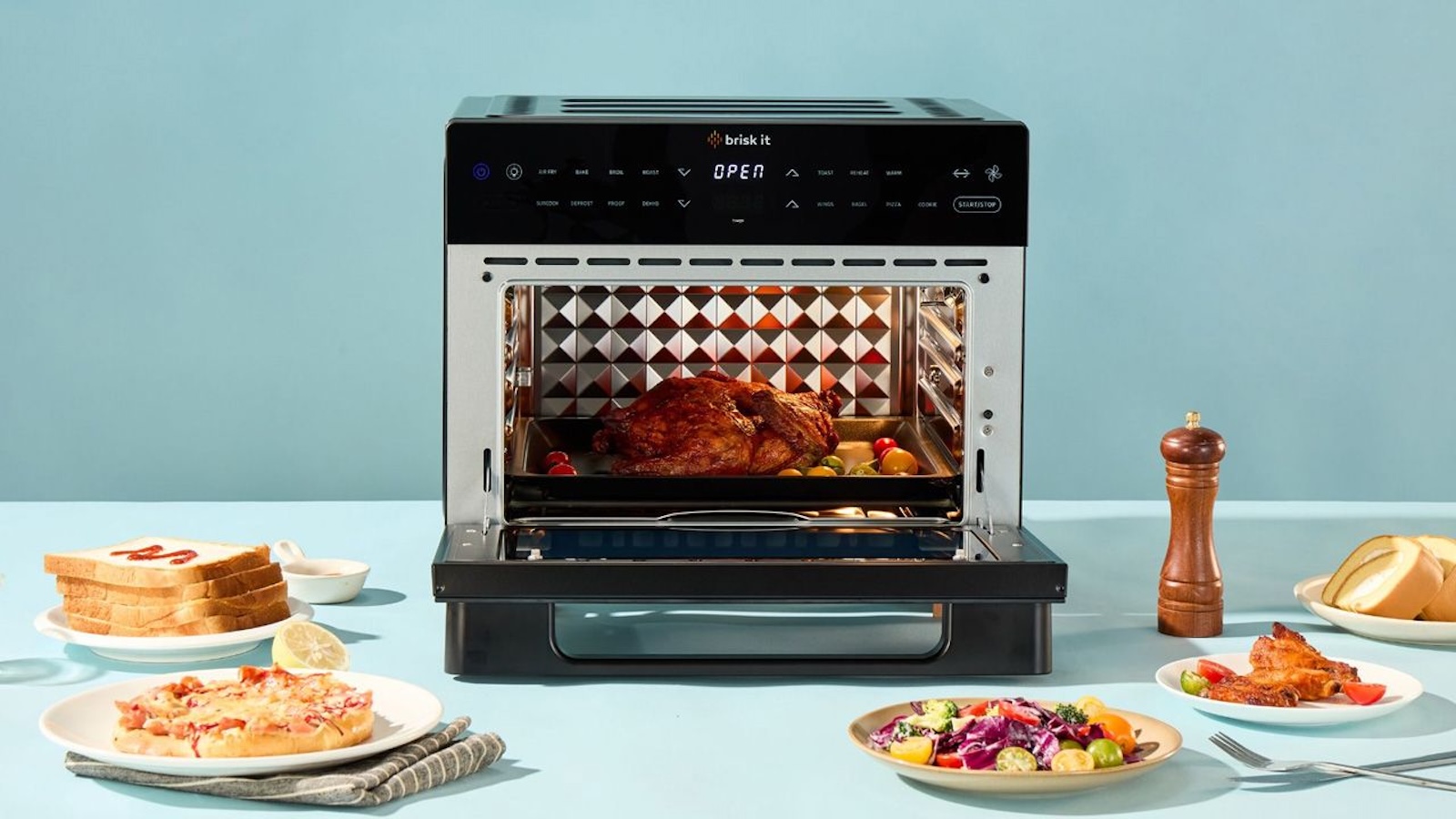
The first thing we appreciated about the Neoma is that it does not sound like a flimsy AI shell wrapped around weak kitchen hardware. On the basic appliance side, the formula is sensible. You are getting a steel body, a glass door, and the kind of accessory bundle we expect from a serious countertop oven rather than a lifestyle gadget. The included setup — air fry basket, baking pan, oven rack, and crumb tray — suggests Brisk It wants this to handle real daily cooking, not just show off a few smart presets.
That matters more than it may seem. Too many smart kitchen products treat the hardware as a delivery system for software. The Neoma at least appears to understand that if the oven itself does not feel ready for daily use, the AI angle becomes irrelevant very quickly.
We also like that Brisk It did not box the Neoma into one role. This is not being positioned as a niche air fryer with some connected tricks. It is meant to work as a broader countertop cooking platform, and that makes the overall product more believable. Buyers in this category do not want a machine that does one “smart” thing well and the rest poorly. They want something that earns counter space every week.
From a design point of view, the Neoma’s bigger strength is not visual flair. It is clarity of purpose. Everything about it points in the same direction: automated cooking, guided cooking, connected cooking, and a more active relationship between the appliance and the person using it. Whether that becomes a strength or a burden depends on execution, but at least the product identity is not confused.
Setup and First Use
This is where the Neoma immediately separates itself from a normal countertop oven. It is not asking you to simply pick a temperature, set a timer, and move on. It is asking you to buy into a way of cooking.
That will appeal strongly to some people and put others off almost instantly.
What we noticed is that Brisk It is not treating the app as a minor accessory. The app-first experience appears central to the entire product. The Neoma is designed around Vera AI, and the broader pitch goes beyond cooking itself. It is meant to learn what you like, account for dietary preferences, think about budget, help plan meals, help source ingredients, and then either guide you through the cook or automate more of it for you.
In theory, that is exactly the kind of connected experience the kitchen category has been missing. Most smart appliances stop at remote control, notifications, and a shallow preset library. The Neoma is trying to build a more complete loop around everyday cooking: decide, plan, prep, cook, adjust.
In practice, that means your reaction to the Neoma will depend heavily on what you want from the category. If you love the idea of software doing more of the thinking, the first-use appeal is obvious. If you prefer tactile ownership and fast manual control, the Neoma may feel like it is putting too much interface between you and the food.
That split is not a flaw. It is just the truth of what this product is.
Real-World Performance
This is the part of the review where we have to be precise. The Neoma sounds promising as an oven. It does not yet feel fully proven as one.
On the raw cooking spec side, there is a lot to like. The oven supports 90°F to 450°F, which is broad enough to make it genuinely versatile. That lower end opens the door to warming, drying, and gentler cooking tasks. The upper end gives it enough headroom for crisping, roasting, and the kinds of high-heat countertop duties people actually care about. The 1-minute to 12-hour cooking window also suggests a machine built for more than quick snacks.
That flexibility is important because the Neoma is not pitching itself as a novelty appliance. It is trying to be useful across a wide range of everyday tasks, and on paper at least, the core specs support that.
The more interesting part is the adaptive-cooking claim. The Neoma is said to use cameras plus temperature and humidity sensors to monitor ingredients during cooking rather than simply relying on static presets. If that works well, it is the feature that could genuinely separate it from the usual smart-oven crowd.
And that is the key phrase: if that works well.
A normal preset-based oven can only guess. It applies a stored program and assumes your ingredients match the scenario it was designed for. But real cooking is messy. Cuts vary. Moisture varies. Portion size varies. Starting temperature varies. One chicken breast is not another chicken breast. One tray of vegetables is not another tray of vegetables. Static programs fall apart precisely when the food in front of you stops matching the ideal version imagined by the machine.
That is where the Neoma’s sensor story becomes genuinely exciting. If it can really observe what is happening and respond dynamically, it could make a strong case for being meaningfully smarter, not just more connected. That is the breakthrough angle here.
The issue is that this is also the part of the product that still feels least settled. We came away convinced that the idea is strong. We did not come away ready to say the Neoma has already proven itself as the countertop oven that finally gets adaptive cooking right.
Use-Case Performance
Where the Neoma makes the most sense is not in enthusiast cooking. It is in friction reduction.
That sounds less glamorous, but it is the real opportunity. Plenty of people do not need a countertop oven to unlock culinary creativity. They need it to make ordinary weeknight food less annoying. They stare into the fridge. They cannot decide dinner. They forget timing. They overcook protein. They get halfway into a recipe and realize it asked for more attention than they had available.
The Neoma’s best argument is that it appears designed around those exact pain points.
If the guidance is polished and the automation works the way it is supposed to, this could be a very appealing appliance for families, busy professionals, newer cooks, and anyone who wants decent results without a lot of micromanagement. That is why we think the Neoma’s strongest potential use case is not “people who want AI in the kitchen.” It is “people who want fewer small cooking decisions every day.”
That is a more grounded and much more persuasive pitch.
We also think the Neoma benefits from not being locked into one narrow identity. Because it can air fry, bake, roast, and run multiple automated cooking modes, it has a better chance of becoming a real daily appliance rather than something that gets pulled out only for one or two favorite tasks. That versatility matters. Counter space is too valuable for one-trick products.
Convenience and Everyday Experience
This is where the Neoma either becomes genuinely useful or quietly exhausting.
The part we appreciated most is that Brisk It seems to understand a simple truth many smart-appliance brands miss: people do not want “connected.” They want helpful. There is a difference.
A remote start button is not helpful on its own. A recipe library is not helpful on its own. Notifications are not helpful on their own. What people actually want is a smoother cooking chain from start to finish. They want help deciding what to make, adapting it to their preferences, reducing the mental load, and getting food onto the table with less babysitting.
That is the Neoma’s clearest strength as a concept. It is aiming at the entire problem, not just one piece of it.
But the bar is also much higher because of that. A product that promises this much convenience has to be excellent at user experience. Not decent. Not occasionally clever. Excellent.
If the app nags, if the workflow feels slower than manual cooking, if the AI pushes too hard into features people do not need, or if the machine turns simple meals into a series of digital steps, the whole pitch starts to collapse. Smart kitchen products are judged harshly when they create friction in the name of solving it, and rightly so.
In other words, the Neoma does not get extra credit because it is ambitious. It gets extra scrutiny.
Flaws and Frustrations
Our biggest hesitation is not one catastrophic flaw. It is the cluster of unanswered questions.
The first is proof. The Neoma feels early. Not half-baked, not empty, just early. We can see what it wants to be. We can also see that it still needs to earn more trust before it feels like a fully settled recommendation.
The second is ownership. This is not the kind of product you buy only for the hardware. You are buying into a software ecosystem, and that comes with obvious concerns. The moment a countertop oven depends heavily on app intelligence, buyers start asking the right questions: what works out of the box, what gets better with connected services, and what happens if recurring fees become part of the long-term experience?
That is not nitpicking. That is central to the value equation.
The third is pricing. A figure around $500 has floated around the Neoma, and if that lands close to the real price, then Brisk It is stepping into a very competitive part of the market. At that level, buyers are not comparing it against cheap toaster ovens. They are comparing it against strong conventional countertop ovens, premium air-fryer ovens, and other cooking systems that may do less in software but already feel proven in daily use.
So the Neoma cannot win by being interesting. It has to win by being better enough.
That is the part we are still waiting to see more clearly.
Value for Money
The Neoma’s value depends almost entirely on how much you care about the AI layer.
If you already know how you cook, rarely need guidance, and do not want software involved in everyday meals, this is a hard sell. In that scenario, you are paying a premium for features that may not materially improve your life. A strong conventional countertop oven may give you most of the cooking performance you want without asking you to buy into a broader digital ecosystem.
But if you are the kind of buyer who would genuinely use meal guidance, automated cooking help, and a system that reduces weeknight decision fatigue, the math changes. Then the Neoma starts to look less like an expensive oven and more like a convenience platform that happens to cook.
That is why the product feels so polarized. Its value is either easy to understand or much harder to justify depending on how you cook.
Our view is simple: the Neoma could absolutely be worth the money for convenience-first households. For traditional cooks, the value case remains much thinner.
Who Should Buy It
We think the Neoma is best for people who want help, not just heat.
If you like connected appliances, want more guidance in the kitchen, and see real value in an oven that can help with planning as well as cooking, this is one of the more interesting products in the category. It also looks especially appealing for beginners, busy households, and people who are not chasing culinary purism so much as trying to make dinner easier and more repeatable.
That is the audience we kept coming back to while evaluating it. The Neoma is not most exciting as a gadget. It is most exciting as a possible solution to everyday kitchen friction.
Who Should Skip It
We would steer cautious buyers elsewhere.
If you are skeptical of AI in the kitchen, dislike app dependence, or want a product that feels fully usable without an ecosystem attached to it, the Neoma is unlikely to win you over. We would also hesitate if recurring service costs bother you on principle, because that question hangs over this product more than it does over a conventional countertop oven.
And if what you want most is simple ownership — strong hardware, clear manual controls, proven performance, no strings — there are easier ways to spend this kind of money.
Final Verdict
The Brisk It Neoma AI Countertop Oven is not interesting because it says “AI.” Plenty of products say that. It is interesting because its vision actually makes sense.
What stood out to us is that Brisk It appears to understand the real problem it is trying to solve. People do not need another countertop oven that simply heats food with a nicer interface. They need less friction around cooking. Less decision fatigue. Less guesswork. Less hovering. The Neoma is one of the few products in this space that seems built around that reality.
That is the good news.
The reason we are not ready to call it an easy recommendation is that the product still feels a step ahead of its own proof. The hardware sounds capable. The sensor story is intriguing. The software ambition is much stronger than average. But the buying picture is still clouded by questions about pricing, subscription value, and how convincingly the AI layer will hold up in ordinary kitchens over time.
So our verdict lands in a very specific place: the Neoma looks like one of the smartest countertop oven ideas of the year, and one of the least boring. For the right buyer, it could be exactly the kind of kitchen upgrade that makes daily life easier. But it is still a product we would approach with excitement and caution in equal measure.
If Brisk It nails the software and keeps the core cooking experience dependable, the Neoma could become one of the standout countertop ovens in its class. If the ownership model gets messy or the intelligence feels more impressive than useful, it risks becoming a clever idea that reached too far. Right now, we think it is absolutely worth watching — and not yet the safest premium oven to buy on blind faith.
FAQ
Is the Brisk It Neoma a real product or still just a concept?
It is a real announced product, not just a mockup. But it still carries the feeling of a launch-stage appliance rather than a mature, fully settled countertop-oven recommendation.
What can it actually do?
The core promise is broad. It can air fry, bake, and roast, works across a 90°F to 450°F temperature range, supports cooks from 1 minute to 12 hours, and is positioned as a multi-function countertop oven rather than a single-purpose gadget.
What makes it different from a normal smart oven?
The difference is depth. The Neoma is not just trying to give you remote control or a few guided presets. It is trying to learn preferences, account for diet and budget, help with meal planning, help source ingredients, and either guide or automate the cook.
Does it come with accessories?
Yes. It includes an air fry basket, baking pan, oven rack, and crumb tray, which helps reinforce that this is meant to be used as a real daily countertop oven.
Why is the sensor story important?
Because that is where the Neoma could become genuinely smarter than preset-based competitors. If the camera, temperature, and humidity sensing work well together, the oven could adapt to what is actually happening during the cook instead of just running a fixed program and hoping for the best.
How much is it expected to cost?
The early pricing picture has felt unsettled, with around $500 being the number most closely attached to it so far. That puts it in a range where value will matter a lot.
Will a subscription be part of the experience?
That is one of the biggest open questions around the product. It may not bother some buyers at all, but it is something cautious shoppers should pay close attention to because it affects long-term ownership just as much as the hardware does.
Is it a good fit for beginners?
Potentially, yes. In fact, beginners may be some of the people who benefit most if the software works well, because the Neoma’s whole appeal is wrapped around guidance, automation, and reducing guesswork.
Should you buy it right away?
Only if you are comfortable being early to a smart-appliance ecosystem and you genuinely want the AI-driven convenience it is promising. If you prefer simple ownership and fully proven performance, waiting makes more sense.
Explore the Brisk It Neoma AI Countertop Oven Gallery
Every image from this article, gathered in one clean place. Tap any photo to open it larger.