
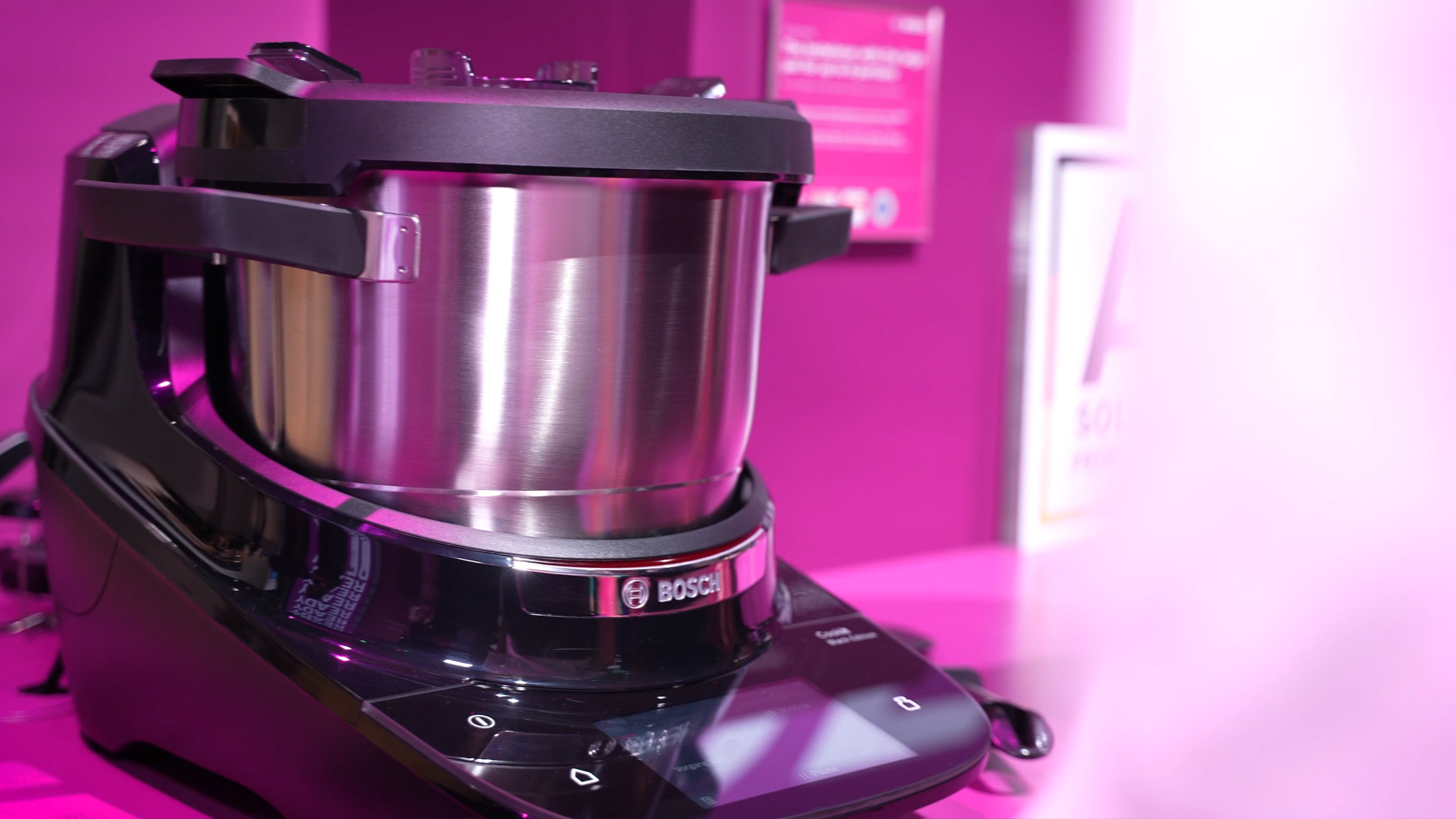

Bosch Cook AI
Pros
- Feels more useful than gimmicky. Bosch Cook AI targets real cooking frustrations like timing, doneness, and coordinating multiple parts of a meal instead of just throwing recipes at you.
- Built on real hardware, not AI hype alone. The biggest strength here is that it works alongside Bosch appliance controls, pan-temperature management, and probe-based tracking, which gives the concept real substance.
- Outcome-focused guidance makes sense in daily use. Starting from what you want the food to become, rather than forcing you through rigid preset logic, feels like a smarter way to guide home cooks.
- Could reduce kitchen stress for less confident cooks. For people who struggle with juggling heat, timing, and multiple dishes at once, this kind of assistance has obvious appeal.
- Bosch already has the ecosystem to support it. Cook AI feels more believable because Bosch is building on Home Connect and existing sensor-led cooking features rather than starting from scratch.
Cons
- Too dependent on the Bosch ecosystem. The best version of the experience clearly belongs to buyers with compatible Bosch appliances, sensors, and a willingness to stay inside that system.
- Still feels more promising than proven. What we have so far is an impressive concept and a polished rollout story, but not the kind of long-term everyday proof that makes this feel fully settled.
- Not a simple one-product buy. This is not something you can judge like a normal oven or countertop appliance, which makes the value proposition less straightforward.
- Could introduce friction instead of removing it. App setup, device pairing, sensor reliance, and automation only feel helpful if Bosch makes the whole experience smooth enough in real daily use.
- Limited appeal for confident or traditional cooks. If you already trust your instincts in the kitchen or dislike connected workflows, Cook AI may feel unnecessary rather than essential.
The concept feels grounded in real kitchen hardware. Bosch is not asking AI to do all the work on its own. It is pairing software with actual appliance controls, pan-temperature regulation, probe data, and live cooking guidance .
The best version of the experience depends heavily on compatible Bosch appliances, sensors, app setup, and Bosch's post-launch execution . Right now, part of the promise still lives in the demonstration rather than in everyday long-term ownership.
Bosch Cook AI is one of the few kitchen AI ideas we have spent time with recently that actually feels connected to the way people cook. It is not another recipe chatbot dressed up as innovation, and it is not a countertop appliance trying to justify its price with a trendy label.
What Bosch is building here is a live cooking layer inside Home Connect that can look at your ingredients, understand the result you want, factor in what compatible Bosch appliances are doing, and guide the process as you cook. After getting a close look at how it works, our view is fairly clear: this is one of the most practical AI-led kitchen concepts we have seen in a while, but it is also only truly compelling if you are willing to live inside Bosch’s connected world.
That distinction matters. Bosch Cook AI is not the story on its own. The story is the broader Bosch stack around it: connected ovens, sensor-driven cooking tools, cooktops with temperature management, probes, app control, and the company’s longer-running Home Connect platform.
What stood out to us is that Bosch is not trying to invent a fantasy kitchen from scratch. It is taking hardware and software that already exist, then trying to turn them into something more adaptive, more responsive, and less rigid than traditional guided cooking. That makes the idea more credible than most AI kitchen launches. It also makes the catch much more obvious. If you are not buying into Bosch’s ecosystem, a lot of the value starts to evaporate.
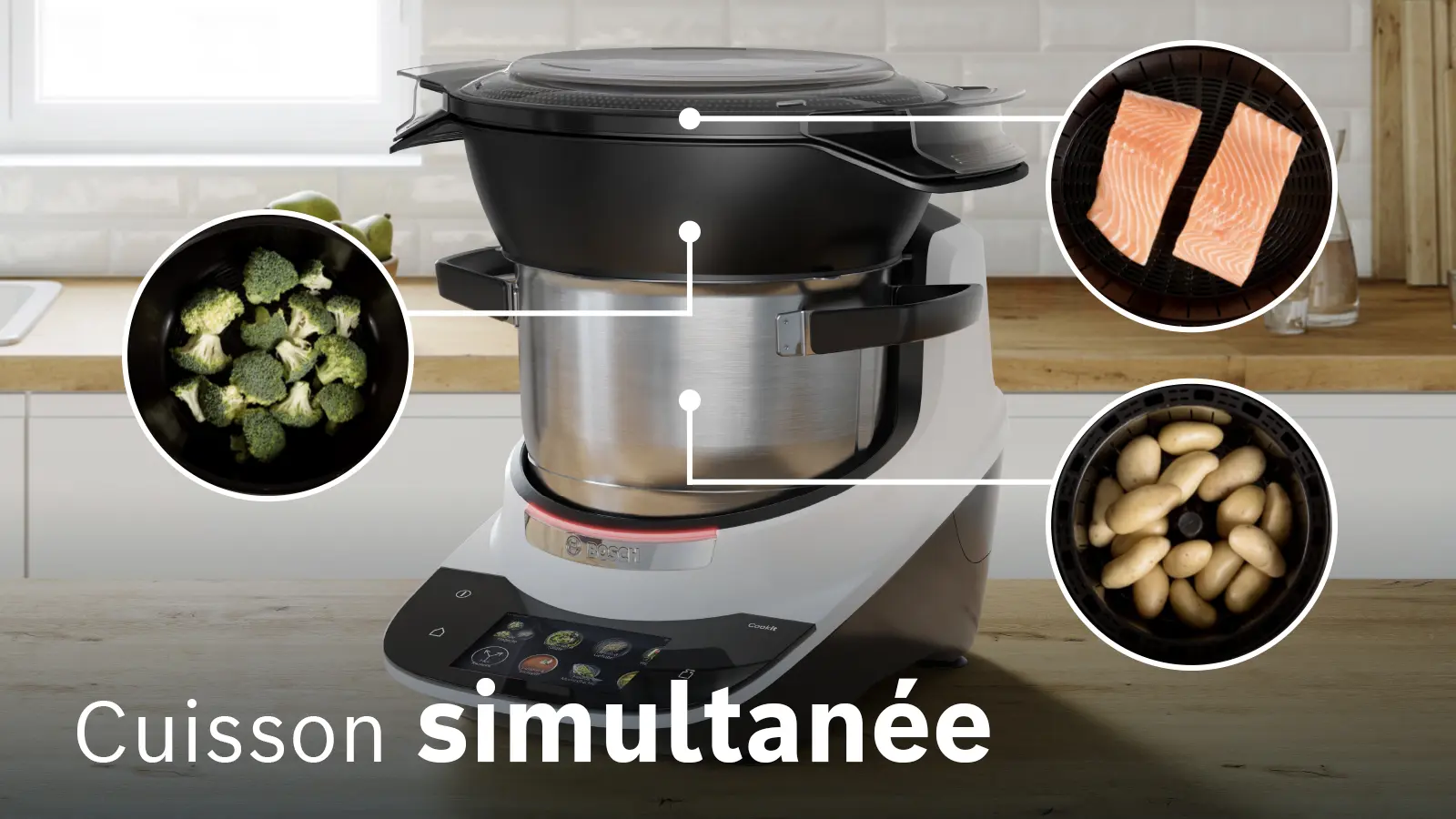
First impressions: why it feels more serious than most kitchen AI launches
The part we appreciated most right away is that Bosch Cook AI is not pretending to be magic. Bosch is presenting it as an intelligent cooking solution inside the Home Connect app, not as some standalone miracle appliance that does everything. In practice, that makes the whole pitch easier to take seriously.
A lot of AI kitchen products collapse the moment you look past the demo. They can recommend recipes, rename leftovers, or generate meal ideas, but the actual cooking part still comes down to you doing all the work while the software watches from the sidelines. Bosch is trying to go further than that. It wants Cook AI to sit on top of real connected cooking tools, read what is happening, adjust guidance in real time, and help coordinate more than one device at once.
That is the key difference. Advice is cheap. Live cooking assistance tied to actual hardware is much harder to fake.
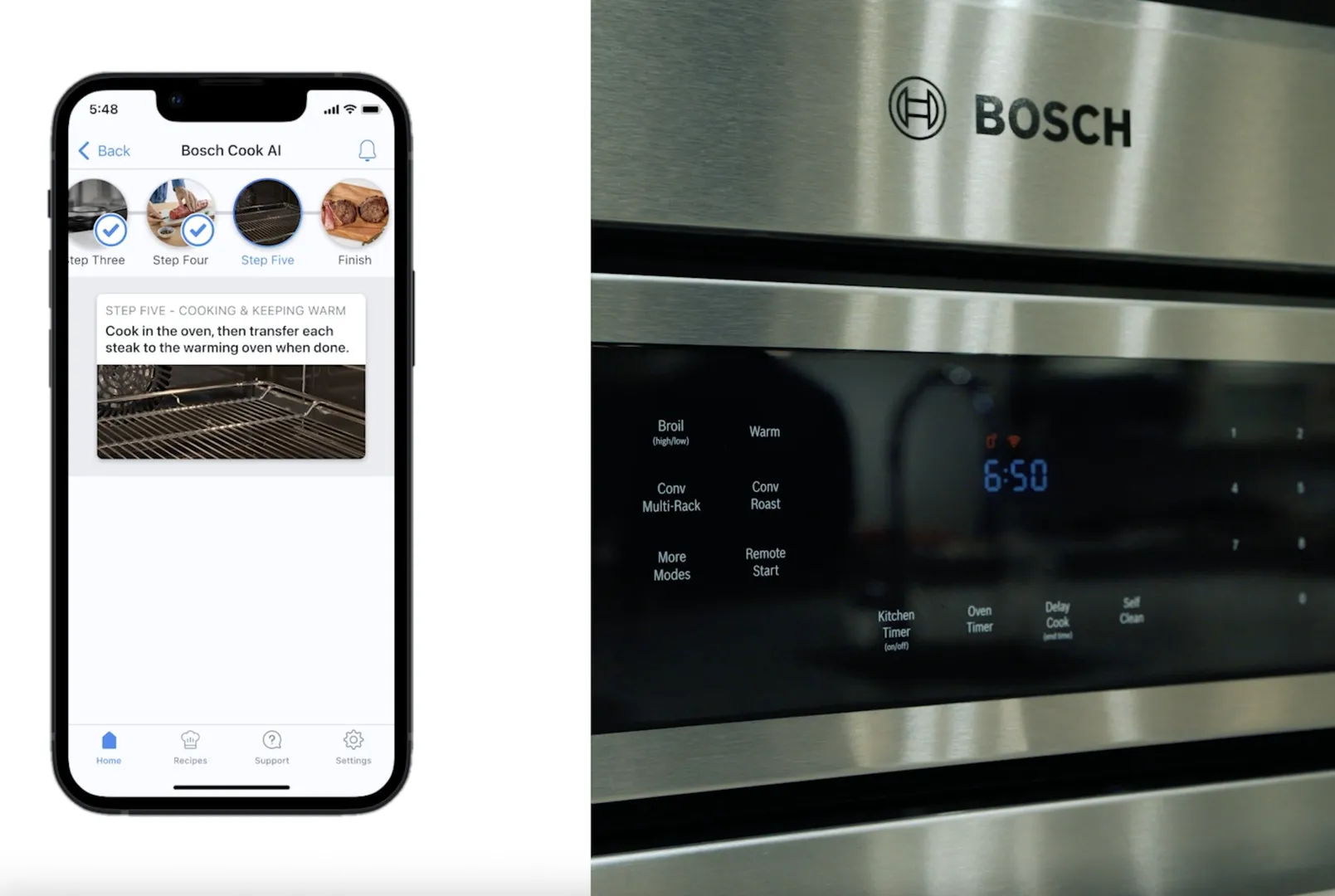
We also liked the fact that Bosch chose to demonstrate the concept through a real kitchen pain point instead of a gimmick. The company’s example of cooking multiple steaks to different levels of doneness at the same time is not glamorous, but it is useful. Plenty of people can follow a recipe when everything is calm. Far fewer can confidently manage heat, timing, and doneness across more than one item without second-guessing every step. Bosch Cook AI is at its most convincing when it tackles that kind of pressure rather than trying to impress people with novelty.
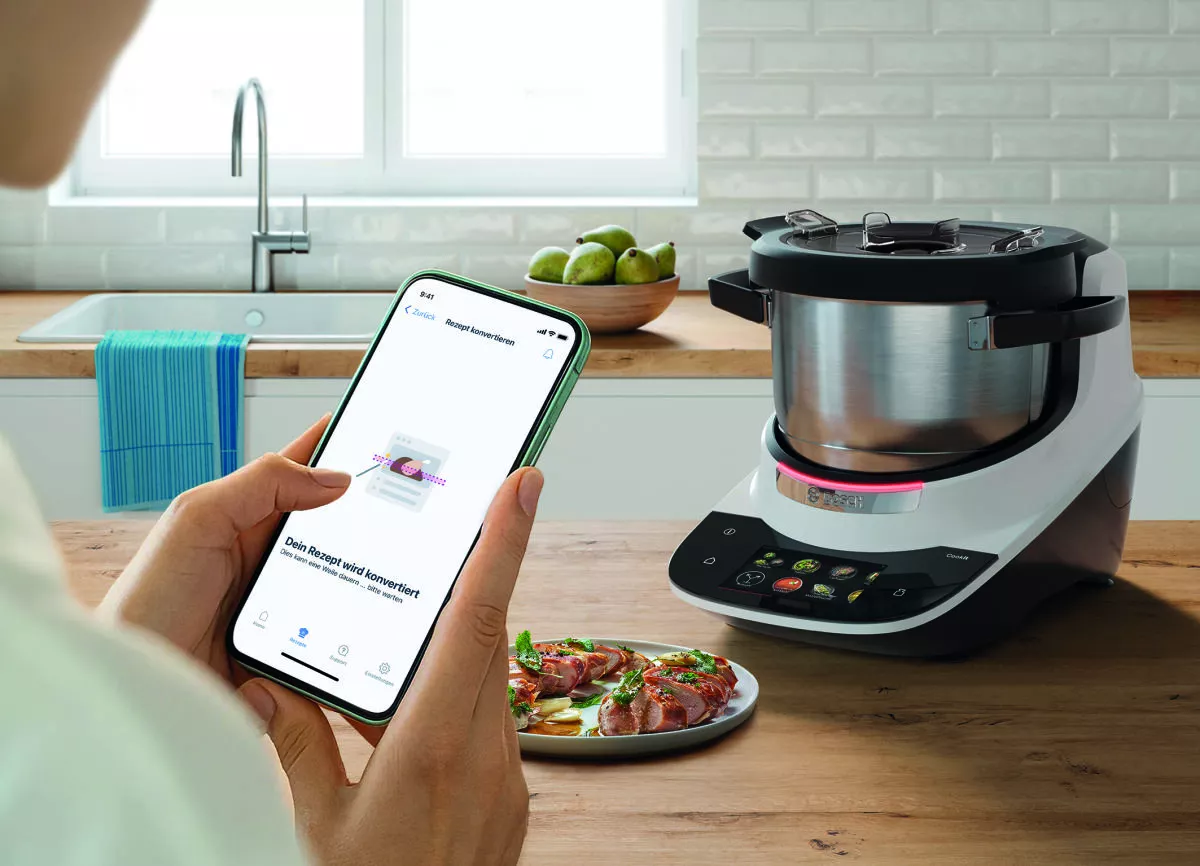
What Bosch Cook AI actually is
It is worth being very clear here, because this is where a lot of buyers could misunderstand what they are looking at.
Bosch Cook AI is not a new oven. It is not a new cooktop. It is not an all-in-one cooker. It is a software-led layer designed to sit within Bosch’s connected cooking ecosystem and make that ecosystem feel more intelligent.
Bosch’s current pitch revolves around a few core ideas:
- Live cooking guidance
- Adapting to the ingredients you actually have
- Working toward the result you want
- Using connected Bosch appliances and sensors as part of the process
- Coordinating more than one appliance when needed
That last point is a big one. Most “smart kitchen” products still feel isolated. Your oven has an app. Your cooktop has a feature set. Your probe gives you data. But they rarely feel like parts of one coordinated cooking system. Bosch Cook AI is interesting because it is trying to stitch those pieces together into something that feels more unified.
That ambition is exactly why we think the idea has real potential. It is also exactly why the buying decision is narrower than the marketing language might suggest.
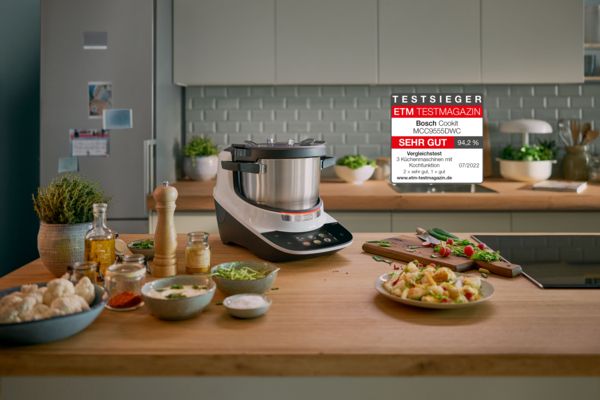
What we liked most in practice
1. It starts with outcomes, not machine language
One of the smartest things about Bosch Cook AI is how it frames the cooking process. Instead of forcing the user to think in technical steps first, Bosch is pushing toward a more natural entry point: what result do you want?
That sounds simple, but it matters. People do not think in program logic when they cook. They think in outcomes. They want a steak medium-rare, not a specific chain of heat adjustments. They want potatoes crisp outside and fluffy inside. They want dinner done properly and on time.
What stood out to us is that Bosch seems to understand that. A system that starts with the desired result is already closer to how real people behave in the kitchen than a system that simply throws recipe instructions at them and hopes they keep up.
2. The hardware foundation makes the AI feel believable
This is the biggest strength of the whole concept.
Bosch Cook AI makes sense because Bosch is not asking software to guess blindly. The demo and the broader platform around it are built on real, controllable hardware. In the version Bosch showed, the experience leaned on the 800 Series induction cooktop’s AutoChef temperature control, along with a Bluetooth meat probe tracking what was happening inside the food.
That hardware-and-software relationship is what gives the system weight. We kept coming back to that while evaluating the concept. If the assistant can actually see what the appliances are doing, sense cooking progress, and respond accordingly, then it has a chance to be genuinely helpful. If it were just an AI layer floating above a dumb kitchen, we would be much less interested.
3. It targets the most stressful part of cooking
The real value here is not inspiration. It is not creativity. It is not “AI cooking” as an abstract buzzword.
The real value is task offloading.
Bosch Cook AI looks most useful when it takes over the small but stressful decisions that cause meals to go sideways: when to reduce heat, how close something is to done, whether you are running ahead or behind, and how to coordinate more than one dish without losing control of the timing.
That is a real problem. It is the kind of problem that can make weeknight cooking feel exhausting even for people who are reasonably confident in the kitchen. If Bosch gets this right, Cook AI could make the kitchen feel calmer, not just smarter. That is a much more valuable promise than recipe generation.
4. Bosch is building on something real, not starting from zero
Another reason we found the concept more convincing than average is Bosch’s track record in this area. The company already has connected cooking features, already uses sensor-led systems like PerfectBake Plus, PerfectRoast Plus, and AutoChef, and already operates inside a mature connected-appliance framework through Home Connect.
That background matters.
We are much more open to a company extending an existing smart cooking platform than to a company suddenly claiming it has solved the future of dinner with one flashy product reveal. Bosch Cook AI feels like the next layer in a longer strategy, and that continuity gives it more credibility.
Where we felt less convinced
1. It still feels like a strong concept before it feels like a finished product
This is the biggest limitation, and it is not a small one.
As interesting as Bosch Cook AI is, it still sits in an awkward place. Bosch has talked about it in “near future” language and presented it in a polished, forward-looking way, but that is not the same as a normal, settled retail rollout. That means we are still judging a product story that has a lot of promise but not the kind of broad, everyday proof that would make us completely relaxed about recommending it without reservation.
That does not make the idea weak. It just means the verdict has to stay measured.
Kitchen tech often looks its best in controlled conditions. A guided steak demo is one thing. A real home kitchen with messy prep, patchy attention, mixed cookware, distracted users, and uneven Wi-Fi is something else. The gap between those two realities is where smart kitchen products often live or die.
2. The ecosystem dependence is not a side note, it is the whole deal
Bosch Cook AI only becomes fully interesting when you view it as an ecosystem multiplier.
That is both its strength and its biggest weakness.
If you already own Bosch appliances, or you are intentionally designing a Bosch-connected kitchen, then Cook AI could become one of the most appealing parts of the whole package. It has the potential to make the hardware feel more coordinated, less demanding, and more responsive.
If your kitchen is a mix of brands, or you only have one Bosch appliance, the picture changes. At that point, you are much more likely to end up with a version of the experience that feels partial. Still clever, perhaps, but not transformational.
We think buyers need to be brutally honest with themselves here. Do you actually want to build around Bosch? If not, the excitement level should drop immediately.
3. Simplicity is still a question mark
Smart kitchen systems live or die by friction.
If setup is annoying, if pairing feels brittle, if you constantly need to confirm things in the app, or if the whole experience only works smoothly when everything behaves perfectly, the magic disappears fast. Bosch Cook AI is supposed to reduce mental load, but systems like this can easily create a different kind of load if the onboarding and day-to-day interaction are not polished enough.
This is one of the places where we still want to see more. The concept is smart. The challenge will be whether Bosch can make it feel natural enough in daily use that people stop thinking about the technology and start trusting the assistance.
4. It is not for everyone, even if it works exactly as intended
There is also a buyer-fit issue here that has nothing to do with bugs or rollout timing.
Some people simply do not want this much digital involvement in the kitchen. They do not want app-driven cooking. They do not want probes, ecosystem logic, connected appliances, and guided automation deciding how dinner should unfold. Even if Bosch Cook AI works beautifully, it will still leave those buyers cold.
And that is fine. Bosch Cook AI is not trying to win over everyone. But anyone considering it should understand that this is not neutral kitchen technology. It reflects a specific idea of how cooking should work: connected, guided, sensor-informed, and increasingly software-led.
What matters most in real buying terms
Here is the practical bottom line.
Bosch Cook AI does not make the most sense as a reason to buy one appliance. It makes the most sense as a reason to see extra value in a Bosch-connected kitchen.
That is the lens we would use.
If you are choosing between normal standalone appliances and hoping Cook AI is the feature that tips the whole decision on its own, we think that is the wrong way to approach it. But if you already like Bosch’s connected cooking direction, and you want your cooktop, oven, probe, and app to behave more like one intelligent system, this becomes much more compelling.
The real value is not that it sounds futuristic. The real value is that it could make everyday cooking more consistent and less stressful.
For less confident cooks, that is potentially a big deal. Getting heat, timing, and doneness right across several components of a meal is one of the hardest parts of cooking well. A system that removes enough guesswork from that process could genuinely improve the experience.
For confident cooks, the value is different. They may not need Bosch Cook AI, but they may still appreciate it as a convenience layer. The question there is whether the convenience feels worth the ecosystem commitment.
There is also a longer-term angle that we think matters. Bosch has already shown a willingness to add features to connected appliances through software updates. That suggests Cook AI could become more useful over time if Bosch keeps investing in the platform. That is encouraging, but it should not be used as an excuse to ignore present-day uncertainty. Potential future value is still potential.
Who should buy it
Bosch Cook AI makes the most sense for:
- People already using, or planning to use, Bosch connected cooking appliances
- Households that regularly juggle multiple dishes and want help getting the timing right
- Less confident cooks who want assistance without needing to master every detail themselves
- Buyers who like the idea of a sensor-led, app-connected, guided kitchen
- Anyone who values consistency and reduced stress more than kitchen theater
This is also one of those products that may appeal to people who are not chasing culinary artistry at all. If your goal is simply to make fewer mistakes and get to the intended result with less friction, Bosch Cook AI has a much stronger pitch than it does for people looking for a showpiece gadget.
Who should skip it
We would steer clear if:
- You want a standalone product with a simple value proposition
- You dislike app dependence
- You do not want connected appliances in your kitchen
- You are not interested in committing to one brand’s ecosystem
- You prefer direct manual control and do not want guided automation involved in the cooking process
- You want something fully settled, widely field-tested, and easy to judge today
We would also be cautious if you have very little tolerance for setup friction. Smart kitchens can be excellent when everything clicks. They can also feel exhausting if the experience is even slightly clumsy.

Final verdict
Bosch Cook AI is one of the smartest kitchen-assistance ideas we have looked at in a while, mostly because it is trying to solve real cooking problems instead of inventing fake AI ones.
What we liked is that the concept feels anchored in actual kitchen hardware. Bosch is pairing software with temperature management, probe data, connected appliances, and live guidance, which gives the whole thing far more substance than the average “AI cooking” pitch. It also helps that Bosch has been building toward this kind of experience for a while. Nothing about Cook AI feels completely disconnected from the company’s broader direction.
What held us back is just as clear. This is still a system that depends heavily on Bosch compatibility, app-led workflows, and rollout execution. The more exciting the concept becomes, the more obvious it is that not every buyer will get the full benefit. And until the experience is fully established in everyday use, there is still a difference between what looks impressive and what feels effortless.
Our take is ultimately positive. Bosch Cook AI feels directionally right. It addresses the right problems, it uses the right foundation, and it could become a genuinely valuable part of a connected kitchen. But this is not a universal must-buy, and it is not a product we would romanticize. It is a smart, targeted idea with real promise for the right household.
FAQ
Is Bosch Cook AI a standalone appliance?
No. It is a software-led cooking assistant within the Home Connect environment, designed to work with Bosch’s connected appliances and sensors rather than replace them.
What does it actually do?
At its core, it is meant to provide live cooking guidance, adapt to what ingredients you have, help target a desired result, and coordinate compatible Bosch appliances during the cooking process.
Is it basically just a smarter recipe app?
No, and that is why it is interesting. A recipe app gives you instructions. Bosch Cook AI is designed to work with real appliance data and sensor input, which gives it a chance to be more adaptive and more useful while you are actually cooking.
Does it only make sense if I own Bosch appliances?
For the best version of the experience, yes. The more deeply you are in Bosch’s connected ecosystem, the more value Bosch Cook AI is likely to have.
Who gets the most out of it?
Busy households, less confident cooks, and anyone who wants help with timing, doneness, and multi-dish coordination are the clearest fit.
Who is least likely to care?
People who dislike connected appliances, prefer manual cooking, or want a simple one-device purchase without ecosystem commitment will probably not find Bosch Cook AI especially appealing.
Is it worth waiting for?
If you are already Bosch-curious and like the company’s connected cooking direction, yes, it is worth watching. If you want a simple, proven, self-contained buy right now, we would wait until the experience is more fully established.
Explore the Bosch Cook AI Gallery
Every image from this article, gathered in one clean place. Tap any photo to open it larger.