
Dreame Tasti PT60
Pros
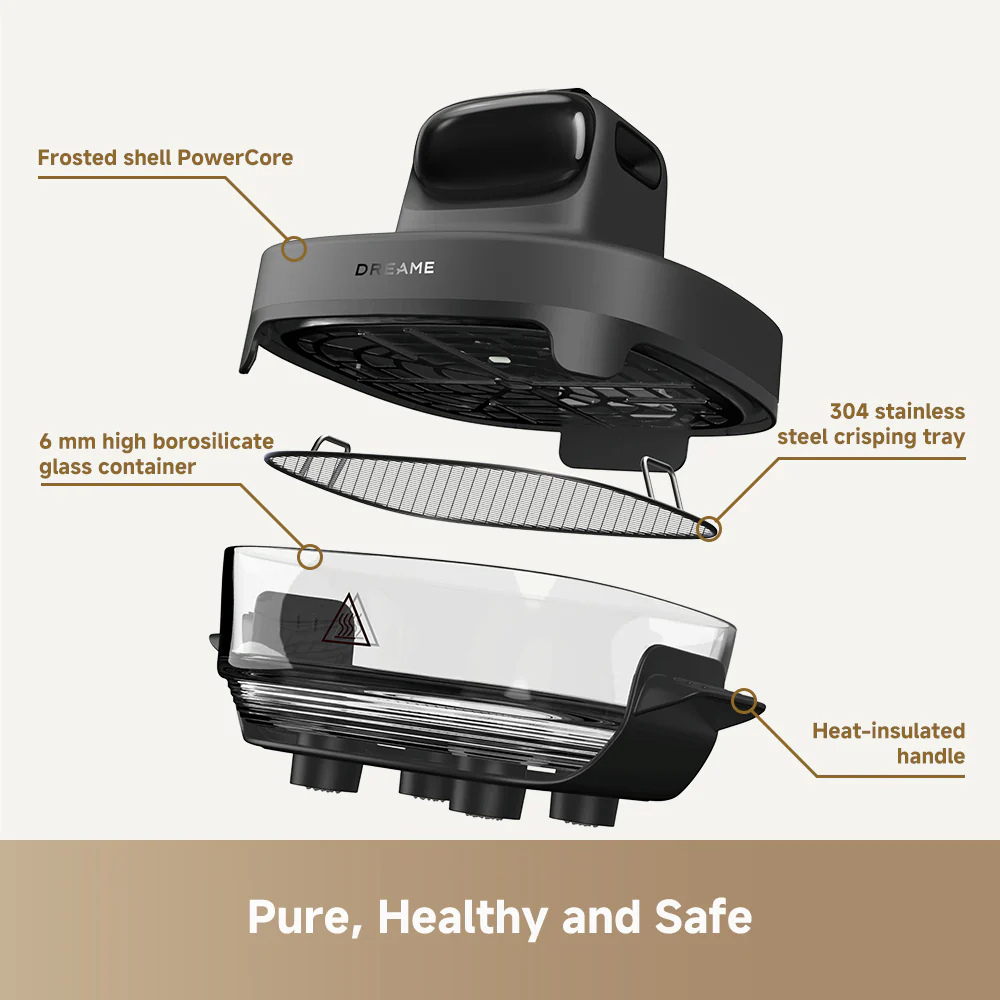
- 6mm borosilicate glass bowl gives the PT60 a cleaner, more distinctive feel than a standard coated basket.
- 304 stainless steel rack reinforces the coating-free appeal.
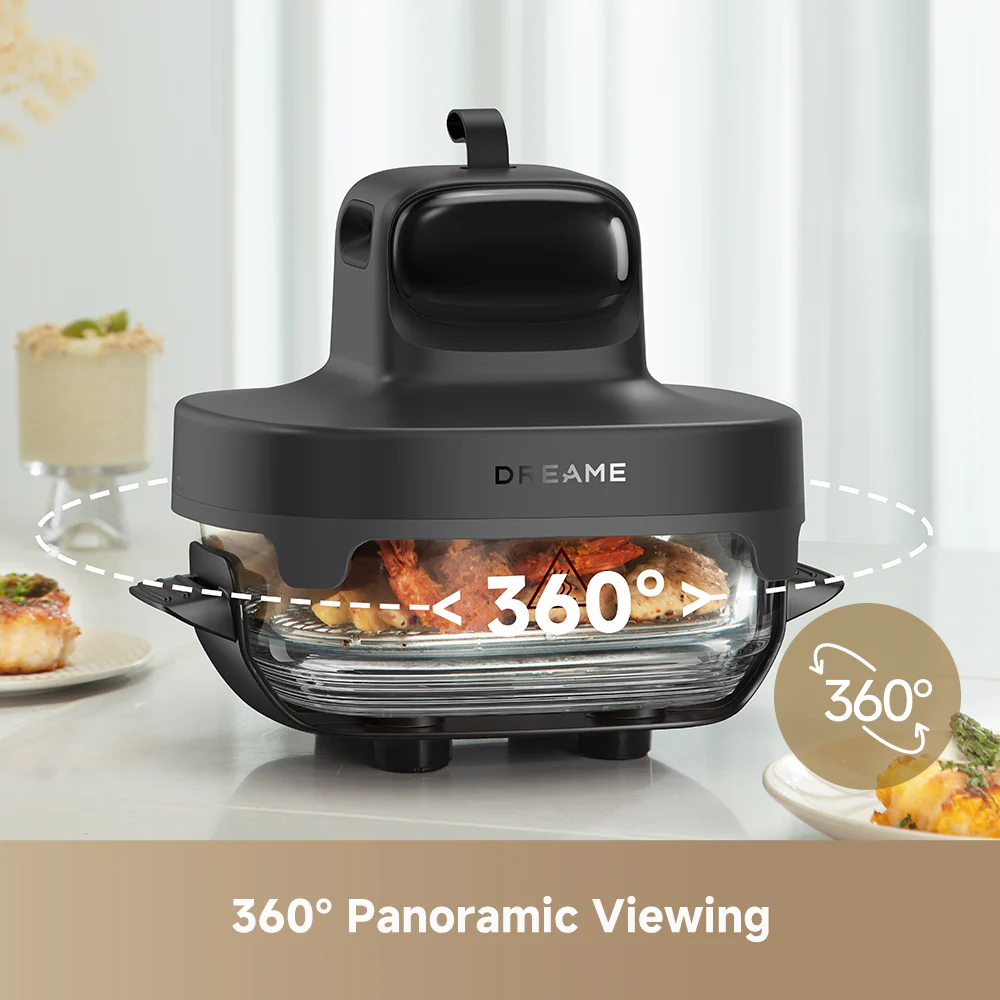
- 360° visibility is genuinely useful and improves cooking confidence in daily use.
- 2.5L and 4.5L bowl system adds real flexibility instead of empty feature padding.
- 1500W power feels appropriate for the size and purpose.
- The moisture-focused cooking concept helps the PT60 feel more thoughtful than a typical compact air fryer.
- It looks better on a countertop than most air fryers in this class.
Cons
- 6.11kg is too heavy for the portability angle to feel fully convincing.
- 4.5L is useful, but not especially roomy for larger households.
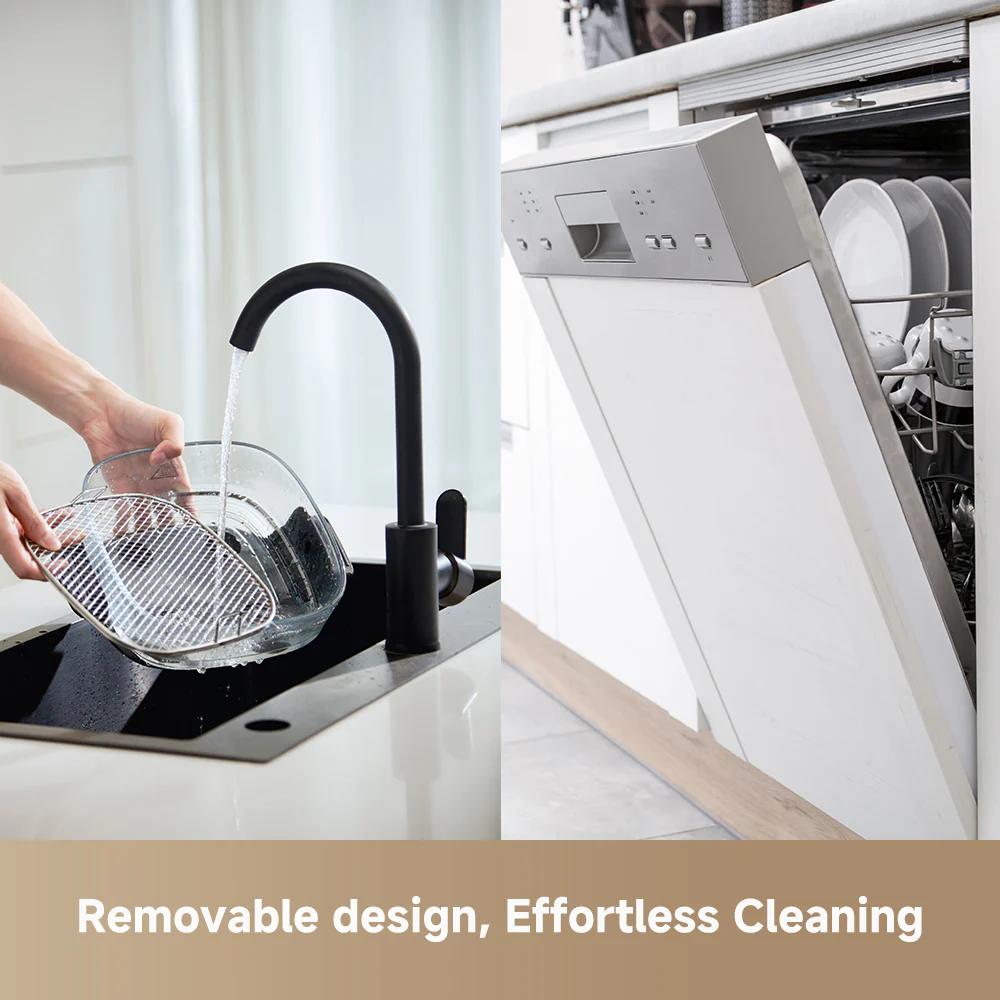
- Cleaning the main powered section is less convenient than the washable glass components.
- It demands a bit more care in handling than a basic drawer model.
- Buyers chasing pure capacity will find stronger options elsewhere.
the 2.5L and 4.5L bowl system , the 360° glass visibility , the PFAS/PTFE-free cooking setup , the 1500W power , and the way the steam-assisted idea helps the PT60 feel more thoughtful than a standard compact air fryer.
the portability angle is stretched a bit too far, the actual cooking space is still modest for family use, and cleaning the main heating section is not as carefree as the glass-and-dishwasher story initially suggests.
The Dreame Tasti PT60 immediately stands out because it does not feel like another me-too air fryer chasing bigger numbers and louder marketing. After spending real time with it, what struck us most was how different the whole experience feels once you move away from the usual black plastic drawer format.
The clear glass bowl, the two-container setup, and the coating-free cooking surface give it a distinct personality from the first use. We came away thinking Dreame got a lot right here. The PT60 is clever, well thought through, and genuinely pleasant to cook with.
At the same time, it has one limitation that matters more than Dreame’s marketing would like to admit: this is not as portable or as spacious as some buyers may expect. For the right kitchen, it is a very appealing air fryer. For the wrong one, it can feel too specialized.
What we tested
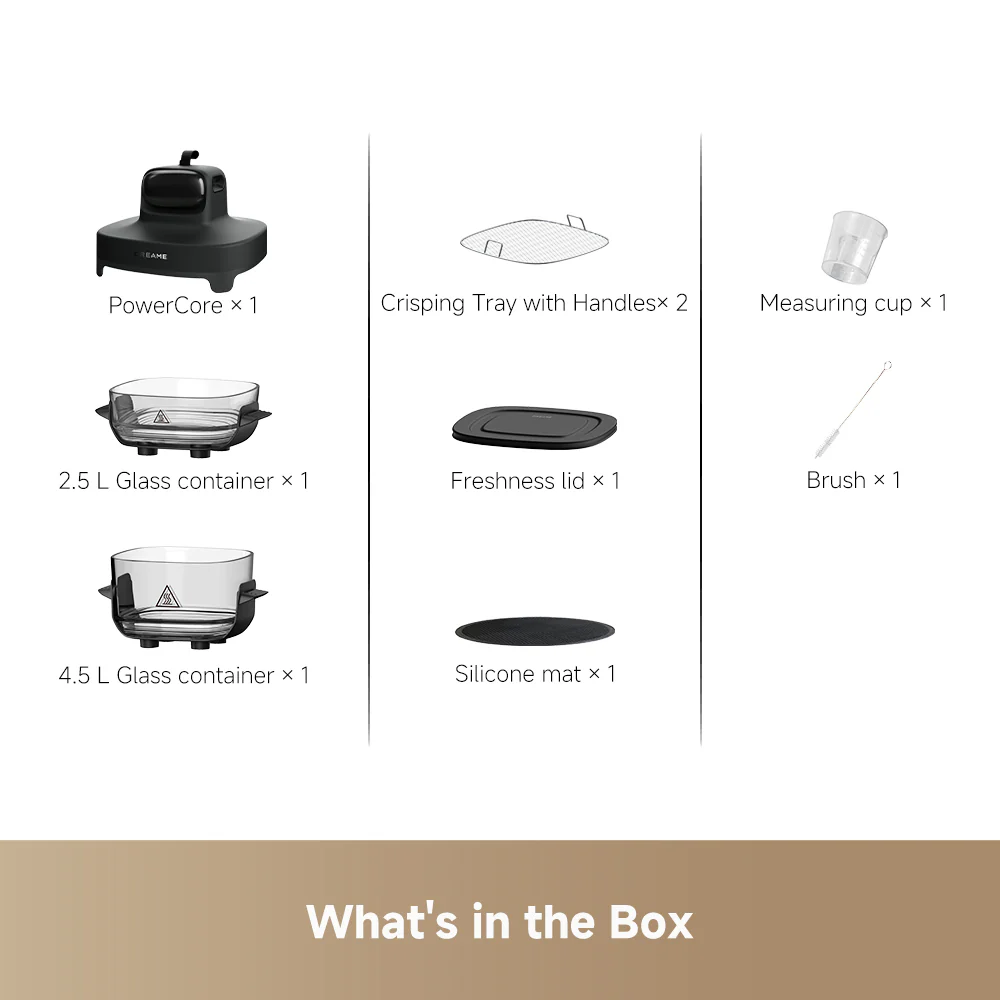
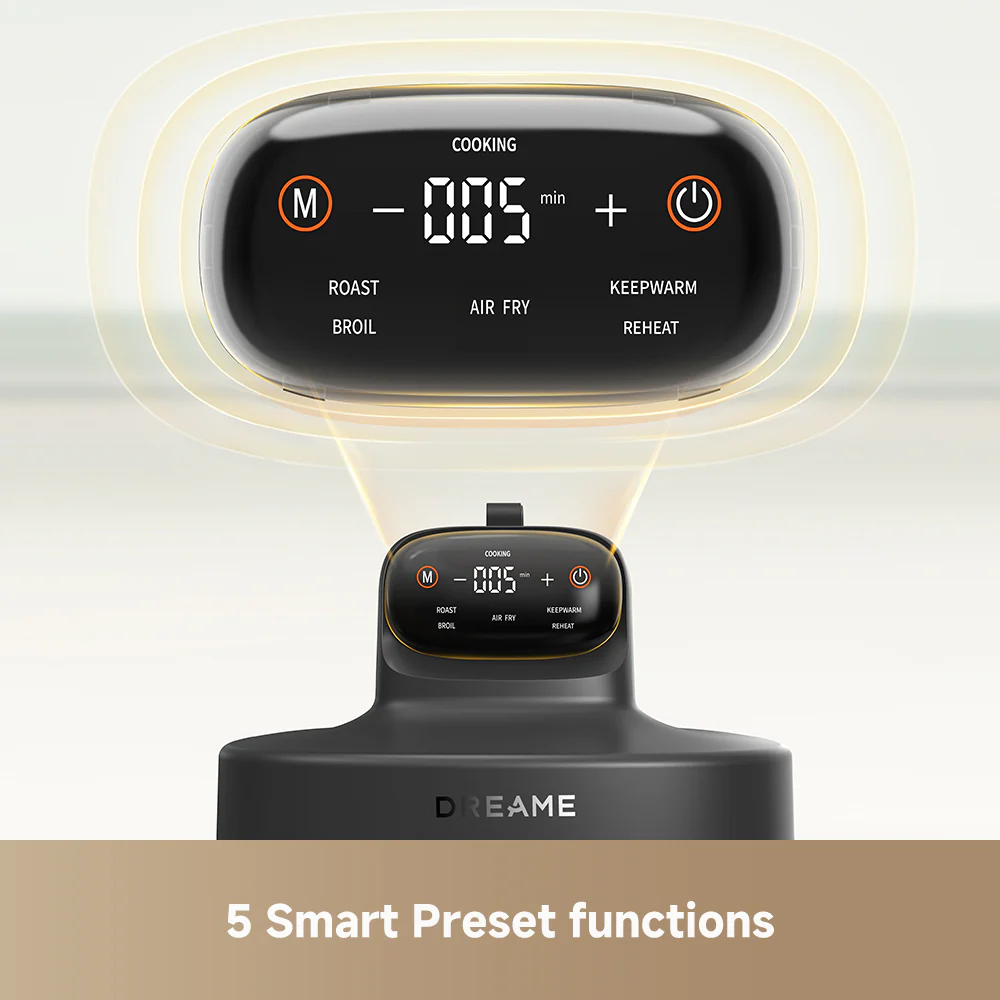
The PT60 is built around a very clear idea. Instead of asking buyers to accept the usual coated basket design, Dreame goes in a different direction with a 6mm borosilicate glass cooking bowl, a 304 stainless steel rack, a 1500W heating system, and a digital LED control panel with five core modes: air fry, roast, grill/broil, keep warm, and reheat. It also comes with two glass bowls, 2.5L and 4.5L, which changes how the machine works in everyday use far more than we expected.
The key promise here is easy to understand. This is supposed to be a compact, health-conscious, coating-free air fryer that lets you actually see what is happening while your food cooks. In practice, that promise is mostly real. We did not walk away feeling like the PT60 was a gimmick. We walked away feeling like Dreame had taken a few frustrations people have with normal air fryers and tried to solve them in a smarter way.
How we tested it
We approached the PT60 the way most buyers actually live with an air fryer. We looked at how it fits on a counter, how easy it is to set up, how intuitive the bowl swap feels, how useful the glass visibility is once you start cooking, how convincing the “portable” angle really is, and whether the capacity matches what people will likely imagine from the product shots and marketing language.
What mattered most to us was not just whether it could crisp food. Most decent air fryers can do that. What mattered was whether the PT60’s design choices made daily use better or simply made the product more interesting to look at. That is the question this machine has to answer, and for the most part, it does.
Design and build quality
This is easily one of the PT60’s strongest areas.
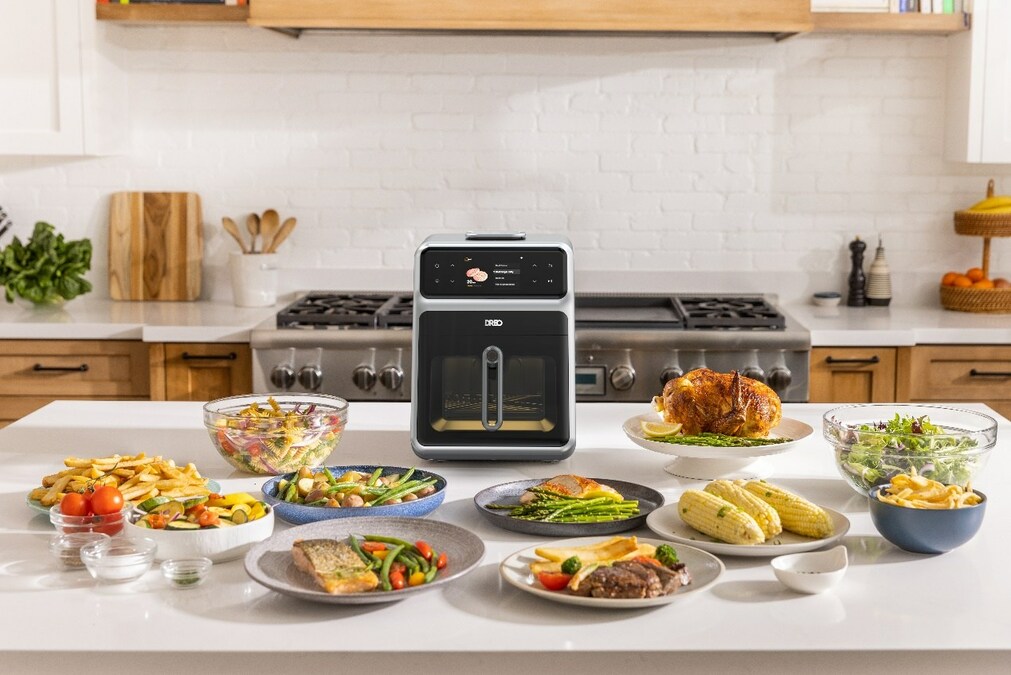
Most air fryers are practical appliances first and attractive objects a distant second. We tolerate them because they cook quickly. We do not usually enjoy having them on the counter. The PT60 is different. The clear glass chamber makes it look cleaner, lighter, and more modern than the usual drawer-style air fryer. More importantly, it does not just look different for the sake of it. The design changes how the machine feels to use.
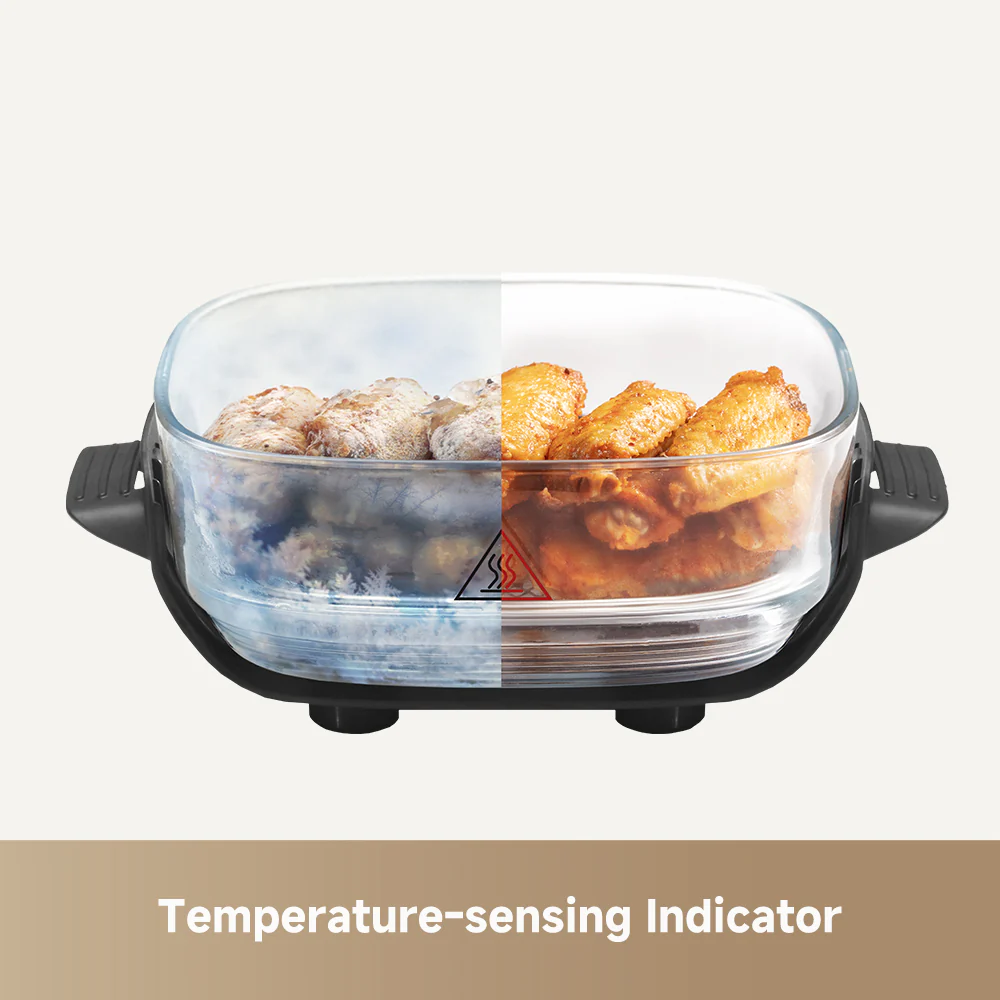
Being able to see the food from all sides is not a gimmick. That became obvious quickly. With most air fryers, you are constantly guessing. Is the top actually browning? Are the edges getting too dark? Does this need another minute, or will one more minute ruin it? With the PT60, a lot of that guesswork disappears. We noticed ourselves checking on food less nervously because we could simply look through the bowl instead of opening the machine and interrupting the cook.
The materials choice also gives the PT60 a much clearer identity than most rivals. The borosilicate glass bowl feels deliberate. The 304 stainless steel rack reinforces that message. If you are the kind of buyer who has always been slightly uneasy about coated baskets heating up over and over again, the PT60 makes immediate sense in a way many mainstream air fryers do not. That is not a small point. It is the core reason this product feels distinct.
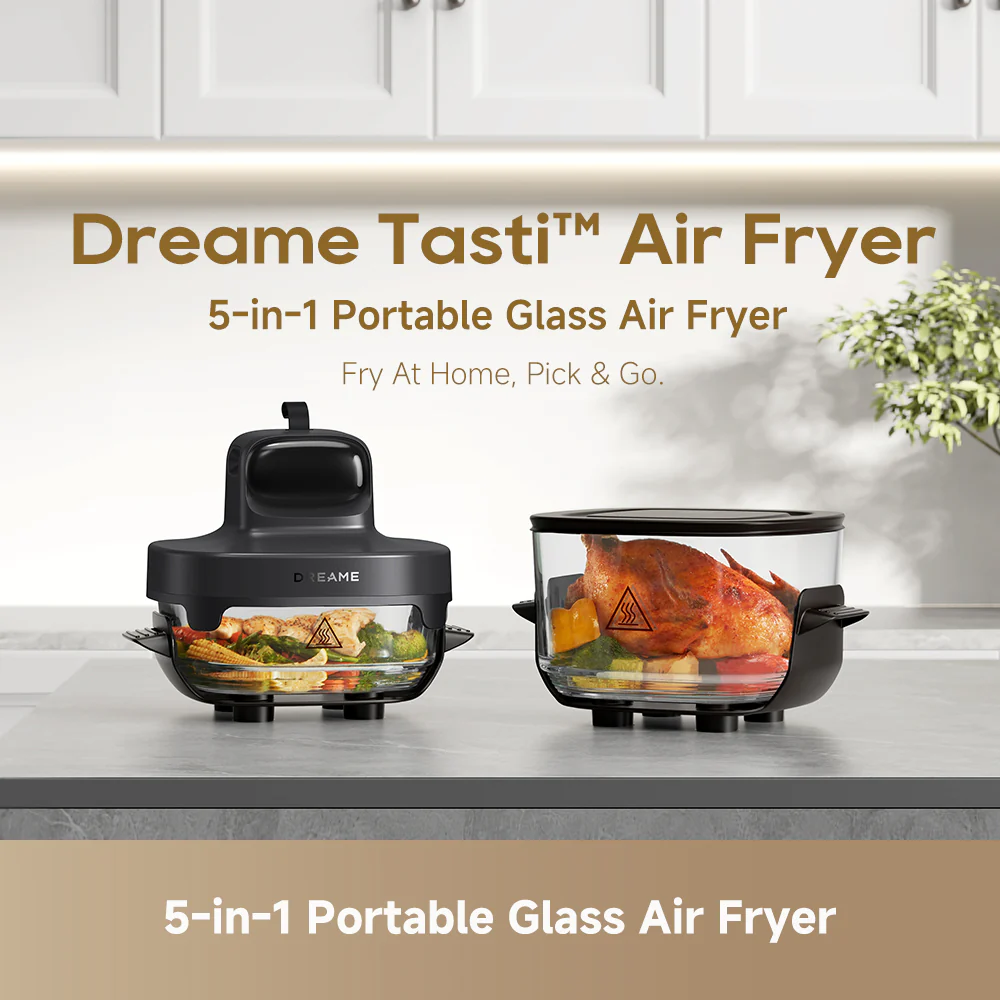
We also appreciated the modular approach more than we expected. The 2.5L and 4.5L bowl combination sounds like a feature you might shrug at on paper. In practice, it is genuinely useful. The smaller bowl keeps the machine from feeling excessive when you are making a quick solo lunch or reheating leftovers. The larger bowl gives the PT60 enough flexibility to handle more serious cooking without turning it into a bulky countertop giant.
That said, the build comes with a tradeoff, and it is impossible to ignore. Glass gives the PT60 its charm, but it also gives it weight. At 6.11kg, this is not the kind of appliance we would casually describe as portable in the everyday sense. You can move it, store it, and relocate it when needed, but the word “portable” feels more generous than accurate once you actually handle it. This is a countertop appliance that can travel occasionally, not a grab-and-go cooker you will happily carry around all the time.
Setup and first use
We liked how straightforward the PT60 felt from the beginning.
Dreame did not overcomplicate this product with a bloated interface or a long list of unnecessary presets. The LED controls are direct. The five main functions cover the jobs most people actually use an air fryer for. Swapping between the two bowls makes sense quickly. The whole product feels designed around the idea that convenience should come from smarter physical design, not from drowning the user in menu options.
That simplicity matters. Too many modern countertop appliances try to impress by doing ten things poorly instead of five things well. The PT60 feels more disciplined. You choose the bowl, set the mode, adjust what you need, and start cooking. That is exactly how this kind of product should work.
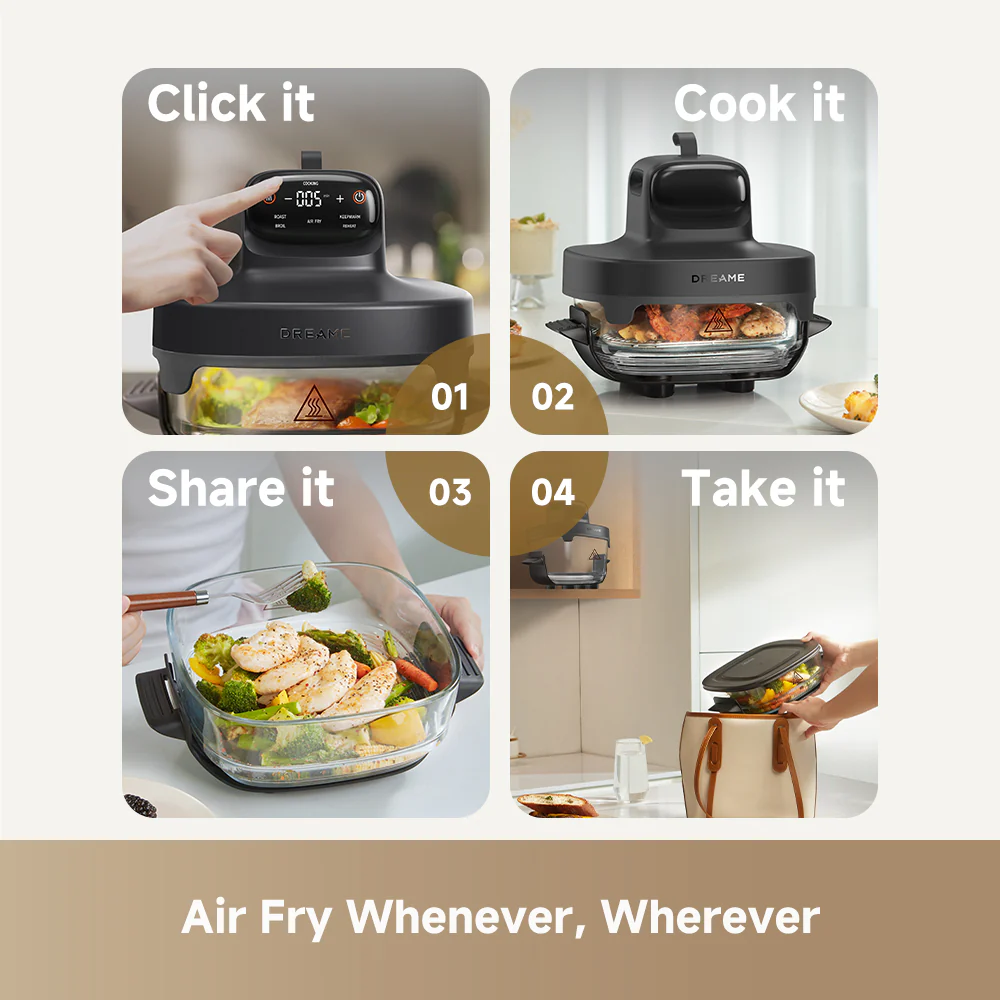
The lunchbox-style angle is also more useful than it first sounds, but not in the way the marketing leans into it. We did not come away thinking, “Yes, this is a truly portable lifestyle cooker.” We came away thinking the modular format is nice because it reduces unnecessary dish-swapping, makes storage a bit easier, and gives the PT60 a practical rhythm in day-to-day use. It is more of a convenience win than a mobility win.
A few smaller details also matter here. The airflow setup means you cannot treat it like a baking tray and block circulation carelessly. The glass gets hot, as you would expect, so this is not a machine you use recklessly. There is a little more awareness required than with a basic drawer model. None of that is a dealbreaker, but it reinforces what the PT60 really is: smarter and more refined than average, but not mindless.
Real-world performance
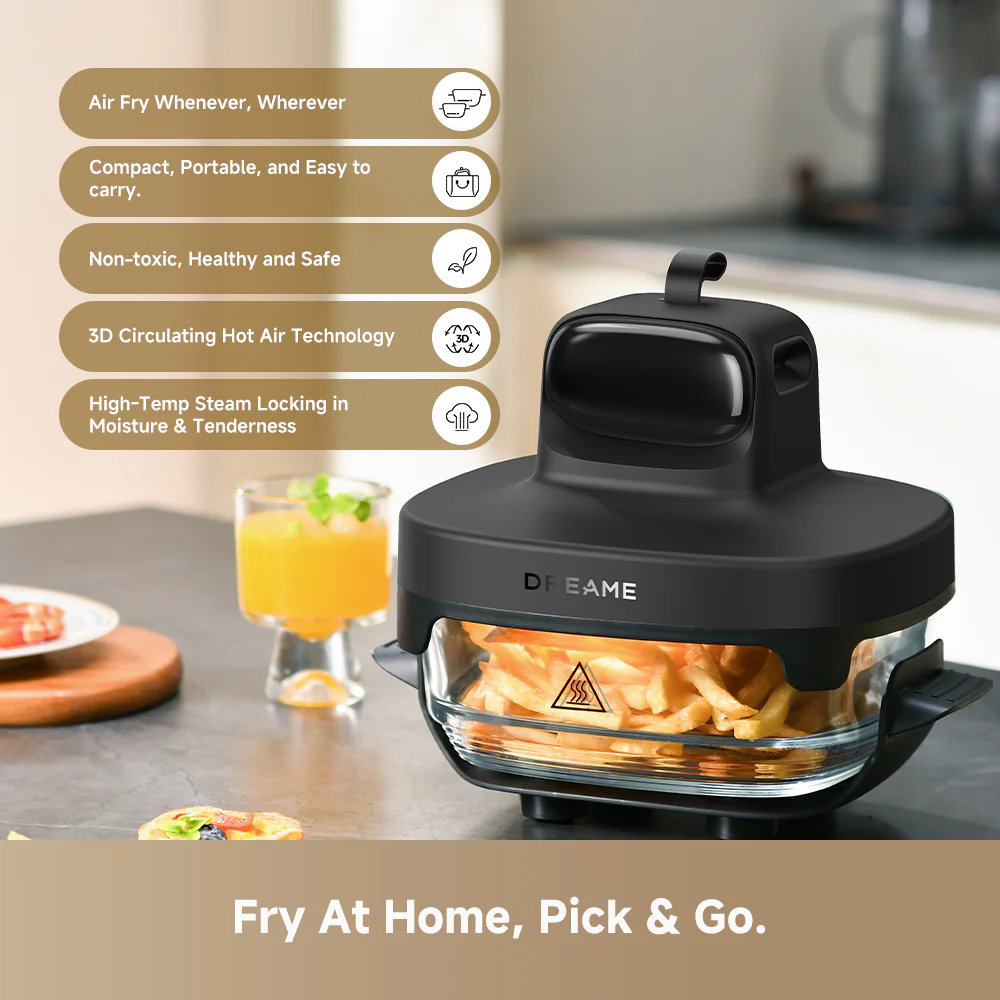
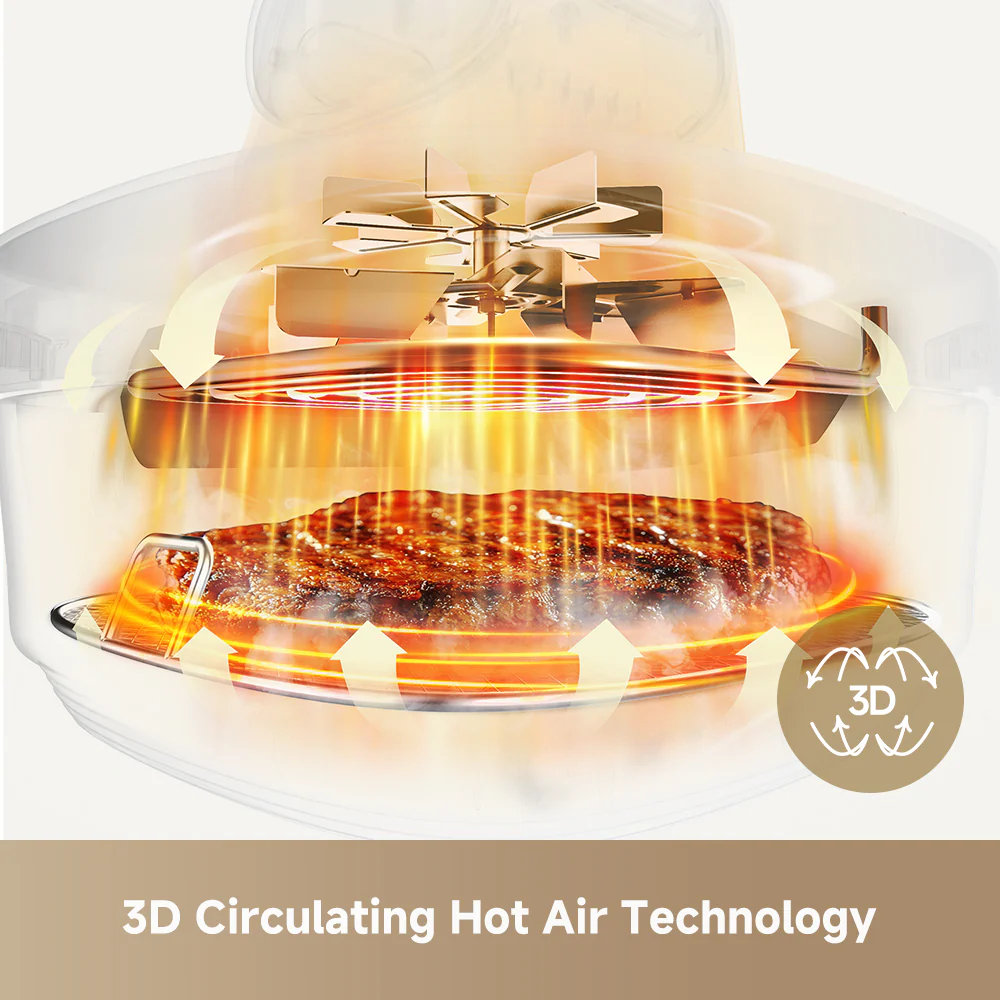
The PT60’s main cooking idea is more interesting than the usual “hot air equals healthier cooking” pitch. Dreame pairs 3D hot-air circulation with a built-in moisture system designed to help food stay juicy inside while still browning outside. In practice, that makes sense. One of the biggest weaknesses of many air fryers is that they are very good at drying things out while also crisping them. Lean proteins, leftovers, and anything slightly delicate can go from promising to disappointing quickly if the machine pushes too much dry heat too aggressively.
What stood out to us with the PT60 was not some dramatic leap in raw power. It was that the machine feels better suited to foods where texture matters. Reheating is a good example. This is where many air fryers are useful but blunt. They bring back crispness, but they can also strip the life out of food if you are not careful. The PT60 feels more controlled. The visible bowl helps you stop at the right time, and the moisture-conscious cooking approach makes the whole result feel less punishing.
That visibility changes the experience more than you might expect. We found it especially useful with foods that are easy to overdo by a minute or two: vegetables with some oil or seasoning on the surface, chicken where color matters, baked leftovers, and anything where you want the outside to brown without blindly trusting a timer. With a regular drawer air fryer, you either keep opening the basket and losing heat or you gamble. With the PT60, you can actually monitor what is happening. That sounds simple, but in use it feels like a real upgrade.
Performance is strongest when you use the PT60 the way it clearly wants to be used: modest portions, everyday cooking, reheating, and meals where texture and visibility matter more than sheer volume. It is not trying to dominate the category with brute force. It is trying to make air frying feel more controlled and less anonymous, and in that sense it works.
Where we felt less convinced was on capacity. The 4.5L bowl is useful, but it is not a disguised family-size machine. This became clear quickly. The PT60 can absolutely handle normal meals, but it fills faster than some buyers will expect. If you are imagining a roomy, high-throughput air fryer that can knock out large family portions without compromise, this is not that machine. It is a compact-to-mid-size model with a premium twist, not a batch-cooking workhorse.
That distinction matters because the PT60 is easy to like when you judge it on its own terms. It becomes harder to recommend when buyers expect it to replace a bigger, simpler, family-first air fryer.

Use-case performance
For solo cooking
This is one of the PT60’s best fits.
The 2.5L bowl makes the machine feel sensible for one-person use. It is small enough to avoid the annoyance of heating a big appliance for a modest meal, but it still feels more substantial than a gimmicky mini cooker. We appreciated that Dreame did not just shrink the concept. The smaller bowl genuinely improves how practical the machine feels for quick everyday use.
For couples
We think this is still a strong fit, with one condition: portion expectations need to be realistic.
For two people who cook fairly normal meals and do not expect oversized single-batch capacity, the PT60 works well. The 4.5L bowl gives enough room for a lot of common air fryer jobs, and the design remains more appealing and easier to monitor than the average rival. But if both people tend to cook large proteins, bigger side dishes, or full meals in one run, the PT60 starts to show its limits.
For families
This is where our enthusiasm cools.
Could a family use it? Yes. Is it the smartest family-first buy? Not really. The biggest reason is simple: 4.5L is decent, but it is not generous by current standards. Families that care most about throughput will likely end up wishing for more room. The PT60 makes sense in a family kitchen only if the materials story, the coating-free build, and the visual cooking experience matter enough to justify the smaller working space.
For health-conscious buyers
This is where the PT60 has a real edge.
If you actively care about what your food is touching, the PT60 becomes much more compelling than a lot of conventional alternatives. The coating-free glass bowl, stainless steel rack, and PFAS/PTFE-free positioning are not minor talking points here. They are central to why this product exists. For buyers who have hesitated to bring an air fryer into the kitchen because of standard basket coatings, this model answers that concern directly.
For reheating and everyday leftovers
This may be one of the PT60’s quiet strengths.
A lot of people buy air fryers expecting them to be miracle machines for cooking from scratch, then end up using them most for leftovers. The PT60 suits that reality well. In daily use, the combination of glass visibility and more moisture-conscious cooking makes reheating feel less like a gamble. Pizza, roasted vegetables, chicken, pastries, and smaller leftovers are exactly the kind of foods where the PT60 feels thoughtful.
Convenience, comfort, and cleanup
The PT60 gets a lot right on convenience, but it is not as effortless as the initial glass-and-dishwasher pitch might suggest.
On the positive side, the two-bowl format is practical. We liked being able to match the container to the task instead of forcing everything through one size. The visibility reduces how often you need to interrupt cooking. The bowl and rack are easier to understand and easier to live with than a deeper, harder-to-see drawer system. The whole machine feels more transparent in every sense of the word.
But cleaning is a little more mixed.
The washable glass components are the easy part of the story. They are the part most people will like immediately. The less glamorous reality is the main powered section. That part still needs manual attention, and it is not quite as carefree as the bowls themselves. This is where the PT60 stops feeling like a dream appliance and starts feeling like a real one. We did not find it unbearable, but we also would not oversell it as an ultra-low-effort cleanup champion.
The portability story lands the same way. We can describe it as movable, easy enough to store, and more flexible than a bulky full-size air fryer. We would not describe it as something that truly earns the word “portable” in a carefree, daily-use sense. The weight and the glass-heavy design make that clear quickly. What Dreame has built is a transportable countertop appliance, not a light travel-friendly cooker.
Flaws and frustrations
The PT60’s biggest issue is not that it fails. It is that it can be misunderstood.
Dreame has made a product with a strong identity, but the marketing can encourage the wrong expectations. This is not a roomy family-sized air fryer in disguise. It is not a genuinely lightweight portable cooker. It is a compact premium model built around better materials, better visibility, and more thoughtful portion flexibility. Buyers who understand that are likely to appreciate it. Buyers who come in wanting maximum size or maximum convenience may feel less impressed.
The second frustration is that the PT60’s best feature is also its biggest compromise. The glass bowl is exactly what makes the product attractive. It looks better, feels cleaner, and solves a real buyer concern around coatings. But it also makes the product heavier and less carefree than a more conventional design. That is simply the tradeoff. We appreciated the materials, but we never forgot we were dealing with a more delicate-feeling concept than a typical drawer machine.
The third limitation is capacity. The bowl system is smart, but intelligence does not magically create space. If your first question with any air fryer is, “How much food can I fit in one run?” the PT60 will probably not be your ideal match.
Value for money
Value here depends heavily on what you care about.
If you are simply shopping for the biggest capacity at the lowest price, the PT60 is not the obvious answer. There are simpler, larger machines that will make more sense for that buyer. But that is not really the comparison that matters.
The PT60 is valuable because it offers a different ownership experience. The glass bowl, the coating-free setup, the dual-container approach, and the 360° visibility give it a clear reason to exist. We think it earns its price for buyers who specifically want those things. It feels more considered than a lot of air fryers that win only by offering slightly more liters or slightly more presets.
For everyone else, value is more average. This is not a universal bargain. It is a targeted premium choice. When the buyer fit is right, the PT60 feels easy to justify. When the buyer fit is wrong, the compromises show up quickly.
Who should buy it
Buy the Dreame Tasti PT60 if you want an air fryer that feels cleaner, more visible, and more thoughtfully designed than the norm.
We would especially recommend it to one-person and two-person households, buyers who care about avoiding coated cooking surfaces, and people who reheat food often enough to appreciate being able to see exactly what is happening during the cook. It also makes sense for anyone who is tired of ugly, opaque air fryers and wants something that feels more deliberate on the counter.
The PT60 is also a good fit for people who value refinement over brute capacity. If you would rather have a smarter 2.5L/4.5L system than one oversized basket you rarely use properly, this machine makes a lot of sense.
Who should skip it
Skip it if your top priority is cooking the biggest possible batch in one go.
That alone rules out a lot of family shoppers and bulk cooks. The PT60 can handle everyday meals, but it is not the model we would push toward people who want one-cycle convenience above all else.
We would also skip it if the portability message is the main reason you were interested. Once you handle the product, the reality is more grounded. It is movable, yes. Truly light and carefree, no.
And if you want the simplest possible cleanup routine, there are easier air fryers to live with. The PT60 is not difficult, but it does not reduce every cleaning task to a throw-it-in-the-dishwasher non-event either.
Final verdict
After spending real time with the Dreame Tasti PT60, our view is clear: this is a smart, distinctive air fryer with a stronger point of view than most of the category. It does not win by being the biggest. It does not win by pretending to replace every countertop cooker in your kitchen. It wins by making air frying feel cleaner, more visible, and more intentional.
What stood out to us most was how coherent the product feels. The glass bowl, the coating-free materials, the dual-size system, and the see-through cooking experience all support the same idea. Nothing feels random. Dreame knew exactly what kind of buyer this machine was for, and that clarity helps.
We also think the PT60 is easy to oversell if you ignore its boundaries. The portability is overstated, and the capacity is only moderate by family standards. Those are real limits. But judged properly, the PT60 is one of the more compelling compact premium air fryers we have seen. For buyers who care more about materials, visibility, and everyday practicality than about raw batch size, it is a genuinely strong buy.
FAQ
Is the Dreame Tasti PT60 really portable?
Not in the way most people will imagine. Yes, you can move it and store it without drama, but at 6.11kg with a glass-heavy design, it feels more transportable than truly portable. We would not buy it expecting a carefree carry-around appliance.
What cooking modes does it have?
The PT60 includes air fry, roast, grill/broil, keep warm, and reheat. It is a sensible lineup and, in our view, better than an overloaded menu of presets most people never use.
What size is it?
It comes with two bowls: 2.5L and 4.5L. That is one of the machine’s best ideas because it gives you better flexibility than a single fixed basket.
Is the bowl really glass and coating-free?
Yes. The PT60 uses a 6mm borosilicate glass bowl and a 304 stainless steel rack, which gives it a clear advantage for buyers who want to avoid traditional coated cooking surfaces.
Can you actually see the food while it cooks?
Yes, and it is one of the best parts of using this machine. The 360° glass visibility is not just a styling trick. It genuinely helps you track browning and doneness without constantly interrupting the cook.
Is it good for families?
Only to a point. The 4.5L bowl is useful, but we would not call this a family-first air fryer. It suits one or two people much better than households trying to cook large portions regularly.
Is it easy to clean?
Partly. The glass bowl and rack are the easy part. The main powered section still needs manual cleaning, and that is where the PT60 feels a little less effortless than the design initially suggests.
Does the steam-assisted feature matter?
We think it does, especially for foods that tend to dry out in standard air fryers. It helps support the PT60’s biggest strength: making everyday cooking feel a little more controlled and a little less harsh than the usual compact air fryer experience.
Explore the Dreame Tasti PT60 Gallery
Every image from this article, gathered in one clean place. Tap any photo to open it larger.