
Jackery Explorer 5000 Plus
Pros
- True 120V/240V split-phase support makes it far more capable than ordinary large power stations.
- 7,200W continuous output gives it real authority with demanding loads.
- 5,040Wh base capacity is substantial, and expansion to 60kWh gives the platform long-term flexibility.
- Quiet, indoor-friendly operation is a major quality-of-life advantage over gas backup.
- Smart Transfer Switch compatibility helps it function like real backup infrastructure rather than just a giant battery.
Cons
- At 134.5 pounds, portability is limited no matter how well the wheels work.
- The full home-backup experience gets expensive quickly once installation and accessories enter the picture.
- Maximum recharge and solar performance depend on more ambitious setups than many buyers will actually build.
- A single unit is powerful, but still requires realistic load planning.
the combination of 5kWh of storage, 7.2kW of output, genuine 120V/240V support, useful ports, strong recharge flexibility, and a real path into more serious backup use.
the weight never stops being a factor, the best recharge numbers depend on higher-end setups, and the total cost climbs quickly once you start adding the transfer switch, installation, more batteries, or solar.
The Jackery Explorer 5000 Plus is one of those products that changes character the moment you stop thinking about it as a giant power station and start judging it as backup equipment. That shift matters. On paper, it is a 5,040Wh battery with 7,200W of continuous output, 120V/240V split-phase power, expansion up to 60kWh, and a path into proper home-backup use through a Smart Transfer Switch.
In practice, what stood out to us was not just how much it can power, but how much more serious it feels than the average oversized battery box. This is not the unit we would buy for topping up phones on a casual weekend trip. It is the one we would look at if we wanted quiet, clean backup power that could genuinely step into the conversation when a generator starts to feel like the wrong answer.
That does not mean it is automatically a smart buy for everyone. The Explorer 5000 Plus is expensive. It is heavy. And despite the word portable living somewhere in the category description, this is a machine you place with intention rather than toss around casually. But for buyers who actually need serious home backup, high-output RV power, or real 240V flexibility without going all the way to a permanently mounted wall battery, Jackery is getting very close to the sweet spot here.
What we tested
With a product like this, the basics are not enough. We did not just look at whether it turns on, holds a charge, and offers a big number on the front. We paid attention to the parts that actually decide whether a unit like this makes sense once it enters real life.
That meant focusing on usable output, real-world capacity expectations, 240V capability, port layout, recharge flexibility, expandability, indoor livability, noise, and the practical difference between owning a giant battery and owning a backup system. We also looked closely at how manageable it feels physically, because a product this large lives or dies partly on what happens after delivery day. Specs matter a lot here, but so does ownership friction.
How we tested it
We approached the Explorer 5000 Plus the way a serious buyer would. That means asking harder questions than the usual marketing checklist.
Can it realistically cover meaningful home loads?
Does the 7,200W output feel like real usable headroom or just a headline figure?
Is the 240V split-phase support genuinely useful?
How easy is it to live with indoors?
Does the app feel like something you would actually want to use during an outage?
And perhaps most importantly: does this still make sense if you treat it as backup infrastructure instead of portable convenience gear?
That last question shaped our experience more than anything else. The more we looked at the Explorer 5000 Plus as a home-backup tool that happens to be movable, the stronger the case for it became.
Design and build quality
The first impression is simple: this is a lot of machine.
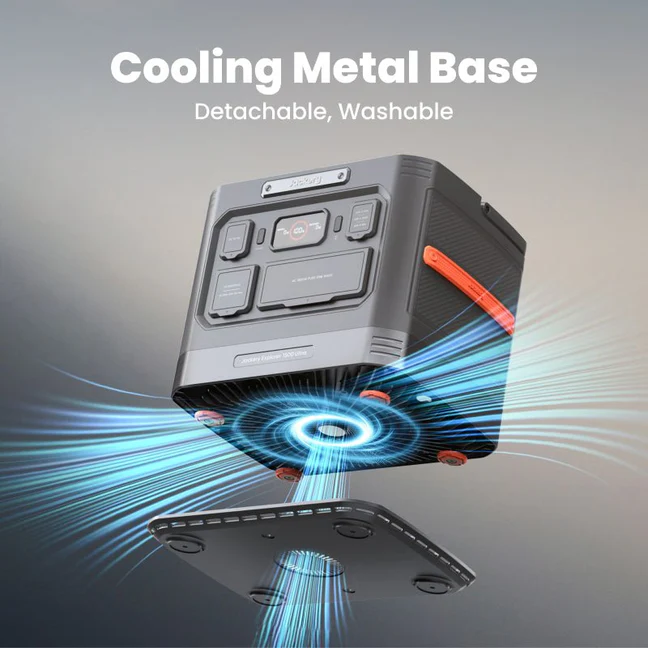
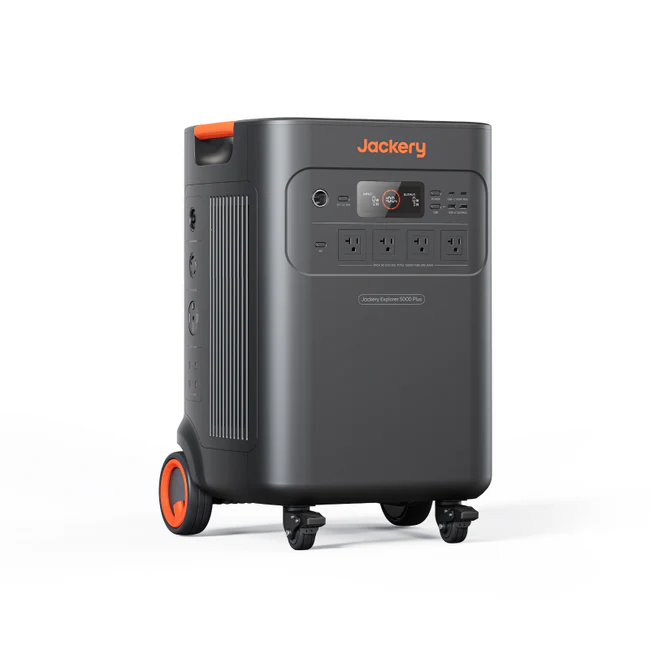
At roughly 16.5 x 15.5 x 25 inches and around 134.5 pounds, the Explorer 5000 Plus is well beyond what most people picture when they hear power station. Even before plugging anything in, it immediately feels like a different category of product. What we appreciated, though, is that Jackery did not try to fake lightness or disguise the size with gimmicks. The design accepts what the unit is and leans into manageability instead.
The rolling form factor makes sense. The overall shape feels appliance-like rather than rugged-for-the-sake-of-it. The body is dense, purposeful, and clearly built for a garage corner, utility space, RV compartment, or backup station in the house rather than picnic-table glamour shots. We liked that honesty. It gives the Explorer 5000 Plus a more grown-up presence than many rivals that still seem unsure whether they are selling emergency equipment or lifestyle gear.
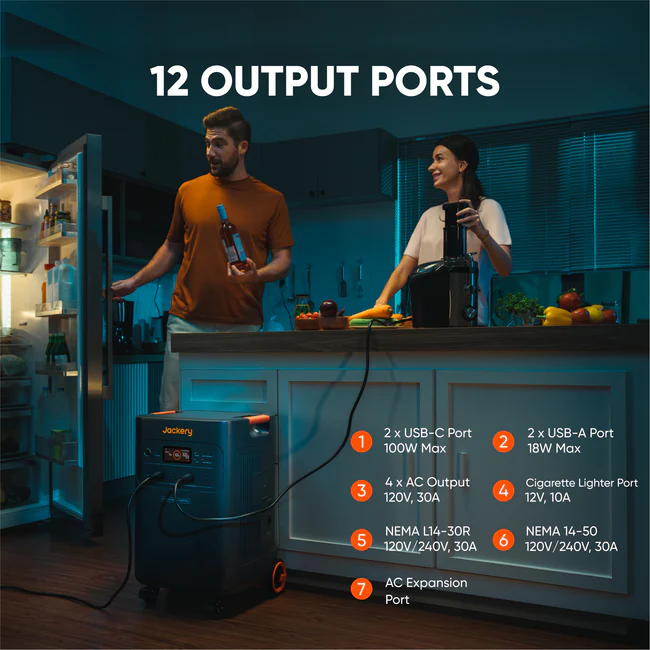
The port selection is also one of the best-balanced parts of the design. You get four 120V AC outlets, plus NEMA L14-30R and NEMA 14-50 outputs for 120V/240V split-phase power. That is the real headline, and it is what separates this unit from the many big batteries that still end up feeling limited once you move beyond standard household plugs. Alongside that, there are two 100W USB-C ports, two 18W USB-A ports, and a 12V car socket, which gives the unit a nice dual identity: serious backup platform on one hand, oversized all-in-one utility hub on the other.
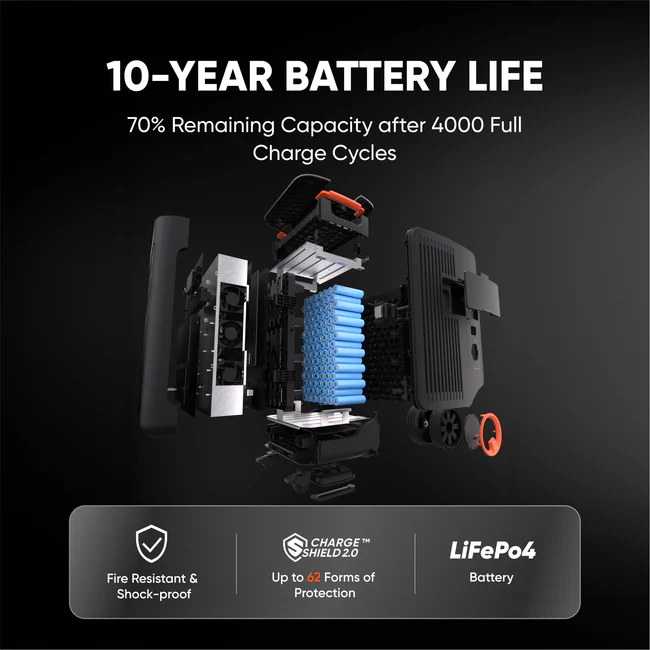
The battery chemistry choice helps too. Jackery uses LiFePO4, rates it for 4,000 cycles to 70%+ capacity, and backs it with a 5-year warranty. At this price and size, that is exactly what we want to see. A product like this needs to feel like durable infrastructure, not a short-lived convenience purchase.
Setup and first use
There are really two ways to experience the Explorer 5000 Plus, and they are very different.
If you buy it as a standalone power station, setup is refreshingly simple. You place it, charge it, power it on, and start using the ports you need. In that role, it is straightforward and surprisingly approachable for such a large unit. The interface is easy to understand, and nothing about basic operation feels intimidating.
The story changes once you move into home-backup territory.
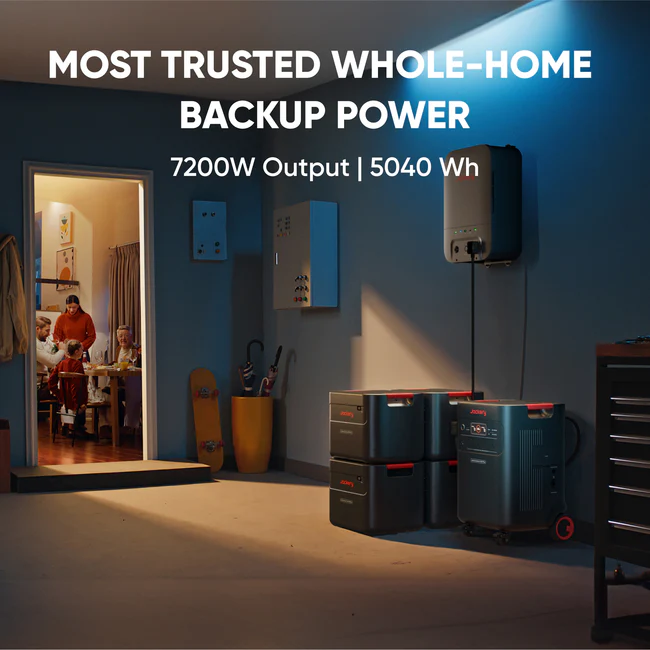
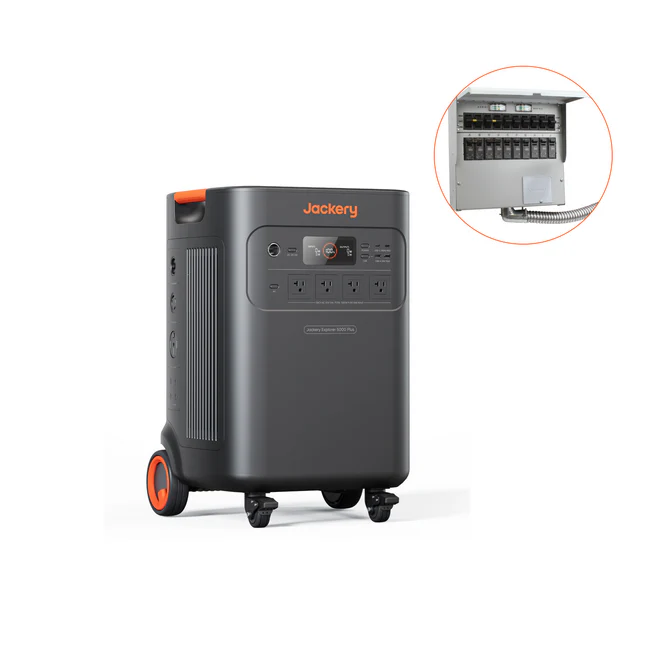
That is where the Smart Transfer Switch comes in, and it is also where the Explorer 5000 Plus starts to justify its price in a more serious way. With the switch, this stops being just a large battery with outlets and becomes something closer to a quiet backup-power system for selected home circuits. That shift is real, and so is the added complexity. This is not a casual accessory purchase once you go that route. It becomes a genuine electrical project, and buyers should treat it as such.
Still, that extra effort buys you something meaningful. Plenty of power stations can keep a fridge, router, or laptop alive with extension cords during an outage. Much fewer products in this class feel ready to integrate into an actual household backup plan with 120V/240V flexibility and a cleaner deployment experience. That is where the Explorer 5000 Plus starts to separate itself.
Real-world performance
This is the area where the Explorer 5000 Plus earns its place.
The core strength is not subtle: it has the muscle to run equipment that instantly exposes the limits of smaller stations. With 7,200W continuous output and 14,400W surge, we are not talking about light-duty convenience loads anymore. We are in the territory of refrigerators, microwaves, heavier kitchen appliances, tools, workshop gear, and selected 240V applications that many so-called high-capacity stations cannot touch.
What stood out to us most was how different the whole experience feels once true split-phase 240V enters the equation. That feature changes the conversation from “how long can this run a few things?” to “can this actually fit into a serious power plan?” For buyers in this price range, that matters more than an extra marketing-friendly port or an app gimmick. Runtime is important, of course, but capability matters first. There is no point having a giant battery if it still cannot power what you actually care about.
At the same time, we would be careful with the idea of whole-home backup. The Explorer 5000 Plus can absolutely play in that world with the right setup, but 5,040Wh is still 5,040Wh. This is not magic. It is powerful, but runtime always depends on what you ask from it. Used intelligently for essential circuits and important loads, it can feel transformative in an outage. Used carelessly with unrealistic expectations, even a battery this large will drain faster than some buyers imagine.
That is why the expansion path matters so much. Jackery allows the platform to scale up to 60kWh, and that gives the system a very different ceiling than a one-box product with nowhere to go. We liked that the base unit feels genuinely useful on its own while still leaving room for bigger ambitions later.
Home-backup use
This is where the Explorer 5000 Plus feels most convincing.
If your main reason for buying it is outage protection, the appeal becomes immediately clear. It offers a cleaner, quieter, far more livable alternative to a gas generator, and that benefit is bigger in daily life than spec sheets often make it sound. No fumes, no engine noise, no fuel storage, and no sense that you are dragging industrial equipment into a home emergency.
The switchover side is also one of the most important practical strengths. Jackery positions the system around fast backup behavior, with UPS backup under 20ms and online UPS at 0ms for critical devices. In use, that kind of response is exactly what makes a backup system feel real rather than improvised. For networking gear, computers, and selected essential circuits, that matters a lot.
What we appreciated most is that this is not trying to win purely on brute-force capacity. It is trying to make battery backup feel civilized. That is a different kind of value. A gas generator can still make sense if raw fuel-based endurance is your only priority, but for indoor-friendly, low-maintenance, quiet backup, the Explorer 5000 Plus feels much more pleasant to live with.

Solar charging and recharge speed
Recharge flexibility is one of the smarter parts of the package.
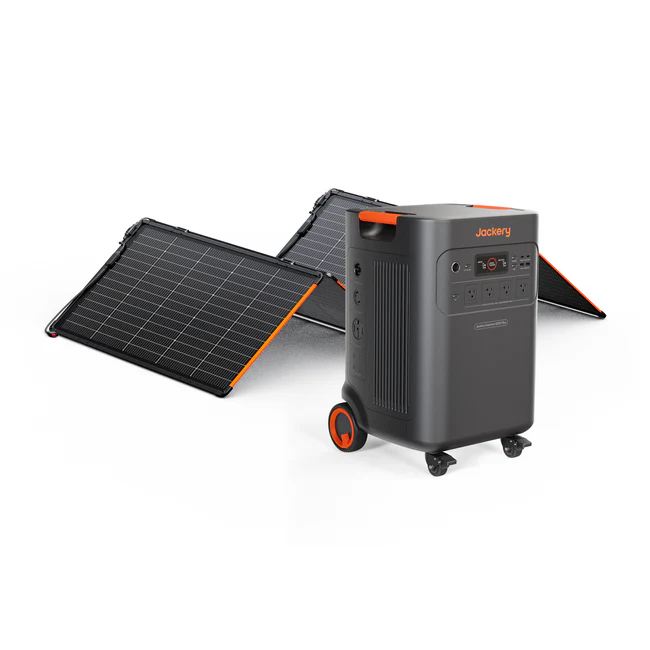
Officially, the Explorer 5000 Plus supports up to 4,000W of charging input and can recharge in about 2 hours in its faster supported configurations. On AC alone, Jackery lists around 3.5 hours, which is still strong for a battery this large. The key point is that this is not one of those giant units that feels impressive until you realize it takes forever to refill.
That said, the best-case numbers come with conditions. In practice, the quickest recharge times depend on using Jackery’s higher-end charging paths, and the same reality applies to solar. Yes, the system supports very high solar input. No, the average starter bundle is not going to come close to maxing that out. We think this is an important distinction, because buyers often see a maximum supported input figure and mentally convert it into everyday performance.
The good news is that even without chasing perfect lab-style conditions, the Explorer 5000 Plus still feels flexible and capable. The better news is that serious buyers who actually plan to build around solar have real headroom here rather than token support.
Convenience, app control, and day-to-day livability
Big power products often get the hardware right and then ruin part of the experience with clumsy software or messy controls. Jackery did a good job avoiding that trap.
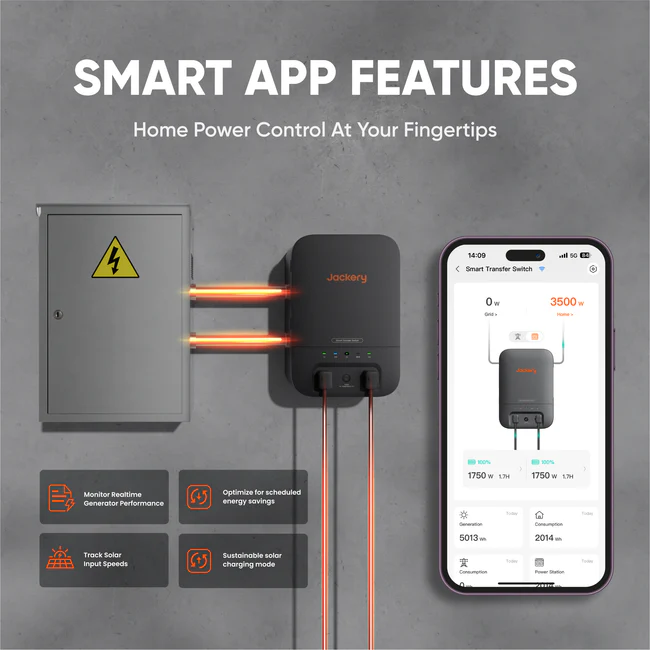
The app is easy to navigate, and the real-time information it provides is actually useful. That sounds basic, but it matters more than people think when a product is meant to serve as backup infrastructure. During an outage or a setup change, you do not want to fight your own equipment just to understand what is happening.
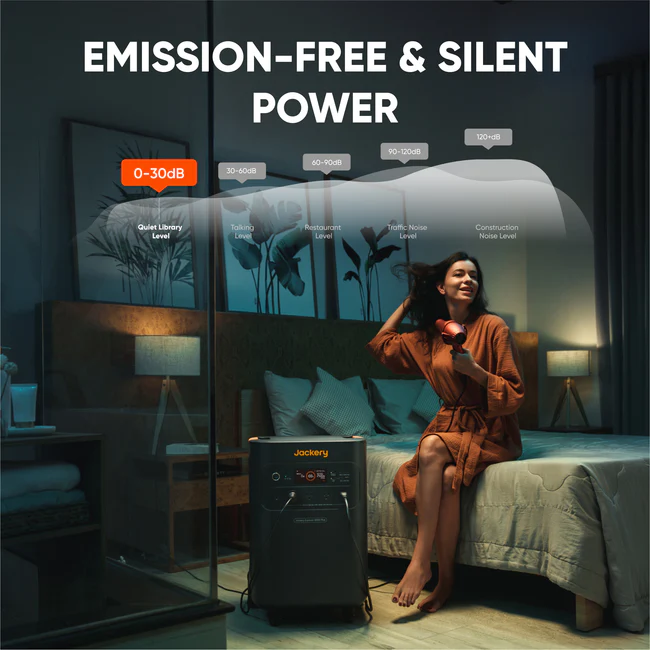
Noise is another major win. For something that can deliver this much output, the Explorer 5000 Plus is impressively quiet in normal use. That changes the way it fits into a home. A noisy machine always feels like a temporary compromise. A quiet one feels like it belongs there.
We also liked that the unit stays useful even when nothing has gone wrong. That matters for ownership. Expensive gear that only proves its worth once or twice a year is hard to love. The Explorer 5000 Plus works better than that. With the mix of AC, USB, and vehicle-style outputs, it can act as a serious utility hub in daily life, during projects, in an RV, or anywhere else that benefits from a lot of clean portable power.
Portability and physical reality
This is the section where we need to be blunt.
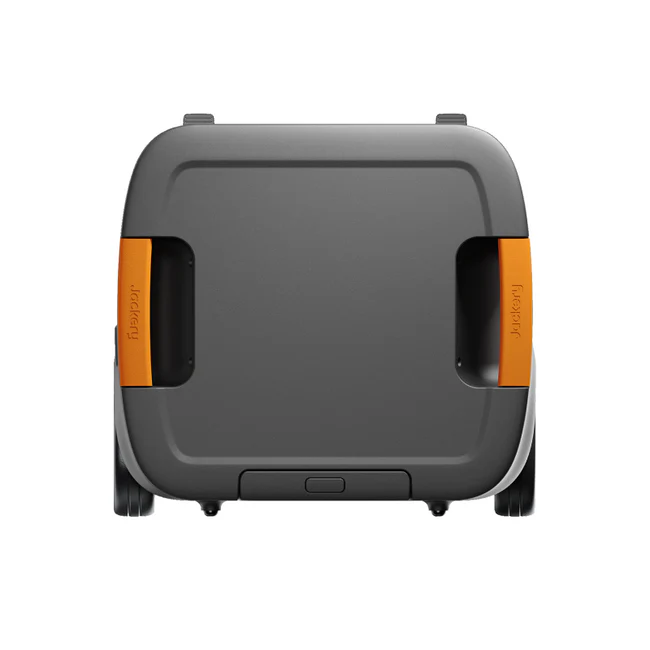
Yes, the Explorer 5000 Plus has wheels. Yes, the design makes movement more manageable than its size suggests. No, it does not feel truly portable in the way most people mean that word.
At 134.5 pounds, this is still a large, heavy object that demands planning. Once it is in position, it makes sense. If you are imagining yourself constantly lifting it in and out of a vehicle, moving it between floors, or treating it like normal travel gear, that fantasy will not last long. For us, the better way to think about it is movable infrastructure. That is still useful. It is just not the same thing as easy portability.
This is one of the biggest dividing lines in the buying decision. Some people will see the weight and decide the capability is worth it. Others will resent it every time they need to relocate the unit. Both reactions are reasonable. It depends entirely on how you plan to live with it.
Flaws and frustrations
The biggest issue is still the most obvious one: size and weight.
No design trick fully changes the reality of moving a 134.5-pound battery. Jackery has made it more manageable, but not effortless. That means placement matters more than with smaller units, and buyers should think carefully about where the Explorer 5000 Plus will live before they buy it.
The second frustration is cost creep. The base unit is already a premium purchase. Once you start adding the Smart Transfer Switch, possible electrician work, permits, extra batteries, and solar, the total investment rises quickly. That does not automatically make it poor value, but it does mean buyers need to price the full plan honestly rather than fixating on the base hardware alone.
The third issue is expectation management. The Explorer 5000 Plus is powerful enough that it invites oversized fantasies. People see 7,200W, 240V, and “whole-home backup” language and start imagining a one-box escape from power constraints. The reality is more grounded. This is a serious machine, but it still rewards sensible circuit planning, realistic runtime expectations, and a clear sense of what problem you are trying to solve.
Value for money
Whether this is good value depends almost entirely on why you are shopping.
If you are simply hunting for the lowest cost per watt-hour, this is not the product we would push you toward first. That is not really what it is designed to win on. The Explorer 5000 Plus makes sense when you value the package as a whole: 240V capability, serious output, clean indoor use, modular expansion, strong recharge flexibility, and a bridge between a large portable station and a more integrated backup system.
That bridge is where the value lives.
We think Jackery understood the gap in the market well. There are buyers who do not want to commit to a fully fixed home battery installation, but who have also outgrown the idea of a glorified camping station. The Explorer 5000 Plus sits directly in that middle ground, and it does so more convincingly than most products that try to play both roles.
Our view is simple. For light users, it is overpriced. For serious outage-prep buyers, demanding RV users, and people who want high-output battery backup without stepping straight into a permanent wall system, it makes a strong case for itself.
Who should buy it
We would recommend the Explorer 5000 Plus to buyers who know exactly why they want it.
It makes the most sense for homeowners who want serious backup power for essential circuits, RV users with real electrical demands, and anyone who specifically needs 240V capability in something more flexible than a permanent installation. It is also a strong fit for people who are tired of the compromises that come with gas generators and are willing to pay for a quieter, cleaner, more refined backup experience.
Who should skip it
We would skip it if the use case is mostly camping, tailgating, or casual convenience power. We would also skip it if frequent lifting and moving are part of the plan, because this is simply too heavy to feel carefree. And if the budget only comfortably covers the base unit while the real vision depends on more batteries, more solar, and a transfer-switch installation, that is another warning sign.
This is a product that rewards clear thinking and punishes vague ambition.
Final verdict
The Jackery Explorer 5000 Plus feels more impressive the longer we sat with the practical questions.
At a glance, it is easy to dismiss it as just another very large power station chasing bigger numbers. But that is not really what it is. Once we looked at the total package, what stood out was how successfully it crosses into real backup-system territory. The 7,200W output matters. The 240V split-phase support matters. The expansion path matters. The quiet indoor livability matters. And together, those things give it a level of seriousness that many rivals never quite reach.
It is still heavy. It is still expensive. And it is still far too much machine for buyers with small, casual needs.
But for the right person, that is exactly why it works. The Explorer 5000 Plus is not trying to be a fun oversized battery. It is trying to be dependable backup equipment that happens to remain more flexible than a fixed installation. In that role, it is one of the most convincing products Jackery has made.
FAQ
Is the Jackery Explorer 5000 Plus really portable?
Technically, yes. Practically, only to a point. The wheels and form factor help, but at around 134.5 pounds, this is much closer to rolling backup equipment than something you will want to carry around often.
Can it run 240V appliances?
Yes. That is one of the main reasons it stands out. The Explorer 5000 Plus supports 120V/240V split-phase output, which opens the door to far more serious applications than a typical high-capacity power station.
How fast does it recharge?
It depends on the charging method. Jackery lists about 3.5 hours on AC adapter charging, while higher-input supported configurations can bring that down to around 2 hours.
Can it work as an automatic home backup system?
Yes, with the right setup. On its own, it works as a powerful standalone station. Pair it with the Smart Transfer Switch, and it becomes a much more integrated backup solution for selected home circuits.
Is one Explorer 5000 Plus enough for whole-home backup?
Usually not in the no-compromise sense many people imagine. A single 5,040Wh unit can absolutely support essential loads, but total runtime still depends on what you are running. Larger ambitions are exactly why the expansion path exists.
Does it support solar charging in a serious way?
Yes. The platform supports up to 4,000W of charging input, including solar-focused configurations. The important caveat is that real-world performance depends heavily on how much solar hardware you actually deploy.
Is it better than a gas generator?
For quiet, indoor-safe, low-maintenance backup, it has clear advantages. For buyers who care most about endless refueling potential and do not mind noise, fumes, and engine maintenance, a gas generator can still make sense. We see the Explorer 5000 Plus as a cleaner and more convenient alternative, not a universal replacement for every scenario.
Explore the Jackery Explorer 5000 Plus Gallery
Every image from this article, gathered in one clean place. Tap any photo to open it larger.