
POWERCOOL HANDY 2026
Pros
- Real refrigerant-based air conditioning, not an evaporative cooler dressed up with better marketing
- Dual-use design that can run as an all-in-one unit or as a split system
- Optional 24V 40Ah / 960Wh battery makes genuine off-grid use possible
- Smarter answer to the usual noise, heat, and efficiency compromises of portable ACs
- Compact indoor section that feels intentionally designed for close-range use
- Strongest use cases are clear and genuinely practical
Cons
- 650 W cooling output limits it to personal or small-zone cooling
- Best experience depends on using the split configuration, which means more setup and more parts
- The full system is portable, but not "grab one tiny box and go" portable
- Too specialized to make sense as a general-purpose home AC purchase
the split-or-all-in-one design , the optional battery-powered operation , the fact that it uses real refrigerant cooling , and the way it tackles the usual noise and heat problems that make many portable ACs disappointing.
the 650 W cooling capacity immediately tells you this is not a broad-room cooling machine, and once you include the indoor unit, outdoor unit, hose, and optional battery, "portable" is true, but only if you understand what kind of portable system this really is.
The POWERCOOL HANDY 2026 is the kind of product that makes more sense the longer you live with the idea behind it. On paper, the headline number looks modest. In practice, what matters is that this is a real refrigerant-based portable air conditioner built around a smarter layout than most of the category.
We came away seeing it as a genuinely useful small-zone cooling tool for camping, temporary work areas, mobile setups, and emergency comfort, not as a fake do-everything room AC pretending to be more than it is. That distinction matters, because when you judge it for the job it is actually built to do, the HANDY is much easier to respect.
What is confirmed
Before getting into what it feels like to evaluate this product properly, there are a few basics that shape the whole verdict.
First, this is not some vague concept floating around a trade show booth. The HANDY line has already existed, and the 2026 framing comes from its newer public push as a hybrid portable air conditioner positioned not only for leisure use, but also for tougher environments like work sites, disaster response, shelters, and temporary industrial situations. That broader positioning actually fits the product well. It never made the most sense to us as a normal home appliance. It makes far more sense as a cooling tool for places where permanent installation is unrealistic or impossible.
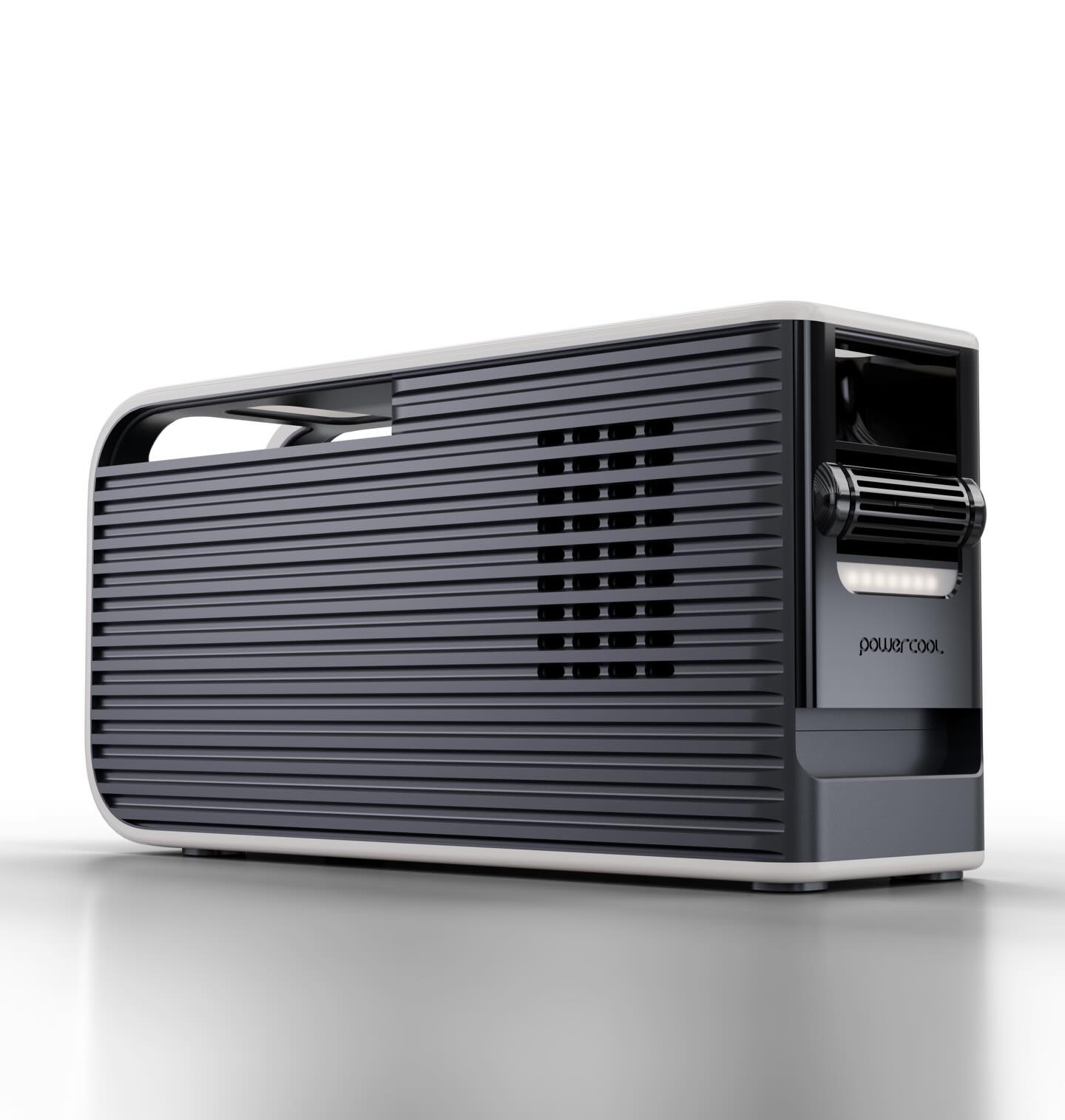
Second, the core numbers matter because they set expectations fast. The product is listed with 650 W cooling capacity, 240 W power consumption, DC 24V power, R-134a refrigerant, and an optional 24V 40Ah / 960Wh battery. The indoor module is listed at 3.6 kg, the outdoor unit at 7.9 kg, the hose at 2.5 kg, and the battery at 4.7 kg. Those figures tell the story almost immediately: this is impressively compact for a real AC system, but it is still a system, not a miracle gadget.
And that last point is where a lot of portable cooling products go wrong. They are either glorified fans dressed up as air conditioners, or they promise room-scale performance that their real-world design cannot deliver. The HANDY feels more honest than that. It knows it is niche. It knows it is modular. It knows its biggest advantage is not brute-force output, but smarter deployment.
Design and build quality
What stood out to us most was not the styling by itself, but the fact that the design has a clear purpose.
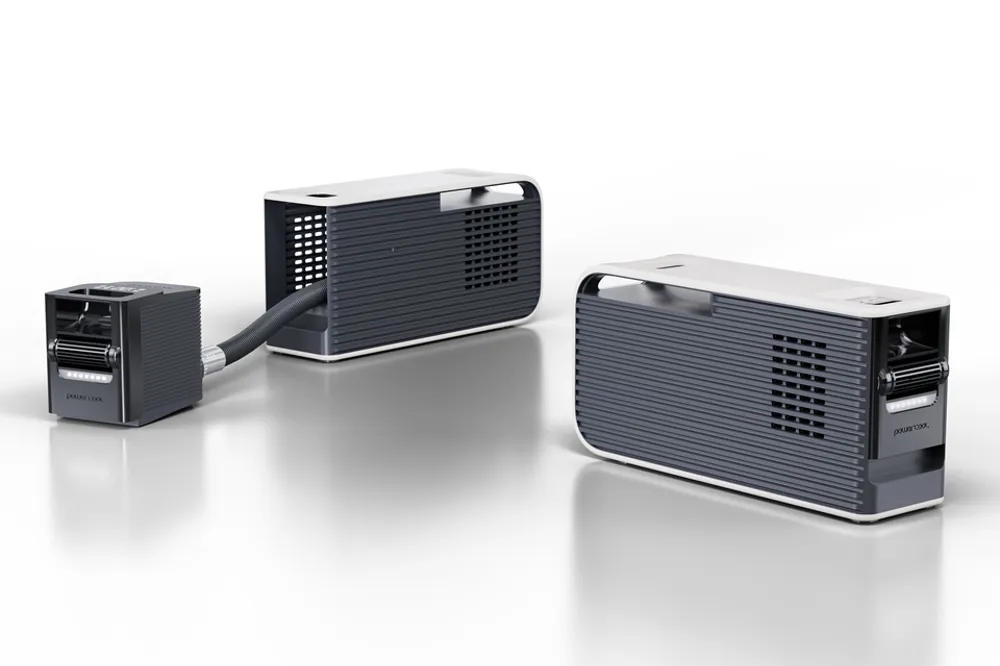
A lot of products in this space try to look futuristic and stop there. This one feels as though the design started with a real annoyance: why are so many portable ACs still built around compromises that make them hot, noisy, awkward, and less efficient than buyers expect? The HANDY’s answer is simple and actually useful. It can work as an all-in-one unit or as a split system, which means you can move the hot, noisy side away from the part sitting near you.
That sounds obvious once you say it out loud. It is also the whole reason the product is interesting.
The indoor unit has a compact, tool-like feel rather than the bulky look of a conventional portable appliance. It looks intentional in a small space. The handle-forward form factor, the top controls, and the directional front airflow all give the impression that this thing is meant to be moved, placed, and used tactically rather than parked in a room forever. We liked that immediately because it matches the product’s purpose. It does not pretend to be furniture. It feels like equipment.
More importantly, the physical separation of indoor and outdoor sections is not just a gimmick. In portable ACs, that layout changes the experience in ways buyers actually care about. When the noisy, heat-producing part of the system is no longer right beside you, comfort improves fast. The product’s logic becomes much easier to understand in real use than it does in a spec sheet.
Setup and first use
The first thing that became clear to us is that this product really has two personalities.
In all-in-one mode, the appeal is obvious: quick deployment, fewer moving parts in the moment, and a faster path to immediate cooling. If you need something working quickly, that convenience matters. There is a reason the mode exists, and for certain temporary situations it will absolutely be the easiest way to use the HANDY.
But the second thing that became clear just as quickly is that split mode is the reason to buy it.
That is where the product stops being just another small portable cooler and starts feeling like a genuinely better idea. Once the hot side is moved away from the people side, the entire concept snaps into focus. The indoor portion feels cleaner, quieter, and more comfortable to live next to. Instead of fighting the usual portable-AC problem where the machine seems to be working against its own waste heat and noise, the HANDY begins to behave more like a practical, deployable version of a split system.
That does not mean setup becomes effortless in the way a fan is effortless. It is still a modular product. You are dealing with separate pieces, a connection hose, and potentially a battery as well. But it never struck us as fussy in the wrong way. It felt more like the kind of setup you accept because the benefit is obvious once everything is in place.
That tradeoff is important. People who hate any extra handling at all are not the right audience. People who care about placing cooling exactly where they need it, while pushing the unpleasant parts of the system away from them, are much more likely to appreciate what is happening here.
Real-world performance
This is where expectations need to stay grounded.
The HANDY is rated at 650 W, which is roughly 2,200 BTU/h. That is not a big-room number. It is not a bedroom-replacement number. It is not the kind of output we would ever describe as full-room home cooling. If someone buys this expecting it to behave like a window unit or a conventional residential solution, disappointment is almost guaranteed.
But that is also not the right frame for judging it.
In practice, this feels like a product built for personal cooling, spot cooling, and small-zone comfort. It makes sense when the goal is to cool the people, not the whole structure. That sounds like a smaller ambition, but in many real situations it is the more practical one anyway. A directed stream of real cold air in a tight, hot environment can be far more useful than a louder, clumsier machine that technically has bigger numbers but is miserable to place and use.
That is why the HANDY never felt underengineered to us. It felt intentionally limited in the right direction. Powercool has clearly chosen portability, modularity, and battery compatibility over chasing capacity numbers that would make the system heavier, bulkier, and less realistic to move around. We think that was the right decision for this category.
The power story is one of the product’s stronger points. With official consumption listed at 240 W and the optional battery at 960Wh, the quoted runtime of up to four hours feels meaningful rather than decorative. That is enough to turn this from an interesting portable AC concept into something that can actually solve short-duration comfort problems where wall power is limited or unavailable. In a field setup, a tent, a temporary rest area, or a short emergency use case, that makes a real difference.
Use-case performance
This is one of those products where buyer fit matters more than average.
Camping and tents
This is one of the clearest use cases. In a tent or enclosed temporary shelter, heat and noise are a big part of what makes sleeping miserable. The HANDY’s split capability directly addresses both. Once the outdoor portion is moved away and the cooling side stays near the user, the product makes far more sense than the usual one-body portable unit that dumps too much of its own unpleasantness back into the same space.
We would not treat it as a solution for huge tents, brutally hot midday family camping setups, or unrealistic full-space cooling expectations. But for personal comfort or a small enclosed zone, it feels intelligently designed for the job.
Mobile work areas and field use
This is another strong fit. Construction-style environments, temporary site offices, tunnels, event back areas, emergency response spaces, and short-term shelters are exactly the kinds of situations where a normal AC installation is either excessive or impossible. Here, the value of the HANDY shifts from “Can it cool a room?” to “Can it quickly give a person or small group meaningful relief where they actually are?” That is a much smarter standard for a machine like this.
And judged that way, the HANDY looks far more convincing.
Events and temporary hospitality
We also think this is an underrated angle. Waiting areas, pop-up event spaces, temporary green rooms, and mobile hospitality setups are all environments where appearance and deployment speed matter almost as much as the cooling itself. The indoor section looks compact and presentable enough to work in those spaces without screaming “industrial fan.” That gives it an advantage over rougher-looking equipment that may cool but feels out of place.
Home use
This is where we would be much more cautious.
Can you use it at home? Of course. Should most people buy it for home cooling? Probably not. If your real goal is cooling a bedroom, office, or living room in a typical house, there are better tools for that job. The HANDY is not weak in an absolute sense. It is specialized. Those are two different things, and buyers who blur that line are the ones most likely to get this product wrong.
Convenience and comfort
The longer we sat with the idea of this product, the more one word kept fitting: practical.
Not cheap. Not universal. Not for everyone. Practical.
It feels designed by people who were tired of the same portable-cooling headaches everyone else complains about. Too much noise indoors. Too much heat indoors. Too much dependence on a fixed outlet. Too much compromise between portability and actual cooling. The HANDY does not eliminate every tradeoff, but it does rearrange them in a smarter way.
The optional battery is a huge part of that practicality. Plenty of products like to call themselves portable while quietly assuming you are near a plug the whole time. The HANDY at least gives you a credible battery-powered path, which makes it much more useful in the exact environments where portability actually matters.
Comfort is also about how annoying a product becomes over time. That is where many portable ACs lose people. Even when they technically work, they can be bulky, loud, awkward, and ugly enough that you stop wanting to use them. The HANDY seems built to avoid that trap. The indoor side is compact enough to feel intentional, and split mode removes a big part of what usually makes portable AC ownership feel like a compromise.
Flaws and frustrations
The biggest weakness is also the easiest one to explain: capacity.
If someone sees the words “portable air conditioner” and assumes room-scale cooling, this product is already headed toward the wrong owner. The 650 W figure is the reality check. This is not a living-room AC in disguise. It is not a mini-split substitute. It is not for buyers who want to lower the temperature of a medium or large indoor space and call it a day.
The second drawback is that portability here is modular portability, not effortless portability. The indoor unit alone is light enough to feel easy. The full system is another story. Once you account for the outdoor unit, hose, and optional battery, you are moving a multi-piece setup. That is still reasonable for what this product is trying to do, but it absolutely changes the meaning of the word portable.
The third issue is that the all-in-one mode, while useful, is also the mode that drags the product back toward the compromises it is otherwise trying to solve. It is convenient, yes. But it is not the mode that makes the HANDY special. Split mode is where the product earns its premium logic. Buyers who never plan to use it that way are leaving the best part of the design on the table.
And finally, this is still a niche product with a niche buyer. We think that is a strength, not a flaw, but it does mean the HANDY is easy to mis-buy. The people who will love it are the ones with a very specific problem. Everyone else may wonder why they did not just buy a stronger conventional solution instead.
Value for money
The HANDY is not the kind of product we would judge by raw cooling-per-dollar alone.
If that is your metric, it is probably not the best answer. A more conventional AC will usually win that fight if the goal is simple room cooling.
But that is not really what you are paying for here. You are paying for cooling flexibility. You are paying for a real AC system that can be moved, deployed temporarily, run from an optional battery, and used in places where standard home cooling hardware is awkward or impossible. That is a different kind of value.
So our read is simple: if you are buying it as a problem-solving tool for the kind of environments it was clearly designed around, the value case is strong. If you are buying it as a substitute for a normal room air conditioner, the value case falls apart fast.
Who should buy it
Buy the POWERCOOL HANDY 2026 if you need real cooling in places where normal air conditioning is unrealistic, excessive, or simply unavailable. We think it makes the most sense for campers who actually care about sleeping comfortably, mobile crews who need localized relief, event operators creating temporary comfort zones, and anyone who understands that small-scale real cooling can be more useful than bigger, clumsier cooling in the wrong form factor.
It is also a good fit for buyers who immediately understand why moving the hot side away matters. Those are the people who will “get” this product very quickly.
Who should skip it
Skip it if what you really want is a normal room air conditioner.
Skip it if your priority is maximum cooling output for the money, completely hassle-free setup, or cooling an entire bedroom, office, or living room. Skip it too if you know you are never going to bother with the split setup, because that is the whole point of the HANDY. And if you are shopping with the vague idea that every product labeled “portable AC” should behave like a small home HVAC replacement, this is not your product.
Final verdict
The POWERCOOL HANDY 2026 earns its place by being smarter, not bigger.
What we appreciated most is that it does not try to win with fantasy expectations. It wins by fixing the exact things that usually make portable ACs frustrating: too much heat indoors, too much noise indoors, too much reliance on fixed installation, and too much of the wrong kind of compromise. That makes it feel focused rather than gimmicky.
Our verdict is straightforward. As a general-purpose home AC, it is not the right buy. As a premium niche cooling tool for camping, temporary workspaces, mobile setups, emergency comfort, and targeted personal cooling, it is one of the more intelligently designed products in its class. If you need what it specifically does well, we think it is easy to take seriously. If you do not, it is easy to misunderstand.
FAQ
Is the POWERCOOL HANDY 2026 a real air conditioner?
Yes. It uses R-134a refrigerant and has a stated 650 W cooling capacity, so this is real compressor-based air conditioning, not an evaporative cooler pretending to be something else.
What makes it different from a normal portable AC?
Its biggest differentiator is the ability to work as a split system, which lets you move the hot and noisy side away from the user. That is the core idea that makes the product feel smarter than a typical one-body portable AC.
Can it run on battery?
Yes. The optional battery is listed at 24V 40Ah / 960Wh, with quoted runtime of up to four hours.
Is it actually portable?
Yes, but it is best understood as a portable system. The indoor unit is 3.6 kg, the outdoor unit is 7.9 kg, the hose is 2.5 kg, and the optional battery is 4.7 kg. The indoor piece is easy to handle; the full setup is still portable, but more involved.
Can it cool a whole room?
We would not buy it for that. Based on the 650 W rating, it makes much more sense for spot cooling, personal cooling, and small enclosed zones than for broad room-scale air conditioning.
Is there a heating version?
The broader Handy line includes references to PCH-500 / PCH-500H, and the family appears to include a heating-capable variant alongside the cooling-focused model.
What are the best use cases for it?
The strongest fits are camping, temporary shelters, mobile work areas, event spaces, waiting zones, and emergency situations where fast deployment and targeted comfort matter more than cooling a full room.
Is it certified?
The Handy line is listed with CE, NRTL, and KC certifications.
Explore the POWERCOOL HANDY 2026 Gallery
Every image from this article, gathered in one clean place. Tap any photo to open it larger.