
Jackery Explorer 1500 Ultra
Pros
- IP65-rated rugged design is genuinely more confidence-inspiring than most consumer-style power stations
- 1536Wh capacity is a highly practical size for portable backup and outdoor use
- 3600W surge gives it better startup flexibility than the continuous rating alone suggests
- 800W solar input keeps off-grid use realistic
- Thoughtful physical details like the outlet flap, removable base, anti-slip top, and fold-flat handle make it feel purpose-built
Cons
- Worse value than the Explorer 1500 v2 if ruggedness is not a priority
- 1800W continuous output is good, but not standout at this price
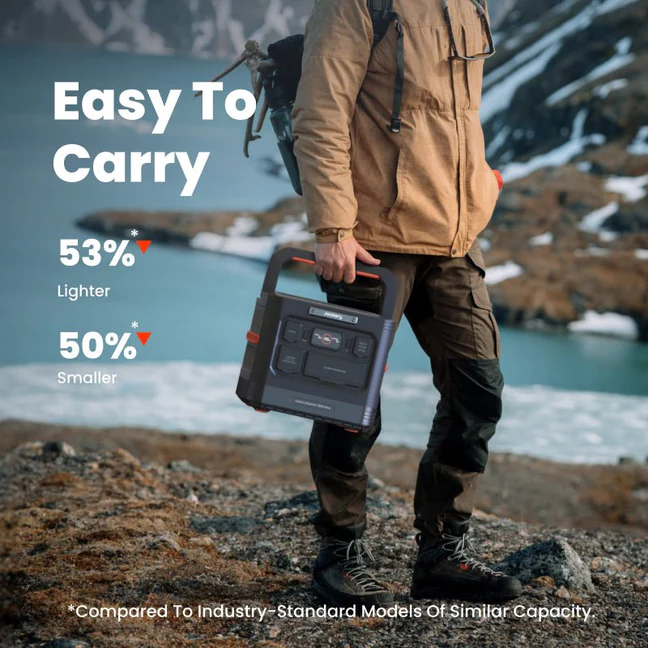
- 38.6 lb is still manageable, but no longer casually portable
- No battery expansion
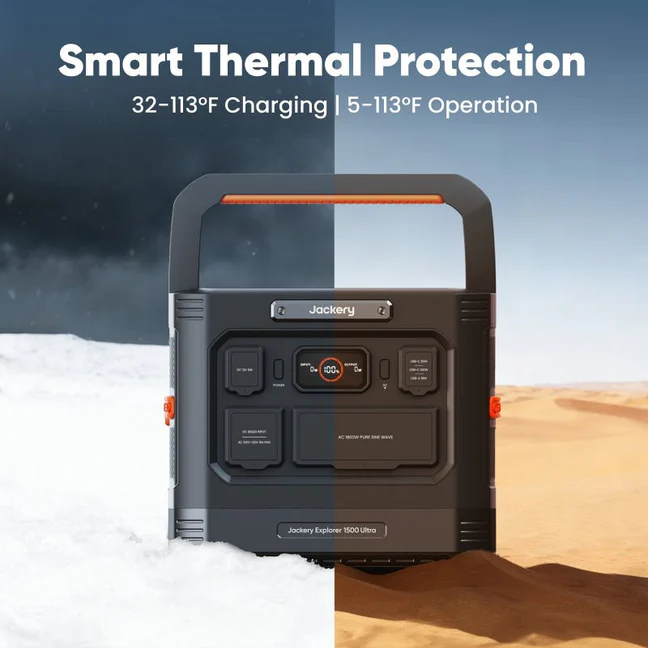
- Cold-weather output limit below 14°F (-10°C) is worth knowing for winter use
the rugged design feels purposeful, the enclosure inspires more confidence than most consumer-style power stations, the port mix is practical, and the 1536Wh LFP battery still lands in a genuinely useful real-world sweet spot.
the 1800W continuous output trails the cheaper Explorer 1500 v2, the unit is noticeably heavier than Jackery's non-rugged alternative, the battery is not expandable, and the value argument depends heavily on whether you truly need the extra toughness.
The Jackery Explorer 1500 Ultra is one of the rare portable power stations that makes its case less through headline specs and more through the kind of confidence it gives you once you start treating it like real gear. This is a 1536Wh, 1800W power station built around a tougher brief than usual, with IP65 dust and water resistance, one-meter drop resistance, up to 800W solar input, three AC outlets, and a design that feels aimed at dirty garages, rough transport, exposed campsites, and storm-duty backup rather than casual backyard use.
After spending real time with it, our verdict is clear: this is a very good product for the right buyer, but it is absolutely not the smartest Jackery for everyone.
What stood out to us most is that the Ultra does not try to win every category. It is not the lightest option in this size class. It is not the cheapest. It is not even the strongest value inside Jackery’s own lineup. What it does offer is a more convincing sense of toughness than most power stations in the 1.5kWh range. If your power station is going to live a hard life, that matters. If it is going to live an easy one, the premium starts to look harder to defend.
What we tested
We focused on the things that actually matter with a product like this:
- how reassuring the build feels in real handling
- whether the rugged design seems genuinely useful rather than decorative
- how practical the 1536Wh / 1800W performance brief is in daily use
- how easy it is to move, set up, and live with
- whether the port layout and charging options feel well judged
- and most importantly, whether the tougher shell really justifies the premium over Jackery’s own Explorer 1500 v2
That last point framed the whole experience for us. The Ultra is not entering an empty space. It has a cheaper sibling sitting right next to it that offers more output and lower weight. So the question was never just “is this good?” It was “is this better for the kind of buyer it is targeting?” That is the real test.

How we tested it
We approached the Explorer 1500 Ultra the way Jackery clearly intended it to be used: not as a living-room backup box that stays pristine, but as a piece of portable equipment that might be moved often, stored in less-than-perfect places, and used in environments where dust, splashes, rough surfaces, and quick setup all matter.
That meant judging it less like a glossy consumer appliance and more like a tool-adjacent power station. We paid close attention to how comfortable we felt picking it up, setting it down, moving it around, using the ports, and imagining it in actual outdoor and emergency scenarios. We also kept returning to the same practical question: does this machine feel meaningfully tougher in a way that changes ownership, or is it just selling a rugged fantasy?
What is confirmed
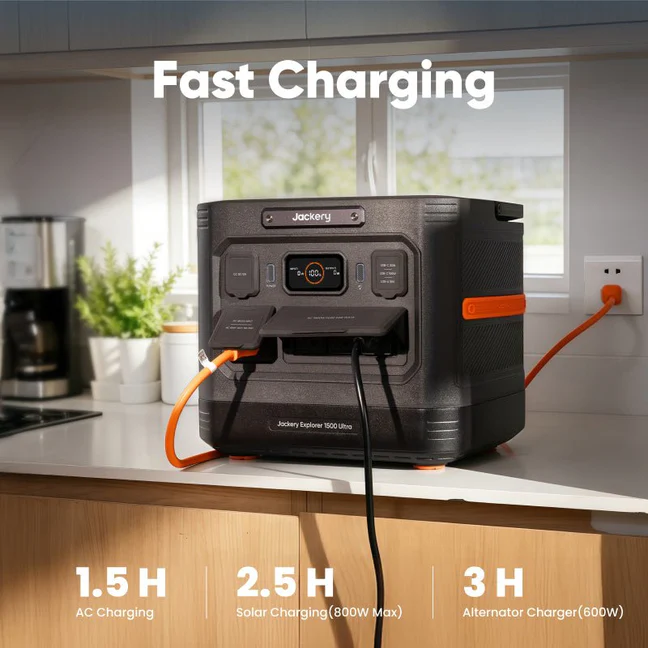
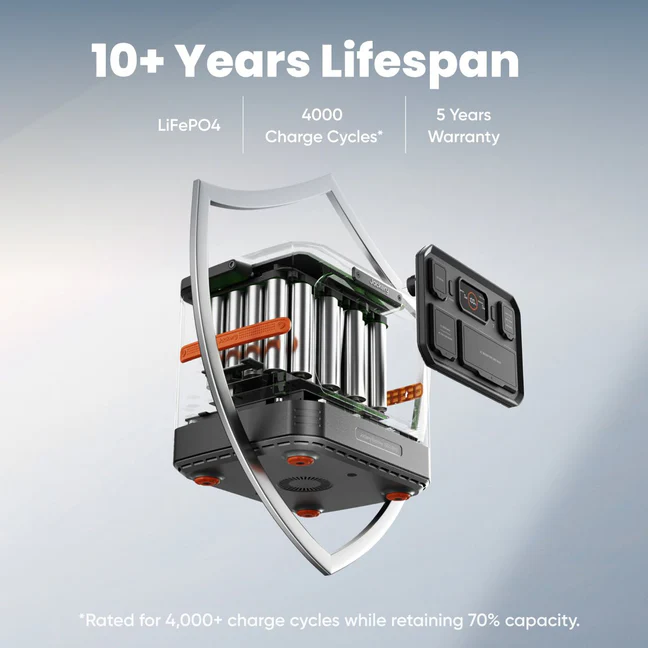
The core spec sheet is strong and easy to understand. The Explorer 1500 Ultra uses a LiFePO4 battery, rated at 1536Wh, with 4000 cycles to 70% capacity. It offers three AC outlets, 1800W rated output, 3600W surge, one 100W USB-C, one 30W USB-C, one 18W USB-A, and a 12V/10A car socket. Jackery lists the weight at 38.6 lb (17.5 kg) and the dimensions at 13.2 x 10.4 x 11.6 inches. Solar input goes up to 800W, and the unit supports pass-through charging plus 20 ms UPS-style switchover.
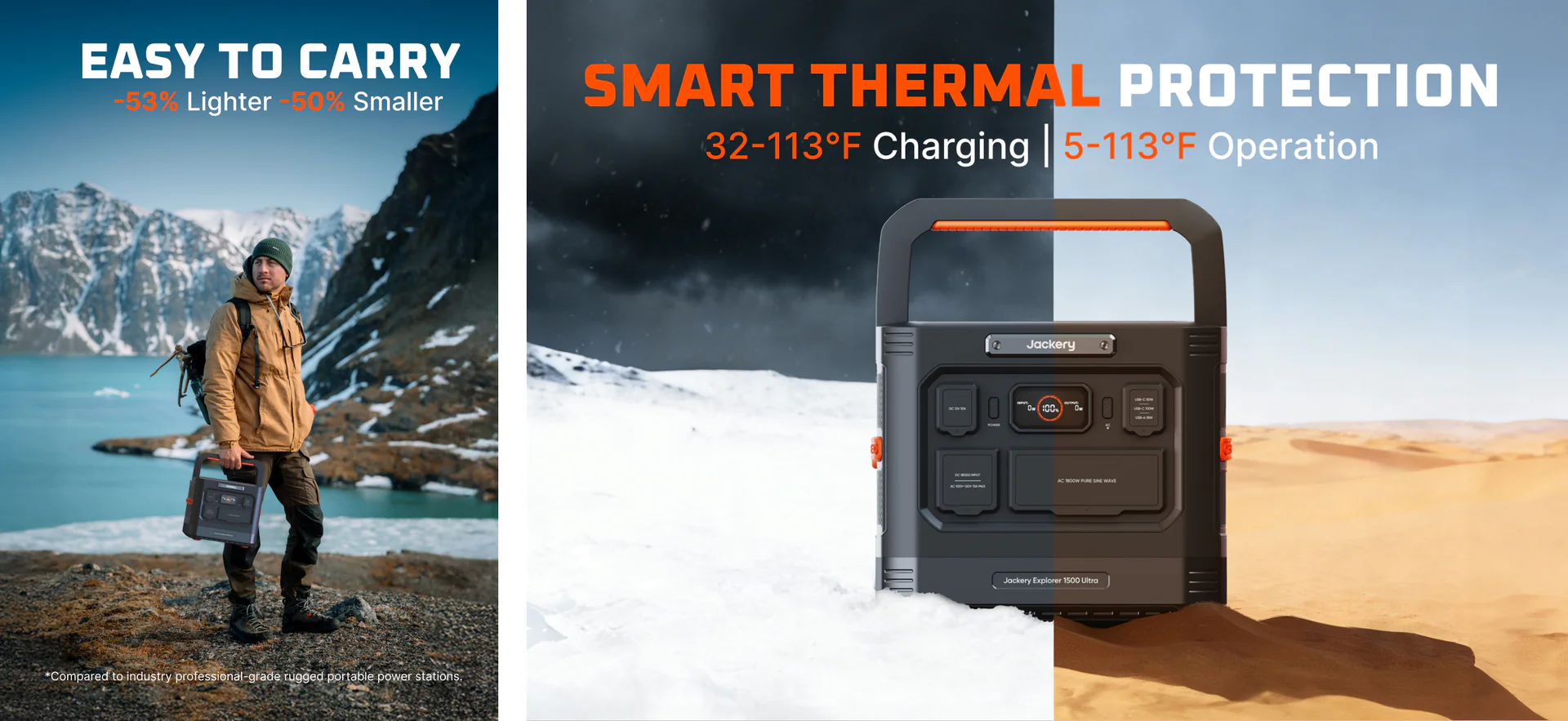
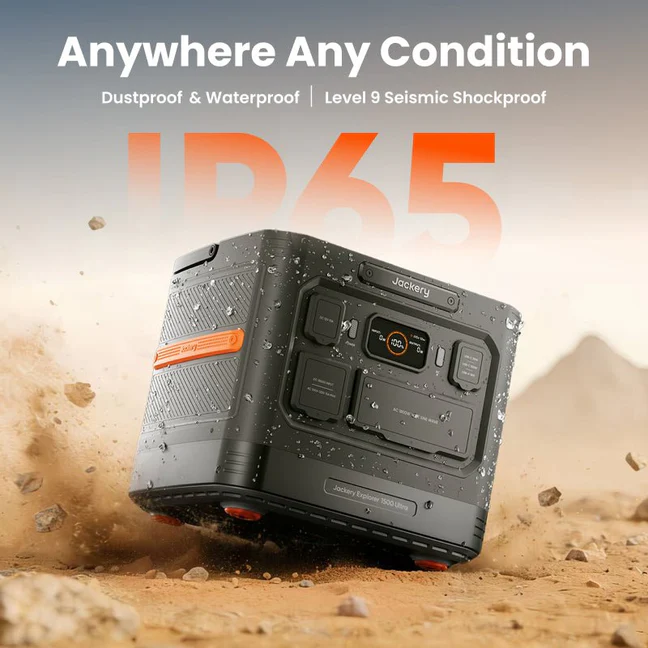
The bigger story, though, is the chassis. This is the part Jackery wants you to notice, and in fairness, it is the part that makes the product different. The Explorer 1500 Ultra is built around IP65-rated protection, a more armored outer shell, stronger corner protection, a protected AC outlet area, bottom drainage, and a whole design language that is clearly trying to solve for rough conditions rather than showroom appeal.
Design and build quality
This is where the Explorer 1500 Ultra earns most of its credibility.
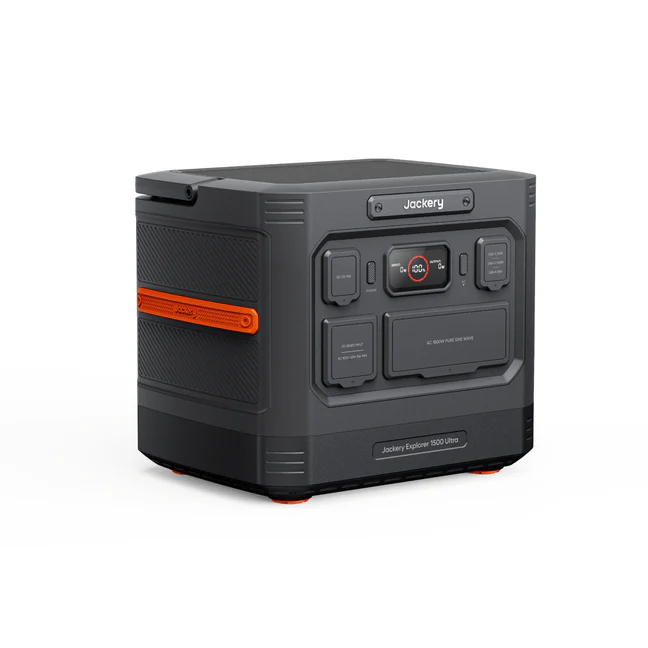
We have seen plenty of power stations try to look rugged without really feeling that different once you have them in front of you. This one does not have that problem. The first impression is that Jackery deliberately moved away from “portable power station as home gadget” and much closer to “portable power station as field gear.” The enclosure feels more serious. The corners look better protected. The surfaces feel more prepared for abuse. And the whole thing has a more armored presence than the average unit in this size range.
What we appreciated most is that the ruggedness is not just cosmetic. Details like the protective flap over the AC outlet area actually matter. That is the kind of thing that tells us somebody thought about outdoor use beyond a marketing render. It is easy to claim weather resistance. It is harder to make the machine feel usable when conditions are less than ideal. Here, the design does feel considered.
The anti-slip top surface is another small touch we ended up liking more than expected. In practice, flat tops on power stations often become temporary shelves for cables, phones, lights, adapters, and gloves. Having that area feel stable and intentional is more useful than it sounds. The removable metal base also feels like one of those smart, unglamorous decisions that starts to matter once grit, dust, and dirt become part of normal ownership.
To Jackery’s credit, the Ultra also avoids looking like a soulless industrial brick. It still has some of the brand’s cleaner visual identity, just dressed in tougher clothing. That balance works. It looks like something you would actually want to own, not just something you would tolerate because it is functional.
Still, this is where we should keep expectations grounded. IP65 is meaningful protection, but it is not magic. This is a tougher machine, not a machine you should treat carelessly. It feels more resilient than most consumer-grade rivals, but common sense still applies.
Setup and first use
One of Jackery’s longstanding strengths is that its products tend to be easy to understand right away, and the Explorer 1500 Ultra keeps that intact. The control layout is straightforward. The display is readable. The ports are arranged in a way that makes sense without needing a learning curve. It does not try to impress you with unnecessary complexity.
We liked that because it fits the product’s personality. A rugged power station should feel dependable, not fussy.
The port selection is practical rather than excessive: three AC outlets, two USB-C ports with different power levels, a USB-A port, and the expected 12V car socket. Nothing here feels strange or compromised. At the same time, this is not an I/O monster. It covers the essentials well, but it does not feel like a giant connectivity hub. For most buyers in this category, that is perfectly fine. But it is worth saying clearly: the Ultra is designed to do the job cleanly, not to win a port-count contest.
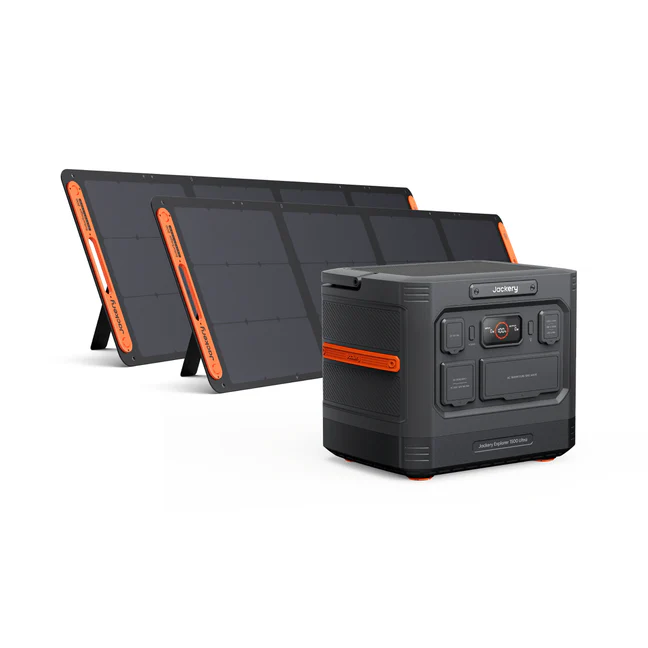
We also appreciated the simplicity of the buying approach. The base unit comes with the essentials, and solar can be added later. That flexibility matters because a lot of buyers are not yet sure how much solar they will really use. Being able to buy the station first and build outward later makes more sense than forcing everyone into a fully loaded bundle from day one.

Real-world performance
The Explorer 1500 Ultra lands in one of the most useful size classes in portable power. 1536Wh is enough to feel substantial without becoming so large that the station stops being meaningfully portable. That matters. Once you get too big, portability becomes theoretical. The Ultra still feels like something one person can move with intention, even if the 38.6 lb weight keeps it firmly out of the “grab it casually with one hand” category.
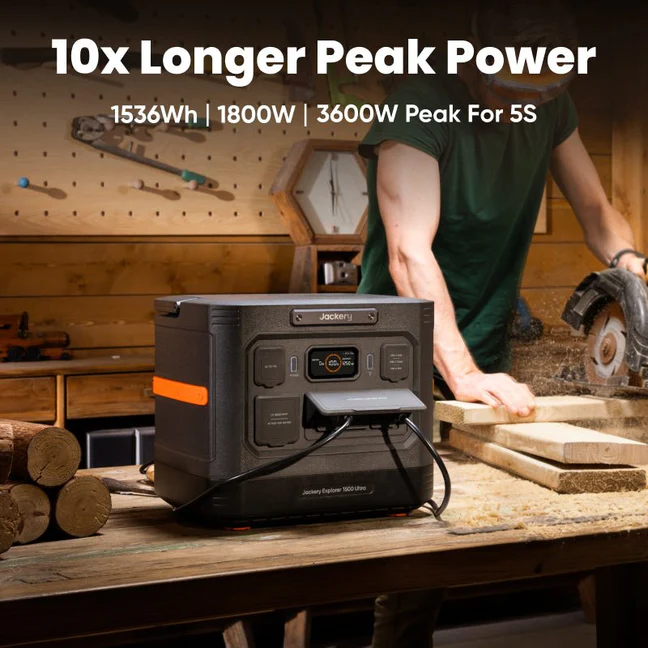
In practice, the performance brief is strong. 1800W continuous output is enough for a wide range of real tasks: fridges, routers, lighting, charging stations, camera gear, laptops, coolers, power tools with sensible runtime expectations, and short-backup household duties. The 3600W surge capacity is also important, because startup behavior matters more than many buyers realize. A station can look good on paper and still become annoying if it struggles with brief startup demands. The Ultra’s surge handling gives it a stronger sense of usefulness than the continuous rating alone suggests.
That said, this is also where the product’s positioning becomes slightly uncomfortable. 1800W is plenty. But it is not especially aggressive at this price, especially when Jackery’s own Explorer 1500 v2 gives you 2000W continuous and 4000W surge for less money. So while the Ultra performs well, it does not dominate on value. That tension follows it everywhere.
Charging is solid too. Wall charging is quick enough to feel convenient in real life, and 800W solar input keeps off-grid charging realistic rather than token. We never got the impression that charging was a weakness. But again, it is not the category’s sharpest value story. It is simply good enough to support the product’s intended role.
Use-case performance
Home backup
For home backup, we see the Explorer 1500 Ultra as an essentials machine, not a whole-home solution. That distinction matters.
This is the kind of station that makes sense for routers, lights, fans, monitors, a CPAP, maybe a fridge for a short period, and the general peace of mind that comes from having a capable backup box sitting ready. The 20 ms UPS-style switchover adds to that sense of readiness. It helps the Ultra feel like a practical emergency companion rather than just a weekend power toy.
Where the rugged design becomes relevant at home is storage and environment. If this thing is going to live in a garage, mudroom, utility area, or somewhere that is less climate-controlled and pristine than a living room, the tougher enclosure starts to feel less like a gimmick and more like part of the ownership appeal.
Outdoor work and jobsite use
This is the use case where the Ultra makes its strongest argument.
The sealed enclosure, better protection, more resilient bodywork, and reassuring physical design all make more sense here than they do in ordinary recreational use. We could easily see this fitting into actual outdoor work, field setups, remote crews, mobile content production, and messy garage duty far more naturally than the average lifestyle-focused power station.
And there is something else here that matters just as much as the raw specs: mental comfort. With many power stations, you feel like you need to baby them. With the Ultra, that feeling eases off. You stop handling it like delicate electronics and start handling it more like equipment. For the right buyer, that shift alone is worth money.
Camping, overlanding, and remote setups
This is another area where the Ultra makes real sense, but only if the use case is serious enough.
If your trips involve uncertain weather, rough loading, dusty storage, or genuinely outdoor-heavy usage, the Ultra has obvious appeal. It is powerful enough for the mix that matters to most buyers in this lane: coolers, lights, charging gear, laptops, camera batteries, small appliances, and connectivity hardware. The solar support helps too, because it makes the station feel viable for more than just one overnight outing.
But for casual weekend trips, we are less convinced. At 38.6 lb, this is still a hefty box, and the premium only feels justified if the ruggedness is doing real work for you. For fair-weather, car-based camping where the station mostly sits in a clean vehicle and then on a picnic table, the Ultra starts to look like overkill.
Convenience and everyday livability
Living with the Explorer 1500 Ultra is mostly pleasant.
The foldable handle helps keep the design compact when stored. The footprint is reasonable for the battery size. The flat anti-slip top is genuinely handy. The controls do not get in your way. And the overall user experience feels clean and sensible rather than gimmicky.
Where we felt slightly less impressed was long-term flexibility. This is a fixed-capacity station. There is no battery expandability, and that matters because plenty of buyers eventually start wishing their power station could grow with them. Jackery clearly chose simplicity over modularity here, and that is not the wrong decision, but it does narrow the audience.
There is also the unavoidable truth of the weight. We would still call it portable, but it is not casually portable. You move it with purpose. That is fine for a rugged 1.5kWh unit, but it is part of the ownership reality.
Cold-weather performance is another detail worth knowing. The unit can still discharge in low temperatures, but output is limited to 1000W below 14°F (-10°C). That is a sensible protective measure, not a flaw, but it is exactly the sort of thing buyers should know before assuming ruggedness means zero compromise in harsh conditions.
Flaws and frustrations
The biggest issue with the Explorer 1500 Ultra is not that it is bad. It is that it is easy to like and still difficult to recommend broadly.
At the time of writing, Jackery listed it at $999, while the Explorer 1500 v2 sat at $699. That cheaper model also offers 2000W output instead of 1800W, 4000W surge instead of 3600W, lower weight, and stronger cycle-life claims. That is a brutal comparison, and it is impossible to ignore.
So the Ultra’s weaknesses are mostly strategic:
- it asks you to pay more for ruggedness instead of more power
- it adds weight rather than reducing it
- it gives up some value efficiency in exchange for niche usefulness
- and it only really makes emotional and practical sense if your use case is genuinely harsher than average
That does not make it flawed in the usual sense. It makes it specialized. But specialization is a weakness when the buyer does not truly need it.
Value for money
This is where our opinion sharpens.
In isolation, the Explorer 1500 Ultra is not a bad value product. You are getting a useful 1536Wh LFP battery, respectable output, fast enough charging, strong surge behavior, and one of the more convincing rugged chassis designs in this class. Viewed by itself, that is a solid package.
But nobody buys in isolation.
Inside Jackery’s own lineup, the Explorer 1500 Ultra becomes a much tougher sell. The cheaper Explorer 1500 v2 undercuts it on price while beating it on several core numbers. That means the Ultra’s value rests almost entirely on one question: how much is the tougher shell worth to you?
If the answer is “a lot,” the price makes sense. If the answer is “not much,” this is probably the wrong model.
That is really the fairest way to frame it. This is not poor value. It is conditional value.
Who should buy it
We would recommend the Explorer 1500 Ultra to buyers who plan to use a power station like gear, not décor.
That includes contractors, serious campers, overlanders, outdoor content teams, storm-prep buyers, remote workers in rough environments, and anyone who is tired of treating a power station like fragile luggage. If dust, splashes, rough loading, vibration, and dirty storage are normal parts of the job, the Ultra’s reason for existing becomes obvious very quickly.
It also makes sense for buyers who want a dependable emergency backup unit but prefer something more resilient than the average consumer box. In that role, it feels like a practical insurance purchase with better manners than a gas generator.
Who should skip it
Skip it if your buying priorities are value, watts, or weight.
Skip it if your power station will mostly stay indoors, travel in fair weather, or live a gentle life between the house, the car, and the campsite. Skip it if you like the idea of ruggedness more than you actually need it. And skip it if you are comparing this directly with the Explorer 1500 v2 and keep coming back to the cheaper one. That instinct is probably telling you something useful.
Final verdict
The Jackery Explorer 1500 Ultra is one of those products we respected more the longer we thought about its intended owner.
It is not the most rational choice on a pure spec-per-dollar basis. It is not the lightest. It is not the strongest value in Jackery’s own range. But that is not really the point. The point is that it solves a different problem. It gives buyers a 1536Wh, 1800W power station that feels better suited to rougher conditions than most of the polished, clean-living boxes that dominate this category.
And on that front, it works.
We liked the fact that its rugged story feels coherent rather than theatrical. We liked the physical design details. We liked that it feels like equipment. We liked that the capacity is still large enough to matter in real use. But we also kept coming back to the same conclusion: this is a smart buy only when the toughness is going to be used.
For the right buyer, the Explorer 1500 Ultra makes a strong case for itself. For everyone else, it is a premium answer to a problem they probably do not have.
FAQ
Is the Jackery Explorer 1500 Ultra better than the Explorer 1500 v2?
Not across the board. The Ultra is the better choice if you need the tougher IP65-rated enclosure and more weather-resistant design. The Explorer 1500 v2 is the better buy if you care more about price, output, lower weight, and overall value.
How much power does the Jackery Explorer 1500 Ultra have?
It has a 1536Wh LiFePO4 battery, 1800W rated AC output, and 3600W surge.
Can it run a fridge or power tools?
Yes, within reason. Its capacity and surge handling make it suitable for fridges, tools, and essential gear, but runtime always depends on the actual power draw.
Is it waterproof?
Not in the submersible sense. It is IP65-rated for dust and water resistance when covers are properly secured, which makes it meaningfully tougher than most rivals, but it is still not something to treat carelessly.
Does it support solar charging?
Yes. It supports solar charging up to 800W and can be paired with compatible Jackery solar panels.
Is the battery expandable?
No. This is a fixed-capacity power station.
Is it good for home backup?
Yes, as an essentials backup. It makes sense for routers, lights, monitors, short outages, and selected appliances, but it is not a whole-home power solution.
Explore the Jackery Explorer 1500 Ultra Gallery
Every image from this article, gathered in one clean place. Tap any photo to open it larger.