

For most buyers looking at the BLUETTI Charger 2, the obvious alternative is not a normal car outlet, a random DC cable, or a cheaper generic converter. The real comparison is the EcoFlow 800W Alternator Charger.
Both products are aimed at the same kind of person: someone who wants to turn driving time into serious charging time for a portable power station. Van owners, RV users, overlanders, mobile workers, campers, and backup-power people are all asking the same question:
“Do I want a simple alternator charger that fits my current power station, or do I want a more flexible charging system that can grow with my setup?”
That is where the BLUETTI Charger 2 becomes interesting — and where the EcoFlow alternative becomes very hard to ignore.
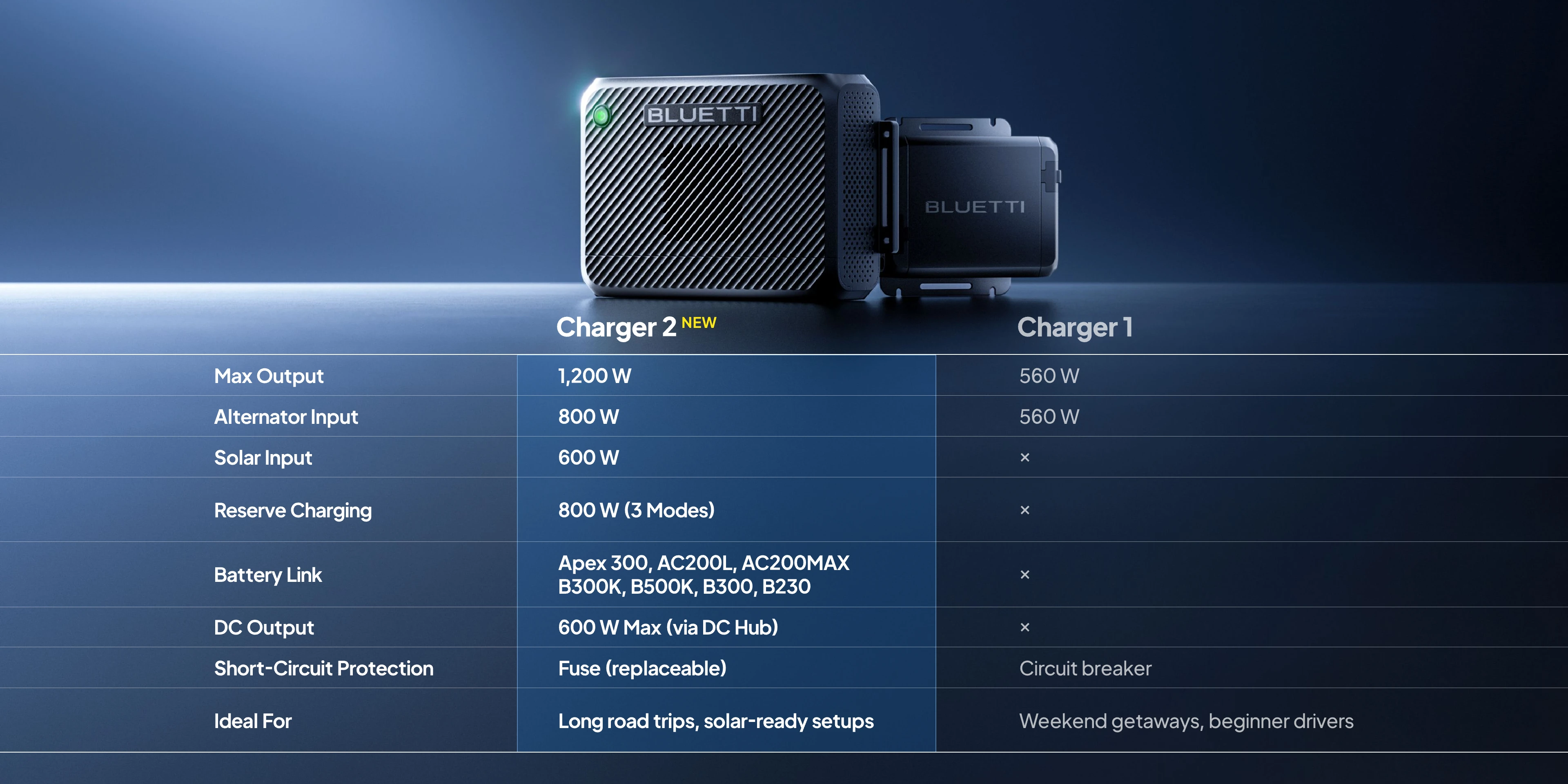
The Real Cross-Shop: BLUETTI Charger 2 vs EcoFlow 800W Alternator Charger
| Decision Point | BLUETTI Charger 2 | EcoFlow 800W Alternator Charger |
|---|---|---|
| Best for | Mixed power-station setups, BLUETTI users, solar + driving setups | EcoFlow owners who want a clean ecosystem experience |
| Core appeal | More flexible charging philosophy | More straightforward within EcoFlow’s world |
| Charging identity | Alternator + solar style power management | Alternator-focused fast charging |
| Setup personality | More capable, but more to think through | Cleaner if you already use EcoFlow |
| Best buyer | The planner building a mobile power system | The user who wants fewer decisions |
“The BLUETTI Charger 2 feels less like a car accessory and more like a small power-management hub. That is good news if you need flexibility — and unnecessary complexity if you don’t.”
Why These Two End Up in the Same Decision
The buyer looking at the BLUETTI Charger 2 is usually not just trying to charge a battery faster. They are trying to solve a bigger problem:
- Keeping a fridge running on the road
- Arriving at camp with the power station already charged
- Reducing dependence on campground outlets
- Avoiding slow cigarette-lighter charging
- Building a van, truck, RV, or overlanding setup that feels more self-sufficient
- Using solar and driving together instead of treating them as separate charging moments
That is exactly why the EcoFlow 800W Alternator Charger comes into the same conversation. It solves a similar pain point, but with a different mindset.
EcoFlow says: stay inside our system and we will make the experience feel cleaner.
BLUETTI says: build a more flexible charging setup that can handle more than one kind of power plan.
Neither philosophy is automatically better. The better choice depends on what kind of owner you are.
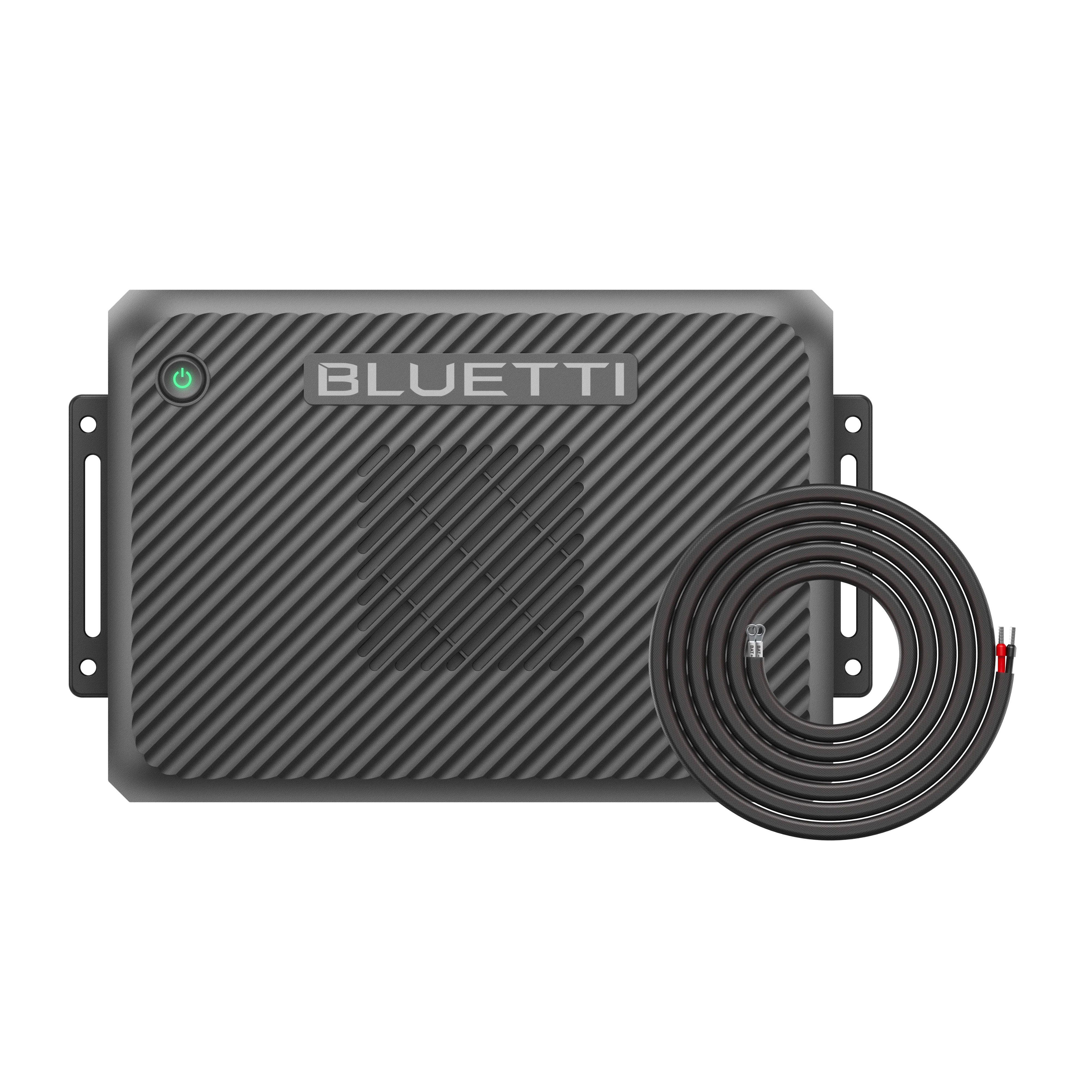
The Philosophical Difference: Ecosystem Simplicity vs System Flexibility
This is the heart of the comparison.
The EcoFlow 800W Alternator Charger feels like the more obvious choice if your setup is already EcoFlow. It is the “don’t overthink it” answer. You buy the matching charger, connect it to the compatible power station, and keep the system inside one brand’s logic.
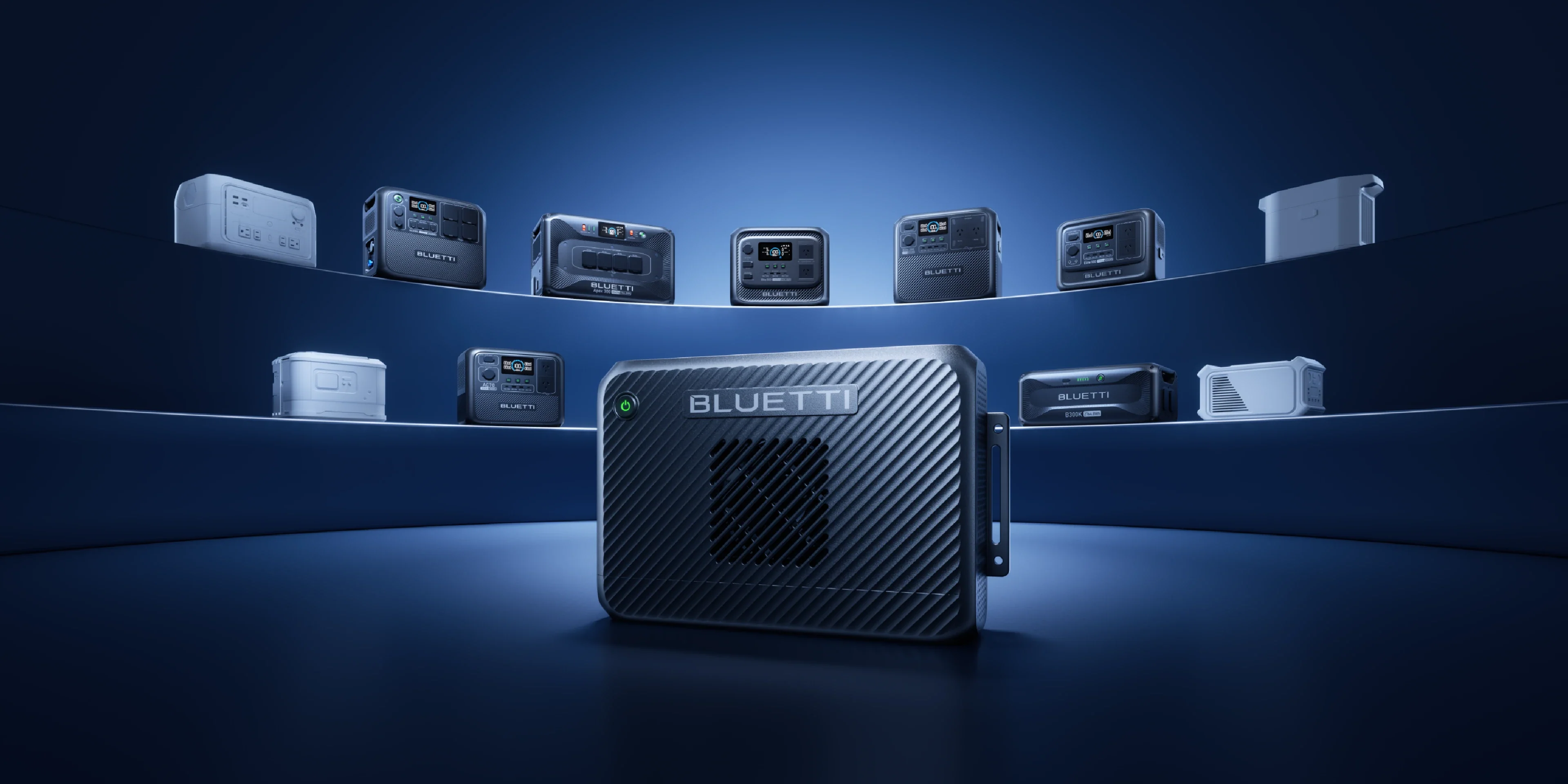
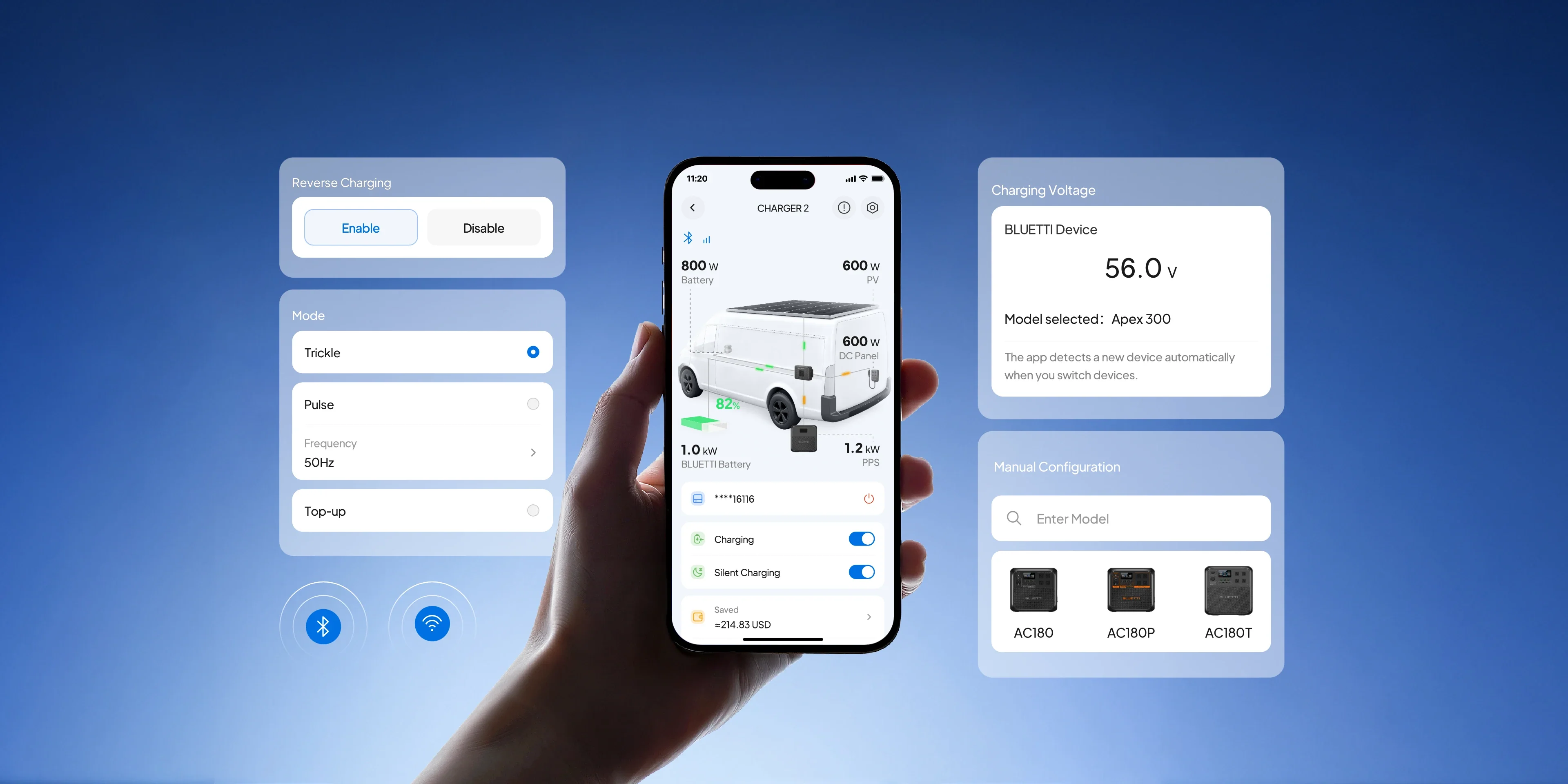
The BLUETTI Charger 2 feels more ambitious. It is not only about charging from the vehicle while driving. It is also about combining mobile charging, solar input, battery-link style expansion, and broader setup planning.
“EcoFlow feels like the cleaner lane. BLUETTI feels like the wider road.”
That is the real tradeoff.
Which One Feels Smarter for Budget-Focused Buyers?
Budget buyers should not only ask which unit costs less. They should ask which unit avoids future replacement.
| Buyer Situation | Smarter Budget Choice |
|---|---|
| You already own an EcoFlow power station | EcoFlow charger may make more sense |
| You own BLUETTI gear | BLUETTI Charger 2 is the safer match |
| You may switch brands later | BLUETTI feels more future-friendly |
| You only need alternator charging | EcoFlow can feel more sensible |
| You want alternator + solar behavior | BLUETTI starts to justify itself |
For the cheapest usable path, the answer is simple: buy into the system you already own. If your main battery is EcoFlow, staying EcoFlow avoids adapter anxiety and compatibility guessing. If your main battery is BLUETTI, forcing an EcoFlow charger into the conversation just because it looks familiar is not smart saving — it is creating a puzzle for yourself.
But if your setup is still evolving, the BLUETTI Charger 2 becomes more attractive because it is the kind of product you buy when you are thinking beyond one battery.
Which One Feels Smarter for Quality-Focused Buyers?
Quality-focused buyers are usually not obsessed with the cheapest way to get power into a battery. They care about stability, headroom, expandability, control, and whether the setup still makes sense a year later.
For that buyer, the BLUETTI Charger 2 has the stronger argument.
It feels like the better choice when:
- You want more charging flexibility
- You care about solar integration
- You want a system that can support a larger power routine
- You use power daily, not occasionally
- You want your vehicle to become part of your energy setup
EcoFlow still wins on polish inside its own ecosystem. But BLUETTI feels more like the product for people building a serious mobile power platform rather than just adding a fast car charger.
“If you judge quality by simplicity, EcoFlow has the cleaner pitch. If you judge quality by long-term flexibility, BLUETTI has the stronger ceiling.”
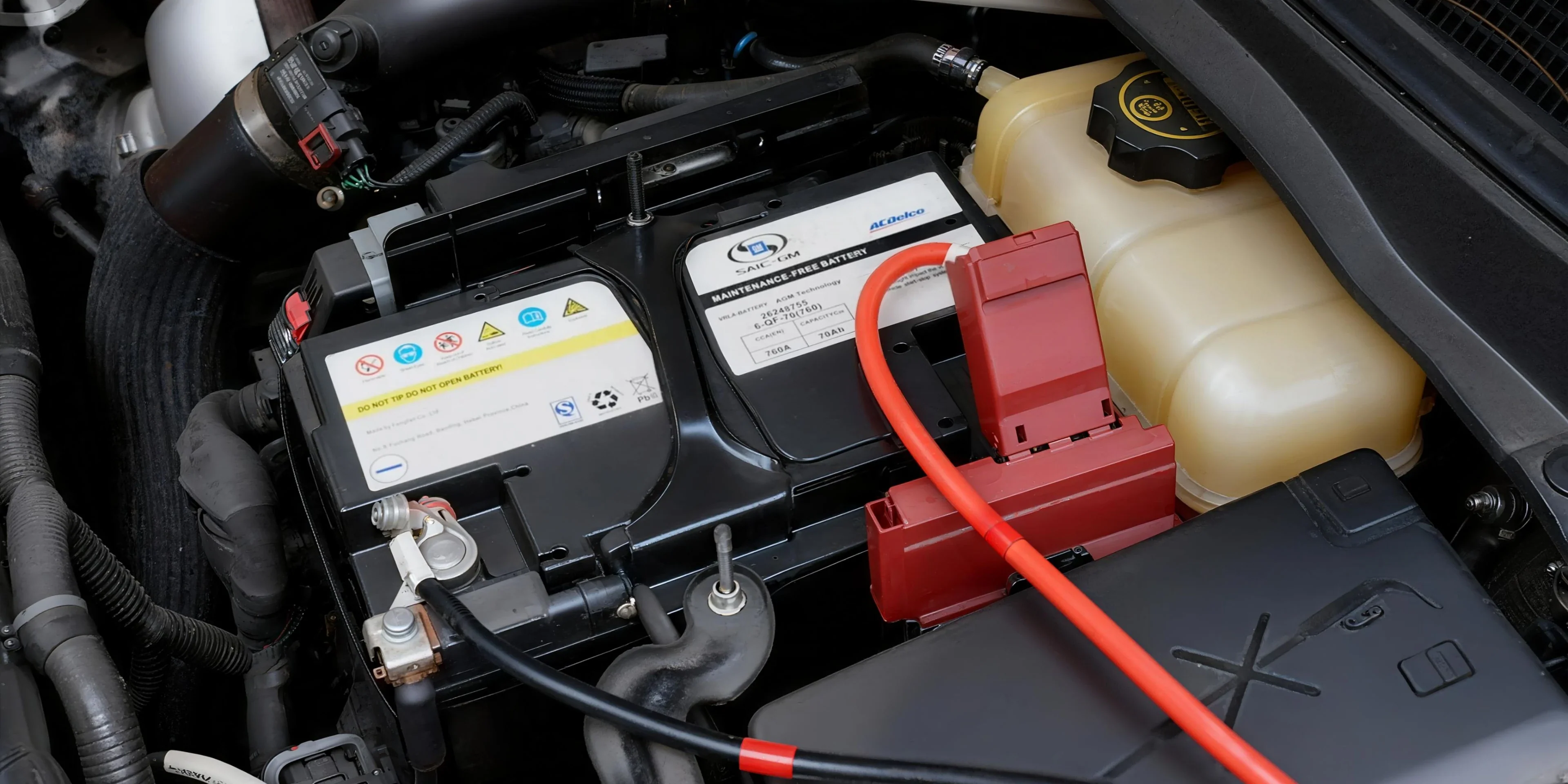
Which One Suits the Simpler Setup Better?
EcoFlow.
No drama there.
If your setup is one vehicle, one EcoFlow power station, and one simple goal — charge faster while driving — the EcoFlow 800W Alternator Charger is easier to understand.
It suits the person who says:
“I don’t want to design a power system. I just want my power station to charge faster while I drive.”
That buyer does not need the full personality of the BLUETTI Charger 2. They need a clean, brand-matched charging accessory that does one main job well.
The BLUETTI Charger 2 can still work in simple setups, but it starts to feel more valuable when the setup becomes slightly more serious.
Which One Makes More Sense for Demanding Use?
BLUETTI.
Demanding use changes the decision. Once you start thinking about longer trips, solar, larger battery capacity, DC loads, vehicle-based power planning, and repeated off-grid routines, the BLUETTI Charger 2 becomes more convincing.
It makes more sense for:
- RV travel
- Vanlife setups
- Remote work from a vehicle
- Overlanding trips
- Multi-day camping
- Emergency backup planning
- Users who want solar and alternator charging to cooperate
- Buyers who may expand their system later
EcoFlow is strong when the setup is clean and contained. BLUETTI is stronger when the setup starts behaving like a small mobile energy system.
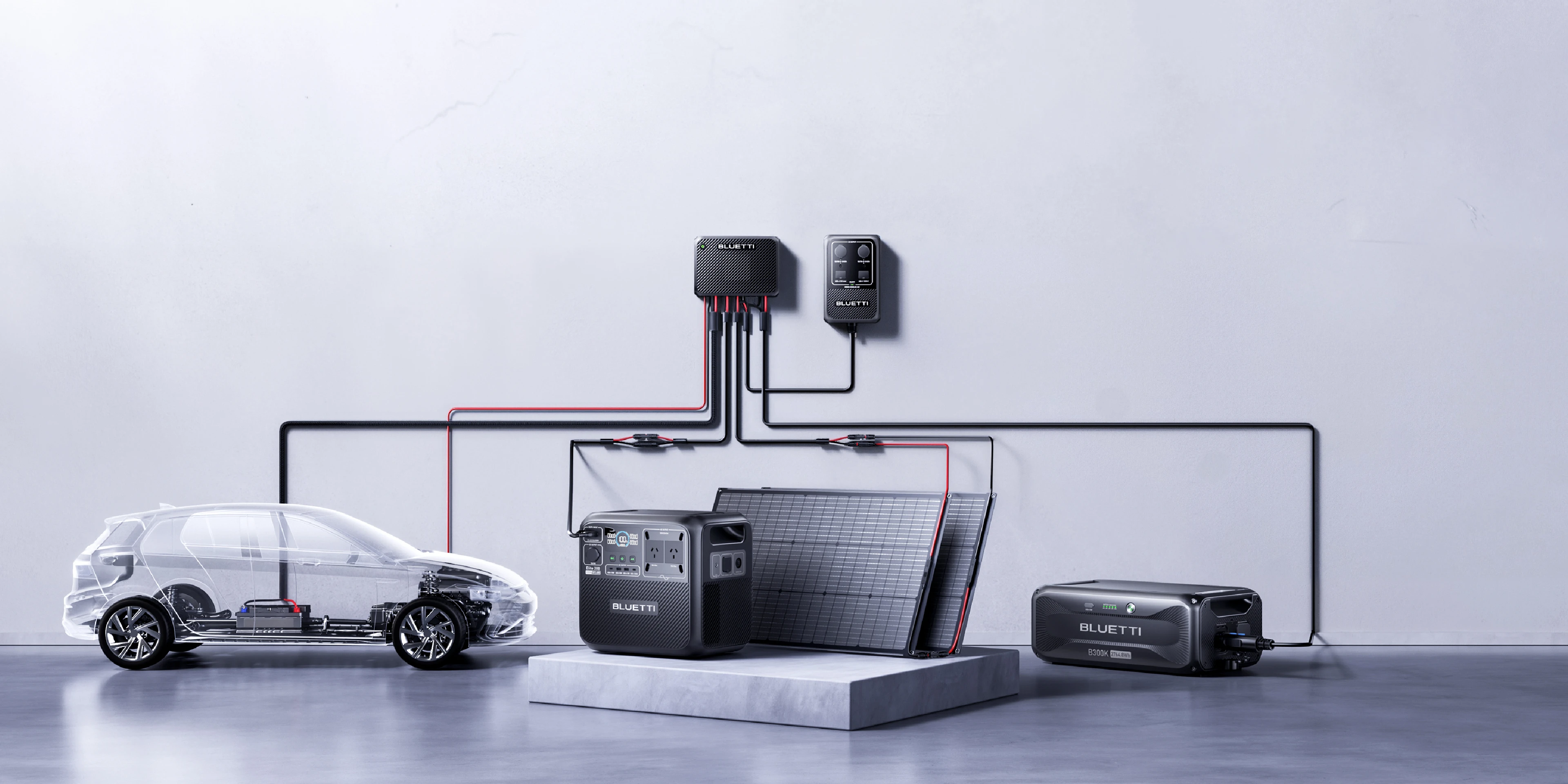
Where BLUETTI Wins Clearly
The BLUETTI Charger 2 wins when the buyer wants flexibility beyond basic alternator charging.
Its clearest advantages are not emotional. They are practical:
- Better suited to mixed charging habits
- More interesting for solar-assisted setups
- More appealing for BLUETTI ecosystem expansion
- Stronger fit for users who want to build around the vehicle
- More convincing for buyers who do not want to be locked into one simple charging pattern
“BLUETTI wins when the vehicle is not just transportation anymore — it becomes part of the power system.”
That is the moment where the Charger 2 stops looking like an accessory and starts looking like infrastructure.
Where EcoFlow Quietly Offers Better Judgment
EcoFlow wins when the buyer needs restraint.
That may sound strange, but it matters. Not every buyer needs a more flexible system. Some buyers need fewer settings, fewer compatibility questions, and fewer reasons to overbuild.
EcoFlow is the better judgment call when:
- You already own EcoFlow batteries
- You want the cleanest brand-matched route
- You do not care about solar blending
- You prefer fewer decisions
- You want fast alternator charging without turning your vehicle into a project
- You are not planning a larger mobile power build
“EcoFlow’s strength is that it does not try to become everything. For some buyers, that is exactly why it makes more sense.”
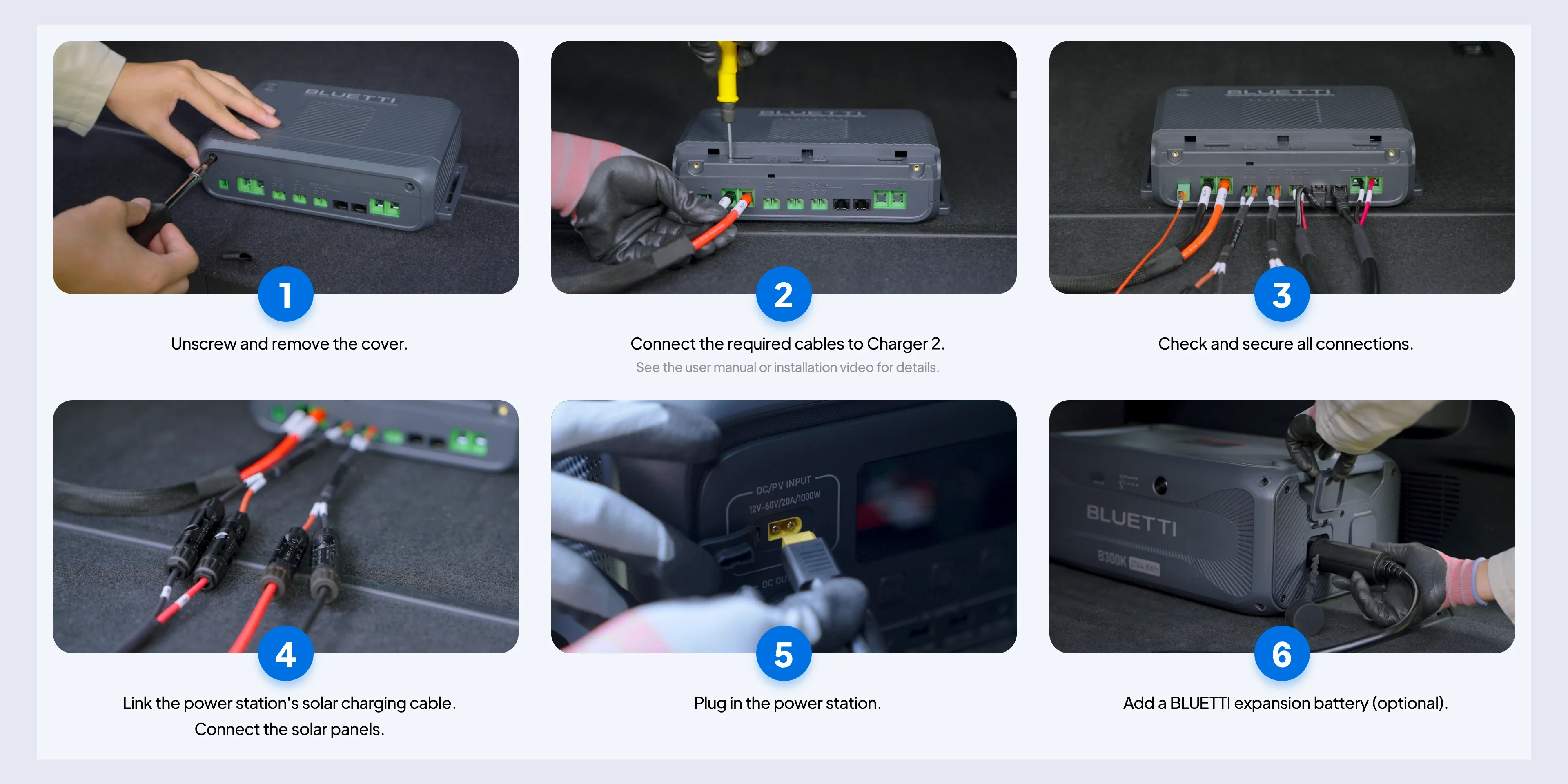
Differences That Matter vs Differences That Barely Matter
Not every difference deserves equal attention. Buyers often get trapped in spec comparison theater, where every number feels important even when it barely changes real use.
| Difference | Actually Matters? | Why |
|---|---|---|
| Brand ecosystem | Yes | Compatibility and daily convenience depend on it |
| Solar integration | Yes, for off-grid users | Huge for campers, RVs, and parked use |
| Maximum charging potential | Yes, but context matters | Useful only if your setup can benefit from it |
| Physical size | Sometimes | Important in tight vehicle installs |
| App/control features | Sometimes | Useful after installation, not always decisive |
| Small speed differences | Not always | Real trip patterns matter more than theoretical peak speed |
| Brand loyalty | Only if you already own the gear | Otherwise, it can blind you |
The biggest real-world difference is not “which one is faster on paper.” It is which one matches the way you actually use power.
How the Decision Changes Depending on Buyer Priorities

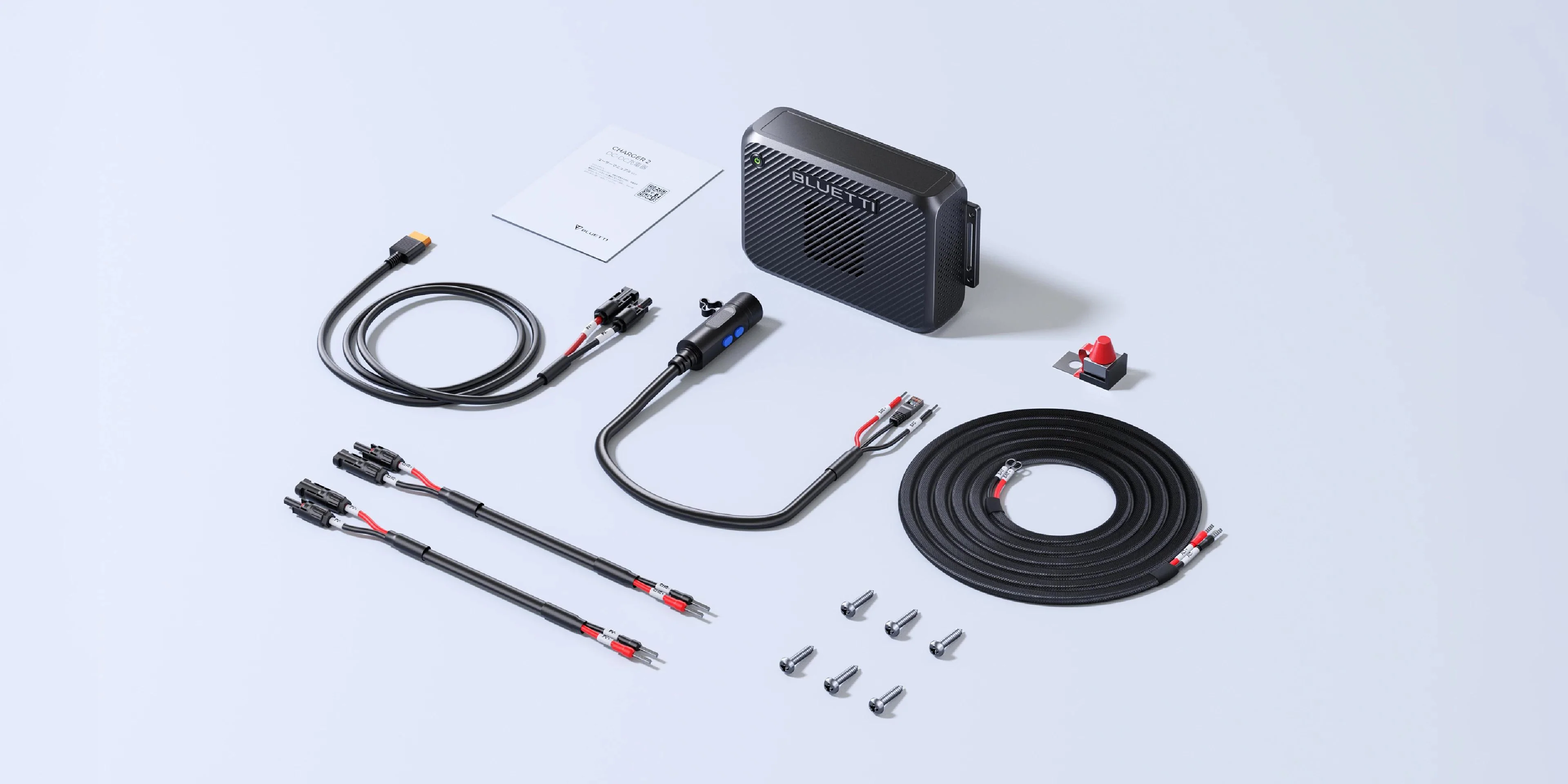
Choose BLUETTI Charger 2 if your priority is flexibility
You are the better BLUETTI buyer if you want a setup that can grow. You may add panels later. You may upgrade the power station. You may use the vehicle as part of a wider backup system. You may care about parked power, road charging, and off-grid routines.
BLUETTI makes sense when your power needs are not fixed.
Choose EcoFlow if your priority is simplicity
You are the better EcoFlow buyer if your setup is already clear. You own an EcoFlow power station. You want faster charging. You want the least complicated route. You do not want to think about compatibility every time you add or change something.
EcoFlow makes sense when your power needs are already defined.
Is the Cheaper Option Actually Enough?
Yes — for the right buyer.
A simpler alternator charger can be enough if you only need to top up your power station while driving. For weekend users, light campers, and people who mostly charge at home before leaving, the EcoFlow-style approach may be perfectly sufficient.
The cheaper or simpler option is enough when:
- You only travel occasionally
- You rarely camp for multiple days
- You do not run heavy DC loads
- You already own the matching power station
- You mostly need faster charging, not a full power strategy
But it stops being enough when your vehicle becomes your main charging source.
That is where the BLUETTI Charger 2 becomes easier to justify.
Does the Pricier Option Earn Its Extra Cost?
The BLUETTI Charger 2 earns its place when the buyer actually uses the extra flexibility.
It does not earn its cost just because it sounds more powerful. That is the lazy argument. It earns its cost when the setup takes advantage of what it offers.
It makes sense to pay more when:
- You travel often
- You rely on your power station for essentials
- You want solar and alternator charging in the same lifestyle
- You plan to expand the system
- You want fewer dead-energy moments while moving or parked
- You care about long-term setup adaptability
If none of that applies, the extra capability becomes decorative. Useful, yes. Necessary, no.
“The BLUETTI Charger 2 is worth paying for when your power routine is active enough to expose the limits of a simpler charger.”
Which Buyer Is Better Served by Each Side?
| Buyer Type | Better Choice | Why |
|---|---|---|
| EcoFlow owner with one power station | EcoFlow 800W Alternator Charger | Cleaner ecosystem match |
| BLUETTI owner building a mobile setup | BLUETTI Charger 2 | Better brand and system alignment |
| Weekend camper | EcoFlow or simpler setup | Full flexibility may be unnecessary |
| Vanlife/RV user | BLUETTI Charger 2 | More useful for layered power needs |
| Overlander | BLUETTI Charger 2 | Stronger for mobile + parked power planning |
| Minimalist buyer | EcoFlow | Less system thinking |
| Future-expansion buyer | BLUETTI | More room to grow |
| Budget-first buyer | Depends on existing battery | Avoid buying the wrong ecosystem |
| Quality-first buyer | BLUETTI | Better long-term power-system argument |
The Practical Buying Logic
Here is the cleanest way to think about it:
- If you already own EcoFlow and want the smoothest path, buy the EcoFlow 800W Alternator Charger.
- If you already own BLUETTI, the BLUETTI Charger 2 is the more natural choice.
- If you are building a serious vehicle-based power setup from scratch, the BLUETTI Charger 2 deserves stronger consideration.
- If you only want basic fast charging while driving, do not overbuy.
- If solar, expansion, and parked power matter to you, do not underbuy.
That last line is the real decision.

Final Recommendation: BLUETTI Is the Better System Choice, EcoFlow Is the Better Simple Choice
The BLUETTI Charger 2 is the stronger choice for buyers who see their vehicle as part of a wider power system. It makes more sense for RVs, vans, off-grid routines, solar-assisted charging, and people who want flexibility instead of a single-purpose accessory.
The EcoFlow 800W Alternator Charger is the smarter choice for buyers who already live inside the EcoFlow ecosystem and want a cleaner, simpler, less mentally expensive setup.
“BLUETTI is the better choice when your power needs are growing. EcoFlow is the better choice when your setup is already solved.”
So the final answer is not that one is universally better. The better judgment is this:
Choose the BLUETTI Charger 2 if you are building a serious mobile power setup. Choose the EcoFlow 800W Alternator Charger if you already own EcoFlow gear and just want fast, clean alternator charging without turning the decision into a full system design.
Explore the BLUETTI Charger 2 Gallery
Every image from this article, gathered in one clean place. Tap any photo to open it larger.