
DREO ChefMaker Combi Fryer
Pros
- The concept is unusually coherent, and the extra features feel genuinely useful rather than decorative.
- Protein cooking is where it shines, especially when doneness and moisture matter.
- The probe adds real confidence instead of just adding complexity.
- The viewing window and interior light are practical in daily use.
- The interface is easy to navigate.
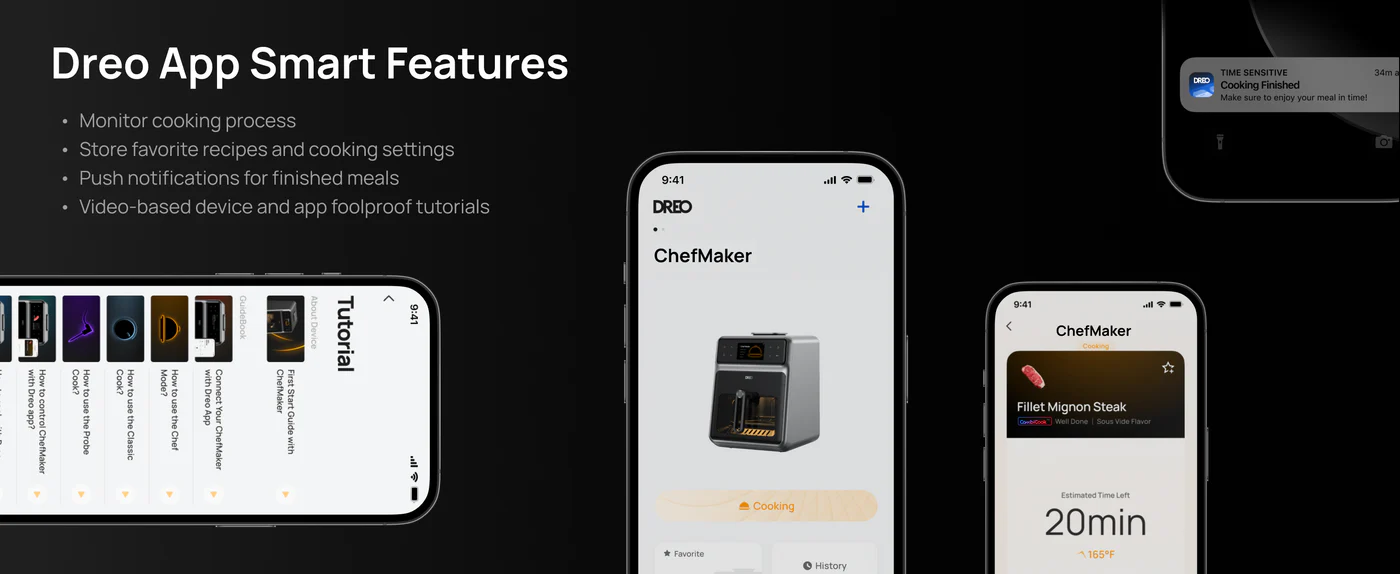
- The app feels like a helpful extension of the product.
- It still works well as a general-purpose air fryer and countertop cooker.
- Cleanup is relatively easy thanks to dishwasher-safe removable components.
Cons
- It is expensive for a single 6-quart basket machine.
- The most compelling features are more useful for meat and seafood eaters than for everyone else.
- The glossy finish shows fingerprints quickly.
- The probe setup can feel awkward the first few times.
- Capacity is fine for smaller households, less convincing for bigger families.
- The water-assisted system is smart, but not as user-open as some buyers may want.
the cooking logic feels purposeful, the probe adds real confidence, the moisture control is not a gimmick, the window and light are genuinely useful, and the overall experience is easy to live with.
it is expensive for a single 6-quart basket , the glossy finish picks up fingerprints fast, the probe setup can feel a little awkward at first, and its smartest features are clearly more useful for meat and fish than for everything else.
The DREO ChefMaker Combi Fryer feels like one of those rare kitchen gadgets that solves a real problem instead of inventing one. After spending time with it, what stood out to us was not just that it looked more premium than the average air fryer, but that its extra hardware actually had a purpose.
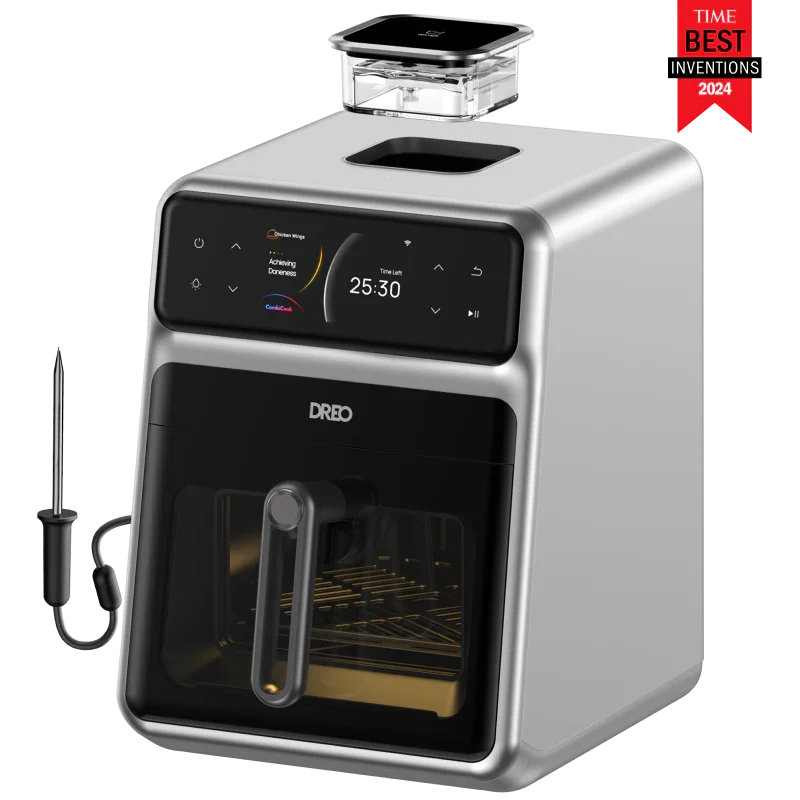
The cook probe, 200ml water tank, 6-quart basket, 1800W output, and 100°F to 450°F temperature range all work toward the same goal: better doneness, less dryness, and far less guesswork when you are cooking proteins. For the right buyer, that makes it much more than another countertop fryer. For the wrong buyer, it is an expensive way to make frozen food.
What we tested
With the ChefMaker, we paid closest attention to the parts that actually matter once the novelty wears off. We looked at how well the probe-based cooking worked in practice, whether the water-assisted system made a real difference, how usable the three core cooking modes felt, whether the app added value or just clutter, and how easy the machine was to live with day to day.
We also kept a close eye on buyer-fit questions, because that is where this product either makes total sense or very little sense at all. A lot of air fryers are broad crowd-pleasers. This one is more targeted. So the real question was never just whether it worked. It was whether it worked well enough, in the right situations, to justify the premium.
How we tested it
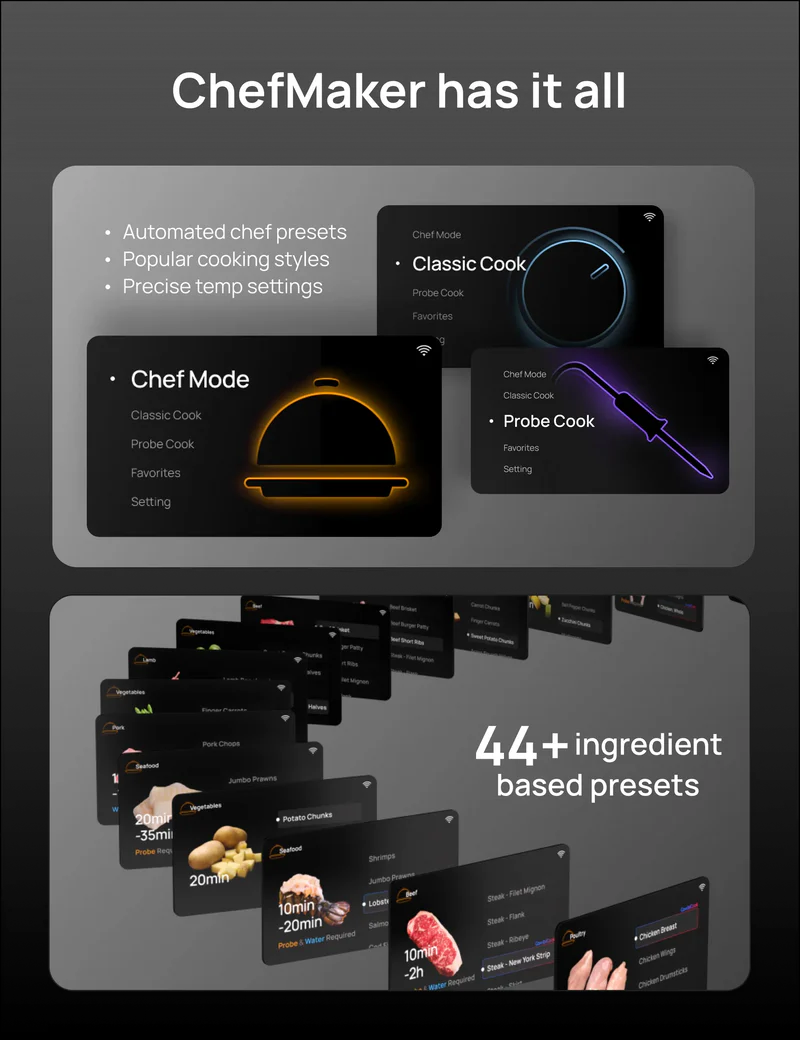
We approached the ChefMaker the way most serious buyers would. We looked beyond the headline “smart” language and focused on how its hardware and cooking system came together in actual use. That meant paying attention to the Chef Mode, Classic Cook, and Probe Cook functions, the role of the built-in probe, the purpose of the water tank, the usefulness of the 4.3-inch display, the practicality of the app, and how much friction the machine created once it was sitting on the counter.
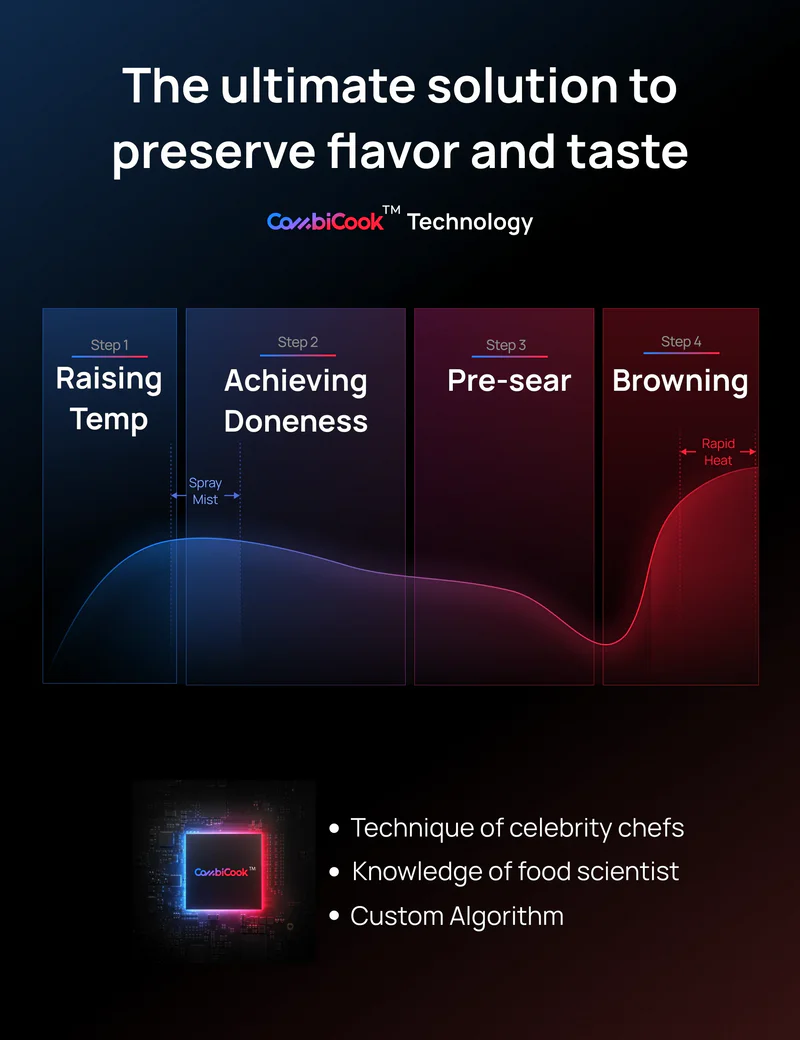
What mattered most to us was whether the product felt coherent. Plenty of countertop appliances throw in extra features that never come together into a better cooking experience. Here, the more we used it, the clearer it became that DREO had a very specific problem in mind: air fryers often do a decent job with frozen snacks and a mediocre job with good protein. The ChefMaker is built to change that.
Design and build quality
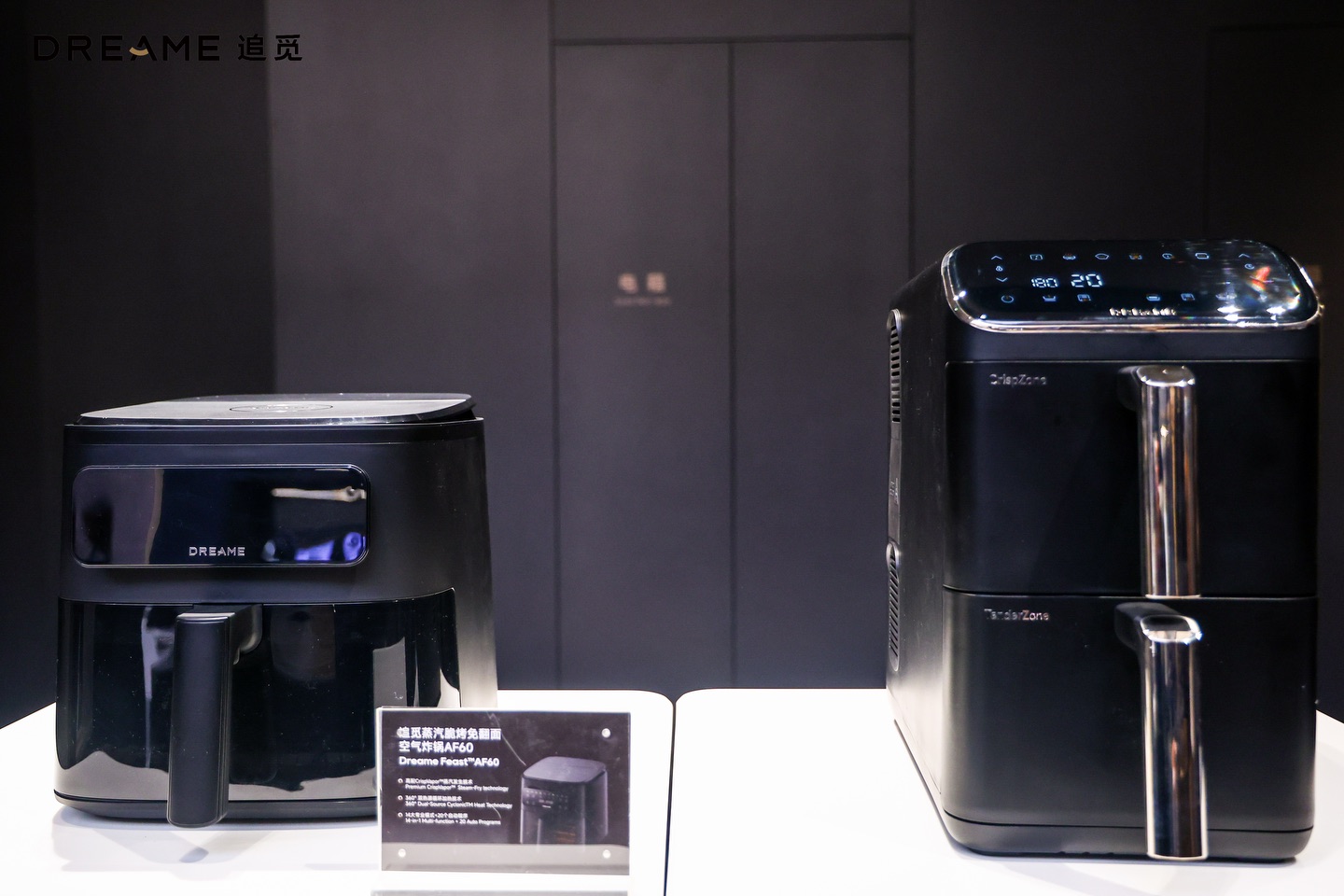
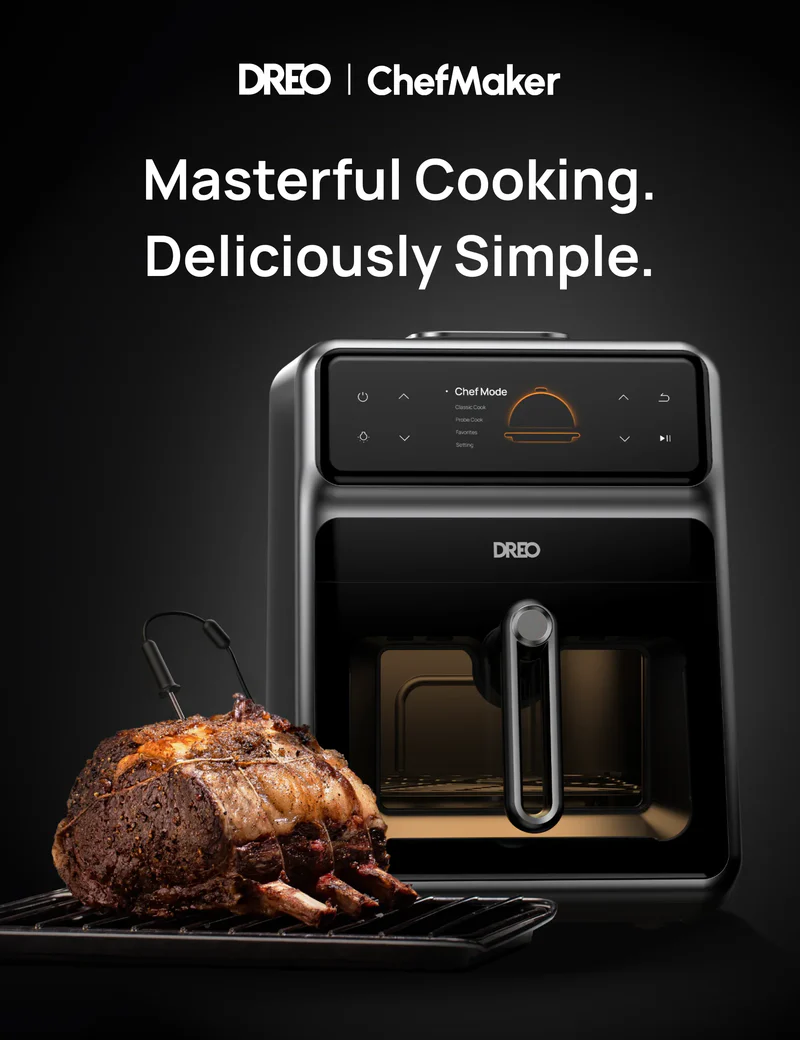
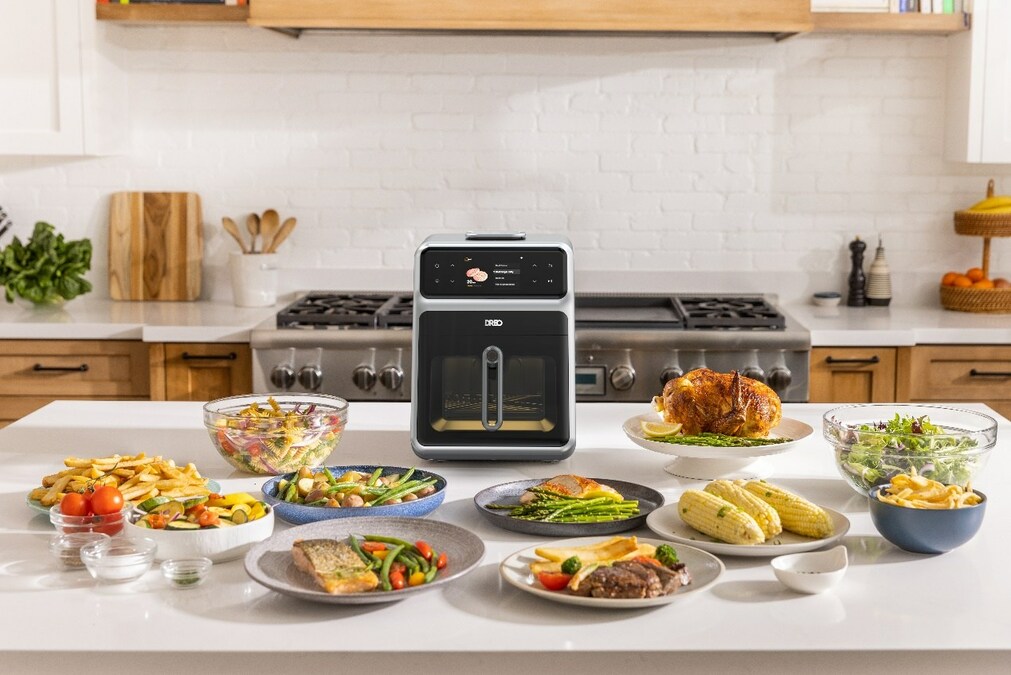
The ChefMaker looks expensive, and in this case that is mostly a good thing. It has a glossy, polished finish, a large front viewing window, a clear display up top, and a design that feels noticeably more refined than the average black plastic drawer fryer. It does not look like a budget appliance trying too hard to appear premium. It looks like a product that was designed to be seen.
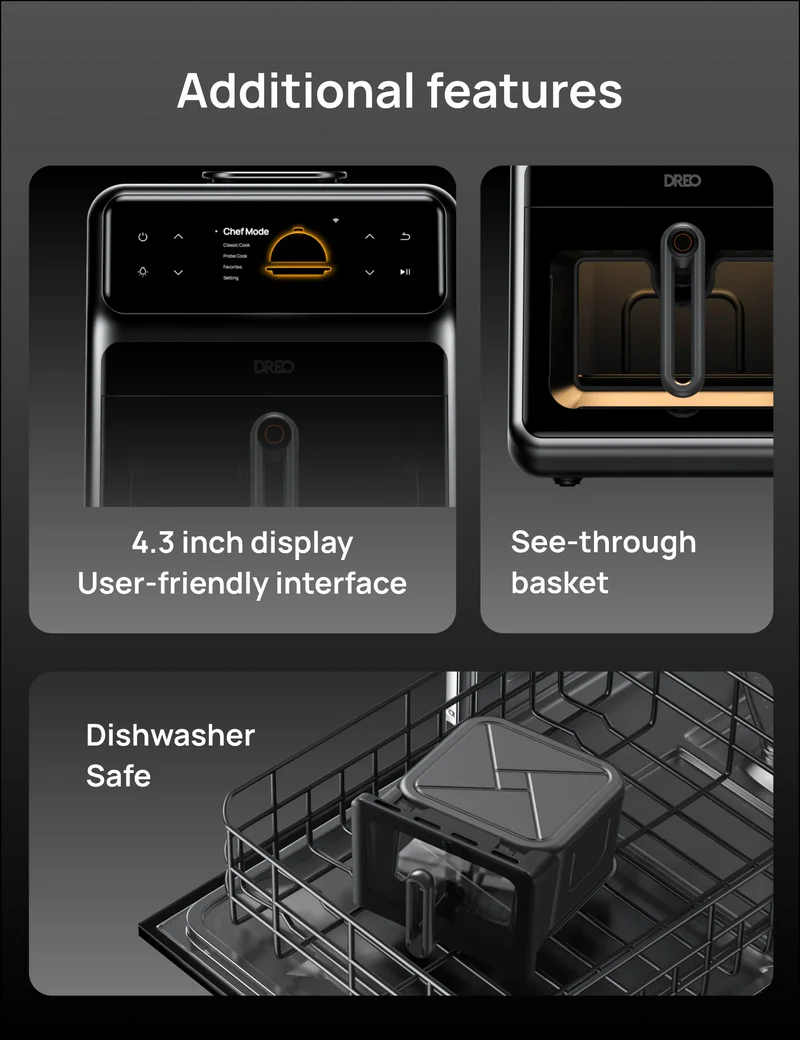
More important, the design choices make sense. The viewing window and internal light are not there just to dress it up. They are practical. When you are cooking a steak, a salmon fillet, or a thicker cut of chicken, being able to check progress without repeatedly pulling the basket out makes the whole experience feel calmer and more controlled. That is one of the first things we appreciated about it. It encourages you to cook food that you actually care about, and it gives you better visibility while you do it.
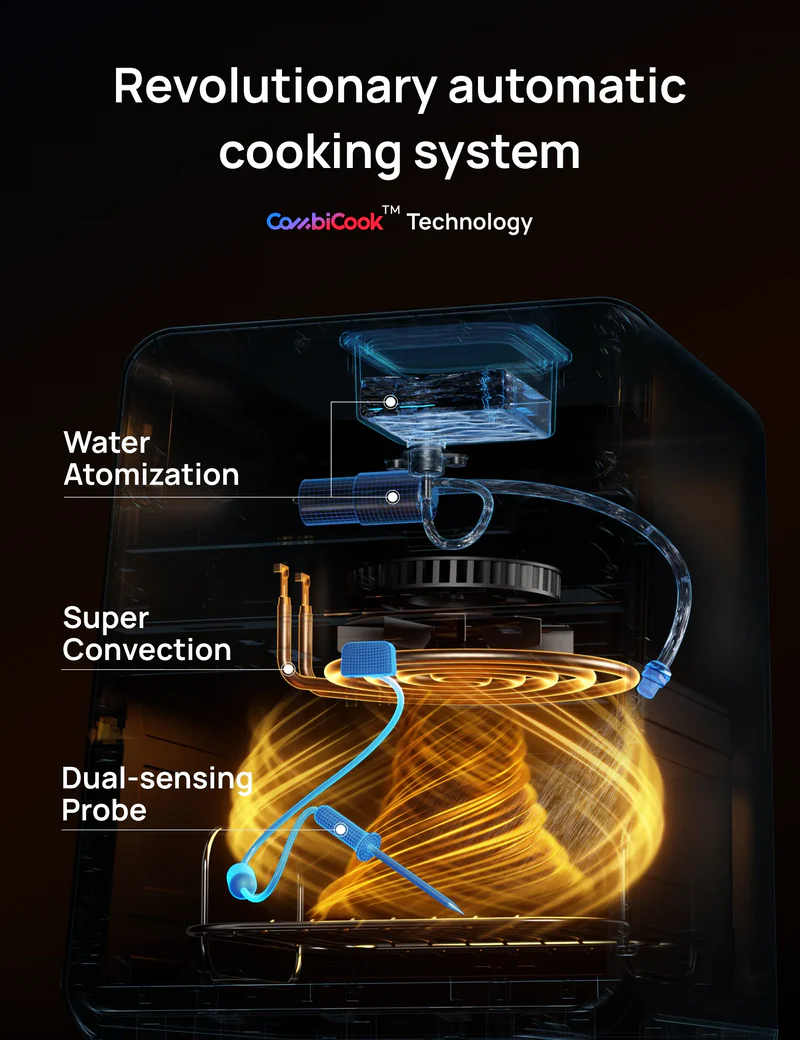
The top section houses the water tank and controls, and again, that extra hardware does not feel random. The 200ml water tank exists because the machine is trying to preserve moisture where air fryers often struggle. The probe exists because doneness is central to the whole point of the product. The structure supports the pitch.
That said, there is a tradeoff. The glossy finish looks nice when it is clean, but it is absolutely the kind of surface that shows fingerprints, dust, and smudges quickly. In daily use, we found ourselves wiping it down more than we would with a simpler matte model. That is hardly a dealbreaker, but it is part of the ownership experience.
In terms of size, it is manageable rather than compact. At roughly 10.59 x 15.67 x 14.65 inches and around 15.36 pounds, it is not the kind of appliance most people will want to keep moving around. Once it is on the counter, it makes more sense to give it a proper home.
Setup and first use
One thing we liked right away is that the ChefMaker does not try to make its “smart” side feel intimidating. Setup is straightforward. Wash the removable pieces, place the unit with enough space around it, and pair it to the app if you want the full experience. The included accessories are easy to understand too: a grilling rack, a cooking tray, and the temperature probe.
Where the machine starts to separate itself is in how it guides you. The interface is clean, the logic is easy to follow, and the prompts make sense. When the ChefMaker wants you to insert the probe or add water, it tells you clearly. It does not bury important steps behind clumsy menus or vague icons. That sounds basic, but it matters. A lot of premium appliances become annoying because the intelligence is there but the communication is bad. Here, the process felt more polished.
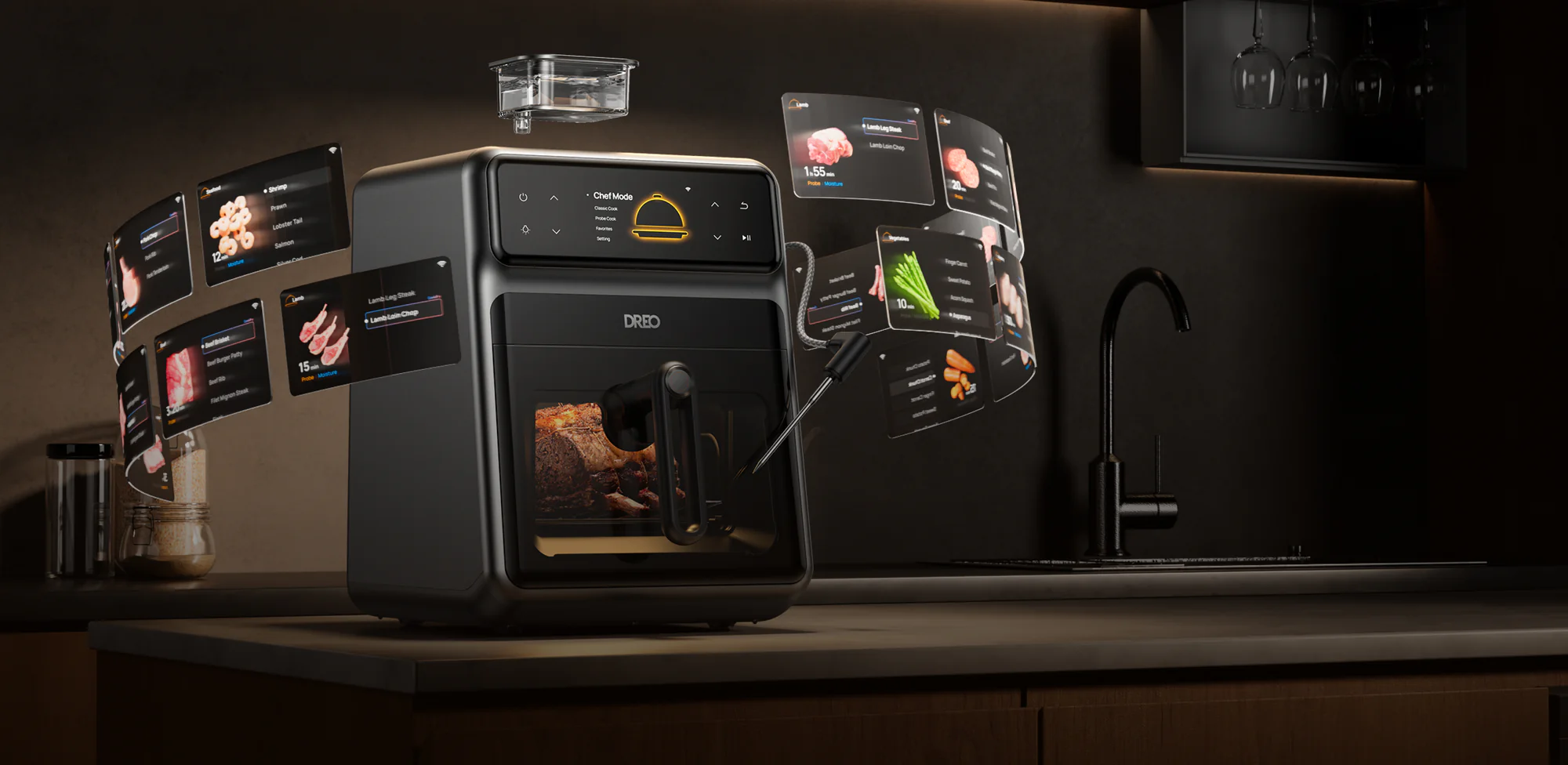
The app also feels more integrated than we expected. That was a pleasant surprise. In many kitchen products, the app is the first thing we stop caring about. With the ChefMaker, it adds real value. It helps with guided recipes, sends cooking updates, and makes the whole appliance feel more approachable rather than more complicated.
First use is not flawless, though. The probe can feel a bit fiddly at first, especially if you are not used to working with this kind of system. And the machine is not equally suited to every food shape or cut. Thinner items and certain frozen proteins are not where the probe experience feels at its best. Once we understood the rhythm of the product, though, the setup friction mostly faded into the background.
Real-world performance
This is the section that matters, because the ChefMaker either justifies its premium here or it does not.
In our view, it mostly does.
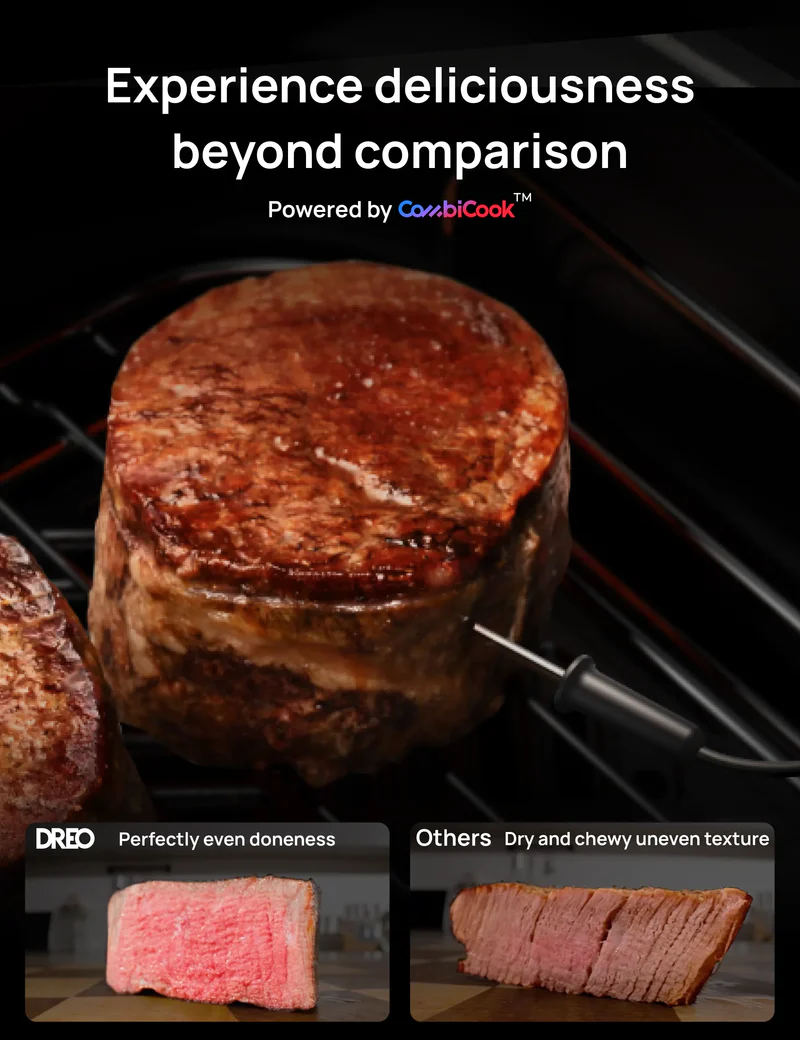
The strongest part of its performance is how confidently it handles proteins. Steak is the obvious showcase, and for good reason. What stood out to us was how much of the usual anxiety the machine removes. With a standard air fryer, cooking steak can still feel like a compromise. You can get browning, but you often give up some moisture and a lot of confidence. The ChefMaker changes that equation. The probe-driven cooking and water-assisted system combine to make the process feel far more deliberate.
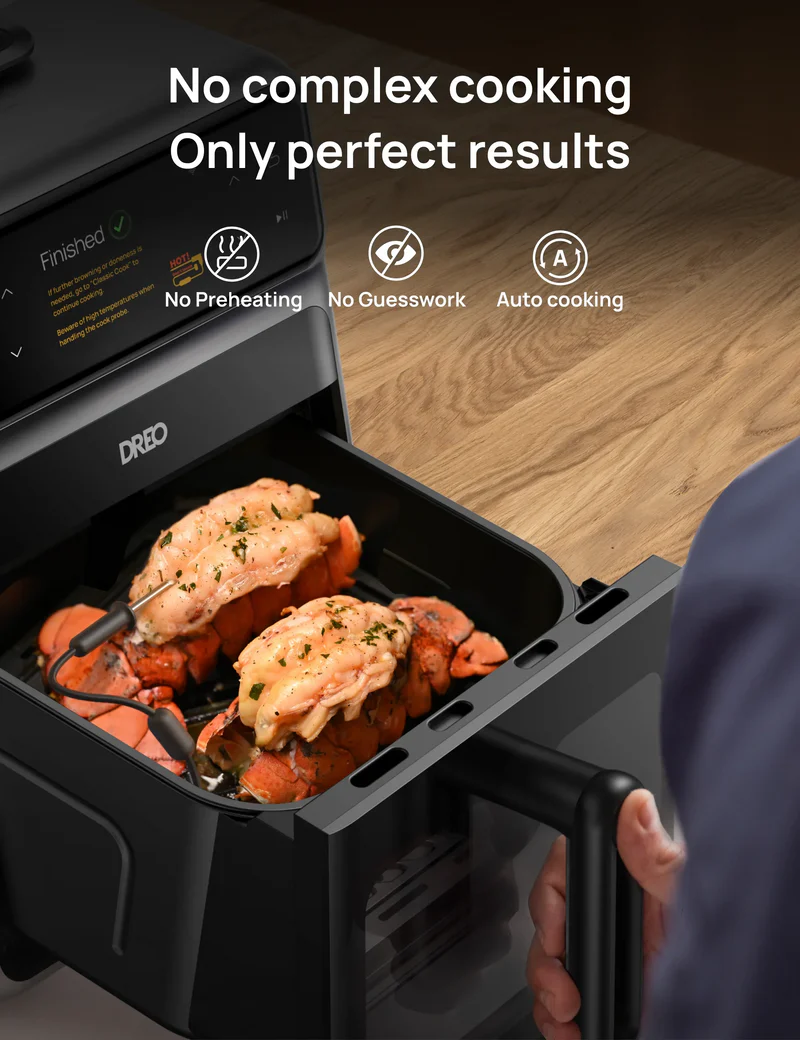
That same advantage carries over to chicken, pork, and seafood. In practice, what impressed us most was not that the results felt flashy, but that they felt controlled. There is a real difference between a machine that simply blasts hot air and one that seems to understand that doneness and moisture need to be balanced. The ChefMaker lands much closer to the second category.
It also helps that it is not trapped by its smartest mode. That is important. If you never touched Chef Mode, you would still have a capable countertop cooker with air fry, defrost, reheat, broil, roast, toast, bake, and dehydrate functions inside Classic Cook. The broad 100°F to 450°F temperature range gives it enough flexibility to handle normal everyday jobs too.
And that is the key point: it is not only good when it is showing off. It remains a solid general-use machine even when you use it like a regular air fryer. But the real value is not in whether it can do fries. It is in how much better it feels when you are cooking something you do not want to dry out.
Use-case performance
The ChefMaker makes the most sense when you look at it through actual kitchen habits instead of broad category labels.
If you are a nervous cook, this machine is unusually persuasive. That is one of the clearest things that became obvious to us over time. A lot of people do not struggle because they lack recipes. They struggle because they do not trust the cooking process. They wonder if they should flip the food, lower the heat, open the basket, cut into the protein, or add more time. The ChefMaker reduces that decision fatigue in a way most air fryers do not.
If you are already comfortable in the kitchen, the value shifts a bit. Then it becomes less about guidance and more about consistency and convenience. In that case, the question is whether you cook proteins often enough to want an appliance that handles them this well with minimal babysitting. For many buyers, the answer will still be yes.
Where we felt less convinced was in households that do not lean heavily on protein cooking. If most of your air fryer use revolves around vegetables, frozen snacks, or big family-style batches, the ChefMaker is still functional, but it loses a lot of what makes it special. Its smartest features feel clearly centered on meat and fish. That is not a flaw exactly. It is just a very important buying truth.
The 6-quart single basket also draws a line around who this is for. For a couple, one person, or a smaller household cooking one main item at a time, it works well. For larger families, it starts to feel less convincing. Capacity is adequate, not generous.
Convenience and day-to-day use
This is one area where the ChefMaker gets a lot right.
The control system is simple. The large display is easy to read, navigation is intuitive, and the overall interface does not make the machine feel overbuilt. That matters because there is a big difference between a product with advanced features and a product that feels annoying to use because of them. Here, the learning curve is mild.
The viewing window is more useful than it sounds on paper. We noticed that we checked progress more often simply because we could do it so easily. That reduced the urge to interrupt the cooking cycle, and it made the whole experience feel more relaxed.
Cleaning is also relatively painless. The removable parts are easy to deal with, and the dishwasher-safe approach makes this feel like a premium appliance that was designed with actual cleanup in mind. That is something we never take for granted with countertop gear.
Another quality-of-life advantage is that the machine feels quick to get going. It does not burden the experience with extra friction before you even start cooking. Add in the app notifications and recipe support, and the ChefMaker ends up feeling like a product that genuinely lowers the amount of attention you need to give it.
That might be the best compliment we can give it. It is a smart appliance that makes cooking feel less stressful, not more.
Flaws and frustrations
The biggest issue is obvious: the price.
For a 6-quart single-basket machine, the ChefMaker sits firmly in premium territory. If you measure value by basket size, it is hard to defend. There are larger air fryers, dual-drawer models, and oven-style alternatives that offer more raw capacity for the money.
That does not automatically make the ChefMaker overpriced, but it does mean its value is conditional. You really do need to use the special parts of the product for the price to make sense. If you buy this and then use it like a basic air fryer, the mismatch will become clear pretty quickly.
The second issue is buyer fit. The machine is not equally compelling for every type of cook. That became more obvious the longer we thought about it. If your cooking life revolves around steaks, chicken breasts, chops, salmon, and similar foods, the ChefMaker feels highly relevant. If not, the whole pitch weakens.
We also think some buyers will wish the water-assisted side of the machine were a little more open. The moisture system clearly matters, but it lives inside DREO’s mode structure rather than giving you a fully separate steam-style function to play with. For most users, that will not matter much. For more hands-on tinkerers, it may feel slightly limiting.
Then there are the smaller annoyances. The probe setup takes a bit of getting used to. The glossy exterior gets smudged easily. And like many powerful countertop appliances, it is not invisible in a small kitchen. None of these issues ruin the experience, but together they keep the ChefMaker from feeling quite perfect.
Value for money
The ChefMaker is not a value buy in the traditional air fryer sense. It is not the product we would point to for someone who wants the most basket space for the least money.
But value is not only about volume.
In practice, the ChefMaker justifies itself by doing something many air fryers still do poorly: cooking proteins with more accuracy, more moisture, and less stress. That is its real value proposition. If that sounds like a vague luxury, then this is not the right product. If that sounds like exactly the problem you want solved, the premium starts to look much more reasonable.
We would put it this way: the ChefMaker is expensive if you judge it like a commodity appliance. It is more compelling if you judge it like a specialized countertop cooker that happens to cover normal air fryer duties too.
We would still say this product becomes even easier to like when discounted. At full price, it is a targeted premium purchase. At a lower sale price, it becomes much more broadly attractive. But even at list price, it has a real argument for the right kitchen.
Who should buy it
We would recommend the ChefMaker to buyers whose main frustration with air fryers is that they dry out good food. That is the heart of this product. If you often cook steak, salmon, pork, chicken breasts, or similar foods and want better doneness with less guesswork, the ChefMaker feels purpose-built for that job.
We also think it makes a lot of sense for people who like the idea of cooking well but do not always trust themselves to get the timing right. What we appreciated most is that it lowers the skill barrier without making the food feel generic or over-automated. It still feels like cooking. It just feels less nerve-racking.
Couples, smaller households, and buyers who care about countertop aesthetics are also likely to get along with it. It fits that role well. It feels more premium than the average fryer, and its footprint and capacity make more sense in that kind of kitchen.
Who should skip it
We would skip it if maximum capacity is the top priority. A 6-quart single basket only goes so far, and there are more family-friendly options for the money.
We would also skip it if your air fryer life is mostly frozen fries, nuggets, reheating, and casual snack duty. The ChefMaker can handle those jobs, but that is not where its value comes from. Paying this much for features you barely use is the kind of decision that leads to regret.
And if your household is largely plant-based or you are not especially interested in guided protein cooking, we would think carefully before spending up. The machine still has strengths, but its most distinctive appeal is clearly centered elsewhere.
Final verdict
The DREO ChefMaker Combi Fryer feels like one of the few premium air fryers that actually has a point of view. It is not trying to win by being bigger, louder, or more overloaded with shallow features. It is trying to fix one of the most common frustrations with countertop air frying: dry, overcooked protein and too much uncertainty.
After spending time with it, our takeaway is simple. It is not the best air fryer for everyone, and it does not pretend to be. It is expensive, moderately sized, and clearly more exciting for some kitchens than others. But inside its lane, it is one of the smartest and most rewarding options we have seen.
If your goal is better dinners, especially better proteins, in a compact countertop format, the ChefMaker earns serious consideration. If your goal is just cheap crispy food in large quantities, look elsewhere. For the right buyer, this is not just another air fryer. It is a noticeably better kind of one.
FAQ
Is the DREO ChefMaker actually different from a normal smart air fryer?
Yes. The difference is not just app control or presets. The cook probe, water-assisted cooking, and multi-stage cooking logic change how the machine handles doneness and moisture, especially with proteins.
How big is the DREO ChefMaker?
It has a 6-quart capacity, 1800W power, a 100°F to 450°F temperature range, and a 200ml water tank. In practical terms, we think it fits one to three people best, depending on what you cook.
Is the ChefMaker really good for steak?
Yes, and that is one of its strongest arguments. In practice, steak is exactly the kind of food that shows why the machine exists. The probe and moisture-focused cooking approach make it feel much more confident than a standard basket fryer.
Can it still do regular air fryer jobs?
Absolutely. It handles air fry, defrost, reheat, broil, roast, toast, bake, and dehydrate, so it is not limited to smart guided cooking. It just happens to be at its most impressive when you use the features that set it apart.
Is it easy to clean?
By premium air fryer standards, yes. The removable parts are easy to deal with and largely dishwasher-friendly. The one thing that needs more upkeep is the glossy exterior, which shows fingerprints quickly.
Does it have a full steam mode?
Not really in the traditional sense. It uses water-assisted cooking where appropriate, but the system is built into DREO’s cooking structure rather than offering a fully separate standalone steam program.
Is the app worth using?
We think so. It adds useful guidance, cooking updates, and recipe support without making the machine feel bloated. That is not something we say about every kitchen app.
Should you buy it at full price?
Only if you fit the product clearly. At full price, this is a premium, somewhat specialized appliance. If you will genuinely use the probe, Chef Mode, and moisture-focused cooking, it makes sense. If you mostly want a standard air fryer, there are easier ways to spend the money.
Explore the DREO ChefMaker Combi Fryer Gallery
Every image from this article, gathered in one clean place. Tap any photo to open it larger.