
Dreame Feast DS50 Air Fryer
Pros
- The CrispZone/TenderZone concept is one of the smartest ideas we have seen in this category
- 10L total capacity feels right for families and full-meal cooking
- The 5L + 5L split is practical and easy to understand
- The vertical stacked layout should be easier to live with than many wide dual-basket rivals
- SYNC Smart Synchronization sounds genuinely useful in daily cooking
- $229 is competitive for a premium launch with a distinctive idea
Cons
- The whole concept still depends on how convincingly the two zones feel different in actual use
- Stacked air fryers always raise reasonable questions about airflow and evenness
- "Cook up to four dishes at once" sounds great, but real usable capacity is what matters
- The TenderZone could be brilliant or only mildly different, and that gap matters a lot
- At this price, buyers are right to expect more than just a clever pitch
A genuinely useful CrispZone/TenderZone split, a practical 5L + 5L layout, a more counter-friendly vertical design, and pricing that feels competitive for a premium launch.
The DS50 still has to prove that its two-zone cooking personalities feel meaningfully different in daily use, and stacked designs always raise fair questions about evenness and true usable capacity.
The Dreame Feast DS50 immediately stood out to us because it is trying to solve a real problem instead of dressing up the usual dual-basket formula with prettier language. This is a 10-liter vertically stacked air fryer with two 5-liter zones, 12 preset programs, a SYNC Smart Synchronization System, and, most importantly, two clearly different cooking identities: a CrispZone built for aggressive browning and a TenderZone built for gentler, more moisture-friendly cooking.
That is a far more useful idea than the typical “two drawers, same machine” approach, and it gives the DS50 a sharper purpose than many premium air fryers we see. At $229 with a Q2 2026 North America launch window, it lands in the right part of the market too: premium, but not absurd.
Our verdict is straightforward. The DS50 looks like one of the smarter air fryer launches in recent memory because it understands how people actually cook. Most full meals do not need identical heat treatment. Potatoes want hard crisping. Chicken breast usually benefits from more restraint. Fish can go from excellent to dry very quickly. Vegetables depend entirely on what you throw in. A machine that acknowledges those differences from the start feels more thoughtful than one that simply gives you two baskets and leaves the rest to luck.
What we liked most is that Dreame is at least aiming at the right weakness in the category. What gave us more pause is the same thing that gives us pause with any ambitious kitchen appliance: the idea is easy to like, but execution is everything.
A clever concept does not matter if airflow is uneven, capacity is less useful than it looks on paper, or the supposed “TenderZone” turns out to be only slightly less aggressive instead of genuinely different in real cooking.
Still, first impressions here are strong for the right reasons. The DS50 does not feel like a gimmick. It feels like a product that understands why dual-zone cooking matters in the first place.
What We Tested
With the DS50, we focused on the things that actually decide whether a premium dual-zone air fryer earns a place on the counter.
We paid closest attention to the value of the CrispZone and TenderZone concept, the practicality of the vertical stacked layout, the usefulness of the 10L total capacity, the logic behind the SYNC feature, and whether the machine feels like it would genuinely simplify mixed-meal cooking rather than just sound smart in a product announcement.
That matters more than preset counts and marketing language. Plenty of air fryers look impressive on a product page. Far fewer feel genuinely thought through once you start judging them by what dinner actually asks of them.

How We Tested It
We approached the DS50 like a serious buyer would. Not as a novelty appliance. Not as a frozen-snack machine. As a full-meal tool.
That means we kept coming back to the same practical questions. Does the vertical format actually make sense in a normal kitchen? Does the 5-liter per zone split feel usefully large? Do the two cooking zones seem different in a way that matters, or just different on paper? Does the control setup look fast and obvious enough for weeknight use? And, crucially, does the whole product feel like it is trying to reduce compromise, or simply rename it?
That mindset is important here because the DS50’s promise is not vague. It is selling a more intentional form of air frying. That is exactly what we judged it on.
Design and Build Quality
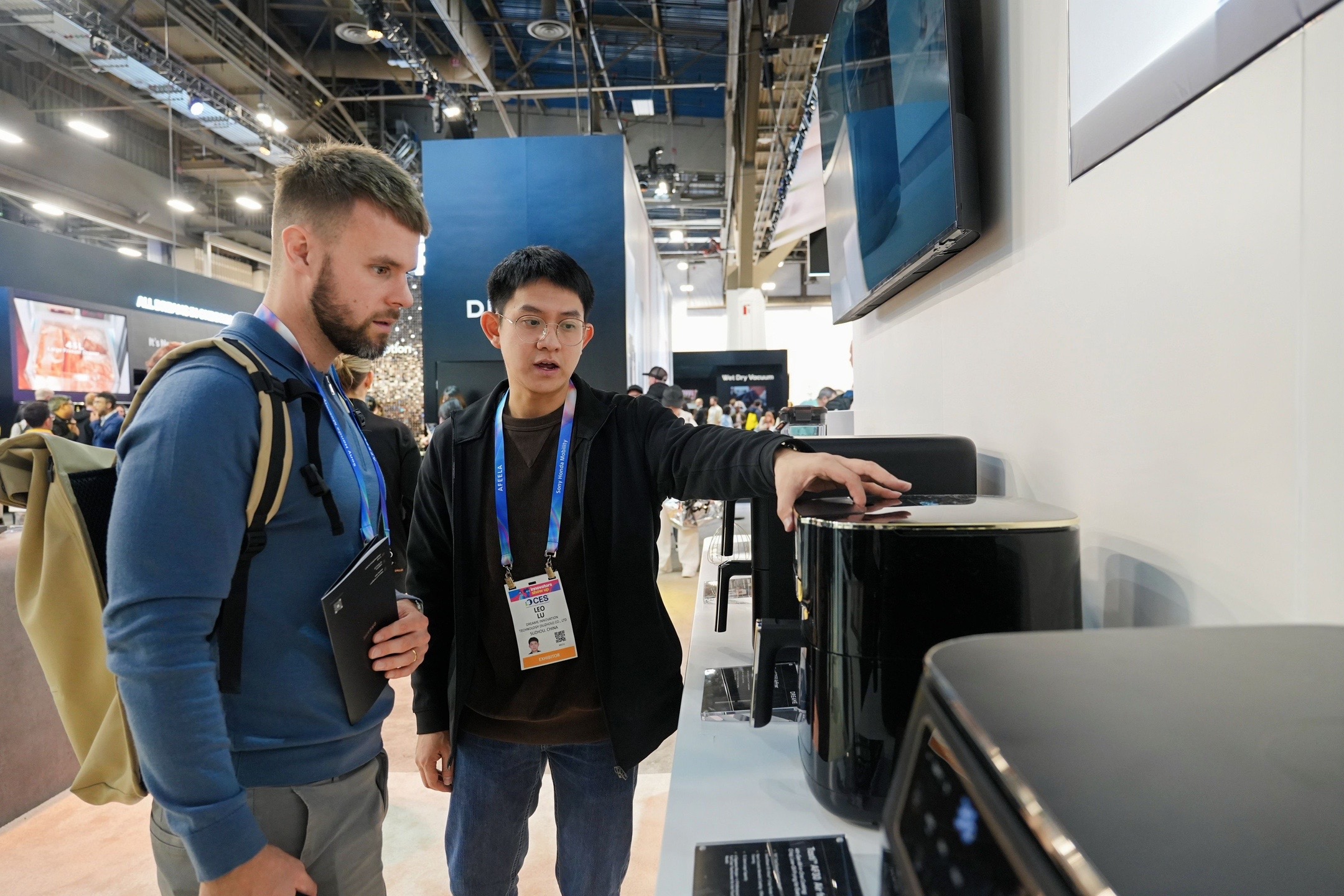
The first thing that makes the Dreame Feast DS50 easy to take seriously is its shape. The vertical dual-zone layout is not just a styling decision. It is a practical answer to one of the biggest frustrations with large dual-basket air fryers: they can take over an absurd amount of counter width.
That is where the DS50 starts making sense immediately. Dreame is not asking buyers to choose between capacity and footprint in the way many big air fryers do. You still get a family-size machine, but in a form that looks much easier to live with if your kitchen already has a coffee machine, kettle, knife block, dish rack, or all four competing for the same space.
We liked that straight away because it shows a product team paying attention to real kitchens rather than imaginary ones. People do not usually upgrade their air fryer because they want more chrome, more presets, or a more dramatic display. They upgrade because they want more room, better flexibility, and less countertop chaos. The DS50 clearly understands that.
The 10L total capacity, split into two 5L chambers, also feels like the right size for the product it wants to be. This is not trying to pass itself off as a compact appliance. It is large, but intelligently large. That is a different thing.
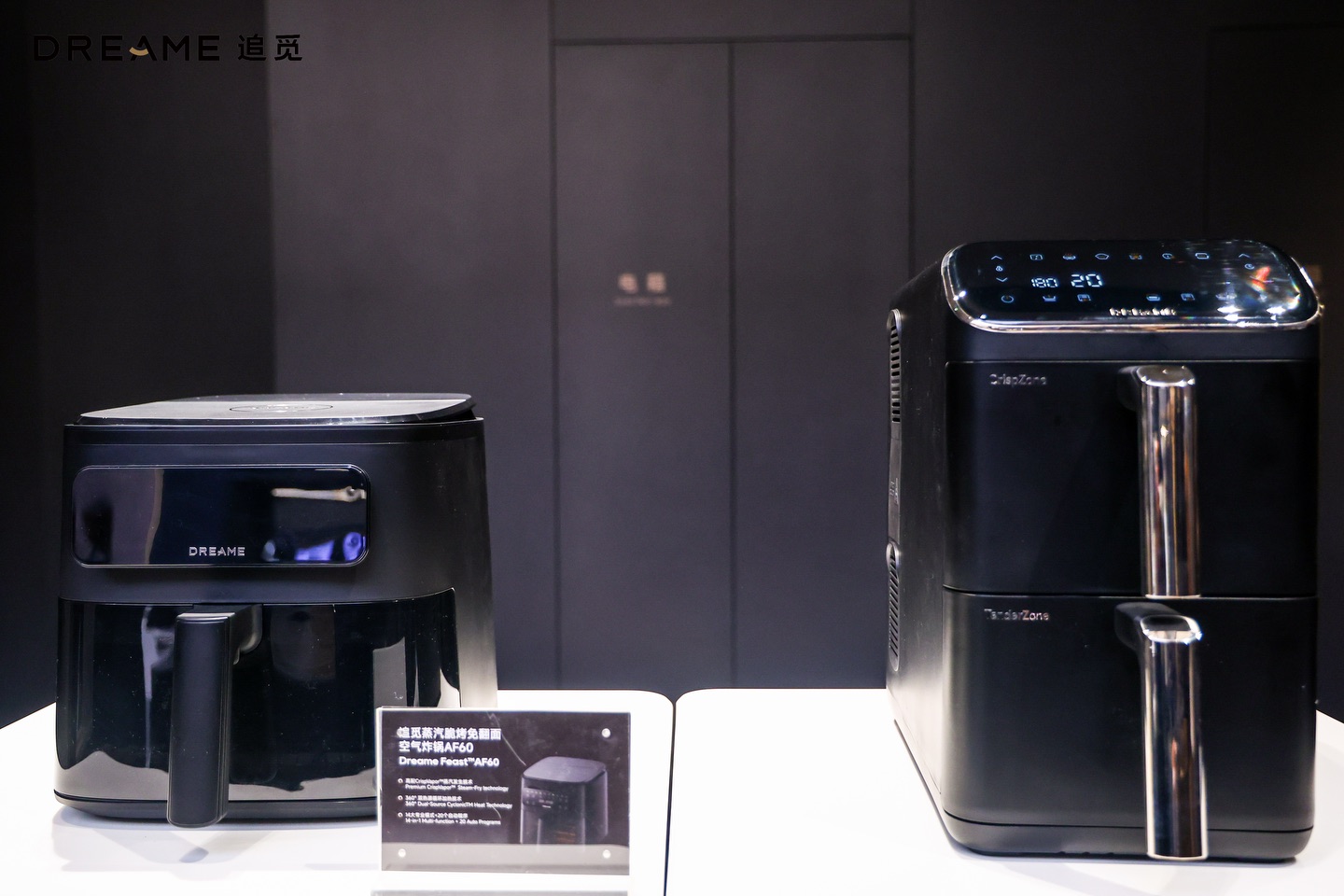
What stood out to us most in the design is that Dreame is not merely saying “here are two baskets.” It is saying these two baskets are meant to behave differently. One is the CrispZone, with what Dreame calls a Crisp Cyclone Airflow System meant to push faster surface dehydration and better crunch. The other is the TenderZone, with a Tender Whirlwind Airflow System designed to apply gentler, more even heat and better preserve moisture.
That is the whole DS50 argument in one sentence, and it is a good one. The machine is not trying to be more complicated for the sake of being premium. It is trying to be more intentional.
Setup and First Use
A product like this lives or dies very quickly on whether it feels intuitive. The more ambitious the concept, the less patience people will have for a clumsy setup or a fussy interface.
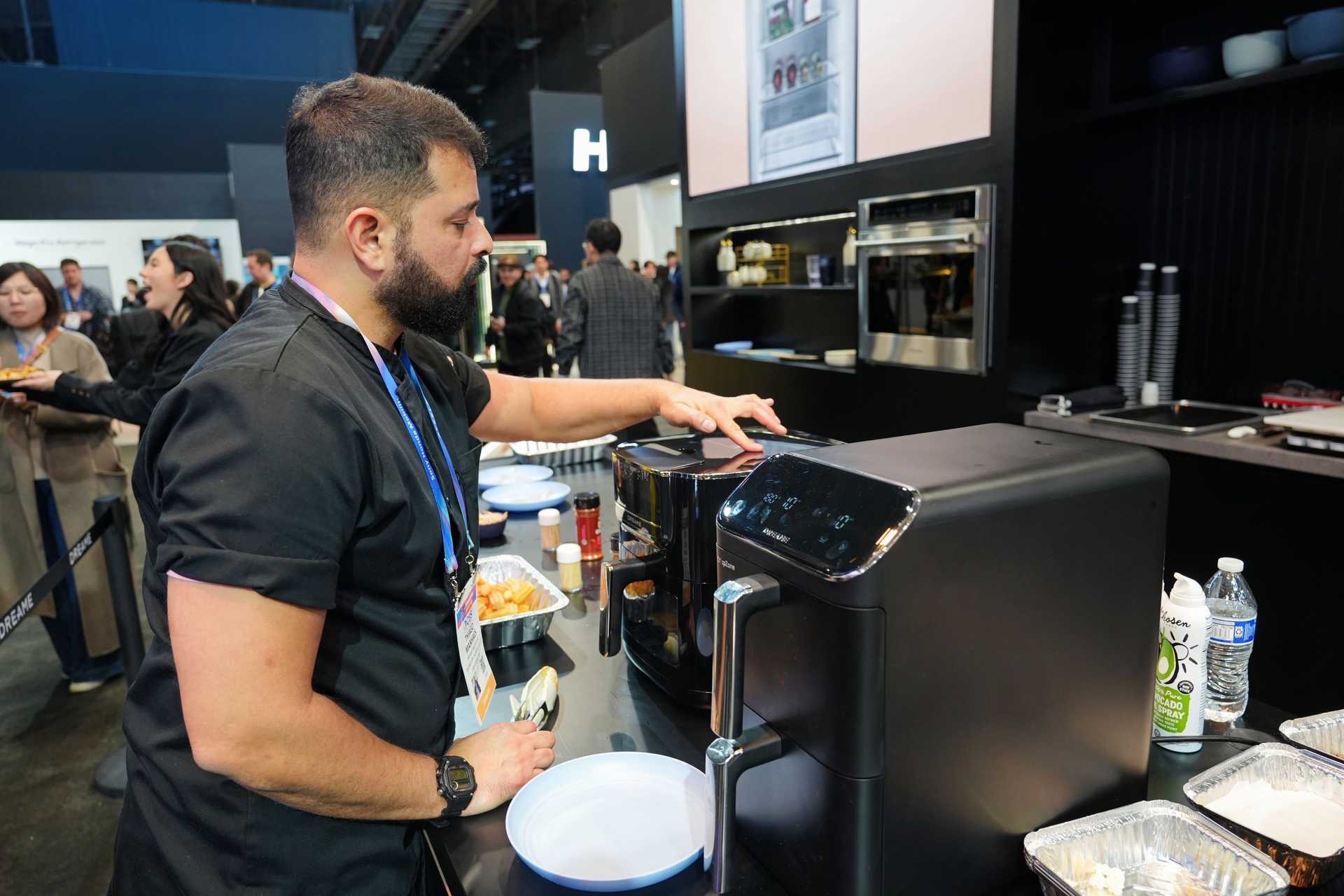
From what we saw, the DS50 seems to understand that. The machine offers independent cooking controls for each zone and includes 12 preset programs, but the more important part is the logic behind the experience. A premium air fryer should not make you work to understand it. It should make sense almost immediately.
That is why the presets matter less to us than the underlying workflow. We care much more about whether it is easy to assign time and temperature to each chamber, whether the two zones feel clearly distinguished in purpose, and whether the SYNC Smart Synchronization System actually saves effort when you are trying to get two different foods to finish together.
That sync feature is one of the few “smart” additions in this category that can genuinely help. When it works well, it reduces one of the most annoying parts of dual-zone cooking: one side is ready, the other still needs time, and you either serve in stages or let something sit and lose quality. If the DS50 handles that well, it adds real daily value.
What we appreciated is that the product’s idea is easy to understand. Crisp one thing. Cook another thing more gently. Finish them together. That is a cleaner and more useful pitch than the bloated smart-appliance language we usually get.
Real-World Performance
This is the section that matters most, because the DS50’s entire appeal rests on whether its split cooking personality feels meaningful in actual use.
And honestly, that is why we find it more interesting than the average large air fryer. Most dual-zone models are built around convenience. This one is trying to add intent.
That sounds like a small distinction, but it is not. A lot of air fryers are still blunt instruments. They are very good at making freezer food crisp. They are very good at reheating leftovers more convincingly than a microwave. They are often very good at roasting and browning. But they are not always graceful. Lean proteins can dry out. Vegetables can go from nicely browned to overdone quickly. Mixed meals often force you into trade-offs.
The DS50 is trying to reduce those trade-offs.
That is why the CrispZone and TenderZone idea works so well on paper. It matches how people actually think about food. Some ingredients benefit from aggressive air frying. Others need a calmer hand. Standard dual-basket machines help mostly by separating timing. The DS50 is trying to separate cooking character.
If that distinction holds up in practice, it is a meaningful advantage.
Where we felt encouraged is that Dreame chose exactly the right battleground. If you are going to launch another premium air fryer in 2026, you need a better reason than “it is large and has presets.” The DS50 has that reason. The part that still has to be earned is the result.
Because this is also where the scrutiny gets tougher. A vertically stacked design saves space, but it also has to manage airflow extremely well. Otherwise you end up with a machine that looks clever on the counter and less convincing once baskets are loaded like real baskets, not styled product photos.
That is the key question hanging over the DS50. Not whether the idea is good. It is. The question is whether the machine delivers enough real separation between crisping and gentler cooking to justify the story it is telling.
Use-Case Performance
The DS50 makes the most sense in homes where the air fryer is not just for snacks, but for actual meals.
That sounds obvious, but it is worth saying because this is not a casual little countertop gadget. Its strengths are clearly tied to mixed cooking. One side for protein, one side for a starch. One side for something that needs more browning, the other for something that needs more restraint. That is the use case that unlocks the logic of the product.
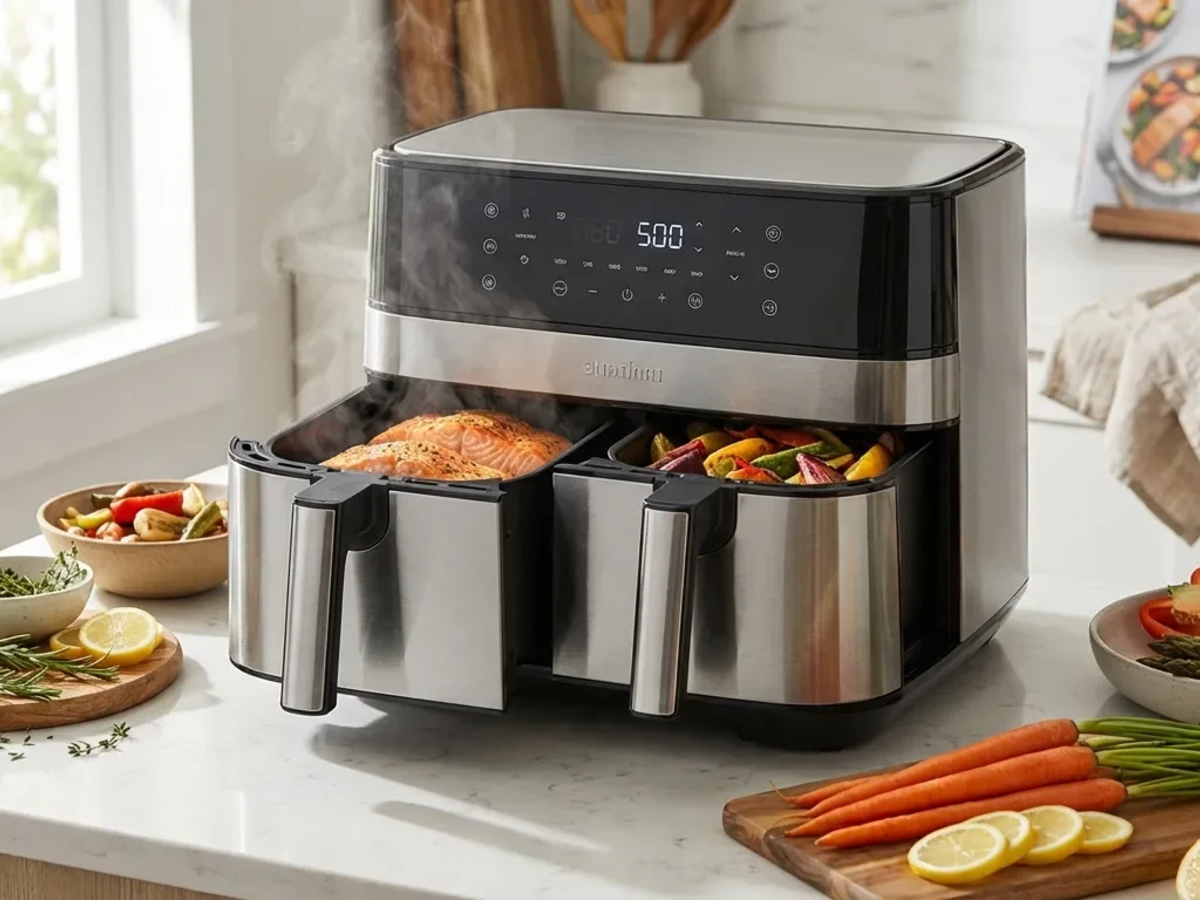
Think about everyday combinations: chicken and potatoes, salmon and greens, tofu and vegetables, wings and a side dish. Those are the kinds of meals where standard dual-basket air fryers can still feel a bit crude. They let you separate food, yes, but not necessarily treat it differently enough. The DS50 is attempting to close that gap.
That is why we think it could be especially good for buyers who have already owned an air fryer and know exactly what frustrates them. If you have ever found yourself thinking, “This appliance is excellent at crisping, but not always subtle,” the DS50 is aimed directly at that complaint.
It also looks like a better fit for couples and families than for solo users who mostly reheat a single portion. If you are only ever making one small item at a time, the DS50’s biggest strengths start to matter less. The vertical layout, the two-zone logic, the sync functionality, the family-size capacity — those things pay off most when you actually use them.
In daily use, that is what would decide whether the DS50 becomes a favorite or just another appliance you admired more than you needed.
Convenience, Controls, and Everyday Comfort
We always come back to this with air fryers: the best ones make themselves easy to trust very quickly.
They do not ask for a learning curve just to be useful. They do not slow dinner down with overdesigned interfaces. They do not feel like they want applause for being “smart.” They simply make cooking easier.
The DS50 looks promising on that front because its concept is more practical than flashy. Independent controls are essential in a machine like this, and the SYNC Smart Synchronization System is one of the few features in the category that sounds genuinely helpful instead of decorative.
We also think the vertical layout helps here. A broad dual-basket machine can feel physically demanding in a smaller kitchen because it asks for so much lateral space. The DS50 seems easier to integrate into tighter layouts without feeling like a compromise appliance.
Another strength is that Dreame does not appear to be overselling the machine as some all-in-one AI revolution. That matters. Buyers want an air fryer to do clear things well. They want crisping, flexibility, decent capacity, simple control, and cleanup that does not become irritating after the honeymoon phase. The DS50’s story is much closer to that reality.
What we would still watch closely is how forgiving the appliance feels. A premium air fryer should not punish you for not mastering it immediately. The more Dreame leans into differentiated zones, the more important it is that people can understand when to use each side without a lot of trial and error.
Flaws and Frustrations
The DS50’s biggest weakness right now is not that we dislike anything about the concept. It is that the concept sets a high bar.
That is both a strength and a risk.
If you tell buyers one side is built for crunch and the other is built for gentler, juicier cooking, the difference has to feel real. Not theoretical. Not barely noticeable. Real.
That is what gives us the most pause. The TenderZone could end up being the feature that makes this model genuinely better than a standard dual-basket air fryer. It could also end up being the kind of idea owners stop thinking about after the first few weeks because the distinction is not strong enough to change how they cook.
The second concern is one that comes with any stacked format: airflow and evenness. The vertical shape is smart for the counter, but stacked air fryers do not get a free pass just because they save space. They still have to cook evenly. They still have to make their capacity feel honestly usable. They still have to avoid that common disappointment where a large machine looks generous until you load it with real portions.
The “up to four dishes at once” promise also needs to be treated sensibly. It is attractive, and in the best-case version of this product it could be very useful. But claims like that always depend on portion size, food shape, and how realistically you fill the baskets. We would not buy this on the fantasy of a perfectly staged four-dish dinner. We would buy it on whether it handles ordinary full meals well.
Finally, the DS50 is not cheap enough to get away with being merely interesting. At $229, it has to be genuinely good. That is still a fair price for a premium air fryer. It just means buyers are justified in expecting more than smart branding and a clever layout.
Cleaning and Ownership
Cleanup is one of those sections brands rarely emphasize enough, even though it has a huge effect on whether an appliance stays in regular rotation.
And this is an area where we would judge the DS50 hard, because premium air fryers are supposed to make life easier, not more annoying over time.
The good news is that nothing about the basic format suggests a cleaning disaster. Two pull-out chambers are still a straightforward, familiar design. That is better than some countertop appliances that ask you to deal with multiple trays, awkward cavities, or fiddly internal parts.
What matters is whether the baskets are easy to handle, whether grease buildup stays manageable, and whether the airflow design introduces extra areas where mess becomes harder to deal with. The more advanced the airflow story becomes, the more important it is that the machine does not quietly become a maintenance chore.
That is especially true for the kinds of foods this appliance is meant to handle well. Crispy foods mean oil, crumbs, drips, and sticky residue. Tender foods often mean marinades, juices, and fat. The DS50 needs to stay convenient after all of that, not just while it is clean and new.
Value for Money
At $229, the DS50 is priced where a strong premium air fryer should be.
It is not a budget buy, and it is not trying to be. But it is also not drifting into the kind of inflated territory where the price itself becomes the story. Dreame has placed it right in the range where usefulness has to carry the argument.
We think that pricing is fair because the product is at least trying to offer something specific. A lot of premium air fryers ask buyers to pay more for nicer cosmetics, broader preset lists, or vague smart features. The DS50 is asking for a reasonable premium because it wants to cook more intentionally. That is a much better justification.
Our view is simple. If the CrispZone and TenderZone behave like truly different tools, $229 looks like good value. If the separation ends up feeling modest, then the DS50 becomes a decent premium air fryer with a clever hook, but not an obvious bargain. And if the differentiated airflow ends up being more branding than practical benefit, then the price starts feeling much harder to defend.
In other words, the value here is directly tied to execution. More than most air fryers, this one needs to earn its premise.
Who Should Buy It
Buy the Dreame Feast DS50 if you are the kind of person who actually wants a dual-zone air fryer for full meals, not just for the occasional side dish.
If your normal routine involves cooking protein in one chamber and vegetables or potatoes in the other, the DS50 makes a lot of sense. If you have felt that most air fryers are excellent at crisping but less convincing when delicacy matters, this model is clearly aimed at you. And if you need a larger-capacity air fryer without surrendering half your countertop width, the vertical format looks especially appealing.
We also think it is a strong match for buyers who are ready to move beyond entry-level air fryers and want something that feels more deliberate in how it handles food. The DS50 is not trying to be a jack-of-all-trades miracle box. It is trying to be better at mixed-meal cooking. That is a smarter goal.
Who Should Skip It
Skip it if you mostly reheat leftovers, cook a single small portion at a time, or simply do not need a large dual-zone machine.
You should also skip it if price is your main priority. There will always be cheaper air fryers that can handle basic crisping tasks reasonably well. The DS50 only makes sense if you want the flexibility, the layout, and the differentiated cooking logic enough to pay for them.
And if you are the kind of buyer who prefers to wait until an appliance has a longer real-world ownership record, that is a perfectly sensible reason to hold off. The DS50 looks promising. Promising is not the same as proven.
Final Verdict
The Dreame Feast DS50 Air Fryer gets our attention because it is solving the right problem.
That alone already puts it ahead of a lot of premium countertop appliances. Instead of pretending all dual-zone air fryers are equally smart, it takes a more practical view: different foods want different airflow behavior, and a well-designed machine should reflect that. We think that is exactly the right idea for this category.
The rest of the case is strong too. 10L of total capacity, a sensible 5L + 5L split, a more kitchen-friendly vertical footprint, 12 presets, independent controls, and a SYNC feature that could actually help rather than complicate things — all of that adds up to a product with real promise.
But the verdict is still earned or lost on execution. If the CrispZone and TenderZone feel truly distinct in daily cooking, the DS50 could be one of the most compelling air fryers of 2026. If the difference turns out to be subtle, then it remains a good premium model with a sharper concept than most, but not a category changer.
As it stands, we would absolutely put it on the shortlist. It looks smart, purposeful, and better thought through than a lot of rivals. Now it just has to prove that the idea cooks as well as it sounds.
FAQ
What is the Dreame Feast DS50 Air Fryer?
The Dreame Feast DS50 is a dual-zone, vertically stacked air fryer with a 10-liter total capacity, split into a 5L CrispZone and a 5L TenderZone. It also includes 12 preset programs and a SYNC Smart Synchronization System.
How much does the Dreame Feast DS50 cost?
Dreame announced a North America price of $229.
When is the Dreame Feast DS50 coming out?
The announced North America launch window is Q2 2026.
What is the difference between the CrispZone and the TenderZone?
Dreame says the CrispZone uses a Crisp Cyclone Airflow System to create faster surface dehydration and better crunch, while the TenderZone uses a Tender Whirlwind Airflow System designed for gentler heat and better moisture retention.
Is the Dreame Feast DS50 good for families?
On paper, yes. A 10L dual-zone air fryer sits firmly in family-size territory, especially for homes that cook mains and sides together.
Can it really cook four dishes at once?
Dreame says the stacked design can handle up to four dishes at once, but the real answer will always depend on portion size, basket shape, and how realistically the chambers are loaded.
Is the vertical design actually useful?
Yes, that is one of the most attractive things about it. The stacked layout should make the DS50 easier to place in smaller kitchens than many wide dual-basket models.
Should you buy it right away?
It belongs on the shortlist right away. Whether to buy immediately depends on how comfortable you are with a promising new product versus waiting for longer-term ownership confidenc
Explore the Dreame Feast DS50 Air Fryer Gallery
Every image from this article, gathered in one clean place. Tap any photo to open it larger.