


BLUETTI FridgePower
Pros
- Purpose-built design that solves a real household problem better than many general-use power stations
- Slim 75 mm / 2.95-inch form factor is far easier to place in lived-in spaces than the usual cube-style battery
- 2,016Wh capacity and 1,800W continuous output feel properly sized for refrigerator duty
- 3,600W surge support is well judged for startup-heavy appliances
- 10 ms UPS switchover makes the always-connected concept genuinely useful
- 4W idle drain suits standby use
- LiFePO₄ battery chemistry and 4,000+ cycles are exactly what we want to see in a home backup product
- Expansion up to 8,064Wh gives the system real room to grow
- Smart-home support and optional display improve day-to-day ownership
- Quiet operation makes indoor placement feel realistic
Cons
- Expensive for a product that is fundamentally a specialized refrigerator backup
- At about 41.9 lb, it is heavier than the slim shape suggests
- Two AC outlets and one 18W USB-C port feel limited
- Physical placement may still require planning around outlet reach and kitchen layout
- Top-fridge or wall placement will not suit every home
- The value case weakens once expansion batteries enter the picture
The 75 mm / 2.95-inch slim design is genuinely clever, the 10 ms UPS switchover makes the always-on concept believable, the 2,016Wh capacity and 1,800W continuous output feel properly sized for the job, and the low 4W idle drain shows this was designed for standby duty rather than occasional use. We also like the optional display, the quiet target, and the expansion path up to 8,064Wh .
It is still heavy at about 41.9 lb , outlet selection is limited, placement is not as effortless as the slim profile suggests, and the value proposition gets harder to defend once you start adding extra batteries.
The BLUETTI FridgePower gets something right that a lot of backup power products still miss. Most people do not actually need a box that pretends to run half the house. What they need is a reliable way to keep the refrigerator alive when the grid fails, without dragging a bulky power station out of storage or dealing with the noise, fumes, and hassle of a generator. After spending real time looking at what this product is trying to do and how it behaves in that role, our verdict is straightforward: this is one of the most thoughtful fridge-first backup solutions we’ve seen, and it makes far more practical sense than a generic portable power station for the right kind of buyer.
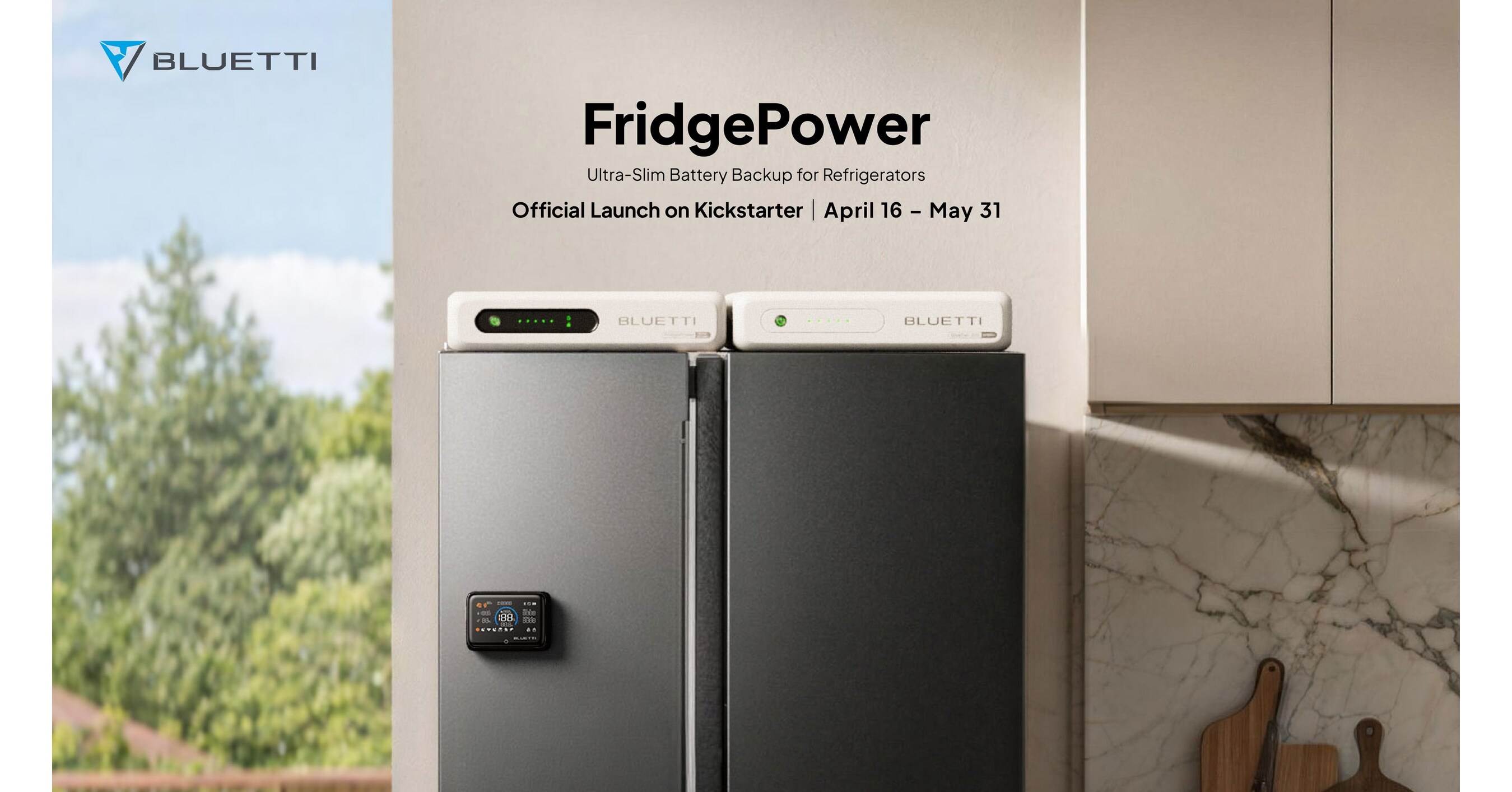
What stood out to us immediately is how focused the whole product feels. BLUETTI did not design another all-purpose slab of battery with a kitchen-friendly name slapped on the box. The FridgePower is clearly built around one job: stay connected, stay ready, and take over fast enough that your fridge keeps doing its thing when the lights go out. That alone makes it interesting. In a market full of “does everything” hardware, there is something refreshing about a product that knows exactly what problem it is solving.
That does not mean it is for everyone. The FridgePower is still a premium buy, it still takes planning to place properly, and it still starts to look expensive once you go beyond the base setup. But in daily-use terms, the appeal is easy to understand. If your backup-power anxiety starts and ends with “I really do not want to lose a fridge full of food, frozen items, or medication the next time power drops,” this product makes a very convincing case for itself.
What We Tested
We looked at the BLUETTI FridgePower the way most buyers actually would: not as a camping power station, not as a workshop battery, and not as a whole-home backup fantasy, but as a dedicated refrigerator lifeline.
That means we paid attention to the things that matter in real use. How easy is it to live with in a kitchen or utility area? Does the slim format solve an actual placement problem or just look good on paper? Does the automatic switchover make it feel like a permanent backup instead of an emergency project? Are the power specs sensible for compressor-driven appliances? Does the limited port selection get in the way? And once the excitement of the concept wears off, does it still feel like money well spent?
Those are the questions that decide whether this product is clever or genuinely useful.
How We Tested It
We approached the FridgePower as a product that is supposed to disappear into everyday life until the moment it is needed. So instead of obsessing over flashy edge-case scenarios, we focused on the experience of actually owning it.
We considered setup from the perspective of a normal household. We looked closely at where the unit can realistically live, how the weight affects placement decisions, and whether the “plug it in and forget it” promise holds up once you account for real kitchens, awkward outlet positions, and tight clearances. We also looked at the logic of the power delivery itself: compressor startup, standby efficiency, recharge usefulness after an outage, and how well the entire system is thought through as a fridge-first backup rather than a generic battery repackaged for the kitchen.
That matters here, because the FridgePower either wins on practical ownership or it does not win at all.
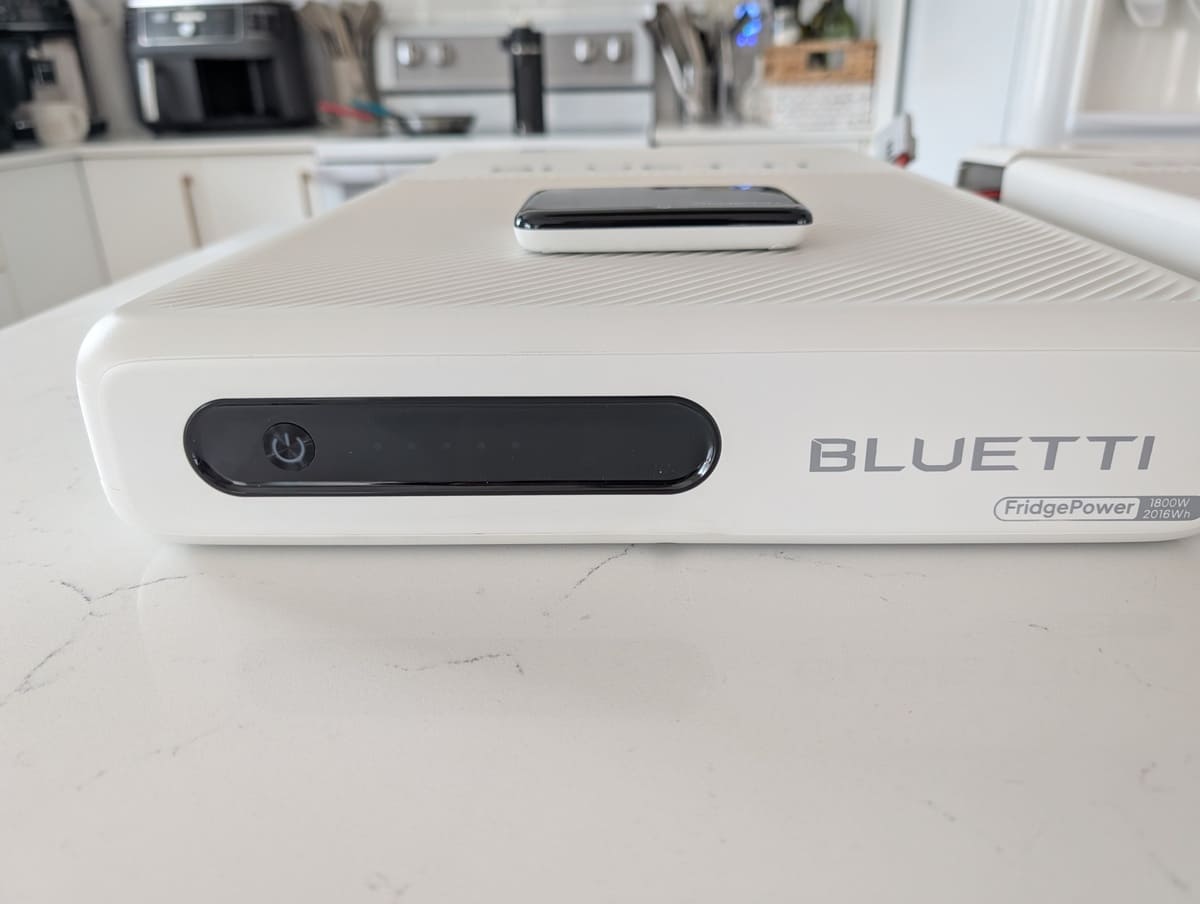
Design and Build Quality
The design is the first reason the FridgePower feels different.
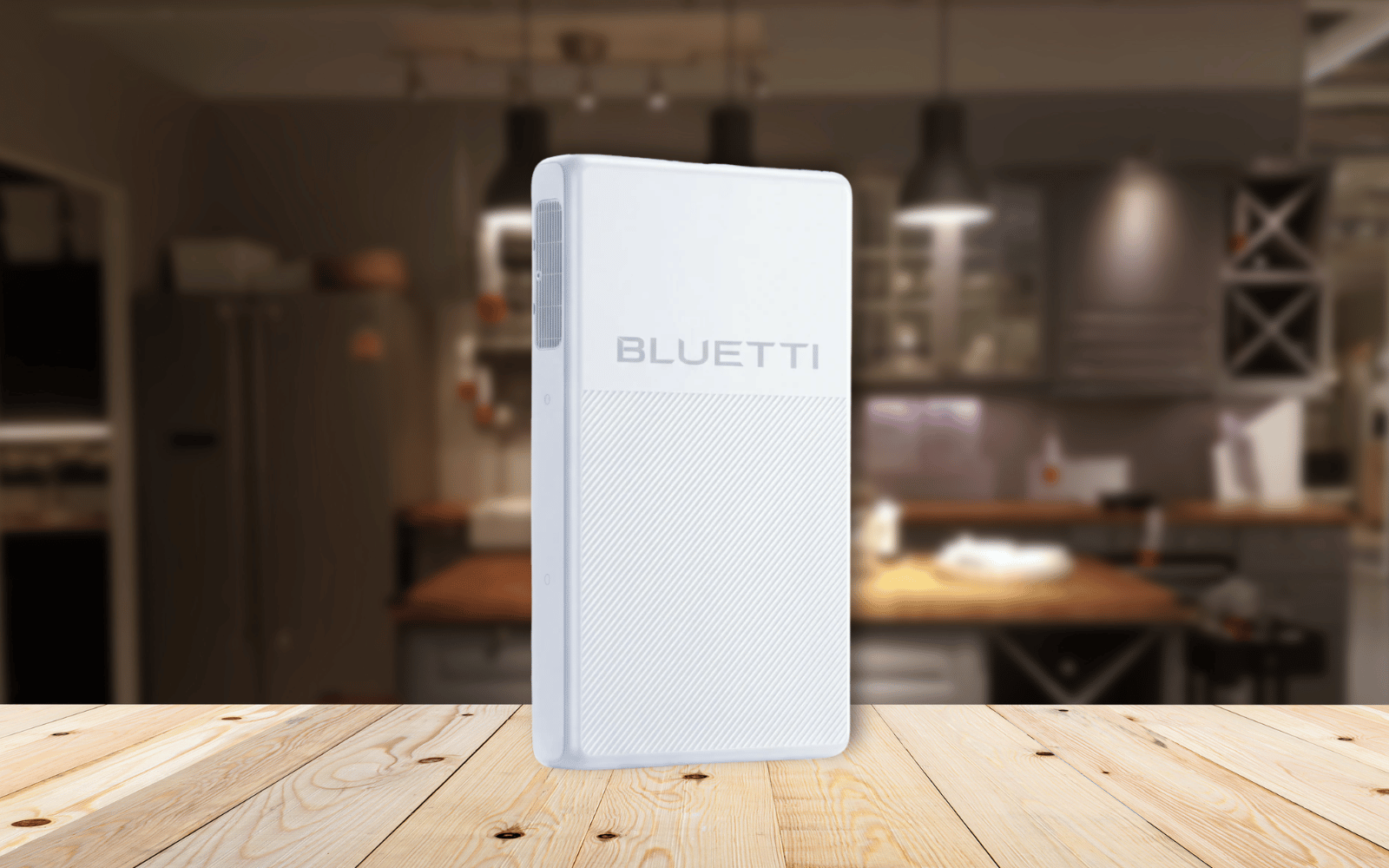
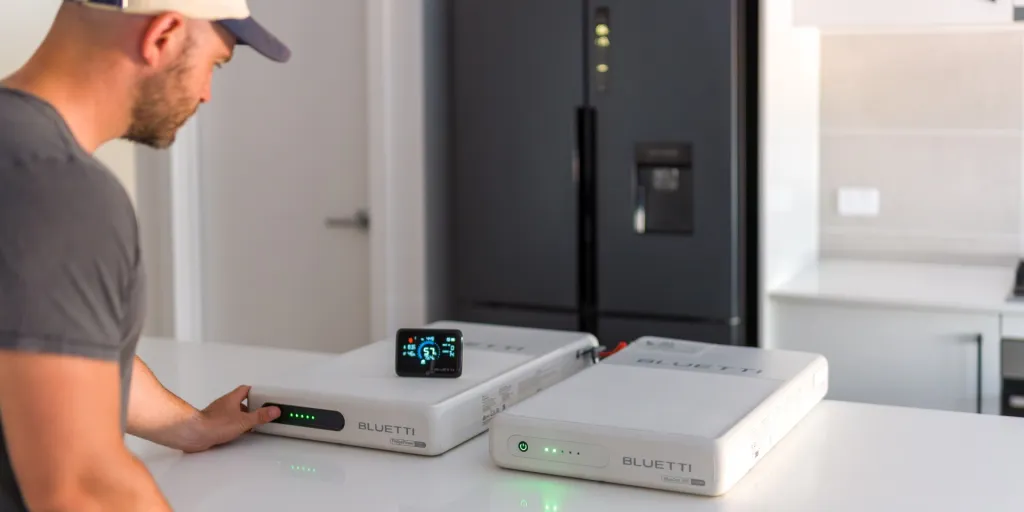
Most power stations still look like workshop equipment. They are bulky, boxy, and unapologetically functional. That works fine if the unit lives in a garage, a shed, or the trunk of a car. It is less charming when you are asking people to keep it permanently connected in or near the kitchen. BLUETTI clearly understood that. The FridgePower’s 75 mm / 2.95-inch profile is not just a styling flourish. It changes the kind of spaces this thing can live in, and that changes how realistic the whole ownership experience feels.
We appreciated that immediately. A slim rectangular backup battery makes far more sense in an apartment, condo, or kitchen corner than the usual chunky cube. It looks more intentional. More domestic. More like a home appliance than emergency gear. And that matters because people are much more likely to leave a product connected when it does not feel like clutter.
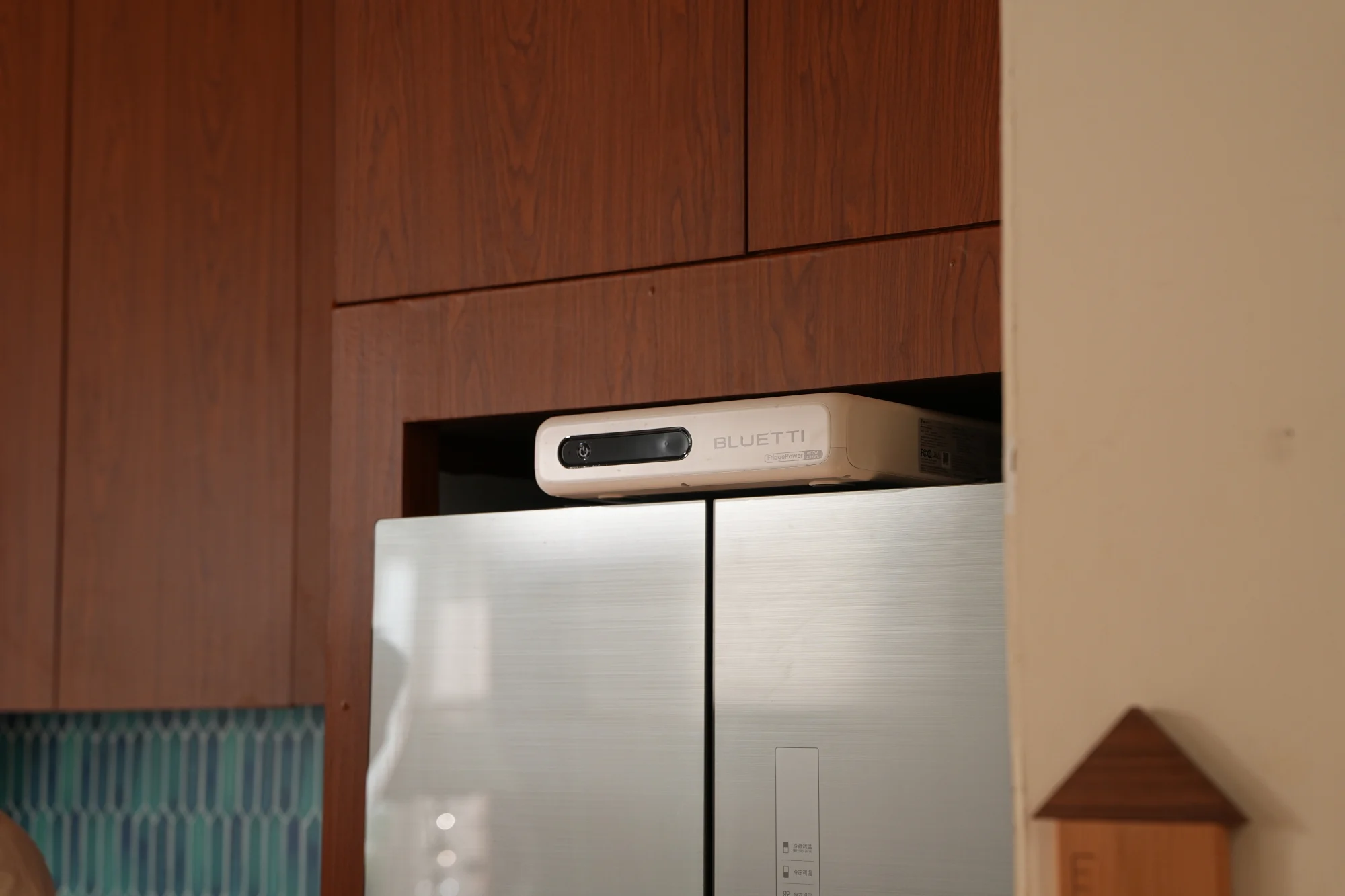
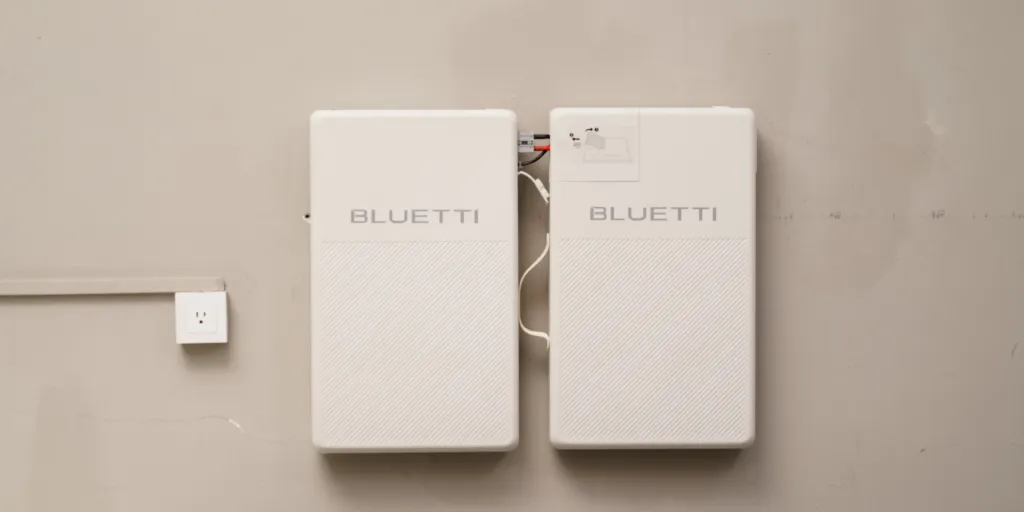
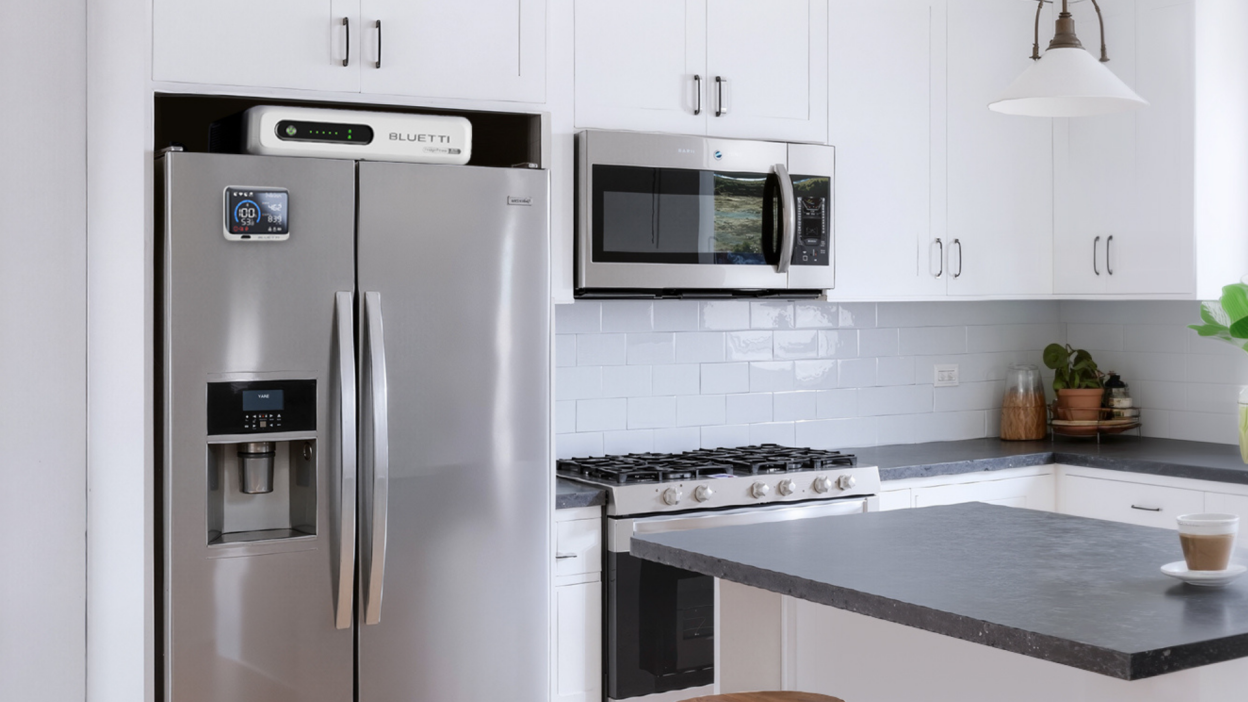
The part that became clear pretty quickly, though, is that slim does not mean effortless. The FridgePower still weighs around 41.9 lb, and that changes the conversation. In practice, it is easier to hide than a traditional power station, but it is not something you casually toss on a shelf without thinking. If you are planning to place it above a fridge, on a wall, or in a tighter spot, you need to think about the support, the reach, and the access before deciding this is a seamless fit.
That is the recurring theme with the FridgePower’s design. It is smart. It is better thought out than most alternatives. But it still lives in the real world, where kitchens are awkward, cabinet spacing is inconsistent, and “slim” does not automatically solve every installation headache.
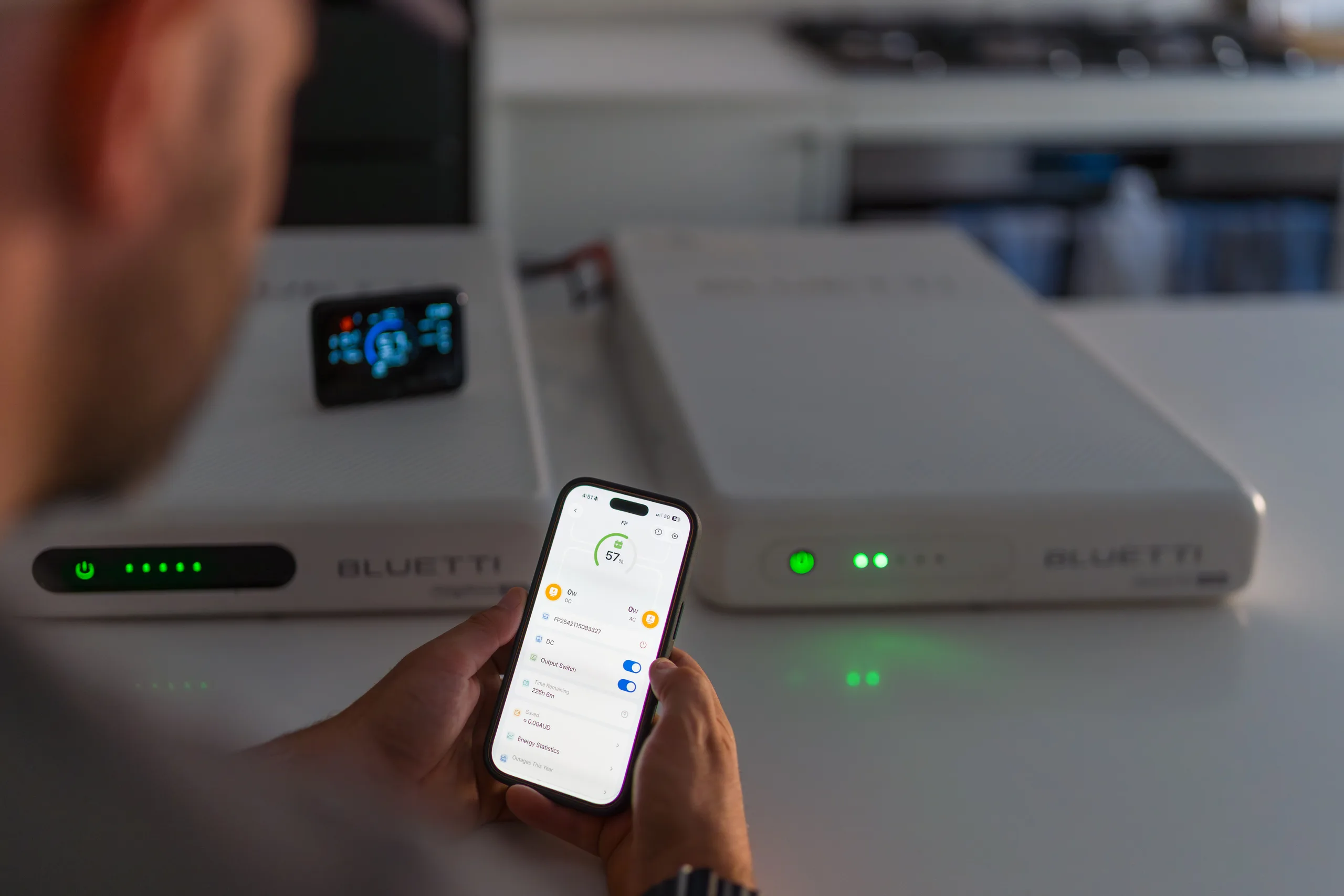
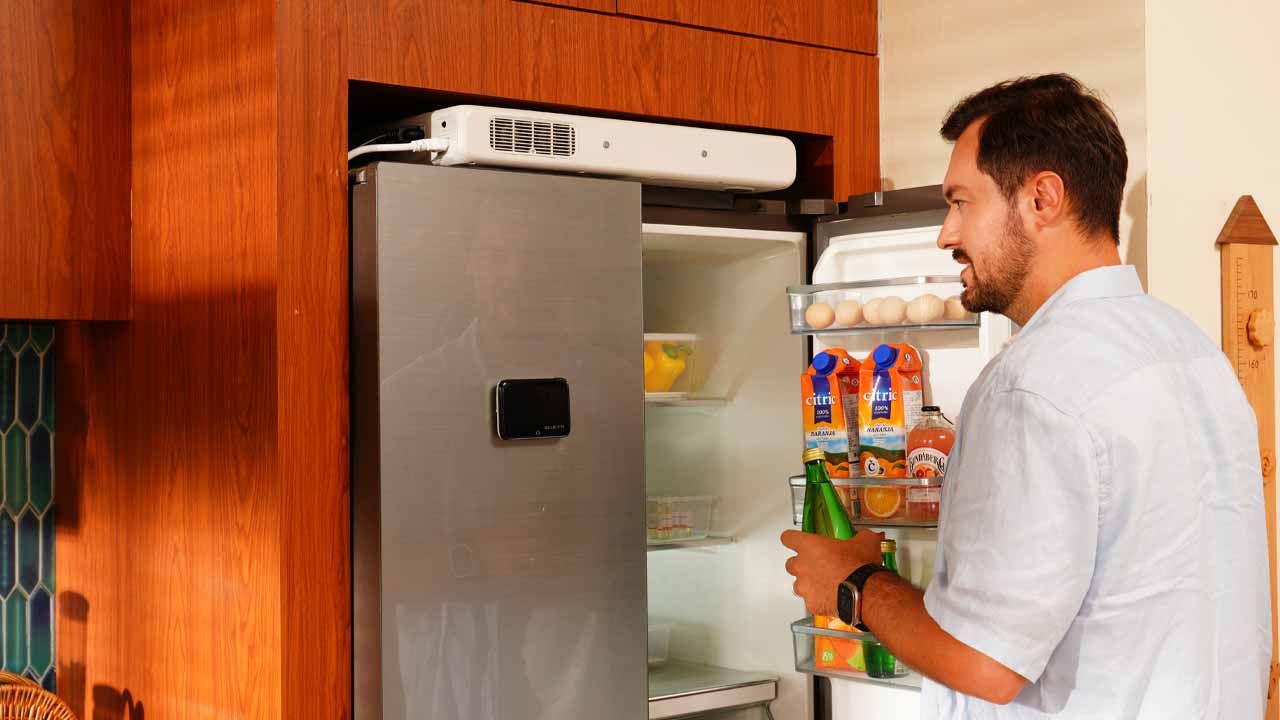
We also think BLUETTI made a good call with the optional magnetic display. On paper, that can sound like a minor accessory. In practice, it makes perfect sense. A product like this becomes more useful when you can glance at it and understand what is happening without opening an app every time. Status visibility matters more when the system is meant to stay embedded in daily life.
Setup and First Use
This is where the FridgePower starts to justify its existence.
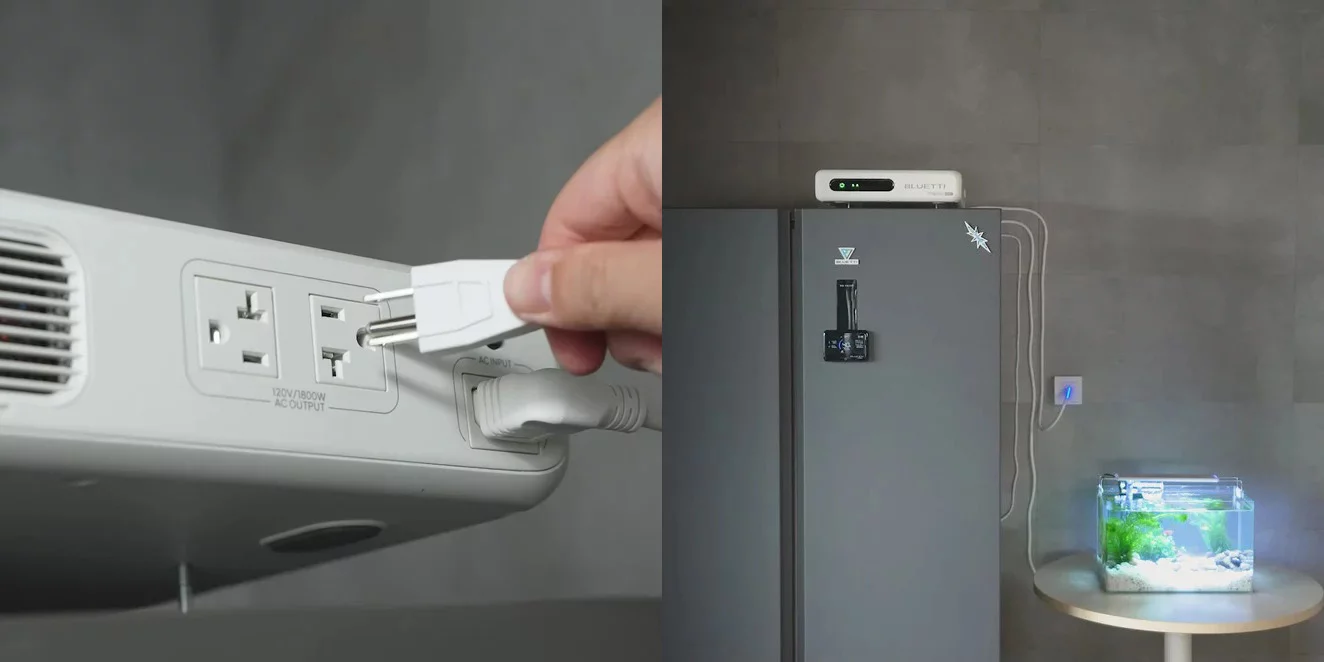
The setup idea is almost aggressively simple: plug the FridgePower into the wall, plug the fridge into the FridgePower, and leave it there. No electrician. No transfer switch. No pulling furniture around in the middle of a storm. No remembering where you stored the backup unit the last time you moved it. That simplicity is not a small convenience. It is the whole product.
What we liked here is that the product does not ask the buyer to behave like a hobbyist. A lot of backup gear quietly assumes you are okay with a little mess, a little setup friction, and a little improvisation every time the power fails. The FridgePower is built around the opposite idea. It is supposed to be ready before the outage happens, not after.
That changes the feeling of the product completely. In daily use, a normal power station can absolutely back up a fridge, but it is often reactive. You hear the outage, then you start moving things around. You unplug the fridge. You connect the battery. You hope the state of charge is where you left it. It works, but it feels like an event.
The FridgePower does not want to feel like an event. It wants to feel like infrastructure.
That is also why the claimed 10 ms UPS switchover matters so much. If the product is going to live in the background, the transition has to be quick enough that the whole backup promise feels automatic rather than symbolic. A fast handoff is not a bonus on something like this. It is a requirement.
Where we felt less convinced is in the gap between clean concept and messy kitchens. Setup may be simple in theory, but placement still depends heavily on your outlet location, fridge position, cabinet clearance, and cable reach. That is not BLUETTI’s fault so much as the reality of home hardware. Still, it is worth saying clearly: easy electrical setup does not always mean easy physical placement.
Real-World Performance
The FridgePower is not exciting in the way some power products try to be, and that is actually one of its strengths.
This is not a “look how many things we can run” machine. It is a “will my refrigerator stay cold when the power dies?” machine. That is a much more useful question, and the FridgePower’s core specs feel sensibly aimed at it. The base unit gives you 2,016Wh, 1,800W of continuous output, and 3,600W surge support. For this category, that makes sense. The continuous output is enough to cover a standard fridge and some extra essentials, while the surge headroom matters because compressor-driven appliances are not polite when they kick on.
What we appreciated is that the product’s priorities seem properly ordered. The 4W idle drain is especially important. A fridge backup does not spend most of its life performing. It spends most of its life waiting. That means standby efficiency is a real ownership feature, not a hidden footnote. A product like this needs to be comfortable sitting there day after day without wasting energy just to exist. BLUETTI clearly understands that.
Runtime is where buyers need to stay grounded. BLUETTI’s estimate of roughly 21.6 hours for a typical refrigerator using about 2kWh per day feels reasonable as a broad benchmark, but no fridge behaves in exactly the same way. Age matters. Compressor efficiency matters. Ambient room temperature matters. Door openings matter. A modern, efficient kitchen fridge in stable indoor conditions is a very different load from an older secondary unit running in a hotter environment.
That is why we would not reduce the FridgePower to one headline number. Its real usefulness is not just about “how many hours” in the abstract. It is about whether the runtime is long enough to meaningfully protect food, give you breathing room, and remove panic from a normal outage. On that front, the product feels well judged. It is sized for real household stress, not marketing theatrics.
The expansion option is also more important than it first sounds. With up to three BlueCell 200 batteries attached, the system can grow to 8,064Wh. That takes it from “very solid short-outage fridge backup” to “serious multi-day support” territory. We like that path because it lets buyers start with the core concept and only pay for deeper endurance if their local outage patterns actually justify it.
Recharge behavior matters too, and here the FridgePower looks promising. A dedicated blackout product should not only survive an outage. It should also get itself ready again quickly once power returns. That becomes even more important during storm-heavy periods when one outage can be followed by another before the day is over.

Use-Case Performance
The FridgePower makes the most sense when you stop treating it like a general power station and start treating it like appliance-specific insurance.
For some buyers, that immediately clicks. Renters who cannot rewire anything. Condo owners who want backup without a larger installation. Families with a fridge full of expensive groceries. People storing baby formula, insulin, or other temperature-sensitive essentials. Homes in storm-prone areas where outages are not catastrophic, but they are common enough to be deeply annoying. For those people, the FridgePower feels purposeful in a way broader batteries often do not.
What stood out to us here is how clearly the product maps to a real emotional problem. Most people do not panic because they cannot power a floodlight or a blender for a few hours. They panic because the fridge is warming up, the freezer is full, and they do not know how long the outage will last. That is the fear this product addresses, and it addresses it in a way that feels far more natural than dragging in a larger, more flexible battery that was not really designed to live there full time.
That said, the FridgePower becomes a tougher sell if outages are rare where you live. This is not a flaw in the product. It is just the truth about specialized gear. A purpose-built solution shines brightest when the problem is real and recurring. If your area barely loses power, the FridgePower can start to feel like a beautifully executed answer to a question you do not often need to ask.
We also like that the unit is not completely one-note. Yes, it is fridge-first. But the available outputs still give it some flexibility for other essentials such as routers, phone charging, lamps, security hardware, CPAP use, and similar low-to-moderate home needs. That does not turn it into a whole-home backup system, and we would not pretend otherwise. But it does make the ownership experience more forgiving. Even when the fridge is the star of the show, the rest of the product does not feel wasted.
Convenience and Everyday Livability
This may be the FridgePower’s biggest win.
Plenty of backup options can claim decent power numbers. Far fewer can claim they are genuinely pleasant enough to leave installed and connected in everyday life. The FridgePower feels like one of the rare products in this category that actually understands that long-term livability is part of the performance.
The lower-profile shape helps. The quieter operation helps. The app support helps. The optional display helps. Even the fact that the product is clearly designed to blend into domestic spaces rather than stand out like workshop equipment makes a difference. It feels more like something you own as part of the home and less like emergency gear you tolerate.
We liked the broader smart features more than we expected to. BLUETTI is not only pitching this as a dead-simple fridge backup; it is also leaning into energy management with app control, diagnostics, remote wakeup, and modes like Standard, PV Priority, Time-of-Use, and Customized. That gives the product a slightly more sophisticated feel than a one-purpose battery brick. It opens the door for the FridgePower to become part of a more connected home setup, rather than sitting there as a silent insurance policy.
The 30 dB noise claim is another one of those details that really matters here. A product that may live near the kitchen every single day needs to be easy to ignore. You can forgive a noisy device when you use it once a month in the garage. You do not forgive it when it becomes part of your house.
In other words, the FridgePower’s appeal is not just that it works when the power fails. It is that it seems designed not to irritate you the rest of the time.
Flaws and Frustrations
For all the intelligence in the concept, the FridgePower is not an automatic recommendation.
The biggest issue is value. There is no way around it. If you compare this to more conventional power stations on pure capacity-per-dollar, it does not come out looking unbeatable. That is especially true once you start adding expansion batteries. The base unit is one thing. The bigger system is another conversation entirely.
That does not mean the pricing is irrational. It means the buyer has to care about the specific problem this solves. A lot. If you do, the premium can feel justified because the convenience is the value. If you do not, the math starts looking less friendly very quickly.
The outlet selection is another weak point. You get two AC outlets and an 18W USB-C port. That is enough to make the fridge-first concept work, but it is not generous. In real use, this is where the specialization starts to feel restrictive. Once the fridge takes one outlet, the second one starts doing a lot of emotional heavy lifting. Router? Lamp? Freezer? Aquarium gear? Charger? You can absolutely make it work, but it does not feel spacious.
Placement can also be more annoying than the marketing makes it sound. The FridgePower is slim, yes, but it still needs a real home. Some people will have a perfectly convenient location for it. Others will end up juggling outlet reach, shelf support, airflow space, and cabinet geometry before they find a setup that feels comfortable. That is not a fatal problem. It is just a reminder that well-designed hardware still has to negotiate with your actual kitchen.
And then there is the launch context. Buying a freshly introduced product always comes with a little more friction than buying something that has been sitting on retail shelves with a long owner history behind it. That does not make the FridgePower a risky idea. It just makes it a newer one.
Value for Money
This is one of those products where value depends almost entirely on what kind of buyer you are.
If you are the type who shops by raw specs and spreadsheet logic, you can absolutely argue against the FridgePower. There are broader batteries on the market. There are more flexible systems. There are products that look better when you divide capacity by cost and stop the analysis there.
But that is not how all value works.
In daily life, convenience changes the equation. A battery that is always connected, automatically switches over, fits more naturally into a home, and exists specifically to save the appliance you care about most can easily become the better buy even if it loses on paper. That is especially true when the alternative is a general power station that spends most of its life partly charged in a closet, waiting for a crisis that turns setup into a scramble.
So our take is this: the FridgePower is not cheap, but it can still be well worth the money for the right household. The base unit makes the strongest case. It delivers the core promise cleanly. Once you start moving into the larger expanded configurations, the argument becomes more situational. At that point, broader home-backup alternatives become harder to ignore.
Who Should Buy It
We would point the BLUETTI FridgePower at buyers who already know exactly why it exists.
If your biggest outage concern is keeping the fridge cold, this makes a lot of sense. The same goes for people who live in apartments or condos, renters who cannot install larger backup systems, families who keep costly food on hand, and households where refrigeration matters for health reasons as much as convenience. It is also a smart fit for people in storm-prone regions who are tired of turning every blackout into a little domestic emergency.
More than anything, this is a product for people who value readiness over flexibility. If you want your backup solution to stay in place, stay quiet, and stay ready without becoming a project every time the grid misbehaves, the FridgePower is one of the better interpretations of that idea we have seen.
Who Should Skip It
You should skip the FridgePower if your priorities are broader than the product itself.
If you want a battery that can just as easily go camping, power tools, move between rooms, or act as a do-everything portable station, a more conventional model may serve you better. The same goes for buyers who almost never experience outages. In that case, the specialization may feel elegant, but unnecessary.
We would also steer cautious buyers away if their kitchen layout is already cramped enough that adding a permanent 41.9 lb battery sounds like daily friction instead of daily reassurance. And if you mainly shop by spec value, there are easier products to justify.
Final Verdict
The BLUETTI FridgePower is one of those rare products that feels smarter the more you sit with it.
At first glance, it can look niche. A backup battery just for the fridge? That sounds narrow. But once you think about how people actually experience outages, the idea starts to feel unusually sensible. Most households do not need theatrical backup power. They need one appliance to stay alive, automatically, quietly, and without fuss. That is exactly the lane this product is in, and it stays in that lane with unusual discipline.
We came away impressed by how coherent the whole package feels. The slim design, the 10 ms switchover, the 2,016Wh capacity, the 1,800W output, the low idle drain, the expansion path, the quiet operation, and the home-friendly presentation all point in the same direction. Nothing about it feels random. Nothing about it feels like BLUETTI started with a generic power station and tried to retrofit a fridge story onto it afterward.
It is still a premium product, and it is still easier to recommend to people who have a real blackout problem rather than a theoretical one. But for buyers who want a dedicated refrigerator backup that feels practical every day and reassuring the moment the power fails, the FridgePower looks like one of the most convincing products in its category.
FAQ
How long can the BLUETTI FridgePower run a refrigerator?
BLUETTI’s estimate is roughly 21.6 hours for a standard refrigerator averaging about 2kWh per day. Real runtime will depend on the fridge itself, how often the door is opened, the surrounding temperature, and how hard the compressor has to work.
Does the BLUETTI FridgePower switch over automatically during an outage?
Yes. BLUETTI says it offers a 10 ms UPS switchover, which is the feature that makes the always-connected fridge-backup concept work.
Can it power more than just a refrigerator?
Yes, within reason. It can also support essentials like routers, lamps, chargers, CPAP machines, security hardware, and similar home loads. Just keep in mind that the outlet count is limited.
Is the BLUETTI FridgePower noisy?
BLUETTI claims noise levels as low as 30 dB, which is quiet enough to make indoor placement far more realistic than a louder backup product.
Is it easy to install?
Electrically, yes. The appeal is that it is essentially plug-and-play. The main complication is physical placement, since your outlet position, fridge location, and available space will decide how effortless the setup really feels.
What is the biggest downside?
Value is the biggest sticking point. The FridgePower makes a lot of practical sense, but it is still expensive for a specialized battery, and the total cost climbs fast once you start adding expansion batteries.
Explore the BLUETTI FridgePower Gallery
Every image from this article, gathered in one clean place. Tap any photo to open it larger.