
The Twelve South Valet makes its case almost immediately. We did not need long to understand what it was trying to do, because it wears its priorities openly. This is not a gadget-first product built to impress us with maximum output numbers, extra charging spots, or a feature list that tries to justify every dollar on technical merit alone. The Valet is aiming for something more domestic and more deliberate. It wants to tidy the little messes that build up around daily life, and it wants to do that while looking like it actually belongs in the room. In that sense, it succeeds. It is one of the most attractive charging accessories we have spent time with in this category, and it feels designed by people who understand that tech no longer lives in isolation. It lives on entryway tables, on dressers, on shelves, on nightstands, and in all the visible places where ugly accessories quietly drag down a room. The Valet respects that reality, and that is the strongest thing about it.
The harder part is deciding whether admiration turns into recommendation. We liked the Valet. We appreciated the materials, the restraint, the weight, and the way it turns a simple drop zone into something that feels calmer and more intentional. But once you step past the first impression, the price becomes impossible to ignore. At $179.99, this is not a casual accessory. It is asking luxury-object money for a product that still has to live in a category where buyers naturally compare charging performance, ecosystem support, and practical value. That is where the Valet becomes less straightforward. It is very easy to understand. It is much harder to justify.
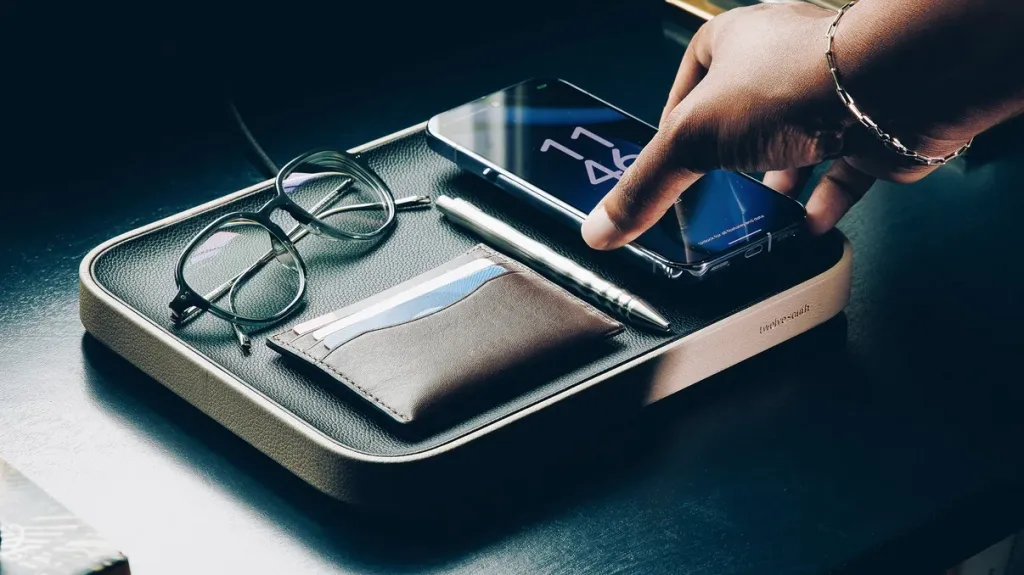
What kept standing out to us is that the Valet works best when we stop judging it like a typical charger and start judging it like a piece of the home. It is a premium catchall tray first, with charging folded into that experience in a clean, tasteful way. When we looked at it through that lens, much of the design clicked into place. The weighted base, the leather wrapping, the hidden cable routing, the restrained shape, and even the swappable frame system all made sense. But the moment we shifted back into pure charger logic, the compromises came into focus. The 15W Qi2 ceiling feels merely decent, not exciting. The lack of built-in Apple Watch support feels noticeable. The second USB-C charging option is useful, but not transformative. None of that makes the Valet bad. It just makes it narrower than its premium price suggests.
That tension defines the whole product. The Valet is refined, thoughtful, and genuinely appealing. It is also indulgent in a way that will only make sense to a particular type of buyer. If what you want is a handsome object that creates order, softens the presence of tech, and quietly charges your phone at the same time, the Valet makes a strong impression. If what you want is the smartest charging value at this price, it will be a much harder sell.
Quick Verdict
Best for:
buyers who want one elegant place to drop a phone and everyday essentials, and who care as much about materials, finish, and visual calm as they do about charging.
Avoid if:
you want the best charging performance for the money, built-in Apple Watch support, stronger bedside functionality, or a more obvious value proposition.
What we liked:
the Nappa leather, the weighted feel, the understated design, the hidden cable management, the four-way placement flexibility, the modular frame system, and the fact that it genuinely improves the look of the surface it sits on.
What disappointed us:
the 15W Qi2 charging feels conservative at this price, the missing Apple Watch integration is hard to ignore, and the overall feature set does not feel ambitious enough for a nearly $180 accessory.
Final verdict:
the Twelve South Valet is a luxury home object with charging built in. It is not a practical value pick, and it is not trying to be. Buy it because you want the object itself, not because the charging specs alone win the argument.
What the Twelve South Valet Actually Is
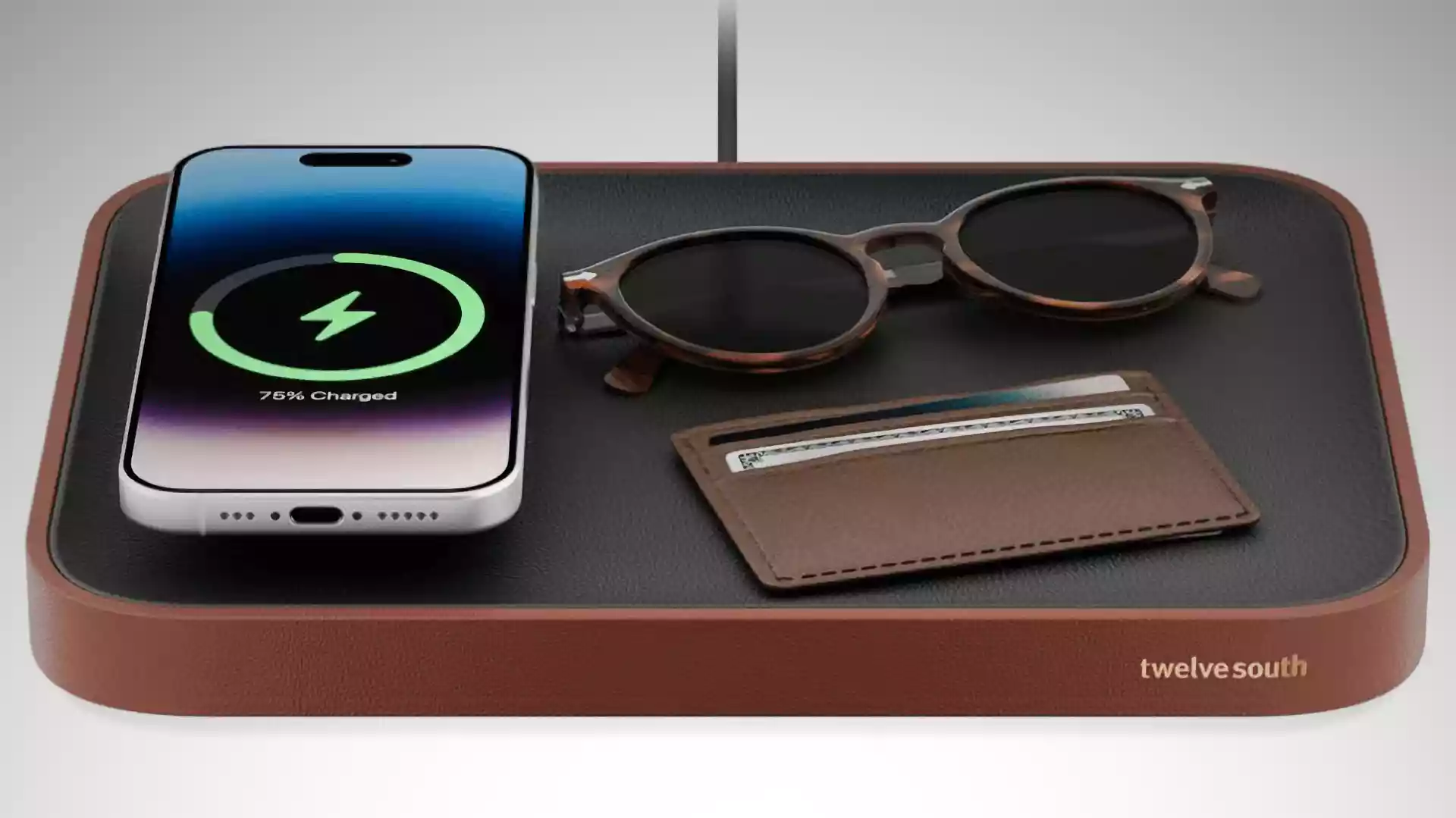
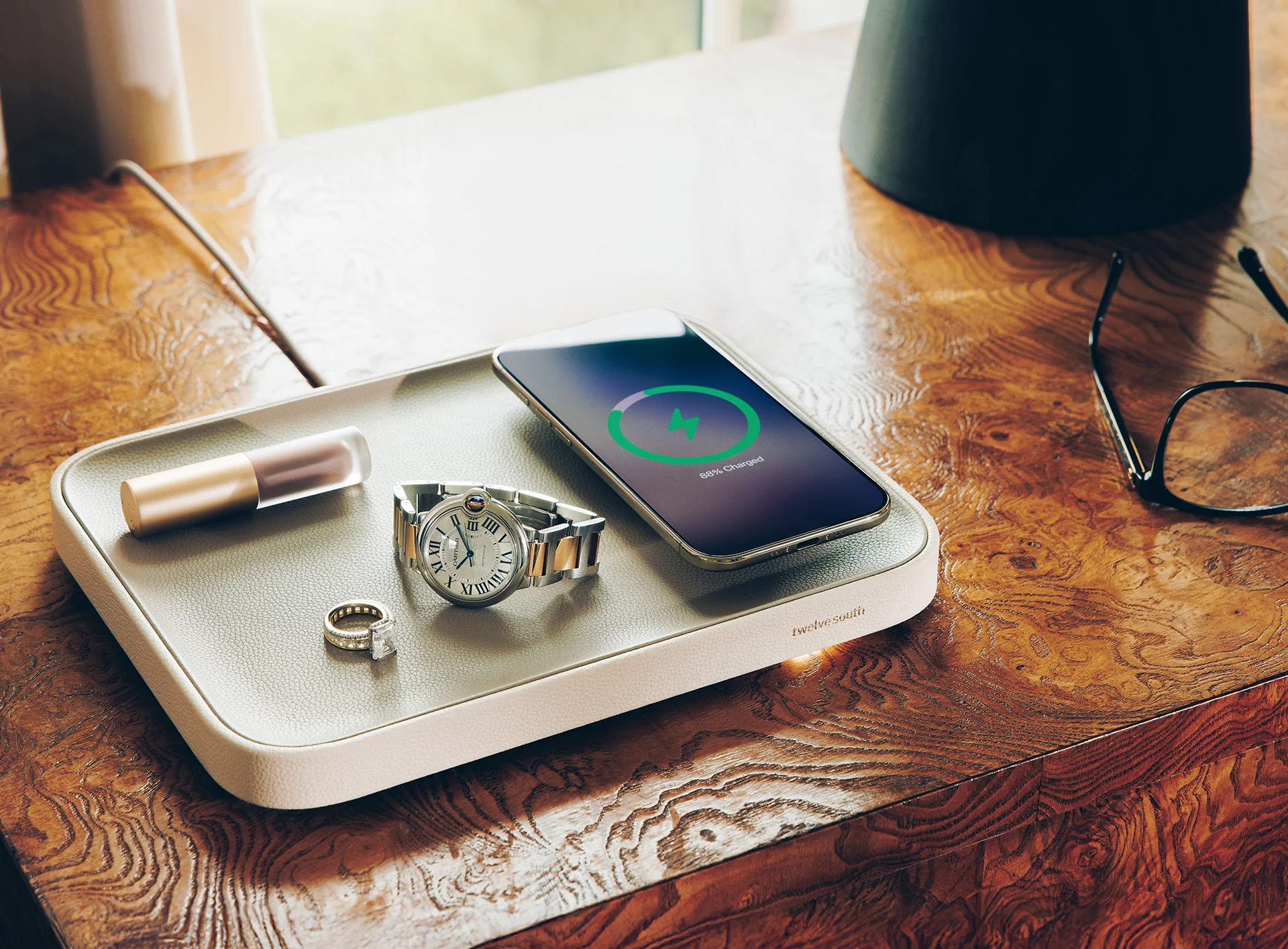
The Valet makes more sense the moment we stop expecting it to behave like a traditional charger. In practice, it is a tray with charging built into it, not a charging station disguised as a tray. That distinction matters more than it sounds. A normal charger is judged primarily by how much it powers, how quickly it does it, and how many devices it supports. The Valet is judged by a different set of questions. Does it reduce clutter? Does it make a surface feel more considered? Does it give your daily essentials an actual home instead of letting them scatter across furniture? Does it charge your phone without turning the whole setup into another obvious piece of consumer tech?
That is the real pitch here, and we think Twelve South understands it clearly. The product is built around a simple idea: one spot for the phone, one clean space for the usual essentials, and just enough charging flexibility to feel modern without making the design bulky or visually busy. That is why the Valet is flat rather than aggressively upright. That is why the footprint feels curated rather than oversized. That is why the cable routing is tucked away. That is why the whole object feels more like something chosen for a home than tolerated in one.
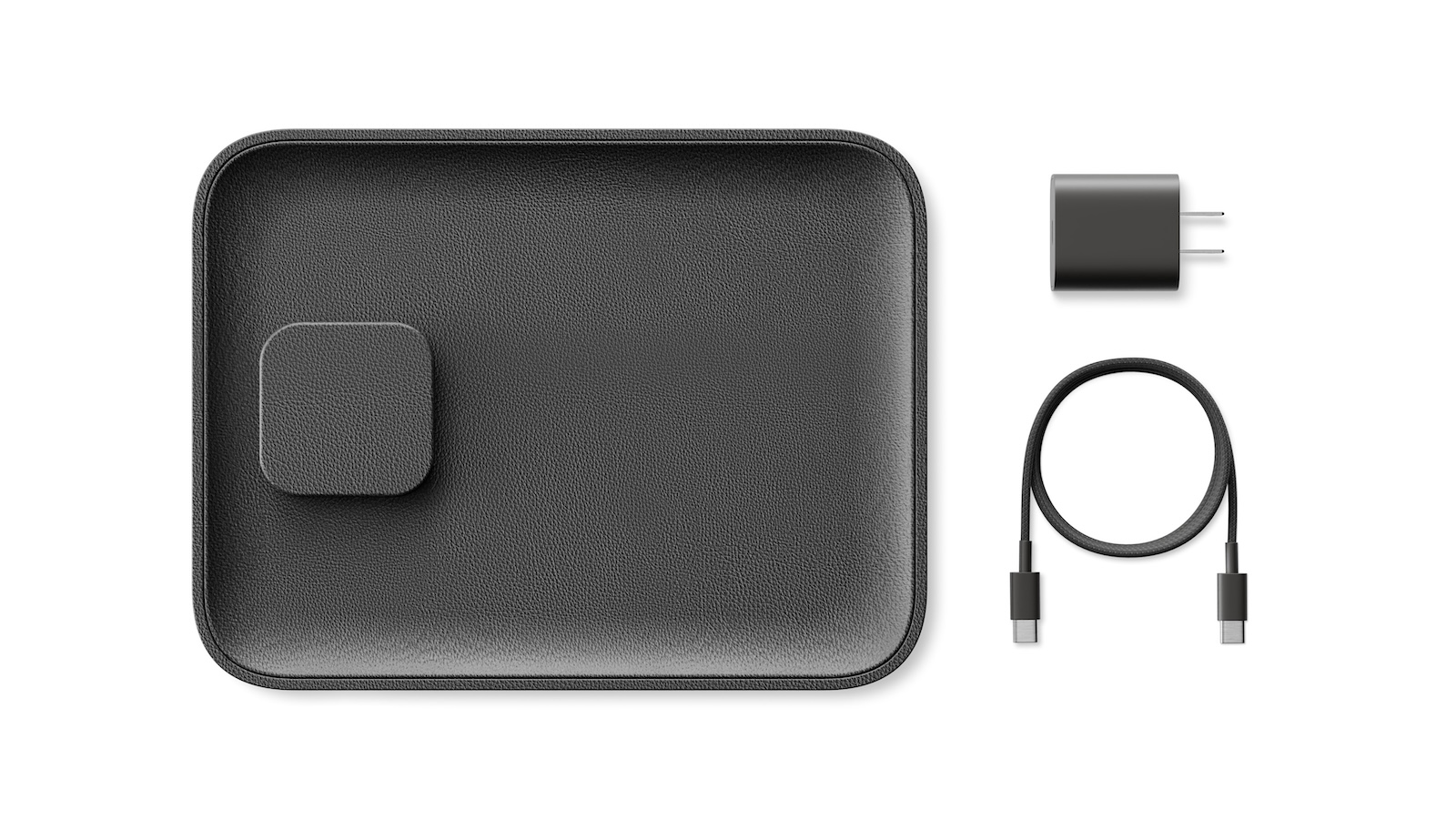
On paper, the spec sheet is straightforward. You get Qi2 wireless charging up to 15W, a USB-C port up to 35W, a 36W power supply, a 1.5-meter USB-C to USB-C cable, a weighted zinc alloy base, genuine Nappa leather, four configurable orientations, 6 mm surface clearance, and dimensions of 9.75 x 7.5 x 1.5 inches with a weight of 1050 grams. There are also multiple color combinations and interchangeable frames sold separately. That is not an especially long list, but it tells us a lot about the priorities. Twelve South did not spend its budget chasing the most aggressive charging story. It spent it on build quality, finish, and the way this object feels in a room.

Design and Build Quality: Where the Valet Really Earns Its Premium Look
The design is the first thing that sells the Valet, and honestly, it remains the strongest reason to care about it. What stood out to us right away was how restrained it feels. A lot of expensive accessories still look like accessories. They lean too hard on metallic accents, loud branding, glossy surfaces, or the kind of “premium” styling that feels more performative than refined. The Valet avoids all of that. It looks quiet. It looks settled. It looks like it was made for people who are tired of letting random tech clutter dictate the mood of a room.
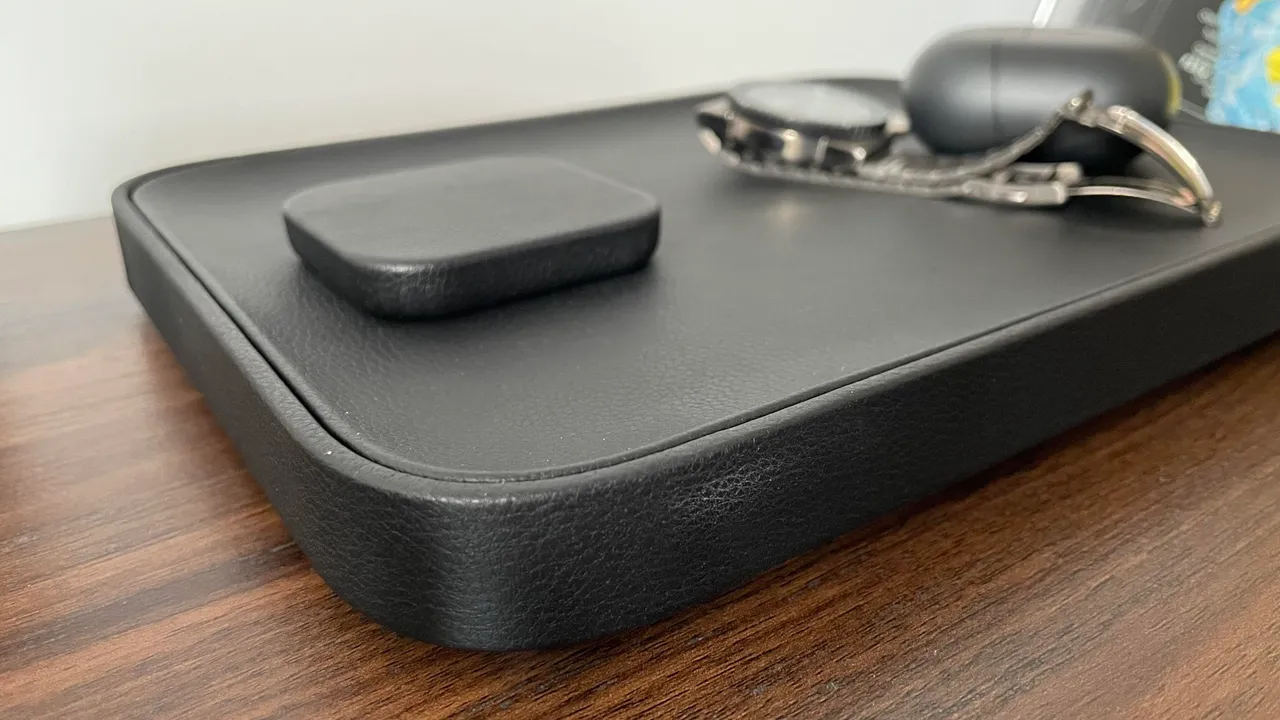
The Nappa leather does a lot of that work. It is not used as a token accent just to give the product a luxury label. The leather wraps the visible surfaces in a way that gives the Valet a cohesive, finished personality. That matters because so many products in this space use one nice material on top and then fall apart visually everywhere else. The Valet does not feel like that. It feels consistent from angle to angle, and that consistency is a big part of why it lands so well as a room-facing object.
We also liked the weight immediately. At 1050g, the zinc alloy base gives the Valet a planted, grounded presence. That kind of stability sounds like a small thing until you use enough lightweight chargers that slide, lift, or feel flimsy the moment you touch them. The Valet stays put. It feels intentional. When you place a phone on it or toss down keys and a wallet, the object responds like something designed to live there permanently, not like a portable tech accessory that just happened to land on the table.
The shape is smart too, though not perfect for everyone. The Valet is large enough to feel useful, but it is not oversized. In daily use, that means it handles the essentials well: phone, keys, wallet, glasses, earbuds, maybe a couple of smaller pocket items. What it does not do is become a giant dumping tray. Some people will love that discipline because it keeps the whole thing from looking messy or overbuilt. Others will wish it had just a little more room once the phone is in place and the rest of the daily clutter starts piling up. We can see both sides. The size feels right aesthetically, but there is a real functional ceiling once you start asking it to hold more than the basics.
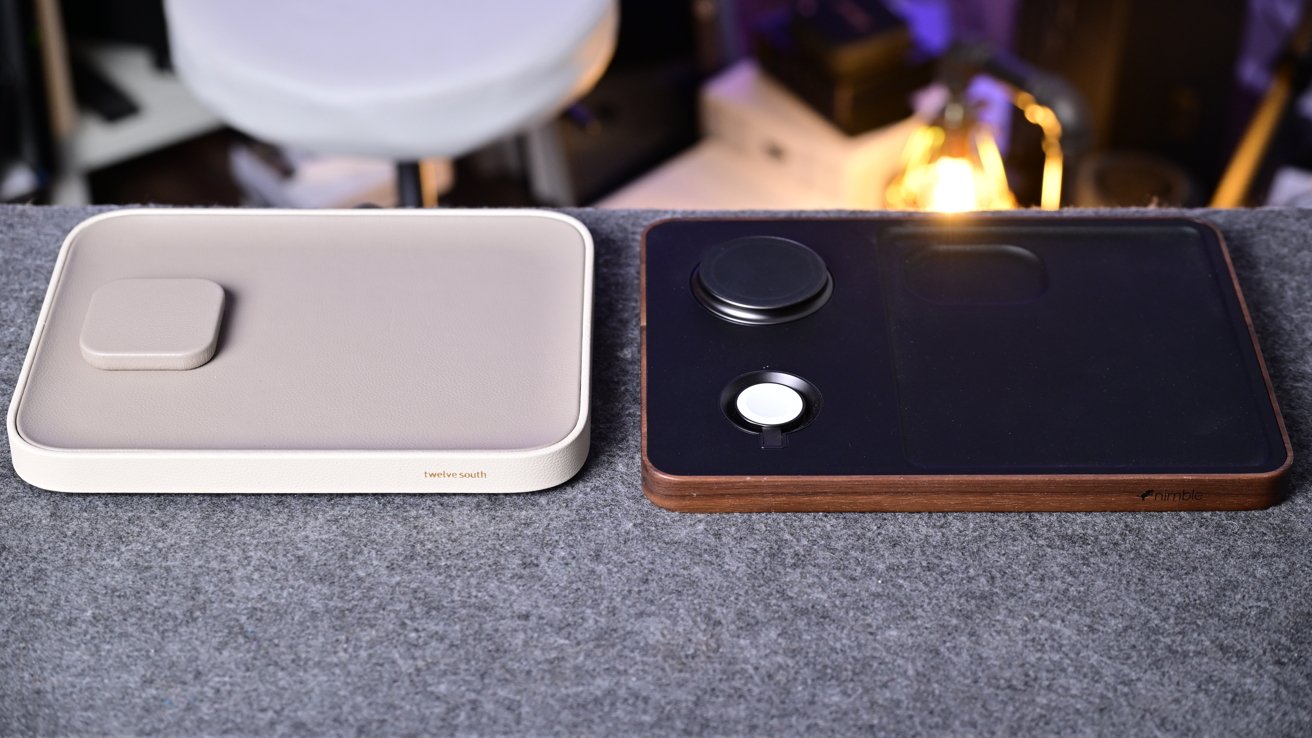
One detail we appreciated more the longer we thought about it is the removable magnetic frame system. This could have been a gimmick. Instead, it feels well aligned with what the Valet is trying to be. The idea of interchangeable trim only really makes sense on a product that is meant to live visibly in the home, and that is exactly what this is. Most chargers are hidden, ignored, or tolerated. The Valet is clearly designed to be chosen. That makes the frame system feel less like unnecessary flair and more like an acknowledgment that some buyers really will care how it sits with the rest of their furniture and decor.
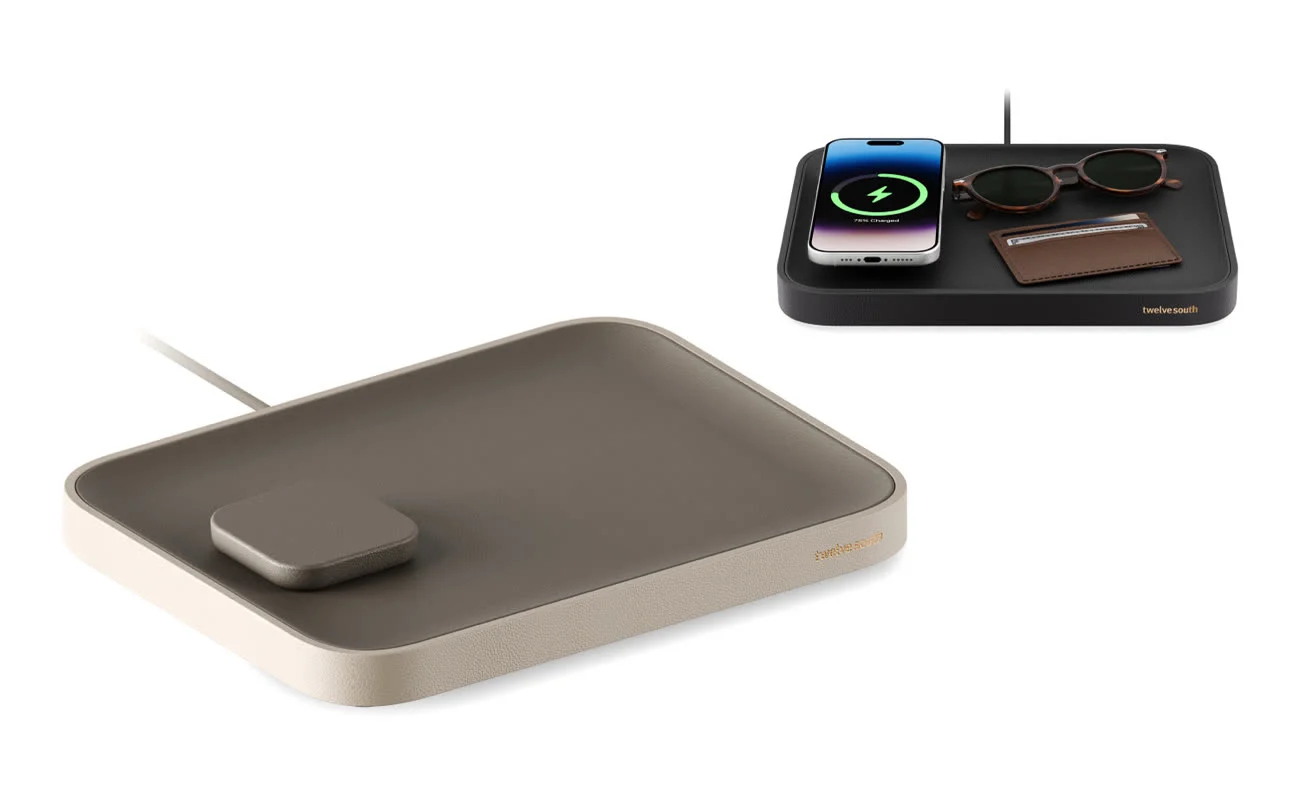
The color options help in the same way. They are tasteful without being bland, and importantly, they do not feel trend-chasing. Nothing about the palette screams for attention. It just supports the same calm, considered tone the rest of the product is going for. When a brand asks this kind of money for a charging accessory, we want the design to feel like it will age well rather than feel dated after one season. The Valet passes that test.

Setup and Placement: Better Thought Through Than It First Appears
There is nothing complicated about setting up the Valet, but there is a difference between simple and careless. The Valet feels simple because the product has been thought through properly, not because nothing much is happening.
The biggest practical win here is the underside cable management. Twelve South supports four orientations, which means the Valet can be rotated to fit different surfaces and still route the cable cleanly. That sounds like a bullet-point feature until you actually think about where a product like this lives. Entry tables, dressers, sideboards, and shelves are not standardized workstations. They all create their own placement problems. A tray that only works neatly in one direction would be much more annoying than it looks in product photos. The Valet avoids that by being genuinely adaptable.
That is exactly the kind of detail we want from a premium product. Good premium design is not just about nicer materials. It is about the quiet problem-solving that makes something easier to live with over time. The Valet’s cable routing falls firmly into that category. It helps the product keep the clean, composed look that is central to its appeal.
We also appreciated that Twelve South did not cheap out on the included accessories. The 36W power supply is color matched. The included USB-C cable is color matched too. Brands skip this kind of finishing touch all the time, and it always weakens the illusion. A beautifully designed product immediately looks less convincing when it is paired with a generic power brick and an ugly cable. Here, the presentation remains coherent right out of the box, and that matters more than usual because the entire point of the Valet is that it belongs on visible surfaces.
This is not a travel accessory, and nothing about it suggests otherwise. The weight, the form, the cable routing, and the overall finish all push the Valet into a more permanent role. We see that as part of its identity, not a weakness. It wants a place. It wants a routine. It wants to become part of the furniture, not another charger that gets tossed into a bag whenever needed. That sense of permanence is part of what makes it feel more coherent in shared spaces and entryways than in more conventional tech-heavy environments.
Charging Performance: Perfectly Fine, but Fine Is Not Enough Here
This is where the Valet stops cruising on charm alone. The wireless charging spec is Qi2 up to 15W, and in isolation, that is perfectly respectable. For a lot of people, 15W wireless charging is enough. If the Valet is being used as a casual top-up spot during the day or as a place to set down the phone overnight, it will do its job.
The issue is not that 15W is bad. The issue is that at $179.99, “good enough” starts to feel like a weak defense. The Valet is positioned as a premium product in a category where technical expectations still matter. That changes the standard. Once a product crosses into this price territory, we stop asking whether the charging is adequate and start asking whether it feels meaningfully elevated. Here, it does not.
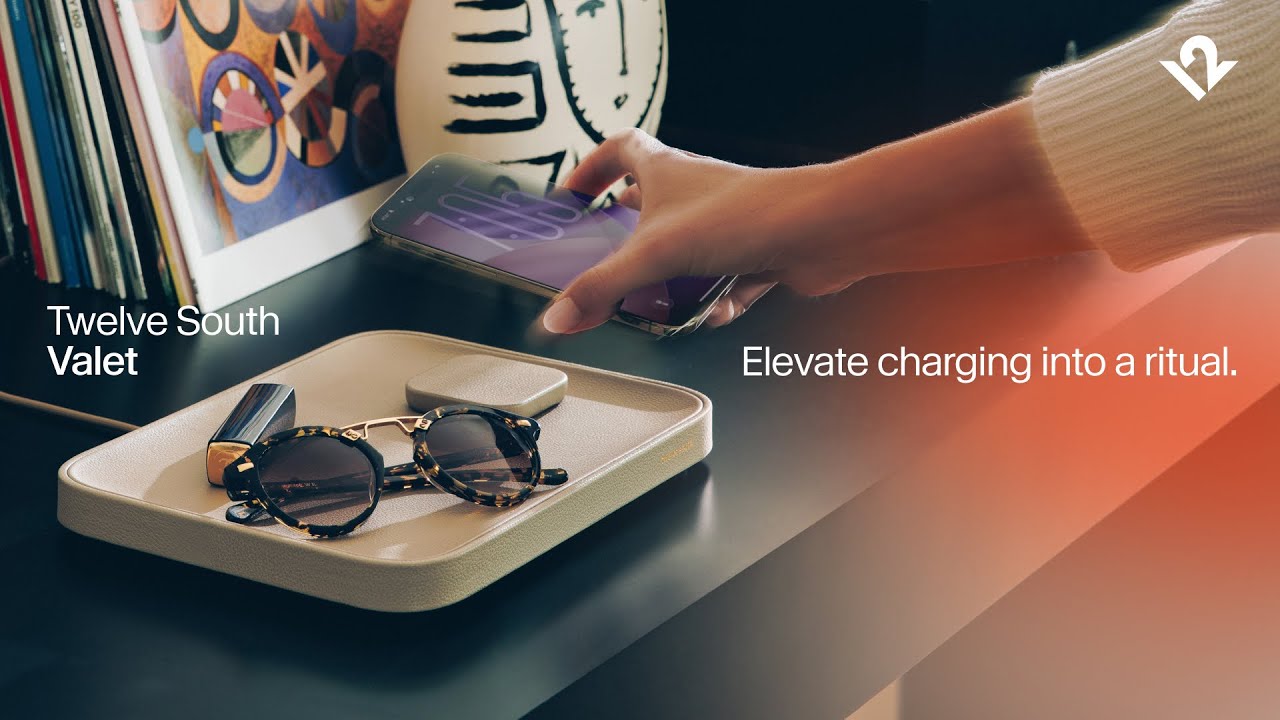
In practice, the charging experience looks thoughtfully handled. The magnetic connection gives the phone a secure, deliberate resting place, and the small white indicator lights that confirm alignment before fading away are exactly the kind of understated touch we like. Bright charging indicators that stay on all night or draw too much attention are one of those tiny annoyances that make a product feel cheaper than it is. The Valet avoids that mistake.
We also liked the way the phone sits on the slightly elevated charging perch. It gives the device a bit of visual separation from the tray without turning the product into a full stand. That helps preserve the tray’s elegance when the phone is present and keeps the design feeling clean when it is not. It is a smart visual compromise.
The second charging option, the hidden USB-C port, is genuinely useful too. On paper, 35W output sounds impressive, and it does add flexibility. You can charge a second device alongside the phone, which broadens the Valet’s usefulness. But here again, the reality is more modest than the headline. The moment you think of that port as the foundation of a full-featured charging hub, the product starts to feel thinner than the specs suggest. It is best understood as a handy extra, not the secret killer feature.
That is really where we land. The charging is pleasant, competent, and cleanly integrated. What it is not is exciting. And on a product at this price, that matters. The Valet sells itself through design first and charging second. That is a legitimate strategy, but it also means anyone shopping with a performance-first mindset is likely to leave underwhelmed.
Where the Valet Fits Best in Real Life
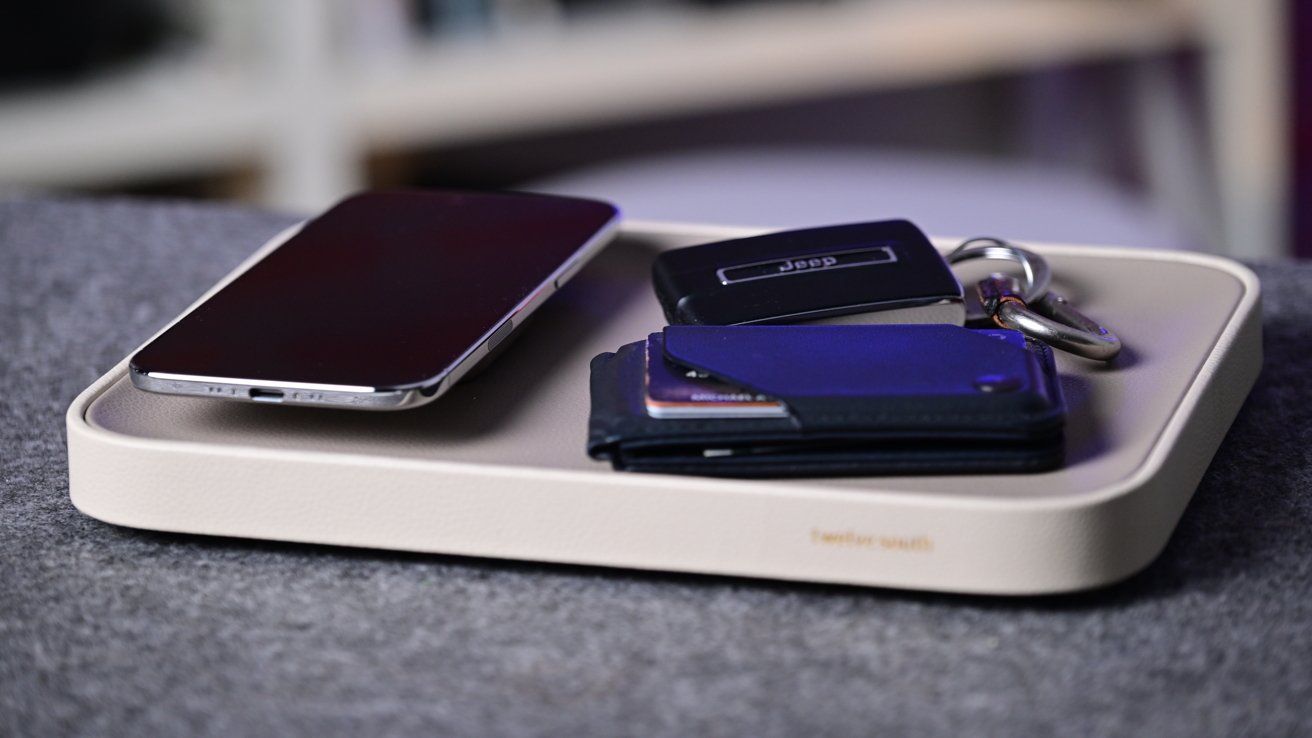
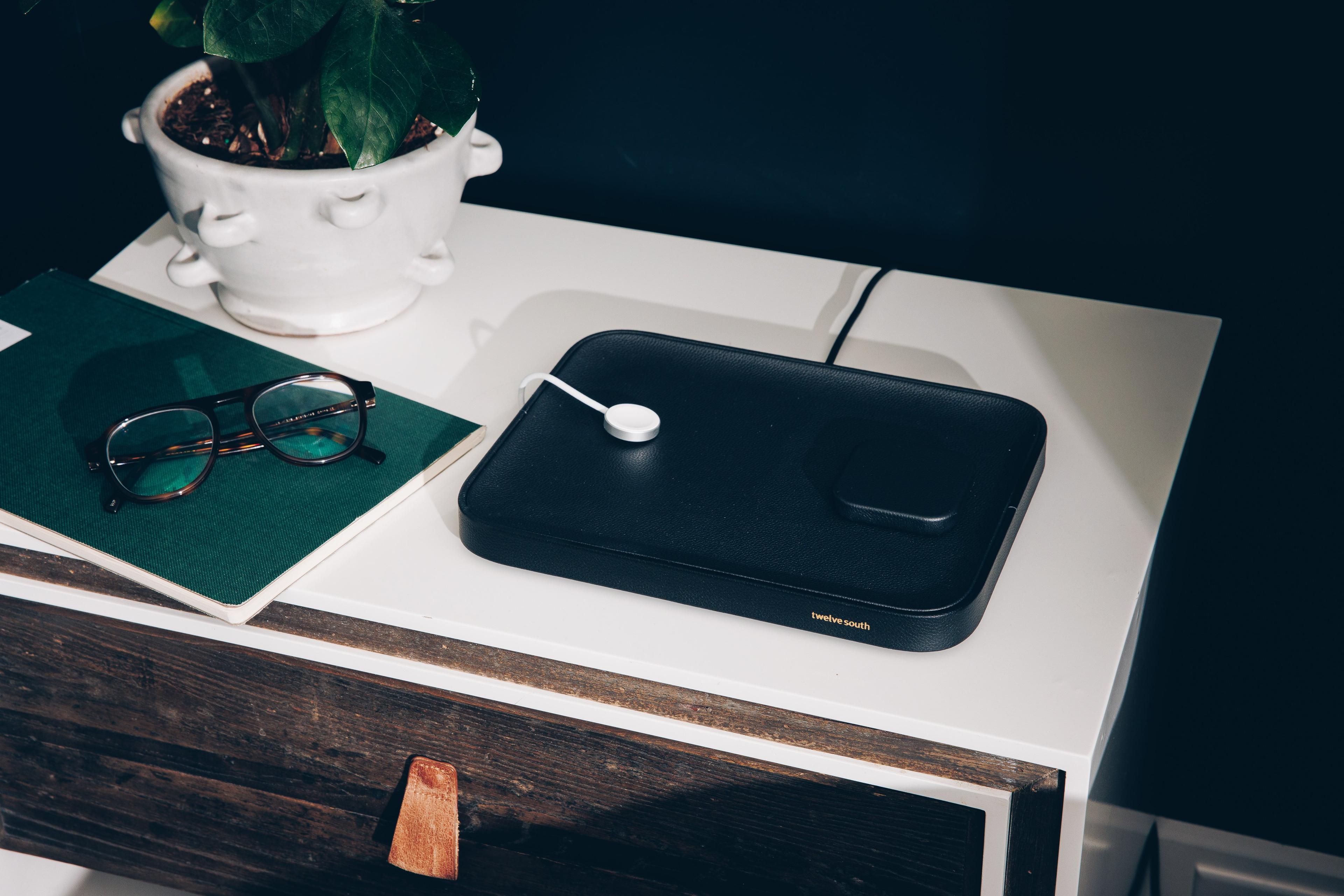
The entryway is where the Valet makes the strongest sense. That is the setting where all of its strengths line up cleanly. You walk in, drop the phone, empty your pockets, put down the keys and wallet, maybe your glasses, and suddenly the surface looks intentional instead of chaotic. That daily ritual is exactly what the Valet is built around. In an entry space, the product does not need to act like a full-blown charging station. It just needs to keep things tidy, look good while doing it, and quietly charge the phone in the process. That is its best version.
It also feels at home on living room consoles, side tables, or general shared surfaces where small daily items tend to collect. We think that is a big part of its appeal. Plenty of people do not really need more chargers. What they need is less clutter. The Valet addresses that in a way separate chargers and trays usually do not. By combining both roles into one footprint, it creates order without adding another object to the surface.
The nightstand is where the story gets more complicated. Yes, the Valet can live there. Yes, it looks good enough for that setting. But in daily use, it does not feel perfectly suited to bedside life. The biggest issue is the missing built-in Apple Watch charger. Technically, you can use the underside USB-C port with your own watch charging cable, but the moment you do that, the setup starts losing some of the neatness that made the Valet appealing in the first place. It works, but it is not elegant.
The phone posture matters too. The charging area is raised, but it is not shaped in a way that makes the phone especially visible or useful at a glance from bed. That weakens the bedside experience compared with more purpose-built stands that support easier viewing and a more obvious overnight role. So while the Valet can function on a nightstand, it feels more like a beautiful compromise there than a product truly built for that job.
The desk is another mixed case. If your desk setup leans lifestyle-focused and you want it to feel visually calm, the Valet can work well. It contains a few essentials, keeps the phone in one place, and softens the overall tech feel. But in a more functional productivity setup, its limitations become clearer. Desks tend to reward faster charging, better phone visibility, and more aggressive utility. The Valet is too restrained for that kind of environment to be its natural home.
What It Feels Like to Live With
The Valet is one of those products that gets a lot of mileage out of small decisions. None of them is revolutionary on its own. Together, they create an experience that feels more polished than most charging accessories.
We noticed that the product’s calmness is a real strength. It is not showy. It is not trying to make itself the center of attention. It simply improves the surface it sits on. That sounds like faint praise, but it is actually rare. A lot of home tech wants to be invisible because it looks bad. The Valet is visible because it looks good. That is a very different kind of success.
The tray concept itself becomes more useful over time too. Once a surface has a proper landing spot for all the small things that otherwise drift around, the room feels more orderly almost by default. That is a low-drama improvement, but it is the kind people genuinely feel every day. The fact that the charger is integrated into that same footprint is what gives the Valet its coherence. If it were just a tray, it would be easy to replace. If it were just a charger, it would be harder to justify. The appeal comes from how neatly the two ideas are merged.
At the same time, daily use is also where the limitations become clear. If you want a more upright or interactive phone position, the Valet will feel too flat. If you want true bedside completeness, it will feel unfinished. If you regularly intend to charge a second device in a way that still looks perfectly clean, you may find the hidden USB-C solution less graceful than you hoped.
The Valet knows exactly what it wants to be, and that clarity gives it character. But it also makes the trade-offs sharper. This is not a product that stretches easily into multiple roles. The more you ask it to do beyond “beautiful tray with built-in phone charging,” the more the compromises start to show.
Apple Ecosystem Fit: Comfortable, but Not Fully Committed
The Valet clearly sits comfortably in the Apple orbit. The magnetic charging behavior feels tailored to the iPhone experience, and the design language is exactly the sort of thing that fits naturally into Apple-friendly homes and desk setups. Nothing about it feels out of place next to modern Apple gear.
But there is a difference between fitting the ecosystem and fully embracing it. That difference is the Apple Watch. At this price, the lack of built-in watch charging feels like a notable omission. We are not saying every premium charger needs to be a 3-in-1, because that is not true. But when a product is charging this much, the missing watch integration becomes one of the first things buyers will notice. The workaround is functional, but it is still a workaround.
AirPods support is simpler. Wireless charging cases can make use of the main charging surface, and that gives the Valet some extra flexibility. But even there, the product feels most coherent when the phone is the star. The whole design is built around that presentation. Once you start using it primarily for other devices, some of the emotional pull fades.
So yes, the Valet fits the Apple world well. It just does not push as far into that ecosystem as its premium positioning might lead some buyers to expect.
The Real Trade-Off: Luxury Object or Smart Buy?
This is the question that matters most. The Valet is not expensive by accident. It is expensive because Twelve South is selling a more luxurious interpretation of a familiar task. That is the entire point of the product.
We think there are two bad readings of the Valet. The first is dismissing it as nothing more than overpriced vanity. That is unfair. There is real thought here. The materials are better than average. The weight helps. The cable management is smart. The tray function is genuinely useful. The design improves the room it sits in. This is not fake luxury built on empty styling.
The second bad reading is pretending that the design premium does not heavily distort the value proposition. It absolutely does. A lot of the price is going into finish, atmosphere, and how the product feels as part of the home. If you do not care about those things, the Valet will look overpriced instantly. And frankly, even if you do care about them, you still have to accept that the charging side of the equation does not feel nearly as premium as the build.
That is why the Valet is so easy to admire and so much harder to recommend broadly. It is not trying to be universally sensible. It is trying to be specifically desirable. We think it succeeds on that front. Whether that translates into a purchase depends entirely on what kind of buyer you are.
What We Liked Most
We liked that the Valet has a clear point of view. It does not feel like a product designed by committee. It knows that some buyers want charging gear that contributes something to the room rather than just extracting convenience from it.
We liked the material execution. The leather feels central to the product’s identity, not decorative. The base has real heft. The matching accessories show attention to presentation. The swappable frame system feels considered instead of gimmicky.
We liked the quiet design language. No excessive branding, no flashy lighting, no unnecessary complexity. It looks like something chosen with intent.
We liked that the tray and charger are integrated in a way that actually makes sense. This is not just two unrelated functions shoved together. The whole product feels unified.
What We Liked Less
We did not like that the 15W Qi2 charging feels ordinary next to the asking price. It is fine, but fine is not the feeling we want from something costing nearly $180.
We did not like the incomplete bedside story. The missing built-in Apple Watch support leaves a gap that is hard to ignore in everyday use.
We think some buyers will find the tray slightly too compact once the phone and a few essentials are all in place.
And while the second USB-C charging option is useful, it does not elevate the Valet into a more powerful or versatile product in the way the price might lead people to expect.
Value for Money: The Biggest Barrier
The Valet’s value makes sense only if the design itself is a major part of the purchase. That is the simplest way to put it.
For buyers who care deeply about how objects feel in the home, how clutter is controlled, and how tech fits into visible living spaces, the Valet is easier to defend. In that context, the premium is not just about watts. It is about calm, order, and having something that looks like it belongs there.
For buyers who judge premium products mainly by performance and capability, the Valet will almost certainly feel overpriced. The charging is competent, not class-leading. The ecosystem support is good, not complete. The flexibility is respectable, not expansive. That makes the design carry too much of the burden for anyone who shops primarily with practical value in mind.
That is why we think many people will appreciate the Valet more than they will actually buy it. It is easy to like. It is harder to defend once you start comparing it to what else the same money can buy.
Who Should Buy the Twelve South Valet
Buy it if the room matters to you. Buy it if you are tired of chargers that look like disposable tech clutter. Buy it if your entryway, dresser, or side table is part of how you experience your home and you want one object that can keep everyday essentials contained while charging your phone cleanly.
It also makes sense if you want a luxury object first and a charger second. That is the most honest filter. The Valet is not trying to win on pure charging logic. It is trying to improve a daily ritual and make the surrounding space feel calmer.
We would feel most confident recommending it in an entryway, on a living room console, or on another visible surface where organization and appearance matter equally.
Who Should Skip It
Skip it if you want the most convincing charging value for the price. Skip it if you want stronger wireless performance, broader device integration, or a more complete bedside solution.
Skip it if Apple Watch support matters a lot to you and you do not want to mess with your own extra cable. Skip it if you want one charging accessory to do everything. The Valet is too disciplined and too specific for that.
And skip it if the leather-and-decor appeal does not immediately resonate with you. This is not a product that becomes more rational the longer you stare at the numbers. It becomes less rational. The emotional side of the purchase has to matter from the start.
Final Verdict
The Twelve South Valet is one of the most attractive charging accessories in its category, and that is not faint praise. It feels thoughtful in the ways that matter most to a product designed for visible living spaces. The materials are strong. The weight gives it confidence. The cable management is smart. The tray function genuinely improves daily organization. And above all, it does something many accessories still fail to do: it respects the room.
At the same time, it does not quite earn its premium price through charging performance alone. The 15W Qi2 ceiling is merely good. The missing built-in Apple Watch support leaves the experience feeling less complete than it should. The second USB-C charging option helps, but it does not fully close that gap. In practice, the Valet is selling elegance, order, and room presence more than technical ambition.
Our take is simple. We like the Valet. We understand exactly why someone would want it. But we would not call it the smart buy for most people. It is a niche luxury accessory with a very specific talent. If what you want is a beautiful landing zone that also charges your phone and helps restore order to the surface it lives on, the Valet is one of the best executions we have seen. If what you want is a premium charger whose performance feels as elevated as its design, this one comes up short.
In the end, the Valet earns appreciation faster than recommendation. For the right buyer, that will not matter. For everyone else, it probably will.
FAQ
What is the Twelve South Valet?
It is a premium leather catchall tray with built-in charging. It combines a Qi2 magnetic wireless charger with a USB-C charging port and gives you a dedicated place for daily essentials like a phone, keys, wallet, and glasses.
How much does the Twelve South Valet cost?
The listed price is $179.99.
What are the main specs?
The main specs are Qi2 wireless charging up to 15W, USB-C wired charging up to 35W, a 36W power supply, a 1.5m USB-C to USB-C cable, dimensions of 9.75 x 7.5 x 1.5 inches, and a weight of 1050g.
Can it charge two devices at once?
Yes. The Valet is designed to charge one device on the magnetic wireless surface and another through the underside USB-C port.
Does it charge Apple Watch?
Not with a built-in watch puck. You can use the underside USB-C port with your own Apple Watch charging cable.
Does it work with AirPods?
Yes. If your AirPods case supports magnetic or wireless charging, the Valet can charge it on the main surface.
Is it good for a nightstand?
It can work there, but we think it makes more sense in an entryway or shared living space. The bedside experience feels less complete because of the flat phone posture and lack of built-in Apple Watch support.
Is the frame removable?
Yes. The border trim is magnetic and interchangeable, and separate replacement frames are available.
Where does it make the most sense?
We think it is at its best in an entryway, on a living room console, or on another visible surface where clutter control and design matter equally.
Is it worth buying?
Only if you value its design-first identity. As a luxury home object with charging built in, it is appealing. As a pure charging value proposition, it is much harder to justify.
Explore the Full Gallery
Every image from this article, gathered in one clean place. Tap any photo to open it larger.