
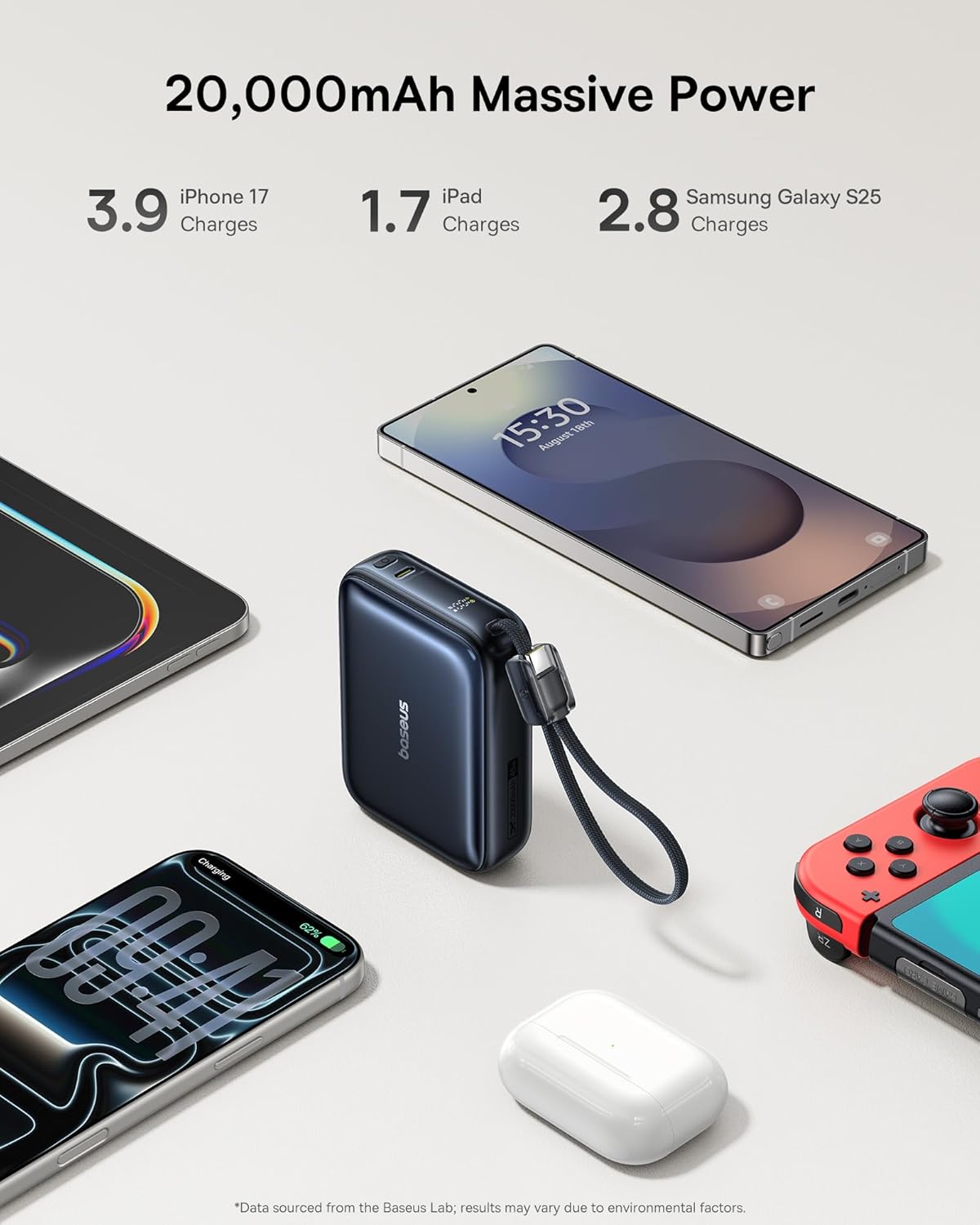
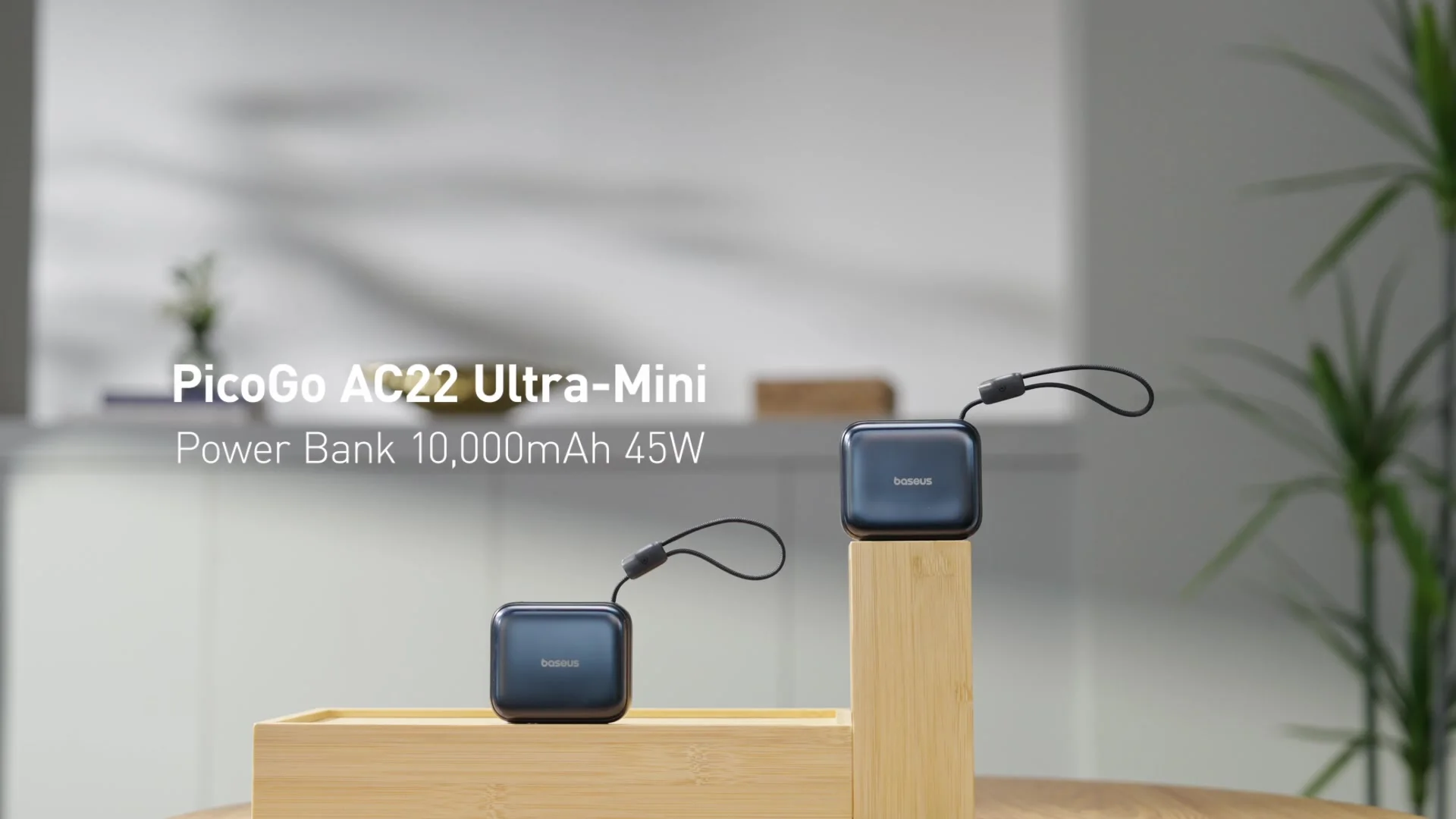
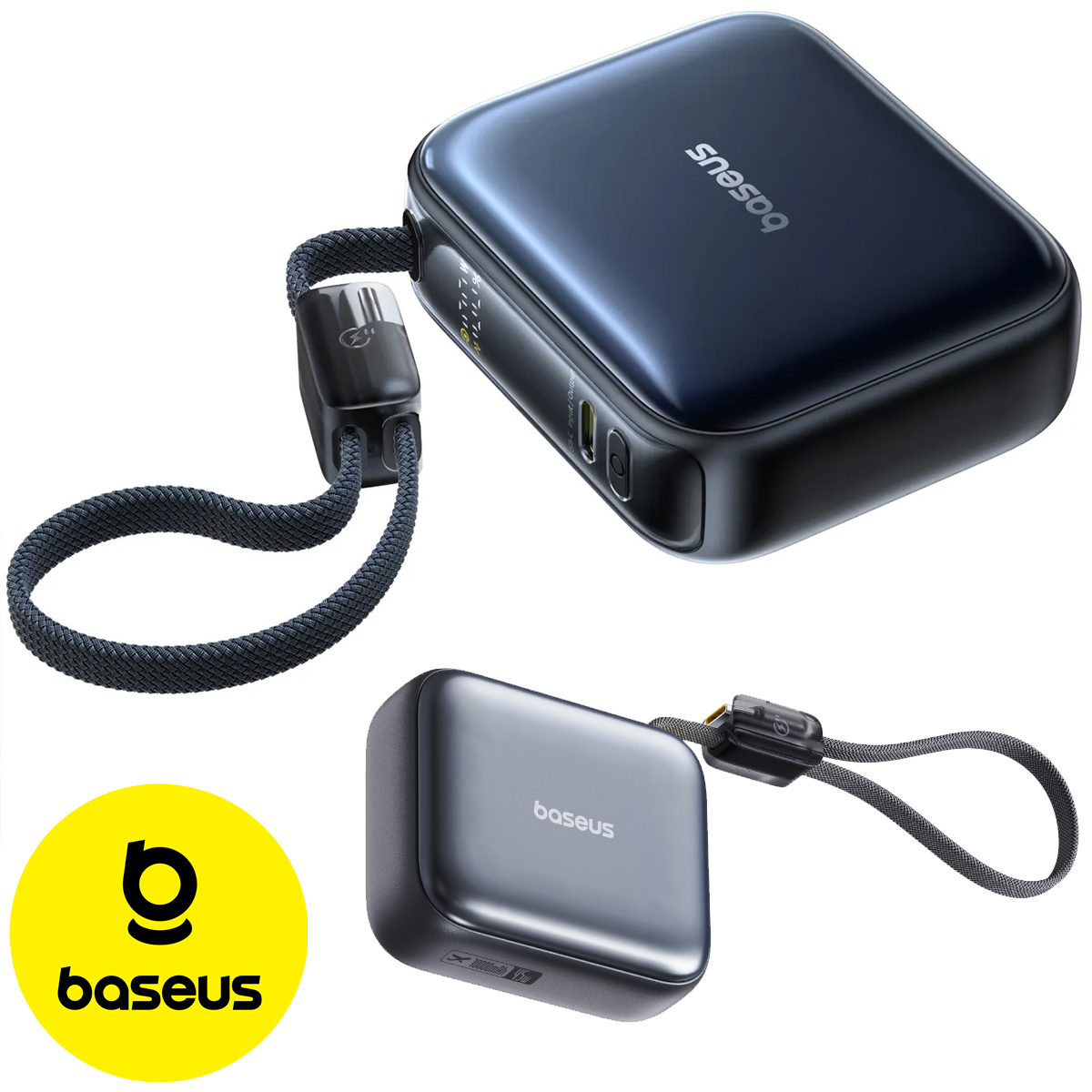
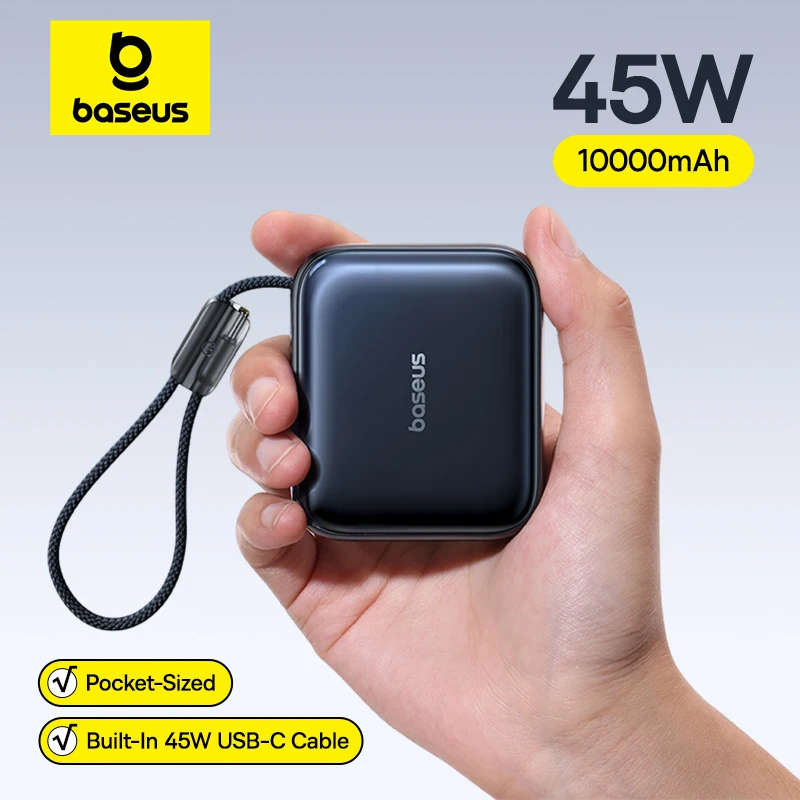
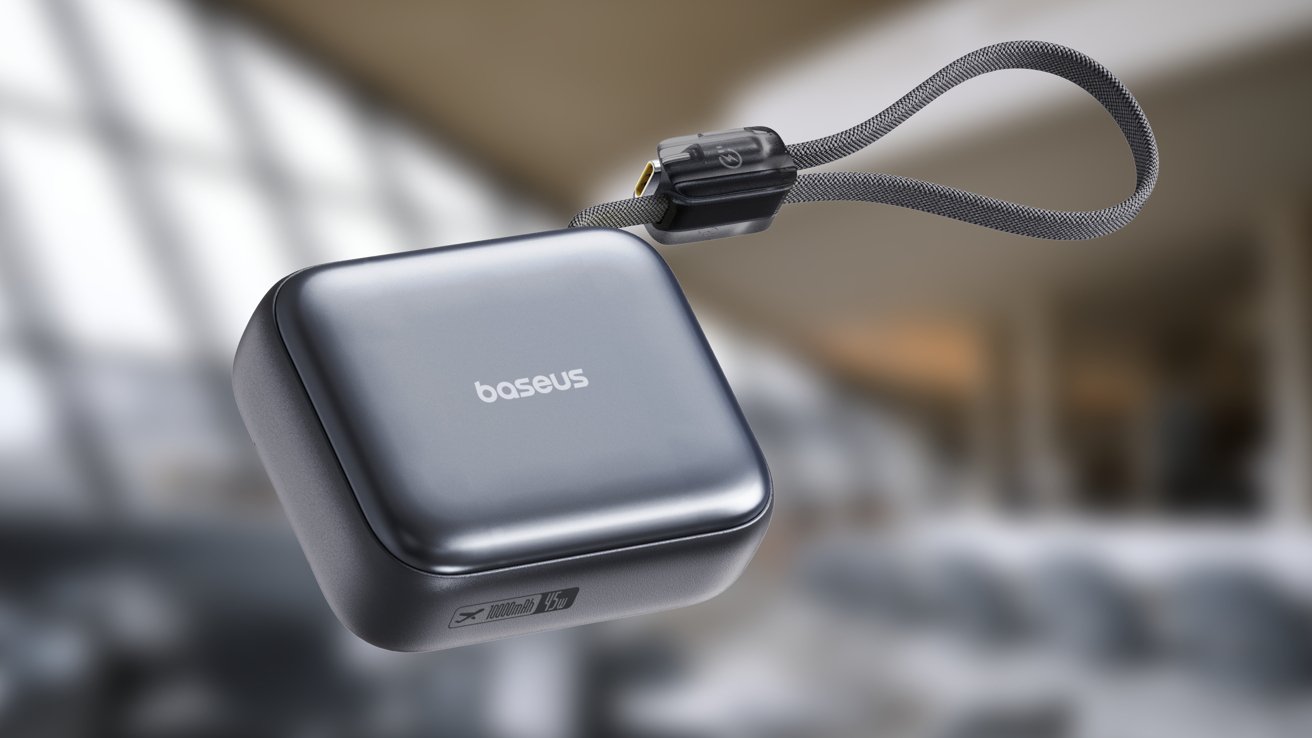
The Baseus PicoGo AC22 gets something right that a surprising number of portable chargers still miss. Most people do not need a heavy battery brick that lives at the bottom of a backpack and only comes out on travel days. What they need is a charger they will genuinely keep with them: something small enough not to become a burden, useful enough to matter, and simple enough that it does not create its own little mess of cables and compromises. After spending real time with the PicoGo AC22, that is exactly why it makes sense. It is a 10,000mAh / 36Wh power bank with up to 45W USB-C output, a built-in braided USB-C cable, an extra USB-C port, and a digital battery display, all packed into a body that feels dramatically smaller than most power banks in this class.
What stood out to us almost immediately was not just the spec sheet, but the intent behind it. This is not trying to be a brute-force battery slab. It is trying to be the power bank we actually grab on the way out. That difference matters. Plenty of larger chargers look better on paper because they offer more raw capacity, but that advantage fades quickly when they are too bulky, too awkward, or too annoying to carry every day. The PicoGo AC22 is built around the opposite idea. It trims friction wherever it can. It is compact enough to disappear into a pocket or small bag, it keeps its cable attached so we do not have to think about it, and it gives us a clear battery percentage rather than forcing us to guess from vague LEDs.
Our verdict is simple: this is one of the smartest mini power banks we have used for everyday carry. It is not the right choice for everyone, and it absolutely is not pretending to replace a larger travel battery. But for people who want a fast, compact, genuinely easy charger for real day-to-day use, the PicoGo AC22 gets far more right than wrong.
Quick Verdict
Best for:
People who want a genuinely compact 10,000mAh power bank they will actually carry every day, especially commuters, travelers, and phone-heavy users.
Avoid if:
You want maximum battery capacity, multiple full device recharges, or a power bank mainly for laptop-first use.
What we liked:
- Truly compact size for this capacity
- 45W USB-C output feels meaningfully useful
- Built-in braided USB-C cable is a real convenience, not a gimmick
- Clear digital percentage display
- Extra USB-C port adds flexibility
- Light enough to carry without thinking about it
What disappointed us:
- 10,000mAh is still limited if you are a heavy user
- Laptop support is more of a bonus than a primary reason to buy it
- The built-in cable is convenient, but some buyers will still prefer detachable-only designs
- Value depends heavily on how much you care about compactness over raw capacity
Final verdict:
The PicoGo AC22 is not trying to be the biggest battery for the money. It is trying to be the easiest one to live with. In that role, it is very good.
What We Tested
We focused on the parts of this power bank that actually matter in daily use: how compact it feels in the hand, how practical the built-in cable is, how easy it is to carry, whether the 45W output feels credible for modern devices, how useful the battery display is, and whether the whole product makes sense as an everyday charger rather than a spec-sheet exercise.
That distinction matters because the PicoGo AC22 is not a product we would judge primarily by brute-force endurance. Its whole appeal is tied to how often we would realistically bring it with us. So instead of treating it like a giant backup battery in mini form, we approached it as a daily-carry power bank and judged it by the standard that matters most for that kind of device: does it reduce hassle, or does it add more of it?
How We Tested It
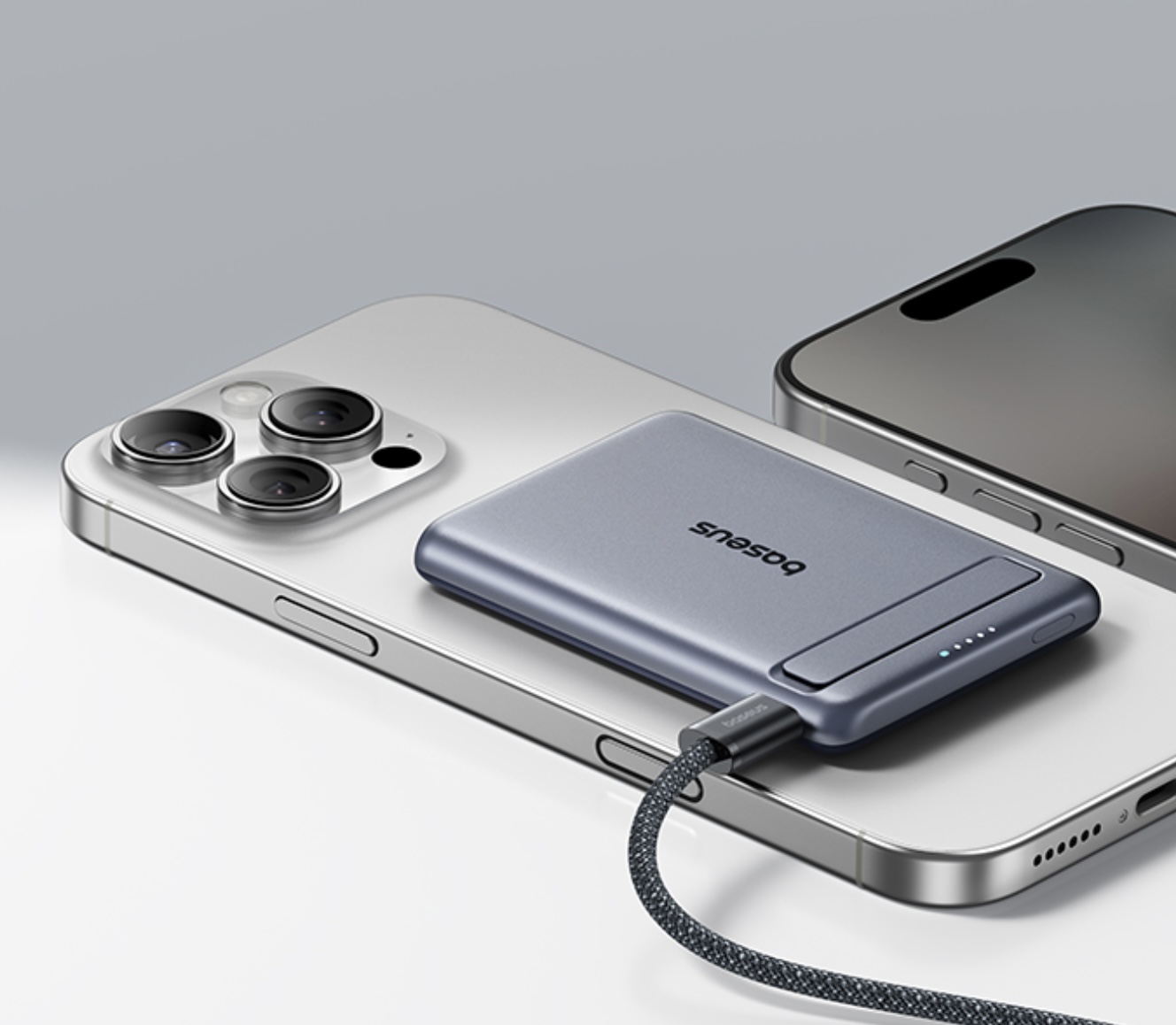
We spent time evaluating the PicoGo AC22 the way most people would actually use it. We looked at how easy it is to drop into a pocket, small sling, or compact travel bag. We paid attention to whether the integrated cable genuinely improves convenience or just sounds good on paper. We considered how useful 10,000mAh really feels in a product of this size, whether the display improves confidence in day-to-day carry, and how the 45W output changes the kinds of devices the bank can realistically help with.
We also looked closely at the trade-offs. A product like this lives or dies by balance. If it is tiny but underpowered, it becomes forgettable. If it is fast but too limited in practice, the appeal fades. And if it solves one frustration while introducing another, then the design has missed the point. The PicoGo AC22 only works if its size, features, and performance feel aligned. Thankfully, they mostly do.
Design and Build Quality
The PicoGo AC22 looks like a product that was designed with a clear idea of what it is supposed to be. That sounds obvious, but it is rarer than it should be in this category. Too many compact power banks feel like smaller copies of bigger ones, with all the same design logic squeezed into a tighter body. This one feels more deliberate than that.
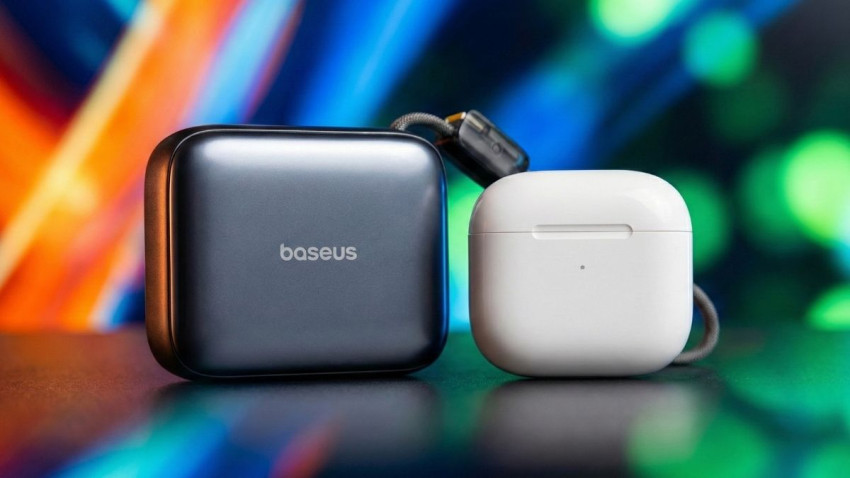
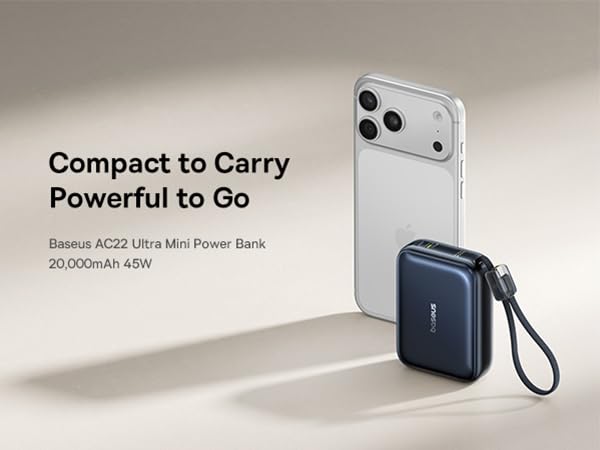
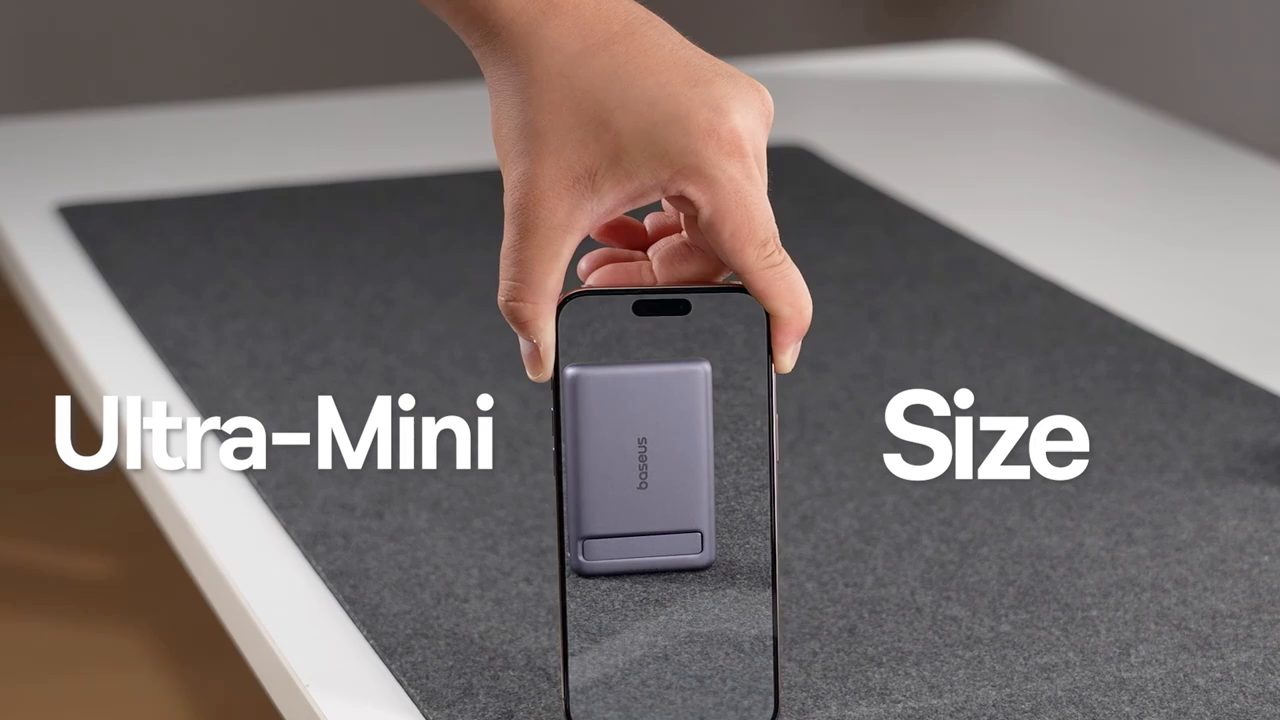
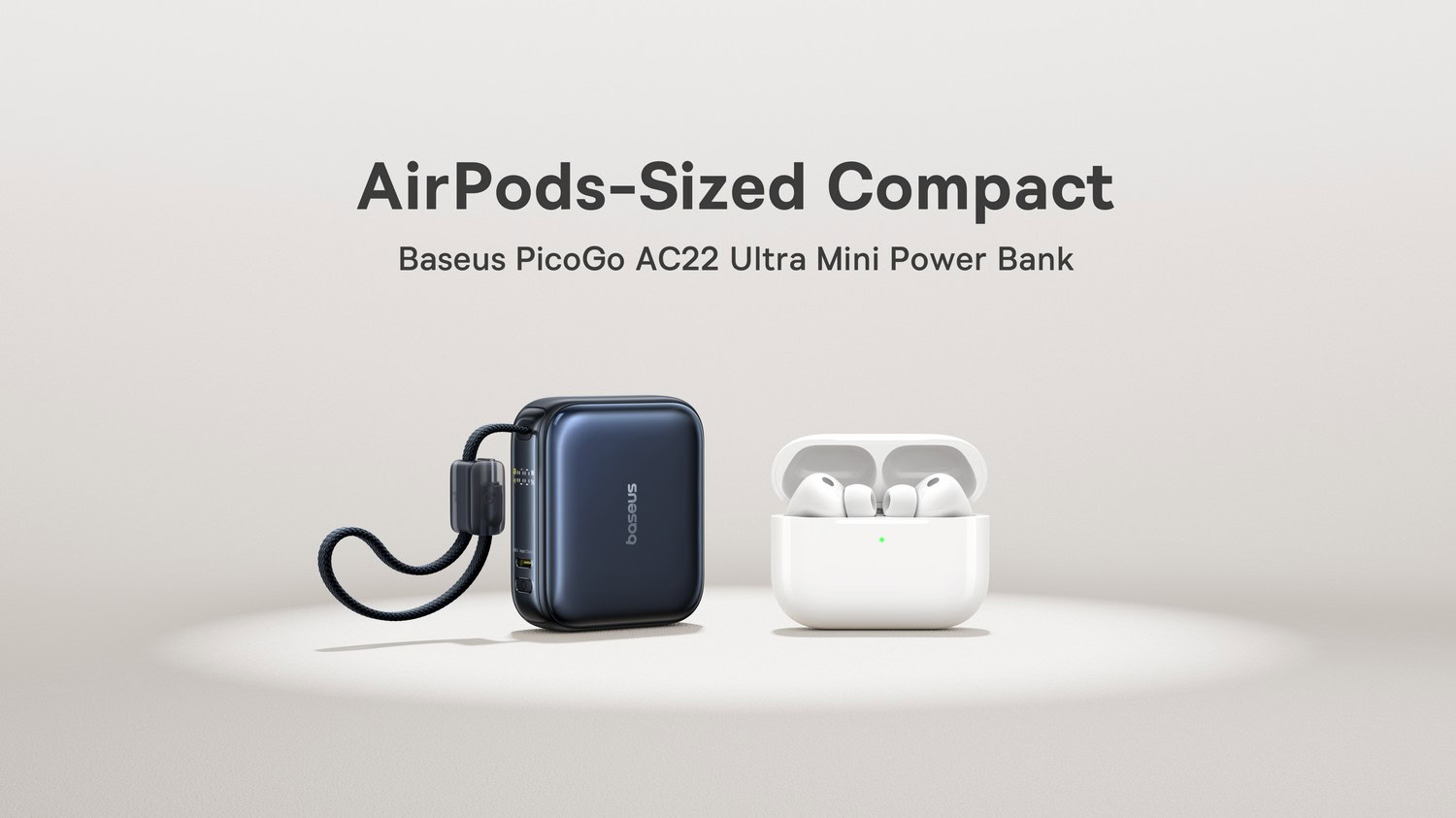
The first thing we noticed is how contained it feels. With dimensions of roughly 72mm x 61mm x 27mm and a weight of around 172g, it lands in a size class that feels properly portable rather than merely “not too bad.” That is a meaningful difference. Plenty of 10,000mAh power banks claim to be compact, but they still feel like something we have to consciously make room for. The PicoGo AC22 feels more like something we can drop into the dead space of a bag or jacket pocket and forget about until we need it.
That compactness also gives the whole product a different personality. It does not read like a backup brick. It reads like a daily accessory. That may sound like semantics, but in practice it changes everything. We are much more forgiving of a 10,000mAh limit when the charger feels this easy to carry.
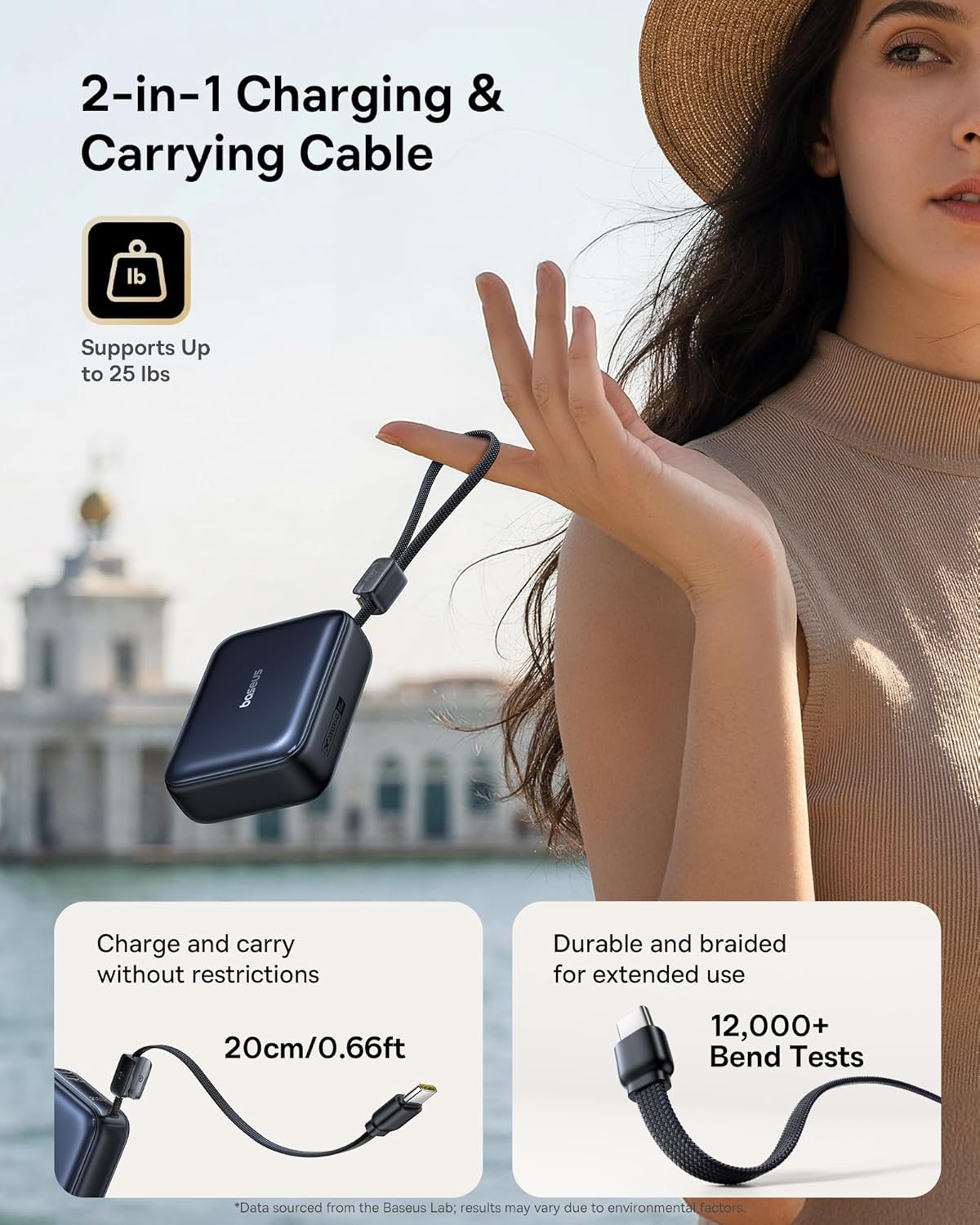
One of the best design decisions here is the built-in braided USB-C cable, which also doubles as a carry strap. We liked this more the longer we thought about it. A portable battery without a cable is only half a solution. We have all had those moments where the power bank is in the bag but the cable is somewhere else, which makes the whole setup instantly less useful. Here, Baseus removes that problem completely. The cable is always attached, always there, always ready.
More importantly, it does not feel like a throwaway extra. The built-in cable is part of the identity of the product. It makes the AC22 feel self-contained, and that matters in real life far more than brands sometimes admit. The best portable accessories are the ones that do not ask us to manage unnecessary extras. This one clearly understands that.
We also appreciated that the built-in cable is not the only path. There is still a separate USB-C port, which means the integrated cable is the convenient default rather than a restrictive one-way decision. That extra flexibility makes the whole design feel smarter. It lets us use the built-in cable for speed and convenience most of the time, without trapping us there when we want a different setup.
Then there is the display. We will say it plainly: a real battery percentage is far better than vague dot indicators, especially on a compact power bank. On larger batteries, a rough sense of remaining charge can be tolerable. On a 10,000mAh unit, it is not. Every percentage matters more. The difference between 82% and 34% is huge in practical terms, and the PicoGo AC22 gives us that clarity. That alone makes it feel more honest and easier to trust.
Overall build quality also seems aligned with the purpose of the product. Nothing here feels ornamental for the sake of looking busy. The AC22 is compact, straightforward, and practical, which is exactly what we want from something meant to be carried every day.
Setup and First Use
There is not much complexity here, and that is a compliment. The PicoGo AC22 is the kind of product that makes sense immediately. Charge it, throw it in the bag, and it is ready to do its job. There is no learning curve, no accessory juggling, and no sense that we need to build a system around it.
That low-friction first experience matters more than people think. A lot of portable chargers are technically good but behaviorally annoying. They need a separate cable, a bit too much bag space, or just enough mental effort that they stop becoming part of the routine. The PicoGo AC22 feels like the opposite. It is the kind of charger we can imagine keeping with us by default because it asks so little from us.
The built-in cable plays a huge role here. The first-use impression is instantly cleaner because the charger already feels complete. We do not need to think, “Where is the cable?” or “Did we pack the right one?” We just plug it in. That sounds simple because it is simple, and simple is exactly what makes it good.
The percentage display also helps early confidence. Instead of guessing whether the bank is “probably charged enough,” we know exactly where it stands. That makes it easier to trust before leaving the house, and it makes top-ups easier to manage without guesswork.
Real-World Performance
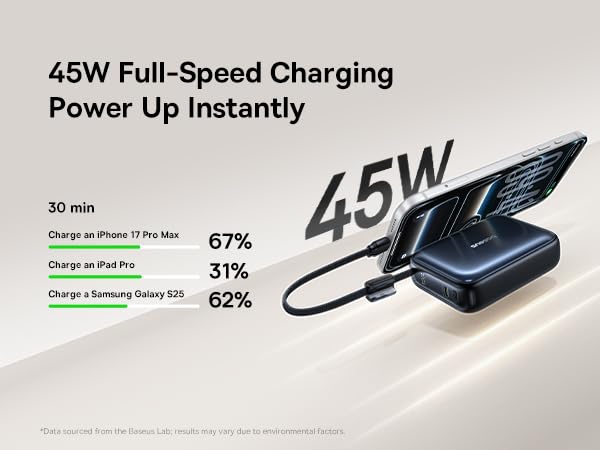
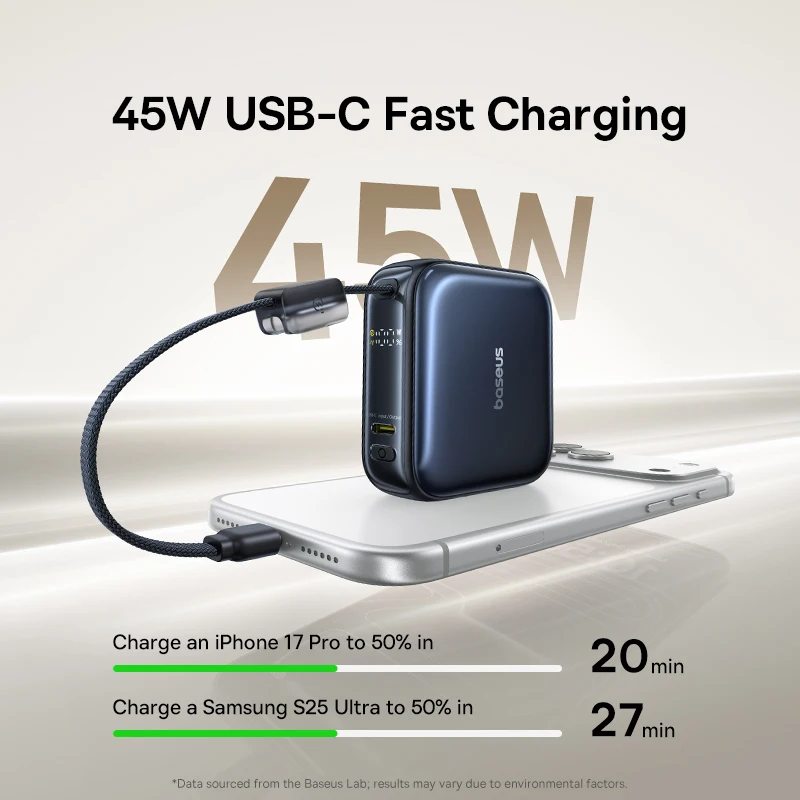
The real strength of the PicoGo AC22 is that it does not behave like a compromised mini charger. Yes, it is small, but it is not timid. The 45W output gives it enough authority to feel like a serious modern USB-C power bank rather than a pocket-sized emergency accessory for low-drain gadgets only.
In day-to-day use, that matters a lot. Fast top-ups are where portable charging becomes genuinely valuable. We are not always sitting down for long, controlled charge sessions. Often, we just need to recover enough battery to get through the rest of the afternoon, a train ride, a long navigation session, or a night out. A power bank that can restore a useful amount of charge quickly is far more practical than one that drips power slowly, even if the slower one stores more energy overall.
That is where the PicoGo AC22 earns its place. It feels designed for short, inconvenient, real-life charging moments. Plug in, recover fast, move on. That makes the 45W support feel like more than a marketing number. It changes the usefulness of the product.
Of course, capacity is still capacity. 10,000mAh / 36Wh does not suddenly become massive just because the charger is small. This is not a power bank for endless endurance. It is a power bank for meaningful rescue power. It works best when we think of it as a fast, everyday top-up companion rather than an all-day off-grid battery solution.
That framing makes all the difference. Judge it as a giant battery replacement, and it will feel limited. Judge it as a compact charger that is actually pleasant to carry and quick enough to matter, and it becomes much easier to appreciate.
Phone Charging Performance
This is where the PicoGo AC22 makes the most sense. Everything about the product feels tuned for phone-first use. The compact body, the built-in USB-C cable, the 45W ceiling, the clear display, and the manageable 10,000mAh size all line up beautifully for modern smartphone life.
In practice, this is the kind of charger we want when our phone battery is in trouble during the day, not when we are trying to live off-grid for a weekend. That sounds like a narrower role, but it is actually the one most people need most often. Most portable charging moments are not huge endurance tests. They are interruptions. They are rescue situations. They are annoying little moments where we just need the phone alive again, and quickly.
The PicoGo AC22 is good at that. It feels like the kind of battery that can step in decisively rather than symbolically. That matters. Some mini power banks technically help, but not enough to feel satisfying. This one seems much better judged than that.
We also like that Baseus is not pretending capacity loss does not exist. In real use, 10,000mAh on the box does not translate to the same number delivered to the device. That is normal. What matters is whether the delivered charge is meaningful, and in phone use it absolutely is. The PicoGo AC22 makes far more sense as a strong one-charge companion than as a multi-day battery reserve, and once we accept that, its value becomes very clear.
There is another behavioral advantage here too. Because the charger is small and self-contained, it is much more likely to be with us when the problem happens. That matters as much as capacity. A larger battery that stays at home is not more useful than a smaller battery that is actually in our pocket when we need it.
Tablets, Handhelds, and Smaller Laptops
The PicoGo AC22 has more flexibility than its size suggests, but this is where expectations need to stay realistic.
For tablets and handheld gaming devices, we think it makes a lot of sense. These devices often benefit more from a fast boost than from endless backup time. A compact battery that can add useful life without taking over the whole bag is a good match for that kind of use. If we are carrying a tablet for travel, work, or entertainment, the AC22 feels like a sensible backup rather than dead weight.
For smaller USB-C laptops, things get more conditional. The 45W output gives the charger legitimacy here, and that is genuinely useful. It means the AC22 is not limited to phones and earbuds. It can step in for smaller laptops in a pinch, and that broadens its appeal.
But the important word is “pinch.” This is not a laptop-first power bank. 36Wh is simply not enough for that role. It can help, and that help may be genuinely valuable in the right moment, but we would not buy this as our main laptop backup strategy. It is emergency support, not workday insurance.
We think this is one of the areas where the product can be misunderstood. Because it supports laptop charging, some buyers may mentally place it in a bigger category than it belongs in. That would be the wrong way to buy it. The laptop compatibility is a useful bonus. The main story is still compact everyday charging, with phones clearly at the center.
Dual-Device Charging and Daily Convenience
The AC22 can charge two devices at once using the built-in cable and the extra USB-C port, and that does make it more versatile. In real life, this is the sort of feature that quietly improves ownership. A phone and earbuds, for example, is an easy and believable pairing. So is a phone plus a wearable.
At the same time, we would not oversell it. On a charger this compact, dual-device charging is a convenience feature, not a replacement for a desk hub or large-capacity power bank. Once two devices are sharing the bank, the experience becomes more about flexibility than speed. That is perfectly fine. It still adds value. It just should not be mistaken for unlimited generosity from a 10,000mAh battery.
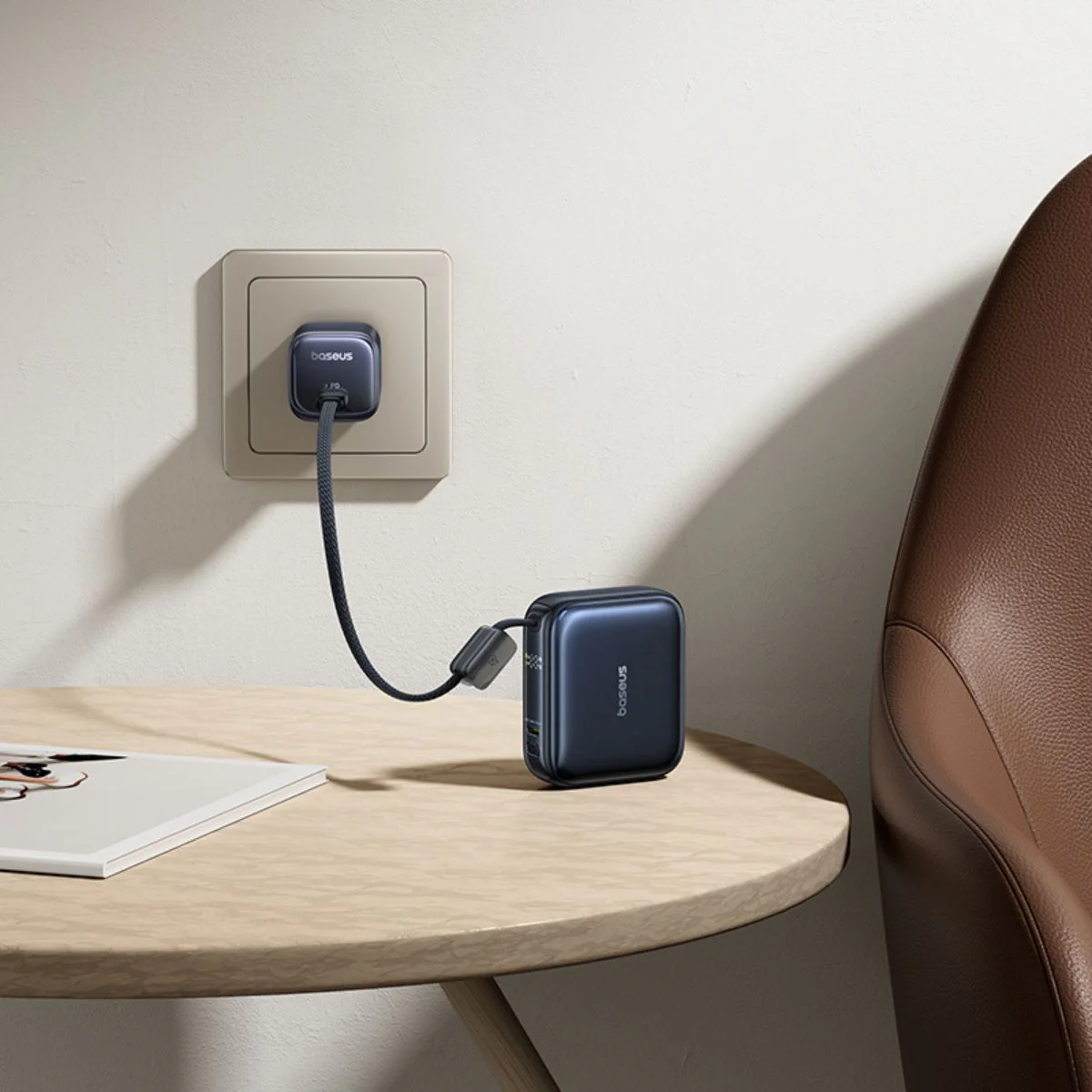
Pass-through charging is also a welcome feature. Being able to charge the bank while it is charging something else adds a bit more real-world flexibility, especially when outlets are limited and routines are messy. It fits the whole design philosophy nicely. The AC22 is clearly trying to smooth out daily inconvenience, and pass-through helps with exactly that.
Convenience and Portability
This is the section where the PicoGo AC22 pulls ahead of bigger, technically stronger alternatives.
It is one thing for a charger to be compact in marketing photos. It is another for it to feel genuinely low-burden in real use. The AC22 feels low-burden. That is the difference. It is small enough that we can imagine carrying it by default, not just on days when we pre-plan needing power. That is a major strength.
We keep coming back to the same core truth: willingness to carry is part of performance in this category. If a power bank is too awkward, too heavy, or too annoying, it will be left behind. Once that happens, the spec advantage means very little. The PicoGo AC22 solves that problem unusually well.
The built-in cable helps here too, because portability is not just about dimensions. It is also about the total system. A charger plus a separate cable is a bigger burden than a charger that already has what it needs attached. Baseus clearly understands that. The AC22 feels less like a product and more like a ready-made answer.
That is why we think travel is one of its smartest use cases. Airline-safe size, built-in cable, compact footprint, visible battery percentage, and enough output to be genuinely useful — that combination makes a lot of sense when moving through airports, trains, rideshares, hotel rooms, and unfamiliar days where convenience matters more than theoretical capacity bragging rights.
Flaws and Frustrations
The PicoGo AC22 is smartly designed, but it is not without limitations.
The biggest one is obvious: 10,000mAh is still 10,000mAh. If we are a heavy user who regularly needs to recharge multiple devices or keep power flowing through a long day away from outlets, this charger will feel small. There is no design trick that changes that. The compact form factor is wonderful, but it comes with a hard ceiling.
The second limitation is that the 45W output can create inflated expectations. Yes, it is fast. Yes, it broadens compatibility. But it does not turn the AC22 into a high-end laptop battery or a high-end multi-device endurance pack. Output power and battery capacity are not the same thing, and this product is clearly stronger in the first category than the second.
We also understand why some buyers will hesitate over the integrated cable. We liked it. In fact, we think it is one of the product’s best ideas. But not everyone loves non-detachable components on daily-carry gear. A fixed cable, no matter how practical, is still one more wear point that cannot be swapped out as casually as a separate cable can. The extra USB-C port softens that concern, but it does not erase it.
Finally, there is the price conversation. The PicoGo AC22 makes more sense when we value portability and convenience highly. If we are shopping purely by capacity per dollar, there are bulkier power banks that will look better. That does not make this one overpriced in a vacuum. It just means its value is tied very closely to its form factor and usability.
Value for Money
We think the PicoGo AC22 offers good value, but only if we judge it correctly.
This is not the best-value power bank if all we care about is raw battery capacity for the price. That is not what it is built to win on. Its value comes from the combination of 10,000mAh, 45W output, a built-in braided USB-C cable, an extra USB-C port, and a genuinely compact design that feels materially easier to carry than most rivals.
In other words, the AC22 is selling usability, not just capacity. And in daily life, usability often matters more.
A charger we actually carry is worth more than a larger charger we keep leaving at home. That is the central value argument here, and we think it is a strong one. For people who want a power bank that blends into everyday life instead of demanding its own space and planning, the PicoGo AC22 earns its price much more convincingly than a simple milliamp-hour comparison would suggest.
Pros and Cons
Pros
- Genuinely compact for a 10,000mAh power bank
- 45W USB-C output makes it feel properly modern and useful
- Built-in braided USB-C cable is a major daily convenience
- Extra USB-C port adds flexibility
- Digital battery percentage display is far better than vague LED dots
- Excellent fit for commuting, travel, and phone-first everyday carry
- Light enough to carry without second thoughts
Cons
- 10,000mAh limits it to top-ups and rescue use rather than long-haul endurance
- Laptop charging is a bonus, not a main reason to buy it
- Integrated cable may not suit buyers who prefer fully detachable accessories
- Capacity-per-dollar shoppers will find larger alternatives easier to justify
Who Should Buy It
We would recommend the PicoGo AC22 to people who are tired of owning portable chargers they never actually carry.
If we want a daily-carry battery for a phone, tablet, earbuds, or handheld device, and we care more about portability and convenience than about maximum battery reserves, this is exactly the kind of product that makes sense. It is especially well suited to commuters, travelers, students, city users, and anyone whose biggest power-bank need is a fast, reliable rescue charge rather than an off-grid power station.
It is also a strong fit for people who value simplicity. The built-in cable and clear display make the whole product easier to trust and easier to live with. That simplicity adds up.
Who Should Skip It
We would skip the PicoGo AC22 if our main goal is brute-force capacity.
If we regularly recharge multiple devices, depend heavily on a laptop away from outlets, or want a battery mainly for long-haul trips where endurance matters more than portability, there are larger power banks that will suit us better. The same goes for buyers who strongly dislike built-in cables and want every accessory in the setup to be detachable and replaceable.
This is a product with a clear lane. Buy it for the right reasons and it makes a lot of sense. Buy it as a shrunken replacement for a large-capacity travel battery, and it will feel underpowered.
Final Verdict
The Baseus PicoGo AC22 wins by understanding that portable charging is not just about how much energy we can carry. It is about how easy that energy is to bring with us, how quickly we can use it, and how little friction stands between the problem and the solution.
That is why this power bank works. It is truly compact. It has a built-in USB-C cable that solves a real everyday annoyance. It offers up to 45W output, which keeps it from feeling lightweight in the wrong way. The digital display adds trust. The extra port adds flexibility. And the whole package feels designed around daily life instead of showroom specs.
No, it is not a capacity monster. No, it is not the smartest buy for people who need serious multi-device endurance. But that is also why it succeeds. It is not trying to be everything. It is trying to be the power bank we actually want to carry, and on that front it does a very good job.
For the right buyer, the PicoGo AC22 is not just a good mini power bank. It is the kind of charger that quietly fixes why so many people stop carrying one in the first place.
Helpful FAQ
Is the Baseus PicoGo AC22 really small enough for pocket carry?
Yes. That is one of its biggest strengths. It feels genuinely compact for a 10,000mAh power bank, which makes it much easier to carry daily than the average battery pack in this class.
How much usable power does it actually provide?
Like all power banks, the rated capacity is not the exact amount delivered to devices after conversion loss. In practical terms, it makes the most sense as a strong everyday top-up charger rather than a multi-day endurance solution.
Can it charge a laptop?
It can help charge some smaller USB-C laptops thanks to its 45W output, but we would treat that as emergency or backup support rather than its core purpose.
Is the built-in cable actually useful?
Yes, very. In our view, it is one of the best parts of the product. It removes one of the most common annoyances of carrying a power bank: realizing we forgot the cable.
Can it charge two devices at once?
Yes. The built-in cable and the extra USB-C port allow dual-device charging, which is handy for setups like a phone and earbuds.
Is it good for travel?
Very much so. The compact size, integrated cable, battery display, and airline-friendly battery class make it especially well suited to travel days and light mobile setups.
Is it better than a larger 20,000mAh power bank?
Not if our priority is endurance. A larger power bank will usually be better for long trips and heavier charging needs. The PicoGo AC22 is better when portability, simplicity, and everyday carry matter more.
Should we buy it?
We should buy it if we want a compact, fast, easy-to-carry power bank that fits naturally into daily life. We should skip it if we mainly want maximum capacity.
Explore the Full Gallery
Every image from this article, gathered in one clean place. Tap any photo to open it larger.