



TESSAN Voyager 205
Pros
- 205W total output gives it far more real charging headroom than most travel adapters in this category.
- Six USB-C ports, one USB-A port, and one AC outlet make it genuinely useful for travelers carrying more than just a phone.
- It can realistically replace a separate multi-port charger for many people, which makes it feel more like a compact travel charging station than a basic plug adapter.
- The built-in international plug system is convenient, and only one plug extends at a time, which helps the design feel more secure and better thought out.
- The spare fuse and overall safety focus make it feel more travel-ready than the cheap adapters people usually buy at the last minute.
Cons
- It is heavy and bulky for a travel adapter, and there is no getting around that once it is in your bag or hanging from the wall.
- In some outlets, it can sag, block nearby switches, or fit awkwardly, which is the biggest practical weakness of the whole product.
- The port layout is powerful, but it is not instantly intuitive, so you get the best results once you actually learn which ports are meant for what.
- It can run warm under heavier multi-device charging loads, which is normal for this kind of high-output GaN hardware but still worth knowing.
- It is not a voltage converter, so it is not the right solution for single-voltage appliances like certain hair tools or other high-heat devices.
205W total output , six USB-C ports , genuinely useful multi-device charging, built-in global plug system, spare fuse, and enough real power to replace several chargers in one go
it is bulky, it is heavy for a travel adapter, and its weight can make it awkward in certain sockets
The TESSAN Voyager 205 is one of those products that sounds excessive until you actually live with it for a while. On paper, a 205W GaN universal travel adapter with one AC outlet, six USB-C ports, and one USB-A port feels like it might be trying too hard. In practice, we came away thinking the opposite. This is one of the few travel adapters that genuinely changes how you pack and charge on the road. It is not small, and it is not light, but it solves a very real problem better than most of the so-called travel-friendly alternatives we have used.
What stood out to us most is that the Voyager 205 does not behave like a cheap universal adapter with a few bonus ports thrown on the side. It feels more like a compact travel charging station that also happens to handle international plug conversion. That difference matters. If your travel loadout includes a laptop, phone, tablet, camera gear, wearables, power banks, or handhelds, this can replace a surprising amount of clutter. If your idea of travel charging is plugging in one phone overnight, though, this is far more product than you need.

What We Tested
With a product like this, the obvious question is not whether it turns on. The real question is whether it makes travel easier or just adds another chunky gadget to the bag.
That was the lens we kept coming back to. We paid close attention to the hardware layout, the plug system, the power distribution across the ports, how natural it felt in day-to-day use, how well it handled a dense charging setup, and whether its size felt justified once it was actually doing the job it was designed to do.
Travel adapters are easy to oversell because spec sheets are flattering. A wall charger can look incredible in a product listing and then become mildly annoying the second you plug in three cables and realize it is sagging from the outlet or blocking the switch next to it. What we wanted to know here was simple: does the Voyager 205 really reduce friction when traveling with a lot of gear? After spending real time with it, our answer is yes, but with a very clear asterisk attached to the size.

Design and Build Quality
The first thing we noticed is that this does not feel like a normal travel adapter at all. It feels more like a dense block of charging hardware that happens to be built for international use. That can be a compliment or a warning depending on what you want.
The body is clearly larger and heavier than the bargain travel adapters people toss into a side pocket and forget about. We felt that immediately. If you are used to tiny one-plug adapters, the Voyager 205 comes across as substantial the moment you pick it up. It has real heft, and that heft never disappears. Even after we got used to it, we still thought of it as something you pack deliberately rather than casually.
That said, it does not feel cheap or flimsy. Quite the opposite. The housing feels solid, the plug mechanisms slide with reassuring resistance, and the whole thing gives off the impression of being designed for repeated use rather than one rushed vacation. We appreciated that. Products in this category often look fine in photos but feel hollow in the hand. This one does not.
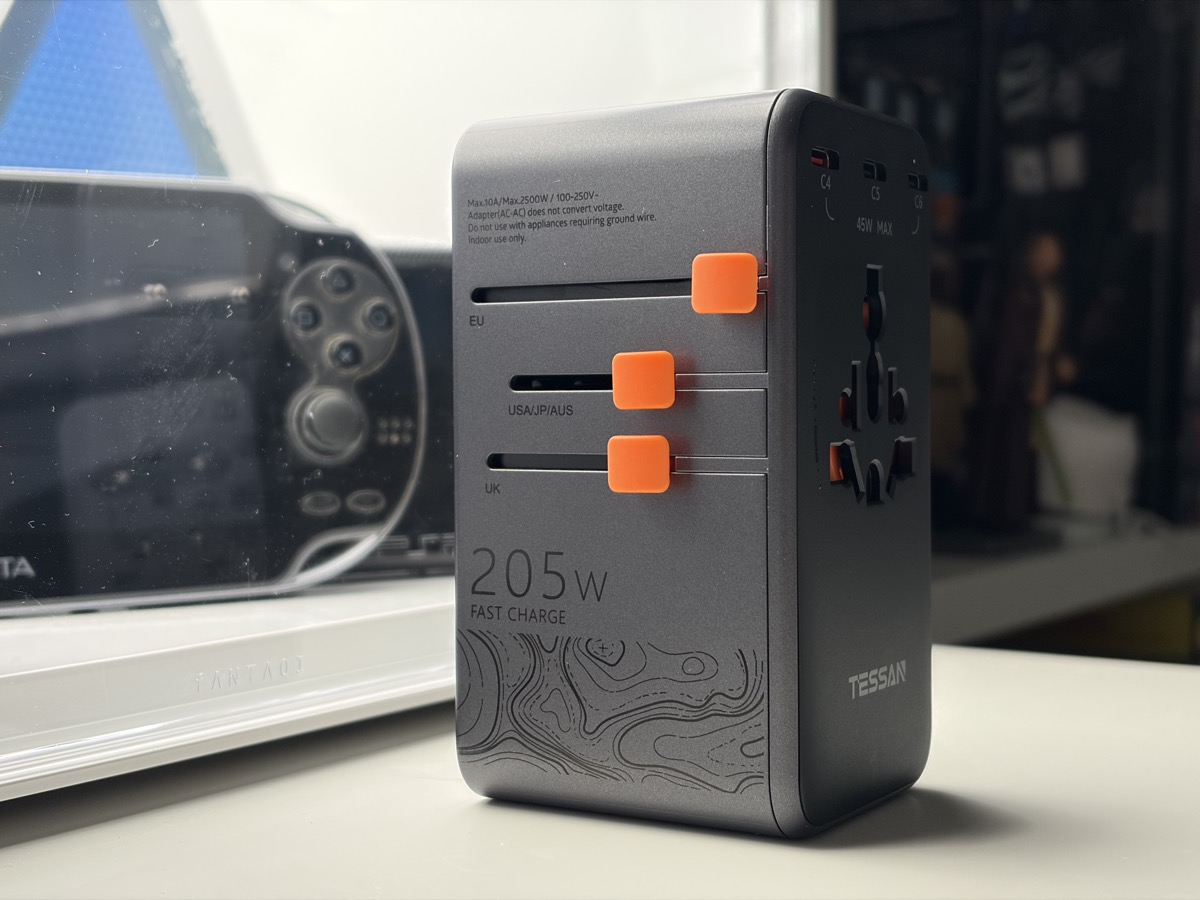
The plug system is also well thought through. You get the expected built-in international formats, and only one plug can be extended at a time, which is exactly how it should work. The sliding action is straightforward, and in daily use we did not find ourselves fighting with it. That might sound like a low bar, but plenty of universal adapters manage to make this part feel clumsy. Here, it is clean and intuitive.
There are a few thoughtful touches that made a better impression over time. The spare fuse is one of them. It is not the kind of feature that sells a product on its own, but it is exactly the kind of detail that makes a premium travel accessory feel like it was designed by people who understand how frustrating failure can be when you are far from home. We also liked that the body avoids the cheap airport-gadget look. It feels functional first, with just enough design restraint to keep it from looking generic.

Setup and First Use
In the simplest sense, setup is easy. You slide out the right regional plug, connect it, and start using the ports you need. That part never felt complicated.
Where the Voyager 205 becomes a little less plug-and-play is in understanding the port layout well enough to use it intelligently. This is not a charger where every port behaves the same way, and that is important. Some ports are meant for serious high-draw devices, some are much better suited to mid-power gear, and others are there for lower-demand accessories. Once we got familiar with the layout, the whole thing made a lot more sense. Before that, it was easy to assume any USB-C port would do the same job, and that is not really how this product works.
That is not a dealbreaker, but it is worth saying clearly. This adapter rewards users who actually learn it. If you just want something mindless, there are simpler options. But if you are willing to spend a few minutes understanding which ports make the most sense for your laptop, phone, and smaller devices, the Voyager 205 quickly starts feeling much more capable than the average travel adapter.
What we appreciated most on first use was how quickly it changed the charging setup around it. Instead of a loose cluster of chargers, adapters, and cables spreading across a hotel desk or nightstand, we had one place for everything. That benefit became obvious very fast.
Real-World Charging Performance
This is where the Voyager 205 justifies its existence.
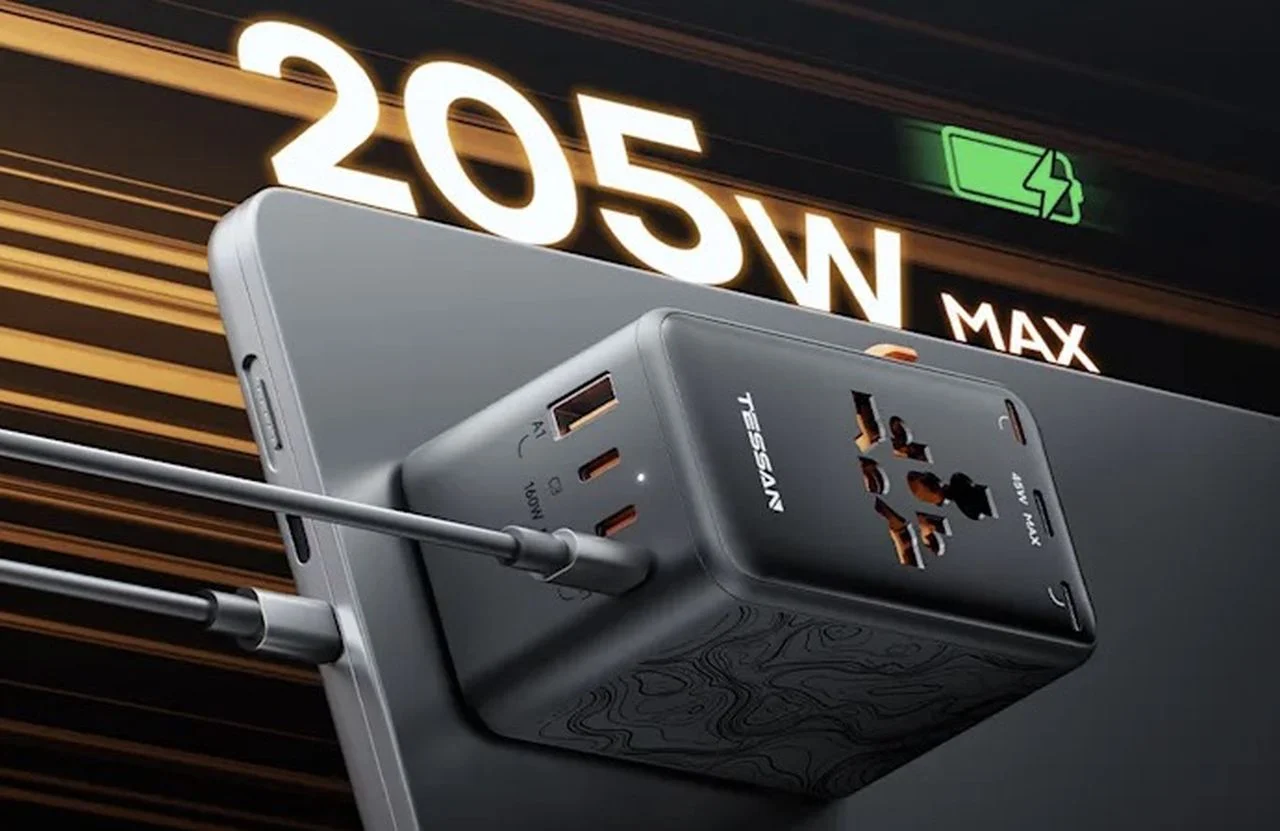
The headline figure is 205W total output, but numbers like that only matter if the device is built in a way that makes the power genuinely usable. Here, it mostly is. The Voyager 205 is not pretending that all eight outputs are equal. It has a clear hierarchy, and once we started using it that way, it felt far more practical than gimmicky.
The two highest-output USB-C ports are where the product makes its strongest case. These are the ports that let the Voyager 205 step beyond “travel adapter with extra charging” territory and into “this can actually replace a serious charger” territory. We found that to be the core of the product’s appeal. When one device really matters, like a laptop, the Voyager has the power budget to treat it properly instead of giving it an apologetic trickle charge.
The rest of the ports round out the experience in a smart way. Medium-demand devices like phones and tablets fit naturally into the mix, while smaller accessories such as earbuds, watches, or other low-draw gear can sit on the lighter ports without wasting the higher-output ones. In practice, that made the whole setup feel designed around actual travel habits rather than marketing symmetry.
That distinction matters. We did not come away feeling like this was a charger built to impress people with port count alone. We came away feeling like it was built for the very common reality that travelers now carry one big device, a couple of medium devices, and a pile of tiny things that always seem to need topping up at the same time.
In daily use, the biggest benefit was not one dramatic charging moment. It was the simple fact that we could centralize everything. Laptop here. Phone there. Watch, earbuds, power bank, and any other accessory all handled from the same block. What stood out to us was how quickly that changed the feel of the room. Instead of hunting for spare outlets or rotating chargers in shifts, we just plugged everything into one zone and moved on.
The Voyager 205 also feels credible as a multi-device laptop solution, though this is an area where expectations matter. Yes, it has the overall power budget to support two laptops in the broader sense. No, that does not mean every high-demand device gets maximum-speed charging all at once. In practice, the power sharing is much more realistic than magical. That is still impressive. It just needs to be understood properly.
For most people, that will be fine. If your goal is to keep one main laptop fully fed while also charging phones, accessories, and maybe a second smaller computer or tablet, the Voyager 205 feels very capable. If your expectation is that it will behave like multiple full-power desktop chargers fused into one perfect box, that is where reality starts to push back.

What It Is Like to Live With on a Trip
This is the part that sold us.
In actual travel use, the Voyager 205 reduces clutter better than most adapters we have tried. That sounds like a small thing until you remember how annoying hotel-room charging usually is. There is never quite enough power where you want it, the useful outlet is behind furniture, and by the end of the day you have cables everywhere and at least one important device still waiting its turn.
The Voyager 205 tackles that problem head-on. Once it is in place, it becomes the hub. That shift is what makes it more than a spec-sheet curiosity. We noticed that our charging routine got simpler almost immediately. There was less swapping, less improvising, and less mental overhead about what needed to be charged first.
That is the product’s biggest strength. It removes the feeling that your tech loadout is managing you.
We also think it makes especially strong sense for shared travel. For one person with a laptop, phone, watch, and extras, it already feels useful. Add a second person into the same room and the appeal becomes even clearer. Two phones, two sets of earbuds, a tablet, a laptop, a watch or two, maybe a camera battery or a power bank, and suddenly this does not feel excessive at all. It feels like conflict prevention.
Another thing we liked is that it does not feel like a single-purpose trip purchase. Once we were done thinking about it purely as travel gear, it was easy to imagine it living on a shelf or desk at home between trips. That matters for value. Accessories like this are easier to justify when they continue to solve a real problem after the passport goes back in the drawer.
Heat and Safety
With a charger doing this much, some warmth is inevitable. We did notice that it can run warm under heavier multi-device loads, which is exactly what we expected from a high-output GaN charger working hard.
The important thing is that it never felt alarming. Warm, yes. Concerning, no.
That distinction is worth making because people are understandably sensitive about heat with travel adapters. In practice, the Voyager 205 behaves like powerful charging hardware, not like a dangerous one. The body can heat up when you are asking a lot of it, but nothing about it suggested poor control. It felt like normal thermal behavior for a product trying to consolidate this much output into one travel-ready form.
Safety-wise, the spare fuse and the controlled plug mechanism help it feel more deliberate than a lot of cheaper alternatives. It still deserves the same common sense you would use with any high-output travel charger, but we never felt like the Voyager 205 was cutting corners in the way some lower-end universal adapters clearly do.
One point that remains essential: this is an adapter, not a voltage converter. That is not an obscure technicality. It is a major practical limitation that buyers need to respect. If you are using modern dual-voltage electronics, you are fine. If you are hoping this will magically make single-voltage heat appliances safe in any country, it will not. That is not unique to this product, but it is still the kind of mistake people make, so it deserves a blunt reminder.

The Main Flaw: Size, Weight, and Socket Fit
For all the things the Voyager 205 does well, its biggest weakness is obvious and persistent.
It is bulky enough to create real-world inconvenience.
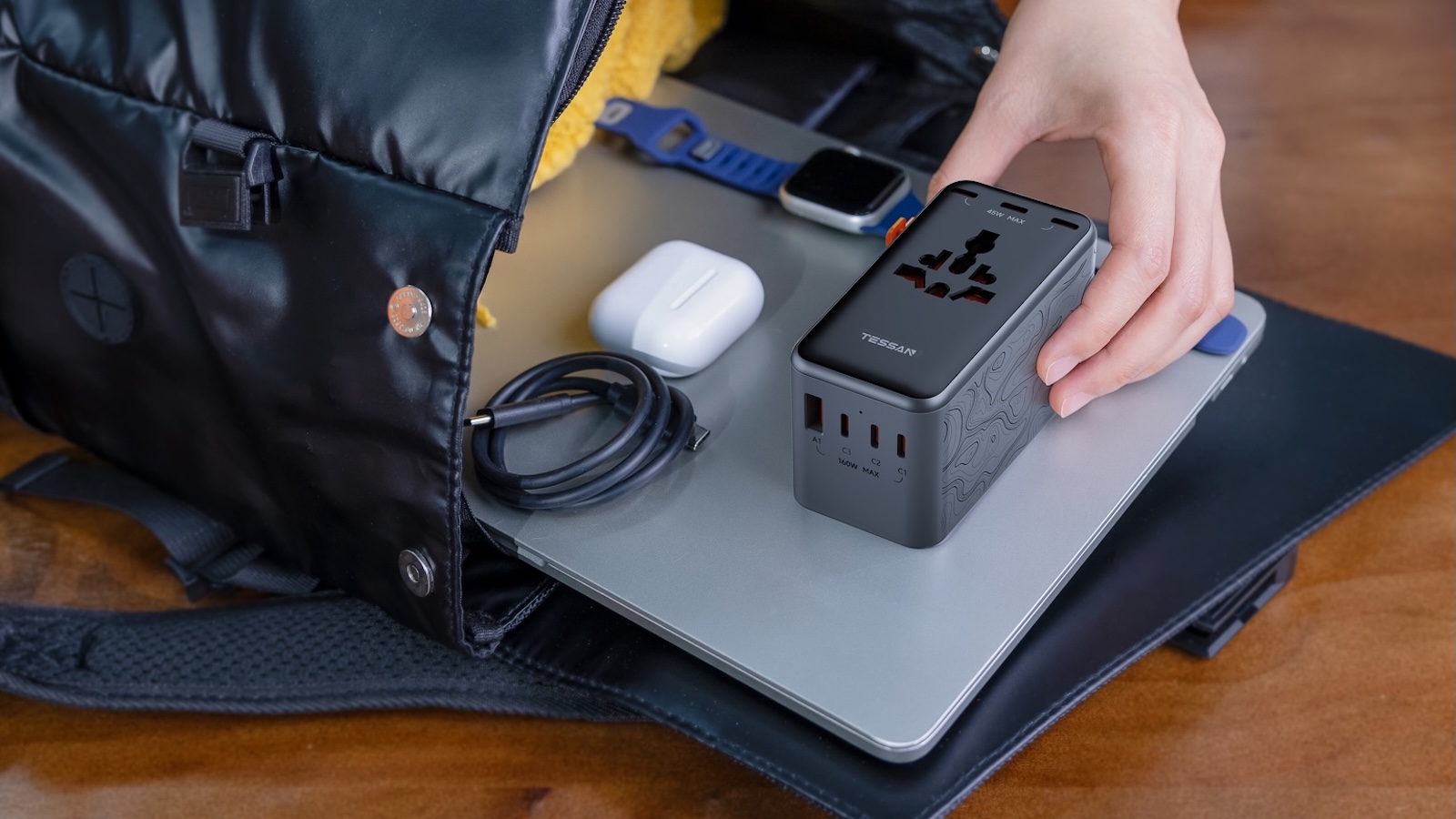
We felt that in two ways. First, in the bag. This is not a forget-it’s-there item. The extra size and weight are the price you pay for the power and port count, and whether that feels worth it depends entirely on your travel style. For us, it made sense once we considered how many other chargers it could replace. But that tradeoff is personal, and not everyone will reach the same conclusion.
Second, and more importantly, we noticed that the body can be awkward in some wall sockets. This is the issue we would take most seriously before buying. In ideal outlets, it is fine. In less ideal ones, the weight and leverage of the body become hard to ignore. Depending on the socket position and orientation, it can feel a little too heavy for complete confidence, and in tighter wall layouts it may block adjacent switches or just take up more room than you would like.
This is the only flaw that we think moves beyond annoyance and into genuine buying consideration. Plenty of products are slightly bigger than we would prefer. That alone is not dramatic. But with the Voyager 205, the size affects usability in a direct way because it hangs from the wall. That means the physical design is never just about packing convenience. It also shapes how stable and comfortable the adapter feels once it is plugged in.
We do not think this ruins the product. Far from it. But it does stop it from being an easy recommendation for everyone.
Value for Money
The Voyager 205 is expensive by travel-adapter standards. There is no clever way around that. If you compare it to a cheap universal plug adapter, it will look overpriced instantly.
That is also the wrong comparison.
The right comparison is this: a travel adapter, a laptop charger, a fast phone charger, a multi-port USB-C charger, and the tangle of cables and outlet juggling that usually comes with all of them. Once we looked at it through that lens, the price made a lot more sense.
What you are paying for here is not just international compatibility. You are paying for consolidation. You are paying to remove pieces from your kit. You are paying for one device that can do the work of several smaller ones well enough that the total experience becomes easier.
That does not make it good value for everyone. For light travelers, it absolutely is not. If you travel with a phone, earbuds, and not much else, this is like bringing a toolbox to hang one picture frame. But for heavier travelers, especially people carrying at least one laptop and multiple USB devices, the value equation improves quickly.
The part we appreciated most is that the product actually behaves like premium gear in a meaningful way. It is not charging luxury. It is travel simplification. When premium products fail, it is often because they solve imaginary problems. The Voyager 205 solves a very real one.

Who Should Buy It
We would recommend the Voyager 205 to travelers who are tired of carrying a charger bag that keeps growing year after year.
If your typical setup includes a laptop, phone, watch, earbuds, power bank, maybe a camera or handheld console, and maybe another device or two depending on the trip, this adapter makes a lot of sense. It also makes sense for couples or small families sharing a room and trying to charge half a dozen things without taking turns.
It is especially appealing for people who do not just want a plug converter. If what you want is a single power hub that travels well enough and meaningfully cuts down the rest of your kit, the Voyager 205 feels like one of the smarter options in its category.
We also think it suits people who want something that will remain useful at home. As a desk or shelf charger between trips, it still has a strong role. That secondary usefulness helps justify the investment.

Who Should Skip It
We would skip the Voyager 205 if our travel routine were simple.
If you mostly carry a phone and a pair of earbuds, you do not need a 205W travel charger with this much bulk. If every gram in your bag matters, there are smaller and easier options. If you often end up in older properties, tight spaces, or wall outlets that already feel less than confidence-inspiring, the weight and shape of this adapter are also worth thinking twice about.
We would also skip it if we wanted something totally brainless. The Voyager 205 is not complicated, but it is more satisfying when you understand the port layout and use it intentionally. People who want zero thought involved may prefer something simpler, even if it is less capable.
And again, anyone expecting voltage conversion should look elsewhere. That is a separate need entirely.

Final Verdict
The TESSAN Voyager 205 gets the big idea right. Modern travel power is not about plugging in one phone anymore. It is about managing an entire personal tech ecosystem without turning your hotel room into a charging mess or your bag into a storage unit for power bricks.
After spending time with it, that is exactly what this adapter feels built to do.
We liked the ambition here, but more importantly, we liked that the ambition translated into real usefulness. The 205W output is not just impressive on the box. The six USB-C ports are not there for show. The built-in global plug system, the AC outlet, and the thoughtful safety touches all come together in a way that makes the Voyager 205 feel like a serious tool rather than a flashy gadget.
Where we felt less convinced was the physical form. It is bulky, it is heavy, and in some outlets that becomes more than a minor compromise. That is the one part of the experience that keeps this from being an effortless recommendation.
Even so, our verdict is clear. For heavy tech travel, this is one of the most useful adapters in its class. For light travel, it is unnecessary. If you judge it as a tiny universal adapter, it feels oversized. If you judge it as a compact international charging station that can replace several separate chargers, it becomes much easier to appreciate.
That is exactly how we would frame it: not the best adapter for everyone, but a genuinely smart one for the people it was built for.

Helpful FAQ
Is the TESSAN Voyager 205 a voltage converter?
No. It is a travel adapter for 100–250V devices, not a voltage converter. Dual-voltage electronics are fine, but single-voltage appliances need extra caution.
How many devices can it charge at once?
It supports up to 8 devices at the same time through one AC outlet, six USB-C ports, and one USB-A port.
Can it charge a laptop properly?
Yes. It is absolutely capable of handling laptops, and that is one of the main reasons to consider it over a basic travel adapter.
Can it charge two laptops at once?
It can support that kind of setup, but not every connected laptop will get the same maximum charging speed at the same time. Think practical multi-device support, not unlimited full-speed output on every port simultaneously.
Does it get hot?
It can get warm under heavier loads, which is normal for a high-output GaN charger, but it did not strike us as unusually hot or worrying.
Is it too bulky for travel?
That depends on how much gear you normally carry. Compared with a basic adapter, yes, it is noticeably bulkier. Compared with carrying multiple chargers plus an adapter, the tradeoff makes more sense.
Is it worth the money?
For light travelers, probably not. For travelers carrying a laptop and several USB-powered devices, we think the consolidation alone gives it a strong value argument.
Who is it really for?
People traveling with a real tech loadout. That includes remote workers, creators, business travelers, couples, and families who want one charging hub instead of a bag full of separate bricks.
Explore the TESSAN Voyager 205 Gallery
Every image from this article, gathered in one clean place. Tap any photo to open it larger.