

GL.iNet Brume 3 (GL-MT5000)
Pros
- Excellent core hardware for the size, including a quad-core 2.0GHz CPU, 1GB RAM, and 8GB eMMC
- Three 2.5GbE ports make it far more flexible than typical compact wired gateways
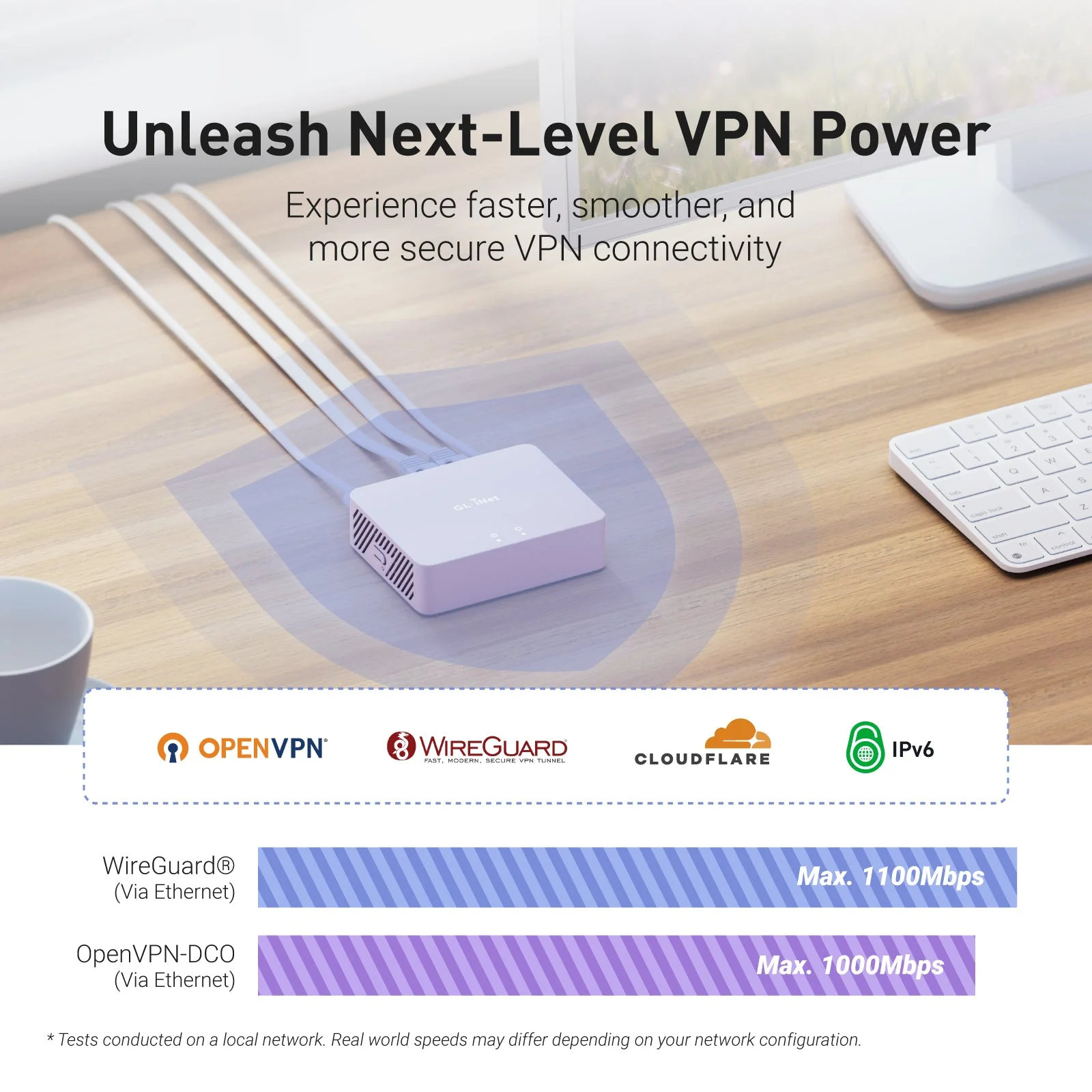
- Headline VPN performance is strong, with up to 1,100Mbps WireGuard and 1,000Mbps OpenVPN-DCO
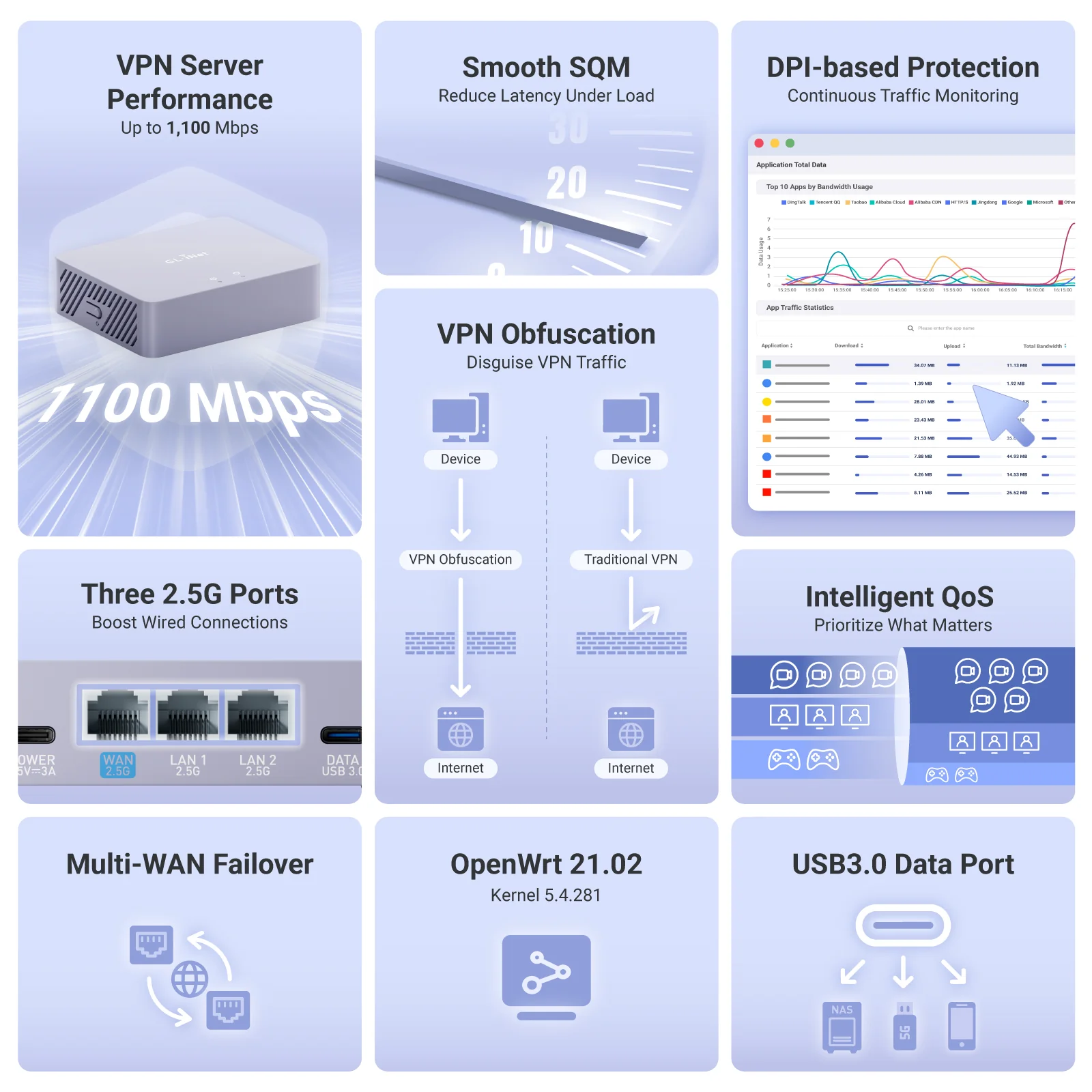
- Feature set is unusually deep, including AdGuard Home, Tailscale, ZeroTier, Tor, multi-WAN, QoS, SQM, and DPI-based traffic tools
- Small footprint, low power draw, and USB-C power make it easy to run continuously
- The interface does a good job of making a feature-rich product feel approachable without gutting its depth
Cons
- This is not a mainstream all-in-one router, and plenty of buyers will misunderstand what it is for
- The best parts of the product are wasted if you do not want advanced gateway or VPN duties
- It makes more sense to experienced users than casual buyers
- The kind of buyer this attracts will care a lot about firmware maturity and ecosystem details
- No built-in Wi-Fi means it is a specialist box, not a one-box solution
the hardware is strong for the size, the three 2.5GbE ports are genuinely useful, the software stack is deep without being unusable, and the overall concept feels much more practical in real use than it first appears.
it is easy to buy this for the wrong reason, some of its best features will be completely wasted on casual users, and a few firmware-ecosystem details matter more here than they would on a basic consumer router.
The GL.iNet Brume 3 (GL-MT5000) is not the kind of networking product that flatters everyone. Put it in front of the wrong buyer and it looks like an oddly specific little black box with no Wi-Fi and too many features. Put it in front of the right buyer and it quickly starts to look like one of the smartest small-network purchases you can make. After spending real time with it, that became the core of our verdict: this is a wired-first VPN and security gateway for people who actually want control.
If that sounds like you, the Brume 3 feels sharp, efficient, and unusually well judged. If you want a simple all-in-one family router, this is the wrong product, no matter how good the specs look on paper.
What stood out to us most is how focused the whole device feels. GL.iNet did not try to make this a mainstream crowd-pleaser. Instead, it built a compact gateway around the things that matter to a more demanding buyer: a quad-core 2.0GHz MediaTek platform, 1GB RAM, 8GB eMMC storage, three 2.5GbE ports, USB 3.0 expansion, sub-5W power draw, and headline VPN throughput rated up to 1,100Mbps on WireGuard and 1,000Mbps on OpenVPN-DCO. That is a serious hardware profile for something this small.
Our take is simple. The Brume 3 is excellent when you buy it for the job it was made to do. It makes sense as a dedicated VPN gateway, a home-lab edge box, a secure remote-access hub, a compact multi-WAN router, or a wired security layer sitting behind your main ISP hardware. In those roles, it feels clever. In the wrong role, it feels confusing. That is not a weakness in the traditional sense, but it does define the product.
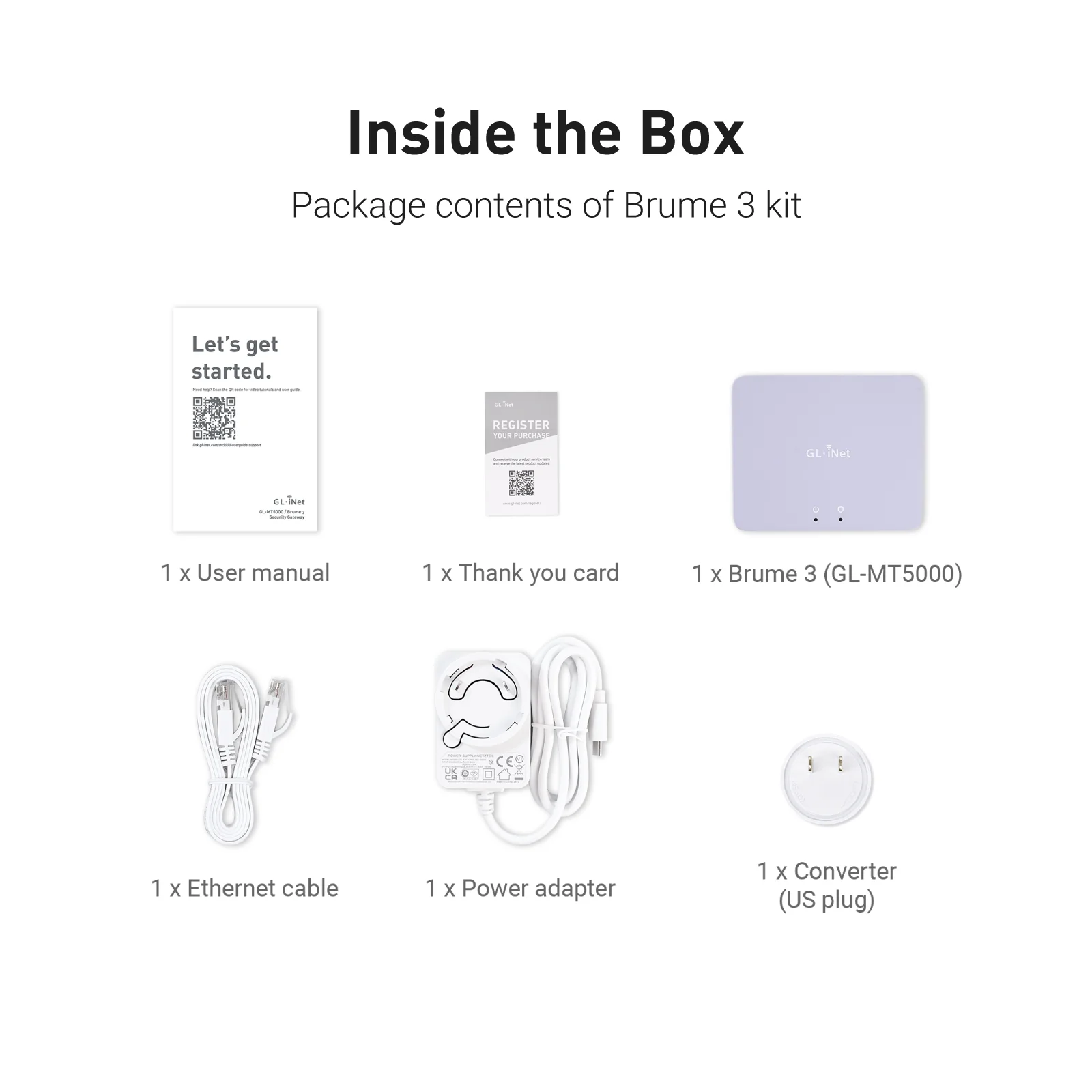
What we tested
We approached the Brume 3 the way it is clearly meant to be used: as a wired network appliance, not as a lifestyle gadget and not as a living-room Wi-Fi router. Our focus was on the things that actually determine whether a product like this earns a place in a real setup.
We evaluated the hardware layout, the overall design, the practicality of the triple 2.5GbE port arrangement, the usability of the GL.iNet admin interface, the setup experience, the depth of the built-in feature set, the appeal of its VPN-first positioning, and the way the whole device fits into realistic roles like VPN gateway, drop-in security layer, remote-access box, and home-lab edge router.
Just as importantly, we judged it as a purchase. A product like this lives or dies on buyer fit. So we spent as much time asking who this is really for as we did looking at what it can do.
How we tested it
We did not treat the Brume 3 like a normal home router because it is not one. We worked through it as a dedicated gateway product: initial setup, admin flow, internet-input options, feature discovery, VPN orientation, network controls, and the kind of day-to-day management that matters once the novelty wears off.
That turned out to be the right approach. With a device like this, the most important thing is not whether it boots up and gets online. It is whether the product still feels coherent after you start actually using the features that justify buying it. In practice, that meant paying close attention to the areas where good networking hardware separates itself from impressive spec-sheet noise: interface clarity, role flexibility, port usefulness, expansion options, and whether the product feels like a focused tool rather than a pile of features.
Design and build quality
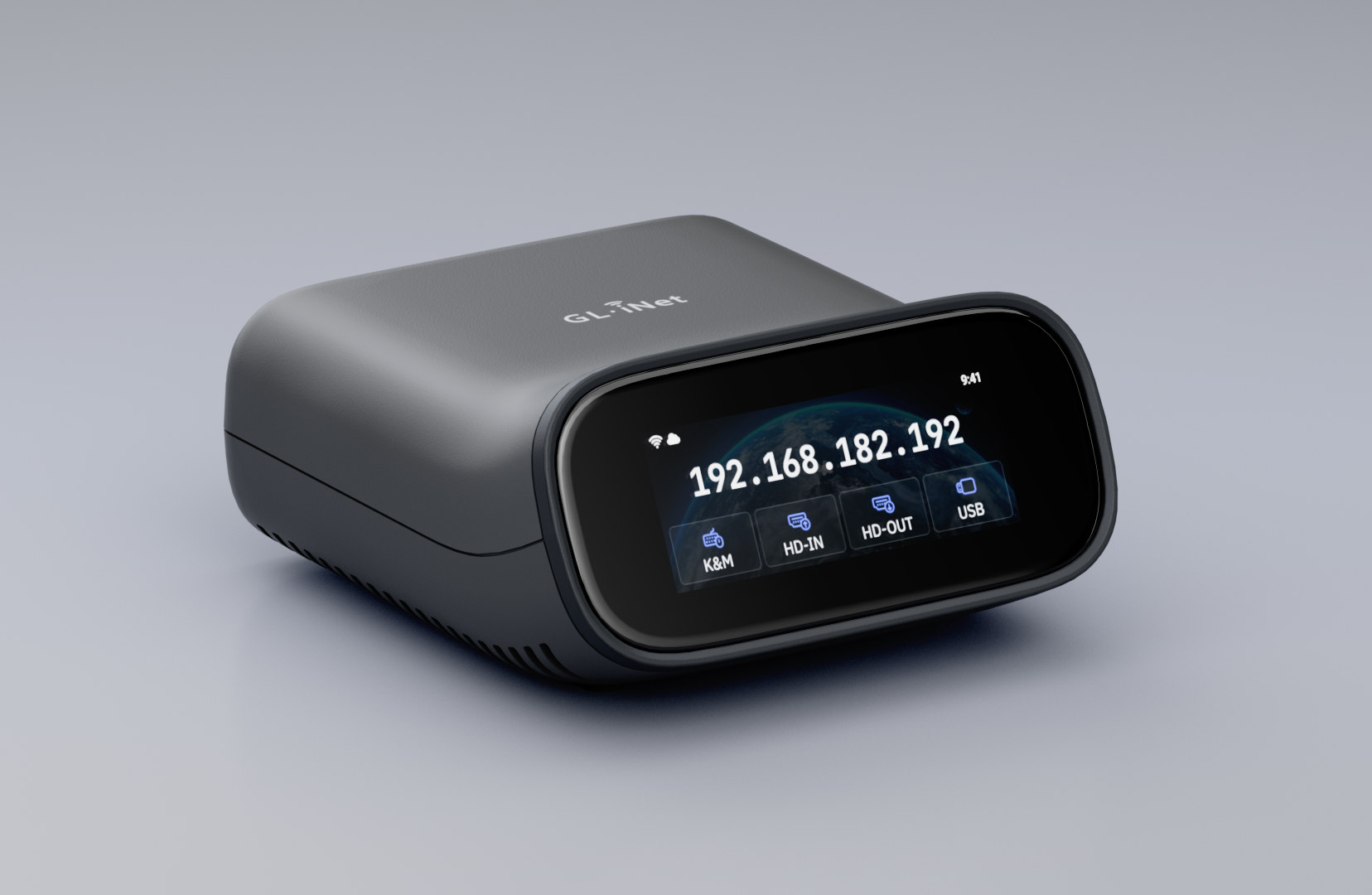
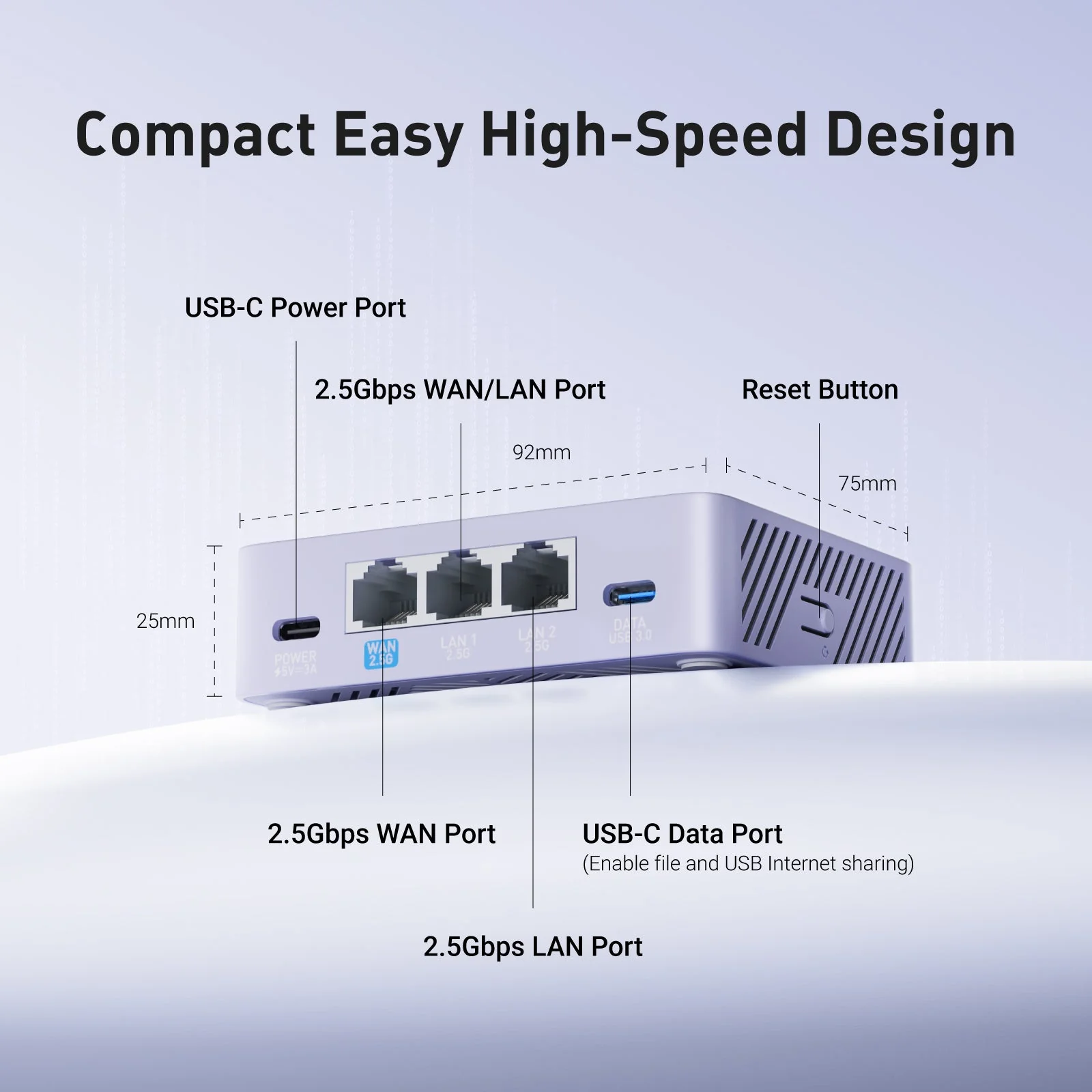
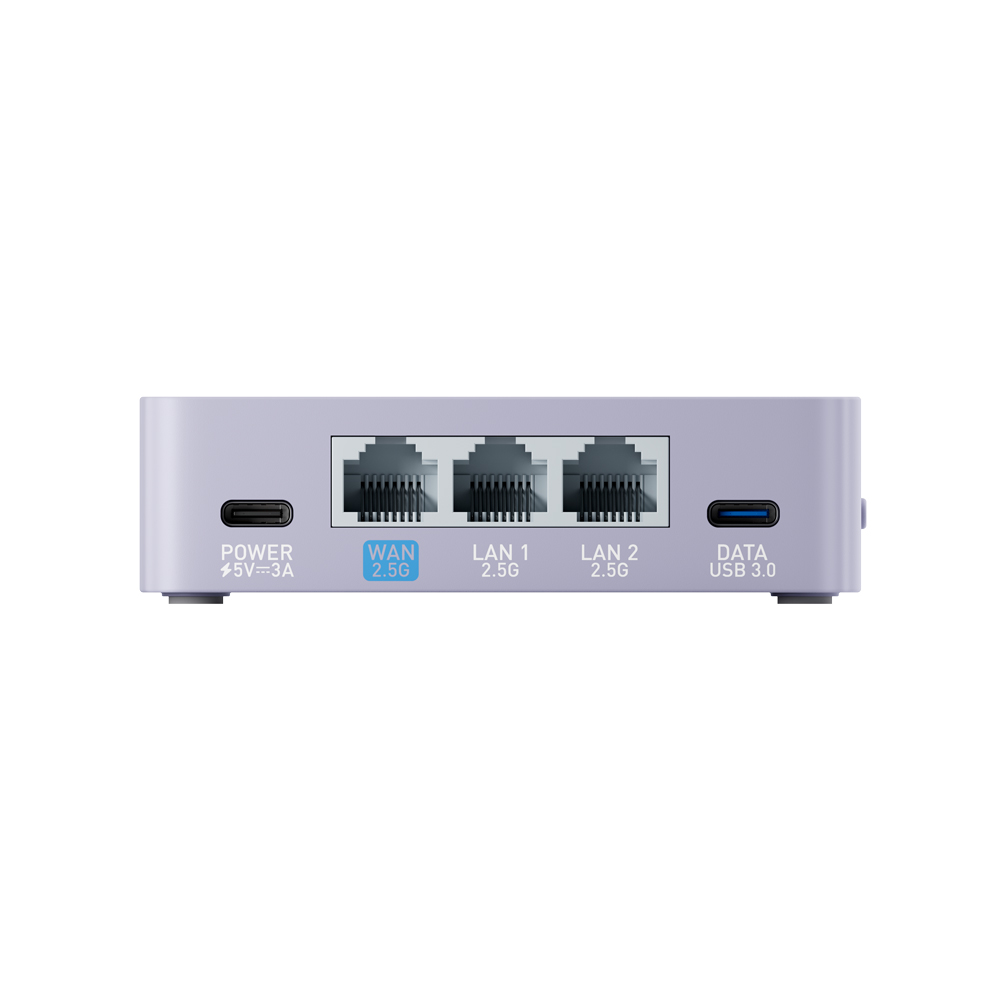
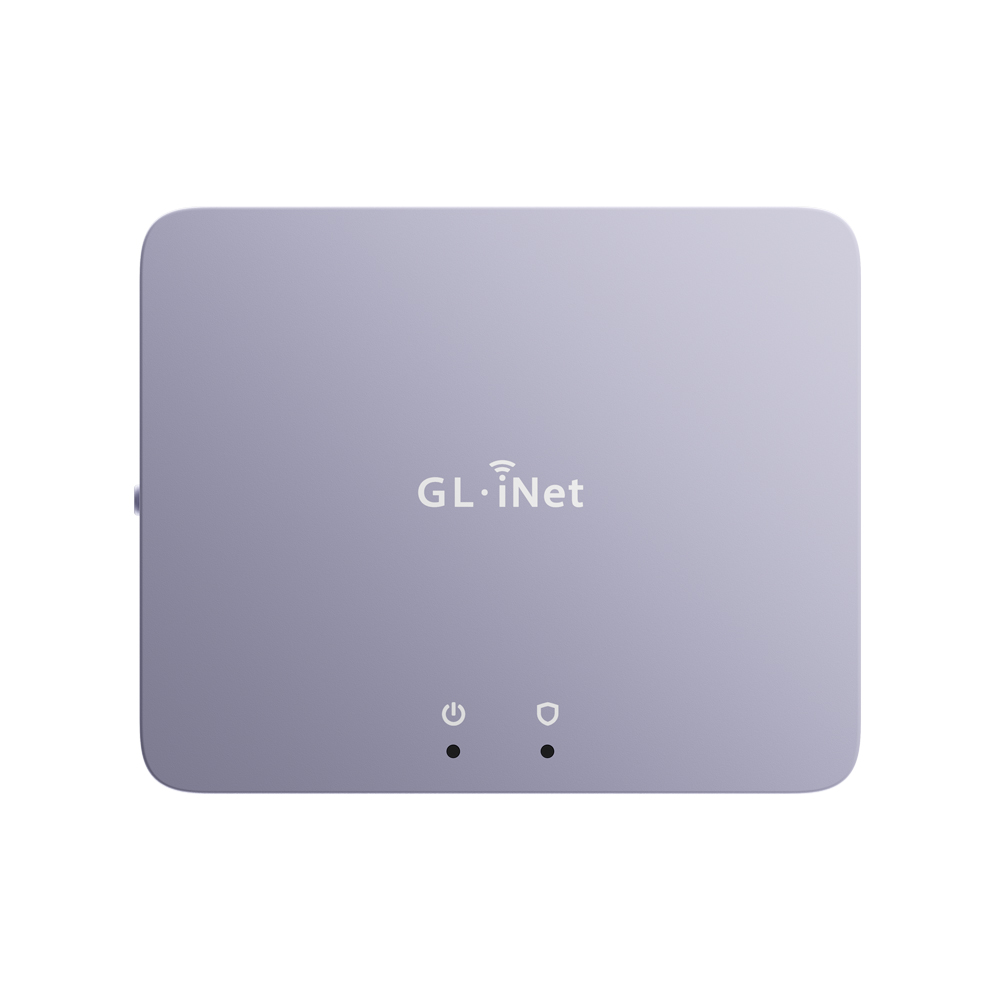
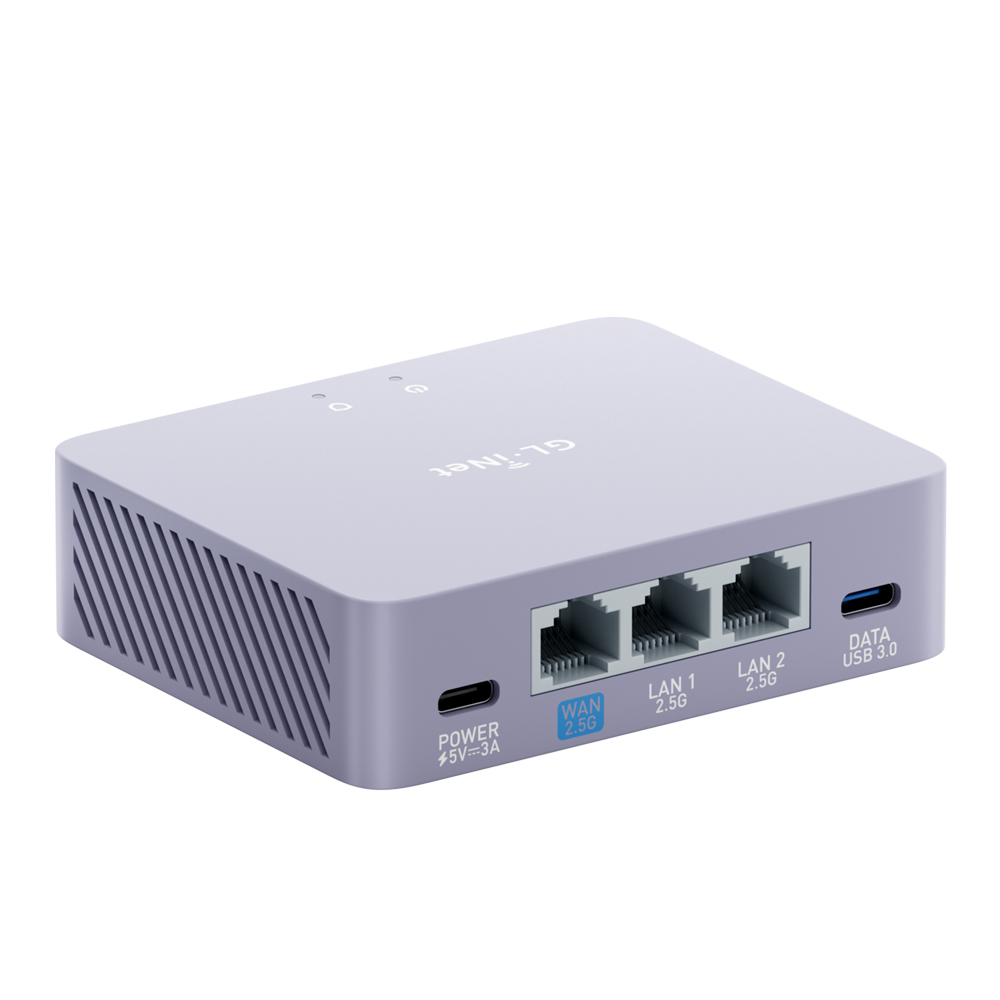
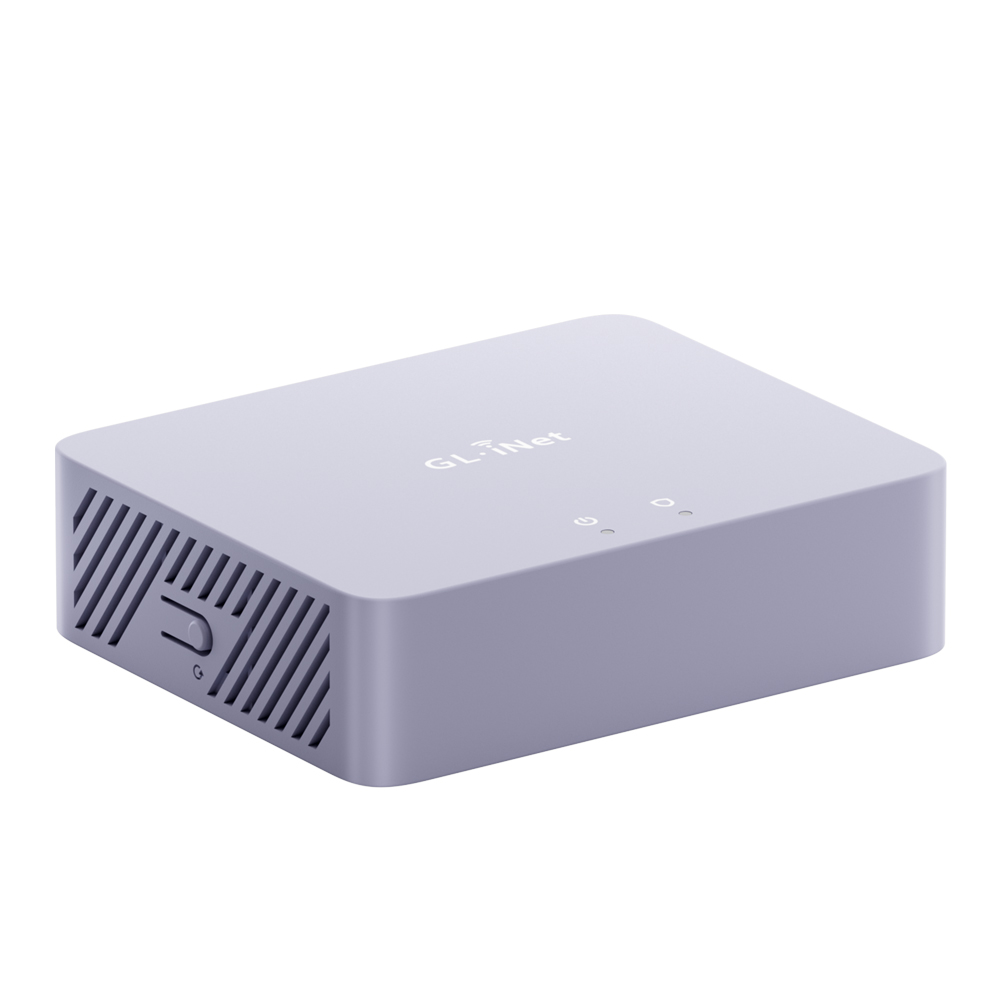
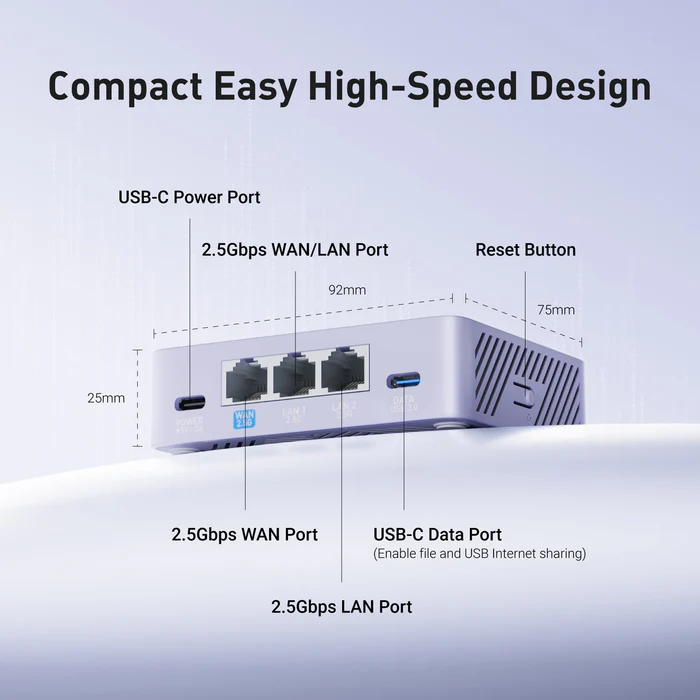
There is nothing flashy about the Brume 3, and that works in its favor. This is a compact, quiet, low-power box that looks like it was designed by people who understand where network gear really ends up living. It is small enough to tuck beside a modem, behind a TV unit, on a shelf in a study, or next to a switch in a cramped office corner without becoming an eyesore or a space problem. At roughly 75 x 92 x 25mm and around 148g, it is genuinely compact.
What we appreciated most is that the physical design is almost entirely about function. The standout feature is obvious the moment you look at the back: three 2.5GbE ports in a device this small is a real advantage. That is not marketing fluff. In actual setups, that port layout gives the Brume 3 far more flexibility than the usual tiny gigabit-only boxes that start feeling compromised the minute you ask more of them.
That matters because this device is often going to sit in the middle of a more intentional network. Maybe it is handling a fast WAN feed, maybe it is routing traffic through a VPN, maybe it is sitting between your ISP router and your main LAN, maybe it is managing backup internet. Whatever the exact setup, the port layout gives it room to breathe. It does not feel like a tiny box that immediately introduces a tiny-box limitation.
We also liked the move to USB-C power. That may sound like a minor detail, but in real use it is exactly the kind of detail that makes a product feel thoughtfully modern rather than awkwardly old-school. Standardized power is easier to replace, easier to travel with, and easier to integrate into tidier desk or cabinet setups. Over time, those small design decisions matter more than people think.
The only thing we would caution here is psychological rather than physical. Because the Brume 3 is so small, quiet, and clean-looking, it can give the impression that it is more mainstream than it really is. It looks approachable. In some ways it is. But this is still a specialist product, and the design does not fully warn casual buyers about that.

Setup and first use
The first-use experience is one of the Brume 3’s strongest traits. We were glad to see that GL.iNet has kept the initial setup reasonably friendly. Getting into the interface, setting an admin password, and getting basic connectivity in place does not feel like a chore. That matters because networking products aimed at power users often make a bad first impression by acting like usability is beneath them.
The Brume 3 avoids that trap. The surface-level experience is cleaner and more approachable than bare OpenWrt, and that makes a difference. It feels like a product made for people who want advanced features, not a hobbyist board that expects you to enjoy unnecessary friction.
What stood out to us during setup was the layering. You can tell GL.iNet wants this to be accessible enough for a motivated buyer who knows what they want, while still keeping enough depth for people who will dig much further. That balance is hard to get right. Too many products go too far in one direction. They either bury useful controls under a toy-like interface, or they throw you straight into an enthusiast environment that feels unfinished unless you already speak its language.
The Brume 3 lands in a more practical middle ground. At a glance, you get the sense that the company understands the actual buyer journey here. Someone buys this because they want VPN client routing, VPN server hosting, Tailscale, ZeroTier, AdGuard Home, dynamic DNS, multi-WAN, traffic control, or better visibility into their network. They do not necessarily want to wrestle with every step of getting there.
That said, we would still not call it beginner gear. Getting online is the easy part. Understanding how to get the most out of the product is where the real divide starts. If you already know why you want a dedicated gateway, the Brume 3 feels inviting. If you do not, it can feel like a surprisingly deep machine with no obvious reason to exist.
What the Brume 3 actually does well
The Brume 3 makes more sense the longer you look at it through the right lens. Stop expecting it to be a conventional router and start thinking of it as a small network brain, and the whole product snaps into focus.
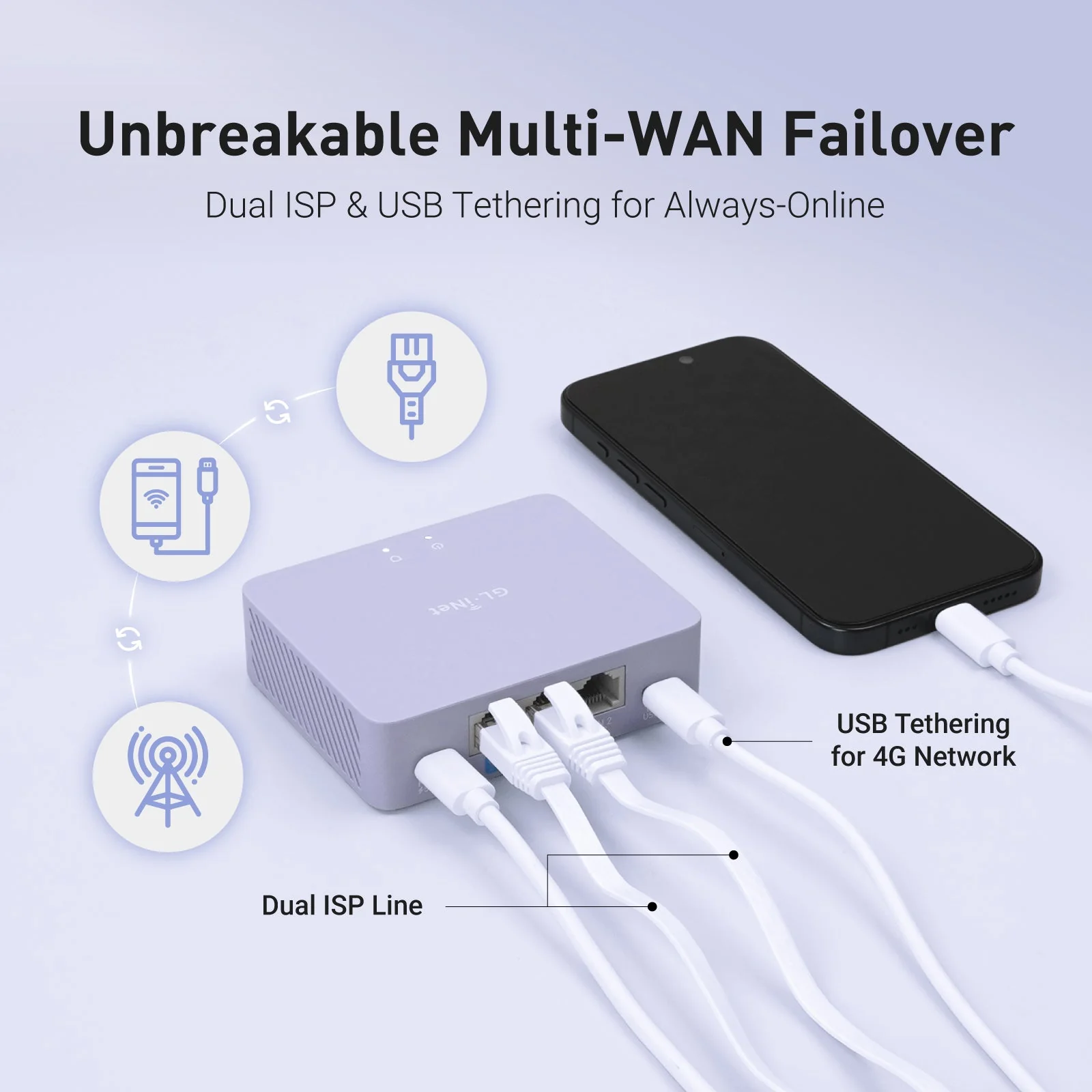
At its best, this is a box for people who already have internet access sorted and want something more specialized at the edge of their network. That could mean routing your whole LAN through a VPN. It could mean hosting a VPN server at home so you can access your network remotely. It could mean adding network-wide ad blocking, cleaner DNS behavior, dual-WAN failover, or more controlled traffic management without dragging a larger, noisier, more power-hungry firewall box into the house.
That is where the Brume 3 feels convincing. It is not trying to win on generality. It is trying to solve a specific class of networking problems in a compact and affordable way, and in practice that focus works.
We especially liked how many of its features actually fit together logically. Plenty of products throw every possible buzzword into a firmware menu and call it a day. Here, the stack feels more deliberate. WireGuard, OpenVPN, Tailscale, ZeroTier, AdGuard Home, Tor, QoS, SQM, Dynamic DNS, drop-in gateway mode, remote management, traffic visibility, and DPI-driven controls all make sense on the same device because the Brume 3 is built around the idea of being a policy and security layer, not just a pipe.
That coherence matters. It makes the product easier to understand once you start using it seriously.
Performance and real-world potential
This is the section where the Brume 3 starts to justify its existence in a more forceful way. On paper, GL.iNet rates it for up to 1,100Mbps WireGuard throughput and up to 1,000Mbps OpenVPN-DCO throughput. Those are serious headline figures for a compact, consumer-priced wired gateway.
We did not come away thinking of this as a “nice little router that happens to support VPN.” The stronger impression was that GL.iNet built this around the assumption that VPN is one of the main reasons you are here. That is an important distinction. Plenty of smaller routers include VPN features. Far fewer feel like they were designed with VPN performance as a central part of the product story.
In buying terms, that changes everything. A lot of small VPN-capable boxes are technically competent but practically limiting. They are fine until you try to use them with a genuinely fast connection, multiple active devices, larger transfers, or more demanding remote-access tasks. Then the compromises show up quickly.
The Brume 3 feels like it was built to avoid that embarrassment. Combined with the triple 2.5GbE layout, it gives the impression of a device that can sit in a more serious wired environment without immediately becoming the bottleneck or the weak link.
We also liked that GL.iNet did not stop at raw speed claims. Features like QoS and SQM matter on a box like this because many buyers are not just trying to encrypt traffic; they are trying to improve how their network behaves. Buffer management, prioritization, and cleaner traffic control are real quality-of-life features when you are using a gateway as an active part of the network rather than just a pass-through appliance.
In practice, this is what lifts the Brume 3 above novelty status. It feels like a product that could genuinely improve a setup rather than just complicate it for the sake of adding features.
Software and feature depth
If the hardware gets your attention, the software is what turns the Brume 3 into a genuinely interesting buy.
We came away thinking the feature set is unusually rich for a device this small and this affordable. Out of the box, it offers more than just the standard VPN talking points. You are looking at a box that can function as a VPN client, VPN server, ad blocker, remote-access node, multi-WAN manager, DNS control layer, traffic monitor, and policy box without feeling like it was assembled from unrelated ideas.
That breadth matters because it gives the product room to grow with the buyer. Maybe you buy it mainly for whole-network VPN routing. Later, you decide to add AdGuard Home. Maybe remote access becomes more important, so you start leaning on Tailscale or ZeroTier. Maybe you want it behind an ISP router as a more capable security layer. Maybe you want to use drop-in gateway mode instead of rebuilding the whole network around it. The Brume 3 has enough flexibility to make those evolutions feel natural.
One of the more interesting things here is the inclusion of DPI-based traffic analysis and classification tools. That is the kind of feature that nudges the device beyond simple privacy branding and into the territory of actual network management. It suggests the Brume 3 is not just meant to hide traffic, but to help you understand and shape it.
We also liked the expansion angle. With 8GB eMMC and USB 3.0 support for storage or modem-style connectivity, the Brume 3 feels more like a compact platform than a sealed appliance. We would not buy it mainly as a tiny NAS replacement or media box, but the fact that it has some headroom for extra jobs adds to the sense that GL.iNet did not build this too narrowly.
What annoyed us
The Brume 3’s biggest issue is not poor quality. It is buyer mismatch.
This is the kind of product that can be recommended very well or very badly. If someone buys it expecting a typical plug-and-play home router, disappointment is almost guaranteed. Not because the device is weak, but because the point of the device has been misunderstood from the start.
That narrow buyer fit is the first frustration. The second is that advanced products invite advanced scrutiny, and this is not the kind of category where little software details can be brushed aside. The more serious the use case, the more seriously buyers will care about firmware maturity, stability, and ecosystem direction. That is normal. It is also something this product cannot escape.
We also think some buyers will simply overestimate how much of the feature set they will actually use. On paper, it is easy to get excited by a long list that includes WireGuard, OpenVPN-DCO, multi-WAN, AdGuard Home, Tailscale, ZeroTier, DPI, SQM, and more. In practice, many people only need one or two of those things. If that is the case, the Brume 3 can still be a good buy, but the value calculation becomes less automatic.
The part we felt least convinced by is not the product itself but the way some people will shop for it. This is not a magic networking box. It is a focused one. Buy it for the right role and it feels smart. Buy it because the spec list looks exciting and you may end up wondering why you did.
Value for money
At $139.99, the Brume 3 strikes us as well priced for what it offers. You are getting a quad-core 2.0GHz platform, 1GB RAM, 8GB eMMC, three 2.5GbE ports, USB 3.0 expansion, low power draw, and a far deeper software stack than most mainstream consumer routers anywhere near this price.
That is a strong hardware-and-features package. It does not feel cheap in the bad sense, and it does not feel inflated either. In the right context, the value is easy to see.
Where the money story gets weaker is when the role gets fuzzier. If all you need is a basic wired router, there are cheaper ways to solve that problem. If what you really want is better Wi-Fi coverage, this is not the answer. If you never plan to use the VPN power, the network-control features, or the richer software stack, then part of what you are paying for will sit there unused.
But that is not really a criticism of the Brume 3. It is a reminder that value depends on fit. For the buyer who wants a compact VPN/security gateway with real flexibility, the pricing looks good. For the buyer who wants an ordinary router, it does not.
Who should buy it
The Brume 3 is a strong buy for people who already know why they want a dedicated wired gateway.
We would recommend it to remote workers who want a cleaner VPN setup, home-lab users who want a capable edge device, privacy-focused users who want whole-network VPN routing or stronger DNS control, and small offices that want a compact, efficient box handling security and policy duties without stepping up to something bulkier and more expensive.
It also makes sense for buyers who want a practical middle ground: more serious than a standard consumer router, but less cumbersome than building out a larger x86 firewall appliance. That, more than anything, is where the Brume 3 feels smart.
Who should skip it
If you want a normal home router with built-in Wi-Fi, skip it.
If you want the easiest possible setup with no real learning curve, skip it.
If your network needs are basic and you have no interest in VPNs, multi-WAN, remote access, DNS management, or traffic shaping, skip it.
And if you are the type of buyer who is drawn to specs first and purpose second, this is one of those products that can easily tempt you into the wrong purchase. The Brume 3 is good enough to attract casual interest, but specialized enough that casual interest is not enough.
Final verdict
The GL.iNet Brume 3 (GL-MT5000) gets something very important right: it knows exactly what kind of device it wants to be.
It is compact, efficient, low-power, and much more capable than its size suggests. The hardware is strong. The three 2.5GbE ports make a real difference. The VPN story is compelling. The software stack is far richer than most people will expect the first time they plug it in. And once we stopped judging it like a generic router and started judging it like a dedicated gateway, the whole product became much easier to appreciate.
Our verdict is that the Brume 3 is one of the most appealing compact wired gateways in its class right now. Not because it tries to do everything, but because it does a very specific set of things unusually well. For the right buyer, it is a sharp, practical, genuinely convincing little networking box. For the wrong buyer, it is an expensive misunderstanding. The good news is that the product itself is honest. It is up to the buyer to be just as honest about what they actually need.
FAQ
Is the GL.iNet Brume 3 a normal home router?
Not really. That is the first thing to understand before buying it. The Brume 3 is best thought of as a wired VPN and security gateway, not a typical all-in-one family Wi-Fi router.
Is the Brume 3 good for a home lab?
Yes, very much so. In fact, that is one of its best use cases. The combination of OpenWrt-based flexibility, rich built-in services, VPN server and client support, Tailscale, ZeroTier, AdGuard Home, and three 2.5GbE ports makes it especially attractive for home-lab edge duties.
Does it have built-in Wi-Fi?
No. That is one of the biggest reasons some buyers should not choose it. The Brume 3 is a wired-first product.
Is the VPN performance actually meaningful?
It looks meaningful for the class. GL.iNet rates the device at up to 1,100Mbps on WireGuard and 1,000Mbps on OpenVPN-DCO, which is exactly the kind of headline that makes this product more than just a token VPN box.
Can it run as both a VPN client and a VPN server?
Yes. That is one of the reasons it is so appealing to more advanced users. It is designed to support both kinds of roles, which gives it more flexibility than a simple privacy-router pitch would suggest.
Is it good value?
For the right user, yes. At $139.99, it offers strong hardware, multi-gig wired flexibility, serious VPN positioning, and a feature set that goes well beyond what most mainstream routers at similar money can offer. The value is strong if you actually need what it does.
Who is most likely to regret buying it?
People who want built-in Wi-Fi, people who do not really need a dedicated gateway, and people who are drawn in by the impressive specs without having a clear use case in mind.
Explore the GL.iNet Brume 3 (GL-MT5000) Gallery
Every image from this article, gathered in one clean place. Tap any photo to open it larger.