


ViewSonic LX60HD
Pros
- Real native 1920 x 1080 image quality
- Google TV and built-in Netflix make it easy to use immediately
- Helpful auto setup features including focus and keystone tools
- Sealed optical engine adds practical long-term appeal
- LCD image avoids DLP rainbow artifacts
- Compact enough to move around without feeling flimsy
- Sensible throw ratio and image size for normal home spaces
Cons
- 163ms input lag makes it a poor gaming choice
- Bright-room performance is limited
- Fan noise is noticeable
- Dark scenes expose its limitations sooner than bright content
- Interface polish is only average
- Built-in sound is fine, not memorable
native 1920 x 1080 resolution, built-in smart streaming that feels genuinely useful, helpful auto setup tools, a sealed optical engine, sensible portability, and an LCD image path that avoids DLP rainbow distractions.
fan noise, a menu system that never feels especially elegant, occasional sluggishness in the smart experience, audio that gets the job done without becoming a highlight, and setup automation that is helpful rather than flawless.
The ViewSonic LX60HD made sense to us almost immediately once we stopped asking it to be something it clearly is not. This is not a bright-room TV replacement. It is not a serious gaming projector. It is not the kind of machine you buy to build a real home theater around. What it is, though, is a genuinely likable 1080p smart projector with Google TV, built-in Netflix, a rated 630 ANSI lumens, a practical 1.2 throw ratio, and enough setup assistance to make movie night feel easy instead of annoying. Used the right way, it is easy to enjoy. Used the wrong way, its limitations show up fast.
That became clearer the more time we spent with it. What stood out to us was not some magical overachievement. It was the way the LX60HD gets the most important things mostly right for its class. The picture is sharp enough to feel like real Full HD rather than soft budget-projector nonsense. Streaming is built in, which matters more than spec-sheet purists like to admit. The setup tools are helpful. The sealed light engine gives it a more practical, long-term feel. And when the room is dim and the screen size is sensible, it can create exactly the kind of casual big-screen experience most buyers are chasing.
The other side of the story is just as important. This is still a relatively modest projector. It does not have the brightness to shrug off daylight. It is not especially refined in the way it handles menus or smart-platform smoothness. The fans are noticeable. Dark scenes reveal the limits sooner than bright ones. And with 163ms input lag, gaming is simply not one of its strengths.
Our verdict did not really change as we got deeper into it. The LX60HD is good when you judge it honestly. It is less impressive the moment you start projecting your own fantasy use case onto it. For bedroom movies, apartment living, casual streaming, and buyers who want the convenience of a smart projector without paying much more, it has a real argument. For people who want one projector to do absolutely everything, it does not.
What we tested
With a projector like this, the big questions are never mysterious. We wanted to know how good the image actually looks in real viewing conditions, how much the built-in streaming experience adds to daily convenience, how smoothly the setup tools work when you are not treating the projector like a permanent installation, how usable the speakers are on their own, how distracting the fan noise becomes, and whether the whole package feels worth the asking price.
We also paid close attention to the gap between promise and reality. Budget projectors live or die on that gap. Plenty of them sound great in product listings and feel disposable the moment you start using them. The LX60HD does better than that, but it still has clear boundaries, and those boundaries matter.
How we tested it
We approached the LX60HD the way most people will actually use it. We looked at how quickly it gets from placement to watchable image, how comfortable it feels moving from one room to another, how convenient the built-in smart platform is once you are signed in and ready to stream, how the image holds up at sensible sizes in dim conditions, how much its darker-scene limits matter in practice, and how livable the noise and sound are over the course of normal viewing.
That gave us a clear sense of what this projector does well, where it starts to wobble, and who is most likely to be happy with it after the initial excitement wears off.
Design and build quality
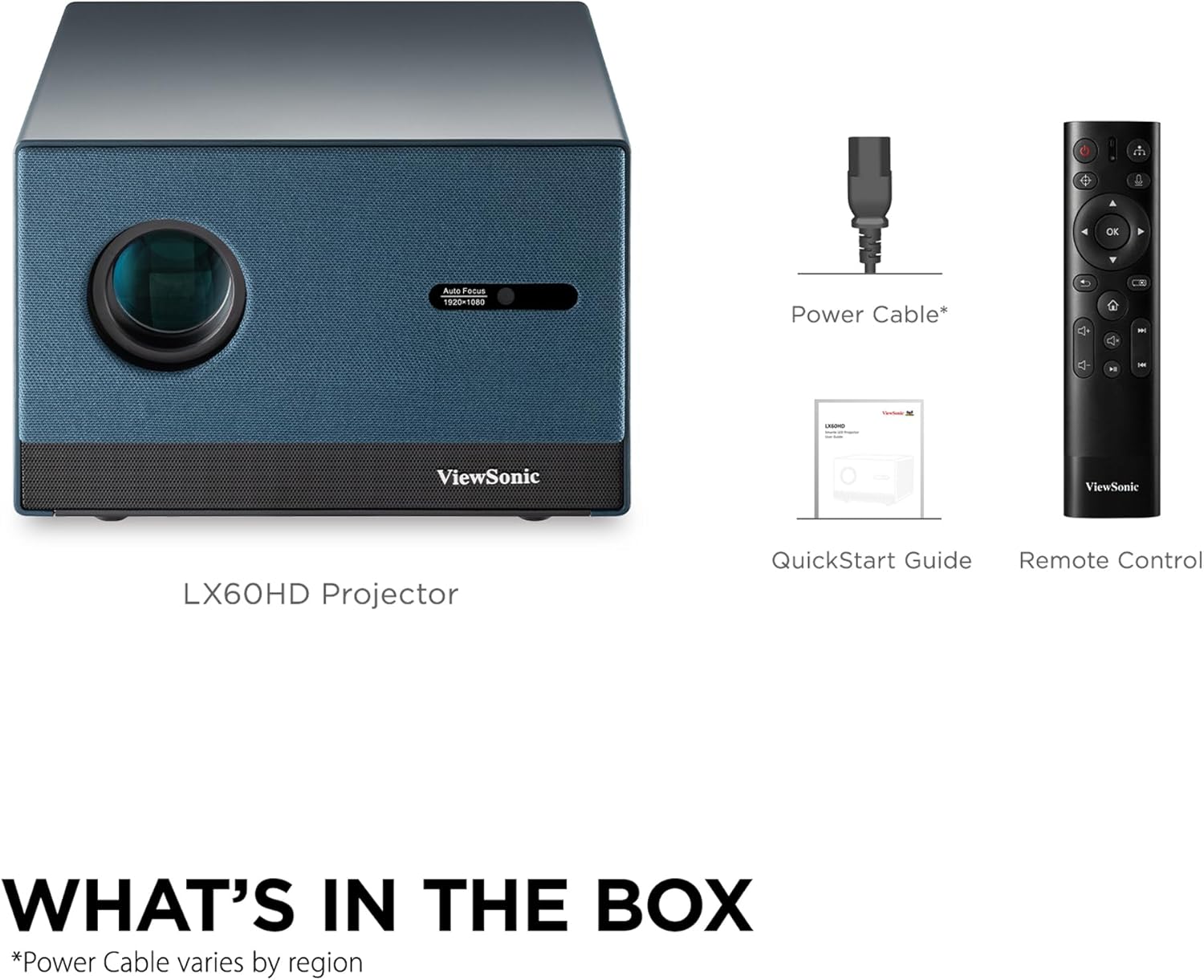
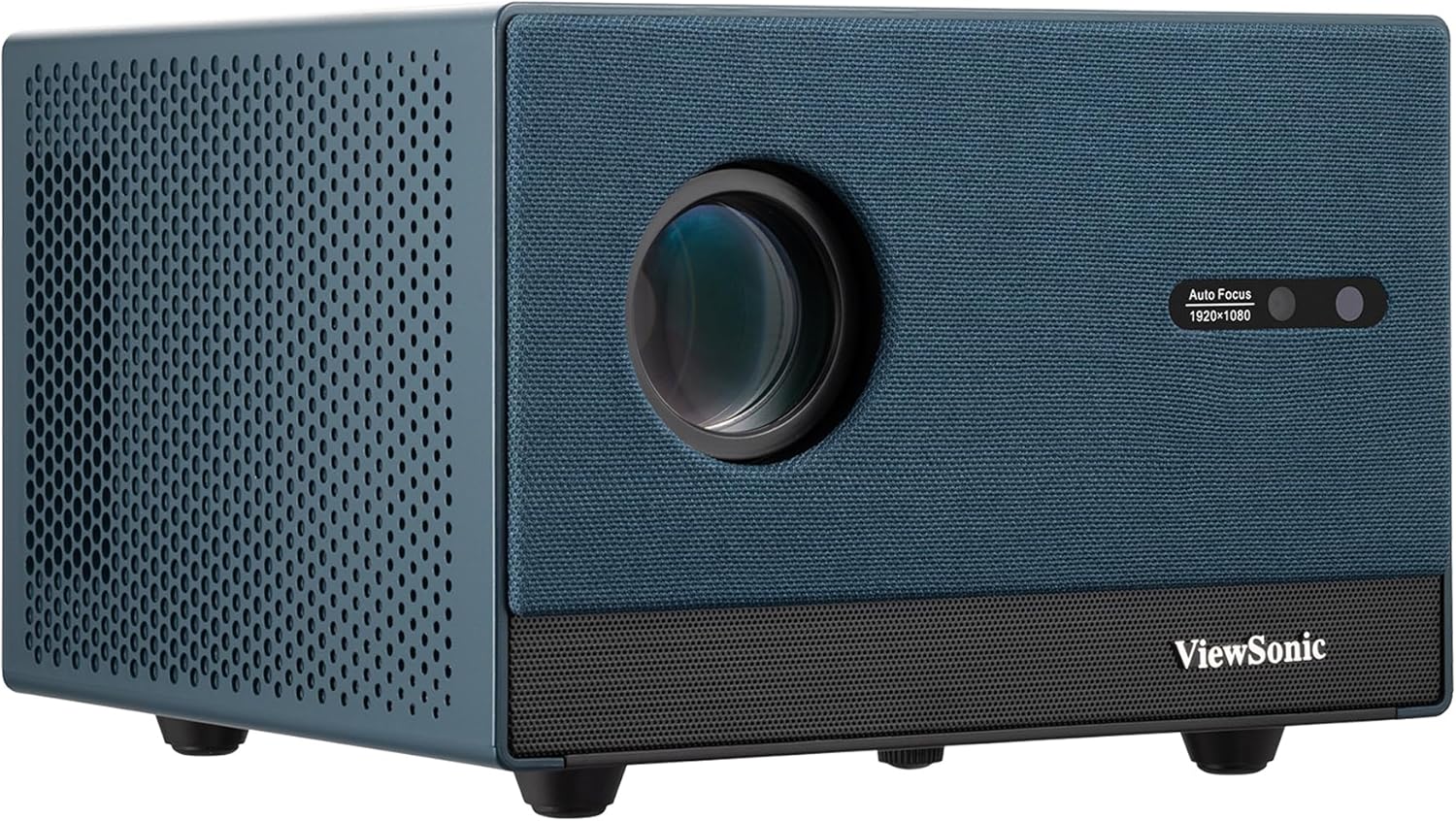
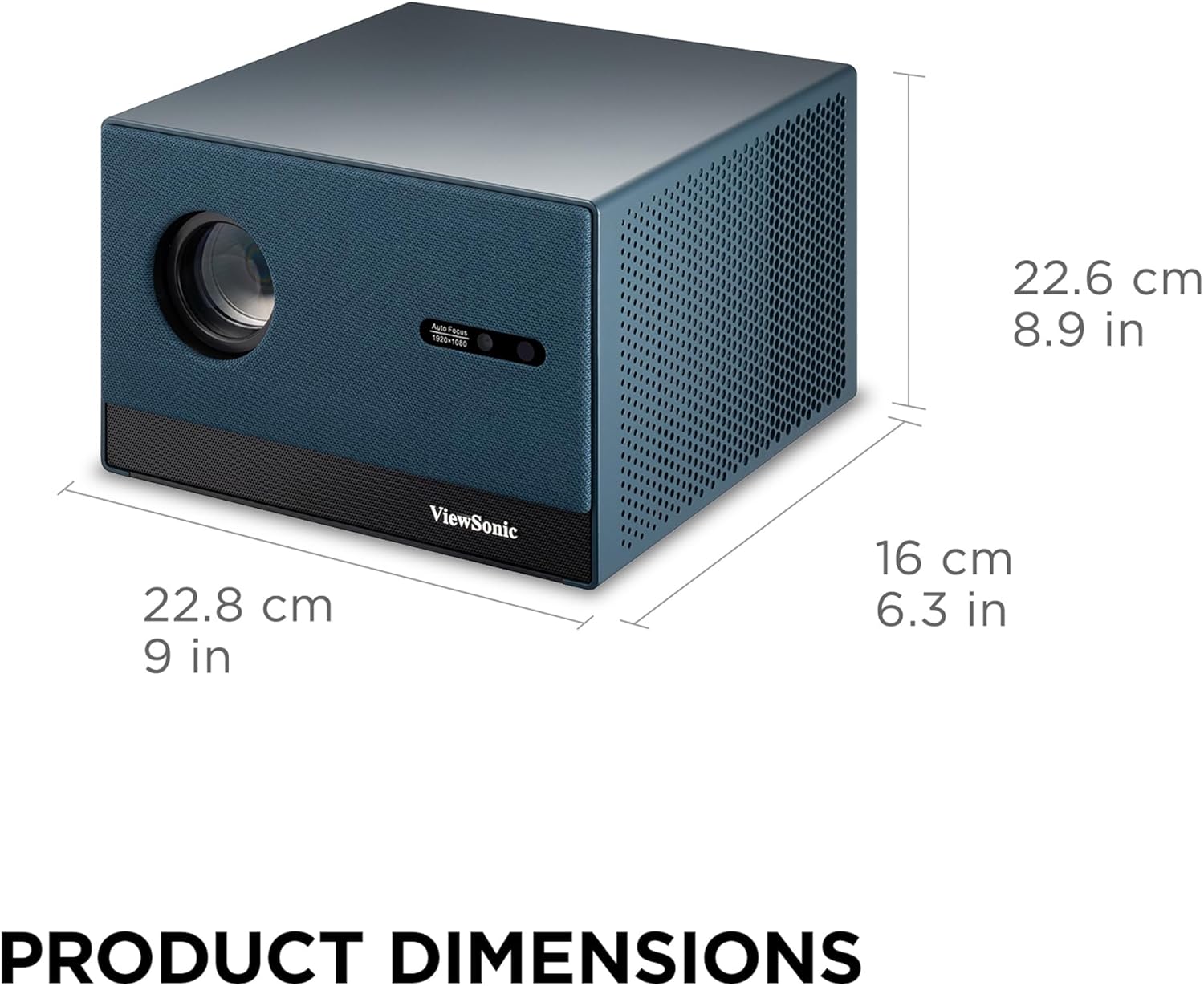
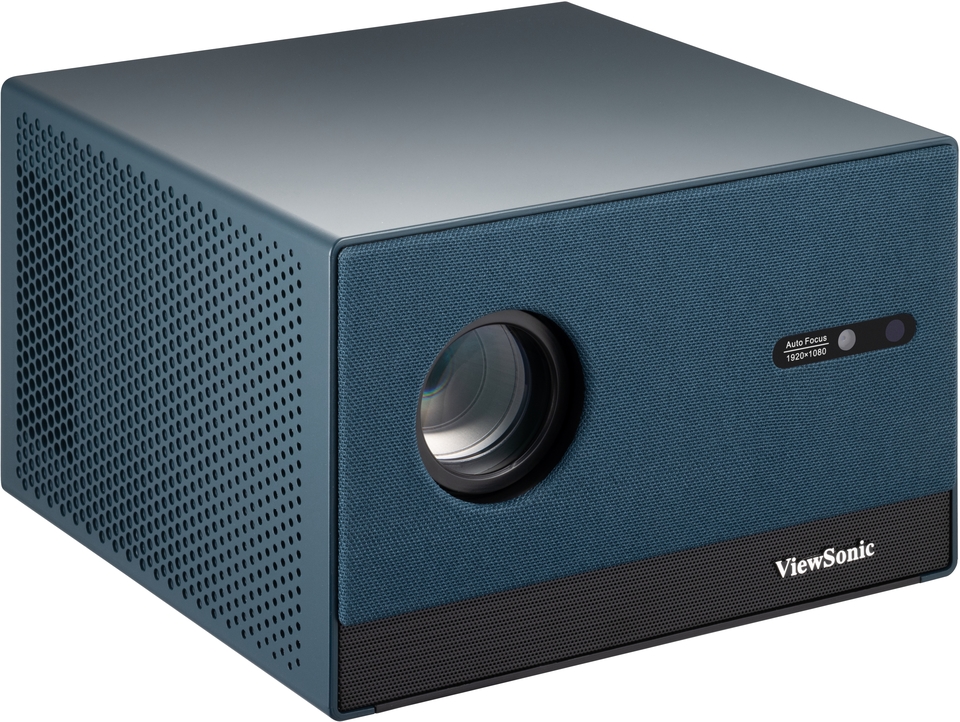
The LX60HD gets the look right. It has that now-familiar lifestyle-projector shape, but it does not come across like a flimsy toy or some anonymous white cube built only to hit a low price. At 9.0 x 8.9 x 6.3 inches and 6.8 pounds, it lands in a useful middle ground. It is compact enough to move around the house without drama, but substantial enough to feel like a real piece of hardware rather than a disposable gadget.
We liked that balance. In daily use, that size makes sense. It is small enough to shift from bedroom to living room or out to a patio setup, yet big enough that it never feels compromised just for the sake of looking “portable” in a marketing photo. Some compact projectors chase portability so hard that everything else suffers. This one feels more grounded.
What we appreciated even more is what ViewSonic did not try to fake. There is no internal battery here, and honestly, we think that is fine. This is portable in the useful sense. You can carry it easily, relocate it quickly, and set it up without much effort. It is not portable in the fantasy sense where you toss it in a bag, head to the middle of nowhere, and watch a full movie with no power source. We would rather have this kind of honesty than a weak battery-driven design with even lower brightness and more compromises.
One genuinely thoughtful touch is the sealed optical engine. That does not sound exciting when you first read it, but it matters more the longer you live with a projector. Portable units get moved around, set down in imperfect places, and used in less controlled environments than dedicated home theater models. Keeping dust out of the optical path is one of those practical quality-of-life choices that makes more difference over time than flashy wording ever will.
There is still room for improvement. The one thing we kept wishing for was a built-in carry handle. This projector invites room-to-room use. A small, well-integrated handle would have made that even more natural. It is not a major flaw, but it is the kind of obvious convenience feature that would have suited the product well.
Setup and first use
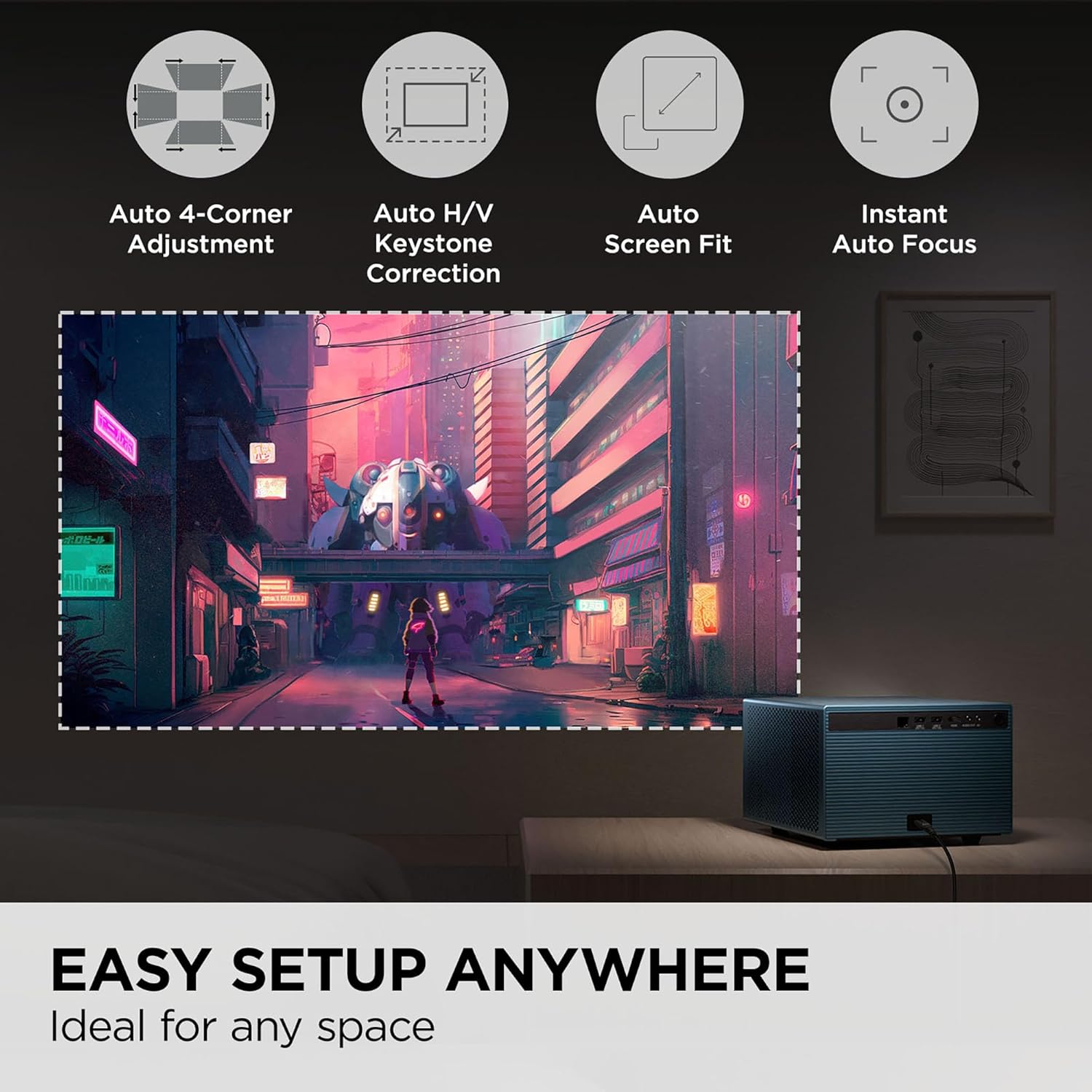
This is one of the areas where the LX60HD earns real goodwill. Out of the box, it feels aimed at people who want the projector experience without turning setup into a hobby. You get auto focus, auto horizontal and vertical keystone, auto screen fit, four-corner adjustment, and obstacle avoidance. On paper, that is a strong package for this price range. In practice, it helps.
What we noticed right away is that the LX60HD generally wants to meet the user halfway. Place it, power it on, give it a moment, and it does a decent job getting the image into shape without demanding much from you. That matters. A projector can have perfectly respectable image quality and still end up annoying if every move turns into a geometry correction ritual. The LX60HD avoids most of that pain.
The remote is straightforward enough, and for basic navigation the whole experience feels approachable. That is an underrated strength. Plenty of affordable projectors bury their value under awkward software and clumsy controls. Here, the convenience-first intent is obvious.
Still, this is not polished in the way truly premium lifestyle projectors are polished. Over time, the rough edges become more noticeable. The menu structure feels more fragmented than it should. Some parts of the interface are not as intuitive as the hardware deserves. And while the auto-correction tools are useful, they do not feel magical. They get you close, often close enough, but not always perfectly there.
That is really the honest way to frame it. The setup system is a real asset. It just is not a miracle worker. Buyers expecting perfect, seamless automation every single time should tone that expectation down a little. Buyers who simply want something easier than a bare-bones cheap projector will probably come away satisfied.
Picture quality and brightness
The most important thing the LX60HD gets right is the image foundation. It is a native 1920 x 1080 projector, and that matters. We are long past pretending that “supported 1080p” marketing language means anything useful on ultra-cheap projectors with soft native resolution. Here, the Full HD sharpness is real, and that immediately gives the LX60HD a more credible starting point than a lot of bargain-bin competitors.
In actual use, that sharpness helps the image feel cleaner and more settled than you might expect at this level. Text, menus, and streaming content all benefit from it. Even before we get into contrast, brightness, or shadow detail, the simple fact that the picture looks properly Full HD gives the projector a stronger first impression.
Brightness is the part that defines the whole experience. The rated output is 630 ANSI lumens, and that is one of those numbers you need to interpret correctly. Within the reality of budget portable projectors, it is respectable. Within the reality of bright living rooms and oversized daytime viewing ambitions, it is not enough. Both things are true.
In a dim room, especially around 80 to 100 inches, the LX60HD can look genuinely enjoyable. That is the use case where it clicks. Streaming shows, casual movies, and even a simple weekend wall projection all feel very reasonable here. There is enough brightness for the image to feel alive instead of sad and washed out.
Once you start pushing beyond that comfort zone, the projector reminds you what it is. Ambient light hurts it. Larger screen sizes make the limitations more obvious. Darker scenes show the strain before brighter scenes do. This is not unusual for the category, but it is central to the buying decision. We would not call it forgiving.
What surprised us a little is that within those limits, the picture is more competent than many cheap projectors manage to be. Blacks are not premium, obviously, but they do not collapse instantly either. Shadow detail is decent enough that darker material remains watchable when the room conditions are right. That is a meaningful compliment at this level, because low-end projectors often fail exactly there.
We also think the LCD imaging approach helps. One of the quieter strengths of the LX60HD is that it avoids the DLP rainbow effect that can bother some viewers. If you are sensitive to rainbow artifacts, that is not a side issue. It can make the difference between a projector you tolerate and a projector you genuinely enjoy. For those buyers, the LX60HD may feel more comfortable than certain DLP alternatives even if they look more exciting on paper.
The real conclusion is simple. The LX60HD can produce a satisfying picture, but it needs the right environment. Respect the limits, and it works. Ignore them, and it stops being impressive very quickly.
Streaming and smart features
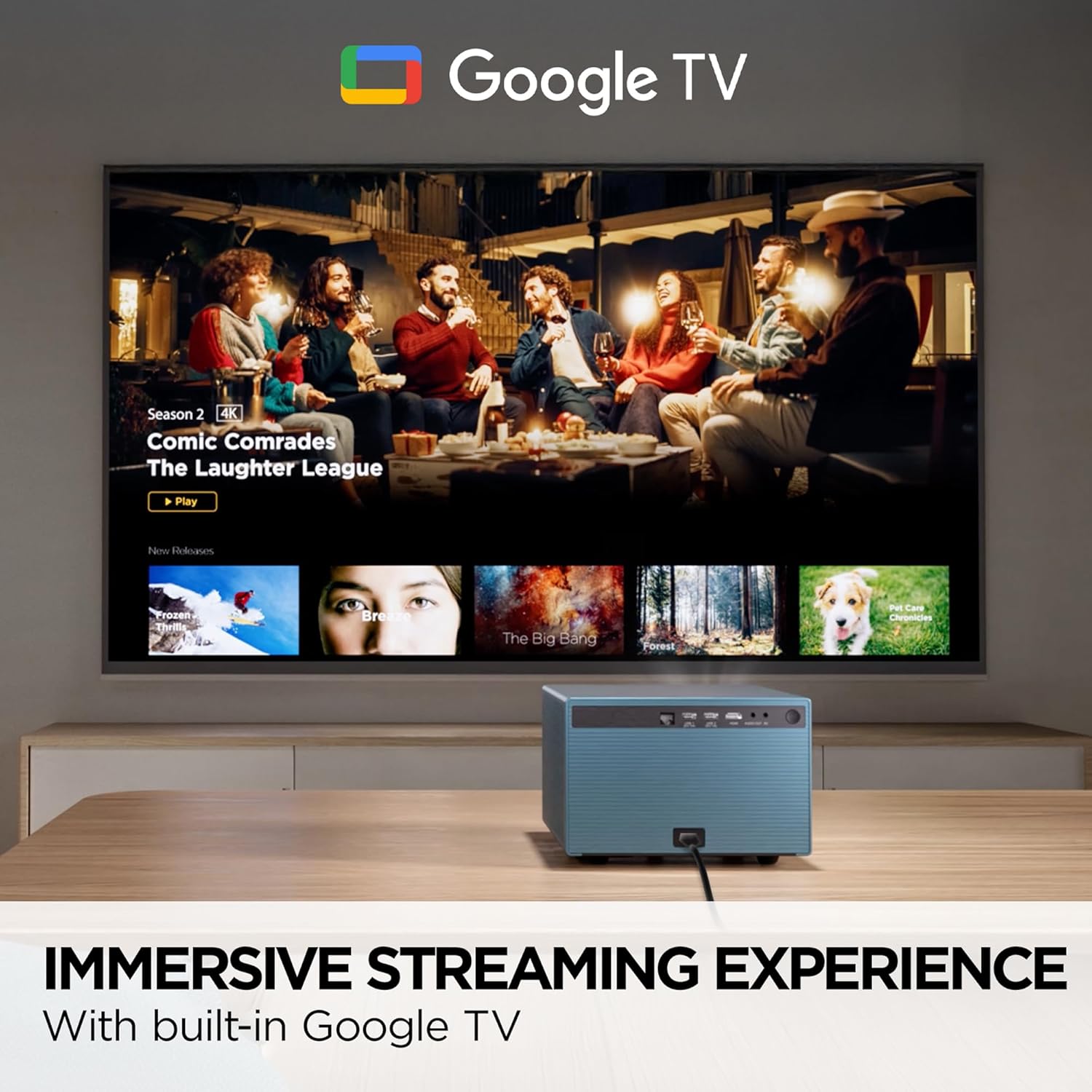
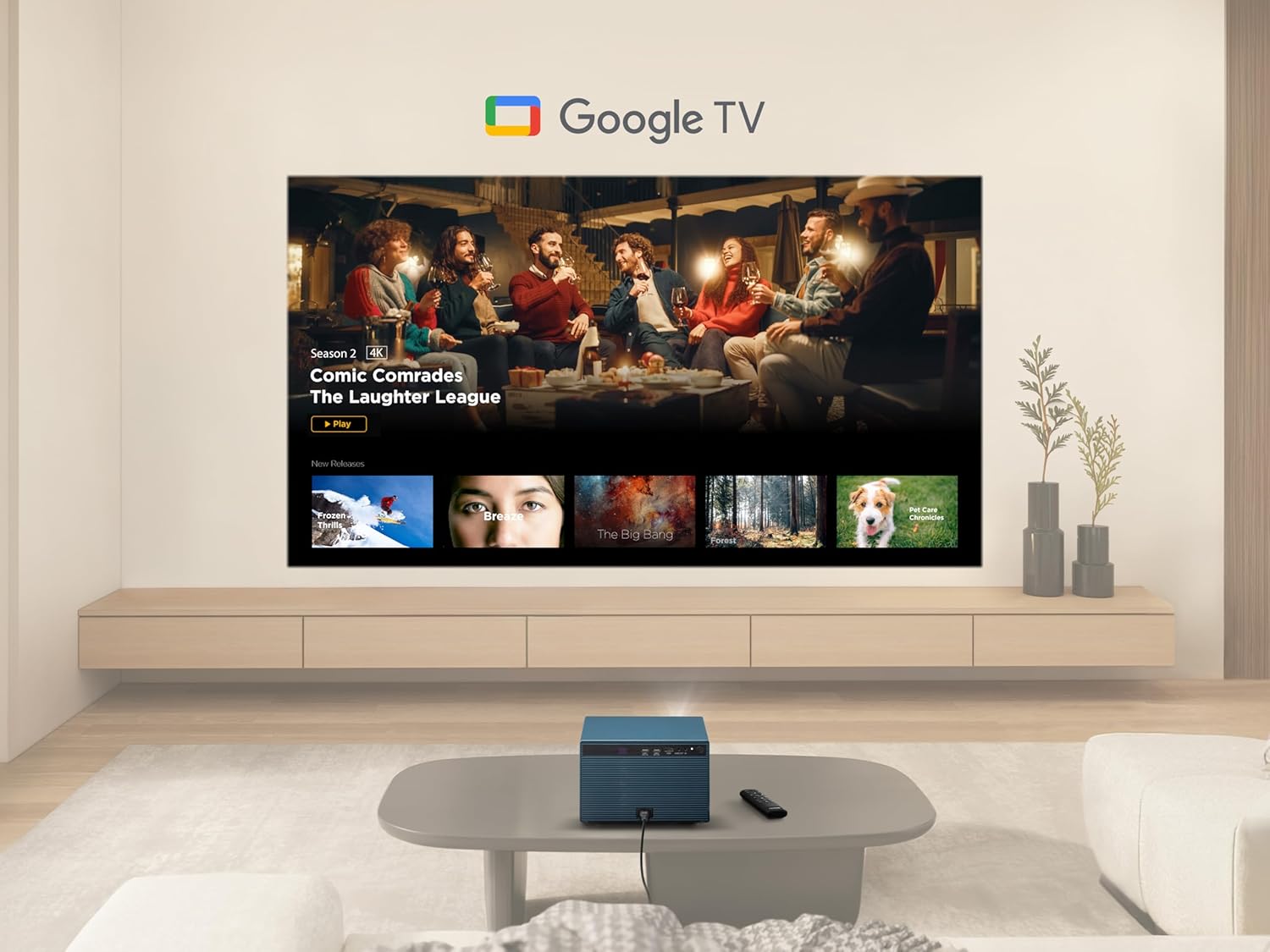
This is probably the projector’s biggest day-to-day strength. Having Google TV built in, along with native Netflix, makes the LX60HD much easier to live with than a projector that sends you straight into dongles, workarounds, and side-loaded app nonsense. That convenience matters more than enthusiasts sometimes admit. Normal buyers do not want a project. They want to watch something.
The part we appreciated most here is how complete the projector feels because of that built-in platform. Once connected, it behaves like a real entertainment device rather than a projector that still needs extra hardware before it becomes useful. That is a major quality-of-life win, especially for bedrooms, apartments, or shared spaces where simplicity matters.
In practice, though, this is more “convenient” than “fast.” The smart experience is usable, but not especially slick. Startup can feel a bit slower than ideal. Navigation is fine, though not premium-smooth. Some parts of the interface have that slightly choppy, low-cost feel that reminds you where the price savings came from.
We could live with that because the core convenience is still there. The friction level stays low enough that the projector actually invites casual use. And that is important. A smart projector that looks good on paper but feels irritating to interact with quickly becomes something you use less often. The LX60HD does enough right to avoid that trap.
Audio
The built-in audio is exactly what we expected from a projector like this: serviceable, occasionally useful, never the reason to buy it. You get two 5W speakers, and they are good enough to get a movie or episode going without forcing an immediate speaker upgrade.
Speech comes through clearly enough, and for small to medium spaces there is enough volume to make the projector feel self-contained. For a casual bedroom setup or spontaneous backyard viewing, that counts for something. We do not like dismissing onboard speakers too quickly when they are clearly meant to make a product easier to use.
That said, the limits are obvious. There is not much richness, not much stereo presence, and not much reason to pretend this is a special audio system. It works. It does not elevate the experience. When the content matters, external audio still makes a big difference.
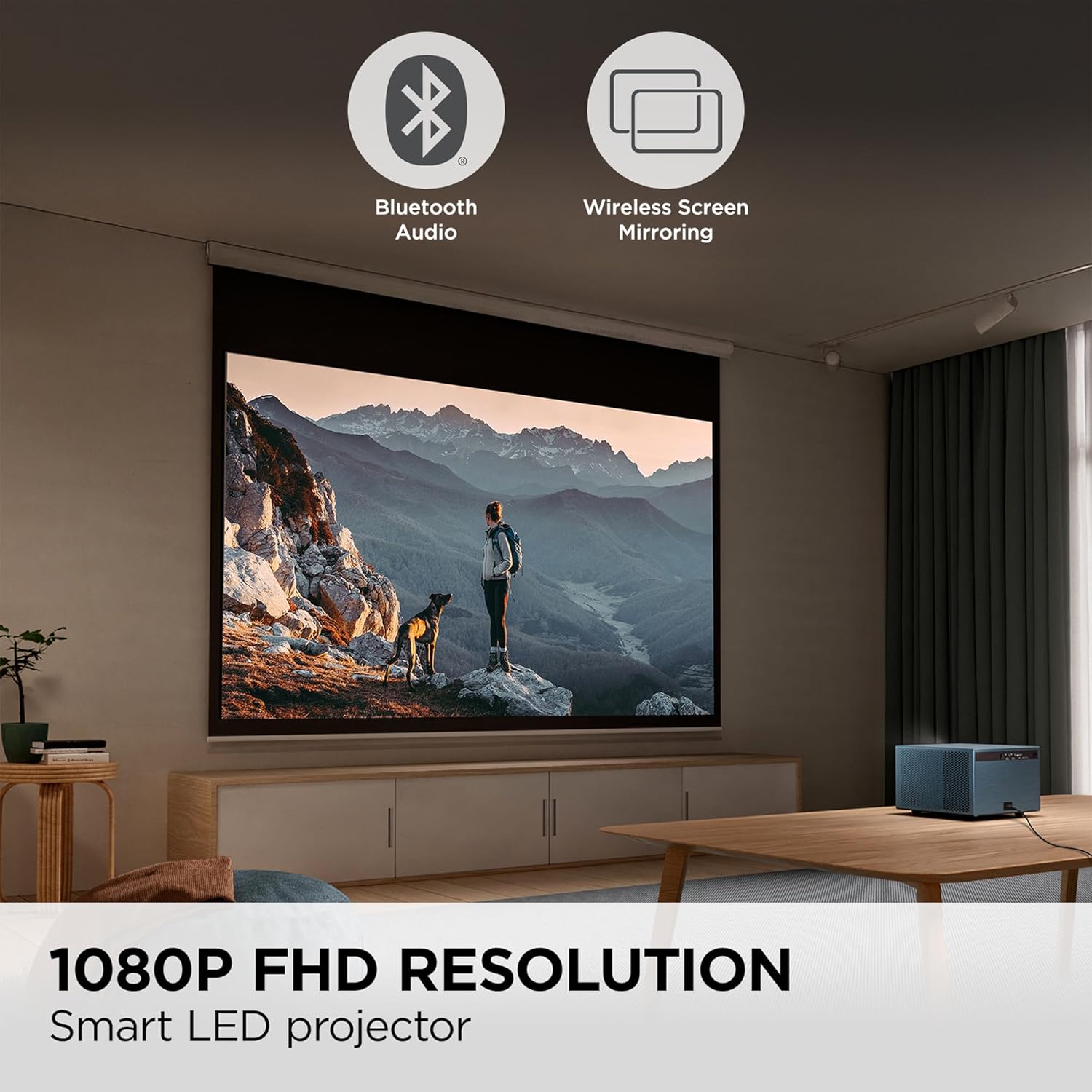
The good news is that the LX60HD makes that easy. With Bluetooth 5.0 audio support and a 3.5mm output, connecting a better speaker is not a hassle. That is how we would approach it. Use the built-in sound when convenience matters most. Use external audio when you want the experience to feel complete.
Gaming and connectivity
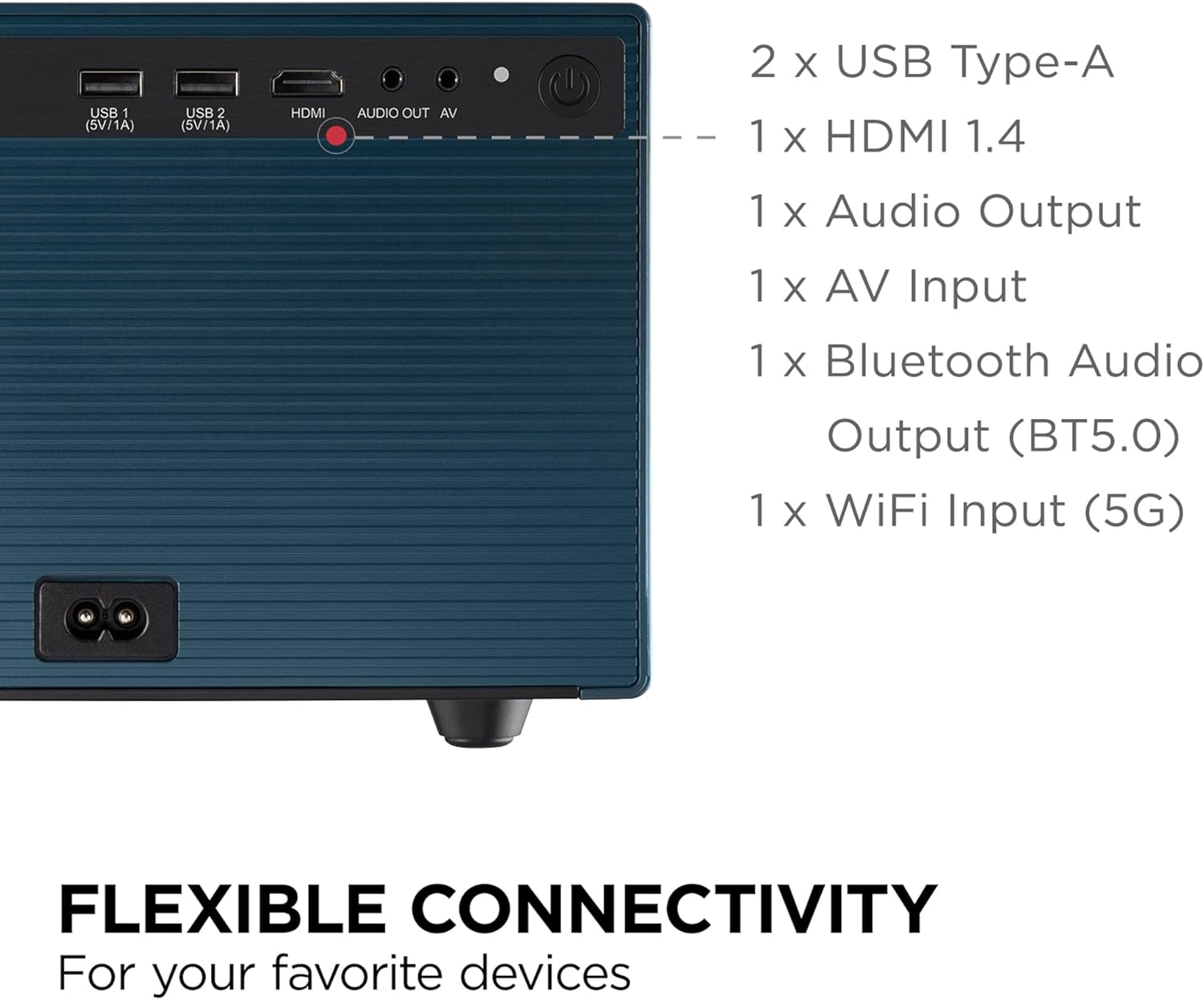
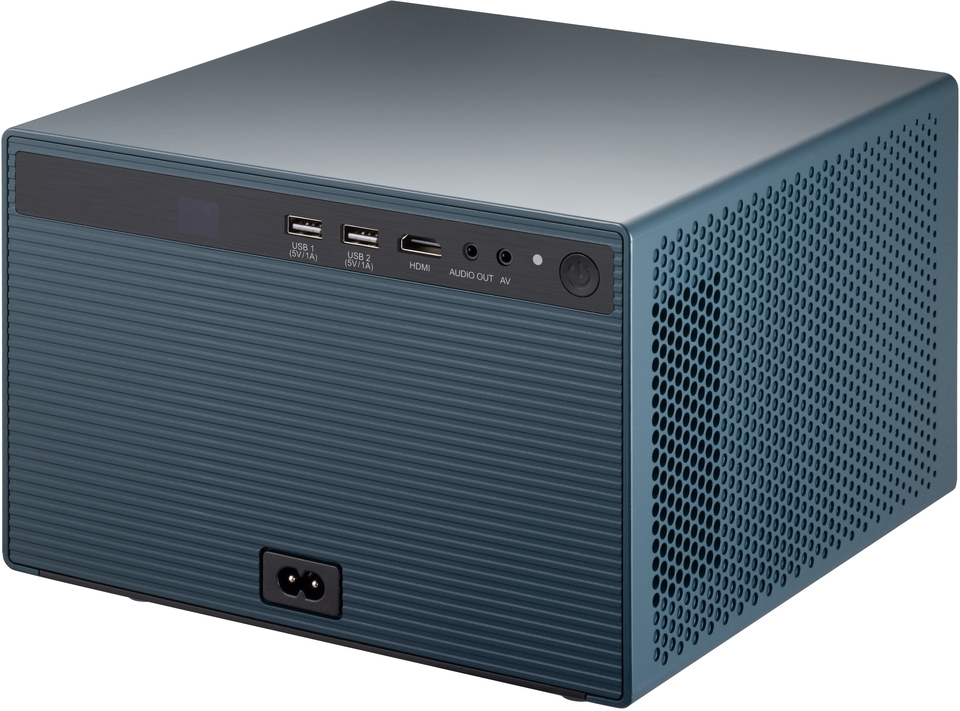
The connectivity is sensible. You get one HDMI 1.4 port, two USB-A ports, AV input, a 3.5mm audio out, plus Wi-Fi and Bluetooth 5.0. For the likely buyer, that covers the basics without drama. Streaming device, laptop, console, USB media, external audio — all fine.
Gaming, however, is where we would draw a very clear line. The listed 163ms input lag tells the story immediately. That is not a number you work around if gaming is important to you. It is simply too slow for anything responsive or competitive. Casual, laid-back play is one thing. Anything that depends on timing or reaction is another.
This matters because projector marketing often encourages people to imagine one giant-screen device that does everything. The LX60HD is not that device. It is far more convincing as a streaming and movie projector than as a gaming screen. If gaming sits high on your priority list, this is the wrong type of projector.
Real-world portability and daily use
The more we thought about it, the more the LX60HD felt designed for a very specific kind of home use: not permanent, not ultra-travel, just flexible. Bedroom tonight, spare room tomorrow, patio on the weekend, maybe a friend’s place once in a while. That is the sweet spot. The size, weight, built-in streaming, and setup assistance all support that style of ownership.
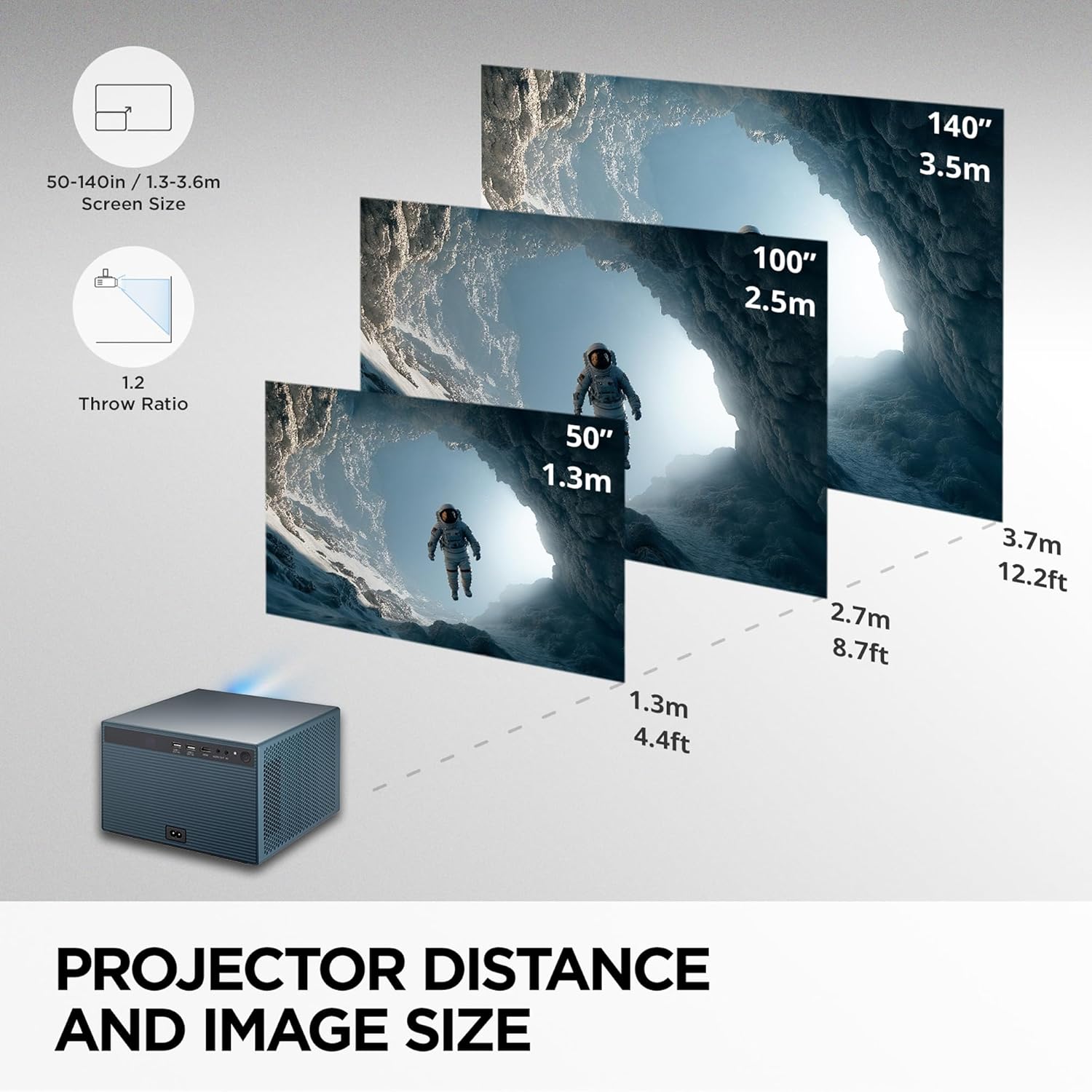
The throw specs help too. The projector can produce a 100-inch image from 2.28 meters / 8.7 feet, with an overall image range of 50 to 140 inches and a throw distance of 1.42 to 3.8 meters. Those are practical numbers. You do not need an enormous room to get something satisfying out of it, and that makes the projector easier to picture in real homes.
Where daily use becomes less elegant is noise. This is not a quiet projector. The fan is there, and once you notice it, you do not really stop noticing it. With content playing at a healthy volume, it fades into the background well enough. In quieter scenes or late-night viewing, it becomes more obvious.
That is one of the tradeoffs you feel over time. Not devastating, but real. The LX60HD asks you for a little tolerance in exchange for its price and feature set.
Flaws and frustrations
The main flaw is the same one that shapes almost everything else: brightness. At 630 ANSI lumens, this is a dim-room projector. If your plan is to battle sunlight or even moderate daytime ambient light on a large image, you are buying the wrong product. That is not hidden. It is built into the nature of the device.
The second issue is refinement. The LX60HD is convenient, but it is not elegant. The interface never feels especially premium. The menu design could be cleaner. The smart experience can feel a bit sluggish. And the automatic setup tools, while genuinely helpful, do not always deliver a perfect one-touch result.
The third frustration is noise. A projector with 40dB listed in normal mode is never going to disappear completely, and this one does not. If you are picky about acoustics, you will care. If you are more relaxed and usually listen at normal volume, you may not care much at all.
None of these are fatal on their own. Together, they explain why the LX60HD comes across as a good budget projector rather than a secretly premium one.
Value for money
This is where the LX60HD makes its strongest case. When it is priced aggressively, the value is easy to see. You are getting a real 1080p image, proper built-in streaming, useful setup assistance, practical portability, a sealed optical engine, and a feature mix that feels modern enough to matter.
At the right price, that is a very appealing package. It feels far more credible than the flood of generic cheap projectors that promise absurd brightness, shaky software, and very little long-term confidence. Here, the value comes from balance. Nothing is wildly overachieving, but enough is done well enough that the overall package makes sense.
Where we felt less convinced is when the price creeps too high. The charm of the LX60HD depends heavily on being an honest, convenient budget option. The closer it gets to more refined competition, the more the rougher edges matter. At that point, buyers are justified in expecting quieter operation, stronger brightness, or a smoother overall interface.
So yes, the value is real. But it is tied directly to price discipline, just like the rest of the experience is tied directly to expectation discipline.
Who should buy it
Buy the ViewSonic LX60HD if you want a projector that makes casual big-screen entertainment easy. It is a good fit for bedrooms, dorm rooms, first apartments, small shared spaces, and occasional outdoor movie nights where power is available and darkness is on your side.
It is also a smart choice for buyers who hate unnecessary workaround culture. The built-in smart platform matters here. There is real value in a projector that does not immediately ask you to solve Netflix, fix the software, or bolt extra gear onto it just to feel complete.
Most of all, this is a projector for people with realistic expectations. If that sounds obvious, good. That is exactly the point.
Who should skip it
Skip it if you want a daytime TV replacement. Skip it if gaming matters more than movies and streaming. Skip it if fan noise tends to bother you. Skip it if interface smoothness and polish are high on your list. And skip it if you specifically want a battery-powered projector for true travel use.
We would also steer clear if your goal is maximum wow factor in every environment. The LX60HD is good within its lane. It is not built to dominate outside it.
Final verdict
The ViewSonic LX60HD succeeds because it understands the budget-projector assignment better than many rivals do. It gives you the things that shape daily satisfaction: real 1080p sharpness, built-in streaming that feels immediately useful, a practical throw ratio, enough brightness for enjoyable dim-room viewing, helpful setup tools, and a body that is easy to move around the house.
Its weaknesses are not subtle, but they are also not dealbreakers if you buy it for the right reason. It is not bright enough to overpower daylight. It is not fast enough for gaming. It is not quiet enough to disappear. And it is not polished enough to fool anyone into thinking it is premium. But that is not really what it is trying to do.
What it offers instead is something more useful: a credible, convenient, no-nonsense budget projector that gets the big stuff right often enough to be worth taking seriously. For buyers who mainly want movies and streaming in a dim room, and who value built-in simplicity over spec-sheet fantasy, the LX60HD is easy to like.
Our final verdict is simple: if the price is right and your use case is grounded in reality, the ViewSonic LX60HD is a smart buy.
FAQ
Is the ViewSonic LX60HD a true 1080p projector?
Yes. It has a native resolution of 1920 x 1080, and that is one of the biggest reasons it feels more legitimate than many ultra-cheap alternatives.
How bright is the ViewSonic LX60HD in real use?
It is rated at 630 ANSI lumens, which makes it best suited to dim or dark spaces. At sensible sizes, especially around 80 to 100 inches, it can look very enjoyable. In brighter conditions, its limits become obvious.
Does the ViewSonic LX60HD have Netflix built in?
Yes. It includes Google TV with native Netflix, which makes it much more convenient than projectors that rely on extra streaming hardware.
Is the ViewSonic LX60HD good for gaming?
Not really. With 163ms input lag, it is far better suited to movies and streaming than responsive gaming.
Does the ViewSonic LX60HD have a battery?
No internal battery is listed. It is portable in the carry-it-between-rooms sense, but it still needs power.
How big of a screen can the ViewSonic LX60HD make?
It supports an image size range of 50 to 140 inches, and it can produce a 100-inch image from 2.28 meters / 8.7 feet. Bigger is possible, but room darkness matters more as you scale up.
Is the ViewSonic LX60HD good for outdoor movie nights?
Yes, as long as you treat it like an evening projector, not a daylight one. With power nearby and the sun gone, it makes sense for casual outdoor use.
Are the built-in speakers good enough?
They are good enough for casual viewing, but they are not a standout feature. For better sound, external audio over Bluetooth or the 3.5mm output is the better move.
Explore the ViewSonic LX60HD Gallery
Every image from this article, gathered in one clean place. Tap any photo to open it larger.