
Hexcal Elevate Standing Desk
Pros
- Premium spec sheet with LINAK dual motors, three-stage legs, and a 350-pound capacity
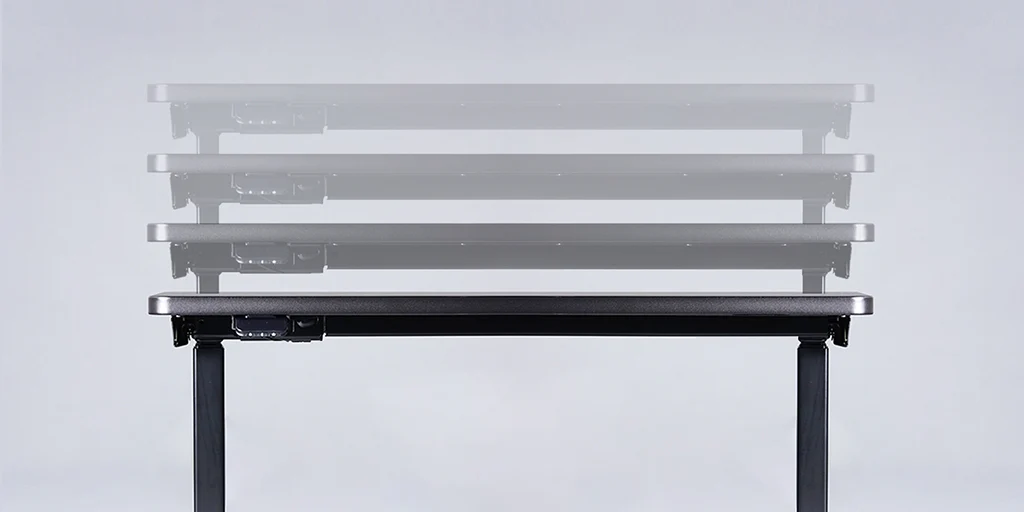
- Wide height range of 24.4 to 50 inches works well for both seated and standing ergonomics
- Clean, minimalist design that looks more refined than most commodity standing desks
- Four memory presets, LED display, interval reminders, and Bluetooth app support
- Quiet operation claim under 40 dB makes it feel suited to everyday use
- 10-year limited warranty is appropriate for a premium desk
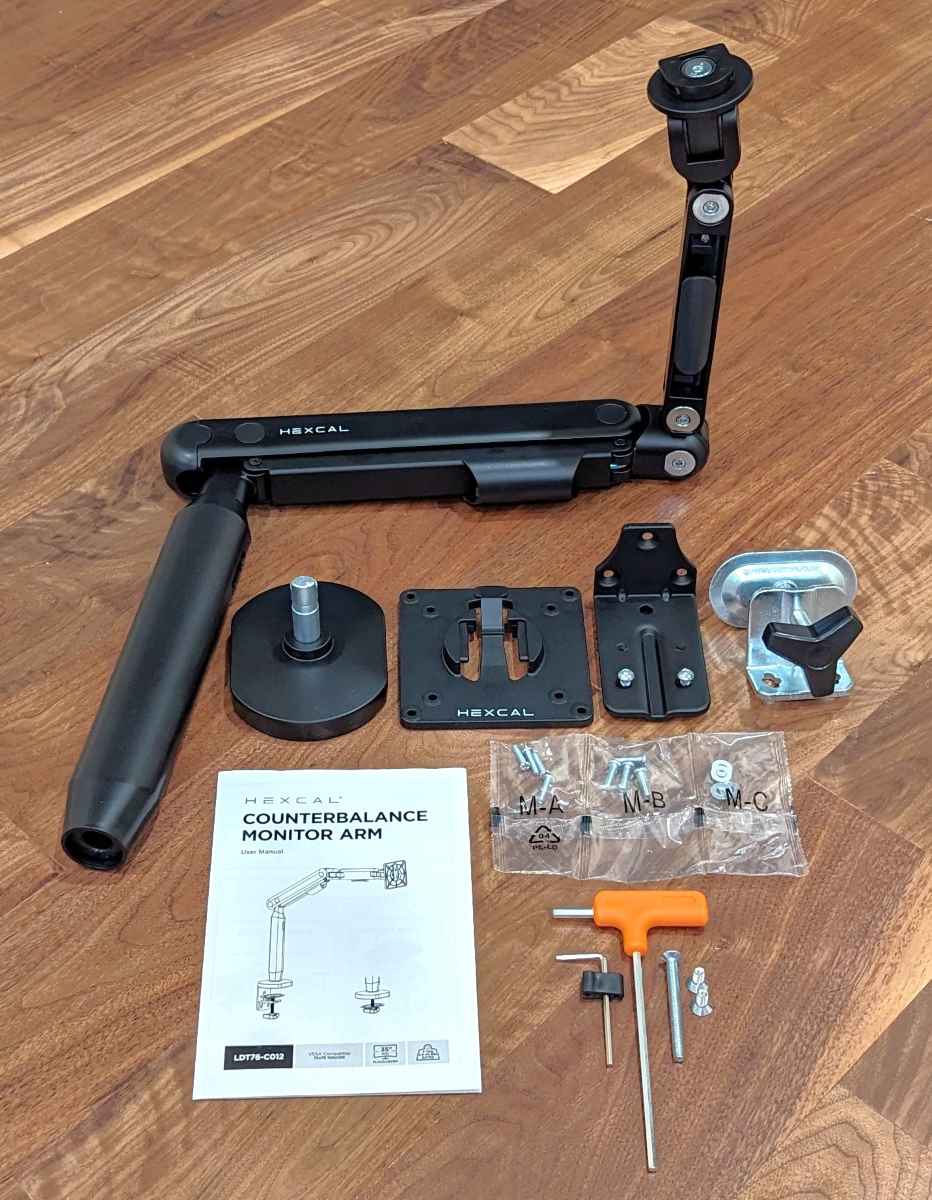
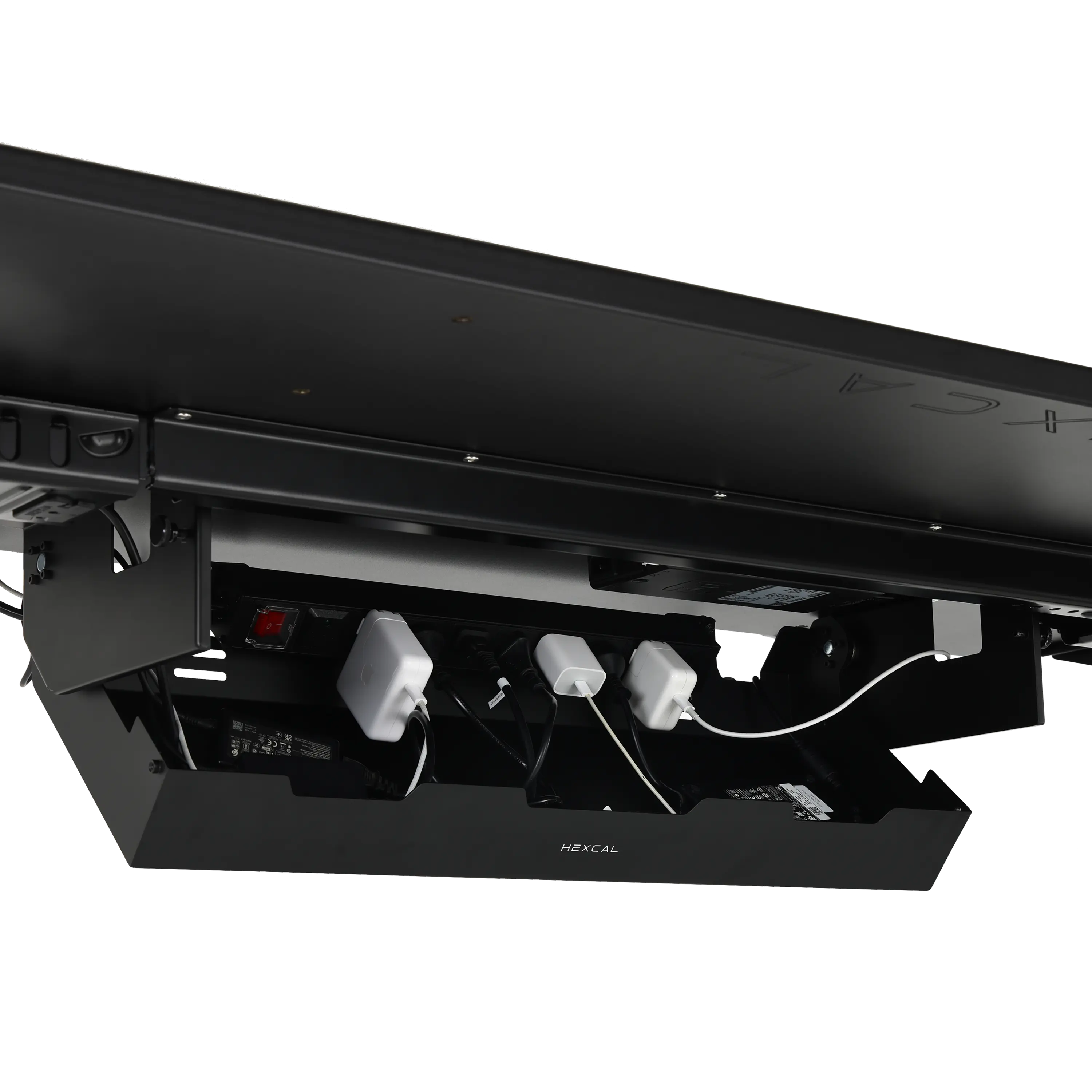
- Designed to work well with accessories, monitor arms, and clean cable-managed setups
- Casters included in the box is a genuinely useful extra
Cons
- Expensive, especially once you move into larger full-desk configurations
- The return process looks more cumbersome than the simple 30-day headline suggests
- Limited availability, currently focused on the U.S. and UAE
- The smallest desktop size may feel tight for bigger creator or multi-monitor setups
- The broader Hexcal ecosystem is appealing, but it can make the total spend climb fast
Strong core hardware , wide height range , quiet operation , clean minimalist design , smart controls , good load capacity , and a 10-year warranty that fits the premium positioning.
The price climbs quickly, the return process looks more annoying than the headline suggests, regional availability is limited, and the smallest desktop size may feel a bit tight for bigger creator-style setups.
The Hexcal Elevate Standing Desk makes its case in the first few minutes. It does not try to compete with bargain sit-stand desks, and it does not pretend to be a simple value play. This is a design-led, premium standing desk built for people who care about how their workspace looks, how it feels to use every day, and whether the whole setup comes together cleanly instead of feeling pieced together. After spending real time with it, that positioning makes sense. The Elevate gets a lot of the fundamentals right, and more importantly, it feels like a desk that was thought through as a complete workspace product rather than just a frame with a motor attached.
What stood out to us most was the balance. The desk looks refined, but it is not fragile-looking. It feels premium, but not in a flashy or overstyled way. And underneath the clean finish, the core specs are serious enough to justify taking it seriously: LINAK dual motors, a three-stage frame, a 24.4 to 50 inch height range, a 350-pound weight capacity, four memory presets, Bluetooth app support, and a 10-year limited warranty. Those are not decorative features. They are the kind of things that matter once a desk becomes the center of your workday.
That said, the Elevate is still a premium product with premium pricing, and that changes the standard. At $699 for the frame only and roughly $989 to $1,299 for full desk configurations, it is not something we would recommend to everyone. If all you want is a functional standing desk for the lowest possible price, there are easier choices. But if you want a standing desk that feels clean, stable, modern, and genuinely pleasant to build a room around, the Hexcal Elevate makes a much stronger argument.
What we tested
We focused on the parts of the experience that actually matter with a premium standing desk:
- overall build quality and fit-and-finish
- how polished the desk feels in a real workspace
- setup experience and assembly friendliness
- height adjustment behavior and day-to-day usability
- controller quality, presets, and app-connected convenience
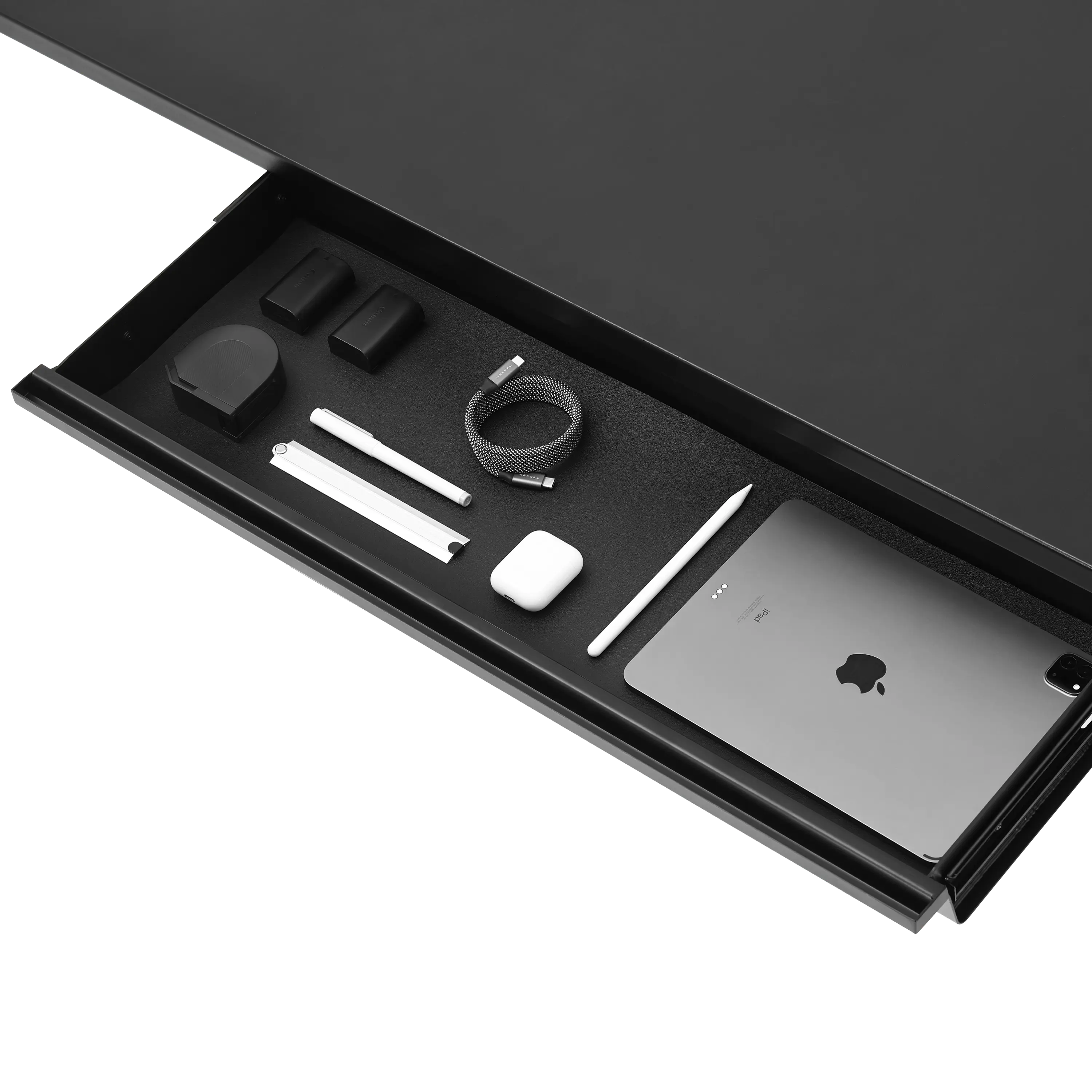
- practical compatibility with multi-monitor and accessory-heavy setups
- whether the premium price feels earned in actual use
How we tested it
We approached the Elevate the way we would any premium desk: not as a spec sheet, but as a product you live with. We paid close attention to the details that become obvious once a desk is part of the room: whether the finish feels premium up close, whether the controls feel smooth or cheap, whether the desk looks stable and capable at both seated and standing heights, and whether the whole experience feels thoughtful enough to justify the asking price.
That is where a lot of standing desks separate themselves. Plenty of them look good in product photos. Far fewer still feel coherent once they are assembled, loaded up with gear, and used as the foundation of a real work setup.
Design and build quality
This is the strongest part of the Hexcal Elevate.
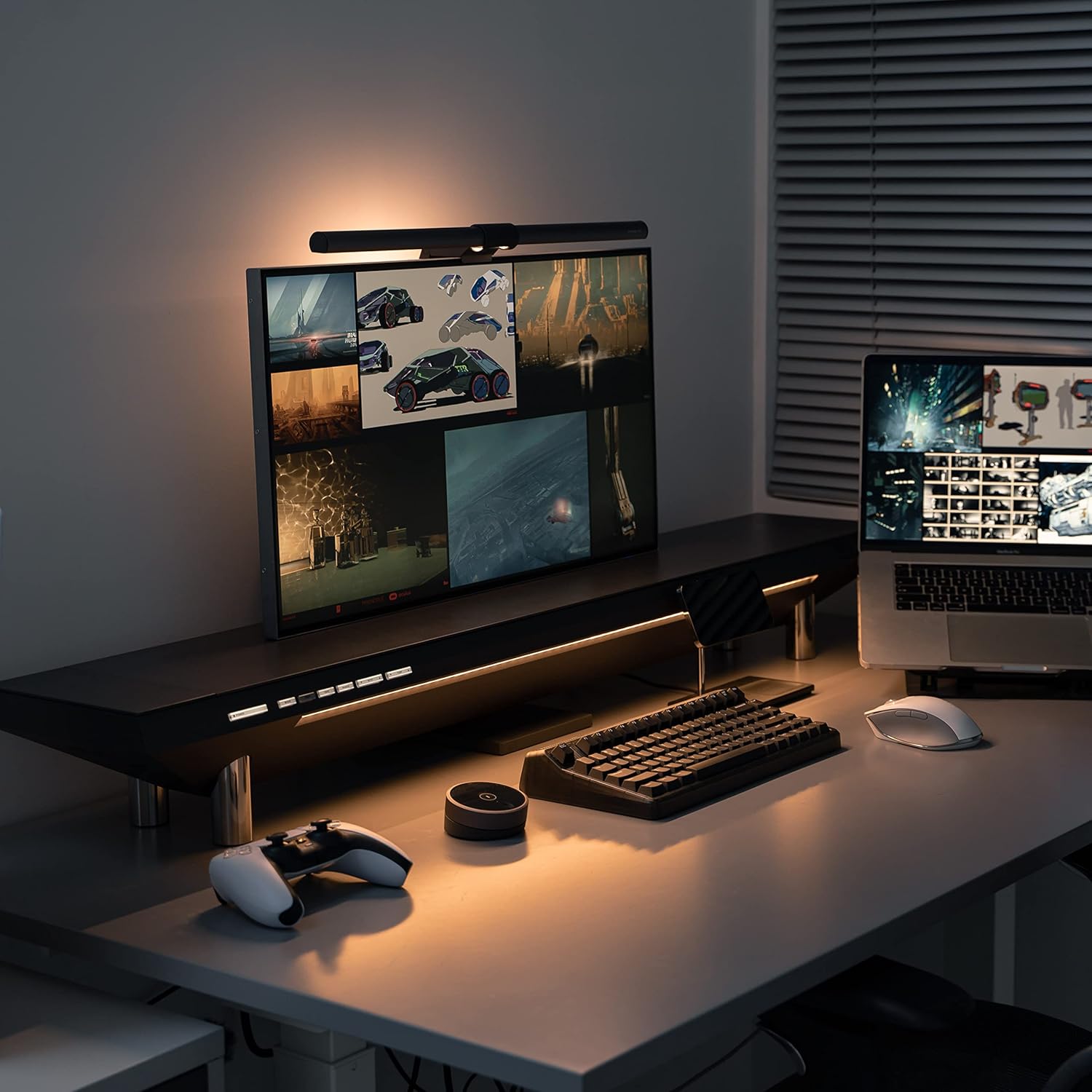
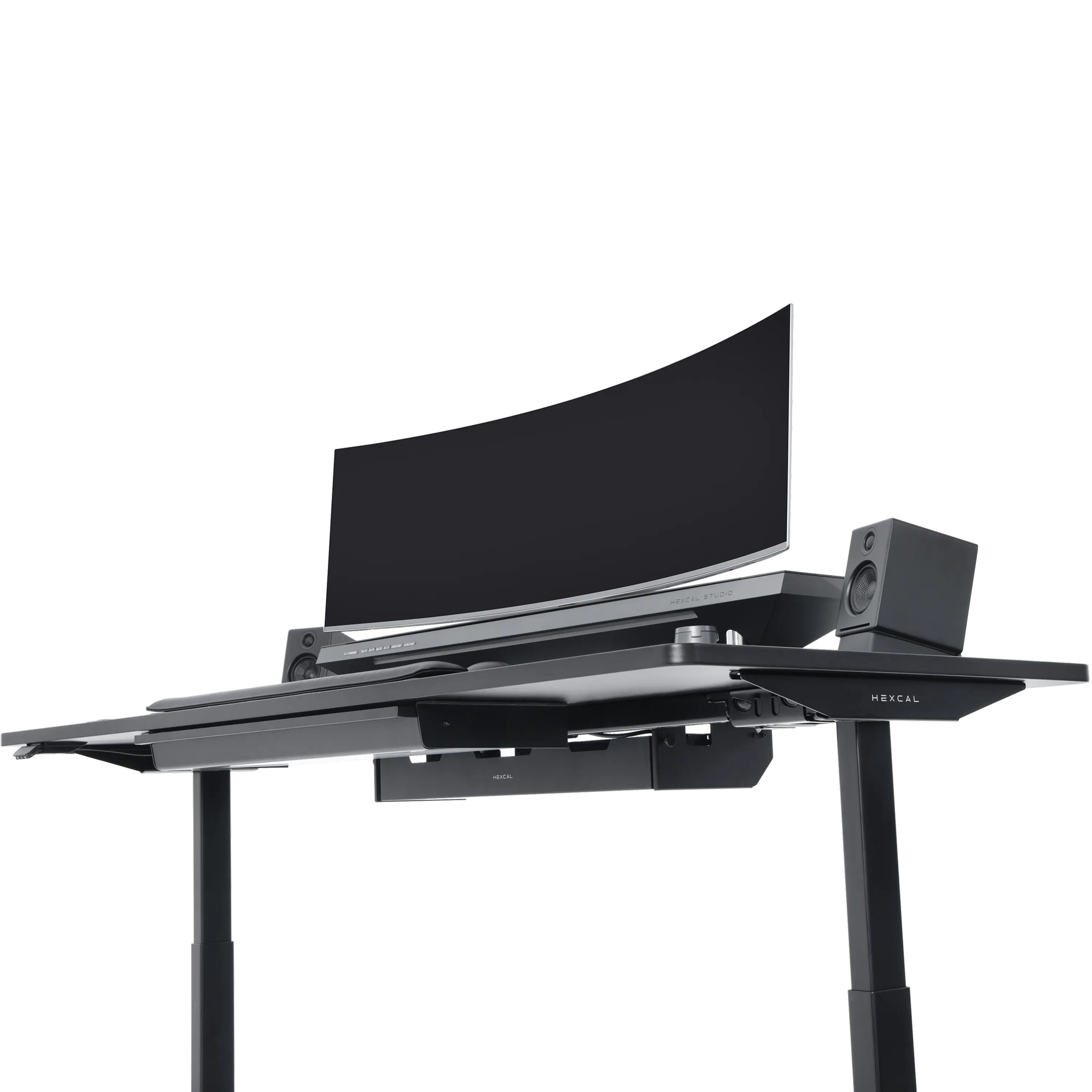
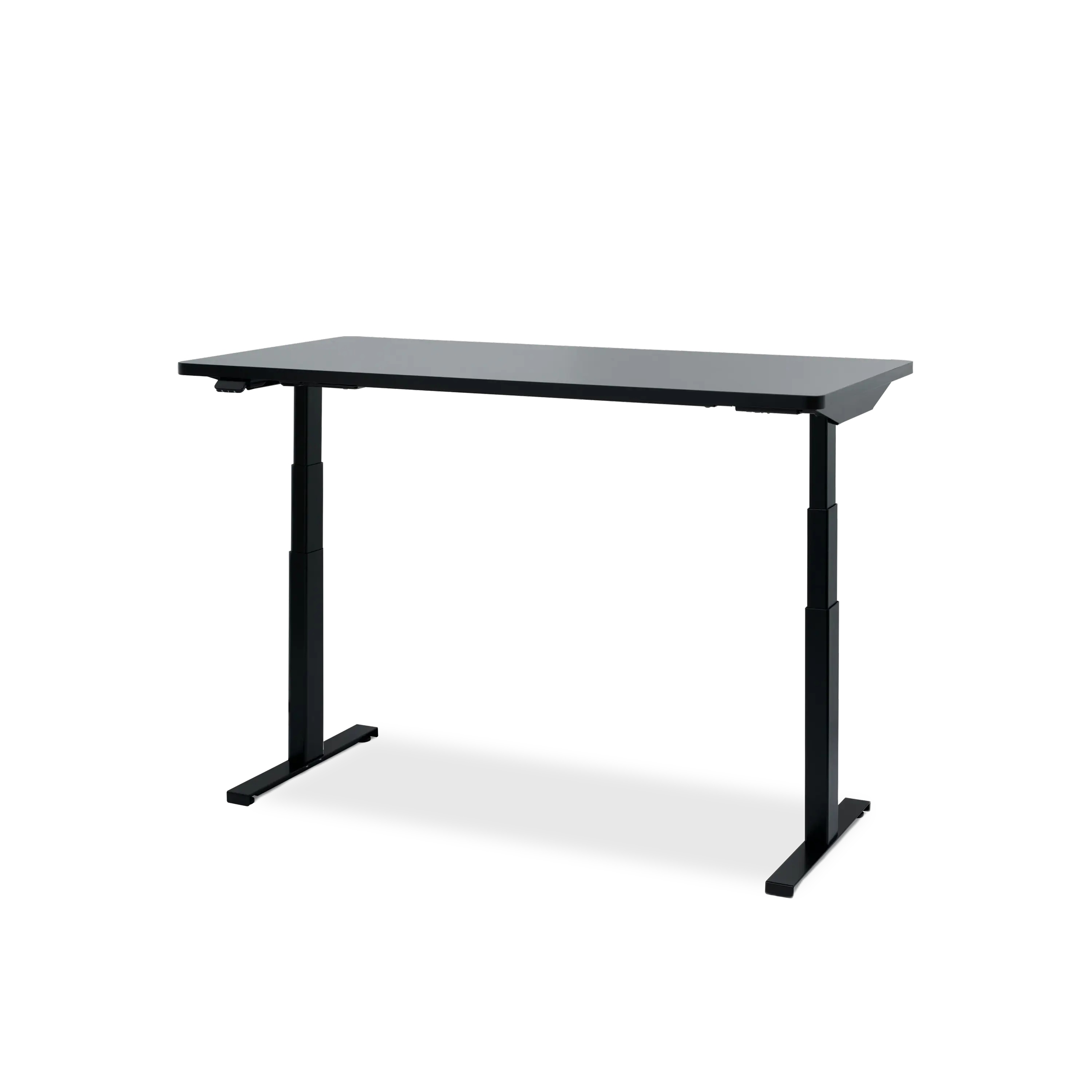
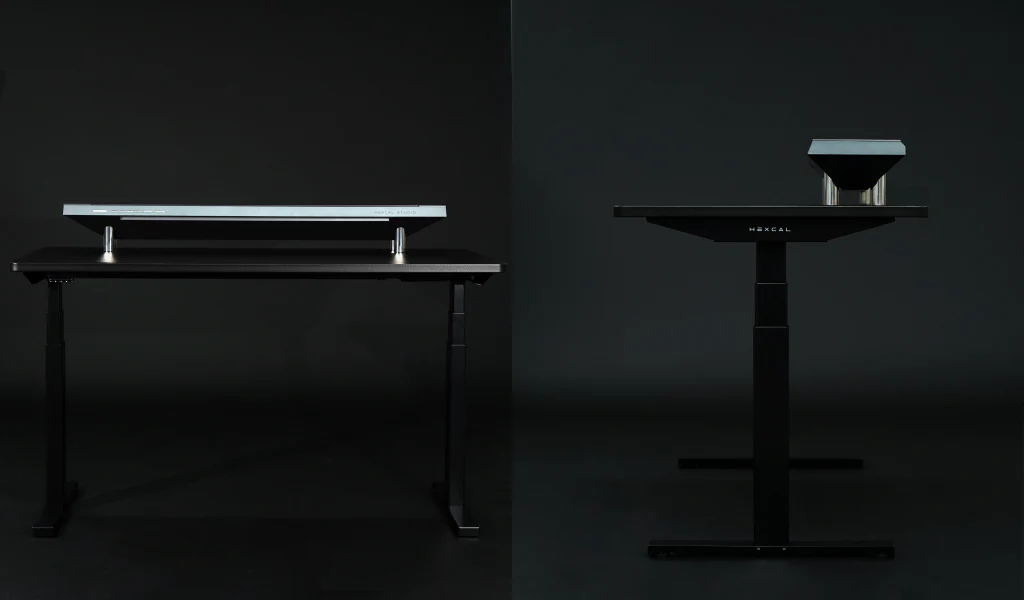
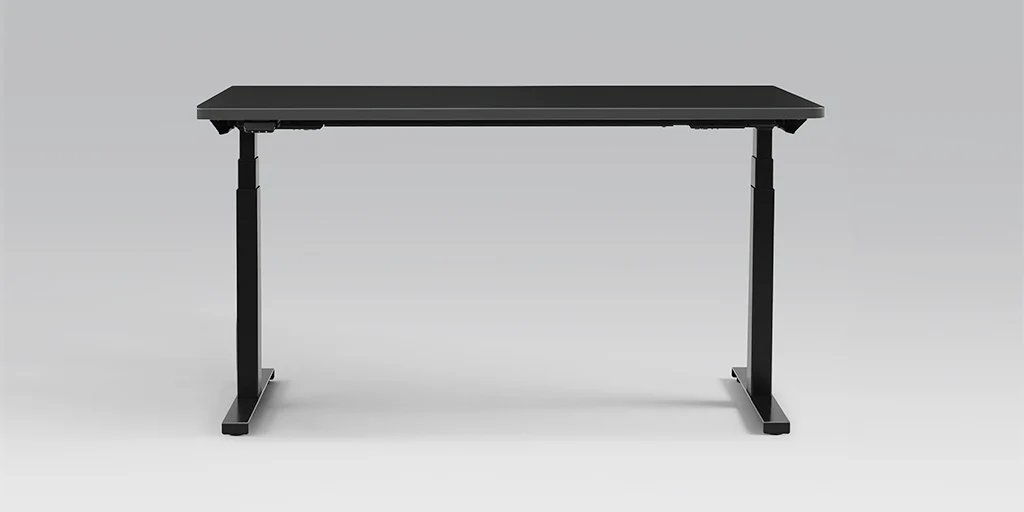
A lot of standing desks still look like office equipment first and furniture second. The Elevate flips that. Its design is restrained, minimal, and tidy in a way that immediately makes more sense in a modern home office than the usual industrial-looking alternatives. There is no loud styling here. No awkward gamer energy. No attempt to make the desk look futuristic for the sake of it. It just looks clean.
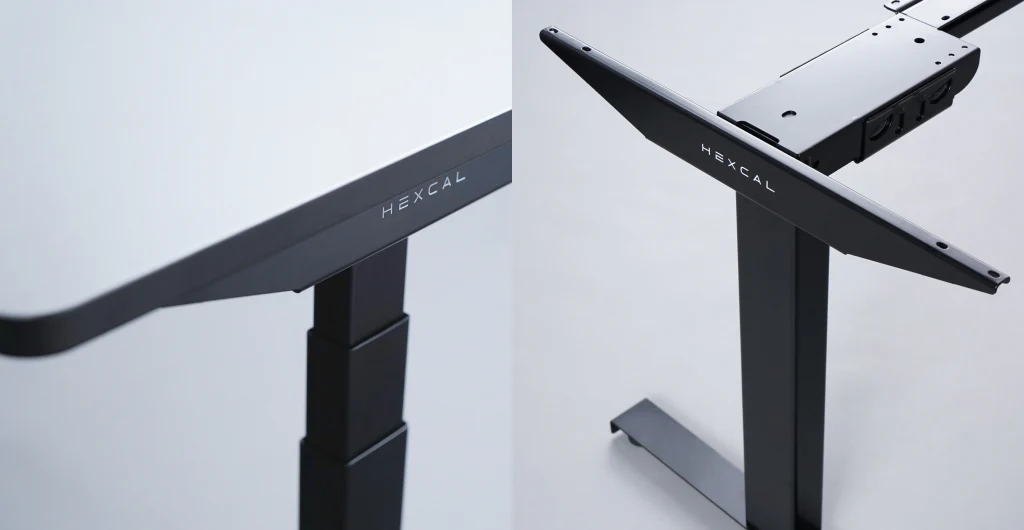
We appreciated that right away. In a premium workspace, the desk is not background furniture. It is the platform everything else sits on. If it looks clumsy, the whole setup looks clumsy. The Elevate avoids that problem well. The top is meant to feel seamless, the overall silhouette is neat, and the lines are simple without being bland.
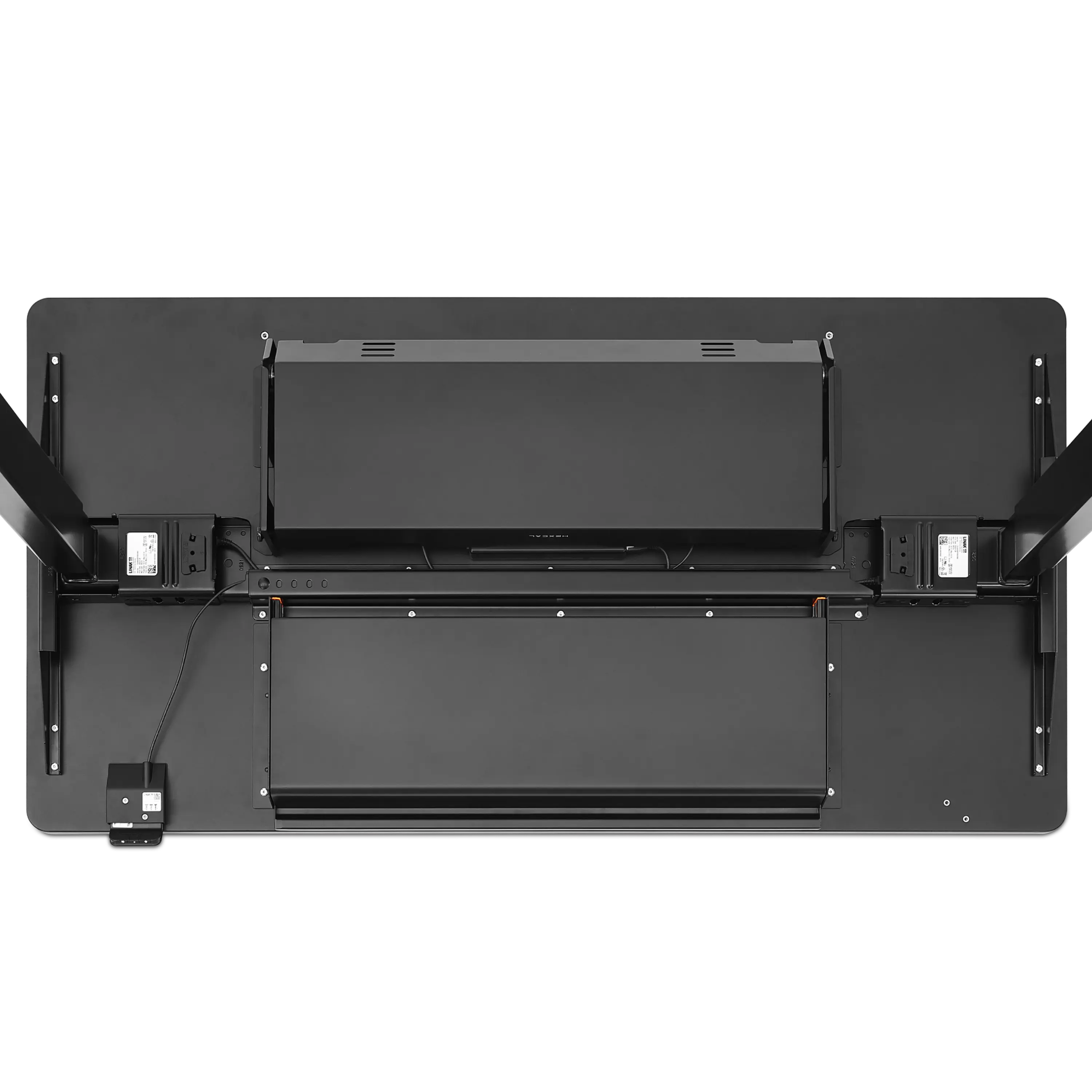
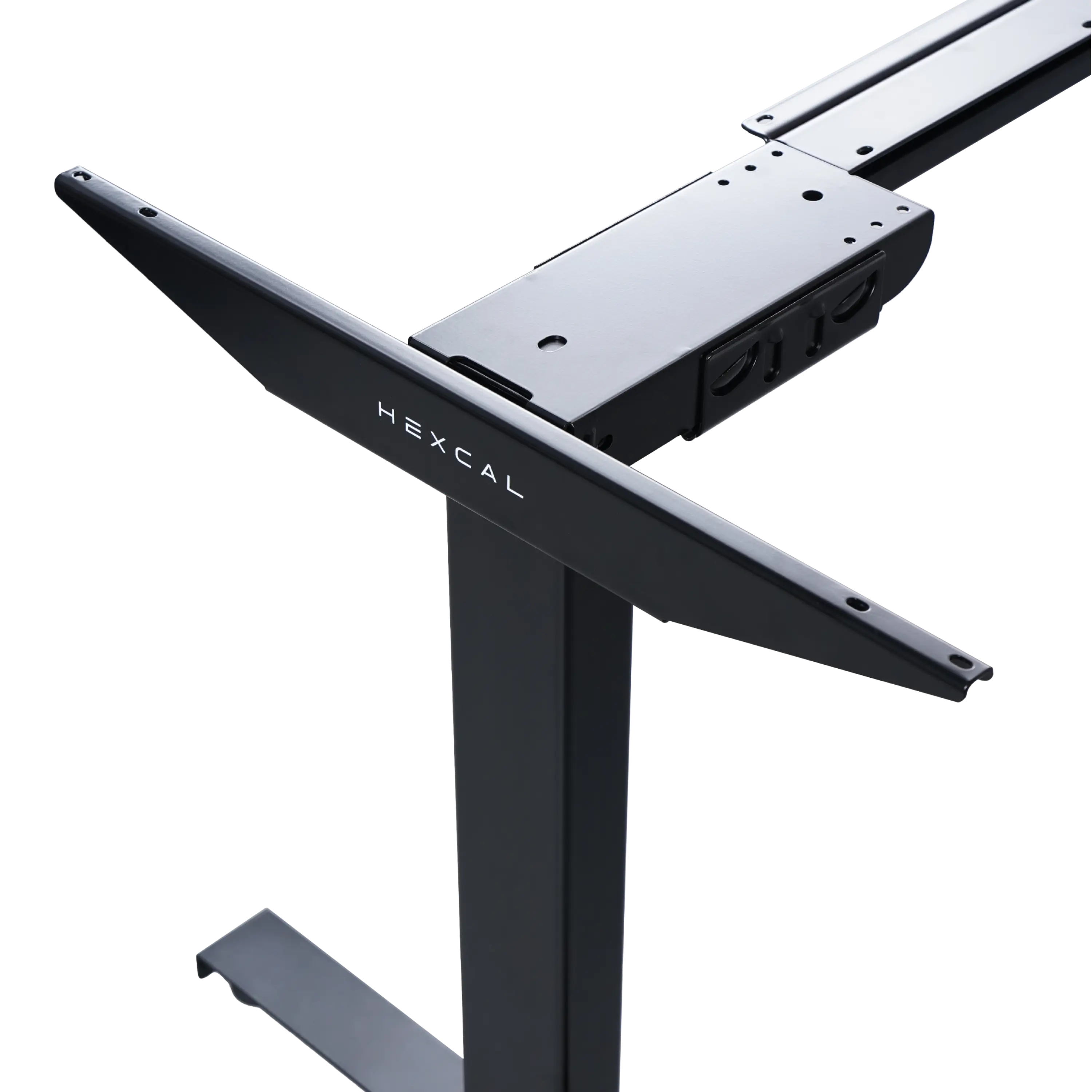
What makes the design more convincing is that the desk is not relying on looks alone. Underneath that polished presentation is a base that at least feels appropriately serious for the category. The use of LINAK DL6 Plus dual-motor lifting columns matters here. So does the three-stage leg design. So does the 350-pound capacity. Those are the kinds of fundamentals we want to see when a desk is clearly aimed at people running heavier setups with monitor arms, larger displays, speakers, drawers, trays, and the rest of the gear that tends to accumulate in a well-built workstation.
We also like the fact that the desk is sold as part of a cleaner workspace philosophy. Normally that kind of ecosystem language can feel a little too curated for its own good, but here it mostly works. The Elevate looks like it wants to support a clean desk setup rather than simply survive one. That difference shows.
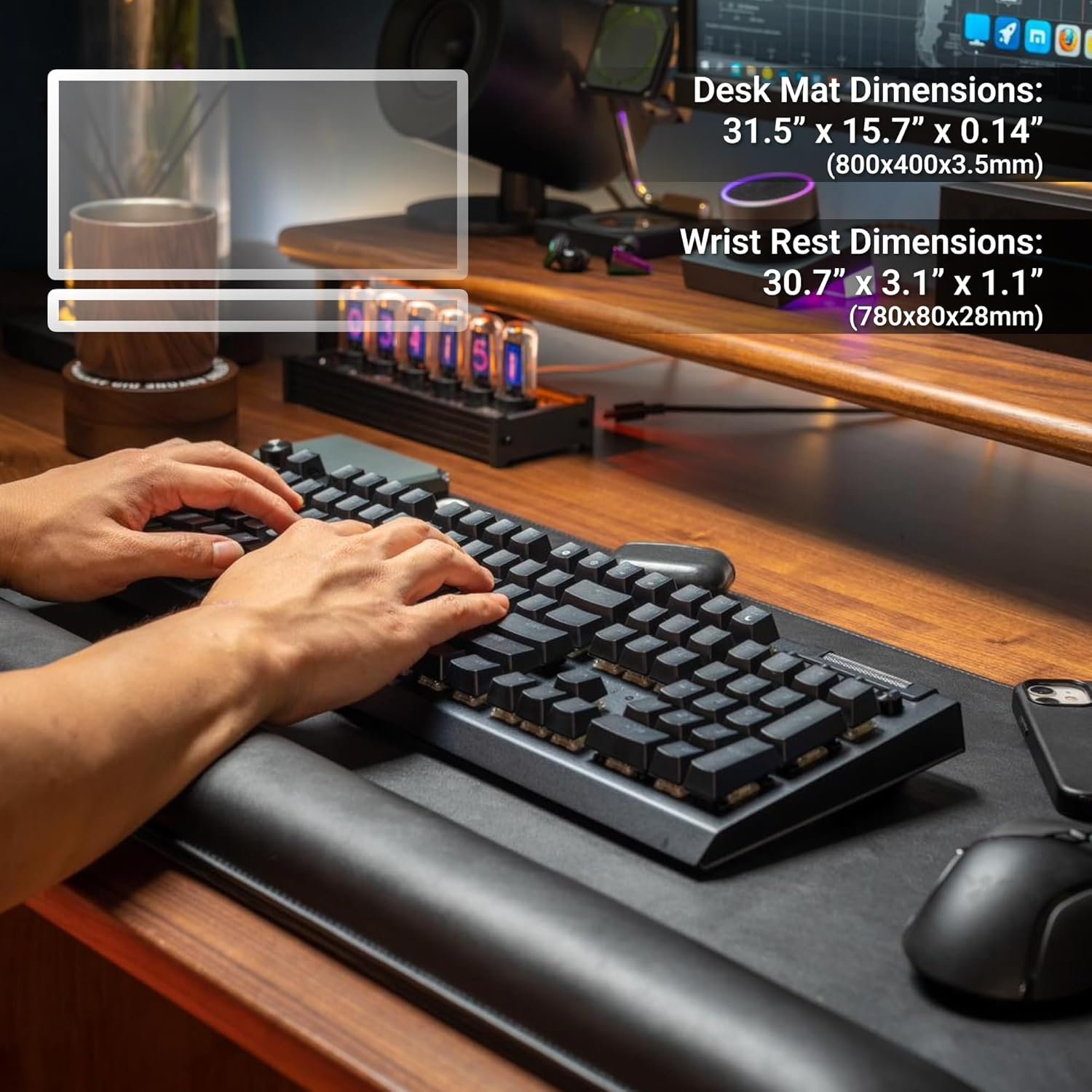
The small touches help too. The inclusion of standing desk casters in the box is one of those details that sounds minor until you think about how often premium desks end up in shared offices, studio corners, or rooms where flexibility matters. It is a useful inclusion and a sign that somebody thought beyond the basic frame-and-top package.
Setup and first use
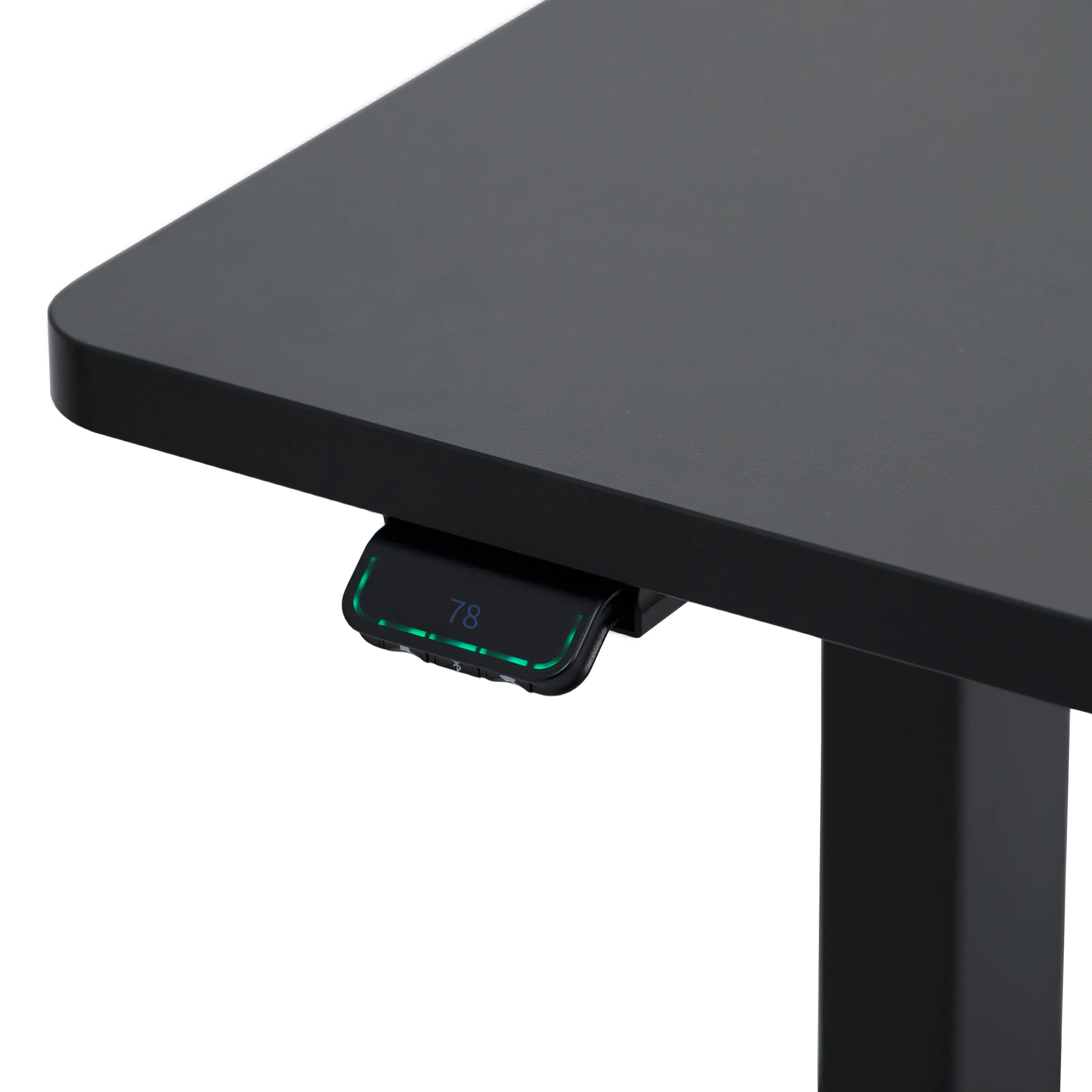
Hexcal positions the Elevate as a desk with easy assembly, and that comes through in the way the package is described. The desktop arrives pre-drilled, the system uses a Kick&Click assembly approach, and the overall message is that setup should be much less frustrating than the average large desk project.
That is the good news.
The more practical truth is that a motorized standing desk with a substantial top is still a large piece of furniture. Even when the process is straightforward, this is not the kind of thing we would treat casually. You still want room to work, some patience, and ideally a second person around when dealing with the larger sizes. A claim of quick setup can absolutely be true while the product is still bulky enough to deserve respect during assembly.
What we liked here is that the desk does not seem to demand unnecessary DIY hassle. No drilling. No measuring guesswork. No sense that the buyer is expected to “figure it out.” That already puts the experience on a better footing than some standing desks that are technically simple but oddly annoying in practice.
There is one important practical note, though. If you are unsure about keeping the desk, hang on to the packaging. The returns language is much more demanding than the simple headline suggests. This is not a toss-the-boxes-on-day-one kind of purchase. You will want to keep everything neat until you are certain the desk is staying.
Real-world performance
A standing desk does not need to perform magic. It needs to do a few things reliably and without becoming irritating over time.
The Hexcal Elevate largely understands that.
In daily use, what matters most is whether the desk moves smoothly, feels credible under load, remembers positions properly, and makes switching between sitting and standing feel easy enough that you actually do it. That is where the Elevate feels like a premium product rather than just a more expensive one.
The height range is one of the best practical strengths here. With a span of 24.4 inches to 50 inches, the desk covers a lot of real-world use cases. The lower end is helpful for seated ergonomics, especially for users who prefer a slightly lower desk position. The higher end is what gives the desk more authority. A top height of 50 inches is not just marketing filler. It means taller users are not automatically left compromising, and it gives the desk enough upward travel to feel viable for more serious standing setups.
The 350-pound weight rating also matters more than it seems. Even if most buyers never come close to that limit, a strong capacity usually suggests a desk designed with more confidence. That headroom becomes reassuring once you start thinking about ultrawide monitors, dual-arm setups, speakers, microphones, storage accessories, and the rest of the hardware that tends to pile up on a real workstation.
Then there is the lift behavior. Hexcal quotes a speed of 1.5 inches per second unloaded and noise of under 40 dB. On paper, that is exactly where we want a premium desk to be. Fast enough that transitions do not feel like a chore. Quiet enough that raising or lowering the desk does not turn into a daily annoyance. The standing desk market is full of products that technically work but still make enough noise or take enough time to discourage frequent use. The Elevate at least feels designed to avoid that trap.
Daily use and ergonomics
The difference between a decent standing desk and a genuinely good one often comes down to whether it fits smoothly into the rhythm of work. This desk does a lot to help itself there.
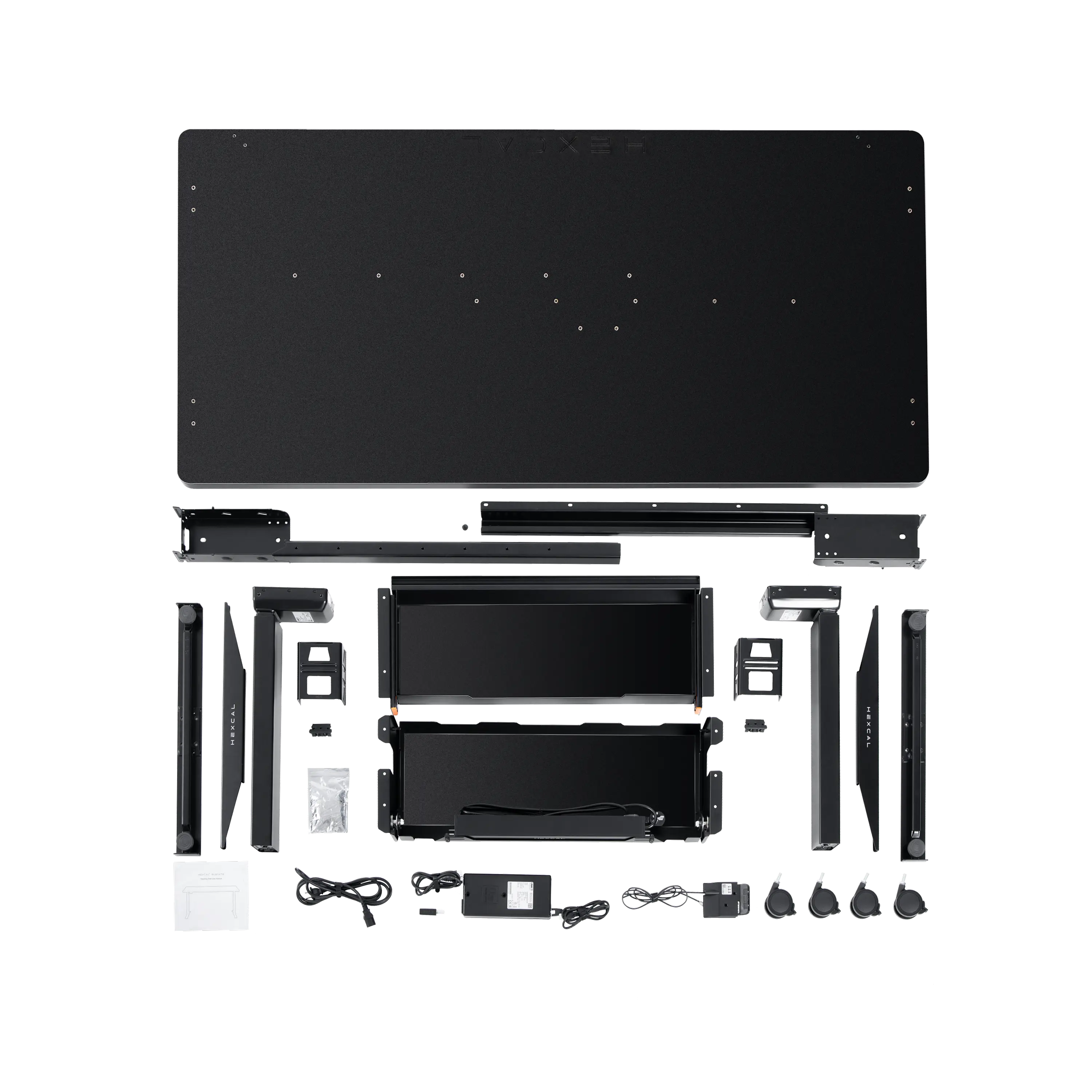
The four memory presets are exactly the kind of feature that sounds ordinary until you do not have it. We found that especially important on a desk like this because it is clearly meant for buyers who may use more than one working position. Seated height. Standard standing height. A slightly different height for certain shoes or foot support. A shared setup with a partner or coworker. Once those presets are saved, the desk becomes easier to live with.
The smart interval reminder is also more useful than it first sounds. One of the strange realities of sit-stand desks is that many people buy them, love the idea of them, and then barely move them after the first few weeks. A reminder feature is not a revolution, but it does address an actual behavior problem. We like when convenience features solve real habits instead of existing just to pad a spec list.
The app support is part of that too. The Elevate works with the Desk Control app via Bluetooth on iOS, Android, and Windows 10 PC, which places it above the barebones experience you get from cheaper desks. We would not say app support is essential for everyone, but on a desk in this price class, it helps the product feel complete rather than stripped down.
We also appreciated the anti-collision setup in principle. Hexcal says the desk uses a PIEZO-based anti-collision sensor that can detect both hard and soft obstacles. That is one of those features you hope you never need, but once you are using a heavier desk in a real room with drawers, chairs, cables, pets, or nearby furniture, it becomes the sort of safety layer that feels appropriately premium.
Why the Elevate works best in a design-first setup
This is not just a standing desk. It is a standing desk for a very specific type of buyer.
The Elevate makes the most sense when the whole workspace matters to you. Not just whether the desk goes up and down, but whether the room feels cohesive. Whether the cables disappear properly. Whether the monitor arms feel like they belong there. Whether the desk looks calm rather than cluttered. Whether the setup feels like a place you want to work from every day.
That is why this product will land differently depending on the buyer.
If your mindset is purely functional, the Elevate may look expensive. And honestly, it is expensive. But if you are building a workspace where design, workflow, and visual simplicity all matter at once, the value calculation changes. A desk like this is not competing only on motion hardware. It is competing on how finished the whole experience feels.
That is where the Elevate becomes much easier to like.
Flaws and frustrations
The biggest drawback is obvious: price.
At just under $1,000 for the smallest full desk and up to $1,299 for the larger option, the Elevate is not casually priced. Even the $699 frame-only version puts it firmly in premium territory. That does not automatically make it overpriced, but it does mean expectations are higher. Buyers are entitled to ask harder questions once a standing desk moves into this bracket.
And there are a few things worth questioning.
The first is that the return process sounds more polished on the surface than it does in the details. The headline is 30-day returns, which sounds reassuring. The fine print is less friendly. Authorization is required. Original packaging matters. The desk must be fully disassembled back into its original boxes. Photographic evidence is involved. Damage-related deductions may apply. Customers are responsible for shipping fees during returns. For a big, heavy product, that is not a small caveat. In practice, it makes the trial period feel less carefree than the top-line message suggests.
The second issue is regional availability. The Elevate is currently sold only in the U.S. and UAE, which immediately makes it a more limited recommendation.
The third is size-related. The smallest desktop option, 55 x 27.5 inches, will work for many people, but we would not call it spacious if you are aiming for a wide multi-monitor creative setup. The larger 63 x 31.5 inch and 71 x 31.5 inch versions make more sense for buyers who want breathing room.
There is also the ecosystem temptation. Hexcal clearly wants the Elevate to be part of a broader family of accessories. That can be a genuine strength if you want a coordinated setup, but it can also push the total cost much higher than the base purchase suggests. The desk is appealing on its own, but it definitely becomes easier to overspend once you start buying into the full vision.
Value for money
This is where the answer depends heavily on the buyer.
If you judge the Elevate as a bargain desk, it loses. That is not really debatable. You are paying well above entry-level standing desk money.
If you judge it as a premium standing desk with strong fundamentals, good finishing, smart convenience features, and a cleaner design language than most of the market, the value case becomes much stronger.
We think the desk earns a lot of its price. The LINAK base, the wide height range, the 350-pound load capacity, the quiet operation target, the four presets, the Bluetooth app support, the anti-collision tech, and the 10-year warranty all help justify the premium positioning. Nothing about the core package feels flimsy or under-specced.
Where the value becomes more complicated is not the hardware. It is the overall buying context. This is a desk that wants you to care about polish. If you do, it makes sense. If you do not, the extra spend will feel harder to defend.
Our view is simple: the Elevate is worth the money for buyers who are intentionally building a premium, design-conscious workspace. It is much less compelling for buyers who only want maximum function per dollar.
Who should buy it
Buy the Hexcal Elevate if you want a standing desk that feels like part of a premium workspace rather than a simple utility purchase.
It makes the most sense for:
- remote professionals building a polished home office
- creators using dual monitors, ultrawides, or accessory-heavy setups
- developers and knowledge workers who spend long hours at their desks
- buyers who care about clean design, cable control, and premium fit-and-finish
- taller users who need more upward range than average desks tend to offer
This is especially good for people who want the desk to look as intentional as the rest of the room.
Who should skip it
Skip it if your main goal is simple: get a decent standing desk for the least money possible.
You should also look elsewhere if:
- you dislike paying extra for aesthetics and integration
- you want the easiest possible return experience
- you prefer a desk with a lower upfront cost and fewer premium extras
- you do not care about app features, polished presentation, or coordinated accessories
- you need broader international availability
For practical shoppers, this is easier to admire than it is to justify.
Final verdict
The Hexcal Elevate Standing Desk leaves a strong impression because it gets the important parts right without feeling generic. It looks polished, but not precious. It offers serious core specs, but does not shout about them. And in daily use, it feels like a desk designed for people who want their workspace to feel deliberate, calm, and well put together.
We liked the balance here. The LINAK foundation gives the desk credibility. The 24.4 to 50 inch range makes it flexible. The 350-pound load rating gives it real workstation potential. The smart controls, quiet operation, and 10-year warranty round out the premium story well. None of that feels accidental.
What keeps it from being a universal recommendation is not a major flaw in the desk itself. It is the price and the context around it. This is a premium desk for buyers who know they want a premium desk. For them, it works. For bargain hunters, it does not.
Our take is straightforward: the Hexcal Elevate Standing Desk is a strong premium standing desk and one of the more appealing design-first options in its category. If you want a beautiful workstation foundation and you are comfortable paying for polish, it is easy to recommend. If you are shopping on pure practicality, there are cheaper ways to solve the same problem.
FAQ
Is the Hexcal Elevate Standing Desk good for multiple monitors?
Yes. The desk is well suited to dual-monitor and even heavier accessory-driven setups thanks to its 350-pound capacity and premium frame design.
What sizes does it come in?
It is available in 55 x 27.5 inches, 63 x 31.5 inches, and 71 x 31.5 inches, plus a frame-only option.
How tall does the desk go?
The official height range is 24.4 inches to 50 inches, which gives it a broad range for seated work, standing use, and taller users.
Does it have memory presets?
Yes. The controller offers four memory positions, along with an LED display and a smart interval reminder.
Does it support an app?
Yes. The desk works with the Desk Control app via Bluetooth on iOS, Android, and Windows 10 PC.
What is the warranty?
Hexcal lists a 10-year limited warranty for the Elevate Standing Desk.
Is the return policy straightforward?
Not really. There is a 30-day return window, but the process appears fairly strict, with requirements around authorization, original packaging, full disassembly, and condition compliance.
Is it worth the money?
Yes, for the right buyer. If you care about clean design, premium hardware, useful smart features, and a polished workspace experience, the Elevate makes sense. If your only goal is value per dollar, it is a harder sell.
Explore the Hexcal Elevate Standing Desk Gallery
Every image from this article, gathered in one clean place. Tap any photo to open it larger.