
ProtoArc Smart Desk Lamp
Pros
- Smart concept that targets a real ergonomic problem
- Makes more sense than most “smart lamp” ideas
- Stronger when viewed as part of a full connected workspace
- The broader ProtoArc office ecosystem gives the idea more credibility
- Could reduce a lot of repetitive manual desk adjustments if executed well
Cons
- Too many core lamp specs are still unclear
- Light quality remains the single biggest unanswered question
- Software experience could make or break the product
- Value is impossible to judge without price and standalone clarity
- May end up appealing only to buyers willing to commit to a larger ecosystem
The core idea feels useful rather than flashy. ProtoArc is thinking about the desk as a system, not as a pile of unrelated gadgets. The lamp’s place inside that system makes real ergonomic sense.
Too many of the details that actually decide whether a desk lamp is great are still missing. We still do not have enough clarity on brightness , color temperature range , CRI , beam shape , mounting style , software polish, price, or release timing.
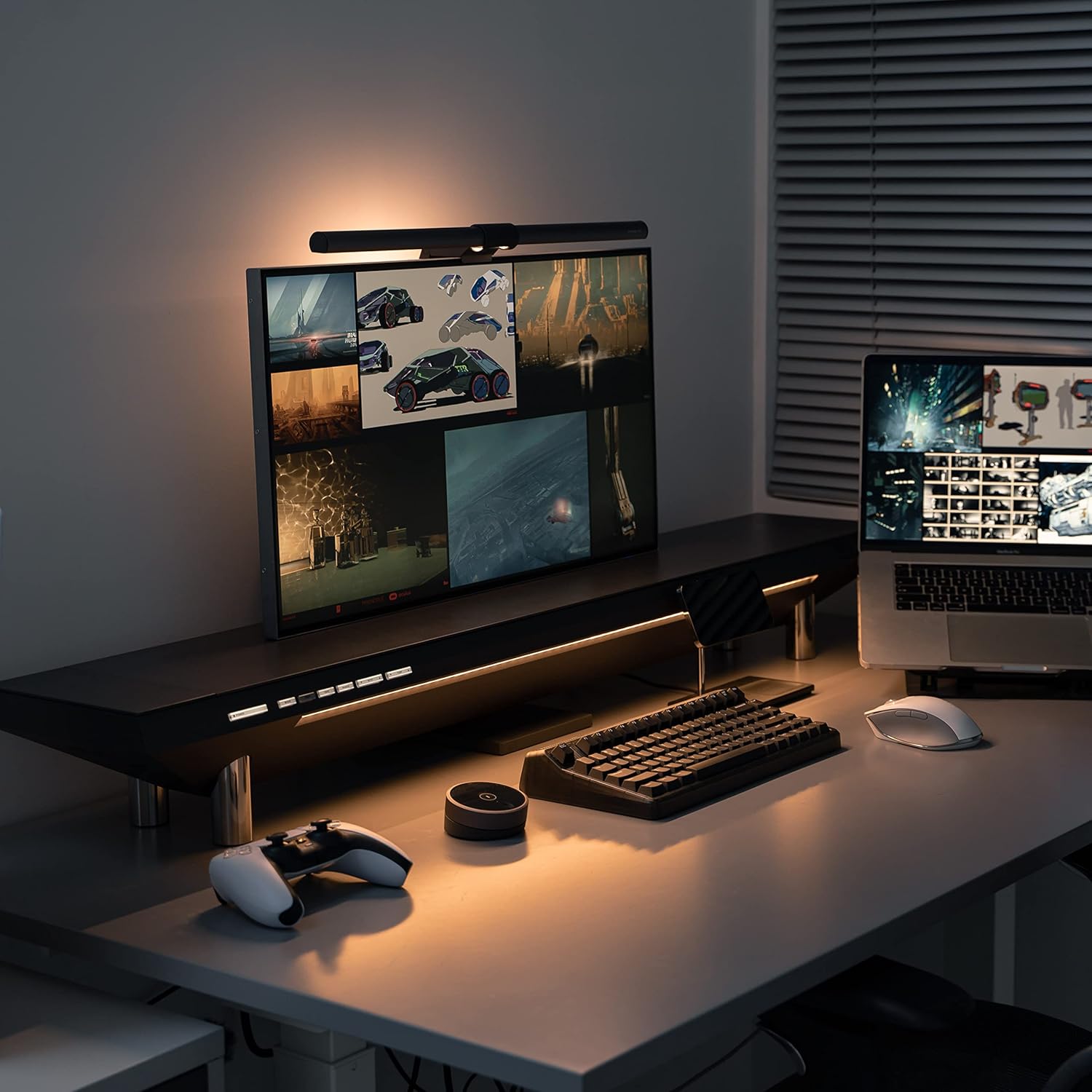
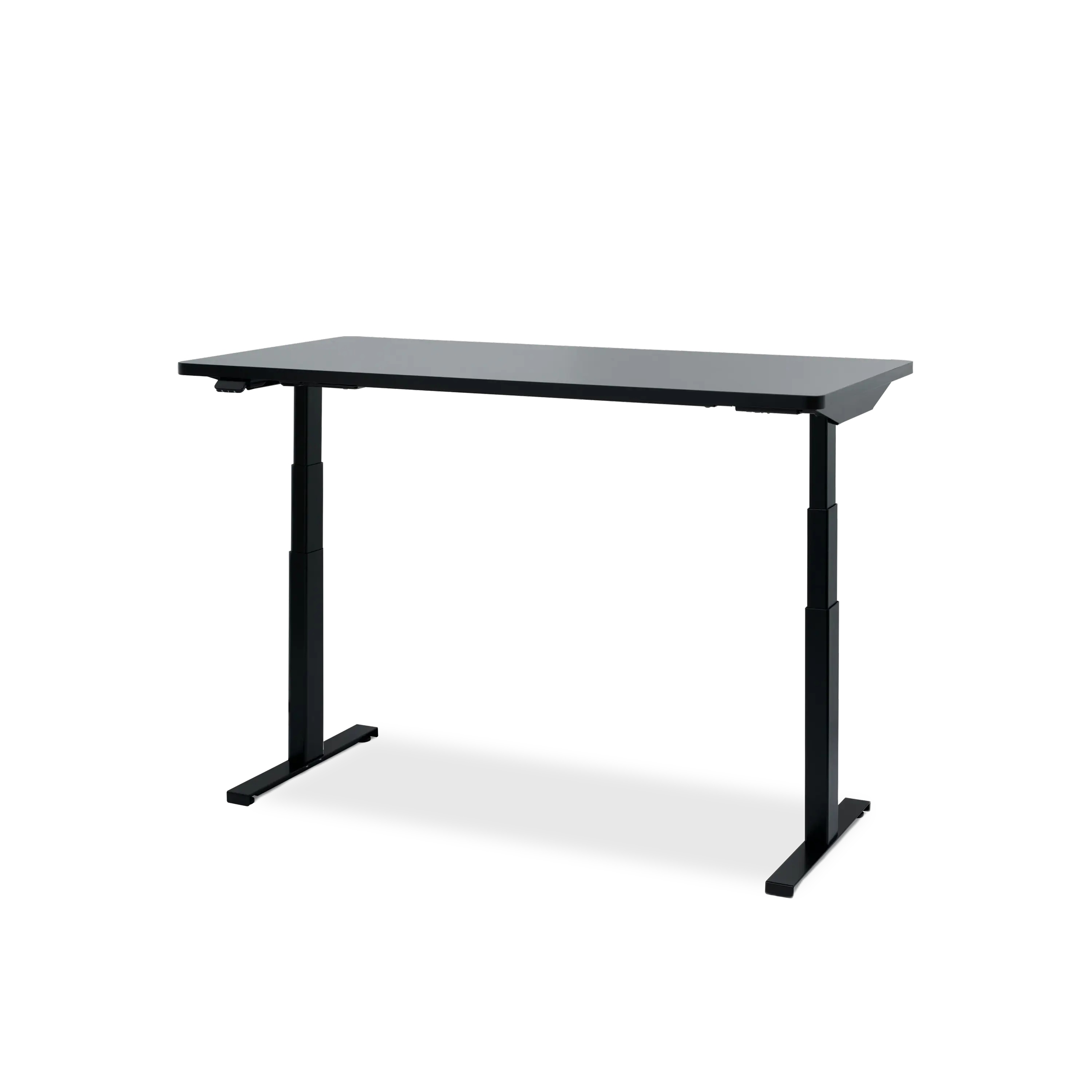
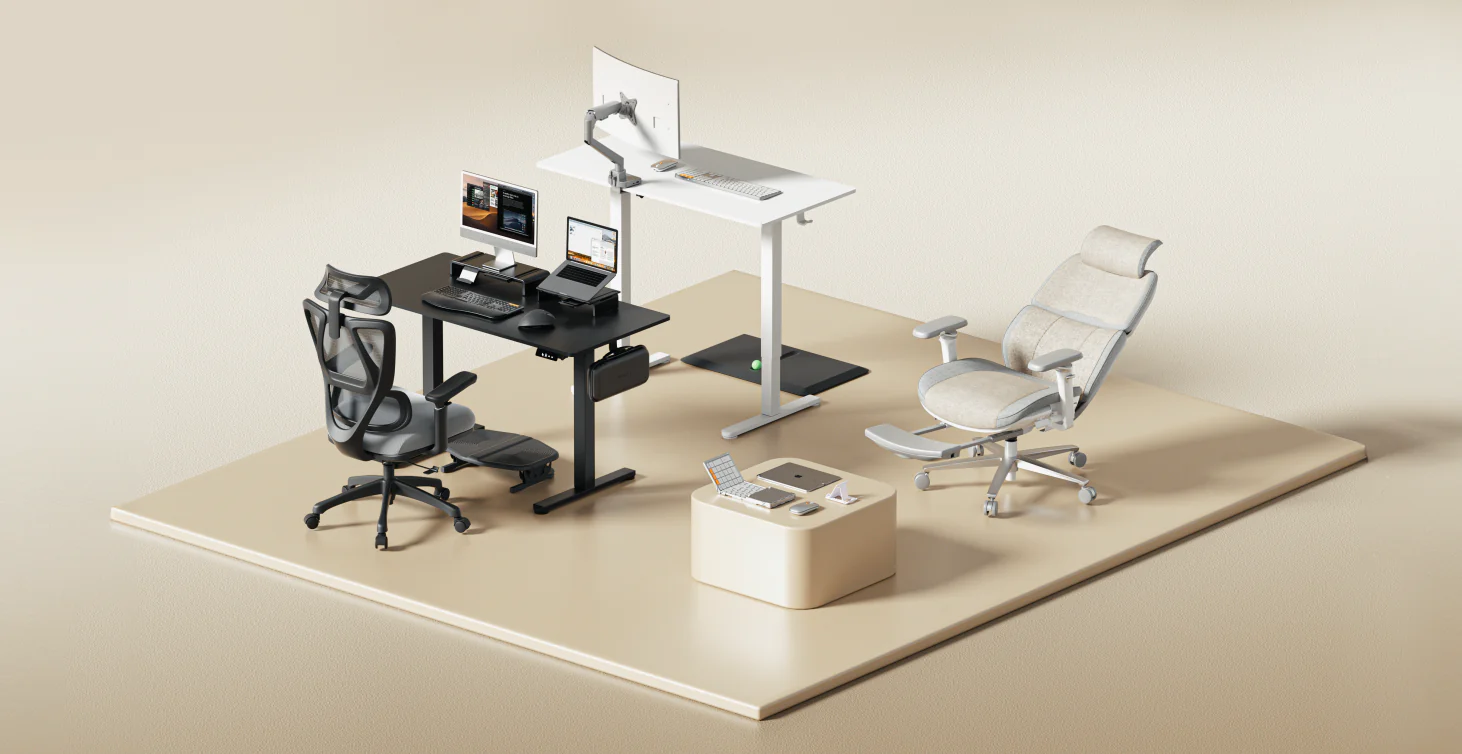
The ProtoArc Smart Desk Lamp is the kind of product that makes sense almost immediately once you understand what it is trying to be. This is not just a desk lamp with a smart label slapped onto it. It is being presented as one part of a broader Smart Workspace that also includes a pressure-sensitive ergonomic chair, a dual-motor standing desk, and a central control panel with desktop software.
After spending time with the concept, our take is simple: the idea is genuinely good, the direction is smart, and the lamp could solve a real daily problem. But the product still feels closer to an impressive prototype than a finished recommendation. What won us over was the logic behind it. What held us back was everything ProtoArc still has not fully nailed down.
A lot of “smart” office gear feels like it exists because somebody wanted to add automation where none was needed. That is not what happened here. What stood out to us right away was that ProtoArc is aiming at something practical: the constant, low-level friction of adjusting your setup every time your posture changes, your task changes, or your desk moves from sitting height to standing height. In that context, a lamp that adapts along with the rest of the workspace sounds less like a gimmick and more like a genuinely thoughtful tool.
That is why this product is interesting. It is also why we are not ready to overpraise it. The concept is ahead of many smart lighting ideas we have seen, but the actual lamp still has important questions hanging over it. The promise is strong. The proof is not there yet.
What Is Confirmed
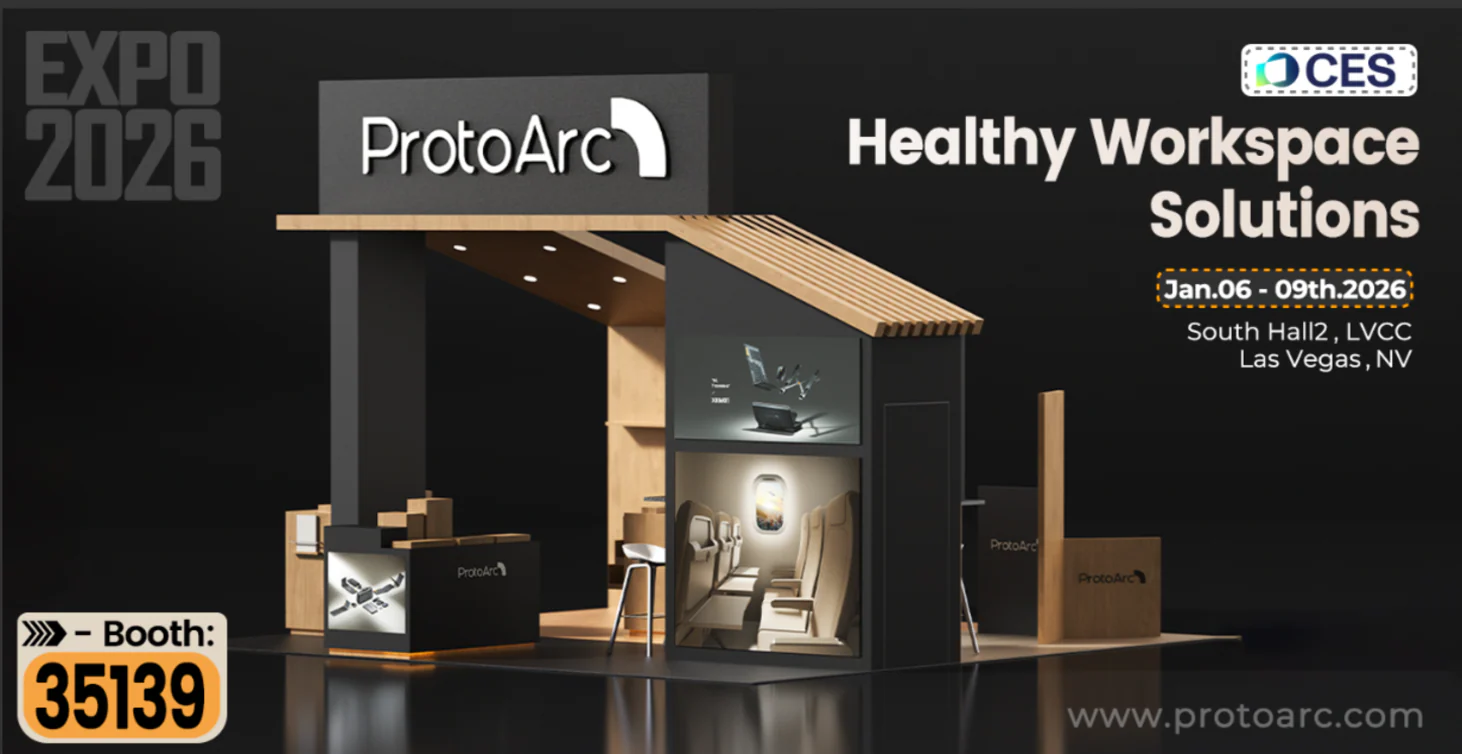
ProtoArc introduced the Smart Desk Lamp as part of its CES 2026 Smart Workspace lineup, with the reveal tied to the show running January 6–9, 2026, at the Las Vegas Convention Center. The company’s pitch is clear: the workspace is meant to function as a connected system where the desk, chair, lamp, and controls work together instead of behaving like separate accessories.
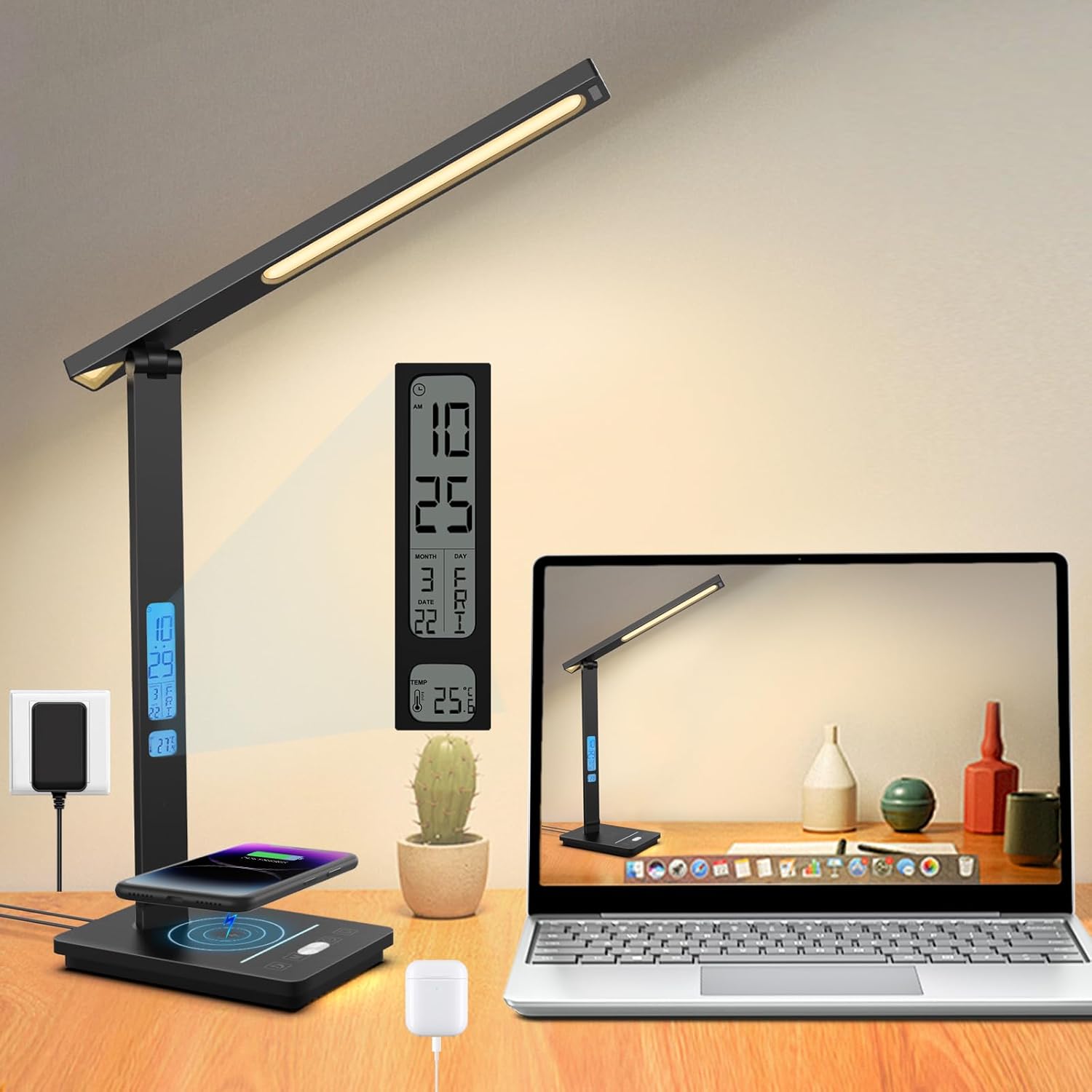
The lamp’s role inside that system is also clear. ProtoArc says it is designed to respond to workspace activity with adjustable brightness intended to support eye comfort. The broader setup includes a central control panel and a desktop client for mode switching and customization. ProtoArc has also made it clear that this is part of a longer-term workspace strategy rather than a one-off lamp announcement. The company had already previewed a smart ergonomic workstation concept earlier, with modes like Casual, Productive, Rest, and Custom, along with automatic adjustments tied to how the user works.
That history matters. The Smart Desk Lamp did not appear out of nowhere. It feels like another step in a more ambitious attempt to make the entire desk setup responsive. We appreciated that because it gives the product more context. It also raises expectations. When a company asks us to think bigger than a normal task lamp, we are going to judge it on a bigger standard too.
And that is where the tension starts. ProtoArc has explained what the lamp is supposed to do. It still has not fully answered how well it does it, what form it takes physically, what kind of light quality we are dealing with, or what buying into the system will actually cost.
Why the Concept Works
The strongest thing about the ProtoArc Smart Desk Lamp is that the problem it is trying to solve is real.
Anyone who spends long hours at a desk already knows how often lighting stops matching what they are doing. A brightness level that feels fine for typing can feel weak for reading paperwork. A setup that works while seated can feel wrong the second you raise the desk to standing height. A light that is comfortable during the day can start to feel harsh once the room gets darker. Most of us deal with that by manually adjusting a lamp, changing the room lighting, or just tolerating a setup that is slightly off.
ProtoArc’s idea is to remove that friction. In theory, the desk knows when it moves. The chair knows when your posture changes. The lamp responds accordingly. That is a much more believable use of “smart” than the usual routine of opening an app just to dim a light or cycling through novelty scenes you stop using after two days.
What we liked most here was the system thinking. The lamp is not being asked to carry the whole story alone. It sits inside a chain of cause and effect: posture shifts, work mode changes, sit-stand transitions, then lighting adapts with them. That is coherent. It feels like somebody thought about the rhythm of a real workday instead of just chasing the word smart.
That also helps the lamp stand out in a crowded category. There are already plenty of desk lamps with touch controls, multiple brightness levels, and adjustable color temperature. The question is not whether ProtoArc can join that list. The question is whether it can make the lamp feel more useful over time because it understands context better than a normal lamp does. That is the real opportunity here.
Why We Are Still Holding Back
For all the good thinking behind the concept, we kept coming back to the same issue: the hard details that matter most in a desk lamp are still too vague.
A smart lamp can only be impressive if it is first a good lamp. That sounds obvious, but it is the part many brands get backwards. We do not care how intelligent the automation sounds if the light ends up too dim, too harsh, poorly directed, or awkward to position. We do not care about ecosystem magic if the lamp throws glare onto a monitor or leaves half the desk in shadow.
And at this point, ProtoArc still has not fully closed that gap.
We are still waiting on the kind of fundamentals buyers actually compare: brightness output, coverage, color-temperature flexibility, color accuracy, flicker performance, dimming behavior, and the physical design choices that make or break daily use. We also do not know enough about the control experience. Does the lamp stay easy to use when the smart layer is stripped away? Are manual overrides immediate? Does the software feel fast and dependable, or does it risk turning a simple act like adjusting a light into a mini troubleshooting session?
Those are not minor questions. They are the whole review.
That is why our overall reaction stayed positive but measured. We liked where ProtoArc is going. We were less convinced that the product, in its current state, has earned an easy recommendation yet.
Design and Build Quality: The Priorities Look Right, but the Lamp Itself Is Still a Black Box
From what we saw, ProtoArc is aiming for a clean office-friendly design language rather than a decorative showpiece. That is the right call. A desk lamp does not need to be visually loud. It needs to fit the workspace, stay out of the way, and direct light exactly where it is needed.
We liked that instinct. A work lamp should feel purposeful, not theatrical.
The bigger issue is that we still do not know enough about the actual physical execution. That matters more than brands sometimes admit. The difference between a lamp people love and a lamp they quietly replace often comes down to very ordinary things: the reach of the arm, the shape of the head, the stability of the base, how much desk space it steals, how easily it adjusts, and whether it holds the angle you want without fighting you.
That is where we wanted more answers.
Will it clamp to the desk, sit on a traditional base, or integrate more tightly into ProtoArc’s own desk system? Is the light source wide enough to comfortably cover a monitor-and-keyboard setup, or is it more directional and task-focused? Can it adapt cleanly between seated and standing positions without becoming awkward? Those are practical questions, and we still do not have enough certainty around them.
ProtoArc is not coming into this cold. The company has already moved deeper into ergonomic office furniture, including a ComfortX Desk with a 55 x 27-inch desktop, touchscreen controller, three presets, and up to 180-pound capacity, along with a wider push into ergonomic seating. That gives the brand more credibility than a random startup trying to build a connected office ecosystem from scratch.
But lamps are unforgiving. A chair can still feel broadly good even if one detail is slightly off. A task light becomes annoying much faster. If the beam shape is wrong, if the adjustability is limited, if the light reflects badly, you notice it every day.
That is why we are still cautious. The broader design philosophy makes sense. The actual lamp still has to prove itself as a lamp.
Setup and First Use: This Could Feel Seamless or Way Too Involved
This is one of those products where the best-case and worst-case scenarios are both easy to imagine.
In the best version, setup fades into the background quickly. You save a few work modes, the desk remembers its positions, the chair recognizes the difference between focused work and a more relaxed posture, and the lamp adjusts along with those shifts without making you think about it. In that world, the Smart Desk Lamp becomes the kind of product you appreciate because it removes small annoyances repeatedly.
That is the outcome ProtoArc should be chasing.
The worst version is just as easy to picture. You install desktop software, pair multiple components, update firmware, fine-tune profiles, then spend the next week correcting automation that keeps getting almost—but not quite—what you want. That is where smart office products go wrong. They stop feeling helpful and start feeling managerial. The desk begins acting like it has opinions.
Where we felt cautiously optimistic is that ProtoArc at least seems to understand the appeal of one-tap modes and connected ergonomics. The company has already pushed into app-based office products, including a smart chair concept that leaned on posture tracking, reminders, and analytics. So the software-first thinking is not new to them.
What we still need to see is restraint.
A good smart lamp should never make the user feel trapped inside automation. Manual control has to remain immediate. If you want brighter light for five minutes, you should get it instantly. If you want the lamp to stop being clever and just stay where you put it, that should also be easy. The moment the smart layer becomes more demanding than the problem it solves, the whole idea starts to collapse.
Real-World Performance: This Will Live or Die on Light Quality
In practical terms, the ProtoArc Smart Desk Lamp has one job: make desk work easier on the eyes without introducing new friction.
That sounds simple, but it covers a lot. A good desk lamp needs to handle typing, reading, note-taking, screen-heavy work, and the changing feel of a room throughout the day. It needs to offer useful light, not just visible light. It also needs to control glare, avoid hotspots, and feel predictable.
This is where the Smart Desk Lamp could become genuinely compelling if ProtoArc gets it right.
A normal smart lamp usually reacts to time, voice commands, or whatever you tell an app to do. ProtoArc’s pitch is more relevant to actual work. If the lamp is responding to posture and sit-stand movement, it potentially has better context for what kind of lighting makes sense in that moment. That is a stronger use case than generic automation.
In other words, this product could be smart in the right way.
The problem is that we still do not know whether the fundamentals underneath that intelligence are good enough. We would want to see strong light coverage, smooth dimming, useful color-temperature options, and behavior that feels calm rather than distracting. We would want brightness shifts that make sense, not ones you notice for the wrong reasons. We would want a lamp that works equally well for screen-heavy work and more paper-focused tasks.
Until those basics are clearly proven, the automation remains an interesting layer sitting on top of too many unknowns.
Convenience and Comfort: This Is Where the Lamp Could Actually Earn Its Keep
The part we appreciated most about the ProtoArc idea is that it aims at convenience in a serious way, not a novelty way.
A lot of office products promise “comfort” when they really mean decoration or lifestyle polish. ProtoArc is aiming at something more practical: reducing the number of tiny adjustments you keep making without even noticing. Desk up. Desk down. Sit upright. Lean back. Switch from keyboard work to reading. Dim the lamp. Brighten the lamp. Shift the angle. Repeat.
That constant correction is real. The appeal of the Smart Desk Lamp is that it might take some of that work off your hands.
Comfort, though, is not just about adaptability. It is also about consistency. A desk lamp should feel dependable. It should not suddenly become fussy because the software layer decided to intervene at the wrong moment. It should not behave unpredictably enough that you start avoiding the automation entirely.
That is the line ProtoArc has to walk carefully.
If the automation fades into the background and the lamp simply seems to follow the way you work, ProtoArc could have something genuinely useful here. If the behavior is even slightly overactive or intrusive, the product risks becoming tiring very quickly.
Flaws and Frustrations
The biggest frustration is not that ProtoArc’s idea is weak. It is that the product still asks buyers to believe before it fully proves.
That hesitation runs through almost every part of this lamp right now. We like the concept. We like the system logic. We like that the brand is treating the desk as an ergonomic ecosystem rather than just selling another app-connected light. But a desk lamp is still a desk lamp, and too many of the basic buying questions remain unanswered.
That makes the lamp hard to recommend confidently.
We were also left wondering how much of its value depends on buying further into ProtoArc’s ecosystem. If the lamp ends up working best only when paired with the matching chair, desk, and software stack, then the barrier to entry rises fast. That does not automatically make it a bad product, but it does narrow the audience and raise the execution standard.
The other lingering concern is software polish. Connected desk gear sounds great in theory. In practice, it only works when the system stays quiet, intuitive, and fast. ProtoArc still needs to show that it can make the smart layer feel invisible rather than needy.
Value for Money: Too Early to Judge, but the Standard Is Already High
Because ProtoArc has not yet announced pricing or retail availability, we cannot pretend to give a clean value verdict. But we can say this much: the market is not waiting around with no competition.
Buyers can already get very competent desk lamps with multiple brightness levels, adjustable color temperature, touch controls, and solid daily usability without spending absurd money. That means ProtoArc cannot charge a premium just because the lamp is smart. It has to be smarter in a way that actually improves the workday, and it has to still be excellent at the boring basics.
The broader ecosystem also suggests this is unlikely to be budget territory. ProtoArc’s ComfortX Desk sits at $599.99, and its smart chair push has already lived in the $559 to $599 range during crowdfunding, against a $699 MSRP. Those numbers do not tell us what the lamp will cost, but they do frame the brand’s ambitions. This is not shaping up to be a bargain-office play.
So our value take is simple. If the Smart Desk Lamp lands at a sensible premium and works beautifully on its own, it could be compelling. If it ends up being an expensive accessory whose best features only come alive inside a costly full-system setup, then ProtoArc will need near-flawless execution to make that price feel earned.
Who Should Buy It
You should keep an eye on the ProtoArc Smart Desk Lamp if you think about your desk as a system.
This product makes the most sense for buyers already investing in posture, ergonomics, sit-stand workflows, and a more intentional home office setup. If you are the kind of person who notices how often your environment falls slightly out of sync with what you are doing, ProtoArc is speaking directly to you.
We also think it could be especially interesting for users who genuinely care about task-based lighting rather than just ambient mood lighting. If your workday moves between screen time, writing, reading, and standing sessions, the idea of adaptive task lighting is far more useful than the usual smart-bulb gimmicks.
Who Should Skip It
You should skip it for now if what you really want is the best desk lamp for the money today.
There are already simpler, proven lamps that tell you exactly what you are getting and ask much less from you in return. If your priority is straightforward usability, clear specs, and minimal software dependence, this is not the sensible buy yet.
We would also skip it if you have no interest in connected office ecosystems. ProtoArc is clearly thinking bigger than a standalone light, and that broader ambition is part of both the appeal and the risk. If you just want a reliable lamp and do not want your workspace trying to think for you, this probably is not your lane.
Final Verdict
Our take after spending time with the ProtoArc Smart Desk Lamp is that the idea is one of the smarter ones we have seen in office lighting lately.
What makes it interesting is not the word smart. It is the fact that ProtoArc is trying to solve a real desk problem: our work changes constantly, but most desk lighting does not. A lamp that adapts alongside posture, task, and sit-stand movement could absolutely be useful. In that sense, ProtoArc is aiming at the right target.
What keeps us from fully recommending it is that the product still feels unfinished in the ways that matter most. The concept is strong. The ecosystem logic is strong. But the lamp itself still needs to answer the practical questions that decide whether daily use feels genuinely better or just more complicated.
Right now, the ProtoArc Smart Desk Lamp feels like the right idea in prototype form. We came away liking where it is headed. We did not come away convinced that the execution is fully there yet.
If ProtoArc can match the strength of the concept with equally strong light quality, physical usability, and calm software behavior, this could become a genuinely standout office product. Until then, it remains a promising vision that still has to earn the last and most important part of the review: trust.
FAQ
Is the ProtoArc Smart Desk Lamp available to buy now?
Not from anything ProtoArc has made clear so far. It has been shown as part of the company’s CES 2026 Smart Workspace concept, but pricing and commercial availability have not been firmly established yet.
Is it meant to be a standalone lamp or part of a bigger setup?
Right now, it is clearly being positioned as part of a broader workspace system that includes a pressure-sensitive chair, a dual-motor standing desk, and shared controls through a central panel and desktop software.
What makes it different from a normal smart lamp?
The key difference is context. Instead of reacting mostly to schedules or app commands, the ProtoArc idea is built around the lamp responding to how you are working, how you are sitting, and whether your desk is in a seated or standing position.
What are the biggest unanswered questions?
The biggest unknowns are still the ones that matter most in a desk lamp: brightness, color-temperature range, CRI, flicker behavior, coverage, mounting style, physical adjustability, software polish, price, and release timing.
Is it worth waiting for?
Only if you are specifically interested in a connected ergonomic desk ecosystem and you like the direction ProtoArc is taking. If you simply need a good desk lamp right now, there are safer and more straightforward options already on the market.
Explore the ProtoArc Smart Desk Lamp Gallery
Every image from this article, gathered in one clean place. Tap any photo to open it larger.