
Lepro TB1 AI Smart Table Lamp
Pros
- Distinctive three-ring design gives it real visual presence without looking cheap or gimmicky.
- 196 RGB+IC LEDs create smoother gradients and more refined color transitions than basic RGB lamps.
- Bright enough to work as more than just decor, with enough output for ambient lighting and casual everyday desk use.
- The adjustable inner and middle rings add useful flexibility and help the lamp adapt better to different spaces.
- Strong hybrid appeal: part mood lamp, part room-enhancing decor piece, and part genuinely useful everyday light.
Cons
- The smartest features are still heavily tied to the Lepro app, so it is less appealing for buyers who dislike app-led products.
- The AI scene generation feels more like a fun extra than a truly essential reason to buy the lamp.
- Smart-home integration is limited compared with more ecosystem-friendly alternatives, especially for buyers who want broader automation support.
- It is more decorative and atmosphere-focused than purely productivity-focused, so it is not the best choice as a no-nonsense task lamp.
- Value makes more sense for buyers who want style, mood, and customization than for those chasing strict utility or deep smart-home control.
The design has real presence, the 196 RGB+IC LEDs produce noticeably smoother gradients than basic RGB lamps, the light looks bright and pleasantly diffused, and the adjustable inner and middle rings make the lamp more flexible in day-to-day use.
The smarter features still live mostly inside the Lepro app, the AI side feels more like a bonus than a core reason to buy, and the overall product leans more decorative than purely productivity-focused.
The Lepro TB1 AI Smart Table Lamp makes its case fast. It looks more ambitious than the average smart table lamp, and once we spent real time with it, that first impression held up more often than not. What stood out to us most was not the AI angle or the marketing language around mood generation. It was the fact that this lamp manages to feel visually playful without becoming useless.
The light output is strong, the color transitions are smoother than most cheap RGB lamps ever manage, and the adjustable ring design gives it more practical range than a lot of decorative lighting that only looks good in product photos. This is a lamp we’d recommend to people who want their desk, bedroom, or gaming space to feel more alive. It is not the lamp we’d point to for serious automation obsessives or buyers who just want a plain, efficient task light and nothing else.
What we tested
The important thing with a product like this is separating the flashy pitch from the experience of actually living with it. So the real questions were simple. Does it look as good in person as it does in the listing photos? Does the light quality hold up once the novelty wears off? Does the adjustable design actually help? And does the smart side make the lamp better, or does it mostly add noise?
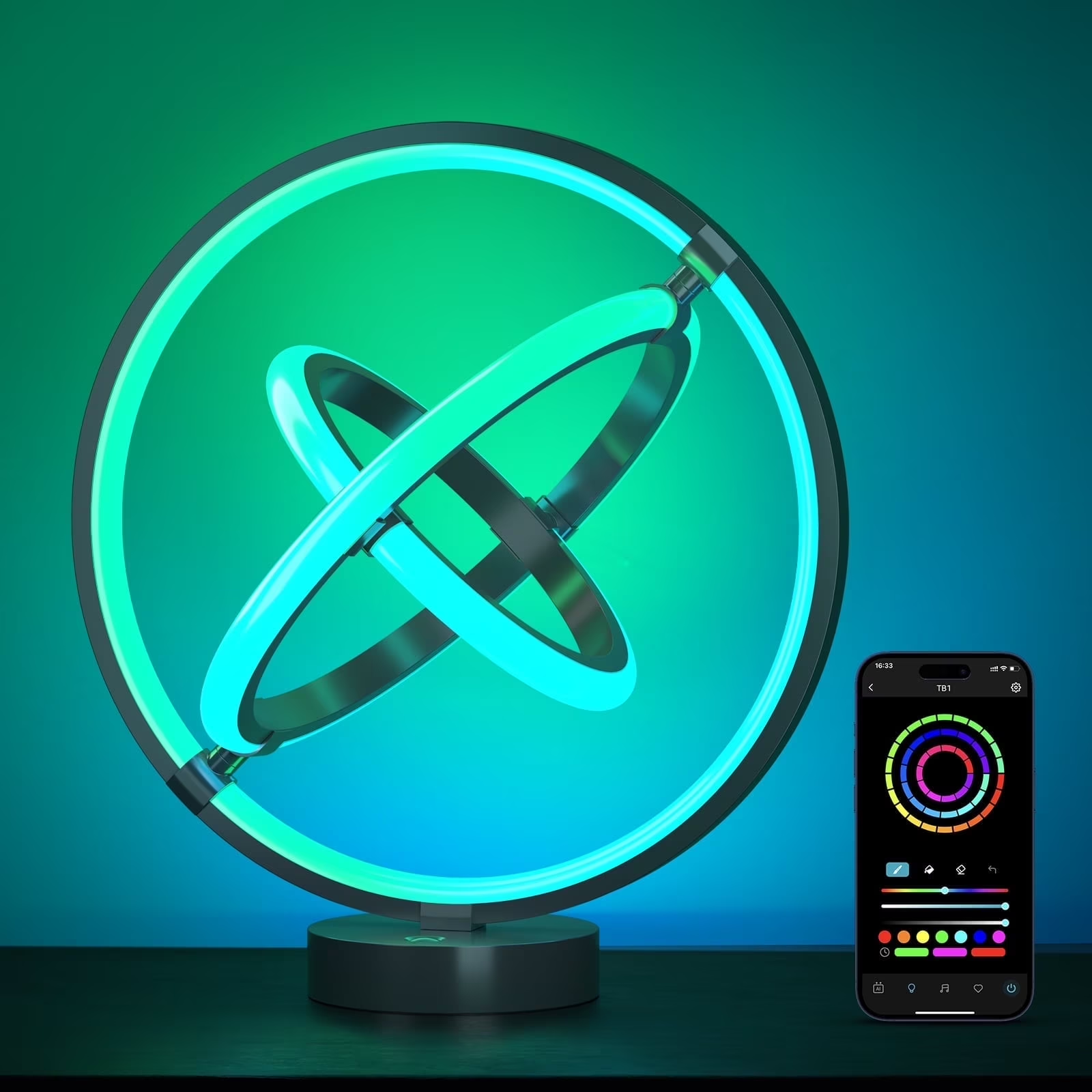
Those questions matter because the TB1 is not a conventional desk lamp. On paper, it is a 14W corded smart table lamp with a three-ring design, 196 addressable RGB+IC LEDs, 1% to 100% dimming, 2.4GHz Wi-Fi and Bluetooth, voice support through Alexa and Google Assistant, music sync, app scheduling, scene creation, and Lepro’s LightGPM AI scene generator. The inner and middle rings rotate up to 300°, while the outer ring stays fixed. The body uses aluminum alloy with a polycarbonate base, and the lamp measures roughly 9.6 x 11.7 x 13 inches, weighs about 1.8 pounds / 830 g, and ships with a 5.9-foot power cord.
Specs like that tell you the shape of the product, but they do not tell you whether it earns a place on a real desk or side table. That only becomes clear after spending time with it, and in practice the TB1 feels most convincing when you stop thinking of it as a novelty lamp and start thinking of it as a room-shaping light that can also pull everyday duty.
Design and build quality
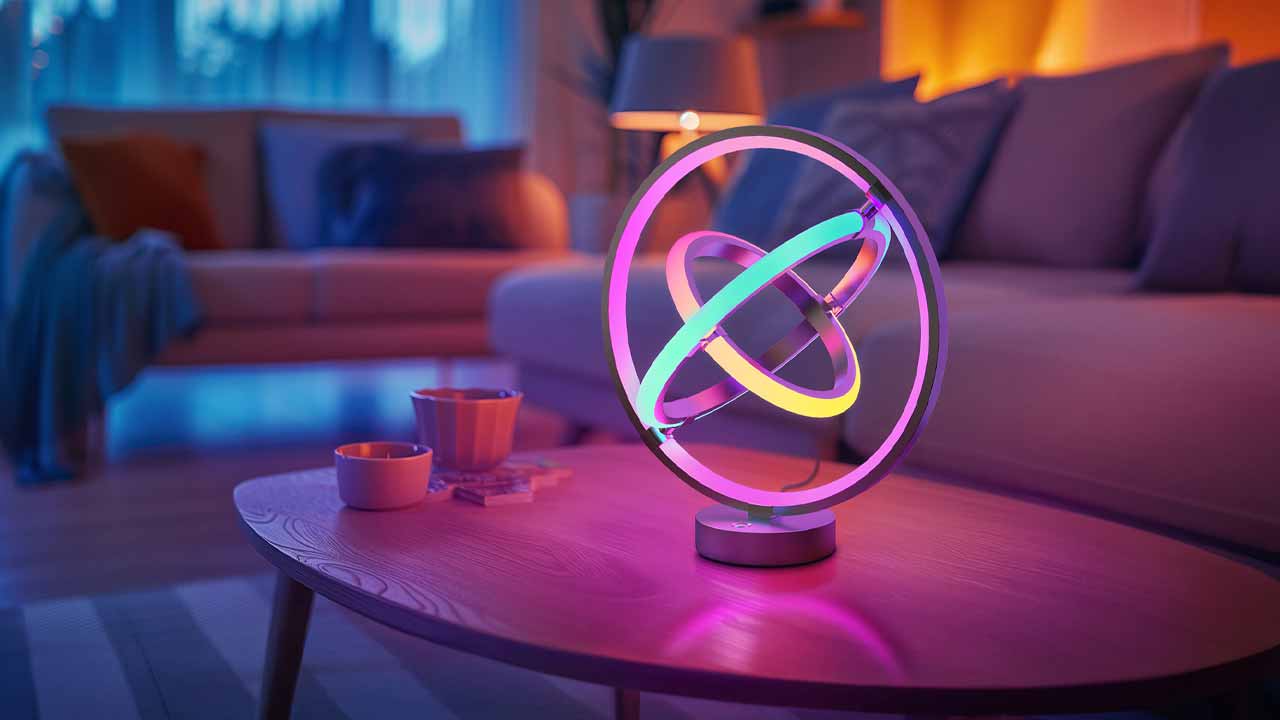
This is the part Lepro had to get right, because the TB1’s whole identity depends on its physical design. If the three-ring structure looked flimsy or gimmicky in person, the whole product would collapse under its own concept. Fortunately, that did not happen.
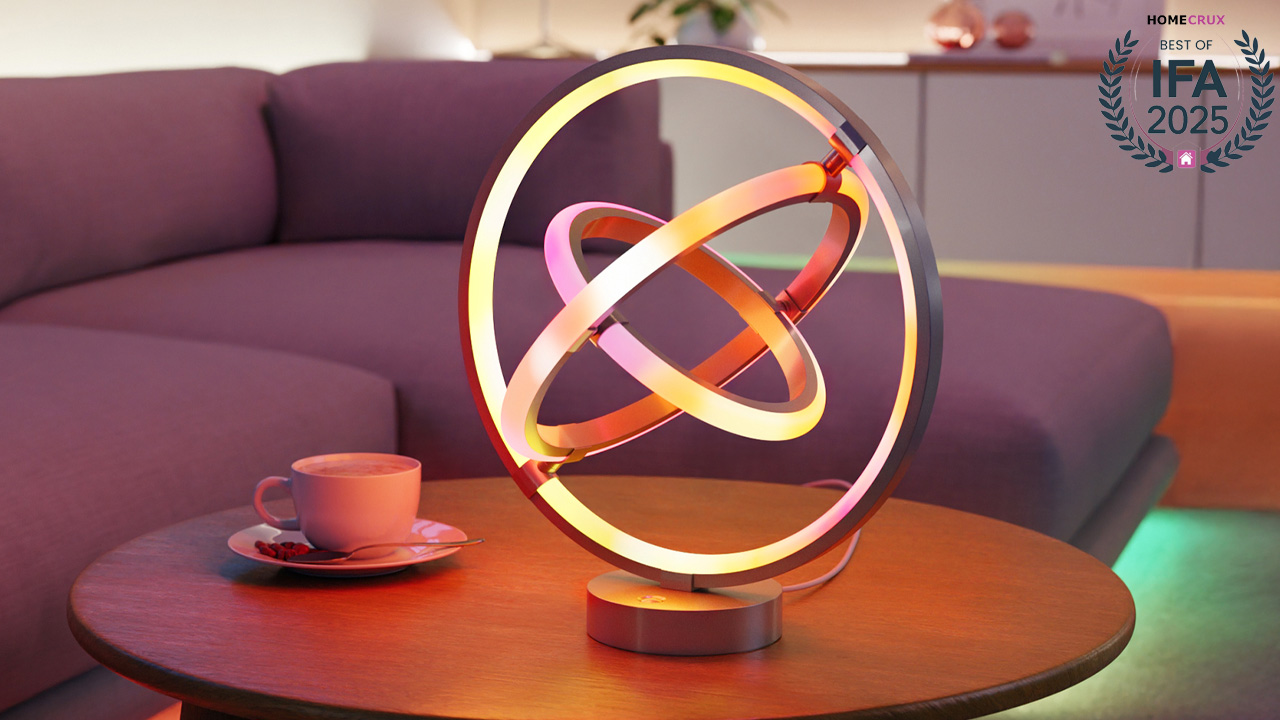
What we noticed right away is that the design has enough visual character to feel different without tipping into tacky sci-fi clutter. The three-ring shape gives it a sculptural presence, but it is not trying too hard. It looks intentional on a desk, shelf, or bedside table. More importantly, it looks like a finished product rather than a toy wearing smart-light branding.
The material choice helps. The aluminum alloy body gives the lamp a cleaner, more substantial feel than cheaper all-plastic RGB lights, and the base does enough to keep the whole thing from feeling flimsy. At roughly 1.8 pounds, it is not especially heavy, but it is not featherlight either. We never got the sense that it was just a decorative shell built around cheap lighting hardware.
The adjustable rings also matter more than they may seem at first glance. The fact that the middle and inner rings can rotate up to 300 degrees changes how the lamp behaves in a room. A lot of ambient lamps are visually locked into one look. They either throw light the way the designer intended or not at all. Here, the ability to shift the inner structure gives the TB1 more range. We appreciated that because it helps the lamp cross over from decor object into something more useful. You can aim the overall glow differently, change how much light hits the wall behind it, and make it feel less static over time.
That flexibility does not turn it into an architect lamp. It is still not that kind of product. But it does make it easier to position in a way that suits the space instead of forcing the space to suit the lamp.
Setup and first use
Smart lights often lose points before they have even turned on properly. App pairing can be annoying, menus can be messy, and features can feel buried under layers of novelty. We were glad the TB1 avoided most of those early frustrations.
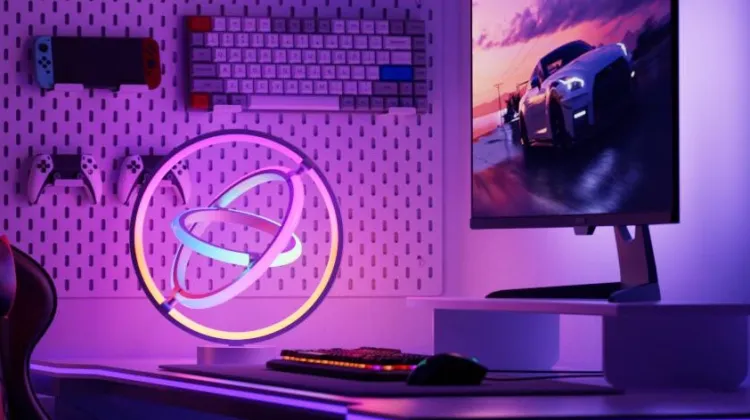
Setup comes down to the Lepro app, with Wi-Fi and Bluetooth handling connection. Once the lamp is in place, the process is straightforward enough that it does not feel like a mini project. That sounds like faint praise, but it matters. Too many smart lights ask for patience before they give you anything back. The TB1 gets to the useful part reasonably quickly.
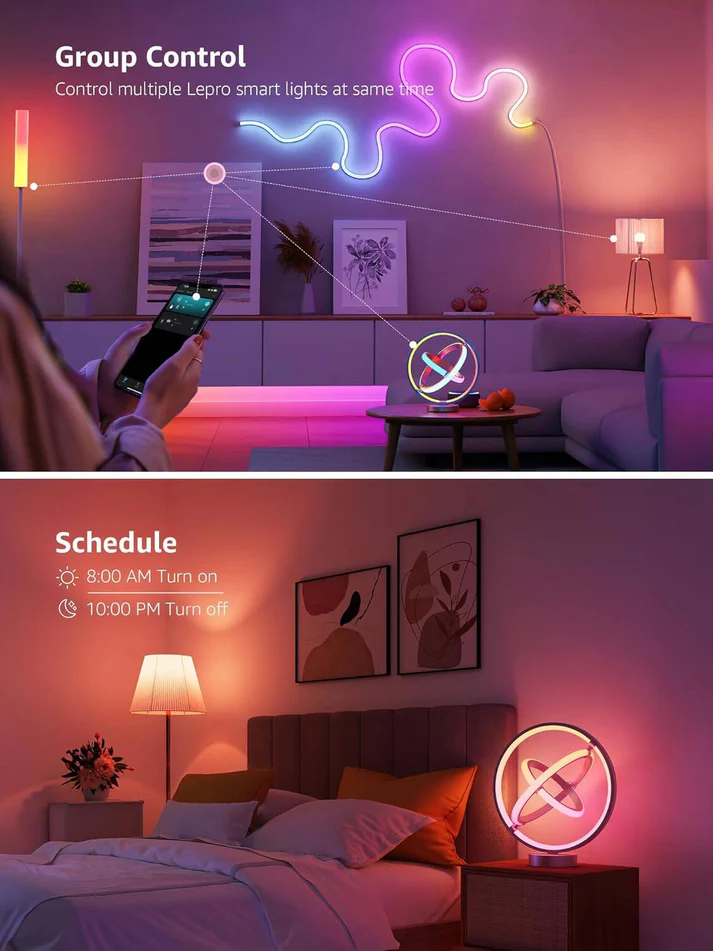
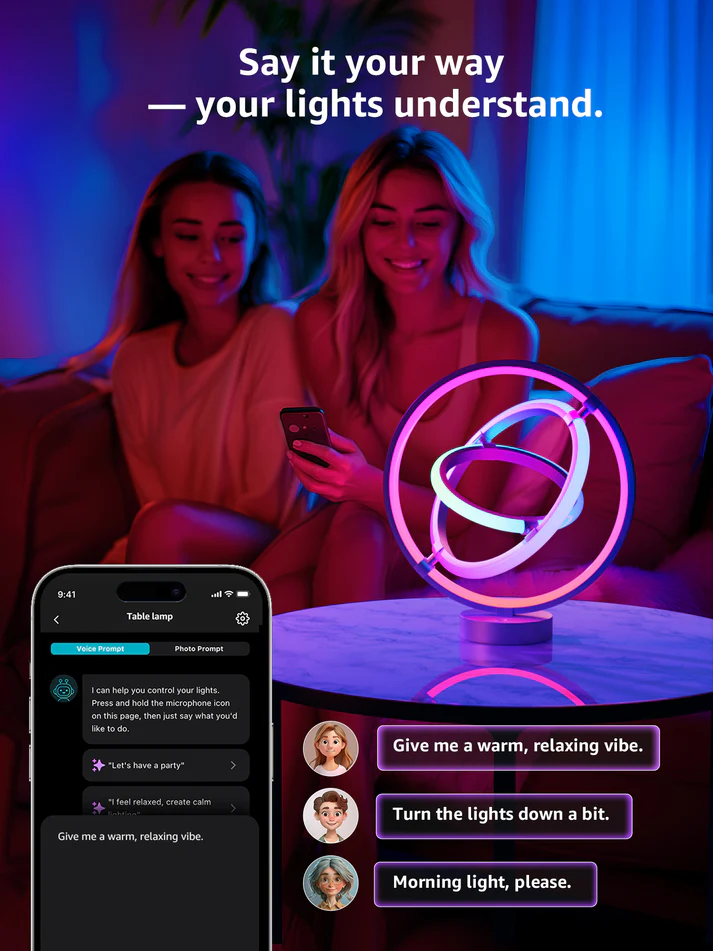
The app itself is where the lamp’s personality lives. Brightness control, scenes, segmented color customization, scheduling, timers, music sync, and AI-driven scene generation are all tied into that software layer. In daily use, we found that to be both one of the product’s strengths and one of its limits.
The strength is obvious: the lamp does not feel stripped down once it is connected. There is enough to play with, enough to fine-tune, and enough room to make the light feel personal. The downside is just as clear. This is an app-led product. If you hate that category on principle, the TB1 will not convert you. Yes, there is a base button. Yes, voice support is present. But this lamp is clearly designed for people who do not mind opening an app to get the best out of it.
That divide matters more than Lepro’s marketing copy does. Buyers who enjoy customizable lighting will probably settle into the TB1 quite naturally. Buyers who want plug-it-in simplicity will feel the app dependence much more.
Real-world lighting performance
This is where the lamp really earns its keep.
The biggest reason the TB1 works is that the light itself does not feel cheap. That may sound basic, but it is the difference between a smart light you keep and one you regret two days later. We have seen plenty of RGB-heavy products that look impressive in screenshots and then fall apart in real use because the lighting feels harsh, patchy, or plasticky. The TB1 avoids that trap.
Brightness is one of its strongest traits. It has enough output to matter, which immediately separates it from purely decorative mood lights that barely register once the room is not fully dark. In practice, we found the TB1 useful not only as an accent lamp but as a real contributor to the space. It can create atmosphere, but it can also add enough usable light to make the desk or side table feel active rather than theatrical.
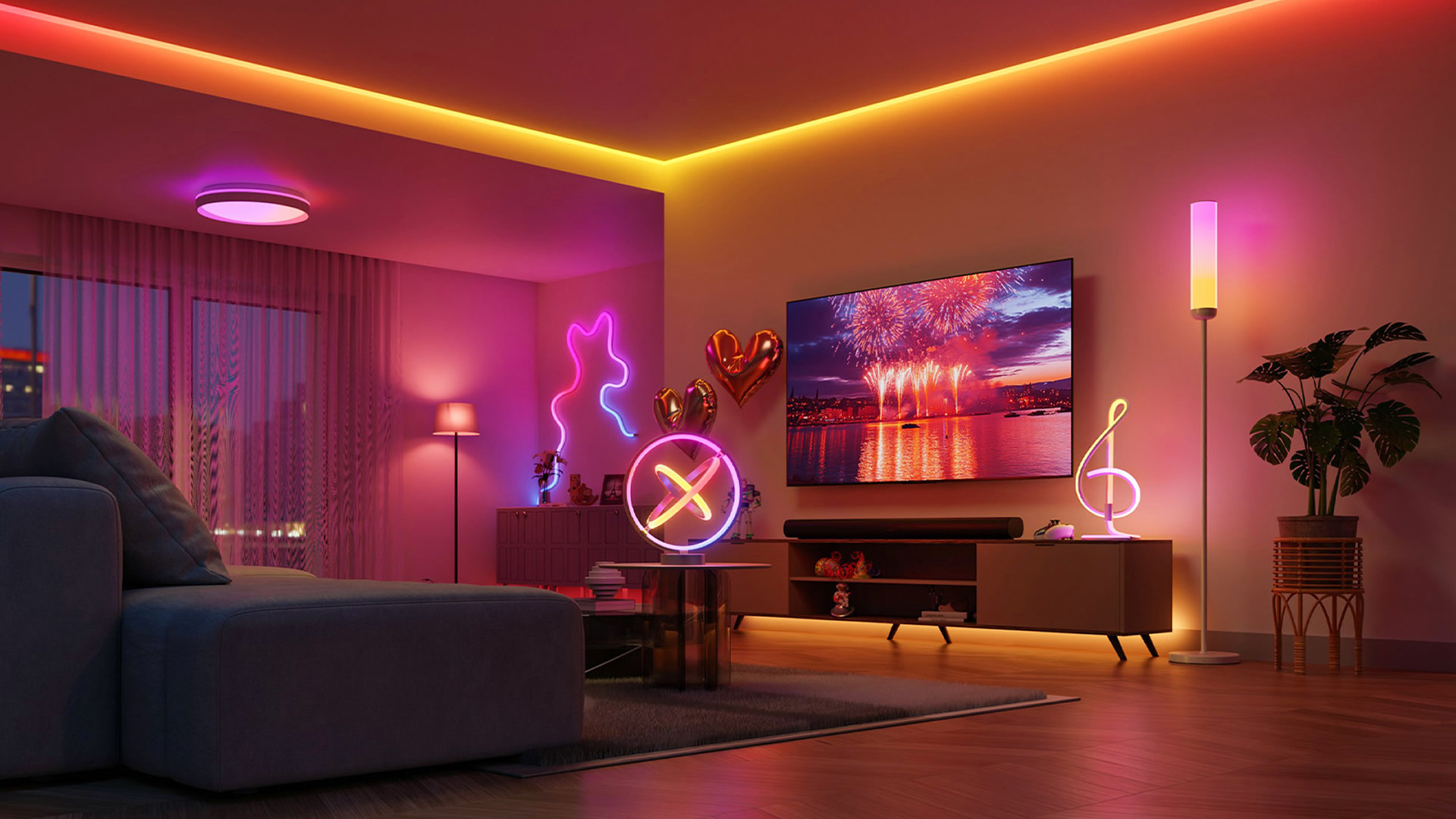
What stood out even more, though, was the quality of the color effects. The 196 addressable RGB+IC LEDs are not just there for spec-sheet padding. They show up in the way gradients move and blend. Instead of the blunt color-shifting effect you get from basic RGB lamps, the TB1 produces transitions that look smoother, more layered, and more deliberate. That matters because ambient lighting can go tacky very quickly when the hardware is not good enough to carry the idea.
Here, the multi-zone behavior gives the lamp visual depth. Flows look more fluid. Scenes feel less like preset gimmicks and more like actual lighting moods. Even when we were not using the most dramatic settings, the lamp still looked more refined than the average RGB desk accessory.
We also appreciated the diffusion. Bright, colorful lighting can become unpleasant if the LEDs are too exposed or the beam quality is too sharp. The TB1 handles this well enough that the output feels vivid without becoming harsh. That is one of the reasons it works as more than a gaming-room novelty. It can be expressive without looking raw.
White-light performance is the more nuanced part of the story. Yes, the lamp can absolutely handle everyday white-light use. Yes, it can support desk duty. But the reason to buy it is not that it dethrones traditional work lamps. It does not. The reason to buy it is that it gives you practical light and a lot more personality than those products usually do. We found that distinction important. When judged as a mood-first hybrid lamp with genuine usefulness, it succeeds. When judged as a pure task-light machine, it is less compelling.
Use-case performance: desk, bedroom, gaming, and backdrop duty
A lamp like this lives or dies by versatility. If it only works in one very specific kind of setup, it becomes harder to justify. The TB1’s appeal is that it adapts well to several different roles.
On a desk, it works best when you want the lighting to contribute to the feel of the space rather than disappear into the background. We liked it most in setups where the lamp was allowed to be visible and part of the room’s identity. It can absolutely support casual desk work, but it feels especially well suited to spaces where the lighting is meant to do more than just help you read.
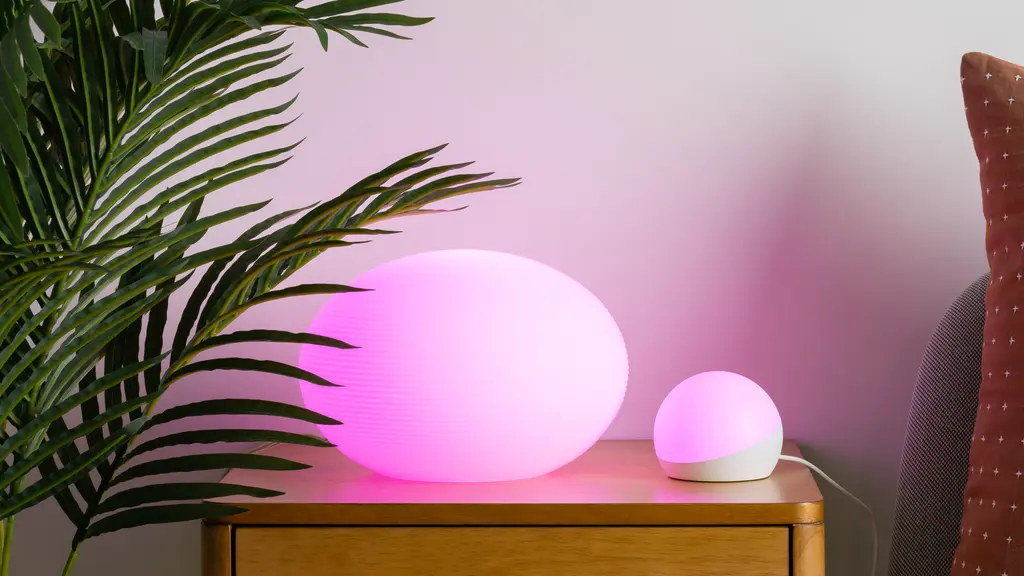
In a bedroom, the TB1 makes immediate sense. This is one of its strongest environments because the lamp can shift from calm white light to warmer mood-focused scenes without looking out of place. That ability to move between functional and atmospheric is probably its best real-world trait.
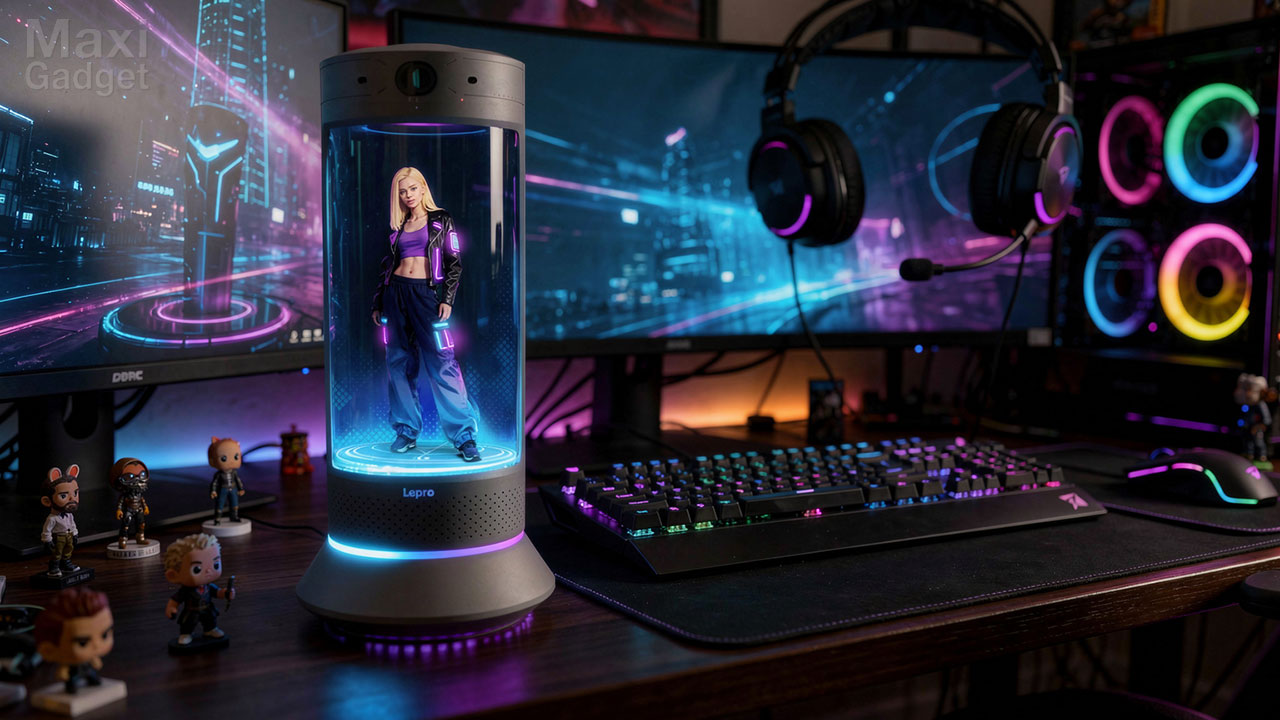
For gaming or streaming setups, the product almost sells itself. The design already looks like it belongs in that category, but what we appreciated is that it is not just playing dress-up. The color effects are smooth enough, the output is strong enough, and the scene flexibility is broad enough that the lamp actually contributes something. It feels more premium than the average RGB accessory because the light quality supports the aesthetic.
As backdrop lighting, it also works well because the lamp itself has visual personality even before the light effects kick in. That sounds minor, but many smart lamps depend entirely on whatever color they are currently showing. When they are off or neutral, they lose all presence. The TB1 does not. Its physical shape gives it decorative value even before you start tweaking scenes.
Smart features, AI scenes, and music sync
This is where the product gets more complicated.
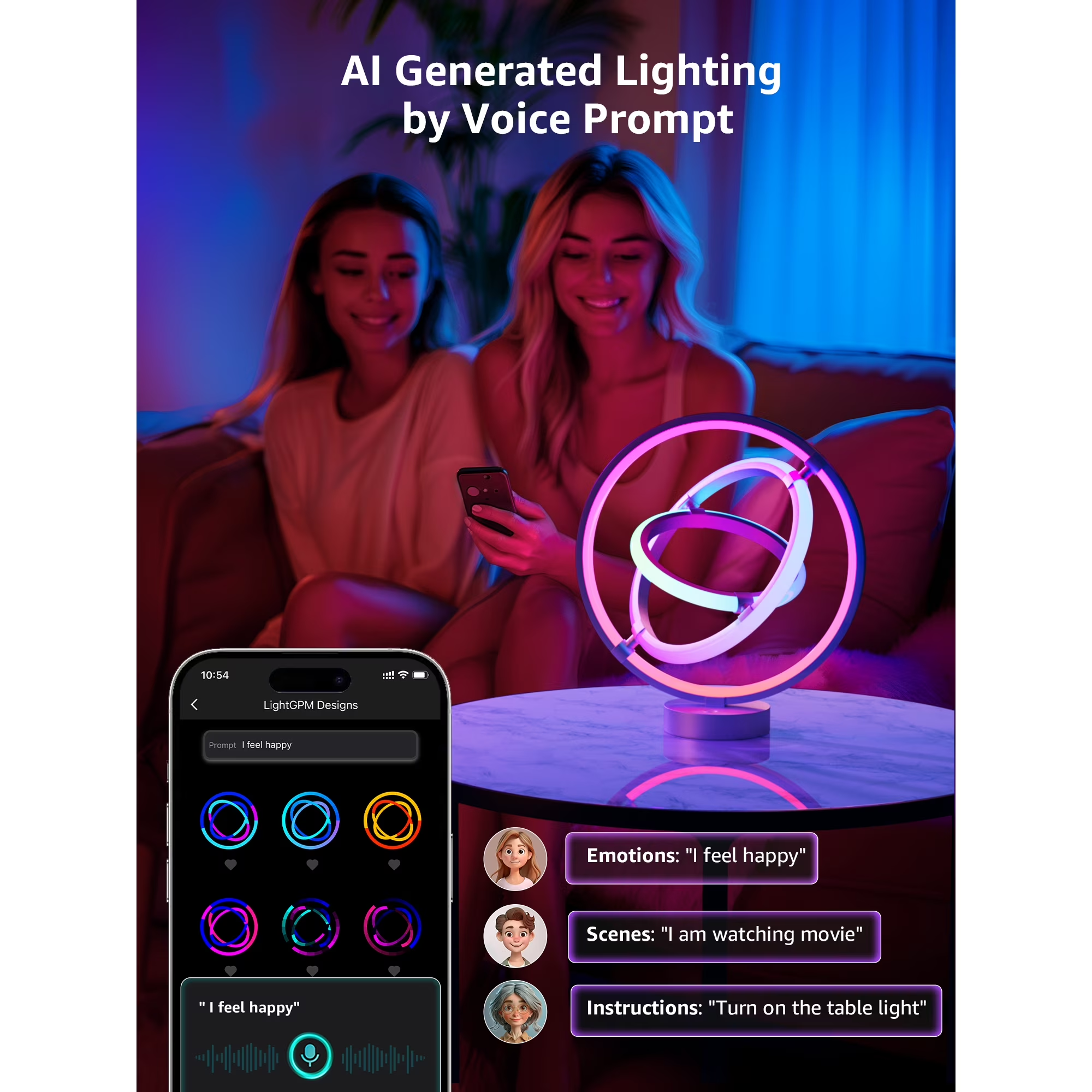
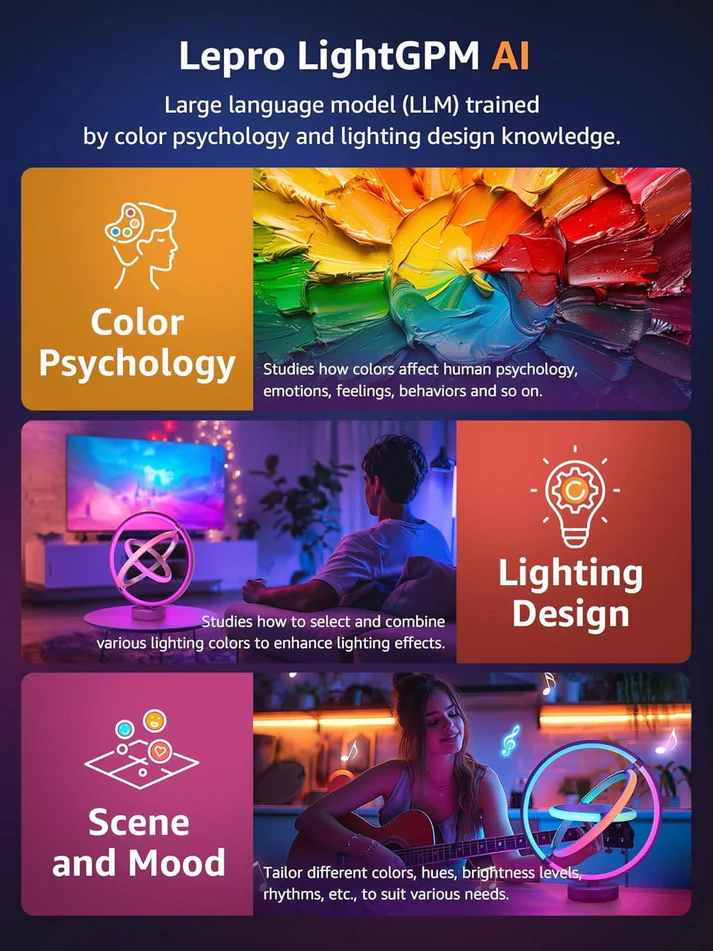
Lepro pushes the LightGPM AI side hard, and we understand why. It is an easy headline. Ask for a mood, get a lighting scene. In practice, though, the AI is not the main reason we would recommend the TB1. It is more like a layer of fun on top of a lamp that already needed to stand on its own.
That is not a criticism so much as a reality check. We enjoyed the idea of being able to generate scenes around moods or activities, and there is genuine appeal in reducing some of the friction of manual customization. But over time, what mattered more was whether the lamp still felt satisfying once the AI novelty faded. The good news is that it does.
The better long-term value is in the segmented control, the strong presets, and the ability to dial the lamp into something that suits the room. Those features keep the product feeling useful after the initial “AI lamp” curiosity cools off.
Music sync is easier to appreciate in daily use because it has a clearer purpose. With the built-in microphone in the base and adjustable sensitivity in the app, the TB1 can react to sound in a way that actually suits gaming rooms, parties, and more playful desk setups. We liked that Lepro included enough control here to keep the feature from feeling totally disposable. Some users will barely touch it, but for the right setup, it adds energy in a way a normal desk lamp simply cannot.
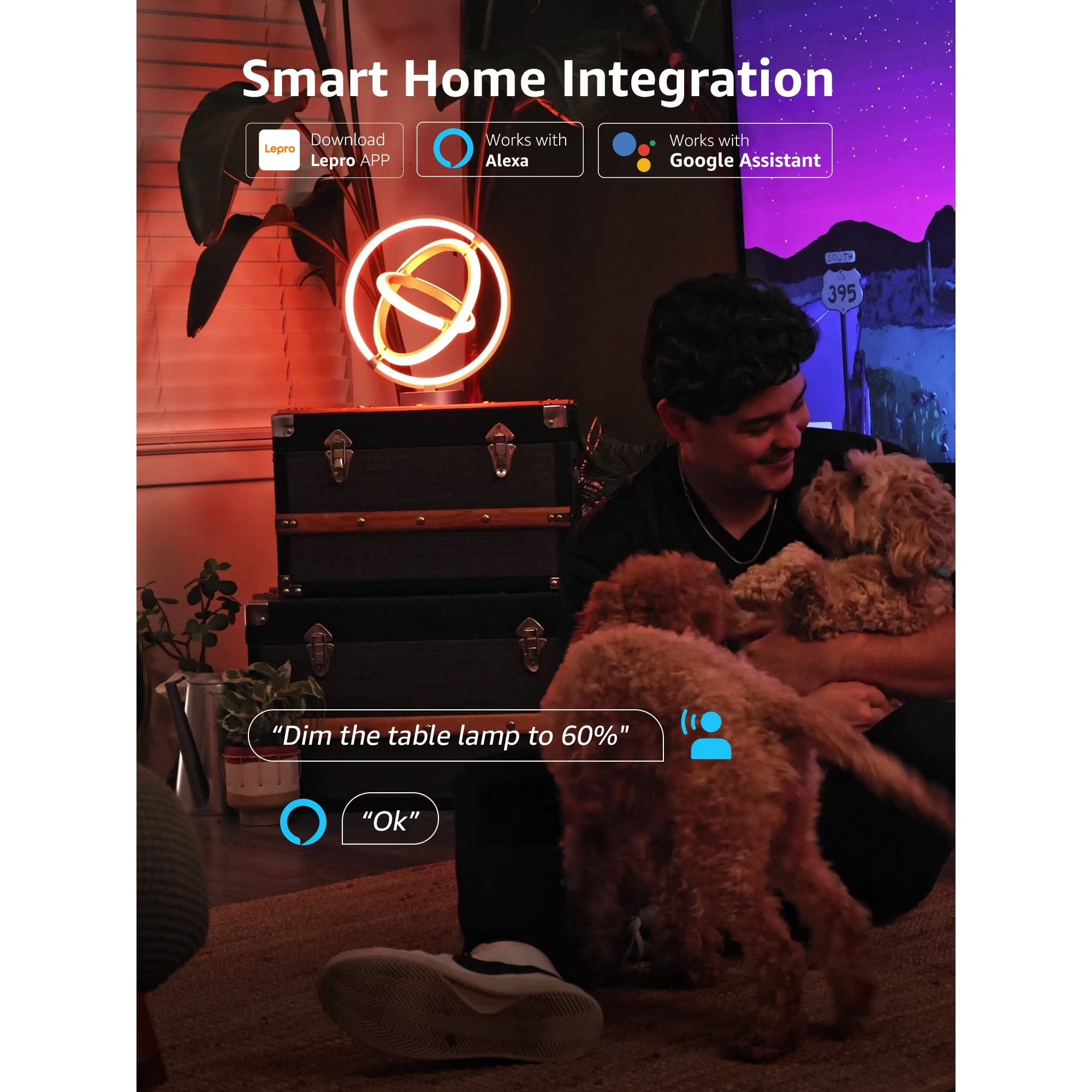
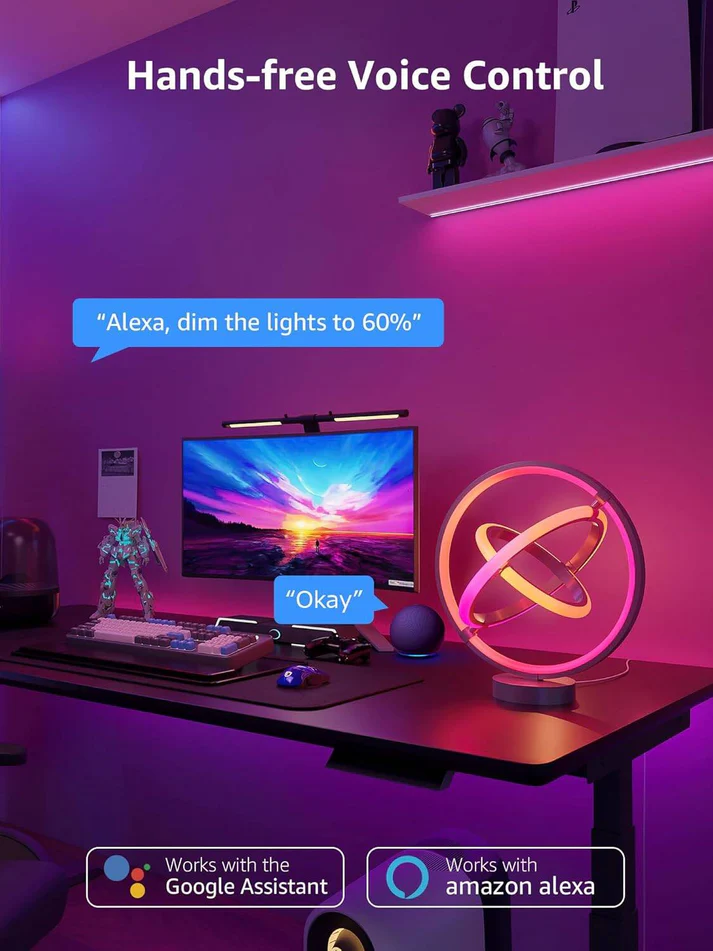
Voice support with Alexa and Google Assistant is welcome, but this is also where the product’s limitations become more obvious. Basic voice functions are there, but the full personality of the lamp still lives inside Lepro’s own ecosystem. That is fine for casual users. It is much less exciting for people who expect a smart product to integrate deeply with the broader system they already use.
Flaws and frustrations
The TB1 is easy to like, but it is not hard to critique either.
The biggest weakness is that its smartest features feel brand-contained rather than broadly connected. The lamp is smart, but it is smart on Lepro’s terms. If your home already runs around Apple HomeKit, Home Assistant, or a more open automation-focused setup, the TB1 starts to feel like a stylish outlier rather than a fully cooperative device.
That matters because buyers in the smart-light category are often split into two camps. One camp wants a cool lamp with app control and voice support. The other wants a lighting product that drops neatly into a larger automation system. The TB1 clearly serves the first group better than the second.
We were also less convinced by the AI as a selling point than by the lamp’s core lighting quality. The AI scenes are interesting, and they help the product stand out on a store page, but the part we appreciated most was that the TB1 does not need them to justify itself. That also means the AI is not really the star. If you buy this lamp because you think the artificial-intelligence hook will transform the experience, you may come away less impressed than someone who buys it for the design, brightness, and color performance.
There is also the question of positioning. Lepro calls it a table lamp, and that is technically true, but buyers should go in with the right expectations. This is not the ultimate productivity lamp. It is not trying to become the new benchmark for long reading sessions, pure office efficiency, or distraction-free workspace lighting. It can support those uses, but its soul is elsewhere. We think that matters because some products get unfairly judged when buyers want them to be something they never really intended to be.
Value for money
The value story depends heavily on what you want from the category.
If you are looking for the cheapest possible source of light for a desk or bedside table, this is not the right product. You can spend less and get something more utilitarian. If you want the broadest possible smart-home compatibility, there are other ecosystems that make a stronger case. If you want pure task-light performance, you can also find lamps that are more focused.
But if you want a lamp that feels like an upgrade to the room itself, the TB1 starts making much more sense. It combines real visual appeal, solid brightness, attractive color quality, adjustable design, and enough smart functionality to stay interesting. That combination is what gives it value.
We also think this is the kind of product that becomes much easier to recommend when it is discounted. At a strong sale price, the TB1 looks like a very persuasive buy because the gap between what it does and what more premium ecosystem-heavy products cost becomes easier to ignore. At full price, the buyer needs to be a little more aligned with its priorities. In other words, this is not a universal-value product. It is a value product for people who actually want this exact blend of style, ambiance, and flexibility.
Who should buy it
You should buy the Lepro TB1 if you want your lamp to do more than just light up a surface.
We think it is especially appealing for people who care about the feel of a room: gamers, content creators, bedroom-upgrade shoppers, desk-setup enthusiasts, and anyone tired of boring lighting that contributes nothing to the atmosphere. The TB1 has the kind of presence that makes a setup feel more considered, and it does that without giving up basic practicality.
It also suits buyers who enjoy customization. If you like experimenting with scenes, shifting the mood of a room, or tuning your lighting to different parts of the day, this lamp gives you enough range to stay interesting. The adjustability of the rings helps, the segmented LED control helps, and the overall polish of the light output helps most of all.
Who should skip it
You should skip the TB1 if your priorities are strict utility and deep ecosystem integration.
If you already know you want HomeKit, wider automation support, or a lamp that becomes part of a larger smart-home brain, this one will probably feel limited. If you want a pure task lamp for long work sessions and care little about color, motion, or visual personality, you will likely get better value elsewhere.
We would also steer cautious buyers away if they know they dislike app-heavy products. The TB1 rewards curiosity. It rewards people who are willing to open the app, browse scenes, try features, and make the lamp part of the room’s personality. If that sounds tiring rather than fun, a simpler lamp will probably make you happier.
Final verdict
After spending real time with the Lepro TB1, our view is pretty clear: this is a good smart lamp made better by the fact that its core lighting quality is stronger than its marketing gimmicks.
The AI side is not the reason we would buy it. The reason we would buy it is that it looks good, feels more substantial than a lot of decorative smart lamps, gets bright enough to matter, produces smooth and attractive RGB+IC effects, and has enough physical adjustability to feel useful beyond its visual appeal. It makes a space feel better. That is the real win here.
The tradeoff is equally clear. The TB1 does not offer the broadest ecosystem story, and it is not the lamp for people who want a stripped-down, work-first tool with minimal app involvement. But for buyers who want a stylish hybrid lamp that can shift between practical light and full mood-setting mode without feeling cheap, we think Lepro got a lot right.
Our take is simple: if your priority is atmosphere with real usefulness attached, the Lepro TB1 earns its desk space.
FAQ
Is the Lepro TB1 actually bright enough to use as a real lamp?
Yes. That is one of the biggest reasons it works. It is not just decorative filler. The light output is strong enough to make the lamp useful in everyday settings, even though it still makes the most sense as a hybrid between an ambient light and a practical lamp.
Does it work with Alexa and Google Assistant?
Yes. The TB1 supports Alexa and Google Assistant for voice control. Basic commands are there, but the more advanced personality of the lamp still lives in the Lepro app.
Does it support Apple HomeKit?
No, and that is one of the more obvious limitations. Buyers who want broader ecosystem compatibility may find the TB1 narrower than they would like.
Are the AI features worth caring about?
They are worth treating as a bonus rather than the main event. They make the lamp more playful and can be genuinely fun, but the lasting value comes from the lamp’s design, brightness, color quality, and flexibility.
Can you adjust the lamp physically?
Yes. The middle and inner rings rotate up to 300 degrees, while the outer ring stays fixed. That gives the lamp more flexibility than a static decorative light.
Is it better as a desk lamp or a mood lamp?
It is better understood as a mood lamp with real desk usefulness than as a pure desk lamp with extra colors. It can do both, but its identity leans clearly toward atmosphere, visual personality, and room enhancement.
What are the key specs that actually matter?
The big ones are 196 addressable RGB+IC LEDs, 14W power, 1% to 100% dimming, Wi-Fi and Bluetooth connectivity, 300° ring adjustability on two rings, and a body built from aluminum alloy with a polycarbonate base. Those are the specs that most directly shape how the TB1 feels and performs in daily use.
Explore the Lepro TB1 AI Smart Table Lamp Gallery
Every image from this article, gathered in one clean place. Tap any photo to open it larger.