
DREO RO Water Filter 511
Pros
- Real reverse osmosis filtration without plumbing installation
- Excellent improvement in taste and overall water quality
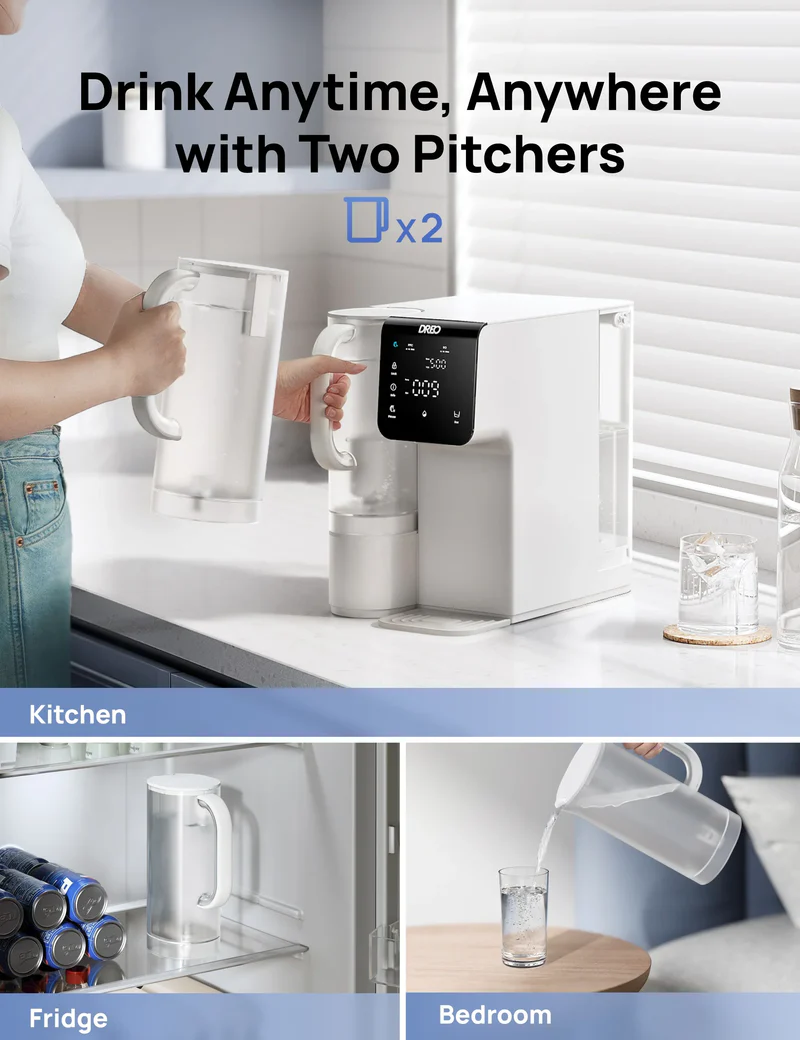
- Dual 1.5L pitcher system makes everyday use much smoother
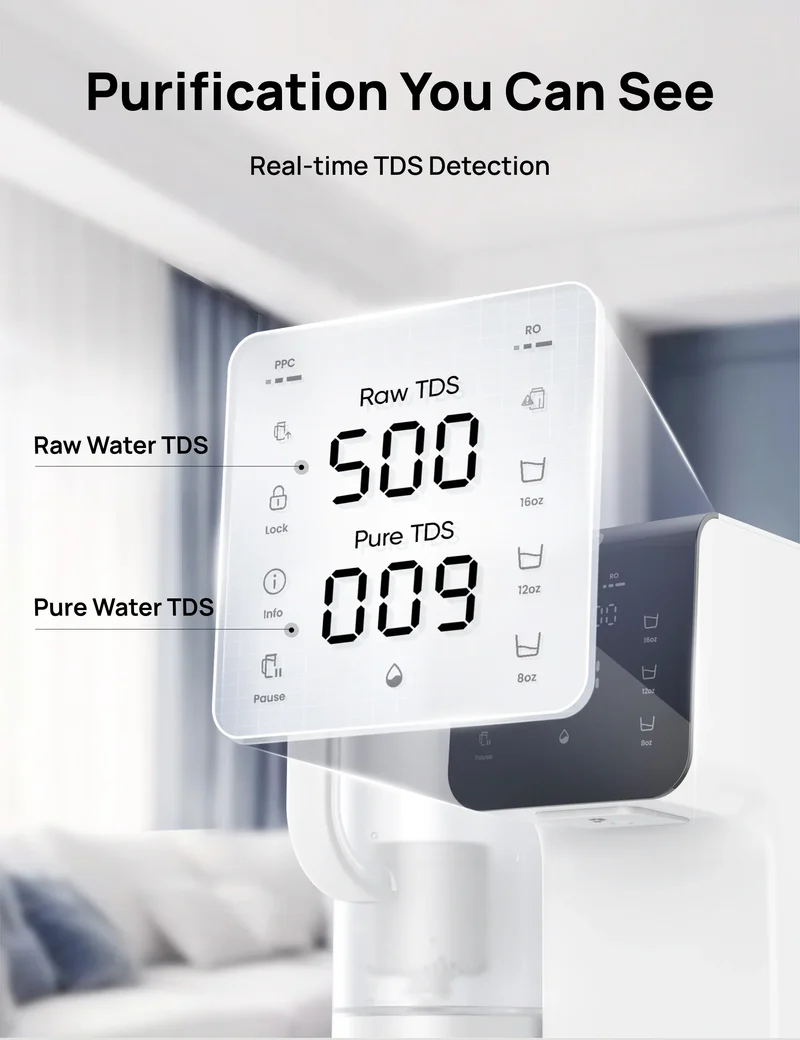
- Real-time TDS display adds transparency and confidence
- Easy setup with no tools, no drilling, and no cabinet work
- 170 oz raw water tank is generous for a countertop system
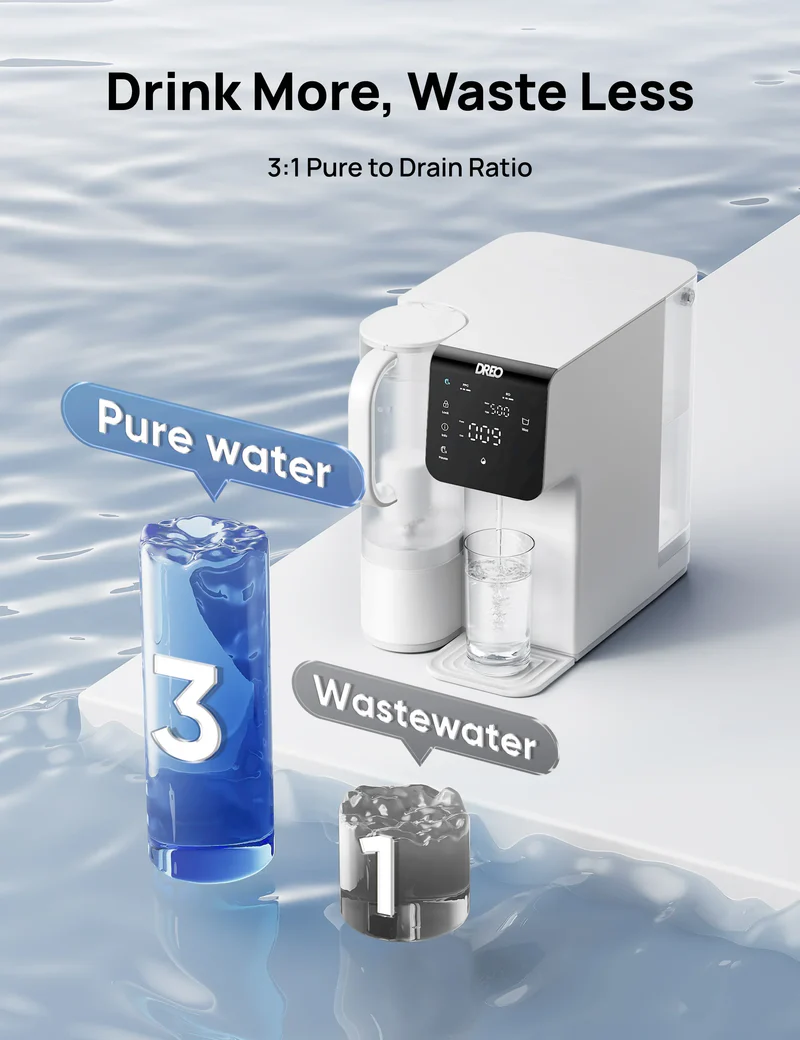
- Strong pure-to-drain efficiency for the category
- Filter monitoring and reminders make ownership easier
Cons
- Still takes up a noticeable amount of counter space
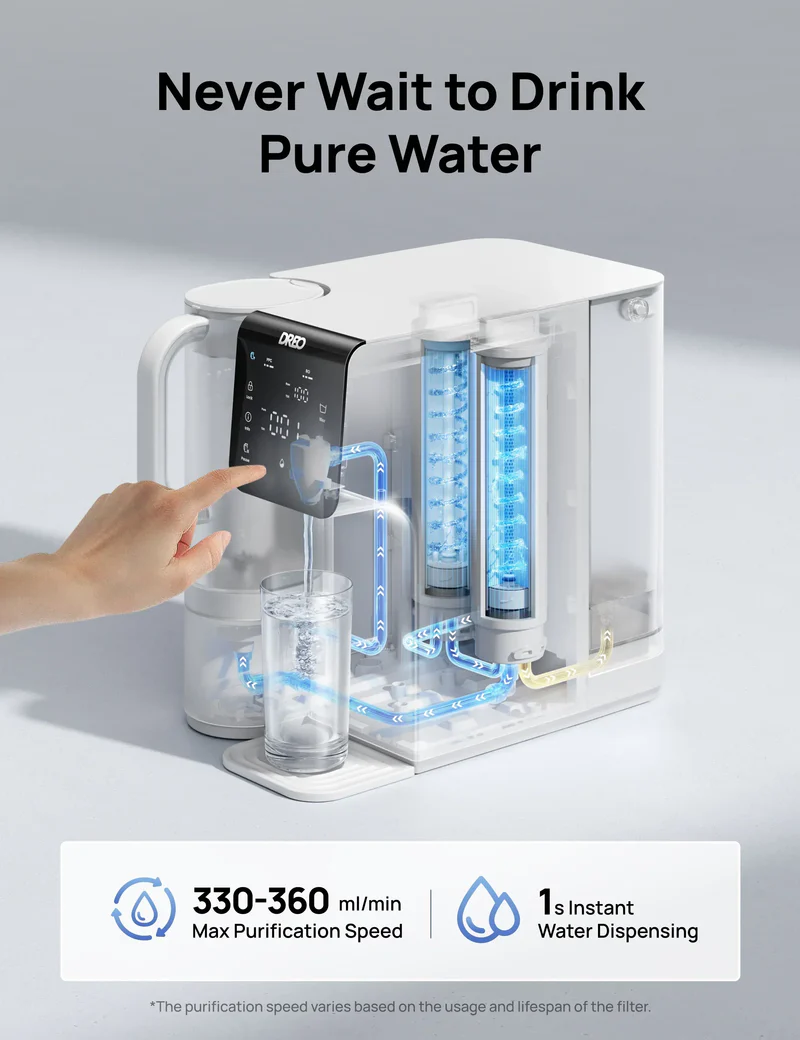
- Direct dispenser is slower than the design suggests
- Dispenses room-temperature water unless you chill a pitcher
- Refill-based ownership will not suit heavy-use households
- Certification messaging could be clearer for detail-oriented buyers
excellent-tasting water, very easy setup, a useful dual-pitcher system, a clear real-time TDS display, simple filter monitoring, and a better waste ratio than many people expect from RO.
it still takes up a noticeable amount of counter space, the direct dispenser is slower than it should be, the machine dispenses room-temperature water, and heavy-use households will feel the limits of a refill-based format.
The DREO RO Water Filter 511 makes a strong first impression because it solves a very specific problem with very little drama. It gives you real reverse osmosis filtration without asking you to crawl under a sink, touch a water line, or permanently give part of your kitchen over to a plumbing project. After spending real time with it, our view is clear: this is one of the smartest countertop RO systems for renters, apartment kitchens, offices, and smaller households that want meaningfully better water without installation headaches.
It is far less convincing if you have a cramped counter, a large family that tears through drinking water, or zero patience for refilling tanks and managing pitchers.
What stood out to us right away was how well DREO understood the category’s usual pain points. Countertop RO systems often sound great in theory, then start feeling clumsy once they move from the product page to the kitchen.
The WF511 avoids a lot of that. The two-pitcher setup is genuinely useful. The TDS display is not there for decoration. The whole refill-and-chill routine feels more practical than we expected. The tradeoffs are still real, but they are the kind of tradeoffs we can understand and plan around: size, refill frequency, and dispensing speed, not disappointing water quality.
What we tested
With a product like this, the questions that matter are not complicated. We wanted to know whether the water actually felt like a meaningful step up, whether the setup was as simple as advertised, whether the dual-pitcher idea improved daily use or just added clutter, and whether the machine earned the space it takes up on a counter.
We also paid close attention to the parts that usually decide whether a countertop appliance stays out full-time or gets exiled to a cupboard after the honeymoon period. That meant looking at refill rhythm, dispensing behavior, display usefulness, maintenance friction, and the difference between what sounds good on the box and what actually feels good in everyday use.
How we tested it
We approached the WF511 the way most people would actually live with it. We focused on setup, first use, pitcher refilling, direct dispensing, day-to-day drinking water convenience, chilled-water workflow, and the simple question of whether it made our kitchen routine better or just more complicated.
That practical lens matters here. Reverse osmosis is easy to admire as a concept. The harder question is whether a countertop RO system fits naturally into real life. The DREO mostly does, and that is a big reason we came away impressed.
Design and build quality
DREO got the look right. That may sound secondary, but with a countertop RO system it matters a lot. This is not something that hides in a cabinet. It lives in plain sight. If the design feels clunky, cheap, or overly industrial, you will notice it every day.
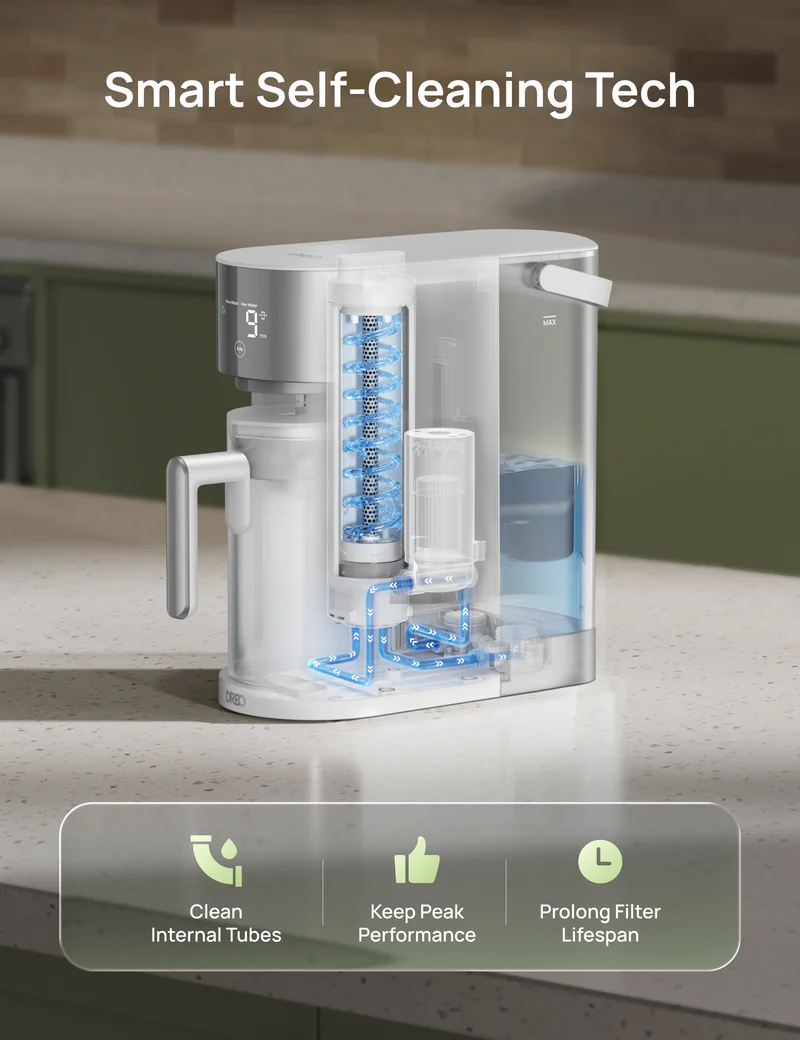
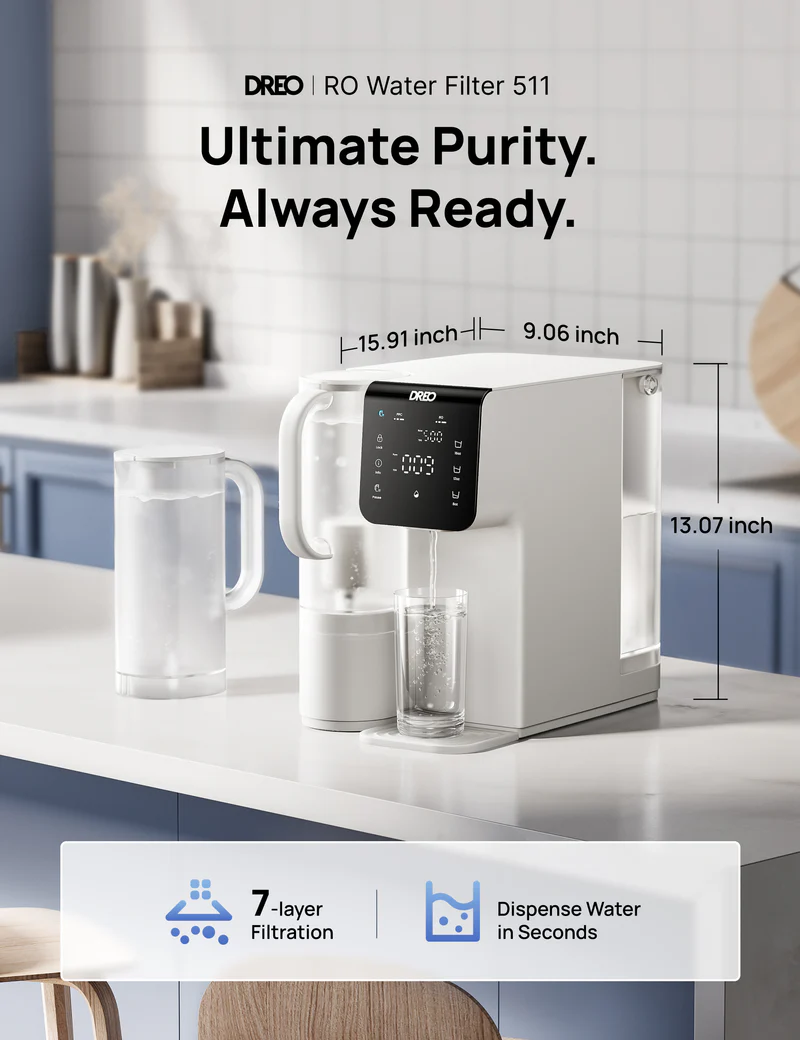
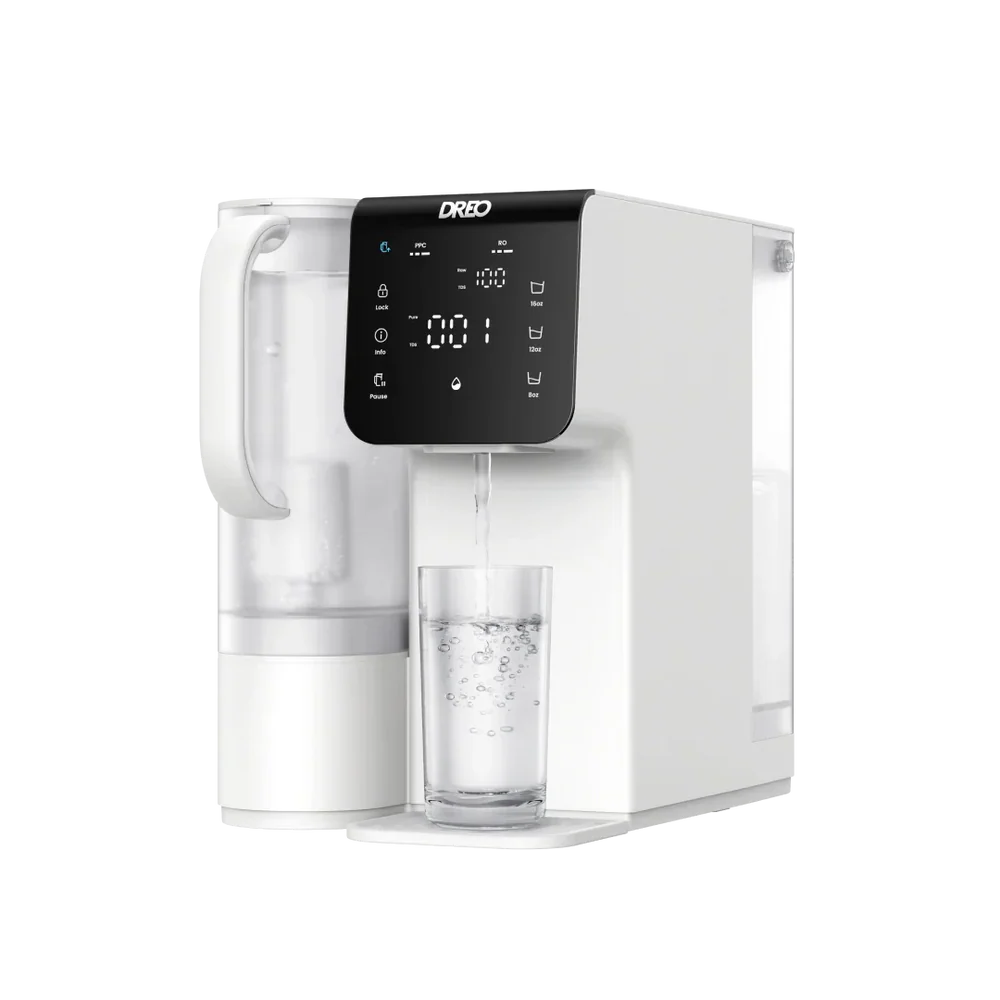
The WF511 looks more like a polished kitchen appliance than a compromise product. It has a cleaner, more finished appearance than a lot of countertop filtration systems, and that helps justify its permanent presence on a counter. The layout is also well thought through. The rear tank placement is sensible, the filter access is straightforward, and the display is easy to read without feeling overdone.
What we appreciated most is that DREO did not dress up a messy design with fancy wording. The machine still has physical presence. It is not tiny. It is not subtle. But it is organized well enough that it feels intentional rather than awkward. There is a big difference between a product that takes up space because it is poorly designed and one that takes up space because the category simply demands it. This is the second kind.
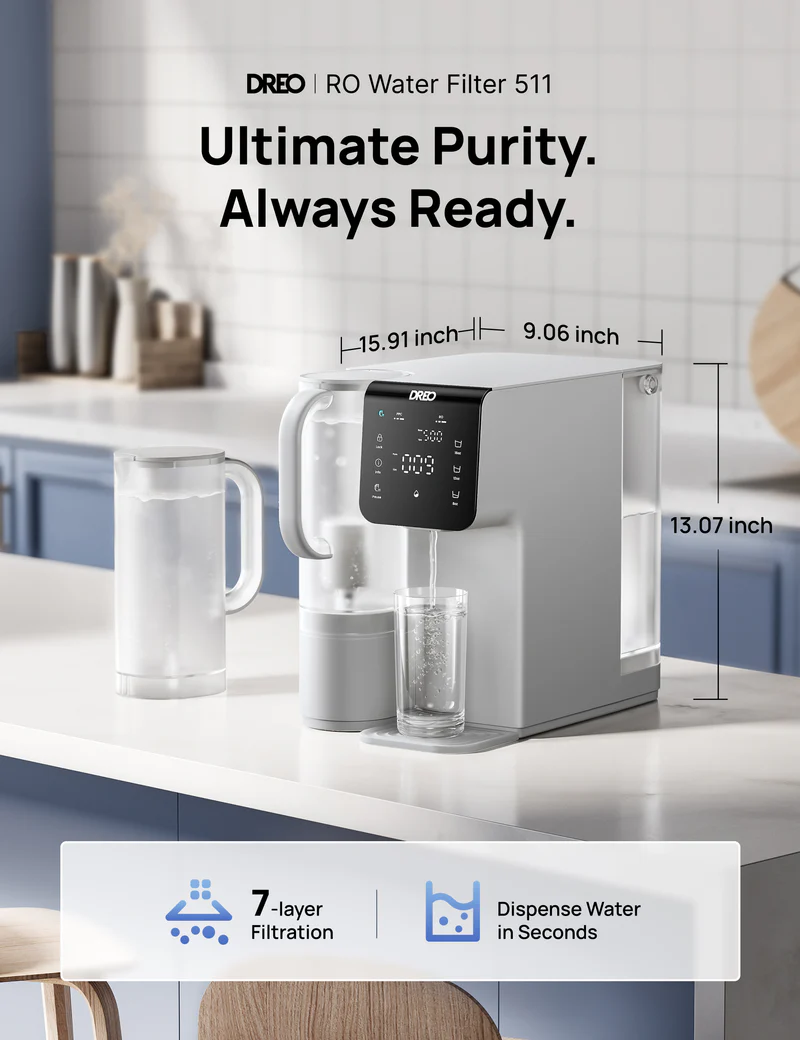
That said, we would not undersell the footprint. If your kitchen already feels tight, the WF511 will not disappear into the background. Between the machine itself, the raw water tank, and the pitcher workflow, this is a product that needs a proper home. Buyers with generous counters will shrug that off. Buyers in smaller kitchens may not.
Setup and first use
This is one of the WF511’s strongest areas.
The entire reason many people shop for a countertop RO system is to avoid the hassle of installing an under-sink unit. No drilling, no hoses, no fittings, no wondering whether you are about to create a leak. The DREO delivers on that promise. Getting started is refreshingly painless. Insert the filters, fill the tank, flush the system, and you are basically up and running.
In practice, that ease matters more than it sounds. Traditional reverse osmosis still makes some buyers nervous because it feels like a commitment. The WF511 strips away that barrier. For renters, office kitchens, dorm-like setups, or anyone who simply does not want to touch plumbing, that changes the buying equation completely.
What became clear to us very quickly, though, is that “easy setup” is not the same thing as “no involvement.” DREO makes the front-end experience simple, but countertop RO shifts more of the responsibility into daily ownership. You still need to refill the raw water tank. You still need to manage the pitchers. You still need to clean removable parts regularly. This is easier than installation, not free of maintenance.
That is a fair trade, and for the right buyer it is absolutely the right trade. But it is still worth saying plainly: the WF511 is low-hassle, not hands-off.
Water quality and real-world performance
This is the part that matters most, and thankfully it is where the DREO feels most convincing.
The short version is simple: the water tastes much better. Not slightly better. Not “maybe if you focus hard enough” better. It tastes cleaner, fresher, and more like what people actually want when they decide to upgrade from basic filtration.
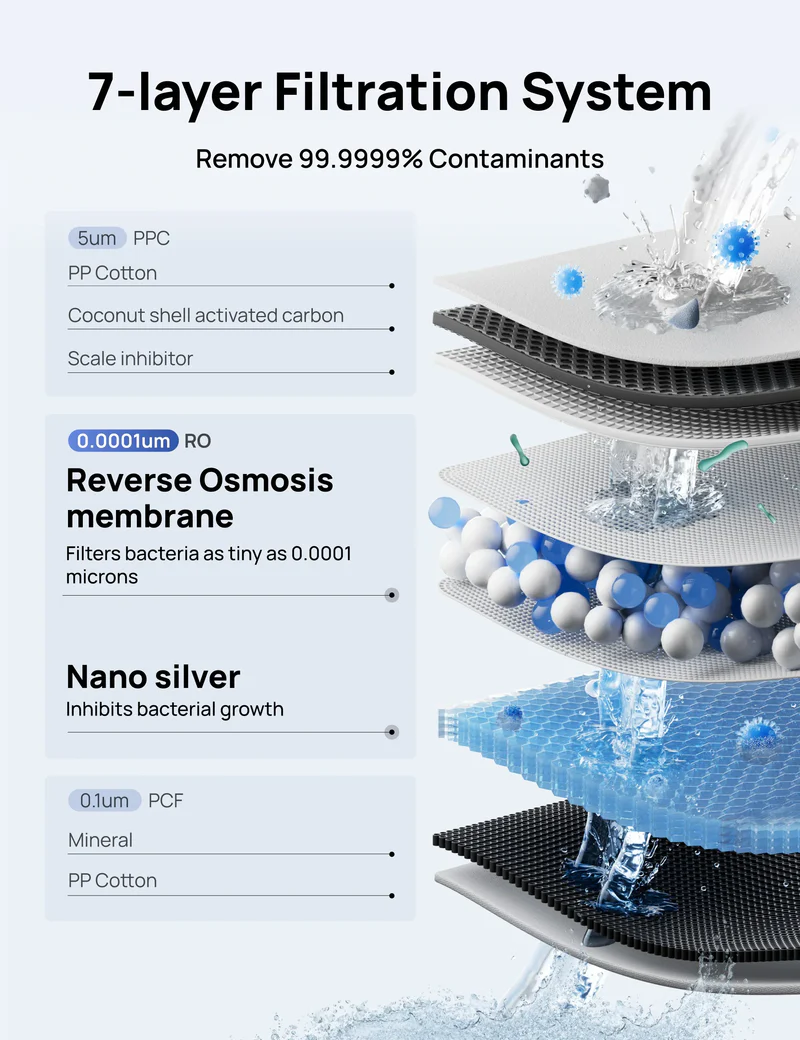
That improvement is backed up by the machine’s behavior as well. The real-time TDS display is one of the best features here because it makes the filtration process feel visible instead of abstract. We liked being able to see raw and filtered readings rather than being asked to trust the system blindly. That kind of transparency is useful, especially in a category that often leans too heavily on invisible promises.
The reported reduction in dissolved solids is also substantial. In one test, the machine’s display showed tap water dropping from 280 ppm to 5 ppm, while a separate tester showed 438 ppm unfiltered and 15 ppm filtered. The exact numbers varied depending on the measurement method, but the main point did not: the system was cutting dissolved solids dramatically, and the difference showed up clearly in the glass.
What impressed us is that the taste improvement did not feel like a side note. It felt central to the whole experience. Some filtration products have strong technical claims but leave you with only a modest real-world payoff. The WF511 does not have that problem. The strongest thing about it is that the result feels worth the effort.
The pitcher system is what makes this machine work
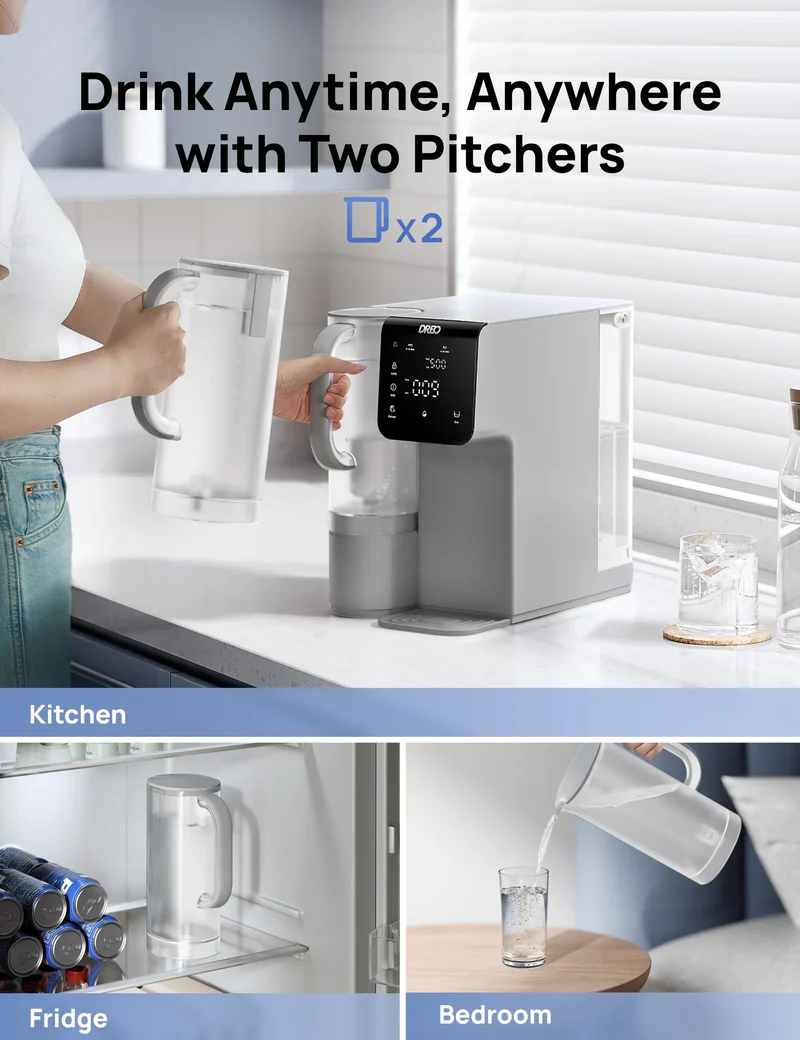
On paper, the headline features are reverse osmosis, contaminant reduction, the screen, and the efficient pure-to-drain ratio. In daily use, the killer feature is the dual-pitcher setup.
That is what makes the whole system feel livable.
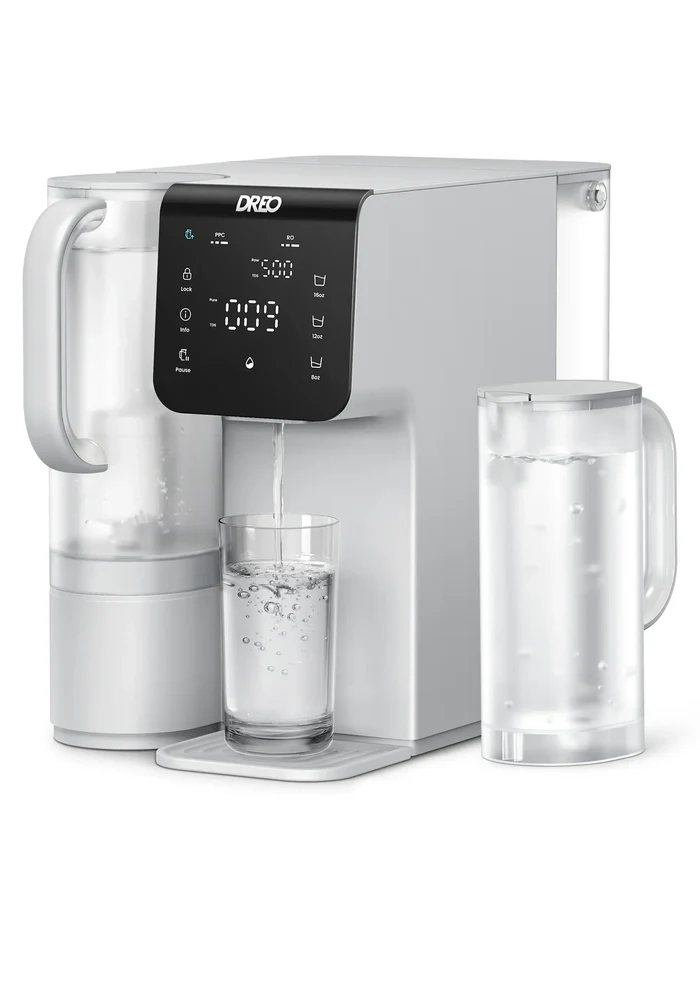
One pitcher can stay on the machine. One can stay in the fridge. The machine refills in the background, and you end up with a workflow that feels much more natural than constantly standing there waiting for glass-by-glass dispensing. It is simple, but it is smart. We noticed that the more we leaned into the pitcher routine, the better the product felt.
Each pitcher is listed at 1.5 liters, and the main raw water tank comes in at 170 ounces, which is a healthy capacity for this kind of product. That does not make it ideal for large families, but it does make it much more practical than smaller countertop systems that feel like they are constantly asking to be topped up.
This is also the best answer to one of the unit’s obvious limitations: the machine dispenses room-temperature water. If you want cold water, the right move is to keep one pitcher in the fridge and let the other auto-refill on the machine. Once we looked at it that way, the product made a lot more sense. Expecting it to behave like a chilled dispenser is the wrong expectation. Treating it like a background refill station with a cold-water pitcher rotation is the right one.
That distinction matters. It is the difference between finding the WF511 thoughtful and finding it mildly frustrating.
Dispensing speed: good enough, but not a highlight
The direct dispensing feature is the weakest part of the experience.
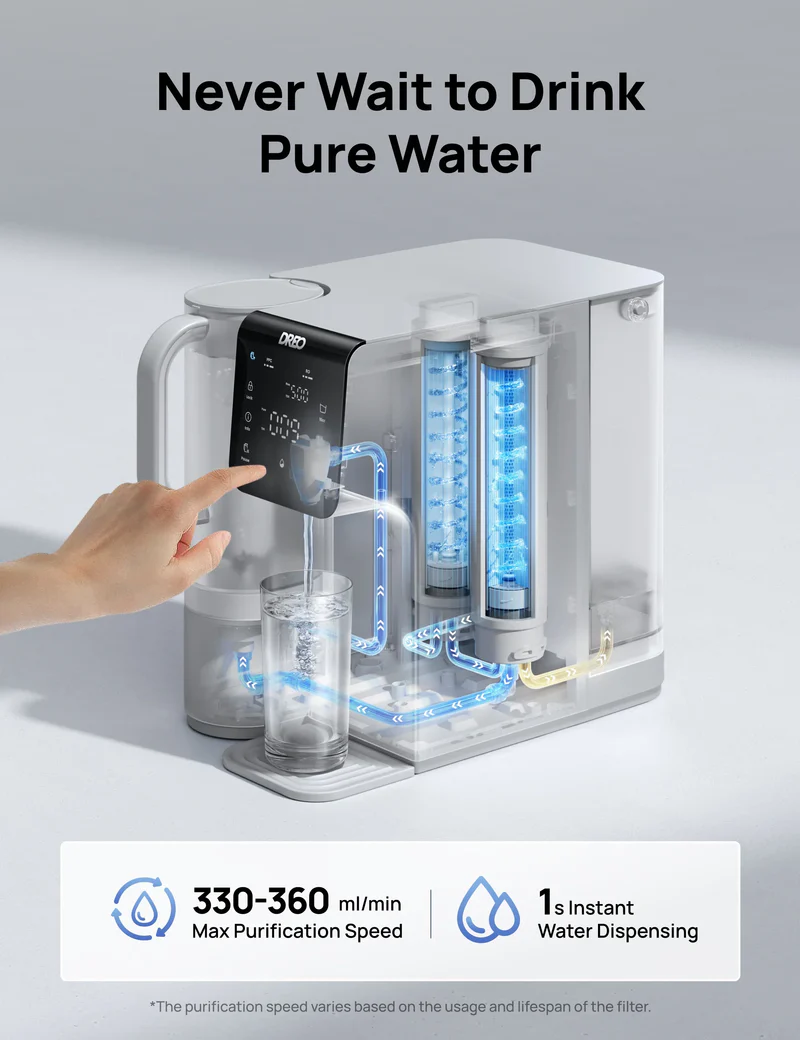
It is not useless, and we are glad it is there. But it sounds more appealing than it feels in daily use. The machine supports one-touch dispensing with preset amounts, which looks like a premium convenience feature. In practice, it is slower than we wanted. An 8-ounce glass can take around 40 seconds, and filling a larger container can feel even more drawn out.
That may not sound terrible on paper, but in a real kitchen it changes how you use the product. We found ourselves liking the pitchers far more than the direct dispenser. The direct dispenser works best as a backup convenience, not as the main reason to buy the system.
This is one of those areas where expectations matter. If you picture yourself walking up to the machine all day and quickly filling glasses like a high-end water dispenser, the WF511 will probably disappoint you. If you picture it keeping pitchers filled in the background, the speed becomes much easier to accept.
There is also a small gap between how slick the feature sounds and how satisfying it feels. That gap is not a dealbreaker, but it is real.
Everyday convenience and comfort
The WF511 earns its keep by making RO feel less annoying than usual.
That is probably the best way to describe it.
We liked the display because it tells you something useful instead of just trying to impress. We liked the filter-life tracking because it removes guesswork. We liked that the machine feels like it is doing its job out in the open rather than hiding the process. Those details make ownership feel calmer and more transparent.
The auto-refill pitcher concept also works well in practice. It gives the whole machine a quieter rhythm. Instead of constantly “using” the purifier, you mostly live around it. Fill the tank, keep the pitchers moving, and let the system maintain the supply. That is a much better ownership experience than a countertop appliance that demands constant attention.
Noise is another area where the DREO lands in a reasonable place. It is not silent while actively filling, but it is not obnoxious either. There is some humming during operation, then it settles down. For an appliance doing actual filtration work, that feels perfectly acceptable.
There is even a small but genuinely thoughtful freshness reminder built into the experience. That sounds minor until you remember that filtered water sitting too long in a countertop pitcher is not ideal. We appreciated that DREO clearly thought about the daily reality of ownership instead of stopping at the filtration hardware.
What frustrated us
The first frustration is obvious: it is still a countertop appliance, and countertop space is valuable.
DREO has made the unit look as clean and appliance-like as possible, but physics wins. If your kitchen is small, the WF511 demands a real commitment. You are not casually tucking this into some unused corner and forgetting about it. We think buyers need to be honest with themselves about that before purchasing.
The second frustration is the direct dispenser. Again, it is not a failure. It is just not nearly as strong as the rest of the product. The presets sound better than they feel, and the slower flow makes them less satisfying than we hoped.
The third is that all water comes out at room temperature unless you use the pitcher-in-the-fridge workflow. That is not unusual for the category, but it is still worth spelling out. Some buyers will see the modern design and assume dispenser-like convenience. That is not what this machine is.
The fourth is refill dependency. The 170-ounce tank is generous for a countertop RO system, but it is still a refill tank. If your household moves through a lot of water every day, the DREO will start to feel more interactive than ideal. Small households will likely find it manageable. Larger households may find it tiring.
The fifth issue is more nuanced: certification clarity. DREO’s filtration claims are ambitious, and the system is positioned as meeting NSF/ANSI 58 standards while also citing SGS testing. The broader performance picture is strong, but buyers who care a lot about crystal-clear, easy-to-verify public certification status may want to check the latest paperwork before buying. That does not erase the product’s strengths, but it is one part of the story we would not ignore.
Value for money
The WF511 sits in a price range where it cannot get by on style alone. At roughly $359.99 for the white version and $399.99 for the gray one, this is not an impulse-buy filter. It is a real appliance purchase.
The good news is that it mostly earns that money.
A big part of the value comes from the fact that it offers genuine reverse osmosis without installation pain. That is the whole point of the product, and it delivers on it. If you specifically want RO performance in a renter-friendly, no-plumbing format, the DREO makes a strong case for itself.
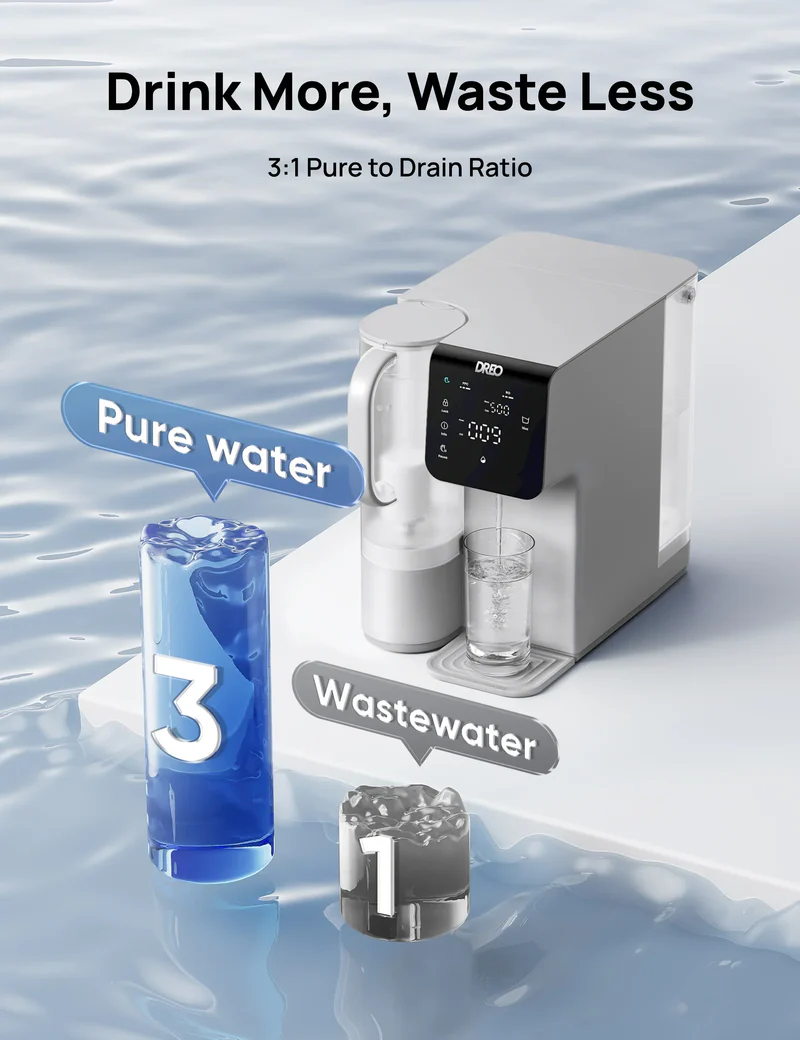
Another part of the value story is efficiency. DREO claims a 3:1 pure-to-drain ratio, which is already better than the older, wasteful reputation many people still associate with RO. In use, that efficiency appears to be one of the product’s real strengths rather than a marketing footnote. That matters because waste ratio is one of the easiest ways for an RO system to feel outdated.
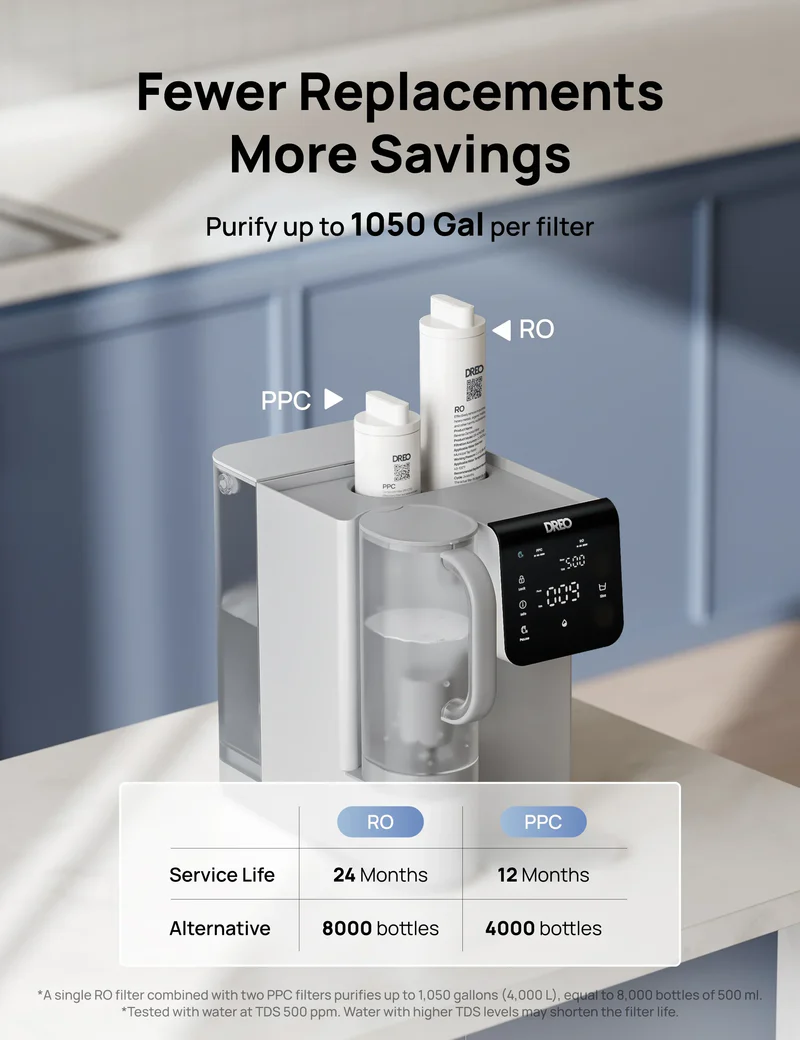
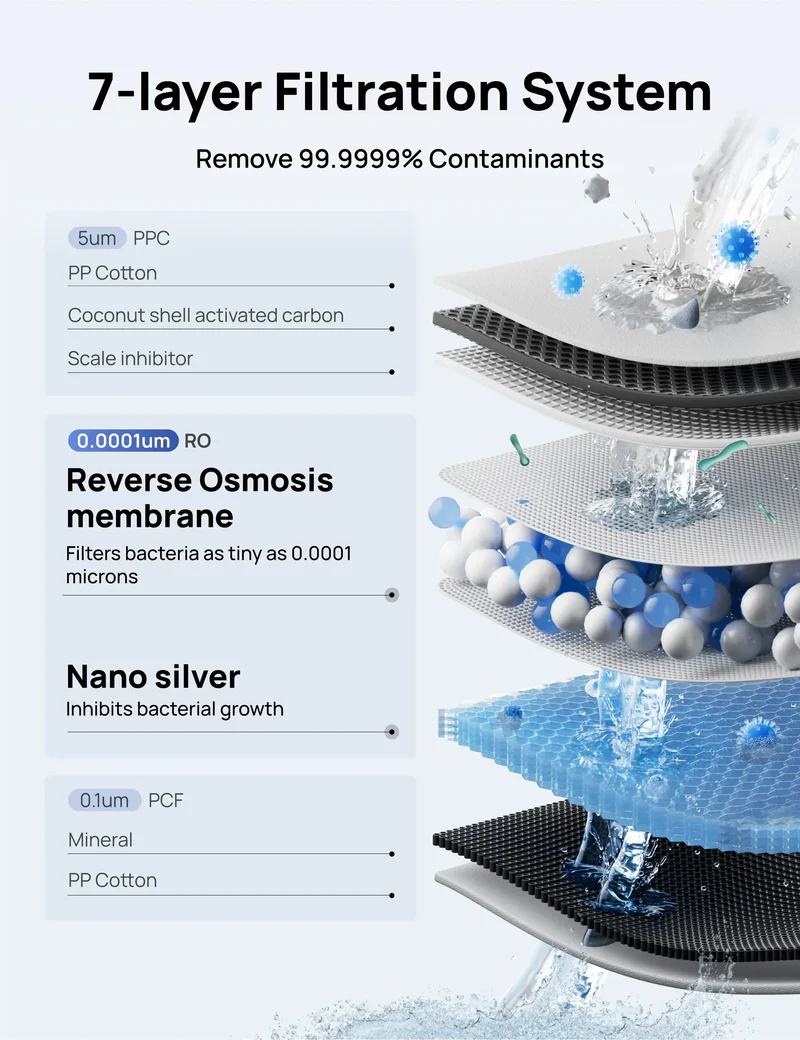
Filter costs also look reasonable for what this is. The main replacement RO filter is listed around $46.99, while the post-carbon filter sits around $19.99. DREO says the RO and PPC filter combination can handle up to 1,050 gallons / 4,000 liters, and the post-carbon filter is rated for six months. That does not make maintenance cheap, but it does keep it within a sensible range for a real reverse osmosis system.
Where the value case weakens is when the countertop format is not actually important to you. If you own your home, have no issue with installation, and want higher-capacity water on demand, an under-sink system may still be the better long-term answer. The DREO’s value is strongest in its specific lane. Outside that lane, it becomes harder to justify.
Who should buy it
We would recommend the DREO RO Water Filter 511 to people who want a serious step up from a standard pitcher filter but do not want the commitment of an under-sink system.
It makes the most sense for renters, apartment households, offices, couples, and smaller families that want cleaner-tasting water without installation work. It is also a great fit for buyers who like visible feedback. If seeing TDS information, filter status, and a more transparent filtration process helps you trust the product more, the WF511 does that better than many rivals.
It is also a strong choice for people whose current frustration is mostly about water taste. If your tap water tastes hard, flat, chlorinated, or simply unpleasant, this feels like a meaningful upgrade rather than a cosmetic one.
Who should skip it
We would skip it if counter space is already a constant battle in your kitchen.
We would also skip it if your household goes through a lot of water and expects fast, endless filtered output with minimal involvement. The DREO is convenient, but it is convenient within the limits of a refill-based design. Those limits do show up.
And if your buying process starts with “I want the cleanest possible public certification trail before anything else,” this probably is not the most confidence-inspiring option until you verify the latest status yourself. That is not the same as saying the machine is weak. It just means this part of the ownership story deserves a closer look.
Final verdict
The DREO RO Water Filter 511 gets the important things right. It delivers genuinely better-tasting water, removes a huge amount of the usual RO friction, and uses its dual-pitcher setup to create a daily routine that feels smarter than most countertop filtration systems. That combination is what makes it so easy to like.
What we appreciated most is that the product understands where convenience actually comes from. Not from flashy feature language. Not from pretending a countertop RO machine can behave exactly like an under-sink system. Convenience here comes from making the compromises manageable. Easy setup. Useful display. Simple filter access. A refill system that works better than expected. A chilled-pitcher workflow that fits real life.
The downsides are not hidden. It takes space. The direct dispenser is not a star. Heavy users may outgrow it. But for renters and convenience-minded buyers who want real reverse osmosis without plumbing work, this is one of the strongest options in the category right now.
Our take is simple: if you want one of the best countertop RO systems for actual daily use, the WF511 is worth serious consideration. If you want invisible installation, endless capacity, and true on-demand convenience, you should still be looking under the sink.
FAQ
Is the DREO RO Water Filter 511 an under-sink system?
No. It is a countertop reverse osmosis system designed to work without plumbing installation.
How big is the DREO WF511?
It is listed at 9.06 x 15.91 x 13.07 inches and about 14.61 pounds, with a 170 oz raw water tank.
Does it come with pitchers?
Yes. One of its best features is the dual-pitcher setup, and each pitcher is listed at 1.5 liters.
Does it chill water on its own?
No. The machine dispenses room-temperature water. The intended workflow is to keep one pitcher in the fridge.
Is the display actually useful?
Yes. We found the real-time TDS display and filter-life tracking genuinely useful rather than decorative.
Is the direct dispenser a major selling point?
Not really. It works, but the machine feels much better as a pitcher-refill system than as a fast direct dispenser.
How often do the filters need replacing?
DREO says the RO and PPC filter combination can purify up to 1,050 gallons / 4,000 liters, while the post-carbon filter is rated for six months. Actual replacement timing will still depend on usage and water quality.
Is it better than a basic pitcher filter?
Yes. In practice, it feels like a much more serious upgrade, especially in taste, filtration strength, and overall water clarity.
Explore the DREO RO Water Filter 511 Gallery
Every image from this article, gathered in one clean place. Tap any photo to open it larger.