
DREO RO Water Filter 112
Pros
- the narrow footprint, the true RO setup, the auto-fill pitcher, the real-time TDS display, the self-cleaning function, the reasonable filter life, and the fact that it feels designed for daily use instead of just spec-sheet appeal.
Cons
- it still comes with normal RO realities, including initial flushing, ongoing tank cleaning, limited output compared with larger systems, and some pump noise during operation.
the narrow footprint, the true RO setup, the auto-fill pitcher, the real-time TDS display, the self-cleaning function, the reasonable filter life, and the fact that it feels designed for daily use instead of just spec-sheet appeal.
it still comes with normal RO realities, including initial flushing, ongoing tank cleaning, limited output compared with larger systems, and some pump noise during operation.
Countertop reverse osmosis systems often miss the mark in one of two ways. Some are so bulky that they dominate the counter and immediately feel like a compromise. Others promise premium filtration but behave more like overdesigned pitchers with a bigger marketing budget.
The DREO RO Water Filter 112 lands in a much better place. After spending real time with it, our take is that this is one of the more sensible countertop RO systems for renters, apartment kitchens, dorm rooms, offices, and smaller households that want true reverse osmosis filtration without plumbing, permanent installation, or a giant machine eating half the workspace.
It is not the right choice for big families or heavy all-day water demand, but within its lane, it feels thoughtfully designed and genuinely easy to live with.
What We Tested
We focused on the parts of the experience that actually matter in a countertop RO machine. That meant looking closely at how the unit fits into a small kitchen, how easy it is to set up, how practical the pitcher-based workflow feels day to day, how convincing the filtration side feels in real use, and how much maintenance it asks for once the honeymoon phase is over.
We also paid attention to the compromises. That is where products in this category usually separate themselves. A compact machine can look great in photos and still be annoying in practice if the pitcher is awkward, if the refill rhythm feels slow, if the display adds no real value, or if the upkeep starts to feel like a chore. The DREO 112 does not avoid every tradeoff, but it handles most of them with more common sense than many countertop RO systems we have seen.
How We Tested It
We approached the DREO 112 the way most buyers would actually use it. We looked at how it behaved during first setup, how much effort the initial flush required, how naturally the pitcher and tank system fit into everyday routines, and whether the smart features felt genuinely helpful or just decorative.
We also judged it in the right context. This is not a big plumbed-in kitchen purifier, so we did not expect that kind of behavior from it. We evaluated it as a compact countertop RO system for small-space living, and that framing matters. Products like this do not succeed by doing everything. They succeed by solving a specific problem well.
Design and Build Quality
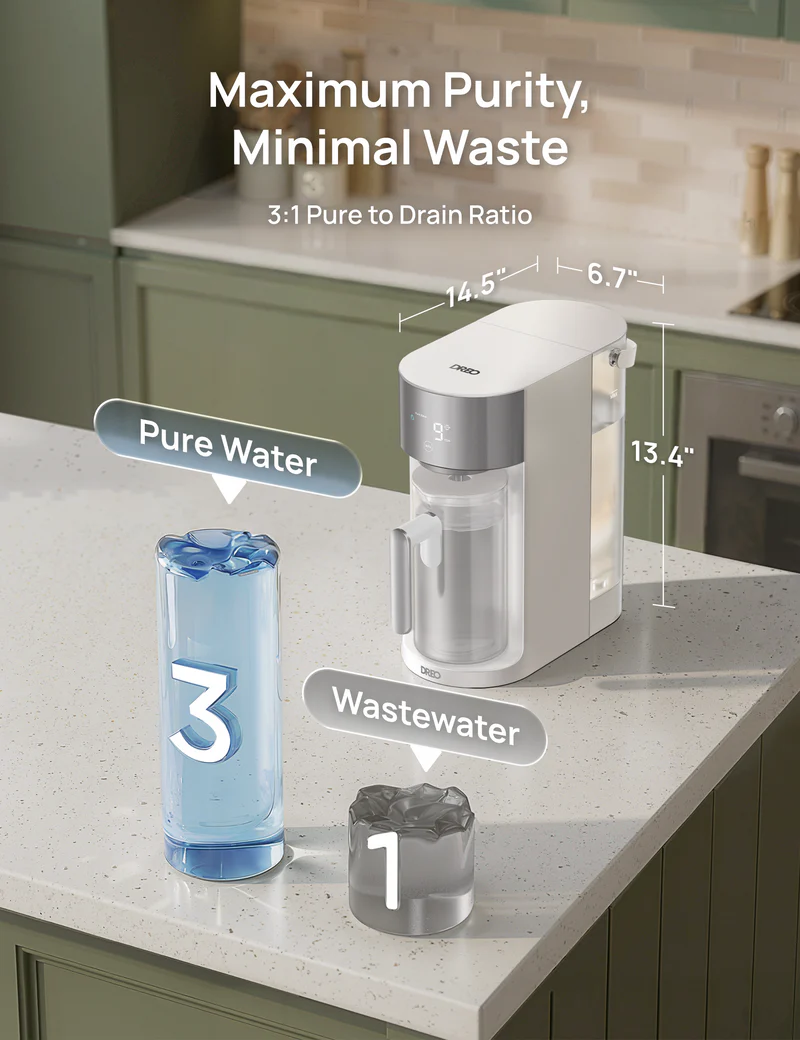
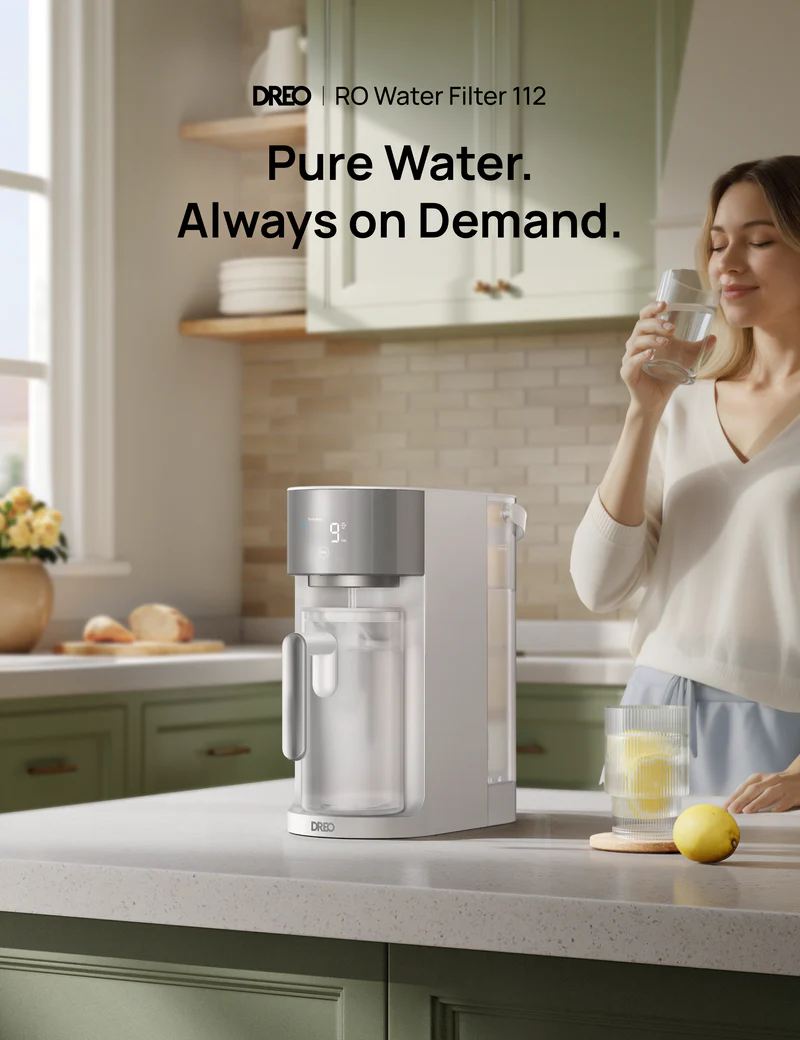
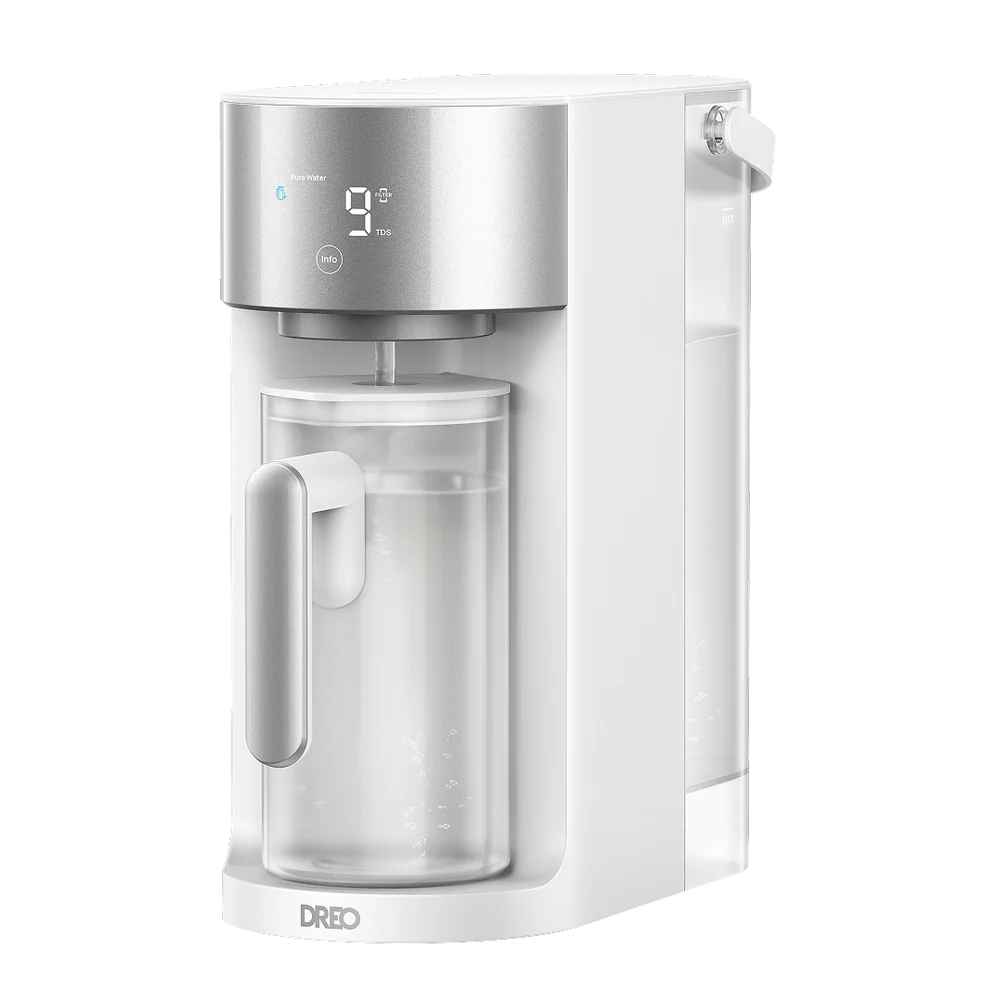
The strongest first impression the DREO 112 makes is that it understands its assignment. A lot of countertop water systems still feel oversized and clumsy, as if somebody stripped the plumbing out of an under-sink unit and decided that was close enough. This one feels intentionally scaled for a countertop. The slim width makes a real difference. It looks like something that can sit beside a kettle, coffee station, or toaster without turning the kitchen into an appliance obstacle course.
That compact footprint is not just a visual win. In daily use, it changes how acceptable the product feels over time. We have seen plenty of countertop appliances that technically fit on a counter but constantly remind you they are there. The DREO 112 does a better job staying out of the way. In a small kitchen, that matters more than a flashy screen or an extra mode button.
The general design language is also clean without trying too hard. It is modern, but not in the self-conscious way some small appliances are. The touch controls look tidy. The display gives it a bit of polish. The separate pitcher helps the whole system feel less awkward than spout-only countertop filters. It comes across like a product designed by people who knew this would sit in visible, shared living spaces instead of disappearing under a sink.
That does not mean it is invisible. You still need room for the main body, room to remove and refill the tank, room to pull the pitcher out comfortably, and access to a power outlet. This is a pump-based RO machine, not a passive filter. So while the footprint is genuinely compact, it still needs a proper place on the counter. Tucked into the wrong corner, it could become annoying. Given the shape and daily access points, it rewards a little placement planning.
Build-wise, we came away thinking it feels appropriately solid for the category. It does not have the industrial heft of a premium plumbed-in system, but it also does not feel flimsy or throwaway. That is the right balance here. This is a countertop convenience product, and it feels like one built to be used regularly rather than babied.
Setup and First Use
One of the biggest reasons to consider the DREO 112 is simple: there is no plumbing involved. No drilling, no adapters, no crawling under a sink, no landlord conversations, no installation headache. You place it on the counter, plug it in, fill the tank, and go through the startup process. For renters and apartment dwellers, that alone removes a huge barrier.
But this is where it helps to be honest about what “easy setup” really means. It is easy compared with under-sink RO. It is not the same thing as instant gratification. You still have to flush the system before drinking from it, and that initial process is not something we would describe as optional or skippable. It is part of ownership. If someone buys this expecting to unbox it and pour the perfect first glass five minutes later, they are going to be annoyed.
That said, the setup ritual feels normal rather than frustrating. Once you accept that reverse osmosis systems need a bit of preparation, the DREO 112 does not create extra drama around it. We did not come away thinking the machine is difficult. We came away thinking it asks for the kind of upfront patience that real filtration products often do.
And that actually says something positive about the product. It does not pretend to be magic. It behaves like an actual RO machine, just one packaged for countertop living. We would rather have that than a product that oversells convenience while underselling what ownership actually looks like.
Water Quality and Filtration Confidence
This is the reason the DREO 112 exists. Nobody buys a countertop RO machine just because it looks compact. They buy it because they want more than what a basic carbon pitcher gives them. On that front, the 112 feels like a meaningful step up.
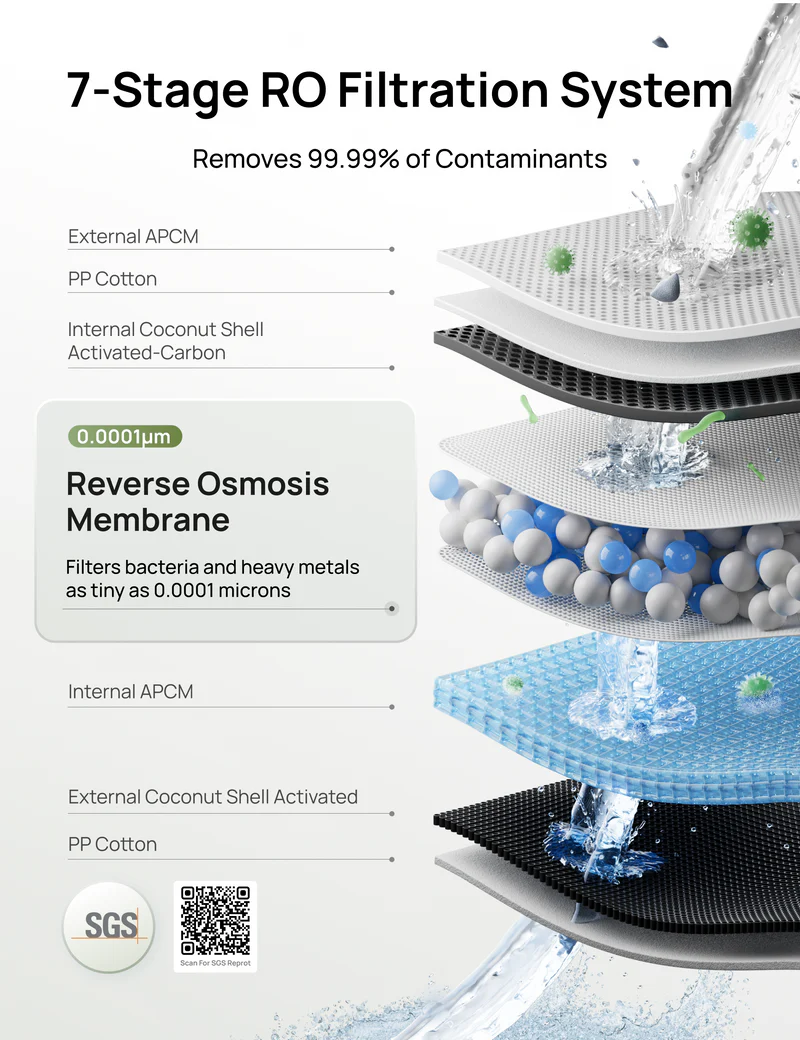
The seven-stage filtration setup gives it a more serious profile than entry-level countertop filters, and the overall experience supports the idea that this is genuine reverse osmosis filtration rather than surface-level branding. In practical terms, it feels like a product aimed at people who care about contaminant reduction, cleaner taste, and moving away from bottled water without stepping into the cost and complexity of a full installed system.
What stood out to us is that the 112 does not lean only on abstract filtration claims. It also gives you a real-time TDS display, and while that should not be treated like lab equipment, it does help make the machine feel more accountable in daily use. You can see the difference between input and output. That matters. It reinforces the sense that the product is actively doing something meaningful rather than operating as a black box.
Taste, of course, is always personal. RO water tends to taste clean and stripped back, and some people love that while others prefer a little more mineral character. We found the DREO 112 makes the strongest case for itself with buyers who want that cleaner, more neutral water profile and who are specifically trying to move beyond the limitations of pitcher filters or bottled-water habits.
The bigger point is that the filtration side feels like the core of the product, not an accessory to the smart features. That is exactly what we wanted to see.
Daily Use and Convenience
This is the section where many countertop appliances either justify themselves or quietly become a nuisance. The DREO 112 does more right here than we expected.
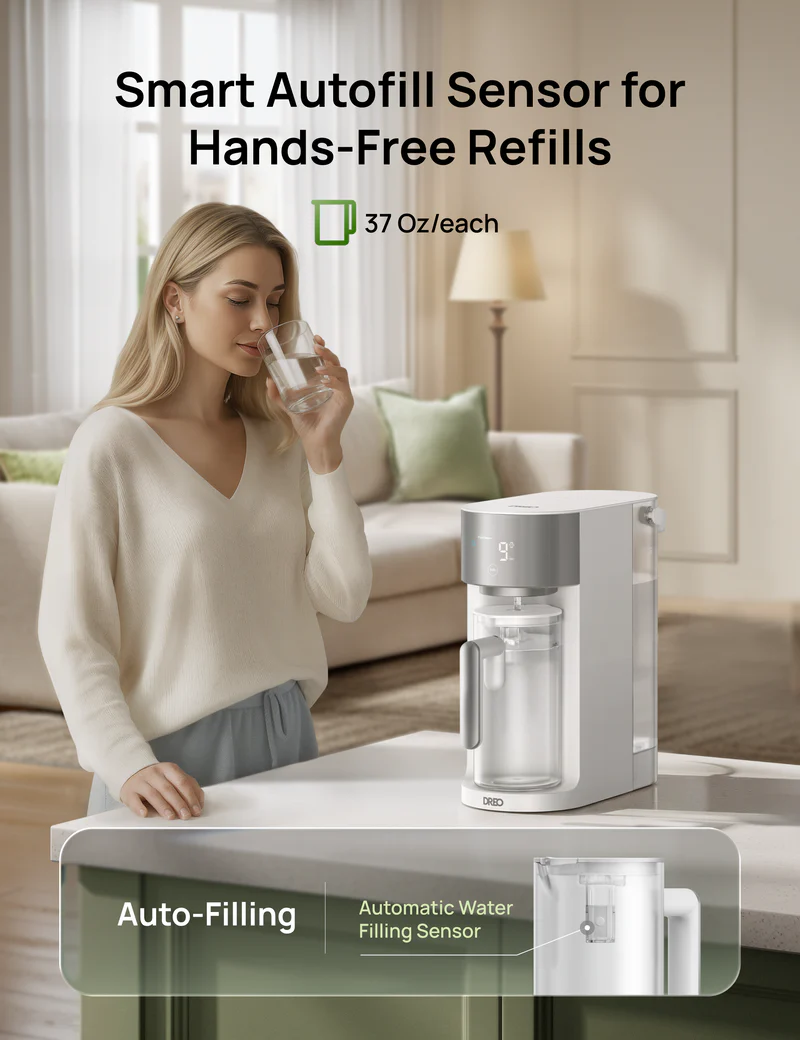
The auto-fill pitcher is one of the best examples. On paper, it sounds like a secondary feature. In practice, it changes how the machine fits into daily life. A bad countertop water system constantly reminds you that it is work. Refill this. Wait for that. Hold a bottle awkwardly. Time the pour. Repeat. The DREO 112 feels more relaxed than that. The pitcher gives the filtered water a destination, which sounds obvious, but it makes the entire routine feel more natural.
We also liked that the display serves a practical purpose. It is not overloaded, and it does not try to turn water filtration into a tech showcase. It gives you usable feedback, including TDS readings and filter reminders, which helps keep the machine feeling manageable rather than vague. That matters more over time than it does on day one. The longer a product lives on your counter, the more you appreciate features that reduce guesswork.
What stood out most in daily use was that the 112 seems designed around actual small-space living. It makes sense for someone who fills a couple of bottles a day, uses filtered water for coffee or tea, wants better-tasting drinking water on demand, and does not want to keep hauling home cases of bottled water. That is the use case where it feels especially convincing.
It is also the kind of product that makes sense in places where under-sink installation either is not allowed or simply is not worth the trouble. In that context, the convenience story becomes much stronger. The machine does not need to compete with a full kitchen RO system to feel worthwhile. It just needs to make better water practical in spaces where the alternatives are weaker.
Speed, Noise, and Capacity
This is where the DREO 112’s limits become clearer, and to be fair, they are the kind of limits we would expect from a compact countertop RO machine.
The output rate is fine for normal household use, but it is not what we would call high-volume. If your idea of convenience is filling several large bottles in rapid succession while multiple people are waiting, this is not that kind of machine. It is better understood as a steady everyday water source than a mini hydration station for a crowd.
That distinction is important because it shapes the whole ownership experience. For one person or two people, the pace feels reasonable. For a light three-person household, it can still make sense if expectations are realistic. For bigger families or frequent entertaining, it starts to feel small. Not bad. Just small.
The same goes for the tank and pitcher setup. A 3L raw water tank and a 37 oz / 1.1L filtered-water pitcher fit the product’s compact identity, but they also confirm that this system was built for moderate, not heavy, demand. In practice, that means it works best when filtered water is part of the household rhythm rather than something everyone suddenly wants in large quantities at once.
Noise is another tradeoff worth mentioning clearly. The booster pump is not outrageously loud, but it is not invisible either. You will hear it. In a normal kitchen environment, it is unlikely to feel disruptive, but anyone expecting near-silent operation should adjust expectations. We did not see this as a dealbreaker. It is more a reminder that this is a working RO appliance, not a passive countertop container.
The good news is that none of these limitations feel hidden. The 112 behaves like what it is: a compact RO machine designed for smaller households and smaller spaces. Judged by that standard, its performance feels fair.
Maintenance and Ownership Realities
This is the section buyers often skip when they are excited about cleaner water, and it is exactly the section they should read carefully.
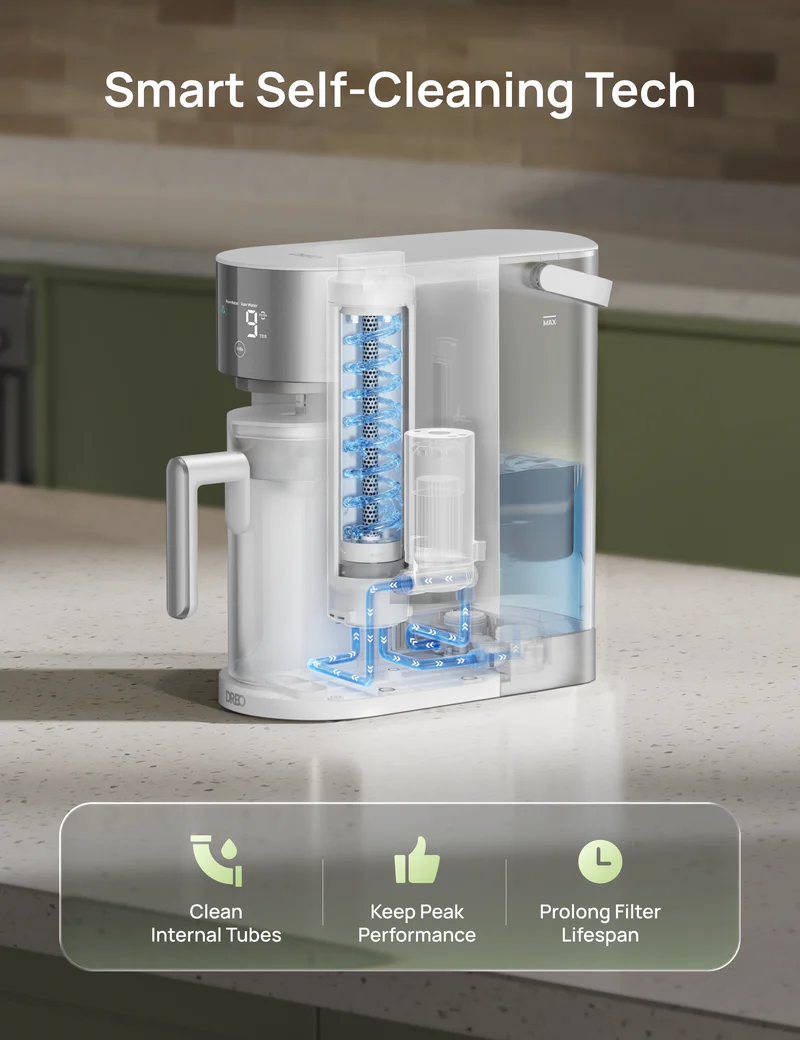
The DREO 112 includes a self-cleaning function, which is useful, but it does not remove the need for regular upkeep. You still have to clean the tank. You still have to flush the machine when required. You still have to treat it like a water appliance instead of a sealed magic box. We appreciated that this became clear quickly, because products in this category can sound lower-maintenance than they really are.
In everyday terms, the ownership burden feels reasonable rather than trivial. That is the fairest way to put it. It is not exhausting to maintain, but it is also not the kind of product you can ignore indefinitely. Buyers who are comfortable with that tradeoff will likely be fine. Buyers who want total invisibility may start to resent it.
Hard water is another reality check. The DREO 112 can absolutely still be useful in hard-water environments, but it is not immune to them. If your source water is extremely tough, you are more likely to deal with faster buildup, possible clogging, and eventual descaling needs. That does not make the product weak. It just means the machine cannot completely escape the chemistry of the water going into it.
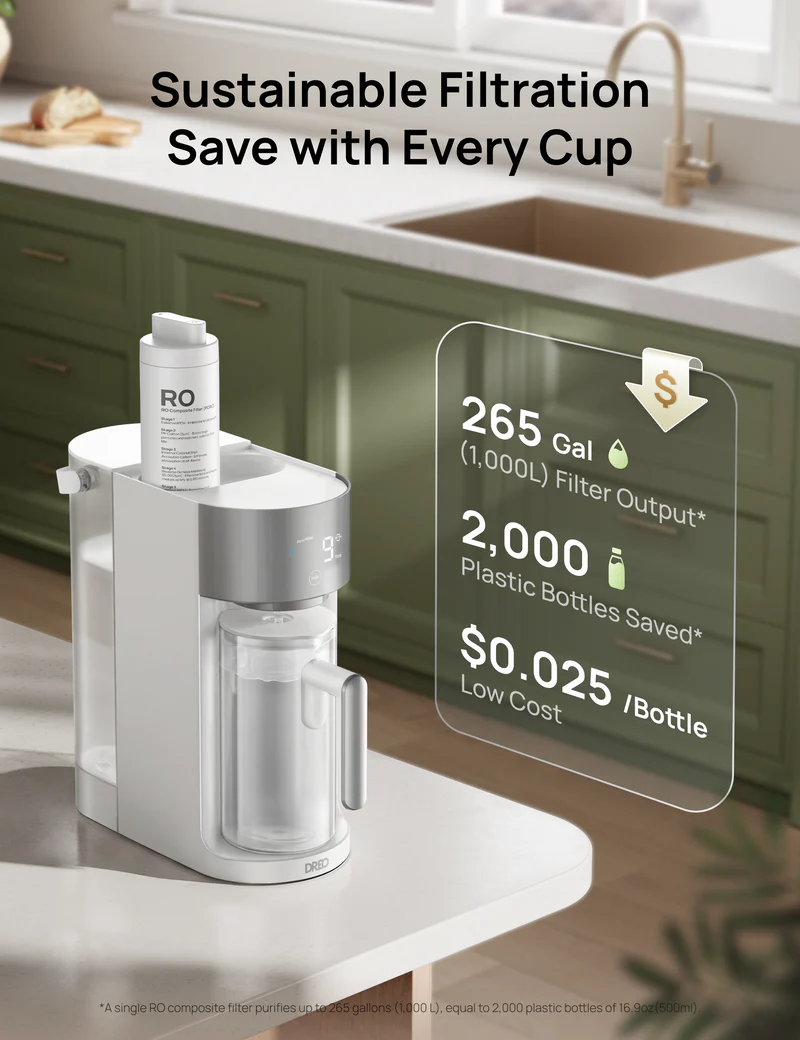
One area where DREO seems to have made the right choice is filter replacement. The twist-in design sounds simple, and that is exactly what we want in a product like this. Filters are already a recurring cost. The last thing anyone needs is a replacement process that turns into a minor home repair.
The replacement interval also seems sensible. It is frequent enough to feel realistic, but not so frequent that the product starts to feel expensive to own. For a countertop RO machine in this size and price class, that balance matters.
Value for Money
The DREO 112 makes the most sense when you judge it as a specific answer to a specific problem.
If someone wants the cheapest possible way to filter water, this is not it. A standard pitcher costs less. If someone wants the highest output and biggest capacity, this is not it either. A larger under-sink system will do more. But if the goal is real reverse osmosis filtration, no plumbing, compact size, and good daily usability, the DREO 112 starts to look like a well-judged buy.
That is where we think its value really shows. It is not trying to win a capacity war. It is trying to make countertop RO practical for the people who normally hesitate because the category often feels too bulky, too ugly, too involved, or too compromised. On that level, it feels like money spent in the right places.
The auto-fill pitcher, the TDS monitoring, the self-cleaning support, the compact footprint, and the relatively ownership-friendly filter setup all contribute to that feeling. None of those features alone would make the product feel special. Together, they make the 112 feel more livable than many competitors in the same general lane.
It is also the kind of appliance that can make bottled-water buying start to feel wasteful very quickly. Once a machine fits into the kitchen and the routine becomes normal, the economics become easier to justify.
Who Should Buy It
The DREO 112 makes the most sense for people living in apartments, rentals, dorms, condos, offices, or smaller homes where kitchen space is limited and permanent installation is either impossible or just not worth the hassle.
We would also recommend it to buyers who specifically want a more serious filtration step up from pitcher filters. If you have been stuck between cheap filters that feel limited and under-sink systems that feel too involved, this sits in a genuinely useful middle ground.
It is especially well suited to one- or two-person households. That is where the size, pace, and convenience all line up nicely. In that context, the machine feels well judged rather than compromised.
Who Should Skip It
We would skip the DREO 112 if your household burns through large amounts of drinking water every day, if several people are constantly refilling bottles, or if you frequently host and want a water station that can keep up without planning.
We would also skip it if you are the kind of buyer who hates maintenance more than you hate bottled water. This is not a high-maintenance machine by RO standards, but it does ask for care. If that already sounds irritating, the relationship probably will not improve with time.
And if what you really want is under-sink-system performance in countertop form, this is probably the wrong product to chase. The DREO 112 succeeds by being compact and practical, not by pretending size does not matter.
Final Verdict
The DREO RO Water Filter 112 works because it stays focused. It does not try to pass itself off as a full-household powerhouse, and it does not bury its compromises under gimmicks. Instead, it offers a compact, genuinely useful countertop RO experience that feels designed for real small-space living.
What we appreciated most is that the product feels coherent. The footprint, the no-plumbing setup, the pitcher workflow, the smart display, and the ownership costs all point in the same direction. This is a machine for people who want better water without turning the kitchen into a project.
That makes the verdict pretty straightforward. For small kitchens and smaller households, the DREO 112 is an easy product to understand and, more importantly, an easy one to recommend. It is not perfect. The pace is moderate, the maintenance is real, and the capacity has clear limits. But those compromises feel fair for what you get in return. And in this category, that is often the difference between a product that looks good in theory and one that actually makes sense to live with.
FAQ
Is the DREO RO Water Filter 112 a real reverse osmosis system?
Yes. It is a genuine countertop RO machine, not just a basic carbon filter in a nicer shell. That is the whole reason it feels like a step up from standard pitcher-style options.
Does it need plumbing or permanent installation?
No. That is one of its biggest strengths. You place it on the counter, plug it in, go through the proper flush process, and use it without any under-sink installation.
How big is the DREO 112?
It has a narrow, countertop-friendly footprint that makes a lot of sense for apartments, rentals, dorms, and smaller kitchens where space is limited.
Is it good for a big family?
Not really. We think it makes the most sense for one or two people, or maybe a lighter-use three-person household. Bigger families will likely want more capacity and faster throughput.
Is the auto-fill pitcher actually useful?
Yes. In practice, it is one of the features that makes the machine feel easier to live with. It reduces some of the fussiness that countertop systems can have.
Does it make noise?
Yes, some. The pump is audible during operation. It is not extreme, but it is not silent either.
Is maintenance a hassle?
Not a major one, but it is real. You still have to clean the tank regularly, handle the initial flush correctly, and stay on top of normal filter maintenance.
Is it a good choice for renters?
Absolutely. In fact, renters are probably one of the clearest target users for this machine. It gives you true RO filtration without the commitment of permanent installation.
Is it worth it over bottled water?
For the right buyer, yes. If you are tired of buying bottled water, do not want under-sink installation, and have the kind of kitchen where compact appliances matter, the DREO 112 makes a strong case for itself very quickly.
Explore the DREO RO Water Filter 112 Gallery
Every image from this article, gathered in one clean place. Tap any photo to open it larger.