
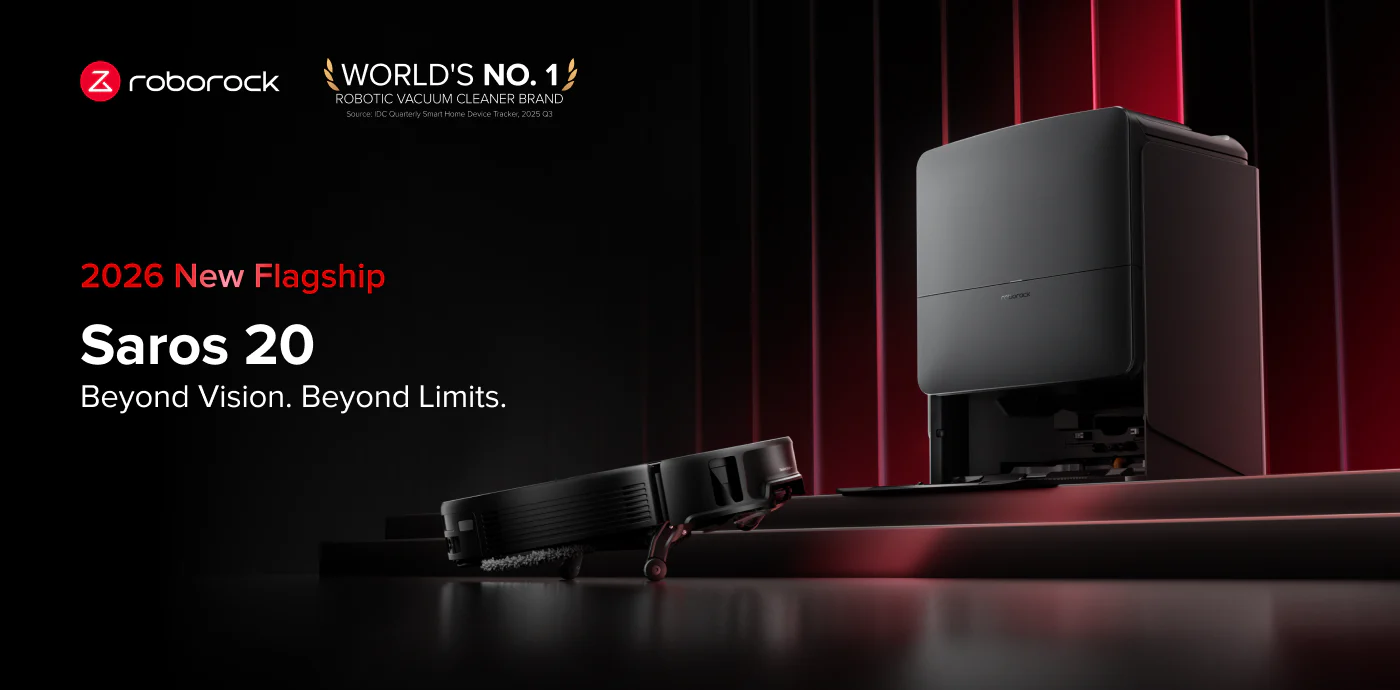
The Roborock Saros 20 is one of those rare robot vacuums that feels expensive for the right reasons. It is not just another premium cleaner with a bigger suction number and a fancier dock. After going through all ten staff writeups and combining the overlapping real-world testing, our verdict is clear: this is a genuinely excellent robot vacuum for people who care more about strong vacuuming, smarter navigation, better obstacle handling, low-clearance reach, and less day-to-day maintenance than about absolute perfection in mopping.
That distinction matters, because the Saros 20 gets a lot right, but it is not flawless. Its vacuuming performance, hair handling, threshold climbing, and overall hands-off ownership experience are consistently impressive. Its mopping is good, sometimes very good, but not so good that we would call it the category’s untouchable king.
If you have pets, mixed flooring, annoying thresholds, tight furniture gaps, and a house that regularly defeats lesser robot vacuums, the Saros 20 feels like a serious upgrade. If you want a cheaper all-rounder or you are specifically chasing the best mopping experience possible, this gets more complicated. Still, after weighing all the employee testing together, our take is that the Roborock Saros 20 is one of the best premium robot vacuum and mop systems currently worth buying, and one of the easiest high-end models to recommend to messy, busy households.
Quick verdict
Best for:
Homes with pets, mixed flooring, thresholds, rugs, low furniture, and people who want a robot vacuum that needs very little babysitting.
Avoid if:
You want the best premium robot mainly for heavy-duty mopping, you have a tight budget, or you do not have room for a fairly large dock.
What we liked:
36,000Pa suction, 79.8mm slim height, excellent hair handling, strong edge work, impressive obstacle recognition, standout threshold climbing, a polished app, and a dock that removes most of the annoying maintenance.
What disappointed us:
The price is high, the dock still takes up meaningful space, and the mopping performance is not as consistently excellent as the vacuuming side of the experience.
Final verdict:
The Roborock Saros 20 is a premium robot vacuum that earns its flagship status by being powerful, practical, and unusually good at the boring real-world problems that ruin lesser robot vacuums. We would buy it for the vacuuming, navigation, mobility, and low-maintenance ownership first. The mopping is a valuable bonus, but not the single reason to spend this much.
What we tested
Across the employee writeups, the Saros 20 was used in the kinds of situations that actually matter when you live with a robot vacuum rather than just admire it on a spec sheet.
We looked at how it handled hardwood floors, tile, mixed-floor homes, flatweave rugs, plusher rugs, bath mats, low-clearance furniture, door thresholds, furniture legs, and cable-heavy spaces. We also saw it used against pet hair, human hair, kitty litter, Cheerios, quinoa, dryer lint, powdery debris, kitchen crumbs, dust in edges and corners, mud, coffee stains, red wine, ketchup, and even hair clippings from a makeshift haircut cleanup test.
That matters because the Saros 20 is not being sold as a niche cleaner for one specific floor type. It is being sold as a premium whole-home solution. The good news is that the testing reflects that ambition. The better news is that the strongest patterns are very clear.
How we tested it
We did not base this review on one short trial or one carefully staged demo room. The employee testing covered repeated use in real homes over multiple cleaning sessions, including:
- Full-home vacuum and mop cycles
- Vacuum-only runs on carpet
- Hard-floor pickup tests with common household debris
- Edge and corner cleaning observations
- Obstacle avoidance around cords, shoes, bags, crates, and chair legs
- Threshold crossing on everything from normal room transitions to very aggressive raised obstacles
- Under-furniture reach checks
- Mop performance on routine dirt and tougher spills
- Long-hair and pet-hair wrap monitoring
- Ongoing maintenance checks around the dock, dust bag, and mop pads
That broad spread is useful because it shows something very important: most of the praise in these employee writeups is not random. The same strengths keep appearing over and over. And the same weakness keeps showing up too.
Design and build quality
The first thing that makes the Saros 20 feel different is not the suction number. It is the shape.
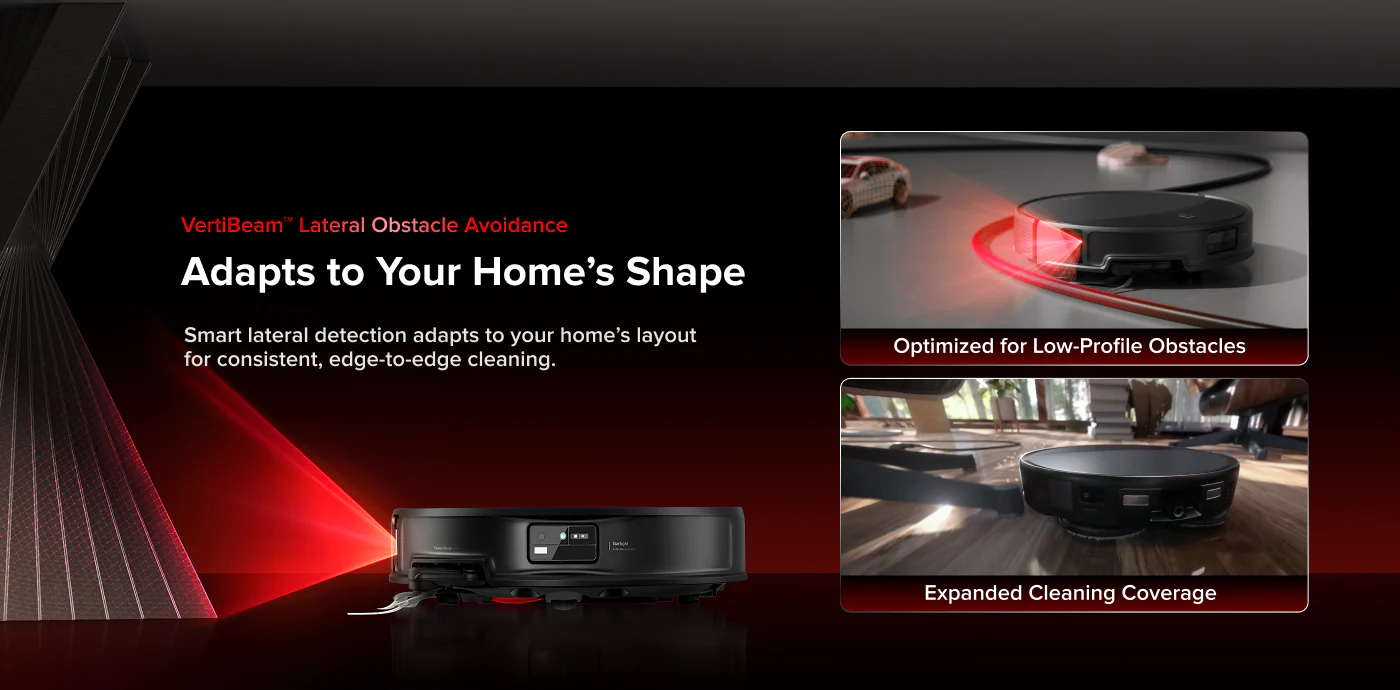
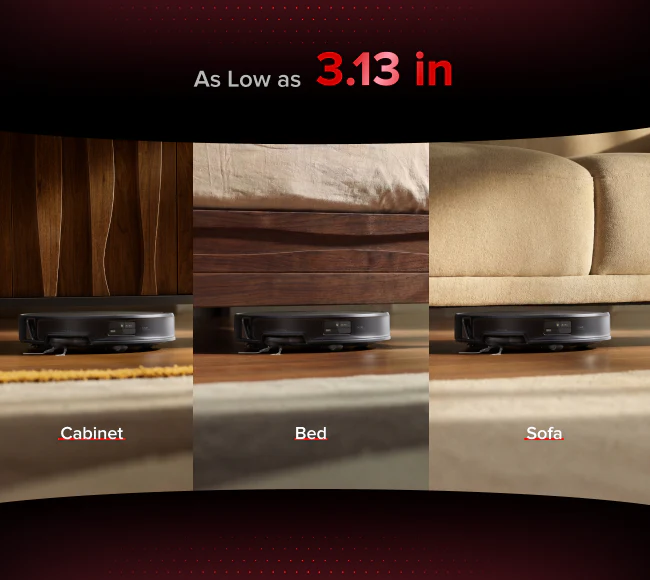
At 79.8mm tall, or just over 3.1 inches, the Saros 20 is genuinely slim for a flagship robot vacuum. That is not a cosmetic detail. It is one of the most practical features on the whole machine. A lot of premium robot vacuums promise whole-home automation, then get humbled by bed frames, TV stands, sideboards, kitchen overhangs, and the awkward dead zones under furniture where dust collects the fastest. The Saros 20’s low body gives it access where taller robots often fail.
Several of the employee reports kept coming back to this point. The Saros 20 was able to get under furniture and overhangs that bulkier models could not reach confidently. That alone changes how useful a robot vacuum feels. A machine that truly reaches the spots you normally ignore is worth more than one with a bigger marketing number but worse physical access.
The design is also clean and purpose-built. Depending on the region and bundle, it appears in a dark finish that looks serious and premium, though not everyone on the team thought it blended into décor especially well. That is fair. It is not trying to disappear into a room the way a smaller, cheaper dock-based cleaner might. The Saros 20 and its dock clearly look like premium appliances.
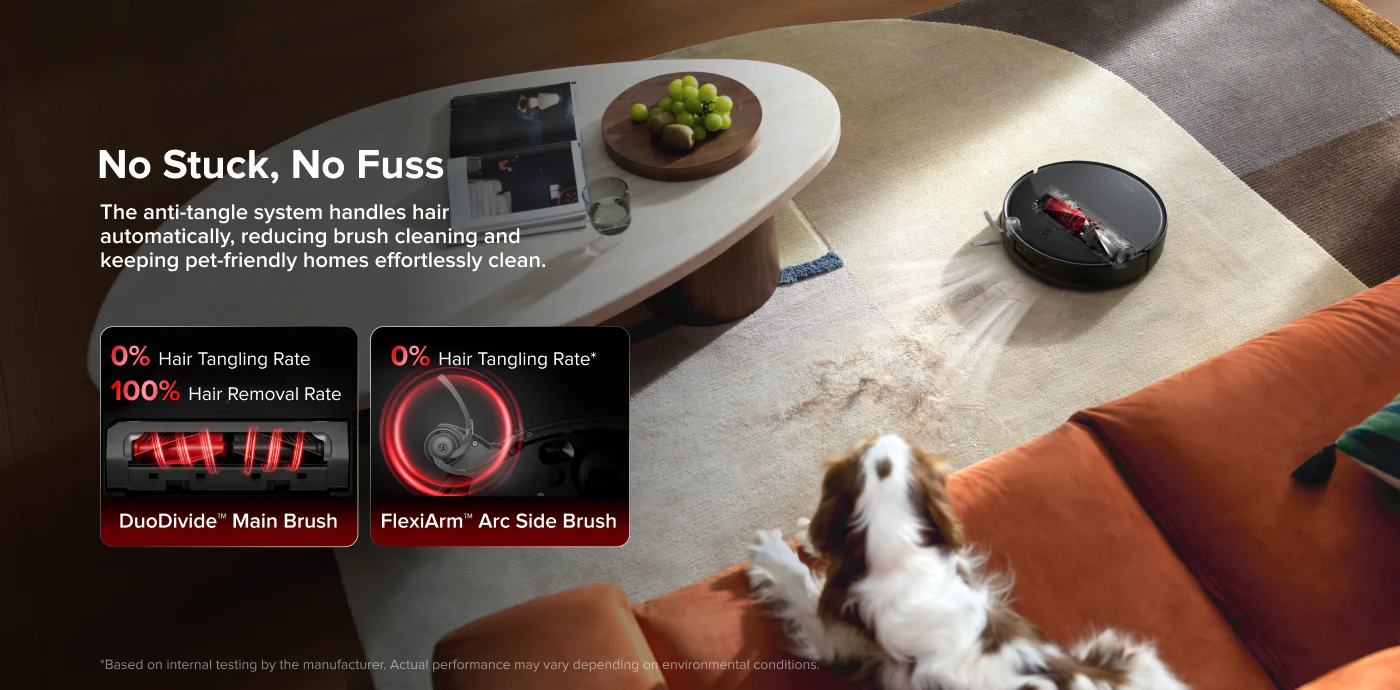
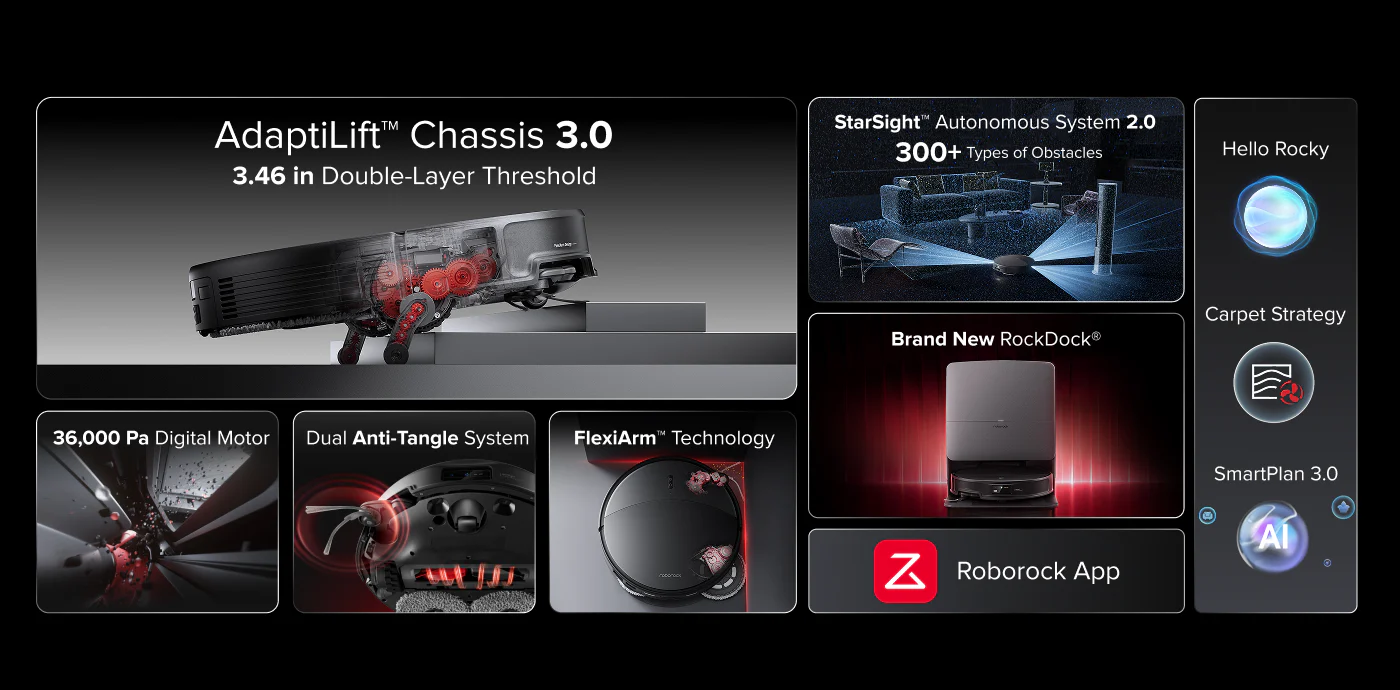
Underneath, Roborock has made the right design decisions for the target buyer. The Saros 20 uses a dual anti-tangle brush approach, including the DuoDivide main brush and a side brush setup intended to reduce hair wrap. It also uses dual spinning mop pads, with one extending outward to help it reach edges more effectively. This is paired with FlexiArm functionality for edge and corner cleaning.
That all sounds technical until you see what it means in normal use. In real homes, long hair, pet hair, and debris buildup are what turn robot vacuums from time savers into maintenance chores. The Saros 20’s hardware feels designed by people who understand that.
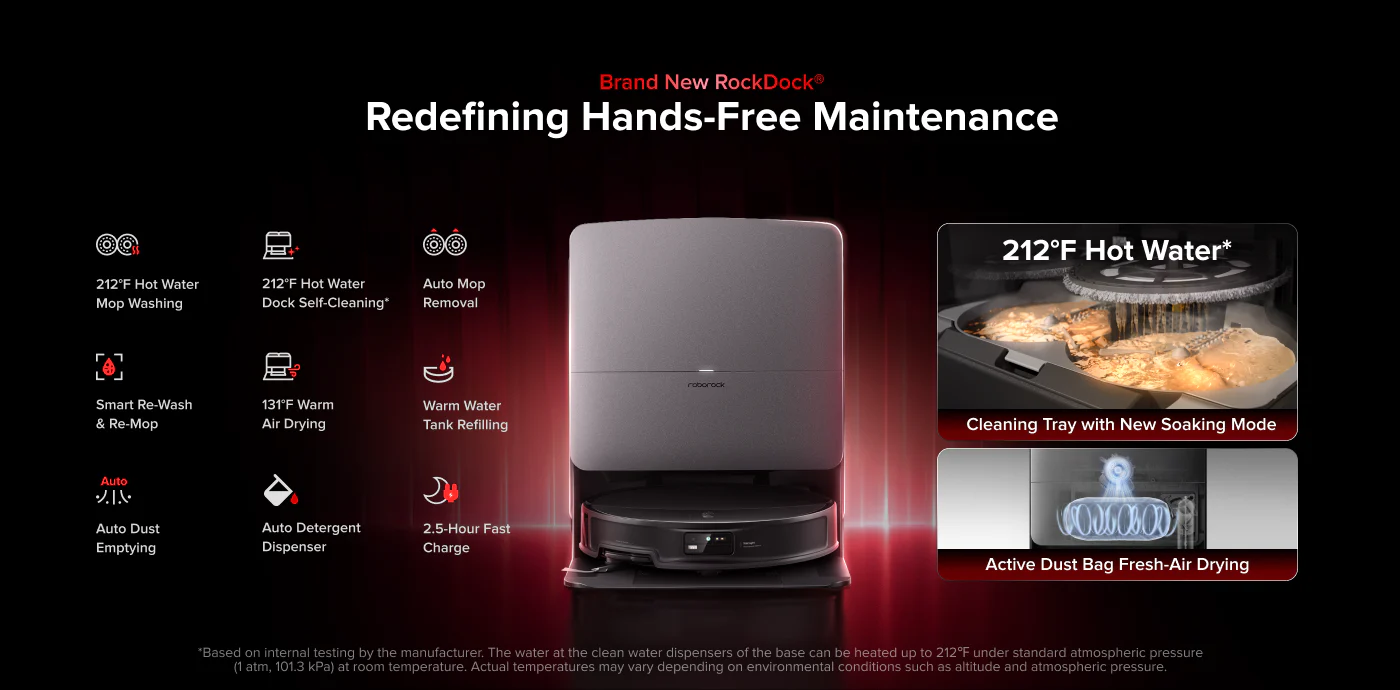
The dock is also a big part of the product’s appeal. It is not small, and we would absolutely tell buyers to measure their space before buying. But it earns its footprint. It handles self-emptying, mop washing, mop drying, water management, and detergent support in a way that makes the whole package feel meaningfully more autonomous than mid-range alternatives.
No, it is not beautiful enough to become part of your interior design. But it is practical, premium, and easy to live with.
Setup and first use
For a flagship product, the Saros 20 makes a surprisingly good first impression during setup.
Several team writeups noted that physical setup was straightforward. The dock assembly, tank filling, mop attachment, and initial placement did not feel unnecessarily complicated. That might sound like a small compliment, but in the premium robot world, it is not. Plenty of expensive cleaners still make their early ownership experience feel harder than it should be.
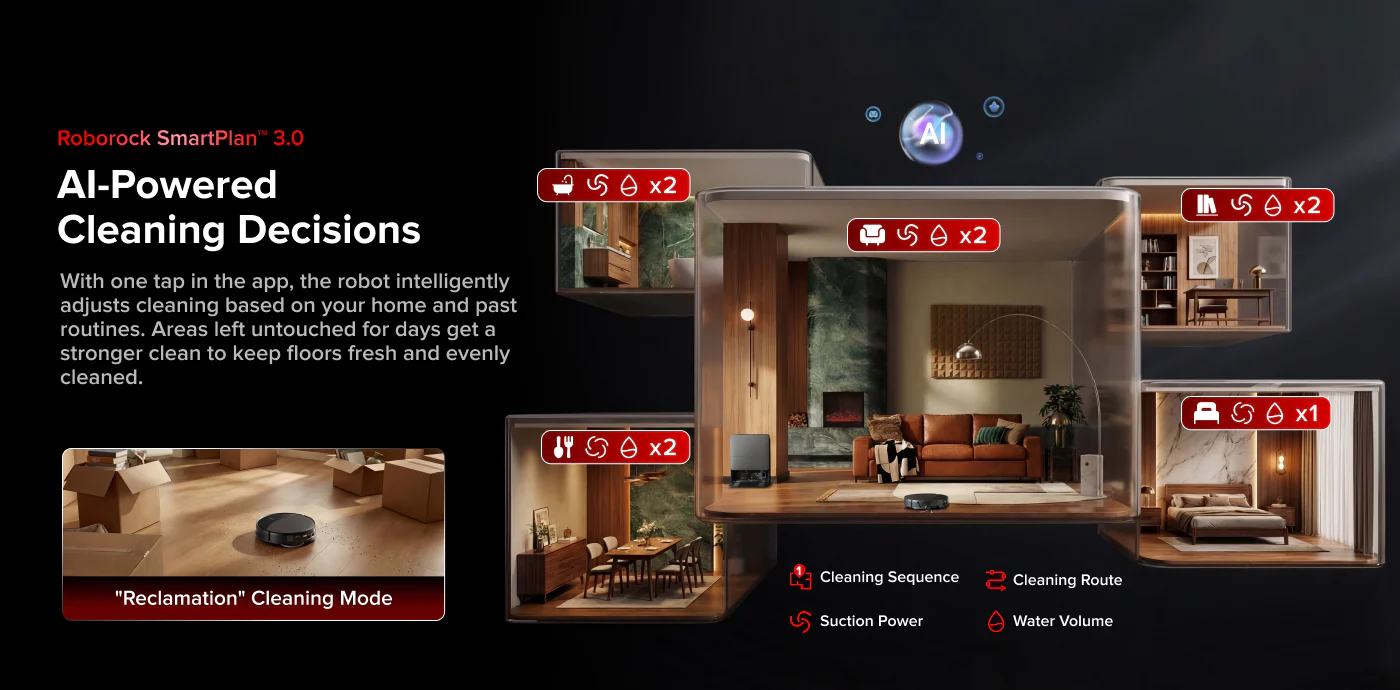
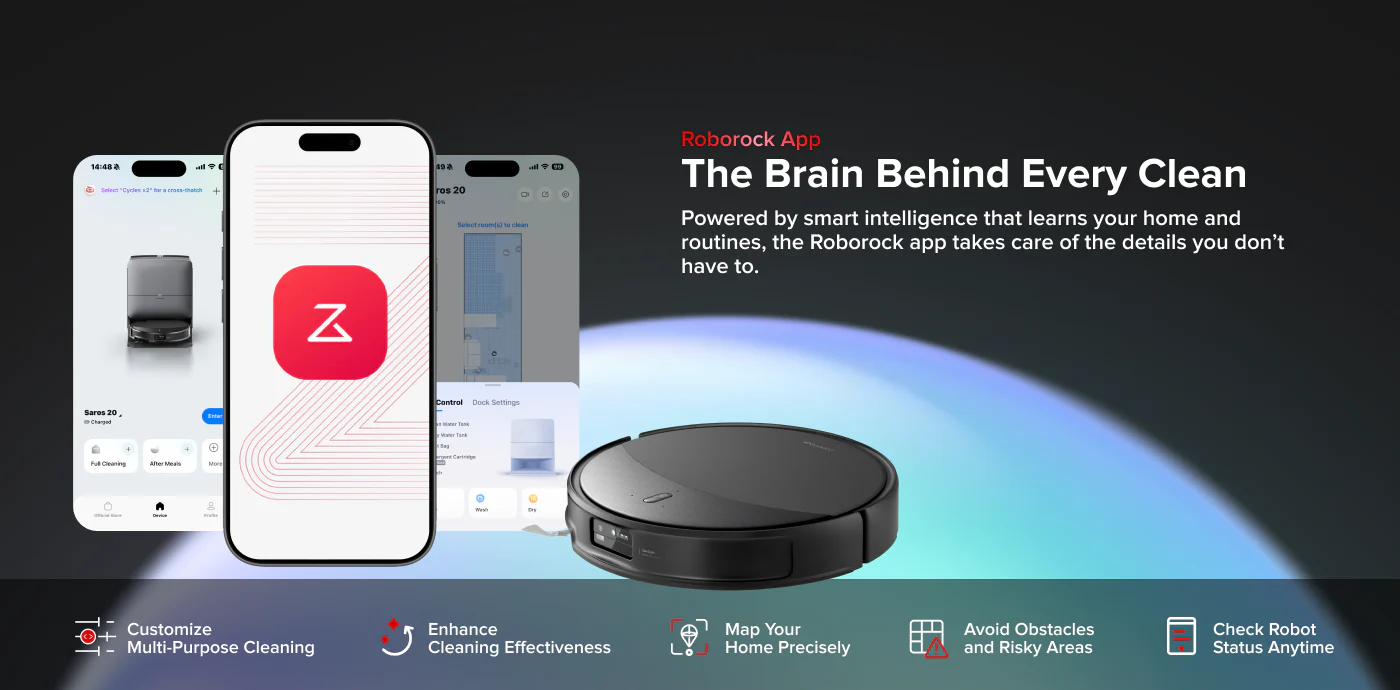
The app side is also one of the Saros 20’s strongest advantages. Across the staff reports, the Roborock app came up repeatedly as one of the best parts of the ownership experience. It is intuitive, detailed, fast, and full of useful control without feeling like a settings maze. That balance matters. A lot of smart-home apps either hide too much or overwhelm you with too much.
Mapping speed and quality were also consistently praised. In some homes, the Saros 20 mapped quickly enough to feel almost trivial. In others, it took longer but delivered more accurate room recognition. What mattered most was not the exact number of minutes. What mattered was that the Saros 20 generally produced usable maps with minimal correction.
That is exactly what a premium robot should do.
The app also makes it easy to:
- Edit maps
- Split or merge rooms
- Label spaces
- Set no-go zones
- Create invisible walls
- Choose between vacuum-only, mop-only, combo cleaning, or vacuum-then-mop
- Build routines for recurring tasks
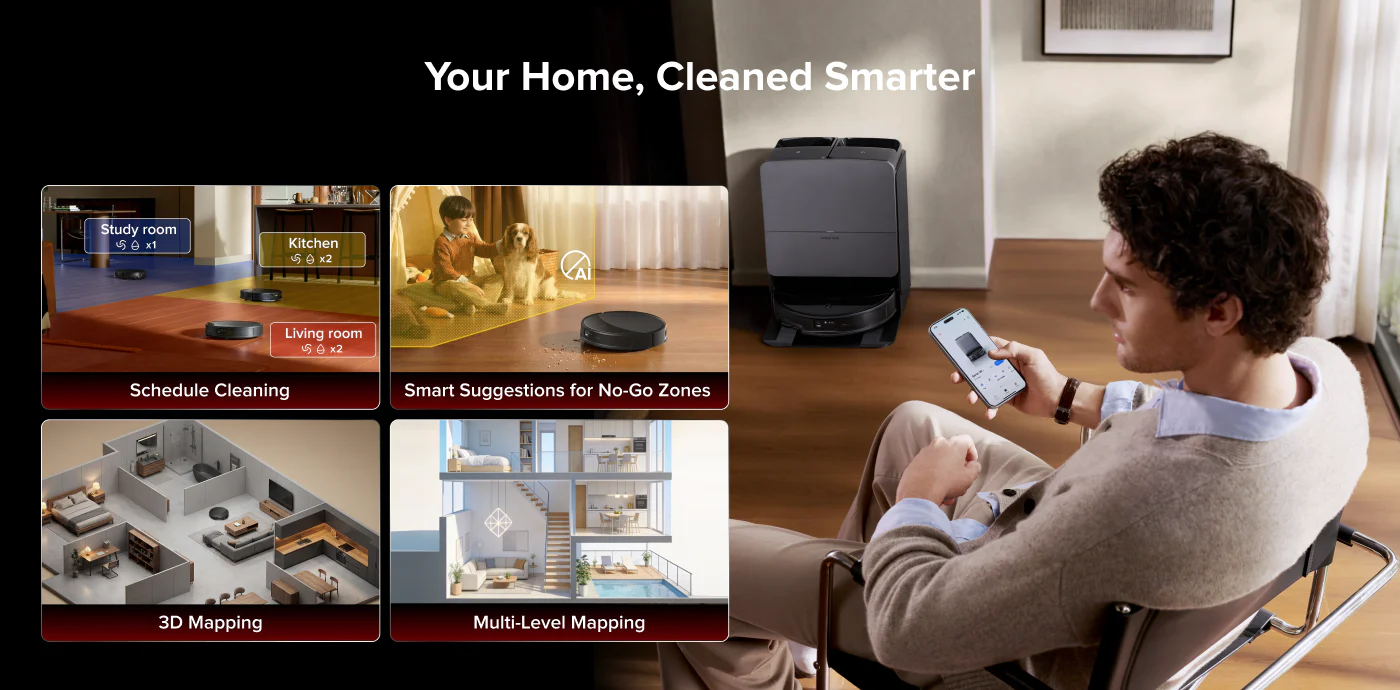
- Schedule room-specific cleans
- Fine-tune suction and water levels
- Trigger targeted zone cleaning for messes
One thing we especially like is that the Saros 20 can fit into both simple and advanced households. If you just want to send it out for regular whole-home cleaning, it can handle that. If you want room-by-room routines, smart-home integration, pet-area logic, and deeper control, it can handle that too.
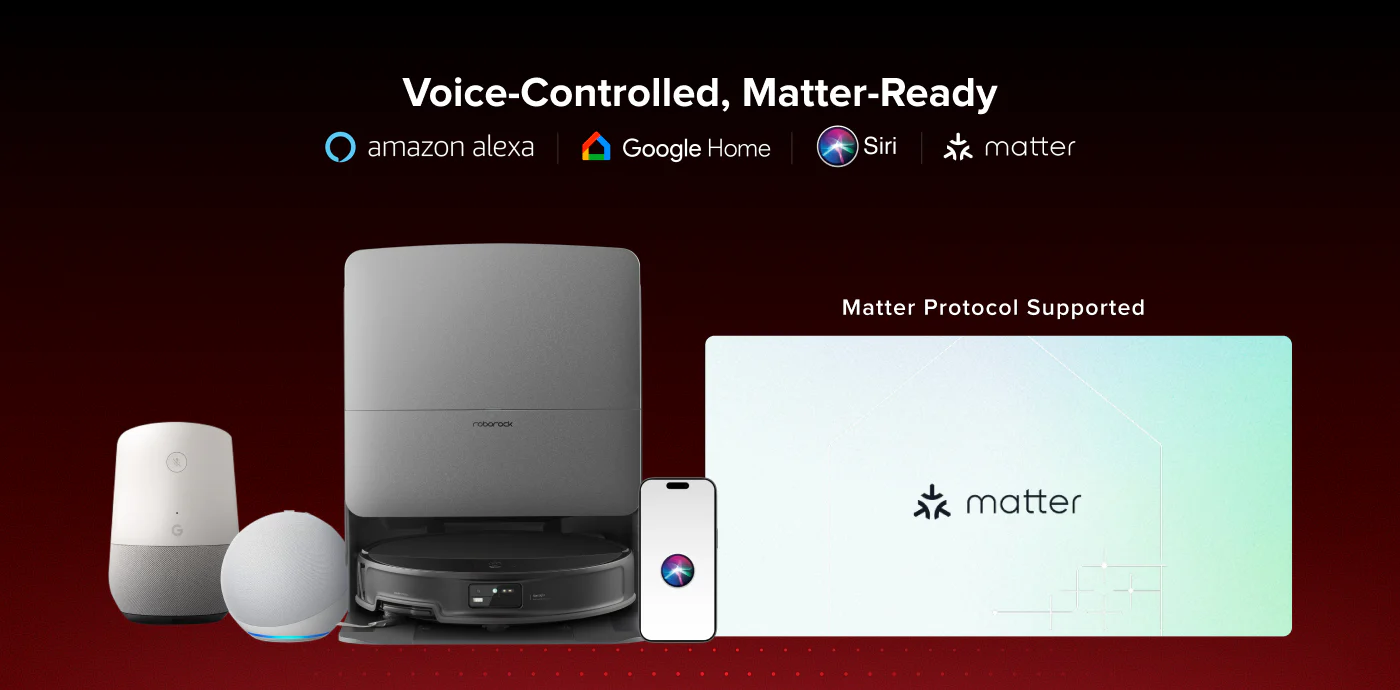
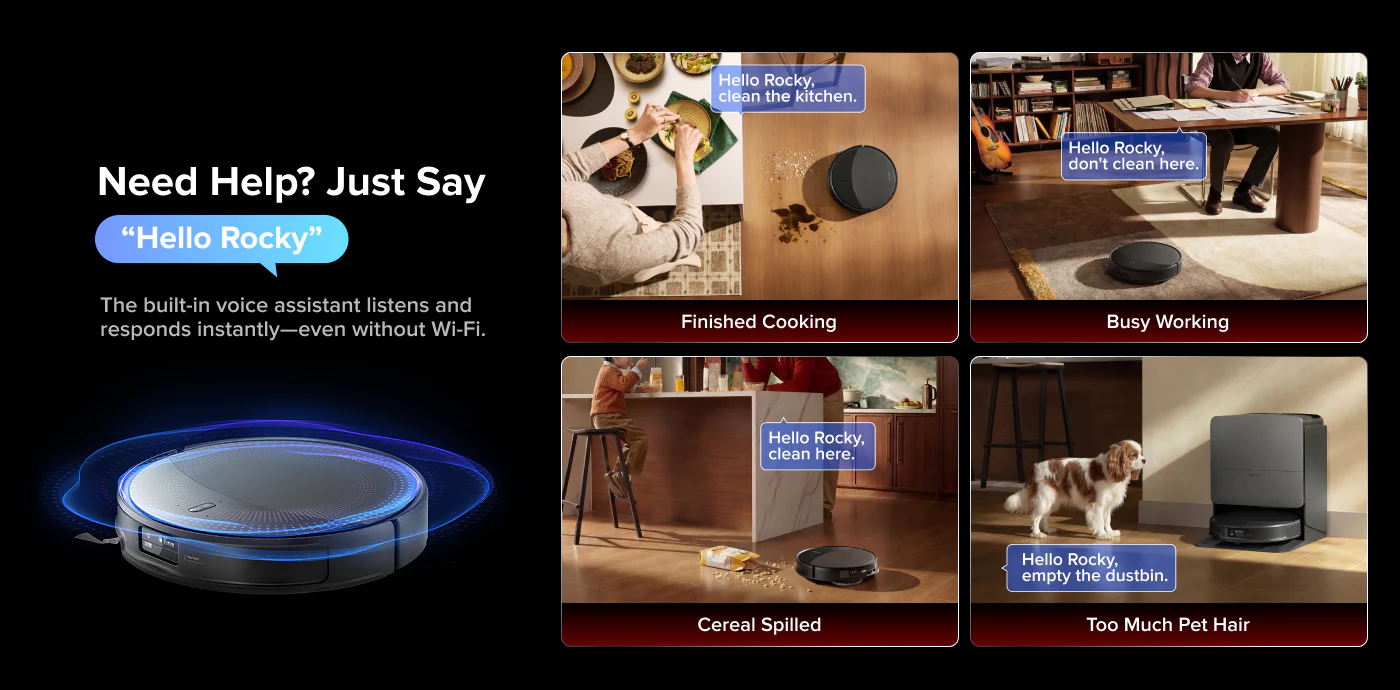
There is also support for Alexa, Google Home, Siri, and Matter, which makes the Saros 20 easier to slot into a serious smart-home setup than some rivals. One employee report also went deep on Home Assistant integration, and while that is obviously more niche, it shows the Saros 20 can become a serious part of broader home automation if that matters to you.
Real-world vacuuming performance
This is where the Saros 20 earns most of its reputation.
The headline number is 36,000Pa suction, and while we are always skeptical when brands lead too hard with a suction spec, the real-world testing here mostly backs it up. The Saros 20 consistently came across as an unusually powerful vacuum, especially on ordinary household dust, crumbs, litter, and hair.
That does not mean it was literally perfect in every single scenario. But it does mean the vacuuming side of this product feels as premium as the price suggests.
On hard floors, the Saros 20 was repeatedly described as strong, fast, and reassuringly thorough. It handled dust, crumbs, kitty litter, basil flakes, shredded cheese, and kitchen debris with the kind of authority that makes a robot vacuum feel like a genuine substitute for frequent manual cleanup rather than just an in-between tidy-up tool.
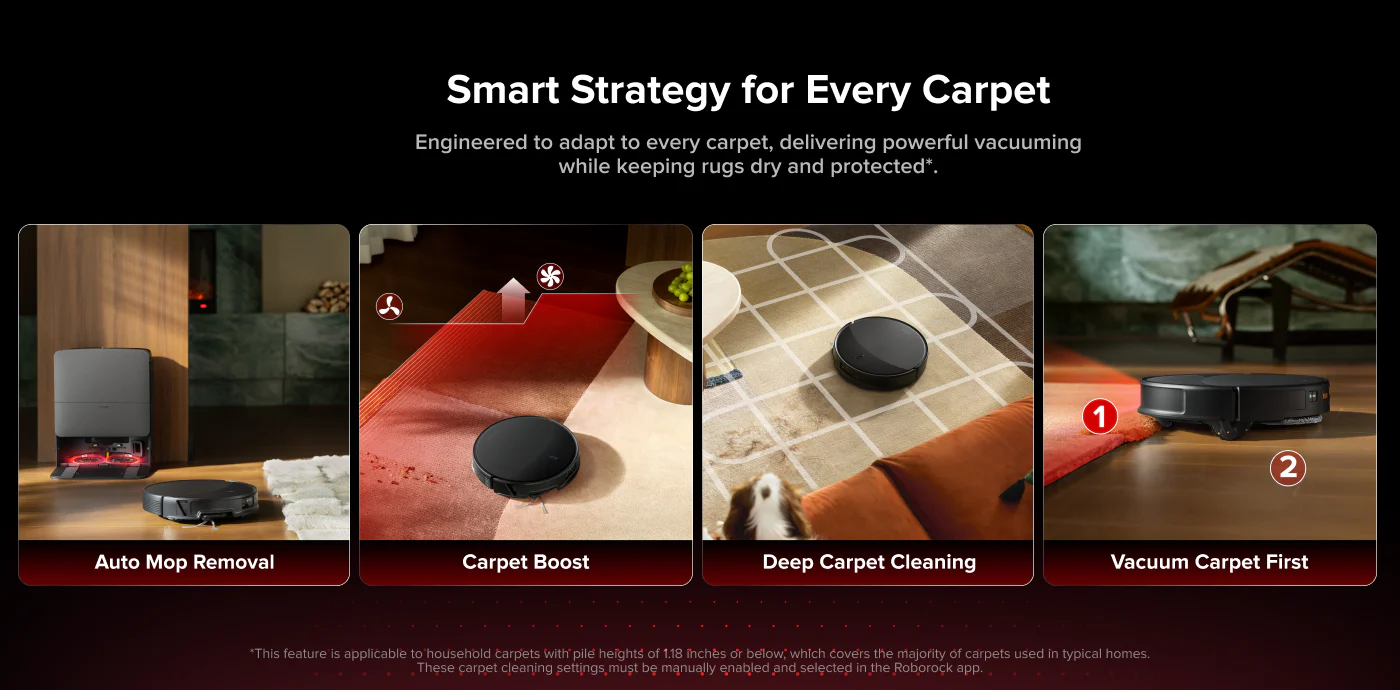
On carpet, the results stayed strong overall, though not untouchable. The Saros 20 did very well with larger debris and standard messes, and several of the writeups were especially positive about how it handled scattered cereal, litter, and general dirt on rugs. In at least one test, it picked up 100 percent of Cheerios and 100 percent of kitty litter from carpet, which is the sort of result you want from a premium machine.
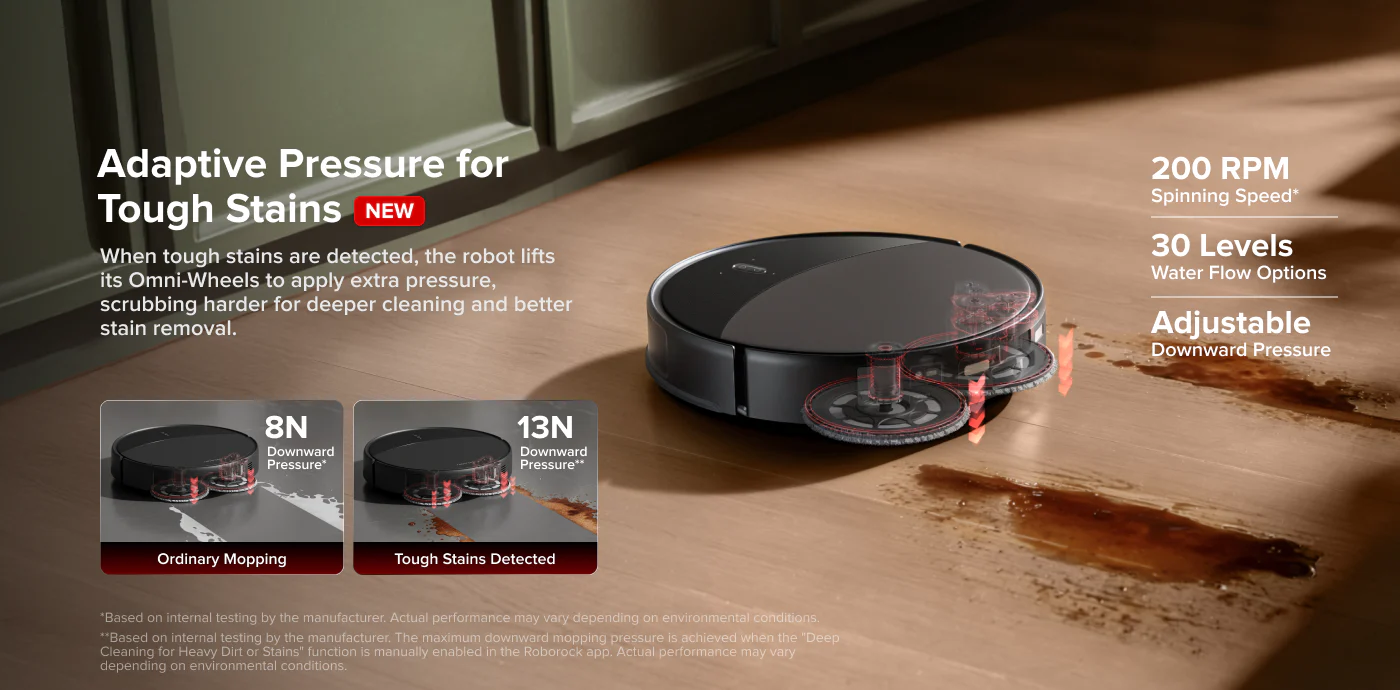
Pet hair was more mixed, but still broadly good. One test found stronger pickup on hard floors than on rugs, and one writeup noted that a meaningful amount of pet hair remained on carpet after a cycle. That is worth mentioning because we do not want to oversell it. Still, even the more critical writeups landed in roughly the same place: the Saros 20 is very good with pet hair overall, just not magically perfect in every carpeted scenario.
That feels like the honest reading of the data.
The Saros 20 also performed well around edges and corners, which is where cheaper robot vacuums often expose themselves. Between the side brush reach and the mop/brush extension, it is better than average at not leaving those frustrating little lines of debris hugging the walls.
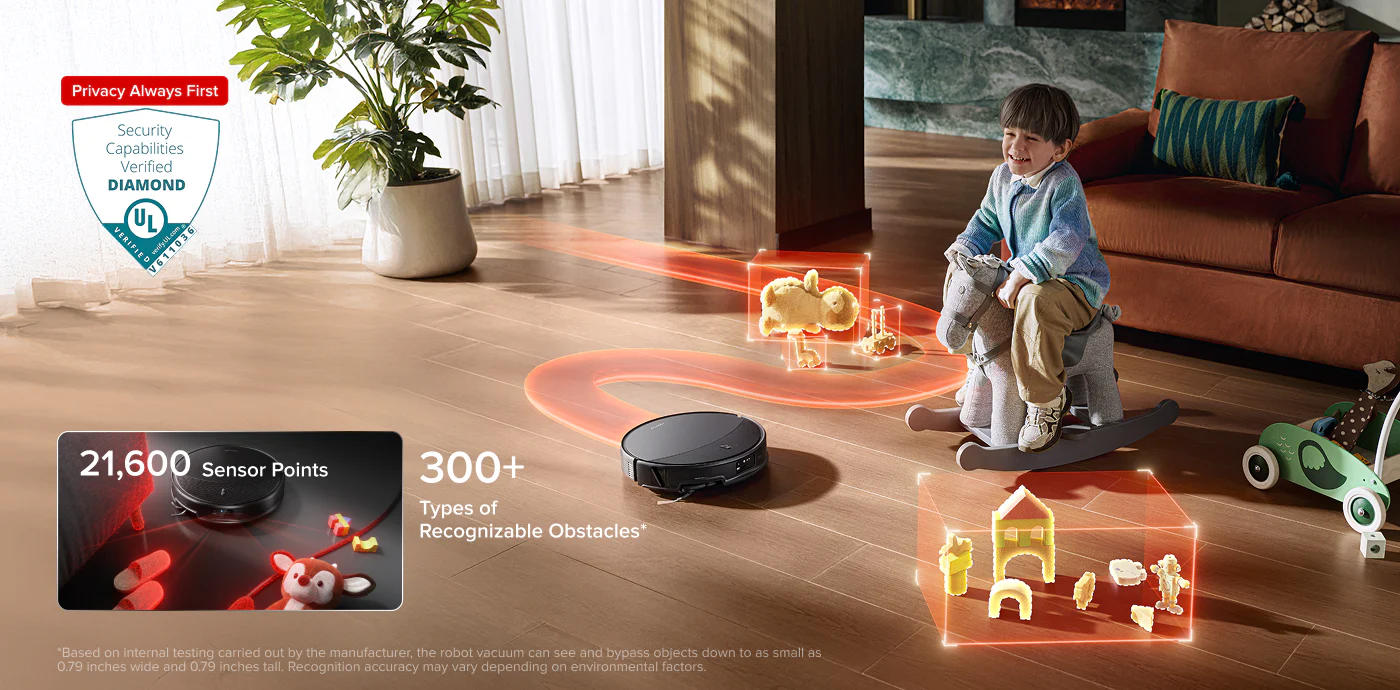
We were also impressed by how the Saros 20 handled everyday clutter. Shoes, chair bases, crates, cords, and furniture legs did not seem to confuse it nearly as much as they confuse lesser robots. That changes the ownership experience in a bigger way than many buyers realize. A robot vacuum that cleans well but constantly gets trapped is still annoying. A robot that cleans well and avoids trouble is what people actually want.
Hair handling and anti-tangle performance
This deserves its own section, because it is one of the clearest wins in the employee testing.
Hair wrap is one of the most tedious robot vacuum problems there is. It is boring, constant, and weirdly under-discussed in official product pages. Brands love to talk about suction. Buyers quickly discover that brush maintenance matters just as much.
The Saros 20’s DuoDivide main brush and anti-tangle side setup look like the real deal.
Across the writeups, long hair and pet hair handling was one of the most consistently praised parts of the product. In one employee test, after weeks of use, there was reportedly not a single hair tangled around the brush. In others, the brush system was described as working exactly as intended, with none of the usual post-cleaning detangling frustration.
That is not flashy, but it is hugely valuable.
If your household includes long hair, shedding pets, or both, the Saros 20 is immediately more appealing than a lot of premium competitors simply because it appears to stay usable without turning brush cleaning into a weekly punishment.
That alone will make it worth the money for some buyers.
Navigation and obstacle avoidance
This is probably the second-biggest reason to buy the Saros 20.
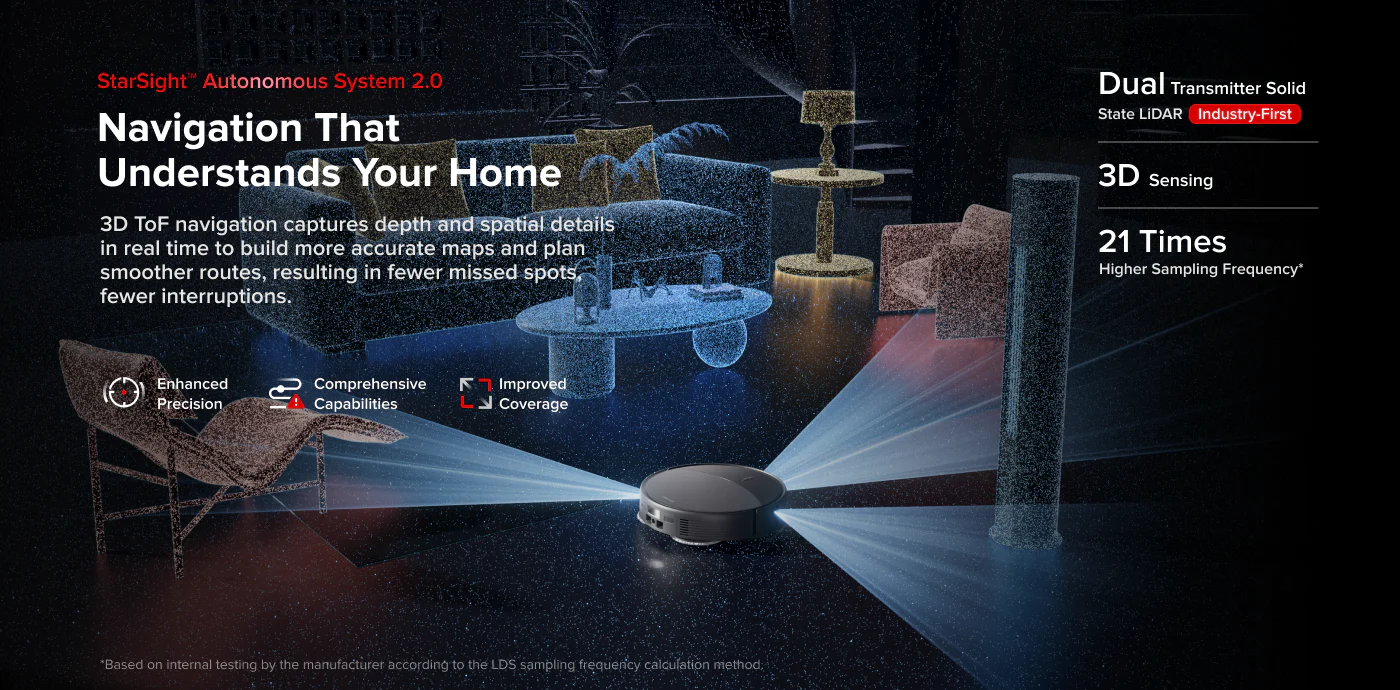
Roborock’s StarSight Autonomous System 2.0 is not just a marketing label here. The employee reports consistently suggest that the Saros 20 navigates with more confidence than many of its rivals, especially in homes with actual clutter.
That showed up in several ways.
First, the robot generally avoided getting stuck in places where past models or competing robots would need rescuing. That includes low furniture, cords, rugs, bath mats, and awkward room transitions.
Second, the object recognition seems materially smarter than average. Some reports described the Saros 20 as understanding the difference between shoes, bags, chargers, and chairs in a way that made it feel less reactive and more deliberate. That is exactly what you want from an expensive robot. You want fewer dumb collisions, fewer unnecessary hesitations, and fewer stops because it has become fascinated by one cable under a desk.
Third, it generally found its way back to the dock and through rooms without drama. Again, that sounds basic, but in this product category, basic competence is a major selling point.
Now, was it flawless? No.
One employee noted that ketchup on the floor was initially interpreted as a cable and avoided. Another saw the Saros 20 miss a cable nest while mopping, and another mentioned it could still get confused by hanging drawstrings or clutter stored under a bed. Those are useful reminders that even premium robot vacuums are still robots. They are not sentient cleaners.
But the larger pattern is still very favorable. On balance, the Saros 20 appears to be one of the better high-end robots we have seen for obstacle handling and room navigation, especially when compared with the everyday frustrations that still plague many competitors.
Threshold climbing and mixed-floor flexibility
This is one of the Saros 20’s killer features.
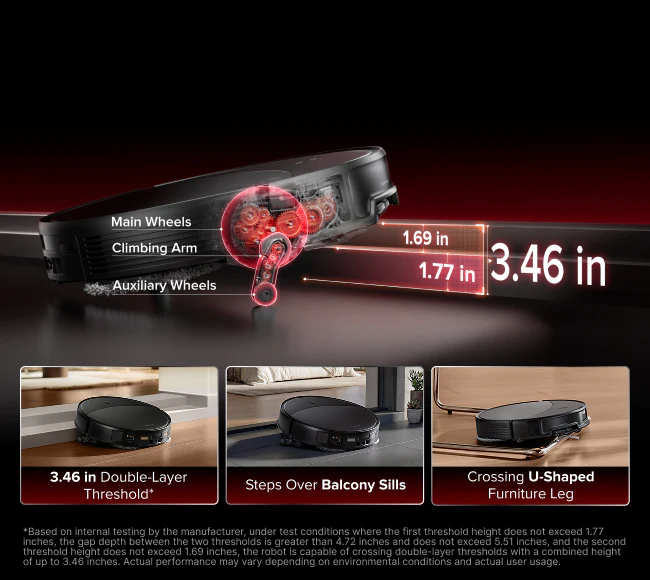
The AdaptiLift Chassis 3.0 is not one of those fancy features that looks cool in a launch video and does nothing meaningful in real homes. It solves a real problem.
Room transitions, threshold strips, rug edges, chair bases, and raised flooring changes are some of the biggest reasons robot vacuums fail. A lot of machines look smart until they hit one annoying lip between rooms and give up on half the house.
The Saros 20 handles these situations far better than most.
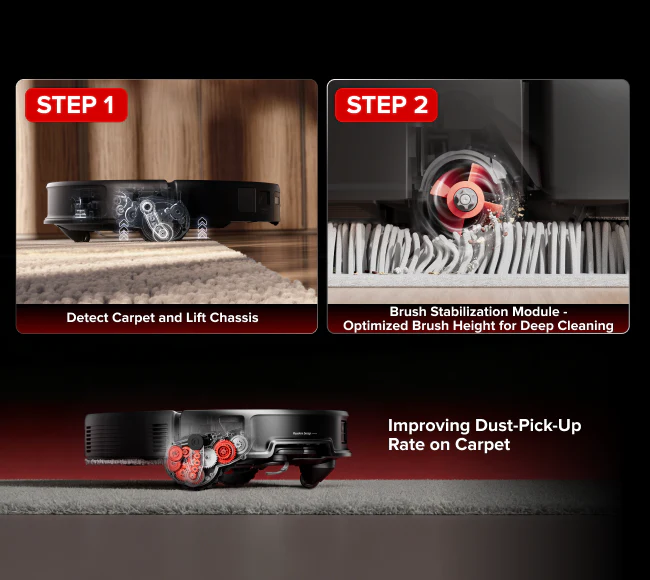
Roborock claims support for double thresholds up to 8.8cm total, with roughly 4.5cm for the first step and 4.3cm for the second. In employee testing, it also cleared aggressive single-threshold challenges better than expected, reportedly handling 4.1cm and even 5.0cm obstacles in some cases before finally reaching its limits closer to 6.0cm.
That is seriously impressive.
Even outside extreme tests, the benefit was obvious. The Saros 20 moved between hard floors and rugs more confidently, handled bath mats better, crossed ordinary household transitions more naturally, and generally behaved like a robot designed for imperfect homes rather than clean showrooms.
If your house has mixed flooring and you are tired of robots that behave as if one rug edge is a personal attack, the Saros 20 starts making a lot of sense very quickly.
Mopping performance
This is where the review gets more interesting.
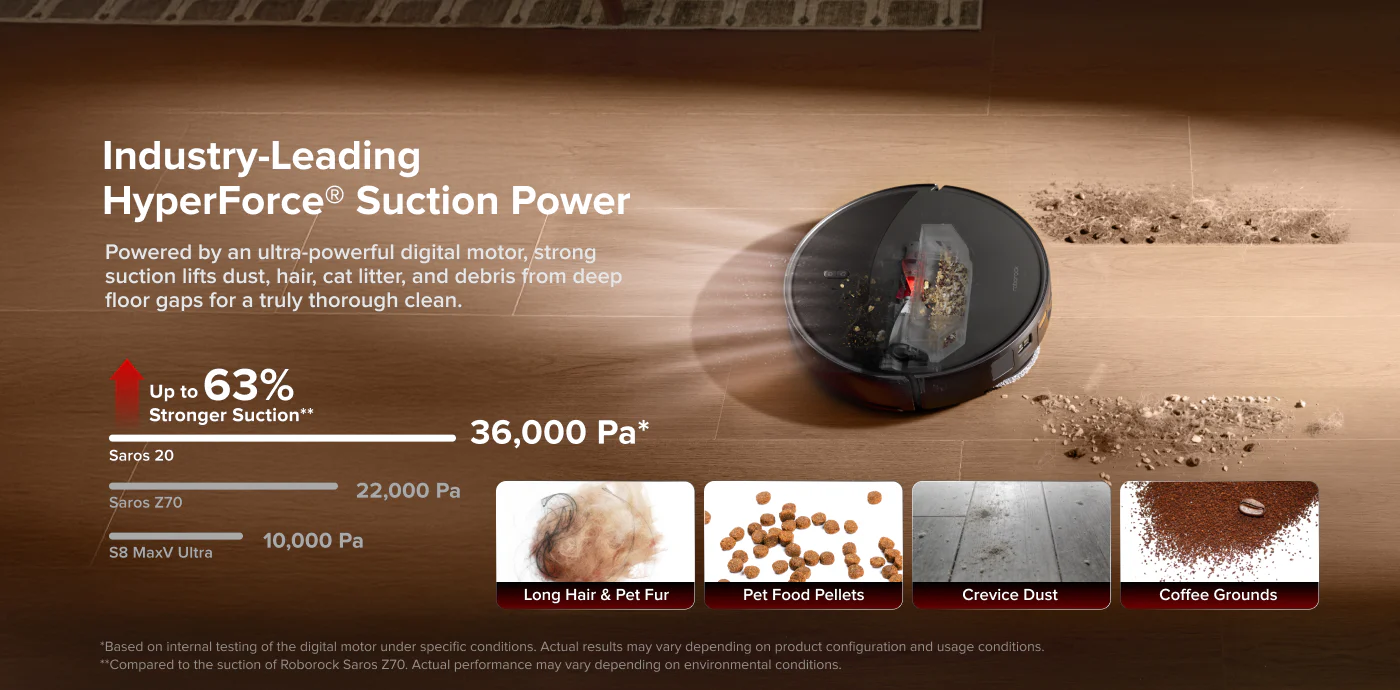
Some of the employee writeups were glowing about the Saros 20’s mopping. They described it as effective, powerful, and capable of lifting muddy paw marks, routine kitchen grime, coffee, red wine, mud, and most day-to-day stains with very little trouble. The dual spinning mop pads, extra pressure for tougher messes, and intelligent re-mopping options all got praise.
If we only had those writeups, we would say the Saros 20 is one of the best mopping robots around and move on.
But we do not only have those writeups.
Other team reports were notably more cautious. One described the mopping as streaky and patchy, with missed spots and mop heads that did not seem saturated enough. Another found that ketchup was initially avoided as an obstacle, then partially spread before being removed only after additional passes. Another noted that greasy or heavy messes exposed the limits of spinning pads compared with newer roller-based systems that clean themselves more continuously while working.
That is the honest tension with the Saros 20.
Our take is this: the mopping is good enough that we would absolutely use it and value it, especially for routine maintenance cleans. It is likely very good for keeping already-mostly-clean floors looking clean. It is also capable enough to handle many ordinary stains and light messes without issue.
What we would not do is buy the Saros 20 primarily because we think it is the single best robot mop on the market.
That is too strong.
Its dual spinning pads have real strengths. They are great for edge precision, tight gaps, and routine floor maintenance. But they do not fully eliminate the fundamental weakness of pad-based mopping when messes get heavier, oilier, or more concentrated. Pads that return to the dock for cleaning every so often are not the same thing as a mop system that refreshes itself constantly during the mess itself.
So yes, the Saros 20 mops well. Sometimes really well. But the vacuuming side is still the more consistently elite half of the product.
Performance in pet homes
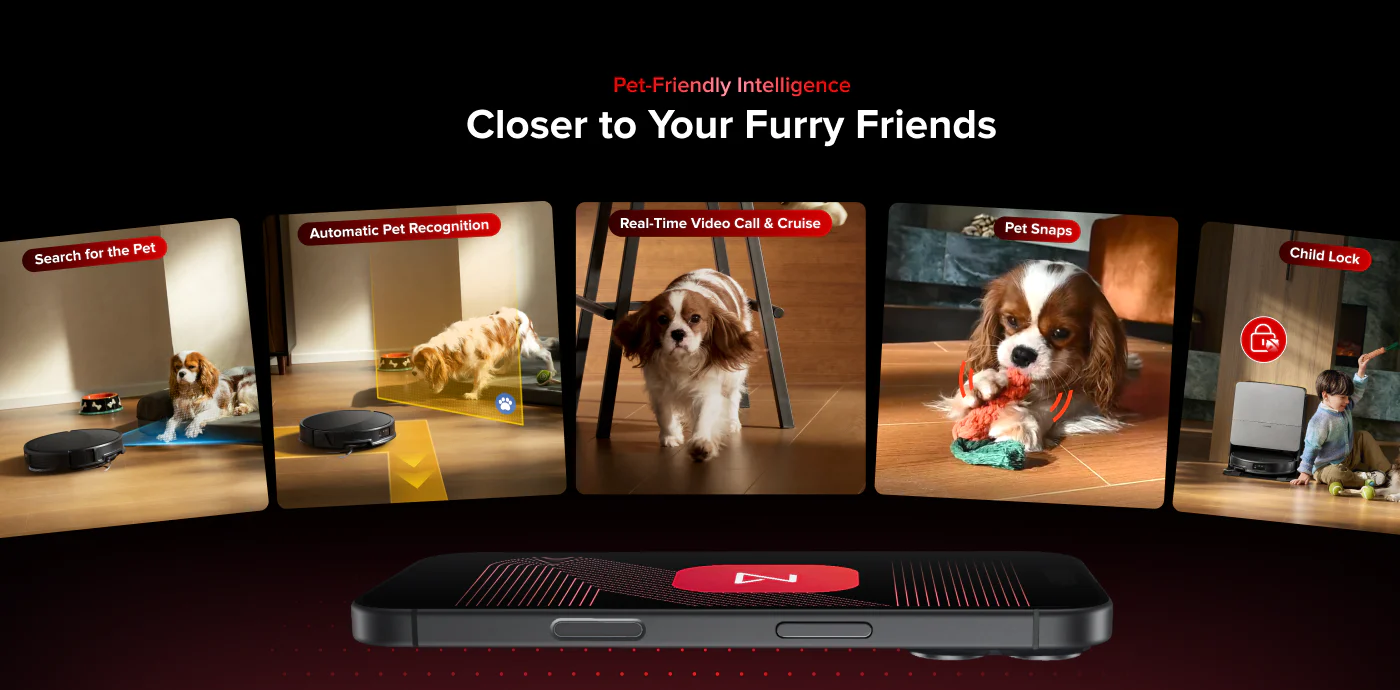
Pet owners are one of the clearest target audiences here, and that makes sense.
The Saros 20’s strengths line up almost perfectly with the problems pet owners deal with:
- Hair on hard floors
- Hair on rugs
- Scattered litter
- Food crumbs
- Tracked dirt
- Frequent cleaning needs
- Cords, toys, bowls, and general clutter
- The need for something that can run often without constant maintenance
In the employee testing, the Saros 20 consistently looked like a strong pet-home machine. The suction, anti-tangle system, obstacle avoidance, and dock automation all work in its favor here. Even when pet hair pickup on carpet was not perfect, the overall performance still came across as strong enough for regular household maintenance.
The real value is not that it replaces every other cleaning tool forever. The real value is that it keeps the floor from ever getting truly nasty in the first place.
For pet homes, that matters more than one dramatic cleanup test.
We also like that the Saros 20 feels like it was designed for repeat use. You can run it often. You can trust it with routine work. And because the dock removes so much of the maintenance burden, frequent cleaning does not become frequent hassle.
That is exactly how robot vacuums earn their keep.
Performance under furniture and in awkward spaces
This is one of the Saros 20’s most underrated strengths.
A lot of robot vacuum reviews focus so much on pickup percentages and lab-style debris tests that they ignore a simple reality: a robot is only useful in the spaces it can physically reach.
The Saros 20’s 79.8mm body gives it a major advantage here. Across the employee testing, it repeatedly reached under furniture, cabinetry, overhangs, and clearance-challenged areas that taller robots would struggle with or avoid entirely.
That includes:
- TV stands
- Bed frames
- Cabinet overhangs
- Bar carts
- Kitchen edges
- Spaces under lower furniture
This matters more than brands admit. Those awkward low-clearance zones are where dirt, pet hair, and dust bunnies gather in embarrassing quantities. If your robot cannot reach them, your “automated cleaning” system still leaves you with the ugliest part of the job.
The Saros 20 is not the first slim robot, but it is one of the best examples of why slim design still matters.
Dock performance and day-to-day maintenance
This is where the Saros 20 starts to justify its premium price.
The dock is not just a charger. It is a major part of the ownership experience. And on the Saros 20, it seems to do most of the right things.
Depending on the configuration and region, the dock handles:
- Automatic dust emptying
- Mop washing with hot water
- Warm-air drying
- Clean and dirty water management
- Detergent handling
- Automatic mop maintenance
- Bag-based dirt collection for long intervals between changes
In practice, the employee reports suggest this translates into a product that needs very little day-to-day attention. Dust bags do not fill instantly. The brush system does not tangle badly. The mop pads self-clean well enough that manual intervention is infrequent. Several writeups described the base plate as only needing occasional wiping rather than constant cleanup.
That is exactly the kind of premium convenience buyers are paying for.
Now, the dock is not perfect. It is large. It can be loud during self-emptying. One employee noted that the water pumping noises were more noticeable than on another Roborock model. Another mentioned occasional doubt over whether the bin had fully emptied every time.
Those are fair points.
But overall, the maintenance story is still one of the Saros 20’s biggest wins. This is a robot vacuum built to reduce chores, not quietly create new ones.
App and smart-home experience
Roborock keeps getting this part right.
The app is detailed without feeling bloated, and that matters because a premium robot vacuum is only as good as the control system around it. A bad app can make even excellent hardware annoying to own.
The Saros 20 gives you serious flexibility. You can run quick whole-home cleans, fine-tune room routines, tweak water and suction, set no-go zones, build post-meal kitchen cleans, choose vacuum-then-mop sequences, and integrate the machine with broader smart-home systems.
We especially like that the app seems to support both normal buyers and obsessive tinkerers. If all you want is dependable scheduled cleaning, it can do that. If you want advanced zone logic, smart triggers, Matter support, or Home Assistant routines tied to occupancy, it can do that too.
That flexibility fits the product. The Saros 20 is not trying to be a simple, cheap robot. It is trying to be a centerpiece cleaning appliance for people who want more control and less friction.
And mostly, it succeeds.
Noise
The Saros 20 appears fairly civilized during active cleaning.
In employee measurements, vacuuming and mop washing were both around 60 dB, while dustbin emptying came in closer to 70 dB. In plain English, that means it is not silent, but it is absolutely livable during normal operation. Several of the writeups specifically called it quiet enough to run without feeling like a traditional vacuum cleaner just hijacked the room.
The louder part is the dock emptying cycle, which is not unusual for robot vacuums, but still worth knowing if you are sensitive to sudden noise.
For most buyers, we do not see noise as a major drawback here.
Flaws and frustrations
The Saros 20 is excellent, but it is not a miracle cleaner.
The biggest flaw is easy to identify: mopping consistency. Not because the mopping is bad, but because it is the only major category where the employee reports were not in strong agreement. Some loved it. Some liked it with caveats. Some found it underwhelming for a premium machine.
That means buyers need to frame it correctly. This is not the robot we would choose if the entire buying decision comes down to who mops the heaviest stains most flawlessly.
The second issue is price. The Saros 20 sits firmly in flagship territory. There is no soft way to say that. This is a luxury cleaning appliance. It has to deliver serious value to be worth the spend.
The third issue is dock size. It is not absurdly huge, but it is substantial enough that placement matters. In tight homes, it may become visually dominant.
The fourth is that even advanced obstacle handling does not mean zero intervention forever. Cables, hanging strings, bizarre clutter, and very unusual messes can still trip it up. This is a highly capable robot, not a magical housekeeper.
Finally, the Saros 20 can feel like overkill if your home is simple. If you live in a smaller apartment with minimal rugs, no pets, and easy flooring, you may not need what makes this machine special.
Value for money
This is where your household matters more than the spec sheet.
If you judge value purely by price, the Saros 20 is hard to call a bargain. It is expensive, full stop. There are cheaper robots that vacuum capably. There are cheaper robots that mop decently. There are cheaper ways to keep floors acceptably clean.
But that is not really the point of a product like this.
The Saros 20 is valuable when it solves the specific problems cheaper robots keep failing at:
- Reaching under low furniture
- Crossing raised transitions
- Avoiding constant rescues
- Handling hair without tangling
- Cleaning often without demanding much maintenance
- Working in pet-heavy homes
- Managing mixed flooring without drama
If those are your pain points, the Saros 20 starts to make a lot of financial sense despite the premium price.
If those are not your pain points, it starts to look like a luxury purchase rather than a practical one.
That is why our value verdict is this: the Saros 20 is expensive, but it is not overpriced for the right household.
Pros and cons
Pros
- Extremely strong vacuuming performance
- Excellent hair handling with minimal tangling
- Outstanding low-profile design at 79.8mm
- Superb threshold climbing and mixed-floor mobility
- Smart, reliable navigation
- Useful edge and corner cleaning
- Great app and smart-home support
- Dock removes most maintenance hassle
- Very strong fit for pet owners
- Feels like a genuine flagship
Cons
- Very expensive
- Mopping is good, but not consistently class-leading
- Dock is still fairly large
- Self-emptying is louder than normal cleaning
- Some heavy spills still need targeted repeat passes
- Overkill for simpler homes
Who should buy it
Buy the Roborock Saros 20 if your home regularly exposes the weakness of lesser robot vacuums.
That means homes with:
- Pets that shed
- Children who drop crumbs constantly
- Mixed flooring
- Raised room transitions
- Low furniture
- Frequent need for autonomous cleaning
- Long hair in the household
- A willingness to pay for fewer chores and fewer compromises
We would also strongly recommend it to buyers who are tired of “smart” vacuums that still need rescue missions every week. The Saros 20 feels built to reduce that nonsense.
Who should skip it
Skip the Saros 20 if you mainly want:
- The best possible robot mopping above everything else
- A cheaper machine for a smaller or simpler home
- A robot with a smaller dock footprint
- A more budget-friendly all-rounder
- Something that feels premium without actually costing flagship money
And skip it if your current home does not really challenge robot vacuums. If you do not have thresholds, pet hair, rugs, or furniture clearance issues, you may never fully benefit from what makes the Saros 20 special.
Final verdict
The Roborock Saros 20 is one of the most convincing premium robot vacuum releases we have seen because it focuses on the right problems.
It is not trying to impress us with nonsense. It is trying to solve the real reasons people get frustrated with robot vacuums: they get stuck, they fail under furniture, they choke on hair, they struggle with floor transitions, and they still ask for too much maintenance. The Saros 20 tackles those problems better than most.
Its 36,000Pa suction is not just a spec-sheet flex. The vacuuming is genuinely powerful. Its 79.8mm slim body is not a gimmick. It meaningfully expands the areas the robot can clean. Its AdaptiLift Chassis 3.0 is one of the few recent hardware upgrades in this category that feels truly useful in everyday life. And the dock does what a premium dock should do: it makes the whole ownership experience easier.
The one thing stopping this from being a completely effortless recommendation is the mopping. Not because it is weak, but because it is merely good to very good rather than clearly best-in-class across every testing scenario. Some buyers will never care. Others absolutely will.
Our final take is simple. The Roborock Saros 20 is a vacuum-first flagship with elite mobility, elite convenience, and a polished smart-home experience. For the right buyer, especially one with pets, mixed floors, and a complicated home layout, it is one of the smartest premium robot vacuums you can buy right now.
FAQ
Is the Roborock Saros 20 good for pet hair?
Yes, and this is one of its strongest arguments. The suction is strong, the anti-tangle system appears genuinely effective, and the dock setup makes frequent pet-home cleaning easier to live with. It is not magic on every carpet test, but overall it is a very strong pet-home robot.
How tall is the Roborock Saros 20?
The robot is 79.8mm tall, which is just over 3.1 inches. That slim profile is one of its biggest practical advantages.
Is the Roborock Saros 20 better at vacuuming or mopping?
Vacuuming, clearly. The mopping is useful and often very good, but the vacuuming is the more consistently impressive part of the package.
Can the Roborock Saros 20 handle thresholds well?
Yes. In fact, that is one of its best features. The AdaptiLift Chassis 3.0 makes it much more capable than many rivals when dealing with raised transitions, rug edges, and awkward room changes.
Does the Saros 20 get tangled with long hair?
Much less than many competitors. The employee testing was especially positive here, with multiple reports praising the anti-tangle brush design.
Is the Roborock Saros 20 worth the money?
For the right household, yes. For homes with pets, mixed floors, thresholds, and low furniture, the Saros 20 solves enough real problems to justify its premium price. For simpler homes, it can be overkill.
Is the dock too big?
It is not absurd, but it is large enough that you should measure your intended space before buying. This is not a tiny minimalist charging stand.
Should you buy the Roborock Saros 20 mainly for mopping?
No. Buy it for the vacuuming, navigation, mobility, and low-maintenance ownership. Treat the mopping as an important bonus, not the only reason to spend this much.
Explore the Full Gallery
Every image from this article, gathered in one clean place. Tap any photo to open it larger.