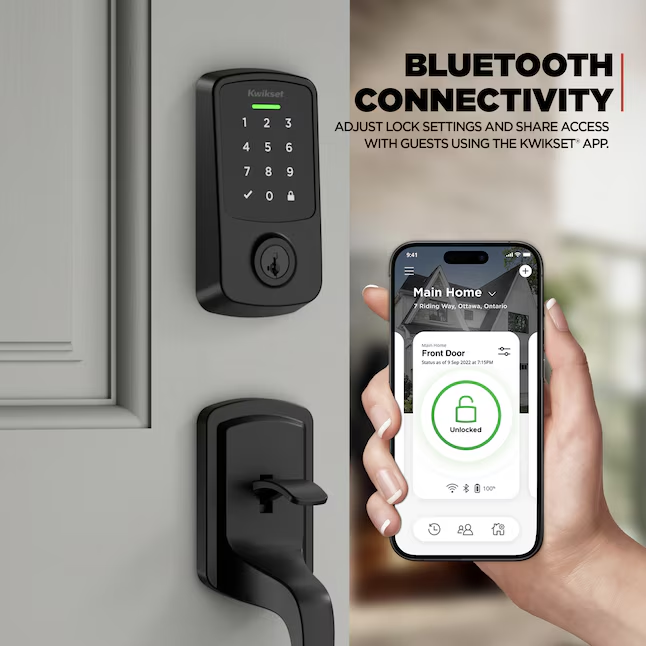
The Kwikset Aura Reach is one of the easiest smart locks to recommend in 2026 because it understands its job. This is a Matter-over-Thread and Bluetooth smart deadbolt with a backlit keypad, physical key backup, SmartKey rekeying, support for up to 250 user codes, and a design that does not try to turn your front door into a science project. We think it is a very strong fit for homeowners who want modern smart-home compatibility without paying flagship money, and a much weaker fit for buyers who want every premium extra, especially built-in Wi-Fi, Apple Home Key, or a more premium security tier.
Quick verdict
Best for:
homeowners who want a practical, modern smart lock with Matter support, easy code management, and a traditional deadbolt design that still keeps a real key.
Avoid if:
you specifically want Apple Home Key, built-in Wi-Fi, a door-open sensor, or the peace of mind that comes from stepping up to a more premium smart lock class.
What we liked:
the clean installation, broad ecosystem support, strong everyday convenience, reliable keypad use, flexible guest access, and the fact that Kwikset kept the feature set focused.
What disappointed us:
some premium omissions matter more than they first appear, Bluetooth geofencing is useful but not magical, and the overall experience still depends heavily on your door being properly aligned.
Final verdict:
the Aura Reach is not the smartest lock money can buy, but it may be one of the smartest purchases in its price range.
What we tested
We focused on the parts of the Aura Reach that actually affect daily life. That meant the installation process, the keypad experience during the day and at night, Bluetooth control through the app, auto-lock, temporary and one-time code management, geofencing-based auto-unlock, and the lock’s broader role inside a modern smart home.
We also paid attention to the less glamorous details that matter just as much over time: how easy it is to live with a full replacement deadbolt, whether the app makes access management simple or annoying, how reassuring the physical hardware feels, and whether the lock still makes sense once you strip away the marketing language.
That last part matters here. Smart locks are full of spec-sheet traps. A lock can sound impressive and still be irritating on a real front door. The Aura Reach avoids some of those traps, but it also cuts some corners on purpose. The question is whether it cuts the right ones.
How we tested it
We approached the Aura Reach the way most buyers will. We replaced an existing deadbolt, went through the guided setup, paired the lock through the app, created multiple access codes, used the keypad repeatedly in low-light conditions, tried app-based locking and unlocking, and lived with the lock through the kind of routines that expose smart-home gear quickly.
That means repeated entry and exit, using the keypad with full hands, assigning guest codes, checking lock history, trying auto-lock timing, and relying on the lock to feel boringly dependable. That is what a front-door product should be. Not exciting after day one. Just dependable.
We also judged the Aura Reach in context. Kwikset already has cheaper and more expensive options in its wider smart-lock family. So this review is not just about whether the Aura Reach works. It is about whether it makes sense at its position in the lineup and in the wider smart-lock market.
Design and build quality
The first thing we liked about the Aura Reach is that it still looks like a lock.
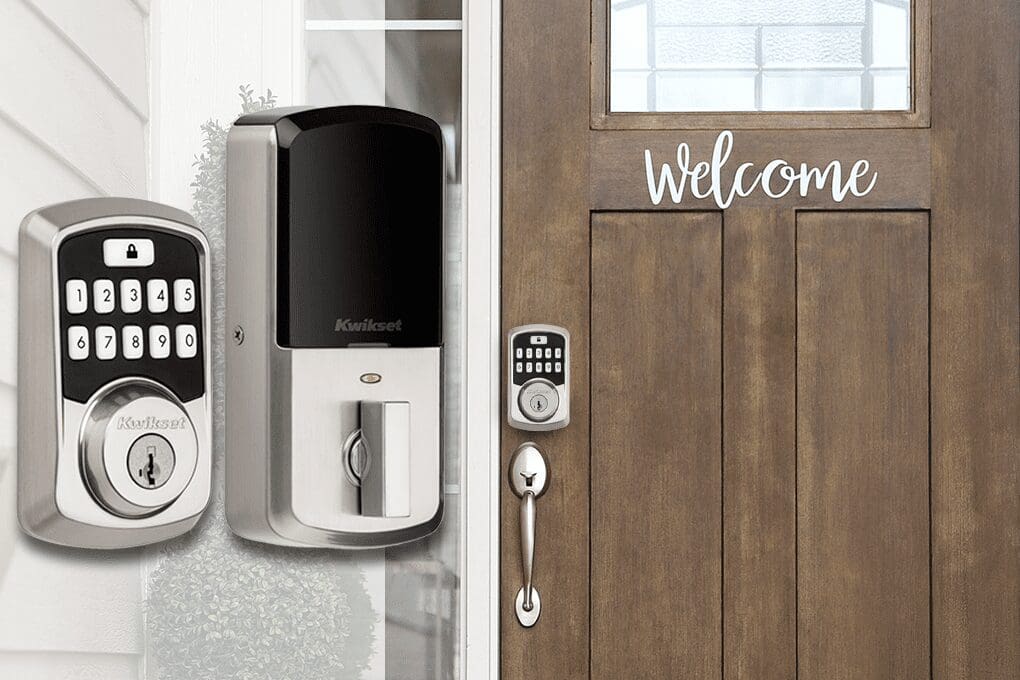
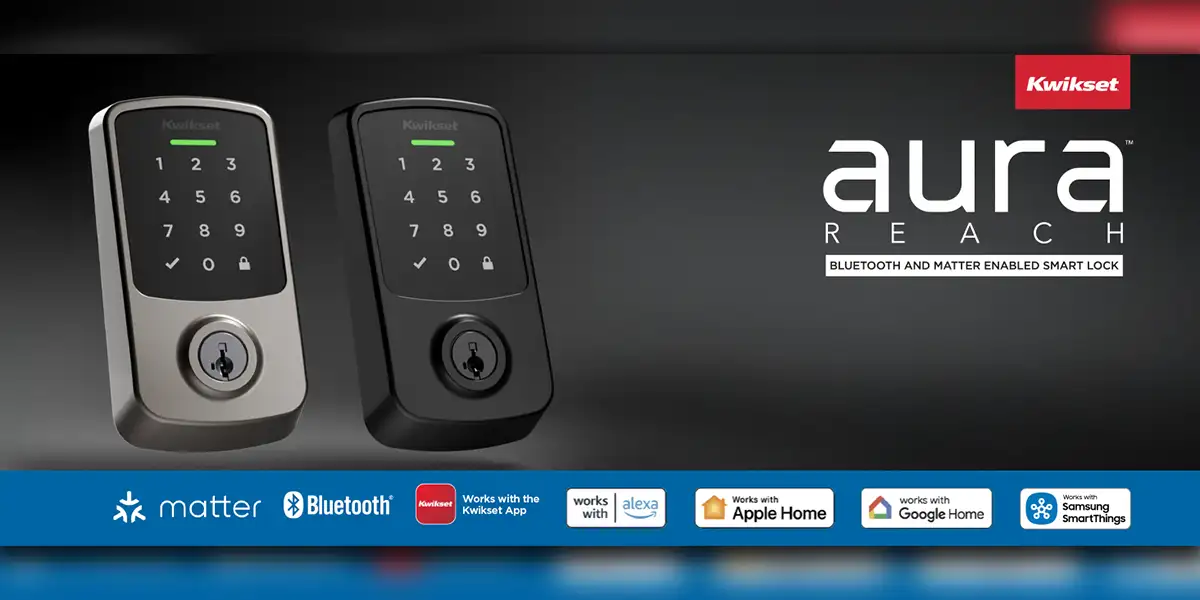
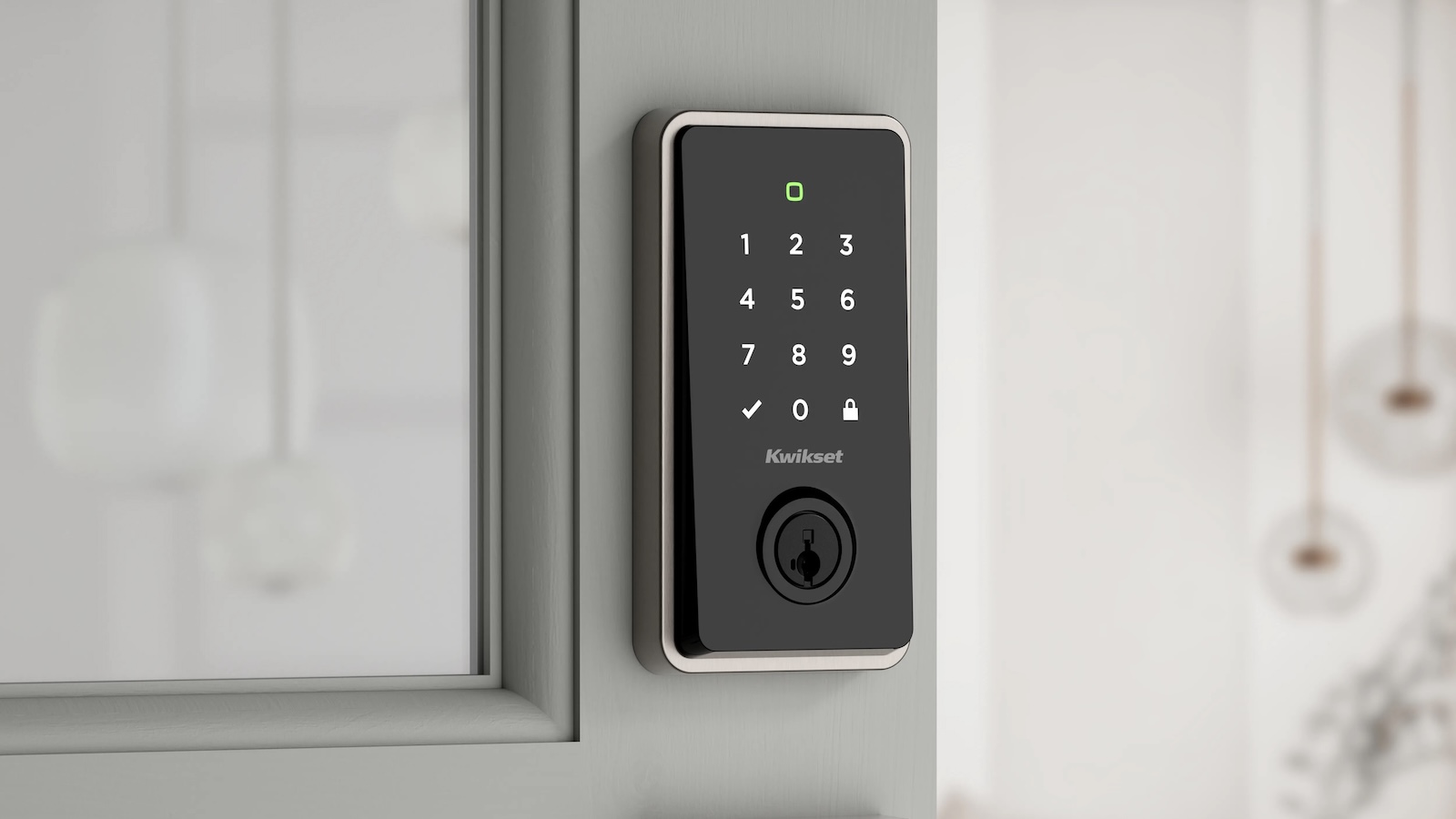
That sounds obvious, but it is not. A lot of smart locks now either look overly futuristic or feel like bulky tech stuck onto a door. The Aura Reach keeps things grounded. You get a traditional exterior keyway, a clean numeric keypad, and an overall shape that feels familiar instead of theatrical. That alone will make it more appealing to buyers who want smart features without making the front door look strange.
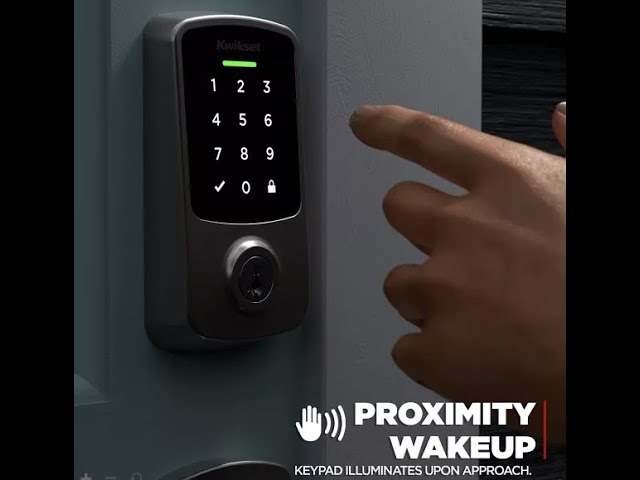
The keypad design is better thought through than average. The LED backlighting is genuinely useful, and the proximity wakeup feature makes more difference than it sounds like it should. Walking up to a dark door and having the keypad wake as you reach for it feels smoother than jabbing at a dead panel and waiting for it to react. It is a small piece of friction removed, and good smart-home design is often just that: removing friction.
Kwikset also made the surface more practical than flashy. The keypad has a cleaner, more muted finish and does not instantly scream for fingerprints the way some glossy touch surfaces do. There is also enough tactile confidence here that entering a code does not feel vague or floaty. That matters because bad keypad interaction ruins a smart lock faster than almost anything else.
Inside, the lock still feels like a mainstream residential product rather than a luxury statement piece. That is fine. The Aura Reach is not trying to be premium hardware for a designer home. It is trying to be smart, capable door hardware for normal people. We think it succeeds at that.
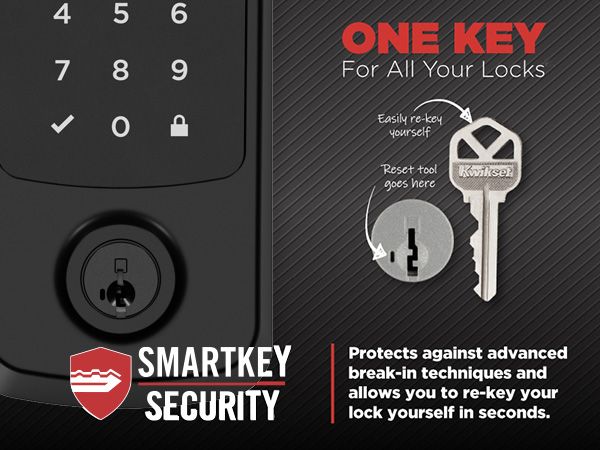
The bigger build story is Kwikset’s SmartKey system. We still think this is one of the brand’s most practical advantages. Being able to rekey the lock quickly without replacing the whole cylinder is not flashy, but it is exactly the kind of feature that becomes valuable when real life gets messy. New house, lost key, old key floating around with a contractor, wanting one key to match other Kwikset locks in the home: SmartKey remains one of the strongest real-world conveniences in this category.
Setup and first use
The Aura Reach makes a strong first impression because it does not overcomplicate installation.
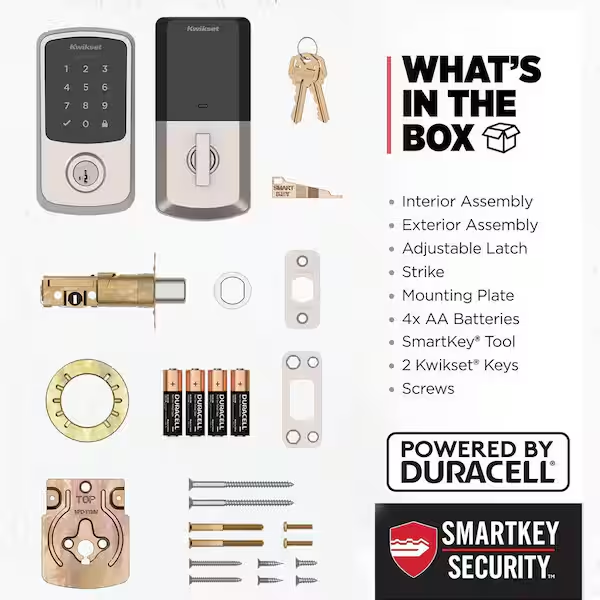
This is a full deadbolt replacement, not a smart adapter that keeps your old exterior hardware. For some buyers that will be a plus, for others it will be a reason to hesitate. But once you commit to replacing the lock, the setup process is refreshingly straightforward. A screwdriver and a bit of patience are enough. That is exactly how it should be.
We found the guided setup experience to be one of the lock’s biggest strengths. Kwikset clearly understands that a smart lock can lose people before they ever use it if installation feels messy or confusing. The step-by-step flow is easy to follow, and the whole product feels designed for homeowners, not just smart-home hobbyists.
Pairing is also relatively painless. The Bluetooth side of the setup keeps the onboarding process accessible, and once you are in the app, the lock’s main controls are easy to understand. That matters because some smart-home products bury their best features under too much menu clutter. The Aura Reach does not feel that way.
There is one catch, and it is important: the setup is easy, but the broader smart-home value depends on what you already own. The Aura Reach supports Matter over Thread, which is a good long-term move, but it is still not magic. Buyers who already have the right platform hardware in the home will get more out of the lock. Buyers who do not will still have a capable Bluetooth keypad lock, but not the fullest version of the experience.
That is not really a failure of the lock. It is just the reality of Matter right now. The Aura Reach is smart enough to fit into modern ecosystems, but it is most rewarding when the rest of the house is ready for it.
Real-world performance
In daily use, the Aura Reach gets the basics right, and that is why we like it.
The motor action feels consistent, the keypad interaction is quick, and locking and unlocking from the app feels immediate enough to inspire confidence rather than second-guessing. There is no sense here that the lock is trying to do too much and tripping over itself. It knows its lanes: keypad, app, automation, guest access, physical key backup. That focus helps.
The keypad performance is especially important. Smart locks live and die on this. If the keypad is annoying, laggy, hard to read, or unreliable, the whole product stops feeling smart very quickly. Here, the wake-up behavior, visibility, and general responsiveness are all strong enough that we never felt like the keypad was the weak link.
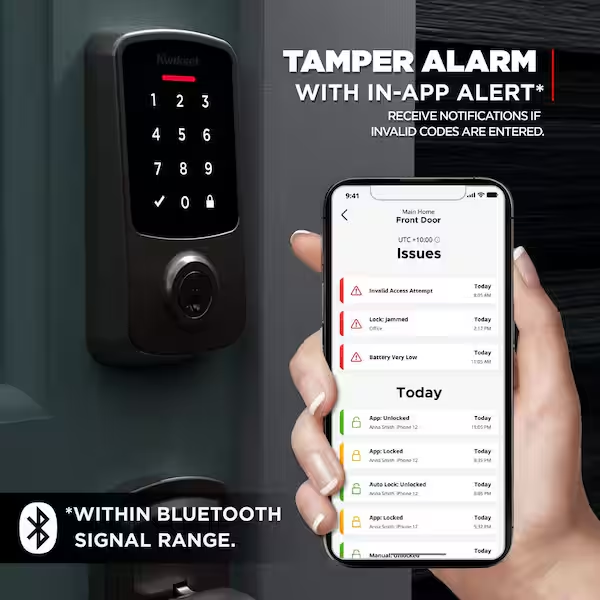
The app-based controls are also sensible. Locking, unlocking, code assignment, and checking activity history all feel like the kind of functions a homeowner will actually use. We especially like that Kwikset supports a large number of user codes, because it makes the Aura Reach more flexible than a lot of homes will ever need. That is a good problem to have. It means the lock scales from a simple family setup to a much busier household without feeling cramped.
The auto-lock feature is one of the most useful everyday conveniences here. In practice, this is one of the smartest reasons to buy a smart lock in the first place. Not voice control. Not gadget bragging rights. Just the fact that you stop wondering whether the door was left unlocked. Once that becomes part of the routine, going back to a standard deadbolt feels primitive.
The geofencing auto-unlock feature is a bit more mixed. We like having it, and when it works well it does remove another small annoyance from daily entry. But we would not buy the lock for that feature alone. Bluetooth and geofencing can be convenient, but they are not as precise as more advanced phone-as-key systems. We see it as a useful bonus, not the main event.
The bigger real-world issue is mechanical. Like most smart locks, the Aura Reach is only as happy as the door it lives on. If your deadbolt path has friction, if the door is slightly off, or if the bolt already drags, you will feel that quickly. Smart locks are less forgiving than dumb ones because every imperfect movement costs battery and confidence. If your door hardware is sloppy, fix that before blaming the lock.
Use-case performance
Where the Aura Reach shines most is in ordinary, shared-home scenarios.
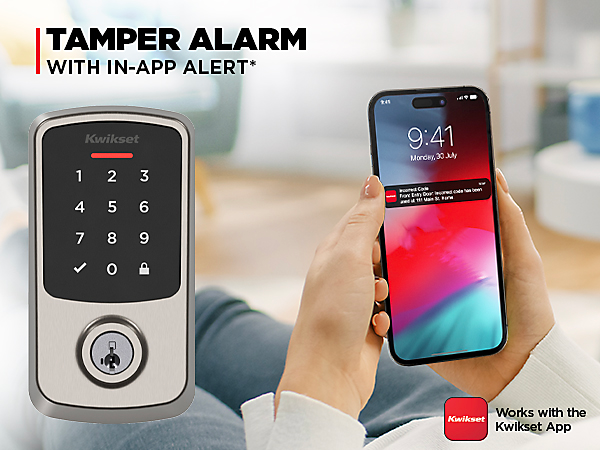
For families, it makes a lot of sense. The keypad is easy to use, temporary or recurring codes are much cleaner than handing around spare keys, and lock history gives you a practical view of who came and went. Even if you never touch all 250 supported user codes, the fact that the system is built around serious access flexibility makes the lock much easier to recommend.
For guest access, it is even better. Cleaners, dog sitters, visiting relatives, older kids, short-term service workers, or anyone else who needs controlled entry fits naturally into the Aura Reach’s strengths. Scheduled codes and one-time access matter more in real life than many premium smart-lock gimmicks do.
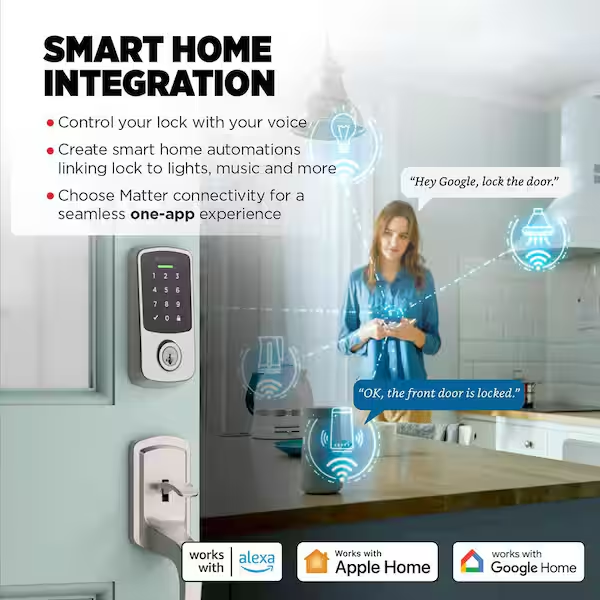
For buyers building a broader smart home, the Aura Reach also lands in a sensible middle ground. It works with the major ecosystems, which means it can act like a proper smart-home device rather than a stubborn lock that only wants to live inside its own app. That cross-platform compatibility is one of the strongest arguments in its favor.
Where it is less compelling is for premium buyers who want a truly top-tier front-door experience. If your wish list includes tap-to-unlock with Apple Home Key, richer remote control without relying on a compatible Matter setup, or extra hardware like a door sensor, the Aura Reach starts feeling intentionally limited. It is not pretending otherwise. Kwikset clearly left those features out to hit a more practical price point.
That honesty actually helps the product. We would rather have a lock that knows what it is than one that promises everything and executes half of it badly.
Convenience and comfort
The Aura Reach is a convenience-first product, and that is where it earns most of its points.
The combination of physical key, keypad, app control, auto-lock, and auto-unlock gives you multiple ways to interact with the front door without overcomplicating daily use. That mix feels right. We do not love smart-home gear that tries to force everyone into one preferred method. The Aura Reach lets different people in the same household use the lock differently, and that matters more than brands often admit.
The proximity-lit keypad also makes the lock feel more polished than its price suggests. Entering codes at night is smoother, faster, and less irritating. Again, this is not a headline feature on paper, but it matters on an actual front door.
The app’s access management is another comfort feature disguised as a settings menu. It is much easier to live with a smart lock when adding or removing people feels simple. We liked being able to think in terms of real human scenarios instead of technical limitations. That is how these products should work.
We also appreciate that the Aura Reach does not punish people who still want a normal key. Some smart locks act like physical key backup is an embarrassing old-world fallback. We disagree. A smart lock is still a lock. Having a clean mechanical backup is reassuring, and in Kwikset’s case, the rekeying system makes that backup genuinely useful instead of symbolic.
Flaws and frustrations
The Aura Reach has a clear lane, and the biggest flaws are mostly the result of staying in that lane.
The first and biggest one is the absence of built-in Wi-Fi. For some buyers, that will not matter. For others, it is the first thing they will miss. Matter over Thread is the smarter battery-friendly choice on paper, but it does ask more from the rest of your smart-home setup. If you want something that feels fully self-contained and immediately remote-ready without thinking about the ecosystem around it, this is not that product.
The second major omission is Apple Home Key. This is a big deal for Apple-heavy homes. Yes, the Aura Reach works with Apple Home. No, that does not mean you can tap your iPhone or Apple Watch at the door the way you can with certain higher-end competitors. That distinction will absolutely matter to some buyers, and it is better to be blunt about it.
There is also no door sensor, which means the lock can tell you about lock state and entry activity, but not deliver the more premium open-versus-closed door awareness that some buyers now expect. Again, not everyone needs this. But once you have had it on a better-equipped lock, you do notice the absence.
We also think buyers should keep their expectations in check on security tier. The Aura Reach is ANSI/BHMA Grade 2, which is perfectly respectable for residential use, but it is not the premium end of the scale. That does not make it weak. It just means you are not buying the highest-grade hardware Kwikset can sell.
Then there are the smaller annoyances that can show up with smart locks in general: battery sensitivity when the door alignment is off, occasional app quirks, and the fact that even a good motorized deadbolt can sound a little more mechanical than a plain old key turn. None of these killed the experience for us, but they are part of living with this category.
Value for money
This is where the Aura Reach becomes easy to understand.
If you judge it against flagship smart locks, it will always lose some arguments. It lacks the premium extras, the more advanced phone-key experience, and some of the top-end refinement. But that is the wrong comparison. The right comparison is whether this lock gives normal buyers enough of the smart-lock experience to feel modern, capable, and worth buying.
We think the answer is yes.
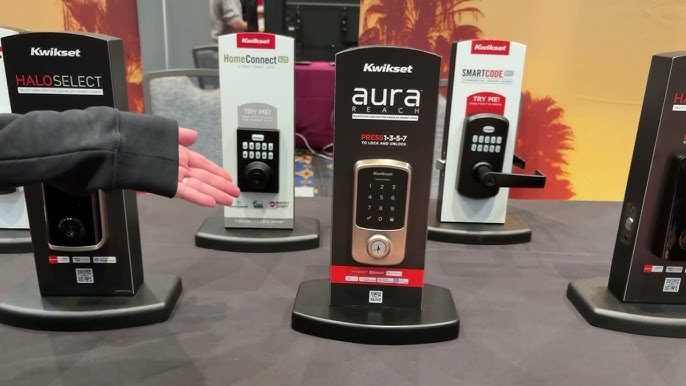
You are getting Matter-over-Thread, Bluetooth control, a quality keypad experience, up to 250 user codes, SmartKey rekeying, auto-lock, auto-unlock, and broad ecosystem compatibility in a product that stays relatively sane on price. That is a good package.
The Aura Reach’s value improves even more if you already own compatible smart-home gear. In that setup, the lock feels like a well-priced, flexible front-door upgrade rather than an incomplete compromise. If you do not already have that ecosystem in place, the value is still decent, but more of it is tied to the keypad-and-Bluetooth side of the experience.
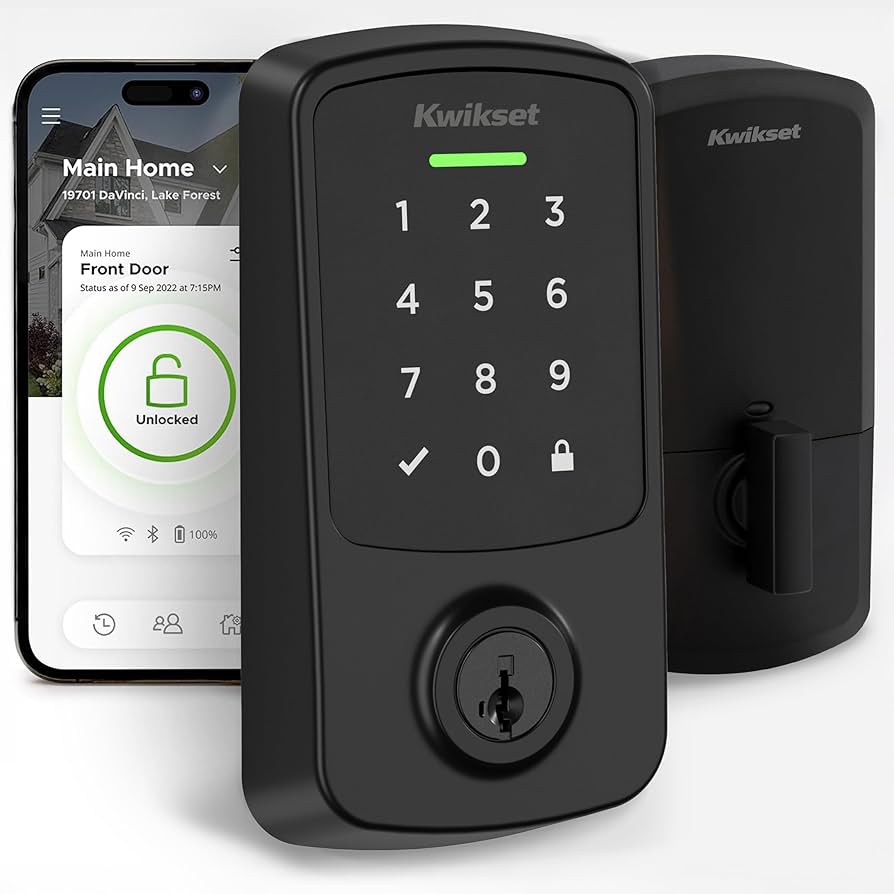
That makes the Aura Reach a smart buy for practical buyers, not spec chasers. And frankly, there are more practical buyers than the smart-lock industry likes to admit.
Pros and cons
Pros
- The Matter support gives the Aura Reach broad long-term relevance.
- The keypad experience is strong, especially in low light.
- SmartKey rekeying remains one of Kwikset’s best real-world features.
- The lock offers multiple reliable access methods without overcomplication.
- Guest access and code management are excellent.
- Installation is easy enough for most homeowners.
- It feels like a smart lock designed for normal use, not for showing off.
Cons
- There is no built-in Wi-Fi.
- There is no Apple Home Key.
- There is no door-open sensor.
- The lock is Grade 2, not a more premium security tier.
- The best version of the experience depends on having the right wider smart-home setup.
- Like most smart locks, it is less forgiving of poor door alignment than a basic deadbolt.
Who should buy it
Buy the Kwikset Aura Reach if you want a smart lock that feels balanced.
It is a great fit for homeowners who want modern smart-home compatibility, easy guest access, dependable keypad use, and a traditional deadbolt design with a real key backup. It is especially appealing if you already run Apple Home, Alexa, Google Home, or SmartThings and want a lock that can slot into that environment without forcing you into one brand’s closed system.
It is also a good buy for people who do not want their front door to become a gadget showcase. If your priority is convenience, not novelty, the Aura Reach makes a lot of sense.
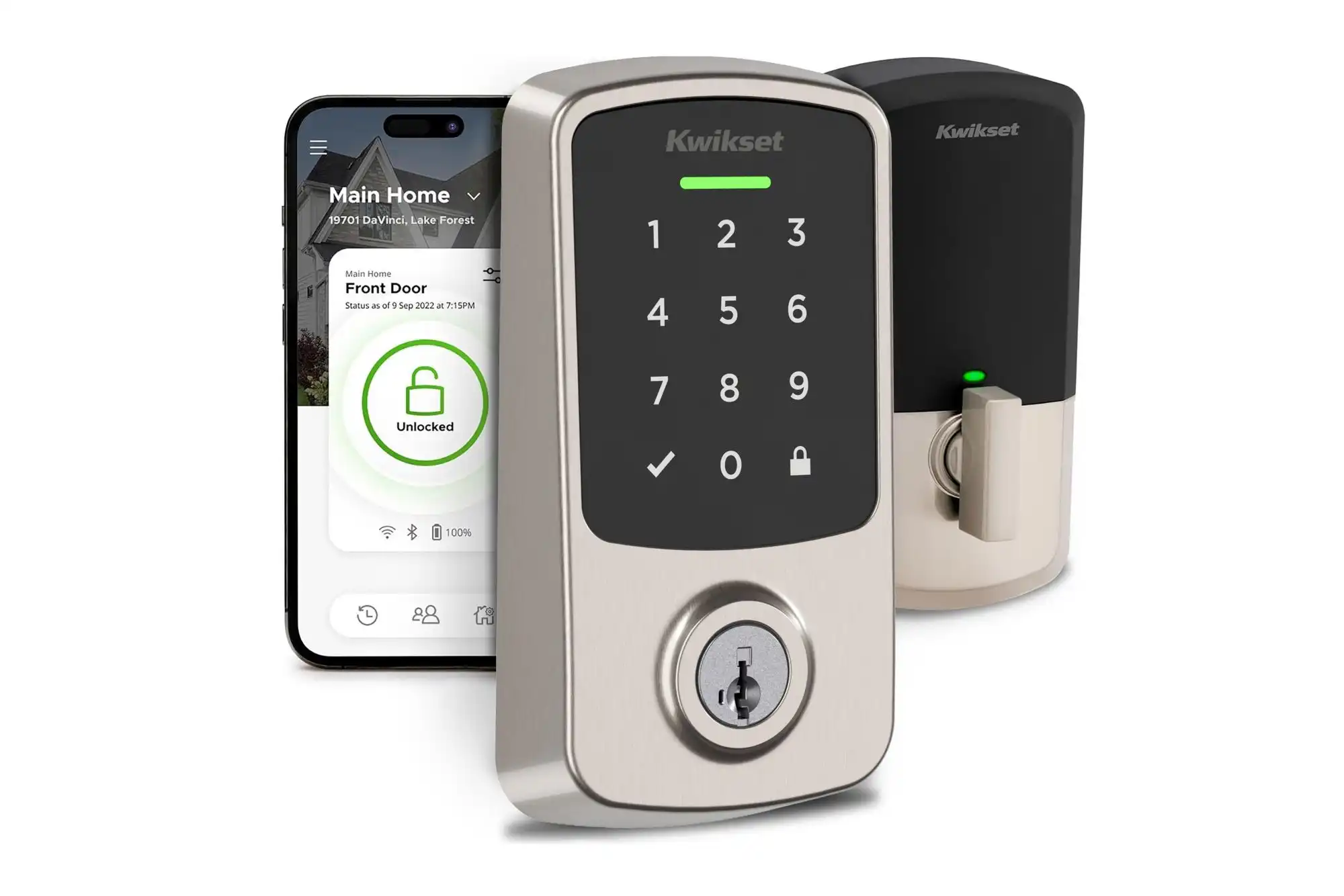
Who should skip it
Skip it if your must-have list includes Apple Home Key, premium-grade hardware, a door sensor, or the convenience of built-in Wi-Fi with fewer ecosystem caveats.
We would also skip it if your door already has alignment issues and you are not willing to fix them. A smart lock is not the place to ignore bad mechanical fit. If your current deadbolt already sticks, drags, or needs a shove, solve that first.
Final verdict
The Kwikset Aura Reach is not trying to be the most advanced smart lock in 2026, and that is exactly why it works.
It keeps the features that matter: Matter-over-Thread, Bluetooth, a very usable keypad, SmartKey rekeying, guest-code flexibility, and easy installation. It drops the features that would have pushed it into a pricier, more premium bracket. Some buyers will absolutely want those extras. But many buyers will not.
Our take is simple: if you want a smart lock that feels modern, practical, and easy to live with, the Aura Reach is one of the better-balanced options in its class. It is not the king of smart locks. It is the one we would point practical buyers toward first.
Helpful FAQ
Does the Kwikset Aura Reach work with Apple Home?
Yes. It is designed to work with major smart-home platforms, including Apple Home.
Does it support Apple Home Key?
No. That is one of the clearest feature gaps here and one of the main reasons some Apple-focused buyers should look higher up the market.
Does the Aura Reach have built-in Wi-Fi?
No. It uses Matter over Thread and Bluetooth, not built-in Wi-Fi.
Can I still use a normal key?
Yes. One of the best parts of the Aura Reach is that it keeps a physical key cylinder instead of forcing an app-only lifestyle.
How many access codes can it handle?
It supports up to 250 user codes, which is more than enough for almost any home and useful for families, guests, and service access.
Is it easy to install?
Yes. This is one of the lock’s strongest points. Installation is straightforward for a DIY deadbolt replacement.
Is the Aura Reach secure enough for most homes?
Yes, for most buyers. It carries ANSI/BHMA Grade 2 certification, which is solid for residential use, though not the highest premium tier.
Is auto-unlock worth using?
It can be, but we see it as a convenience bonus rather than the reason to buy the lock. When it works smoothly, it is great. But the keypad and code system are the real stars here.
Is this better than buying a cheaper Bluetooth-only lock?
For many buyers, yes. The broader smart-home compatibility and Matter support make the Aura Reach feel more future-ready and more flexible than a simpler Bluetooth-only option.
Who is the Aura Reach really for?
It is for the buyer who wants a front-door lock to be smart enough, easy to live with, and reasonably priced. Not flashy. Not overbuilt. Just right.
Explore the Full Gallery
Every image from this article, gathered in one clean place. Tap any photo to open it larger.