
DDPAI Z60 Pro
Pros
- Strong 4K front-camera performance that actually justifies the upgrade over basic dash cams
- Sony STARVIS 2 IMX678 sensor and HDR give the front channel a more convincing low-light result than most mid-range rivals
- 32GB built-in eMMC plus microSD support up to 512GB is a genuinely useful reliability advantage
- Supercapacitor, GPS, 5GHz Wi-Fi, and the 3-inch display make the core hardware feel properly thought through
- Expandability into a 3-channel setup gives it more room to grow than a lot of fixed rivals
- Optional parking and 4G features make it more versatile than a typical two-channel dash cam
Cons
- Rear camera is only 1080p and is clearly the weaker half of the system
- No CPL filter, which feels like a miss at this level
- The best parking and remote features require extra hardware
- The full system can feel a little too accessory-dependent for casual buyers
- App and setup experience are not the cleanest part of the package
Excellent-looking front-camera hardware , Sony STARVIS 2 sensor up front, HDR , 32GB built-in eMMC , microSD support up to 512GB , 5GHz Wi-Fi , GPS , supercapacitor , and a system that feels more expandable than most rivals.
The rear camera is still only 1080p , the best parking and remote features need extra hardware, there is no CPL filter , and the overall experience can still feel more ecosystem-dependent than it should.
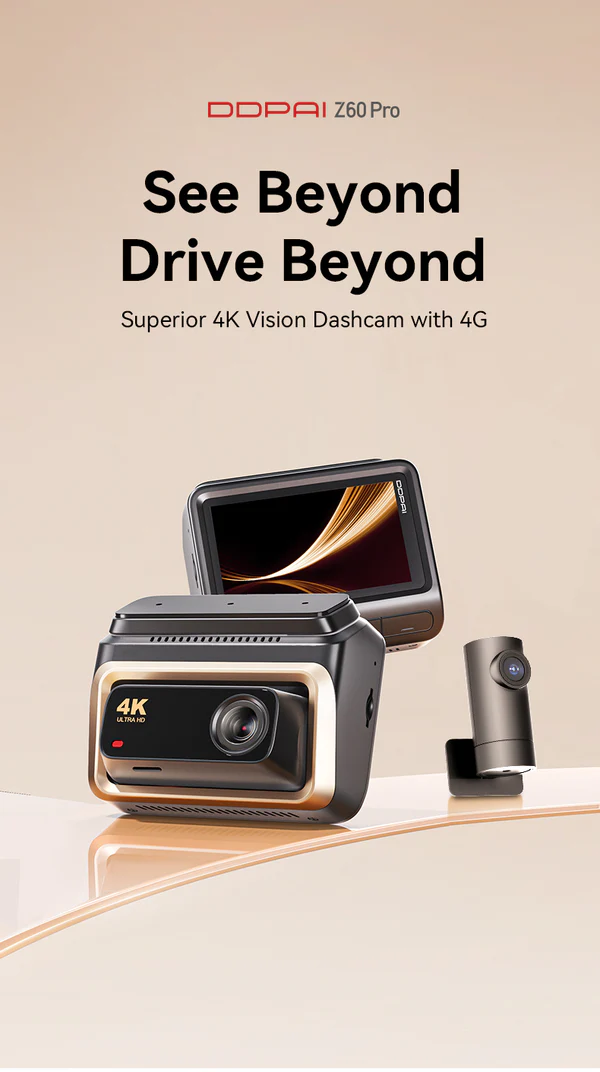
The DDPAI Z60 Pro makes a strong first impression because it does not behave like a bargain-bin dash cam trying to win on a long spec sheet alone. In day-to-day use, it feels like a more considered product than that. The front camera is the clear headline, the hardware is well judged, and the feature set goes deeper than most people will expect at this level.
We came away thinking this is a genuinely good buy for drivers who care about front-camera evidence quality first and want room to build a more complete system later. Where we felt less convinced was not the core camera itself, but the surrounding ecosystem.
The Z60 Pro can be simple, but it can also turn into the kind of purchase where bundle choices, storage quality, hardwiring, and app behavior matter more than they should.
What We Tested
We focused on the areas that actually decide whether a dash cam feels worth owning or just impressive in a listing:
- Front video quality in daylight and low light
- Rear-camera usefulness in real traffic situations
- Setup, pairing, menus, and general daily interaction
- Storage behavior and how the camera handles built-in memory versus microSD
- Installation practicality and overall hardware quality
- Parking-mode potential and whether the optional extras genuinely add value
- The Z60 Pro’s role as a front-first camera versus a full system
How We Tested It
We approached the Z60 Pro the way most real buyers would. We spent time with the hardware itself, worked through setup and app pairing, used the on-device controls, looked closely at footage quality from both cameras, and paid attention to the little things that start to matter after the novelty wears off. That meant judging not just raw image quality, but how the camera feels to install, live with, and trust. We also looked at the optional parts of the system the way a practical buyer should: not as marketing extras, but as real costs and real decisions that affect the value of the whole package.
Design and Build Quality
What stood out to us early was that the Z60 Pro does not feel cheap. That sounds basic, but plenty of dash cams still get this wrong. They promise a lot, then arrive with flimsy plastics, annoying mounts, mediocre buttons, or cable setups that already feel like a compromise before you even start installation. This one feels more sorted than that.
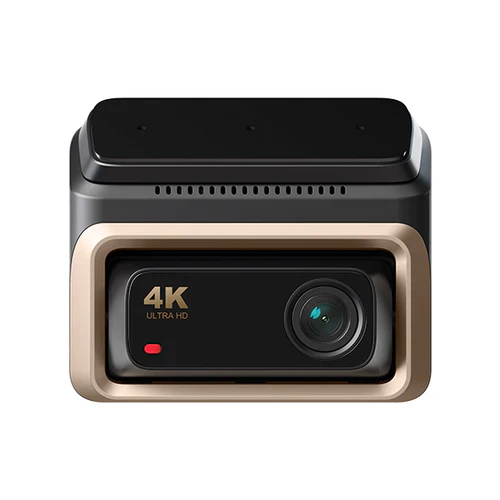
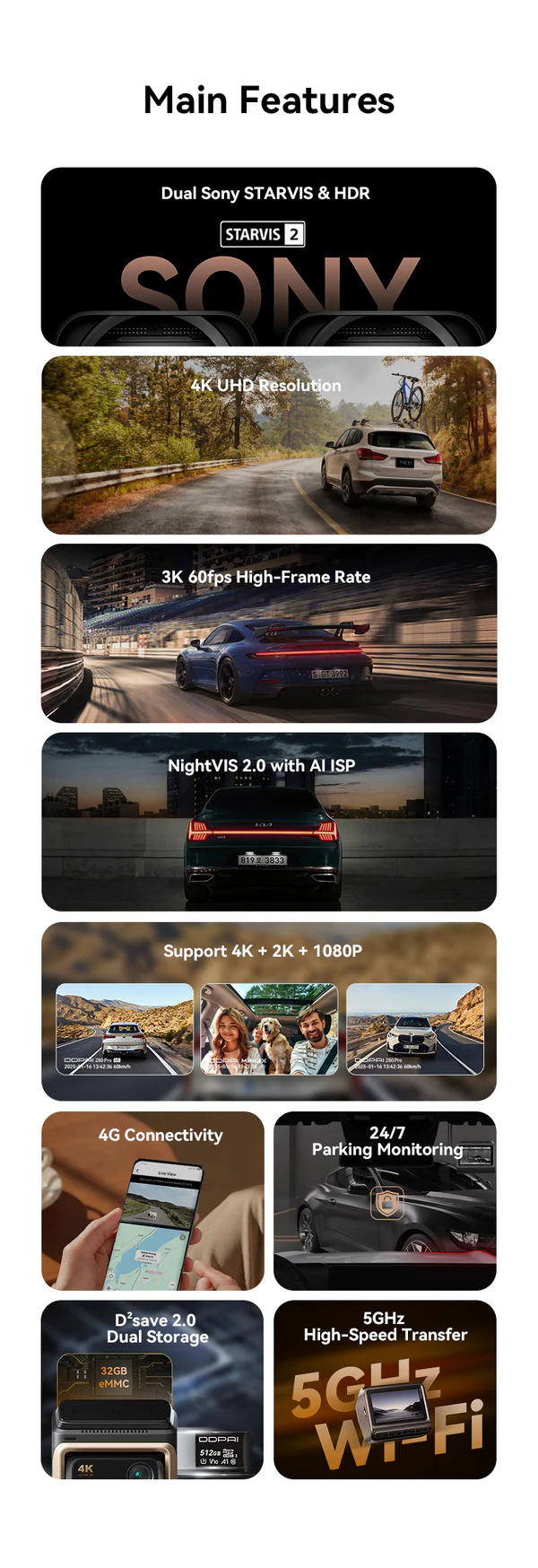
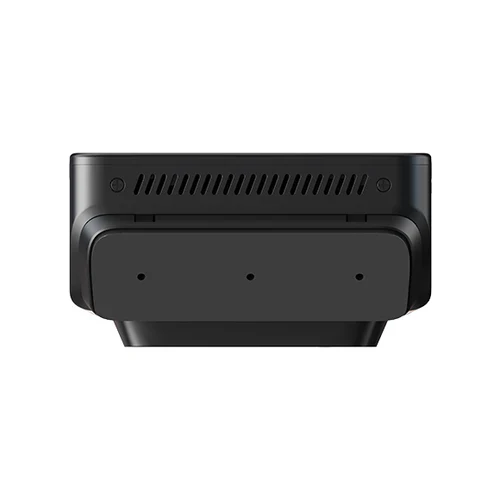
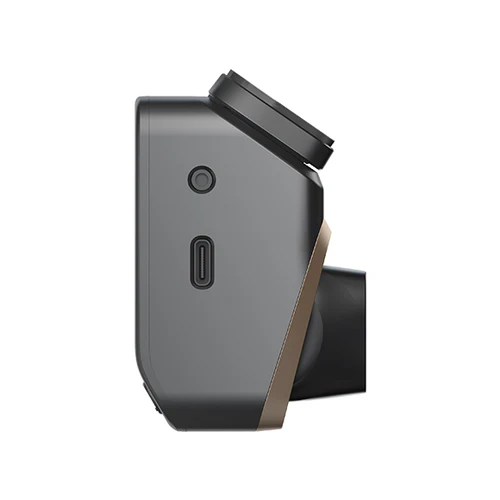
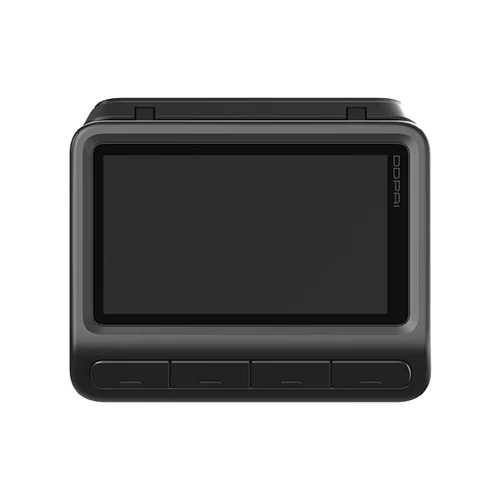
The main unit has a 3-inch screen, a lens housing with useful adjustability, a clean adhesive mount, and a layout that suggests someone actually thought about how people install and use dash cams in the real world. The side access for the card slot is convenient, the overall shape looks tidy on the glass, and the cables feel more robust than what we usually see in cheaper kits. Nothing here is flashy for the sake of it. It just feels better judged.
We also think DDPAI made the right call with the non-touch display. On paper, a touch panel sounds more modern. In practice, dash cams live in heat, vibration, glare, and awkward mounting positions. Physical controls may be less trendy, but they are often easier to trust long term. We appreciated that choice more the longer we thought about it.
There is one omission we kept coming back to, though, and that is the lack of a CPL filter. For a dash cam pushing into premium-leaning territory, that is not a tiny oversight. Windshield reflections can still wreck otherwise excellent footage in the wrong car or the wrong lighting, and a CPL option would have made a lot of sense here. The absence does not ruin the product, but it does feel like a missed opportunity on a camera that gets so many other hardware decisions right.
Setup and First Use
The Z60 Pro is not hard to set up, but it is also not what we would call completely frictionless. This is a camera that rewards a bit of patience. If you are the kind of buyer who wants to stick it on the windshield, tap one button, and never think about it again, this may not be your ideal match. If you are willing to spend a little extra time getting everything dialed in properly, the experience is much more rewarding.
Initial pairing follows the now-familiar pattern of Bluetooth first, then handoff to Wi-Fi for preview, footage access, and deeper settings. Once everything is behaving, the system makes sense. The issue is that connected dash cams always live or die by how smooth that handoff feels, and this is one of those products where the camera hardware inspires more confidence than the software layer around it.
In daily use, that distinction matters. A dash cam can be brilliant at recording video and still become mildly annoying if the app is inconsistent, the Wi-Fi handoff is fussy, or the setup flow feels like it expects you to already know the brand’s ecosystem. That is where the Z60 Pro occasionally reminds you that it is feature-rich, not foolproof.
The other lesson we learned very quickly is that this camera is not forgiving about cheap storage. That is not a criticism of the Z60 Pro so much as a practical reality. With 4K front recording, proper U3 microSD support matters. This is not the kind of camera where it makes sense to save a few coins on a weak card and hope for the best. If you buy the right storage from the start, you are removing one of the most common causes of dash-cam headaches before they happen.
Real-World Video Performance
Front Camera Performance
The front camera is the reason to care about the Z60 Pro in the first place, and it is also the reason we ended up liking it as much as we did.
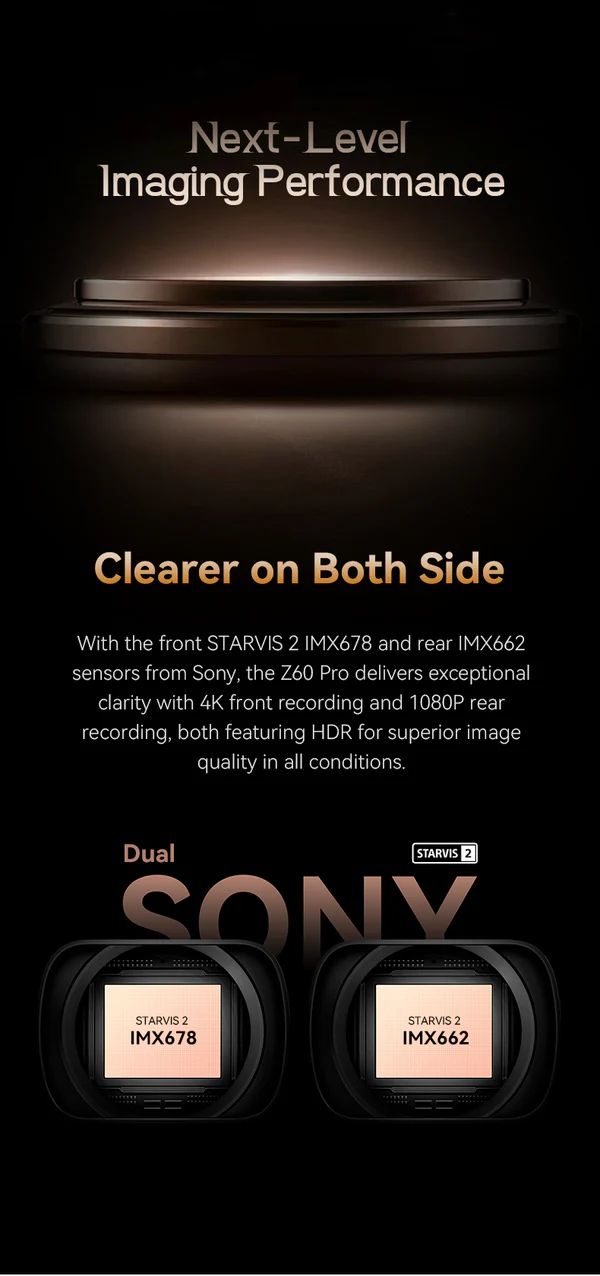
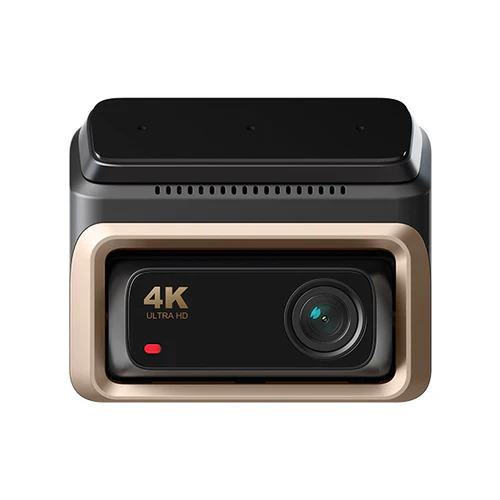
On paper, the ingredients are strong: 3840 x 2160 at 30fps HDR, a Sony STARVIS 2 IMX678 sensor, a bright F1.75 lens, and an optional 3K 60fps front mode for buyers who want smoother motion. In practice, the front footage is where the camera earns its price. This is not just “nice dash-cam video.” It looks like footage from a genuinely upper-midrange unit that was designed around evidence quality rather than marketing slogans.
In daylight, the front channel produces the kind of clarity that makes a real difference when something actually happens on the road. Road signs, lane markings, general traffic context, and vehicle details come through with convincing sharpness. The bigger point is not that the image looks pretty. It is that it looks useful. That is what matters in a dash cam.
We also liked the overall balance of the image. Colors look natural rather than overly processed, and the footage avoids the smeared, over-sharpened feel that some brands use to fake crispness. It looks like DDPAI aimed for a cleaner, more controlled result, and we think that was the right move.
License plate capture is always the test people care about most, even if dash cams are not miracle machines. The Z60 Pro does a respectable job here from the front, especially when the relative speed and distance are reasonable. That does not mean it will magically read every plate in every lighting condition. No honest dash cam can promise that. But this is clearly above basic. For the sort of daily evidence capture most buyers actually need, the front camera feels strong.
Night Driving
Night performance is where a lot of dash cams start talking bigger than they perform. The Z60 Pro does not feel like that kind of product.
The front channel stays useful after dark, which is the part that matters most. It does not turn a black road into daylight, and it does not produce fantasy-level clarity in fast-moving, badly lit situations. But in realistic use, it holds up well. Street-lit roads look better, naturally. Headlight glare and speed still make plate capture harder. That is normal. What we appreciated was that the camera remains dependable instead of collapsing into mush once the sun goes down.
The HDR tuning helps, and the STARVIS 2 sensor gives the front camera a more composed low-light look than cheaper units usually manage. The footage still looks like night footage, which is exactly how it should. That may sound like faint praise, but it is actually one of the better compliments you can give a dash cam. It is better to get an honest, usable night image than an over-processed one that looks bright at first glance and falls apart when you need detail.
Rear Camera Performance
The rear camera is where the Z60 Pro stops feeling like a near-premium all-rounder and starts showing the compromise that keeps it from being a full flagship.
The rear unit records at 1920 x 1080 at 30fps HDR using a Sony IMX662 sensor with an F1.55 lens. That is not bad. It is just clearly not the star of the show. In daily use, the rear camera is there to provide context, capture impacts from behind, and show the general sequence of events. It is much less convincing if your standard is “I want front and rear both to feel equally premium.”
That gap becomes clear the moment you compare channels. The front view has the crisp, confident look of a camera doing serious work. The rear footage is perfectly serviceable, but it is obviously a step down in fine detail. It records what happened. It does not always record it with the kind of clarity that makes you feel spoiled.
That does not make the rear camera bad. For many buyers, it will be good enough. Most people prioritize the front channel for a reason, and rear coverage often matters more for context than for forensic-level detail. But we would not oversell it. This is a front-first system. The rear camera supports the package. It does not define it.
Use-Case Performance
As a Straight Front-and-Rear Dash Cam
Used as a conventional two-channel dash cam, the Z60 Pro makes a strong case for itself. You get a front camera that feels meaningfully better than entry-level alternatives, a rear camera that adds useful coverage, GPS, 5GHz Wi-Fi, built-in storage, and a hardware package that feels mature enough to trust. For many drivers, that is already enough.
What we liked here is that the core package does not feel thin. Even before you start thinking about 4G modules or third-channel expansion, the Z60 Pro already offers more substance than the usual mid-range box that wins people over with one flashy spec and not much else.
As a 3-Channel System
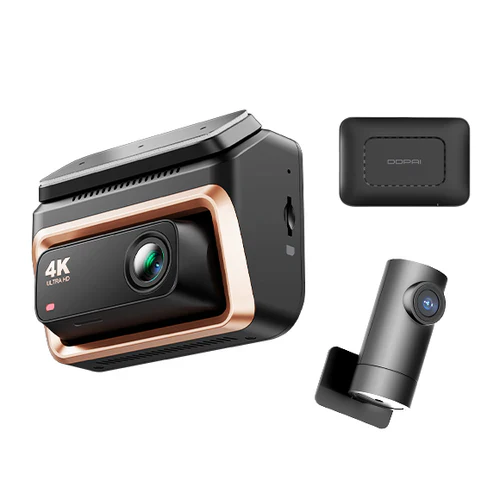
This is where the Z60 Pro becomes more interesting. Through DDPAI’s πLink system, it can expand into a 3-channel setup by adding the Mini2X, giving you 4K front + 2K extra channel + 1080p rear. That opens the door for cabin recording, extra interior coverage, or a more customized setup depending on the vehicle.
We liked this part of the idea more than we expected to. A lot of dash cams are what they are on day one, and that is it. The Z60 Pro feels more like a platform. That matters for buyers whose needs may change over time. Ride-share drivers, family vehicles, and anyone who wants more complete coverage have a clearer upgrade path here than they do with many fixed two-channel rivals.
As a Parking and Security System
This is where the Z60 Pro becomes much more than a standard dash cam, but also much more dependent on accessories.
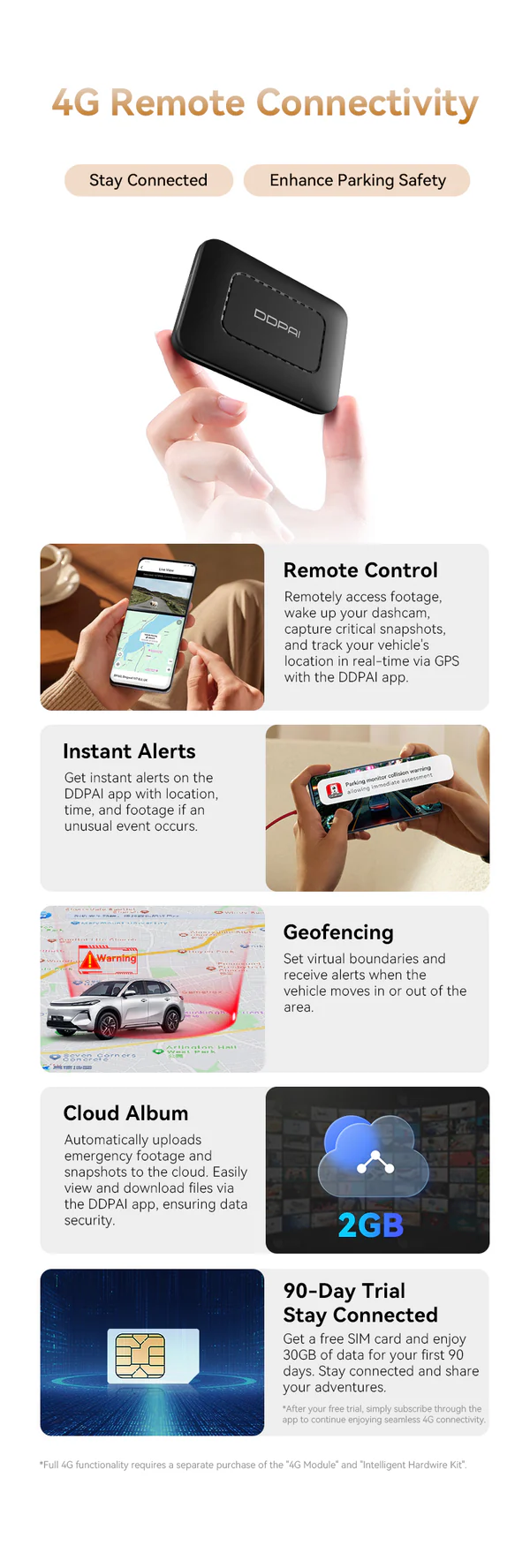
With the Intelligent Hardwire Kit, you unlock the parking features that actually matter: time-lapse parking recording, normal parking recording, and a sleep mode that wakes on impact. With the optional 4G cloud module, the system moves into connected-security territory with remote viewing, alerts, geofencing, and live location features.
In practice, we think this is a real strength, but only if you walk into it with clear expectations. The base camera is a dash cam. The fully accessorized version becomes something closer to a driving and parking-monitoring system. Those are not the same product in value terms. The Z60 Pro makes a solid case in both roles, but the price logic changes depending on which one you are actually buying.
Convenience and Daily Use
One of the things we appreciated most was the overall depth of the hardware package. The Z60 Pro includes 32GB of built-in eMMC storage and supports microSD cards up to 512GB. That built-in memory is more important than it sounds. In daily ownership, fallback storage is not a luxury. It is exactly the kind of quiet reliability feature that becomes valuable the first time something goes wrong.
We also liked seeing a supercapacitor rather than a small battery. For a windshield-mounted device expected to live through heat and cold, that is the more confidence-inspiring choice. It suggests the camera was designed with long-term use in mind rather than just short-term checklist appeal.
The GPS / Beidou / GLONASS support is another real plus. Speed, route, and location overlays are not gimmicks when you are using footage as evidence. The same goes for the SR data overlay. That is one of the more distinctive features in the package, and unlike many dash-cam extras, it actually adds context in a useful way instead of just cluttering the interface.
We were less enthusiastic about the ADAS side of the feature set. It is there, and some buyers will appreciate it, but it does not fundamentally change the value of the camera. It feels like an extra rather than a meaningful buying reason.
Flaws and Frustrations
The biggest issue with the Z60 Pro is not that it does anything terribly wrong. It is that the whole product can feel more complicated than it first appears.
There are multiple bundle choices. There is front-only, dual-channel, 3-channel, 4G, and 4G-plus-hardwire thinking to do. There is the app. There is the question of whether you are buying this as a dash cam or as a connected parking-security setup. There is the practical reality that the best version of this product is not the cheapest one. None of that is fatal, but it does mean the Z60 Pro is best suited to buyers who want what it offers rather than buyers who just want the easiest possible answer.
We also cannot ignore the rear camera compromise. It is fine, sometimes more than fine, but it is not equal to the front channel. That matters because the rest of the product does such a good job of presenting itself as premium-leaning.
Then there is the missing CPL filter, which we kept coming back to. On a camera this ambitious, it feels like something that should have been part of the package or at least part of the ecosystem.
Finally, the software side never feels like the strongest reason to choose the Z60 Pro. The camera itself is the attraction. The app is part of the experience, not the selling point.
Value for Money
This is where the Z60 Pro ends up being more convincing than some rivals that look cheaper at first glance.
You are getting a lot of meaningful hardware here: 4K front recording, STARVIS 2, HDR, 32GB built-in memory, microSD expansion up to 512GB, GPS, 5GHz Wi-Fi, a supercapacitor, and genuine expandability into a more advanced system. That is a serious package.
What stops it from being a completely effortless value pick is that some of its best long-term features sit behind extra purchases. Parking mode becomes more compelling when hardwired. The security angle becomes more compelling with the 4G module. The flexibility becomes more compelling if you add the third camera. That is all good in theory, but it also means the Z60 Pro can be either a sensible upper-midrange dash cam or a more expensive ecosystem buy depending on how far you go.
Even with that caveat, we still think the value case is strong. The core hardware is good enough to stand on its own, which is the important part. The extras only feel worth considering because the base camera already is.
Who Should Buy It
Buy the Z60 Pro if you care most about the front camera and want a dash cam that feels like it was designed for more than the bare minimum. It makes sense for drivers who want clearer evidence, better hardware than the average mid-range unit, and the option to grow into rear coverage, 3-channel recording, or connected parking features later.
We also think it suits buyers who understand that the best dash cams are rarely the ones with the most dramatic listings. They are the ones that get the fundamentals right: dependable recording, sensible storage, strong front footage, and enough flexibility that you do not feel the need to replace them six months later.
Who Should Skip It
Skip it if you want a one-box answer with zero decisions attached. Skip it if you hate dealing with apps, have no interest in hardwiring, or expect the rear camera to feel just as premium as the front. And skip it if your definition of value means “everything important should already be included and nothing should depend on add-ons.”
There are simpler dash cams out there, and for some buyers, simpler will genuinely be better. The Z60 Pro is at its best when the person buying it actually wants the extra depth it offers.
Final Verdict
After spending real time with the DDPAI Z60 Pro, our view is straightforward: this is a very good dash cam built around an excellent front camera and a smarter-than-average feature set.
What makes it work is that the strengths are the right strengths. The front image quality matters. The storage setup matters. The hardware quality matters. The supercapacitor matters. The expandability matters. None of that feels like fluff. The weaknesses are also easy to understand. The rear camera is merely decent, not standout. The best extras cost more. The ecosystem is not as effortless as the camera deserves.
Even so, we came away liking it. The Z60 Pro feels like a product with real substance behind it. If we were choosing it, we would be doing so because the front camera is strong enough to trust, and because the rest of the system adds practical value rather than empty noise. For the right buyer, that is more than enough reason to recommend it.
FAQ
Is the DDPAI Z60 Pro a true 4K dash cam?
Yes. The front camera records at 3840 x 2160 at 30fps HDR. It also supports a 2880 x 1620 at 60fps front mode. The rear camera is 1080p HDR, not 4K.
Does it support rear and cabin cameras?
Yes. It can be used as a standard front-and-rear system, and it can also expand into a 3-channel setup with the Mini2X through πLink, giving you 4K front + 2K extra channel + 1080p rear.
Does it have built-in storage?
Yes. The Z60 Pro includes 32GB built-in eMMC storage and also supports U3 microSD cards up to 512GB.
Does parking mode require hardwiring?
Yes. The more advanced parking features require the Intelligent Hardwire Kit, including time-lapse recording, normal parking recording, and sleep mode with wake-on-impact.
Is 4G included in the base package?
No. The 4G cloud features require the optional 4G module, and full functionality also depends on the Intelligent Hardwire Kit.
Is the rear camera as good as the front?
No. The rear camera is useful and worthwhile for coverage, but the front camera is clearly the stronger performer. This is a front-first system.
Is the DDPAI Z60 Pro worth buying?
Yes, for the right kind of buyer. If you want strong 4K front footage, more flexibility than a basic dash cam, and room to build a better overall setup over time, it is easy to recommend. If you want the simplest possible dash cam with the fewest moving parts, there are easier options.
Explore the DDPAI Z60 Pro Gallery
Every image from this article, gathered in one clean place. Tap any photo to open it larger.